×

Nigeria🇳🇬 | best festivalsWhere to Find the 10 Best festivals in Nigeria

Festivals in Nigeria are a vibrant tapestry of culture, energy, and tradition, each offering a unique glimpse into the country’s diverse heritage. From the colorful masquerades of the Yoruba to the spiritual rites of the Igbo, these celebrations vary widely by region and season, impacting everything from crowd dynamics to budget considerations.

Choosing the right festival can transform your experience as a backpacker. Some festivals attract massive crowds, creating a lively atmosphere but also potential logistical challenges. Others are more intimate, allowing for deeper cultural immersion. Timing is crucial; festivals often align with agricultural cycles or religious observances, meaning that your travel dates can significantly affect your experience.

Understanding these nuances not only helps you navigate the local vibe but also ensures you allocate your resources wisely, maximizing both your energy and budget. Whether you seek adventure, community, or spiritual connection, the right festival choice can elevate your journey through Nigeria.

By Johan Kruseman 🇳🇱 | Updated June 7, 2026
Explore the best regions in Nigeria

Why go?Why These festival Stand Out

Festivals in Nigeria are a vibrant reflection of the country’s rich cultural tapestry. They matter because they encapsulate centuries of history, tradition, and community spirit. Unlike many other countries, Nigeria’s festivals are deeply rooted in ethnic diversity, showcasing the customs of over 250 ethnic groups. This diversity means that each festival offers a unique lens into the values, beliefs, and artistic expressions of its people.

Timing is crucial. Many festivals align with seasonal cycles, such as harvests or religious observances, making them not just celebrations but also significant markers in the agricultural calendar. However, this can lead to crowd sizes that may overwhelm first-time visitors. The energy is palpable, but navigating through throngs can be exhausting. Those … read more 👉
Festivals in Nigeria are a vibrant reflection of the country’s rich cultural tapestry. They matter because they encapsulate centuries of history, tradition, and community spirit. Unlike many other countries, Nigeria’s festivals are deeply rooted in ethnic diversity, showcasing the customs of over 250 ethnic groups. This diversity means that each festival offers a unique lens into the values, beliefs, and artistic expressions of its people.

Timing is crucial. Many festivals align with seasonal cycles, such as harvests or religious observances, making them not just celebrations but also significant markers in the agricultural calendar. However, this can lead to crowd sizes that may overwhelm first-time visitors. The energy is palpable, but navigating through throngs can be exhausting. Those seeking a more intimate experience might consider attending smaller, local events that occur outside the peak festival season.

Geographically, Nigeria’s vastness presents both opportunities and challenges. While some festivals are easily accessible in urban centers, others require significant travel through rural areas, which may lack robust infrastructure. This trade-off between accessibility and immersion is vital to consider. The journey to a remote festival can deepen your understanding of local culture, but it may also demand more time and patience.

Climatically, Nigeria’s weather can be unpredictable. The dry season is generally more favorable for outdoor festivities, but unexpected rain can disrupt plans. Travelers should prepare for these conditions, as they can affect not just comfort but also the overall experience.

Understanding these factors is essential for anyone looking to engage meaningfully with Nigeria’s festivals. The rewards are immense, but so are the considerations. Prioritize your energy and budget wisely to truly savor the moments that matter.
How the List Was Created
The list of best festivals in Nigeria is created based on energy, traditions, crowd experience, activities, and overall excitement. If you feel a festival is missing in this list, please let us know.

When to go?Timing Your Visit for the Best Experience

Seasonality plays a crucial role in Nigeria’s festival landscape. The dry season, typically from November to March, is when most major festivals occur. This period offers pleasant weather, making it ideal for outdoor celebrations. Expect vibrant energy and a lively atmosphere, but also brace for larger crowds and higher accommodation costs.

Optimal months for experiencing the full spectrum of Nigerian culture through festivals are December and February. These months often host significant events that draw both locals and tourists. The festive spirit is palpable, but be prepared for bustling streets and packed venues. If the goal is to immerse in the local vibe, this is the time to be there, despite the potential for long lines and inflated prices.

Shoulder seasons present a different picture. … read more 👉
Seasonality plays a crucial role in Nigeria’s festival landscape. The dry season, typically from November to March, is when most major festivals occur. This period offers pleasant weather, making it ideal for outdoor celebrations. Expect vibrant energy and a lively atmosphere, but also brace for larger crowds and higher accommodation costs.

Optimal months for experiencing the full spectrum of Nigerian culture through festivals are December and February. These months often host significant events that draw both locals and tourists. The festive spirit is palpable, but be prepared for bustling streets and packed venues. If the goal is to immerse in the local vibe, this is the time to be there, despite the potential for long lines and inflated prices.

Shoulder seasons present a different picture. Visiting during the transitional months of October and March can yield a more authentic experience. Fewer tourists mean less congestion, allowing for deeper connections with local traditions. However, some festivals may be scaled back or less publicized during these times. Weather can be unpredictable, with occasional rains, but the trade-off is often worth it for the chance to engage more intimately with the culture.

Peak periods can significantly influence travel decisions. Major festivals often coincide with national holidays, leading to a surge in local travel. This can complicate logistics, from transportation to accommodations. Planning ahead is essential during these times to avoid the chaos that can detract from the experience.

Seasonal constraints should also be considered. The rainy season, from April to September, brings challenges like muddy roads and potential festival cancellations. While some events still occur, the atmosphere may lack the vibrancy found in the dry season. Balancing the desire for cultural immersion with practical considerations will enhance the overall experience.

festival hoppingTips for Visiting Multiple Destinations

Regional Clustering
Start by grouping festivals by region. Nigeria has diverse cultural hotspots. The North is rich in traditional festivals, while the South showcases vibrant celebrations. Focus on one region at a time to minimize travel time and maximize experience. For instance, explore the North for the Argungu Festival, then head south for the Osun-Osogbo Festival. This approach keeps travel efficient and energy levels high.

Optimal Sequencing
Plan your route based on festival dates. Some festivals are back-to-back, while others may require a few days in between. Prioritize those that occur within the same week or month. This not only saves on transportation costs but also allows for deeper immersion in local cultures. Be aware of peak travel times; avoid major holidays when crowds … read more 👉
Regional Clustering
Start by grouping festivals by region. Nigeria has diverse cultural hotspots. The North is rich in traditional festivals, while the South showcases vibrant celebrations. Focus on one region at a time to minimize travel time and maximize experience. For instance, explore the North for the Argungu Festival, then head south for the Osun-Osogbo Festival. This approach keeps travel efficient and energy levels high.

Optimal Sequencing
Plan your route based on festival dates. Some festivals are back-to-back, while others may require a few days in between. Prioritize those that occur within the same week or month. This not only saves on transportation costs but also allows for deeper immersion in local cultures. Be aware of peak travel times; avoid major holidays when crowds swell.

Timing and Pacing
Allocate at least two to three days per festival. This allows time for travel, rest, and exploration. Rushing from one event to another can lead to burnout. Festivals often have pre-events or related activities worth experiencing. Factor in downtime to recharge and soak in the atmosphere.

Common Planning Mistakes
Avoid cramming too many festivals into a short timeframe. This leads to fatigue and missed experiences. Also, don’t underestimate travel times between locations. Nigeria’s infrastructure can be challenging, so plan for delays. Flexibility is key; be ready to adapt your schedule if needed.

Trade-offs and Constraints
Consider the balance between speed and depth. Quick visits may save time but can rob you of meaningful interactions. Budget constraints may limit accommodation options, impacting comfort. Prioritize experiences that resonate with you, even if they require more effort or expense. The goal is to create lasting memories, not just check boxes.

The ListThe Best festivals of Nigeria

1 Osun-Osogbo

sacred grove, Osun river rituals, priestess procession

Walk with devotees to the Osun Sacred Grove, witnessing river offerings and spiritual ceremonies led by the festival’s chief priestess.

2 Durbar Festival

royal procession, horse regalia, northern emirate palaces

Witness a centuries-old parade where emirs, cavalry, and drummers converge in a display of power, tradition, and pageantry.

3 Calabar Carnival

street parade, elaborate costumes, Cross River spectacle

Follow costumed dancers and musicians through Calabar’s streets in a month-long celebration of creativity, performance, and local pride.

4 Argungu Fishing

river fishing contest, giant catfish, Kebbi traditions

Watch thousands of fishermen race into the river, competing to catch the largest fish in a festival rooted in local legend.

5 Ojude Oba Festival

Ijebu chiefs, equestrian parade, beaded attire

Stand among crowds as Ijebu families honor their king with horse-riding, elaborate costumes, and displays of cultural pride.

6 Ofala Festival

Igwe coronation, royal regalia, Anambra gathering

Join a community as they pay homage to their king, marked by colorful attire, traditional music, and public blessings.

7 Olojo Festival

Ooni rituals, sacred crown, Ile-Ife processions

Watch the Ooni of Ife don the ancient crown, leading processions and ceremonies that connect Yoruba people to their spiritual roots.

8 Sango Festival

thunder deity, Yoruba shrines, fire displays

Experience rituals honoring the god of thunder, with energetic drumming, fire performances, and spiritual ceremonies in sacred Yoruba spaces.

9 Felabration

Fela Kuti legacy, Afrobeat concerts, New Afrika Shrine

Celebrate the music and activism of Fela Kuti through week-long concerts, panel discussions, and late-night dancing in Lagos.

10 Gidi Fest

Lagos beachfront, live music, urban youth culture

Immerse yourself in a contemporary festival with live performances, art installations, and a lively crowd on Lagos’s Atlantic shore.

11 Eyo

white-clad masqueraders, Lagos Island, staff procession

Observe the Eyo masqueraders as they sweep through Lagos Island, performing rituals that honor ancestors and city notables.

12 Igue Festival

Benin monarchy, palace rituals, ancestral veneration

Observe the Oba of Benin perform sacred rites, blending ancient customs with communal feasting and masked dances.

13 Abuja Carnival

national costumes, citywide parades, cultural troupes

See Nigeria’s diversity on display as performers from every region fill Abuja’s streets with music, dance, and colorful pageantry.

14 Igbo New Yam Festival

yam offerings, Igbo elders, harvest dances

Participate in a harvest festival where elders bless new yams, followed by traditional dances and storytelling.

15 Iri Ji Festival

yam harvest, Igbo thanksgiving, communal feasts

Mark the arrival of new yams with prayers, music, and shared meals, reflecting gratitude and agricultural rhythms.

16 Nwafor Festival

Anioma masquerades, post-planting celebration, riverbank dances

Celebrate the end of planting season with masquerade performances, riverside gatherings, and communal meals in Delta State.

17 Wushishi Salt Festival

salt mining, Nupe traditions, riverbank rituals

Observe salt extraction techniques and join riverside ceremonies that highlight the Nupe people’s connection to their land and resources.

Think you know Nigeria?

Prove you’re a true local — uncover 7 lesser-known festivals in Nigeria that locals tend to keep to themselves.
Loading the map 🌍

Expert viewInsights from Locals and Experts

Energy & Timing
Nigeria’s festival scene is a whirlwind of color, sound, and culture. You’ll want to dive into at least three to five festivals to truly grasp the country’s rich tapestry. Timing is everything; many festivals align with local harvests or religious calendars. The dry season, from November to March, is prime time for festivals. This is when you’ll find the most vibrant celebrations, but also the largest crowds. If you’re not a fan of bustling crowds, consider attending smaller, regional festivals that may occur during the rainy season. They can be just as enriching but with fewer tourists.

Cultural Context
Understanding the cultural significance of each festival is crucial. Festivals like the Osun-Osogbo and the Eyo Festival are steeped in tradition and spirituality. They’re … read more 👉
Energy & Timing
Nigeria’s festival scene is a whirlwind of color, sound, and culture. You’ll want to dive into at least three to five festivals to truly grasp the country’s rich tapestry. Timing is everything; many festivals align with local harvests or religious calendars. The dry season, from November to March, is prime time for festivals. This is when you’ll find the most vibrant celebrations, but also the largest crowds. If you’re not a fan of bustling crowds, consider attending smaller, regional festivals that may occur during the rainy season. They can be just as enriching but with fewer tourists.

Cultural Context
Understanding the cultural significance of each festival is crucial. Festivals like the Osun-Osogbo and the Eyo Festival are steeped in tradition and spirituality. They’re not just parties; they’re communal rites that reflect deep-rooted beliefs. Engage with locals to get the full experience. However, be prepared for cultural nuances. Some festivals may have strict dress codes or behavioral expectations. Ignoring these can lead to uncomfortable situations. Respect is key; it’s not just about being a spectator but a participant in the cultural narrative.

Crowd Management
Crowd dynamics can be a double-edged sword. Larger festivals offer a spectacle but can be overwhelming. Arrive early to secure a good spot, and don’t underestimate the power of local knowledge. Connect with residents or guides who can help you navigate the chaos. If you’re not keen on jostling for space, opt for festivals that are less commercialized. They often provide a more intimate experience, allowing you to connect with the community on a deeper level. Just remember, smaller doesn’t mean less impactful; it often means more authentic.

Budget & Comfort
Festivals can range from budget-friendly to wallet-draining. Entry fees vary, and while some festivals are free, others may charge for special access or seating. Factor in transportation, food, and accommodation. Street food is often delicious and cheap, but if you’re sensitive to hygiene, stick to established vendors. Comfort is also a consideration. Some festivals involve long hours of standing or sitting on the ground. Bring a portable chair or cushion if you can. And don’t forget sunscreen and hydration; the sun can be relentless, especially during peak festival days.

Planning & Prioritizing
Prioritize festivals based on your interests—music, dance, food, or spirituality. Research the festival’s history and significance to determine what resonates with you. Create a flexible itinerary; you might discover a festival that wasn’t on your radar but captures your imagination. Use social media or local forums to gauge the vibe of upcoming festivals. This can help you avoid those that may not live up to the hype or are overly commercialized.

Safety & Cultural Considerations
Safety is paramount. While Nigeria is generally safe for festival-goers, it’s wise to stay informed about local conditions. Avoid displaying valuables and be cautious in crowded areas. Some regions may have specific security concerns, so always check local advisories. Additionally, be mindful of cultural sensitivities. Some festivals may involve rituals that are sacred to the community. Participate respectfully and avoid taking photos during solemn moments unless invited.

Trade-offs & Constraints
Every festival experience comes with trade-offs. Larger festivals may offer more entertainment but can be exhausting and less personal. Smaller festivals might lack the spectacle but provide a richer connection to the culture. Consider your energy levels and what you hope to gain from the experience. If you’re traveling solo, smaller gatherings can be a great way to meet locals and other travelers.

In the end, Nigeria’s festivals are a celebration of life, community, and culture. They’re not just events; they’re experiences that can transform your understanding of this vibrant country. Plan wisely, respect local customs, and immerse yourself fully. The rewards will be worth the effort.

✈️ The backpacker research shortcutNigeria Travel Guide

An offline-friendly backpacking guide with optimized travel routes, ranked highlights, transport advice, and the best areas to stay.
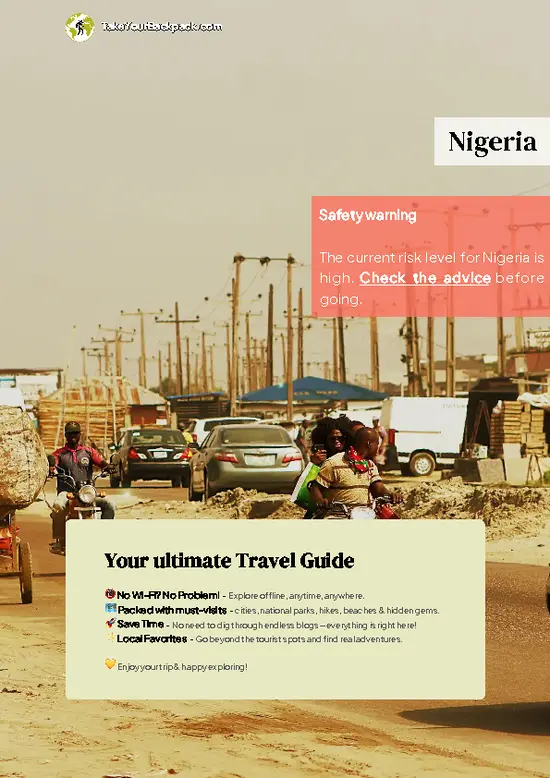
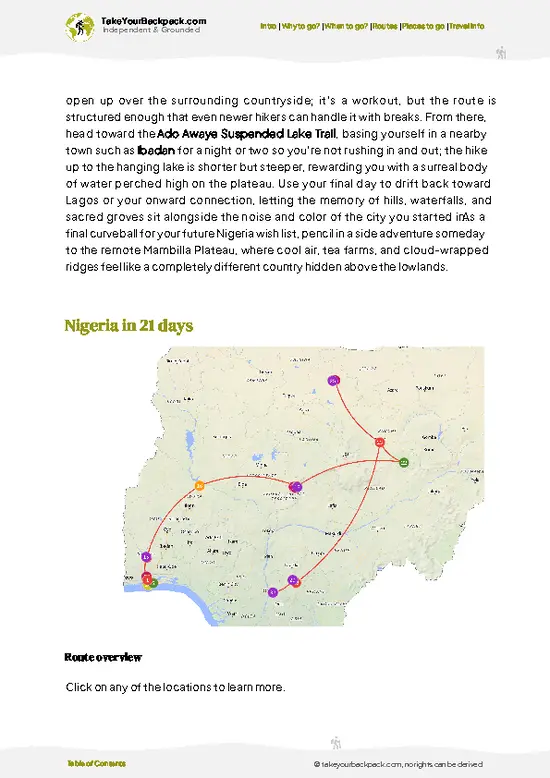
example page 0 from our offline Travel Guide for Nigeria
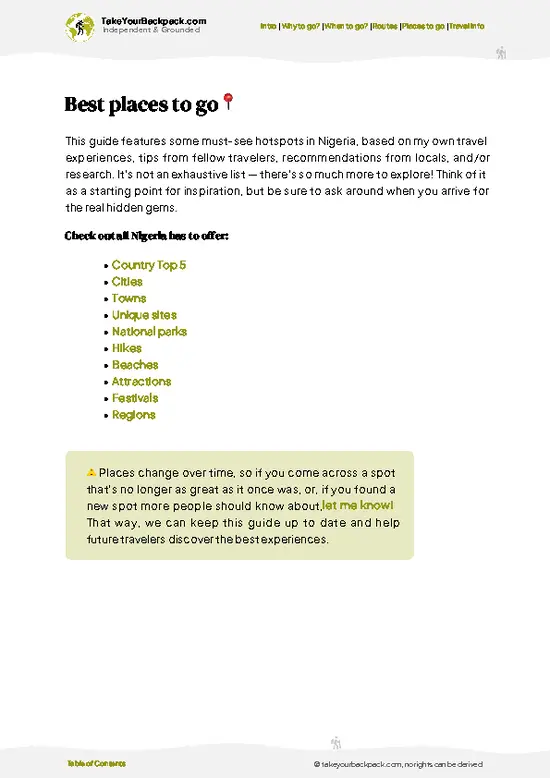
example page 1 from our offline Travel Guide for Nigeria
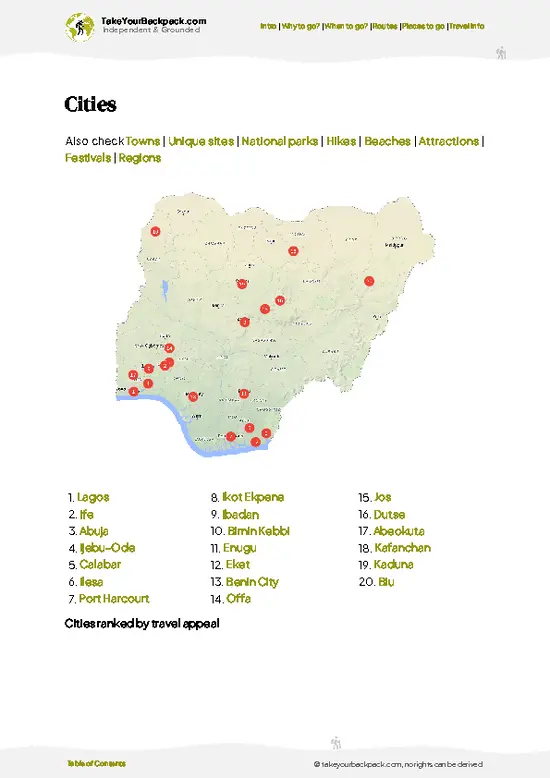
example page 2 from our offline Travel Guide for Nigeria
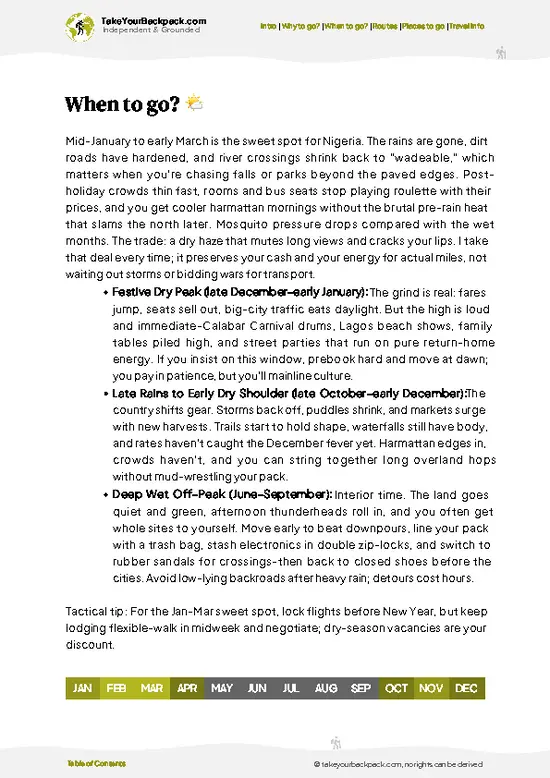
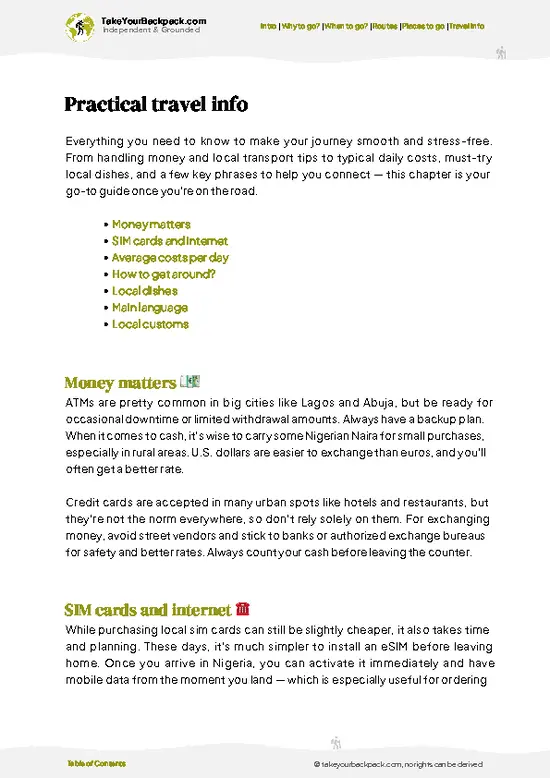
example page 3 from our offline Travel Guide for Nigeria
example page 4 from our offline Travel Guide for Nigeria
example page 5 from our offline Travel Guide for Nigeria
example page 6 from our offline Travel Guide for Nigeria
example page 7 from our offline Travel Guide for Nigeria
The digital guide (332 pages) contains:
89 highlights, ranked by travel appeal
Optimized 7, 14 & 21-day travel routes
Cities, national parks, landmarks, beaches
How to get around
Offline-friendly for travel without Wi-Fi
👉 Click to see all 30+ guide features

📅 Plan smarter in minutes, not weeks
Month by month travel advice
Festivals & national holidays
Budget expectations

🗺️ Go to the right places, skip the overrated ones
Honest pros & cons of destinations
Top hikes, parks & viewpoints
Lesser-known places most travelers miss
Clear “worth it vs skip it” guidance

🛏️ Travel smoothly without rookie mistakes
Best areas to stay
Transport systems explained simply
Common scams & safety advice
SIM cards, money & practical tips

🌍 Understand the country, not just visit it
Culture & traditions
52 Essential phrases & customs
Festivals worth planning around
Traveler-friendly historical context
Insights that make places more meaningful

📱 Built for real travel conditions
Fully downloadable PDF
Works completely offline
Optimized for phone use
Useful in remote areas & buses
Everything in one place
Save weeks of stressful planning
Get instant access to your full guide. 30‑day money-back guarantee.


By proceeding you agree to our terms.
Sent to your inbox immediately after payment • 100% Secure Checkout
Best Backpacking Travel Advisor 2025 tourism awardBest Backpacking
Travel Advisor
2025
What others say about Take Your Backpack Guides:
⭐⭐⭐⭐⭐
Fantastic, amazing amount of information!
⭐⭐⭐⭐⭐
My goodness this is amazing, it's what I've been looking for hats off too you!
⭐⭐⭐⭐⭐
I think this is absolutely BRILLIANT
⭐⭐⭐⭐
Very complete and informative. It's still missing places, but I gotta to commend you
⭐⭐⭐⭐⭐
This is truly amazing, thank you, can't wait to explore it with my kids!
⭐⭐⭐⭐⭐
Awesome resource, thank you!
⭐⭐⭐⭐⭐
This is amazing! Can't wait to explore the ones I haven't seen
⭐⭐⭐⭐
I love this! Well done, great idea.
⭐⭐⭐⭐⭐
Thanks for taking the time to make this gem!
⭐⭐⭐⭐⭐
This might be the best website I've ever seen.
⭐⭐⭐⭐⭐
Congratulations, and thank you so much for your work; it's incredibly valuable.
⭐⭐⭐⭐
In all seriousness I think you did a great job pointing out the important spots
⭐⭐⭐⭐⭐
10/10 very good
⭐⭐⭐⭐⭐
As someone who's only just starting to visit regularly this is awesome, thank you.
⭐⭐⭐⭐
Thank you very much! I'm going to visit my dad, it's going to be very useful!
⭐⭐⭐⭐⭐
This is really cool! We'll be travelling for the first time and this definitely come in handy.
⭐⭐⭐⭐⭐
You are now our minister of culture, congratulations 👨‍💼
⭐⭐⭐⭐⭐
Just wanted to tell you that this is a pearl! Going to follow your recommendations.
⭐⭐⭐⭐⭐
This is so cool. I'll definitely be using the resource for my travels soon.
⭐⭐⭐⭐⭐
This is very impressive! Good work.
⭐⭐⭐⭐⭐
This is an amazing and informative site. Very well done!

🛏️ Where to stay?Where to Stay: Nigeria Edition

Yes — hostels and budget accommodation are available in Nigeria, concentrated in major cities like Lagos (Victoria Island, Lekki, Yaba, Ikeja), Abuja (Wuse, Garki) and Port Harcourt (GRA/Diobu).
Victoria Island and Lekki put you close to nightlife, beaches and business hubs but are pricier and suffer heavy traffic; Ikeja and Yaba offer cheaper stays with better transit links yet feel busier and less polished.
Wuse and Garki in Abuja are central, relatively secure and convenient for markets and government sites but quiet after dark, while Port Harcourt’s GRA is calmer and safer than industrial areas though budget options are scarcer and expect security checkpoints and fewer late‑night services. … read more 👉
Yes — hostels and budget accommodation are available in Nigeria, concentrated in major cities like Lagos (Victoria Island, Lekki, Yaba, Ikeja), Abuja (Wuse, Garki) and Port Harcourt (GRA/Diobu).
Victoria Island and Lekki put you close to nightlife, beaches and business hubs but are pricier and suffer heavy traffic; Ikeja and Yaba offer cheaper stays with better transit links yet feel busier and less polished.
Wuse and Garki in Abuja are central, relatively secure and convenient for markets and government sites but quiet after dark, while Port Harcourt’s GRA is calmer and safer than industrial areas though budget options are scarcer and expect security checkpoints and fewer late‑night services.

If you enjoy meeting fellow travelers, consider choosing hostels with high ratings for atmosphere. On the other hand, if you prefer having your own space, a hotel might be a better option.

NigeriaExplore Beyond This Category

👋 Meet the founderWho’s Behind Take Your Backpack?

Johan, backpacker and founder of TakeYourBackpackHi, I’m Johan (Netherlands 🇳🇱), the creator of TakeYourBackpack. Over the past decade, I’ve backpacked through 80+ countries across six continents, gaining extensive experience with independent travel, long-term trips, and overland routes.

This site is built on a combination of firsthand travel experience and carefully curated insights from other backpackers. Many guides are based on places I’ve personally visited, while others bring together tips, observations, and practical advice shared by trusted travelers I’ve met along the way.

The goal is to provide realistic, experience-driven guidance — not generic itineraries — so you can explore destinations with better context, clearer expectations, and more confidence.

Get full Nigeria guide •
Instant download • 89 highlights • Full Offline guide