
×

Nigeria🇳🇬 | festivalsIri Ji Festivalyam harvest, Igbo thanksgiving, communal feasts | things to do and best time to go

Explore Nwafor FestivalExplore Olojo Festival

Backpacking in Iri Ji
👀 For curious travelersfestival ranked #15
By Johan Kruseman 🇳🇱 | Updated May 29, 2026

A decade ago, Iri Ji Festival was a raw, communal surge—elders pounding yams, kids darting through smoky air, and drums that rattled your bones. Today, the festival in Igbo heartland, southeastern Nigeria, still pulses with ancestral pride, but you’ll dodge selfie sticks as often as you’ll catch the hypnotic thump of Igbo highlife and masquerade parades. Backpackers find a crowd that’s half local, half diaspora, all hungry for connection. The vibe is electric but grounded—expect a day or two of ritual, feasting, and music. Go for the living tradition, not for curated spectacle.

Discover everything you want to know in the 📖 Nigeria Travel Guide.
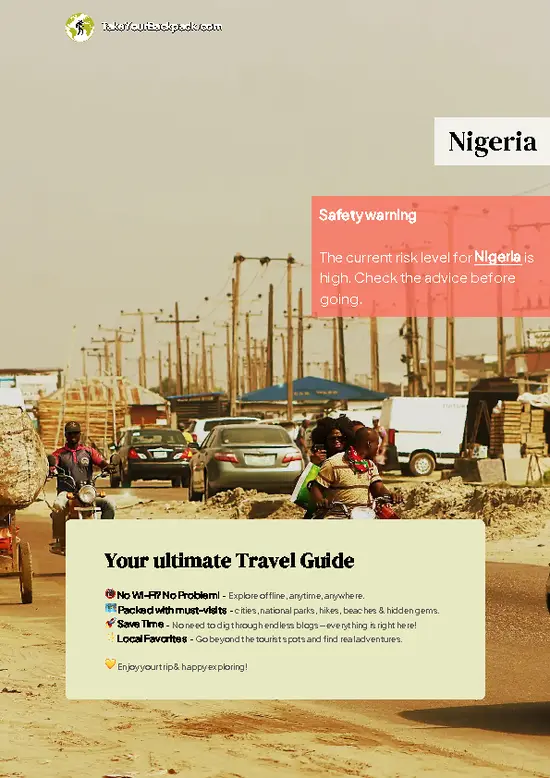
Safety warning

The current risk level for Nigeria is high. Check the advice before going.


Get your Nigeria guide
89 ranked highlights, routes & tips, works offline (332 pages)
Loading the map 🌍
CLICK TO FILTER
cities
towns
landmarks
national parks
hikes
beaches
attractions
festivals
regions
SHOW COUNTRY’S BESTSHOW ALL

✨ Why go?
Ranked #15 festival in Nigeria
What sets this place apart

Backpackers flock to the Iri Ji Festival in Nigeria for a burst of social energy and a taste of temporary community. This vibrant celebration of the new yam harvest isn’t just a feast; it’s a deep dive into local culture, where you’ll dance, feast, and connect with the heart of the people.

Planning your route around this festival means you’re not just visiting; you’re immersing yourself in a living tradition. It’s an affordable experience compared to similar events worldwide, allowing you to stretch your budget while maximizing your adventure. Plus, it fits seamlessly into longer travel plans, acting as a cultural anchor that enriches your journey. Don’t miss the chance to experience this electrifying atmosphere; it’s where the real stories unfold.
Want to include Iri Ji Festival in your Nigeria route?
Create a personalized Nigeria itinerary that includes Iri Ji Festival and the places that fit your trip — based on your travel style, budget, and available time. Get your route in seconds.

Generate my trip

💡 HighlightsPlaces and moments you shouldn't skip

  1. First-Yam (Iwa-Ji) Ceremonies — The heart of Iri Ji: elders and chiefs present the season’s first yams to the gods and ancestors, then break the first tuber as a communal blessing. It’s a quiet-but-powerful ritual that marks renewal — you can feel agriculture, spirituality and local authority all wrapped into one simple act.
  2. Mmanwu — Masquerades and Costumed Pageantry — Masked performers pop up everywhere: flamboyant, eerie, funny or fiercely athletic, with flamboyant masks and dramatic dances. The whole town turns into a stage; these performances enforce tradition, tell stories and keep you glued to the edge of the crowd.
  3. Drums, Call-and-Response Songs and Traditional Dance — Live drumming, flutes and vocal choirs create relentless, contagious rhythms that pull everyone into the dance.
read more 👉
  1. First-Yam (Iwa-Ji) Ceremonies — The heart of Iri Ji: elders and chiefs present the season’s first yams to the gods and ancestors, then break the first tuber as a communal blessing. It’s a quiet-but-powerful ritual that marks renewal — you can feel agriculture, spirituality and local authority all wrapped into one simple act.
  2. Mmanwu — Masquerades and Costumed Pageantry — Masked performers pop up everywhere: flamboyant, eerie, funny or fiercely athletic, with flamboyant masks and dramatic dances. The whole town turns into a stage; these performances enforce tradition, tell stories and keep you glued to the edge of the crowd.
  3. Drums, Call-and-Response Songs and Traditional Dance — Live drumming, flutes and vocal choirs create relentless, contagious rhythms that pull everyone into the dance. The music is raw and communal — expect spontaneous dance circles, skilled drummers showing off, and plenty of chances to join in.
  4. Yam Exhibitions, Cooking Contests and Feasts — From displays of monster yams to competitions for the best pounded-yam or creative yam dishes, food is central. This is where agricultural pride meets pure appetite: taste different varieties, swap recipes with locals, and come hungry.
  5. Age-grade Parades, Blessings and Community Rituals — Young and old march in age-grade formations, elders offer blessings, and cacao/kola nut ceremonies smooth social ties. These moments make the festival as much about community repair and identity as they are about celebration — a real window into how the society holds itself together.
Spotted a mistake or missing something? Contact us.

Things to do near Iri Ji Festival

Ratings based on Tripadvisor reviews. When you book through this link, you support our work at no extra cost to you.

🌤️ When to go?When is the celebration of Iri Ji Festival?


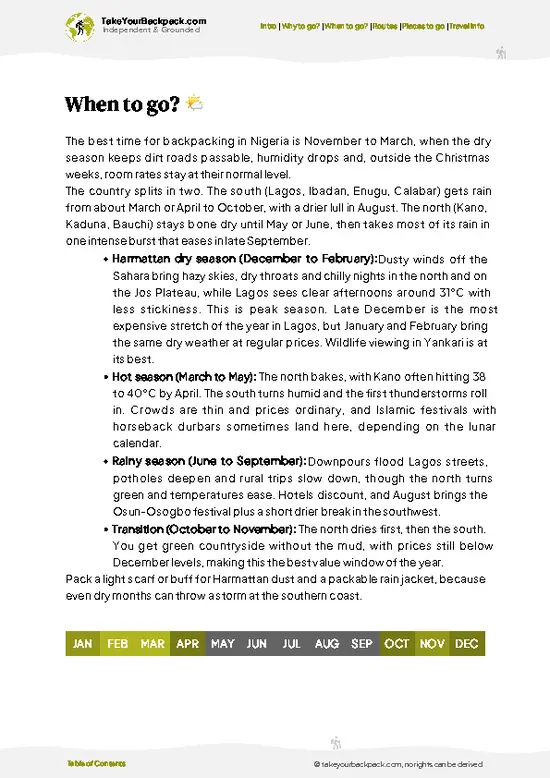
  • Topic: Weather – The Iri Ji Festival thrives in the dry season, typically between November and February. Expect clear skies and minimal rain, which means fewer soggy boots and more time to soak in the festivities without weather interruptions.

  • Topic: Temperature – Daytime temps hover around 28-32°C (82-90°F), perfect for energetic dancing and outdoor celebrations. Nights cool down to about 20°C (68°F), so pack a light layer for comfort after sunset.

  • Topic: Daylight Hours – With roughly 11-12 hours of daylight, you get ample time to explore beyond the festival grounds. Early mornings and late afternoons offer softer light and cooler temps for trekking or village visits.

  • Topic: Crowds – Peak festival days draw locals and tourists alike, so expect lively crowds. Arriving just before
read more 👉

  • Topic: Weather – The Iri Ji Festival thrives in the dry season, typically between November and February. Expect clear skies and minimal rain, which means fewer soggy boots and more time to soak in the festivities without weather interruptions.

  • Topic: Temperature – Daytime temps hover around 28-32°C (82-90°F), perfect for energetic dancing and outdoor celebrations. Nights cool down to about 20°C (68°F), so pack a light layer for comfort after sunset.

  • Topic: Daylight Hours – With roughly 11-12 hours of daylight, you get ample time to explore beyond the festival grounds. Early mornings and late afternoons offer softer light and cooler temps for trekking or village visits.

  • Topic: Crowds – Peak festival days draw locals and tourists alike, so expect lively crowds. Arriving just before the main events lets you settle in and avoid the crush, preserving your energy for the big moments.

  • Topic: Seasonal Activities – The festival coincides with the yam harvest, so you’ll witness authentic agricultural rituals and feasts. This timing is non-negotiable if you want the full cultural immersion.

  • Topic: Price Fluctuations – Accommodation and transport costs spike during the festival’s peak. Booking early or arriving slightly off-peak can save you cash without missing the core experience.


Pro-tip: Time your visit to catch the dry season’s start—drier trails, cooler nights, and the freshest yam harvest make every step and bite count.


source: climatestotravel.comJANJanuary: excellent for travelingFEBFebruary: not recommended for travelingMARMarch: not recommended for travelingAPRApril: not recommended for travelingMAYMay: not recommended for travelingJUNJune: not recommended for travelingJULJuly: not recommended for travelingAUGAugust: not recommended for travelingSEPSeptember: not recommended for travelingOCTOctober: not recommended for travelingNOVNovember: not recommended for travelingDECDecember: not recommended for traveling

✈️ The backpacker research shortcutNigeria Travel Guide

An offline-friendly backpacking guide with optimized travel routes, ranked highlights, transport advice, and the best areas to stay.
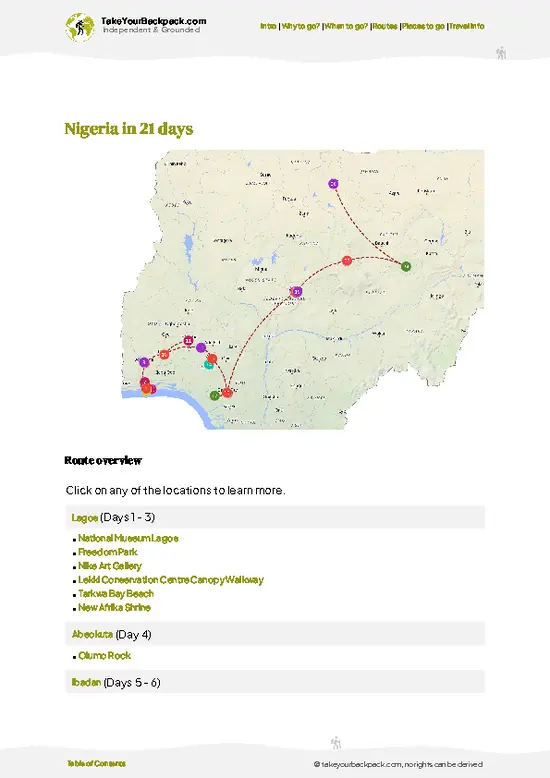
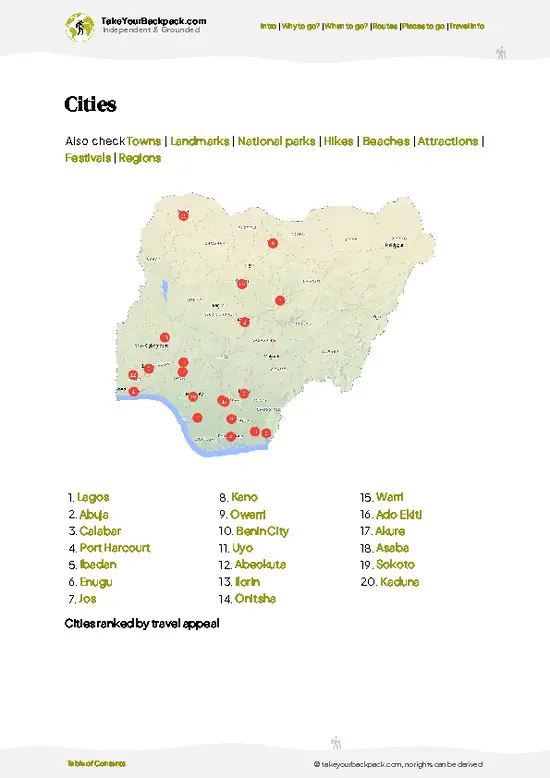
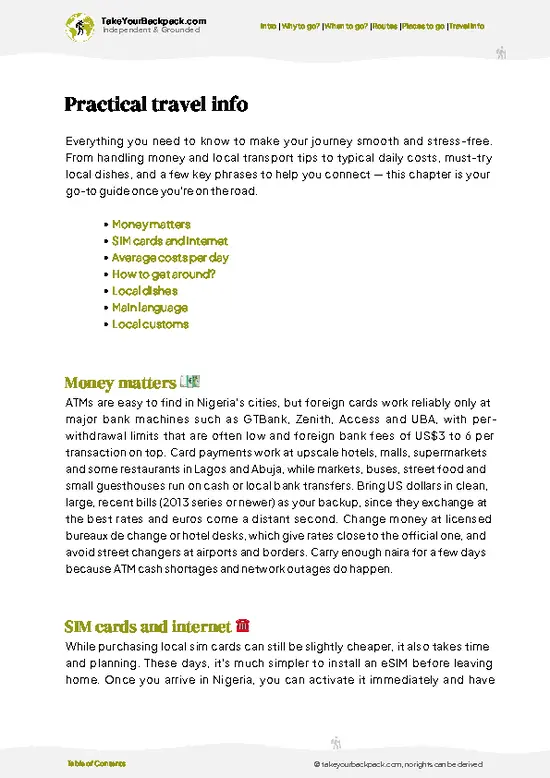
example page 0 from our offline Travel Guide for Nigeria
example page 1 from our offline Travel Guide for Nigeria
example page 2 from our offline Travel Guide for Nigeria
example page 3 from our offline Travel Guide for Nigeria
example page 4 from our offline Travel Guide for Nigeria
example page 5 from our offline Travel Guide for Nigeria
example page 6 from our offline Travel Guide for Nigeria
example page 7 from our offline Travel Guide for Nigeria
The digital guide (332 pages) contains:
89 highlights, ranked by travel appeal
Optimized 7, 14 & 21-day travel routes
Cities, national parks, landmarks, beaches
How to get around
Offline-friendly for travel without Wi-Fi
👉 Click to see all 30+ guide features

📅 Plan smarter in minutes, not weeks
Month by month travel advice
Festivals & national holidays
Budget expectations

🗺️ Go to the right places, skip the overrated ones
Honest pros & cons of destinations
Top hikes, parks & viewpoints
Lesser-known places most travelers miss
Clear “worth it vs skip it” guidance

🛏️ Travel smoothly without rookie mistakes
Best areas to stay
Transport systems explained simply
Common scams & safety advice
SIM cards, money & practical tips

🌍 Understand the country, not just visit it
Culture & traditions
52 Essential phrases & customs
Festivals worth planning around
Traveler-friendly historical context
Insights that make places more meaningful

📱 Built for real travel conditions
Fully downloadable PDF
Works completely offline
Optimized for phone use
Useful in remote areas & buses
Everything in one place
Save weeks of stressful planning
Get instant access to your full guide. 30‑day money-back guarantee.


By proceeding you agree to our terms.
Sent to your inbox immediately after payment • 100% Secure Checkout
Best Backpacking Travel Advisor 2025 tourism awardBest Backpacking
Travel Advisor
2025
What others say about Take Your Backpack Guides:
⭐⭐⭐⭐⭐
Fantastic, amazing amount of information!
⭐⭐⭐⭐⭐
My goodness this is amazing, it's what I've been looking for hats off too you!
⭐⭐⭐⭐⭐
I think this is absolutely BRILLIANT
⭐⭐⭐⭐
Very complete and informative. It's still missing places, but I gotta to commend you
⭐⭐⭐⭐⭐
This is truly amazing, thank you, can't wait to explore it with my kids!
⭐⭐⭐⭐⭐
Awesome resource, thank you!
⭐⭐⭐⭐⭐
This is amazing! Can't wait to explore the ones I haven't seen
⭐⭐⭐⭐
I love this! Well done, great idea.
⭐⭐⭐⭐⭐
Thanks for taking the time to make this gem!
⭐⭐⭐⭐⭐
This might be the best website I've ever seen.
⭐⭐⭐⭐⭐
Congratulations, and thank you so much for your work; it's incredibly valuable.
⭐⭐⭐⭐
In all seriousness I think you did a great job pointing out the important spots
⭐⭐⭐⭐⭐
10/10 very good
⭐⭐⭐⭐⭐
As someone who's only just starting to visit regularly this is awesome, thank you.
⭐⭐⭐⭐
Thank you very much! I'm going to visit my dad, it's going to be very useful!
⭐⭐⭐⭐⭐
This is really cool! We'll be travelling for the first time and this definitely come in handy.
⭐⭐⭐⭐⭐
You are now our minister of culture, congratulations 👨‍💼
⭐⭐⭐⭐⭐
Just wanted to tell you that this is a pearl! Going to follow your recommendations.
⭐⭐⭐⭐⭐
This is so cool. I'll definitely be using the resource for my travels soon.
⭐⭐⭐⭐⭐
This is very impressive! Good work.
⭐⭐⭐⭐⭐
This is an amazing and informative site. Very well done!

🛏️ Where to stay?Where staying makes the most sense

For the Iri Ji Festival in Nigeria, head to the heart of Umuahia. This area buzzes with energy, making it a prime spot for backpackers. You’ll find a mix of budget-friendly guesthouses and communal spaces where you can swap stories with fellow travelers.

Stay close to the festival grounds to soak in the atmosphere without the hassle of long commutes. The local markets nearby are a feast for the senses, offering everything from street food to handmade crafts.

Safety is key, so stick to well-lit areas and travel in groups when possible. The vibrant community here welcomes visitors, creating … read more 👉
For the Iri Ji Festival in Nigeria, head to the heart of Umuahia. This area buzzes with energy, making it a prime spot for backpackers. You’ll find a mix of budget-friendly guesthouses and communal spaces where you can swap stories with fellow travelers.

Stay close to the festival grounds to soak in the atmosphere without the hassle of long commutes. The local markets nearby are a feast for the senses, offering everything from street food to handmade crafts.

Safety is key, so stick to well-lit areas and travel in groups when possible. The vibrant community here welcomes visitors, creating a social vibe that’s perfect for solo adventurers. Embrace the challenge of navigating local customs and languages; it’s all part of the experience. This is where your journey transforms into something truly memorable.

👛 Costs (as of 19 February 2026)Travel costs and budget guide for Iri Ji

The Iri Ji Festival in Nigeria is a vibrant celebration of yam harvest, but navigating the costs can be tricky. Here’s a breakdown to keep your budget in check and your energy focused on the festivities.
  • Festival Tickets: Expect to pay around $5 to $15 for entry. Prices can vary based on the day and events you want to attend. Some special performances might cost more, so keep an eye out for those.
  • Accommodation: Options range from budget hostels at about $10 to $30 per night to mid-range hotels costing $40 to $100. Booking in advance is crucial, especially during the festival, as places fill up fast.
  • Local Transport: Budget around $5 to $20 for local transport. Taxis and motorbike taxis (okadas) are common, but negotiate fares beforehand. Public transport is cheaper, but can be less reliable.
read more 👉
The Iri Ji Festival in Nigeria is a vibrant celebration of yam harvest, but navigating the costs can be tricky. Here’s a breakdown to keep your budget in check and your energy focused on the festivities.
  • Festival Tickets: Expect to pay around $5 to $15 for entry. Prices can vary based on the day and events you want to attend. Some special performances might cost more, so keep an eye out for those.
  • Accommodation: Options range from budget hostels at about $10 to $30 per night to mid-range hotels costing $40 to $100. Booking in advance is crucial, especially during the festival, as places fill up fast.
  • Local Transport: Budget around $5 to $20 for local transport. Taxis and motorbike taxis (okadas) are common, but negotiate fares beforehand. Public transport is cheaper, but can be less reliable.
  • Food & Drinks: Street food is your best friend here. You can enjoy local dishes for as little as $2 to $5 per meal. Restaurants will set you back $10 to $20 for a more substantial meal. Don’t forget to try the local drinks, which are usually affordable.
  • Miscellaneous Expenses: Set aside $10 to $30 for souvenirs, tips, or unexpected costs. This cushion will help you enjoy spontaneous experiences without stress.

Being aware of these costs will help you navigate the festival with confidence. Focus on the experience, not the expenses.


source: nigeriatravelguide.com
⚠️ Prices can change and everyone travels differently, so take this as a rough guide. Hope it helps you plan your adventure!

🍲 FoodLocal Flavors for Backpackers

At the Iri Ji Festival in Nigeria, food is a vibrant celebration of culture. You’ll find yam porridge bubbling away, a staple that embodies the festival’s spirit. Don’t miss the peppered goat meat skewers sizzling on open flames; they’re a must-try for that smoky, spicy kick.

Stalls overflow with local specialties like jollof rice and pounded yam, each bite a testament to the region’s culinary heritage. For drinks, grab a cup of zobo—a refreshing hibiscus drink that’s both tart and sweet.

Embrace the sharing culture here; it’s common to swap bites with fellow festival-goers. Lines can get long, so be patient and enjoy the buzz around you. Bring cash; many vendors don’t accept cards. Serving sizes are generous, so pace yourself—there’s plenty to savor!

Other Nigerian festivals near Iri Ji

Explore more nearby:

  • Eyo—white-clad masqueraders, Lagos Island, staff procession| 1 km away
  • Igbo New Yam Festival—yam offerings, Igbo elders, harvest dances| 9 km away
  • Felabration—Fela Kuti legacy, Afrobeat concerts, New Afrika Shrine| 20 km away

💡 Not sure where to go next?
Create a personalized itinerary for Nigeria including Iri Ji and the places that fit your trip.

Generate my itinerary

👉 Discover all festivals

Or checkout all Nigeria has to offer (think cities, towns, villages, national parks, hikes, beaches, festivals)
Country photo of Nigeria

We 💚 feedbackFinal thoughts on celebrating the Iri Ji

The Iri Ji Festival is electric. You’ll feel the pulse of tradition in every drumbeat and dance. But here’s the kicker: don’t underestimate the heat. Hydrate like it’s your job. The best surprise? The communal spirit—strangers become family over bowls of yam. Embrace it all, but keep your energy for the moments that matter.

✍️ Help improve this page!
The information on this page is based on in-depth research, insights shared by experienced travelers, and feedback from the local travel community in Nigeria. While every effort is made to keep the information accurate and current, conditions can change — so if you spot anything incorrect or outdated, please get in touch.


🙋‍♂️ Give feedback

👋 Meet the founderWho’s Behind Take Your Backpack?

Johan, backpacker and founder of TakeYourBackpackHi, I’m Johan (Netherlands 🇳🇱), the creator of TakeYourBackpack. Over the past decade, I’ve backpacked through 80+ countries across six continents, gaining extensive experience with independent travel, long-term trips, and overland routes.

This site is built on a combination of firsthand travel experience and carefully curated insights from other backpackers. Many guides are based on places I’ve personally visited, while others bring together tips, observations, and practical advice shared by trusted travelers I’ve met along the way.

The goal is to provide realistic, experience-driven guidance — not generic itineraries — so you can explore destinations with better context, clearer expectations, and more confidence.

Get full Nigeria guide •
Instant download • 89 highlights • Full Offline guide