×

Nigeria🇳🇬 | attractionsNational Museum of Colonial Historycolonial documents, period furniture, independence artifacts | things to do and best time to go

Explore Nike Art CentreExplore Atican Beach

Backpacking in National Museum of Colonial History
👀 For curious travelersattraction ranked #21
By Johan Kruseman 🇳🇱 | Updated May 9, 2026

Let’s kill the fantasy right away: the National Museum of Colonial History is not some air-conditioned Instagram palace with velvet ropes and blockbuster crowds. You won’t find selfie-stick mobs or a gift shop hawking “authentic” colonial hats. Tucked in Aba, southeastern Nigeria, this museum is raw, a little scruffy, and refreshingly honest—more faded files and creaky floorboards than polished dioramas. For backpackers, it’s a reality check and a rare window into the machinery of colonial rule, with artifacts and documents that hit harder than any glossy display. The upside? You’ll likely have the place to yourself, and the entry fee is pocket change compared to the big-ticket sites in Lagos or Abuja. The downside: don’t expect slick signage, air-con, or a curated narrative. This is history in the rough—sometimes frustrating, always real. If you want a museum that feels lived-in and unvarnished, not a tourist conveyor belt, this is where Nigeria’s past gets personal.

Discover everything you want to know in the 📖 Nigeria Travel Guide.
Safety warning

The current risk level for Nigeria is high. Check the advice before going.


Get your Nigeria guide
89 ranked highlights, routes & tips, works offline (332 pages)
Loading the map 🌍
CLICK TO FILTER
cities
towns
landmarks
national parks
hikes
beaches
attractions
festivals
regions
SHOW COUNTRY’S BESTSHOW ALL

✨ Why go?
Ranked #21 attraction in Nigeria
What makes it a must-see attraction

The National Museum of Colonial History in Nigeria isn’t just another stop on the tourist checklist—it’s a raw, unfiltered dive into the tangled roots of a nation still wrestling with its past. Sure, it’s not a quiet, crowd-free sanctuary. Expect groups, school trips, and the occasional selfie stick brigade. But that’s part of the deal when you’re standing in a place that holds the weight of centuries in its walls. This museum isn’t about pretty displays; it’s about confronting the gritty reality of colonialism’s impact on Nigeria’s identity, economy, and culture. The exhibits don’t sugarcoat the brutality or the resilience—they lay it all out, from the slave trade to independence struggles, with artifacts and stories that hit hard. For backpackers, it’s a milestone on the route through Nigeria’s … read more 👉
The National Museum of Colonial History in Nigeria isn’t just another stop on the tourist checklist—it’s a raw, unfiltered dive into the tangled roots of a nation still wrestling with its past. Sure, it’s not a quiet, crowd-free sanctuary. Expect groups, school trips, and the occasional selfie stick brigade. But that’s part of the deal when you’re standing in a place that holds the weight of centuries in its walls. This museum isn’t about pretty displays; it’s about confronting the gritty reality of colonialism’s impact on Nigeria’s identity, economy, and culture. The exhibits don’t sugarcoat the brutality or the resilience—they lay it all out, from the slave trade to independence struggles, with artifacts and stories that hit hard. For backpackers, it’s a milestone on the route through Nigeria’s complex history, a place where you can pause and really grasp the layers beneath the surface. The effort to navigate Lagos’s traffic and the admission fee might sting a bit, but the payoff is a deeper understanding that no Instagram post can capture. This museum is a checkpoint for anyone serious about seeing Nigeria beyond the postcard—raw, real, and relentlessly honest.
Want to include National Museum of Colonial History in your Nigeria route?
Create a personalized Nigeria itinerary that includes National Museum of Colonial History and the places that fit your trip — based on your travel style, budget, and available time. Get your route in seconds.

Generate my trip

💡 HighlightsPlaces and moments you shouldn't skip

The Slave Trade Gallery
Let’s cut through the brochure gloss: this is the room that hits you in the gut. The museum doesn’t sugarcoat Nigeria’s role in the transatlantic slave trade. You’ll see actual shackles, trade manifests, and hauntingly detailed dioramas. It’s not comfortable, and it shouldn’t be. The power here is in the rawness—no Instagram filter can soften the reality of what happened. If you want to understand the real cost of colonialism, this is where you start. It’s not entertainment, but it’s unforgettable in the way a punch to the chest is unforgettable.


Traditional Nigerian Artifacts
Here’s where the museum quietly flexes. You’ll find ceremonial masks, intricately carved stools, and textiles that predate colonial rule by centuries. These aren’t just pretty objects—they’re … read more 👉
The Slave Trade Gallery
Let’s cut through the brochure gloss: this is the room that hits you in the gut. The museum doesn’t sugarcoat Nigeria’s role in the transatlantic slave trade. You’ll see actual shackles, trade manifests, and hauntingly detailed dioramas. It’s not comfortable, and it shouldn’t be. The power here is in the rawness—no Instagram filter can soften the reality of what happened. If you want to understand the real cost of colonialism, this is where you start. It’s not entertainment, but it’s unforgettable in the way a punch to the chest is unforgettable.


Traditional Nigerian Artifacts
Here’s where the museum quietly flexes. You’ll find ceremonial masks, intricately carved stools, and textiles that predate colonial rule by centuries. These aren’t just pretty objects—they’re proof that Nigeria’s story didn’t begin with colonization. The craftsmanship is wild: think Benin bronzes with a side of Yoruba beadwork. If you’re the type who thinks “museum” means “dusty old stuff,” this collection will make you eat your words. It’s a crash course in pre-colonial swagger.


Colonial-Era Documents and Maps
This is where the museum gets nerdy in the best way. You’ll see original treaties, decrees, and maps that look like they were drawn by someone who’d never seen a satellite image. The handwriting alone is worth a stare—impossibly elegant, yet loaded with the arrogance of empire. These papers are the receipts of history. They show how borders were invented, not discovered. If you want to see how a continent was carved up with a pen, not a sword, linger here.


Interactive Storytelling Sessions
This isn’t your average “press a button, hear a fact” setup. The museum sometimes brings in local historians or elders who tell stories you won’t find in any textbook. These sessions are unscripted, sometimes fiery, and always personal. You’ll hear about resistance, survival, and the weird, everyday ways people navigated colonial rule. It’s living history—messy, opinionated, and way more memorable than any plaque on the wall.


The Architecture Itself
Don’t skip the building. The museum is housed in a colonial-era structure that’s both beautiful and loaded with contradictions. The high ceilings and thick walls were built to keep out the heat—and, symbolically, to keep out the locals. Walking these halls, you feel the weight of history pressing in from all sides. It’s a place where the walls really do talk, if you’re willing to listen. The building is a relic, a warning, and a work of art all at once.
Spotted a mistake or missing something? Contact us.

Things to do near National Museum of Colonial History

Ratings based on Tripadvisor reviews. When you book through this link, you support our work at no extra cost to you.

🌤️ When to go?Seasonal considerations and timing


  • Topic: Weather and Temperature – The best time to visit the National Museum of Colonial History in Nigeria is during the dry season, roughly from November to March. Expect temperatures between 25°C and 30°C (77°F to 86°F), which is far more comfortable than the hot, sticky wet season months of April to October when humidity spikes and rain can disrupt your plans.

  • Topic: Daylight Hours – Nigeria enjoys fairly consistent daylight year-round, with roughly 11 to 12 hours of daylight daily. However, during the dry season, clearer skies mean more reliable daylight for exploring without the threat of sudden downpours cutting your visit short.

  • Topic: Crowds – Tourist crowds peak during the dry season, especially December and January, coinciding with holiday travel. If you want fewer people
read more 👉

  • Topic: Weather and Temperature – The best time to visit the National Museum of Colonial History in Nigeria is during the dry season, roughly from November to March. Expect temperatures between 25°C and 30°C (77°F to 86°F), which is far more comfortable than the hot, sticky wet season months of April to October when humidity spikes and rain can disrupt your plans.

  • Topic: Daylight Hours – Nigeria enjoys fairly consistent daylight year-round, with roughly 11 to 12 hours of daylight daily. However, during the dry season, clearer skies mean more reliable daylight for exploring without the threat of sudden downpours cutting your visit short.

  • Topic: Crowds – Tourist crowds peak during the dry season, especially December and January, coinciding with holiday travel. If you want fewer people around the exhibits, aim for November or February when the museum is less packed but the weather remains pleasant.

  • Topic: Seasonal Activities – The dry season also aligns with local festivals and cultural events that can enrich your visit, offering a deeper dive into Nigeria’s colonial history through community storytelling and performances often absent in the rainy months.

  • Topic: Price Fluctuations – Expect higher accommodation and travel costs during the dry season, particularly December. Visiting just before or after peak months can save you money without sacrificing the quality of your experience.


Pro-tip: Plan your visit for November or February to dodge the crowds and rain, enjoy comfortable temperatures, and catch authentic cultural moments without the premium price tag.


source: climatestotravel.comJANJanuary: highly recommended for travelingFEBFebruary: excellent for travelingMARMarch: highly recommended for travelingAPRApril: fair for travelingMAYMay: fair for travelingJUNJune: below average for travelingJULJuly: below average for travelingAUGAugust: below average for travelingSEPSeptember: fair for travelingOCTOctober: fair for travelingNOVNovember: excellent for travelingDECDecember: good for traveling
when-to-go

✈️ The backpacker research shortcutNigeria Travel Guide

An offline-friendly backpacking guide with optimized travel routes, ranked highlights, transport advice, and the best areas to stay.
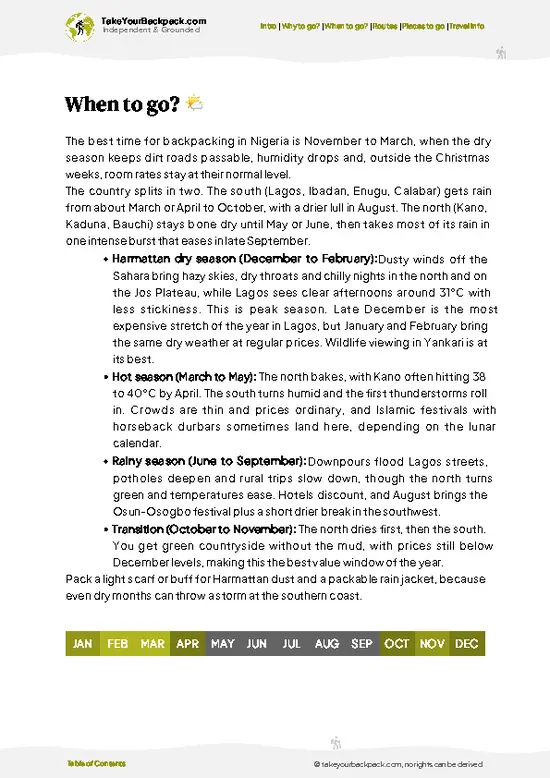
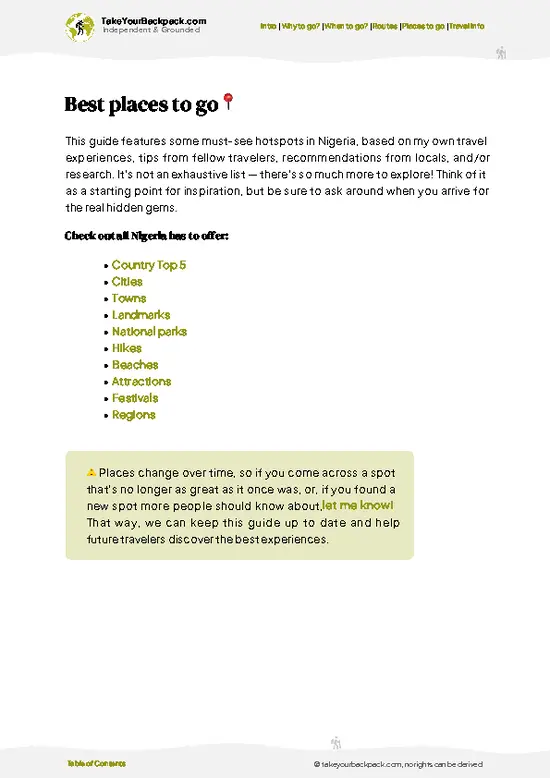
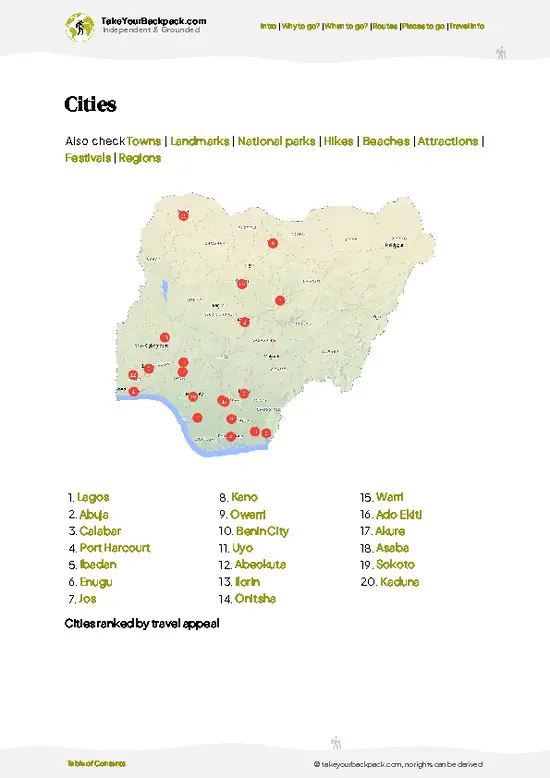
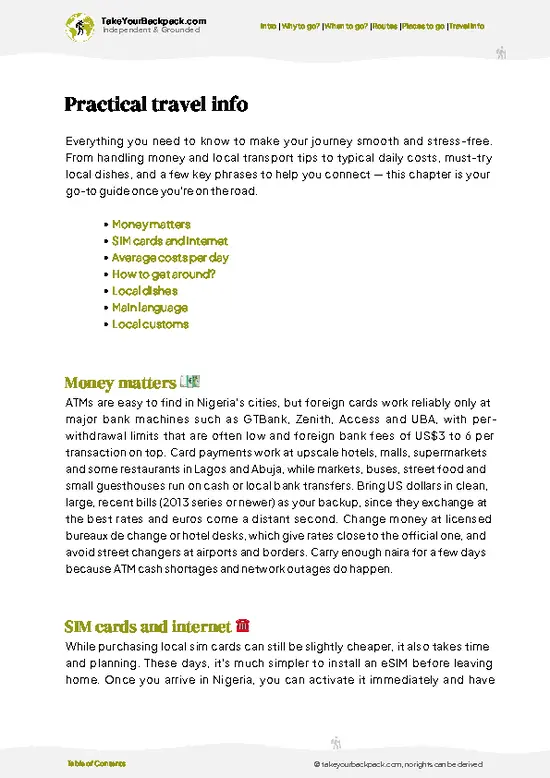
example page 0 from our offline Travel Guide for Nigeriaexample page 1 from our offline Travel Guide for Nigeriaexample page 2 from our offline Travel Guide for Nigeriaexample page 3 from our offline Travel Guide for Nigeriaexample page 4 from our offline Travel Guide for Nigeriaexample page 5 from our offline Travel Guide for Nigeriaexample page 6 from our offline Travel Guide for Nigeriaexample page 7 from our offline Travel Guide for Nigeria
The digital guide (332 pages) contains:
89 highlights, ranked by travel appeal
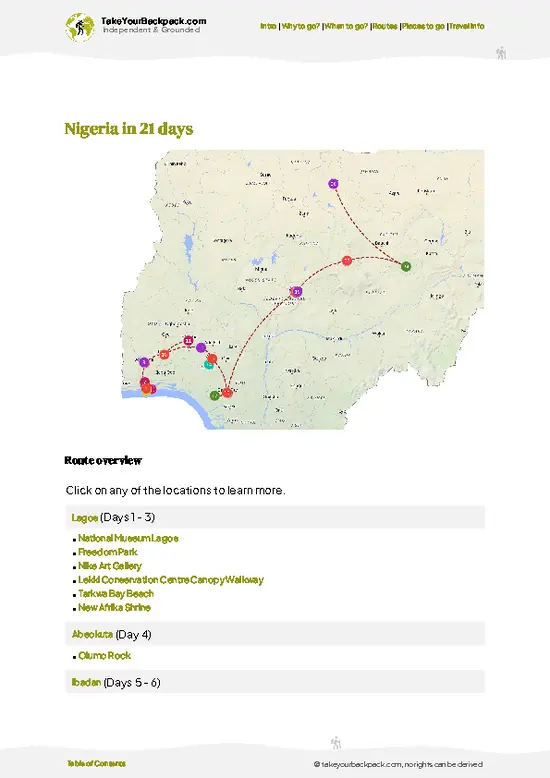
Optimized 7, 14 & 21-day travel routes
Cities, national parks, landmarks, beaches
How to get around
Offline-friendly for travel without Wi-Fi
👉 Click to see all 30+ guide features

📅 Plan smarter in minutes, not weeks
Month by month travel advice
Festivals & national holidays
Budget expectations

🗺️ Go to the right places, skip the overrated ones
Honest pros & cons of destinations
Top hikes, parks & viewpoints
Lesser-known places most travelers miss
Clear “worth it vs skip it” guidance

🛏️ Travel smoothly without rookie mistakes
Best areas to stay
Transport systems explained simply
Common scams & safety advice
SIM cards, money & practical tips

🌍 Understand the country, not just visit it
Culture & traditions
52 Essential phrases & customs
Festivals worth planning around
Traveler-friendly historical context
Insights that make places more meaningful

📱 Built for real travel conditions
Fully downloadable PDF
Works completely offline
Optimized for phone use
Useful in remote areas & buses
Everything in one place
Save weeks of stressful planning
Get instant access to your full guide. 30‑day money-back guarantee.


By proceeding you agree to our terms.
Sent to your inbox immediately after payment • 100% Secure Checkout
Best Backpacking Travel Advisor 2025 tourism awardBest Backpacking
Travel Advisor
2025
What others say about Take Your Backpack Guides:
⭐⭐⭐⭐⭐
Fantastic, amazing amount of information!
⭐⭐⭐⭐⭐
My goodness this is amazing, it's what I've been looking for hats off too you!
⭐⭐⭐⭐⭐
I think this is absolutely BRILLIANT
⭐⭐⭐⭐
Very complete and informative. It's still missing places, but I gotta to commend you
⭐⭐⭐⭐⭐
This is truly amazing, thank you, can't wait to explore it with my kids!
⭐⭐⭐⭐⭐
Awesome resource, thank you!
⭐⭐⭐⭐⭐
This is amazing! Can't wait to explore the ones I haven't seen
⭐⭐⭐⭐
I love this! Well done, great idea.
⭐⭐⭐⭐⭐
Thanks for taking the time to make this gem!
⭐⭐⭐⭐⭐
This might be the best website I've ever seen.
⭐⭐⭐⭐⭐
Congratulations, and thank you so much for your work; it's incredibly valuable.
⭐⭐⭐⭐
In all seriousness I think you did a great job pointing out the important spots
⭐⭐⭐⭐⭐
10/10 very good
⭐⭐⭐⭐⭐
As someone who's only just starting to visit regularly this is awesome, thank you.
⭐⭐⭐⭐
Thank you very much! I'm going to visit my dad, it's going to be very useful!
⭐⭐⭐⭐⭐
This is really cool! We'll be travelling for the first time and this definitely come in handy.
⭐⭐⭐⭐⭐
You are now our minister of culture, congratulations 👨‍💼
⭐⭐⭐⭐⭐
Just wanted to tell you that this is a pearl! Going to follow your recommendations.
⭐⭐⭐⭐⭐
This is so cool. I'll definitely be using the resource for my travels soon.
⭐⭐⭐⭐⭐
This is very impressive! Good work.
⭐⭐⭐⭐⭐
This is an amazing and informative site. Very well done!

🛏️ Where to stay?Choosing the right base

If you’re backpacking near the National Museum of Colonial History in Nigeria, brace yourself: this isn’t a polished tourist zone where everything is wrapped in a neat bow. The crowds can be thick, especially on weekends and holidays, and the area isn’t exactly a budget paradise with endless cheap options. But here’s the real deal—if you want to dive into the authentic pulse of the city, you want to stay in the neighborhoods that locals and savvy travelers actually use.

Focus on the districts just outside the immediate museum vicinity, where safety and social vibes intersect without the inflated … read more 👉
If you’re backpacking near the National Museum of Colonial History in Nigeria, brace yourself: this isn’t a polished tourist zone where everything is wrapped in a neat bow. The crowds can be thick, especially on weekends and holidays, and the area isn’t exactly a budget paradise with endless cheap options. But here’s the real deal—if you want to dive into the authentic pulse of the city, you want to stay in the neighborhoods that locals and savvy travelers actually use.

Focus on the districts just outside the immediate museum vicinity, where safety and social vibes intersect without the inflated prices of the city center. These areas are gritty but alive, with street food stalls that serve up real-deal Nigerian flavors and small guesthouses where you’ll meet fellow backpackers and locals alike. It’s not about fancy lobbies or Instagrammable decor—it’s about connection, stories, and the kind of nights where you swap travel tips over a shared meal.

Safety is a valid concern, so stick to well-trodden streets and avoid wandering alone after dark. But don’t let that scare you off. These neighborhoods offer a raw, unfiltered experience that’s worth every moment. You’ll get a front-row seat to the city’s rhythm, the hustle, and the warmth that no polished tourist zone can replicate. This is where the real magic of your visit begins.

👛 Costs (as of 30 January 2026)How expensive it really is

As of the most recent estimates, the entry fee for the National Museum of Colonial History in Aba, Nigeria, is approximately 300 Nigerian Naira, which is about €0.60 to €1.20. This fee grants access to the museum's exhibits, which are divided into eight sections covering pre-colonization, colonization, and independence periods. Additional costs may include guided tours or photography fees, but specific details are not provided in the available sources.

source: nigerianheritage.ng
⚠️ Prices can change and everyone travels differently, so take this as a rough guide. Hope it helps you plan your adventure!

Other Nigerian attractions near National Museum of Colonial History

Explore more nearby:

  • National Museum Lagos—ethnographic displays, Benin bronzes, cultural relics| 0 km away
  • Freedom Park—former prison, open lawns, public art installations| 1 km away
  • Terra Kulture—theatre space, Nigerian cuisine, bookshop| 3 km away

💡 Not sure where to go next?
Create a personalized itinerary for Nigeria including National Museum of Colonial History and the places that fit your trip.

Generate my itinerary

👉 Discover all attractions

Or checkout all Nigeria has to offer (think cities, towns, villages, national parks, hikes, beaches, festivals)
Country photo of Nigeria

We 💚 feedbackSumming up the experience

The National Museum of Colonial History in Nigeria isn’t your polished, crowd-pleasing blockbuster. Expect some hustle, a few cramped corners, and the occasional staff who might seem more interested in their phones than your questions. But here’s the kicker: the raw, unfiltered stories behind those dusty artifacts hit harder than any glossy exhibit. The real magic is in the voices of resistance and resilience—stuff you won’t find in guidebooks or Instagram posts. If you’re ready to lean in and listen, this place will stick with you long after you leave.

✍️ Help improve this page!
The information on this page is based on in-depth research, insights shared by experienced travelers, and feedback from the local travel community in Nigeria. While every effort is made to keep the information accurate and current, conditions can change — so if you spot anything incorrect or outdated, please get in touch.


🙋‍♂️ Give feedback

👋 Meet the founderWho’s Behind Take Your Backpack?

Johan, backpacker and founder of TakeYourBackpackHi, I’m Johan (Netherlands 🇳🇱), the creator of TakeYourBackpack. Over the past decade, I’ve backpacked through 80+ countries across six continents, gaining extensive experience with independent travel, long-term trips, and overland routes.

This site is built on a combination of firsthand travel experience and carefully curated insights from other backpackers. Many guides are based on places I’ve personally visited, while others bring together tips, observations, and practical advice shared by trusted travelers I’ve met along the way.

The goal is to provide realistic, experience-driven guidance — not generic itineraries — so you can explore destinations with better context, clearer expectations, and more confidence.

Get full Nigeria guide •
Instant download • 89 highlights • Full Offline guide