×

Nigeria🇳🇬 | best attractionsWhere to Find the 10 Best attractions in Nigeria

Nigeria’s best attractions are defined by a complex mix of geography, culture, and infrastructure that demands more than surface-level planning. From the bustling urban energy of Lagos to the serene landscapes of Yankari National Park, each region offers a distinct vibe that shapes your backpacking experience. Understanding these differences is crucial: northern Nigeria’s dry season opens access to wildlife reserves but brings security considerations, while the south’s rainy season can complicate travel but rewards with lush scenery and vibrant festivals. Independent travelers must weigh factors like local transport reliability, safety hotspots, and entry costs, which vary widely and can quickly drain your budget if overlooked. Choosing the right attraction isn’t just about ticking off sights—it’s about aligning your itinerary with your tolerance for adventure, cultural immersion, and logistical challenges. Mastering these nuances ensures your energy and funds go toward moments that truly define Nigeria, not the frustrations that come from underestimating its scale and diversity.

By Johan Kruseman 🇳🇱 | Updated June 3, 2026
Explore the best festivals in Nigeria

Why go?Why These attraction Stand Out

Nigeria’s attractions stand apart because they demand more than a quick stop or a checklist mentality. This country’s appeal lies in its complex layering of cultural depth and historical weight, which often requires time and patience to truly absorb. Unlike destinations where attractions are neatly packaged and easily accessible, Nigeria challenges travelers to navigate a sprawling landscape marked by diverse ethnic groups, languages, and traditions that shape every experience. This is not a place for surface-level tourism.

Geographically, Nigeria’s vast size and varied terrain—from dense rainforests to savannahs and bustling urban centers—mean that travel between attractions can be time-consuming and logistically demanding. The trade-off between accessibility and immersion is stark here: … read more 👉
Nigeria’s attractions stand apart because they demand more than a quick stop or a checklist mentality. This country’s appeal lies in its complex layering of cultural depth and historical weight, which often requires time and patience to truly absorb. Unlike destinations where attractions are neatly packaged and easily accessible, Nigeria challenges travelers to navigate a sprawling landscape marked by diverse ethnic groups, languages, and traditions that shape every experience. This is not a place for surface-level tourism.

Geographically, Nigeria’s vast size and varied terrain—from dense rainforests to savannahs and bustling urban centers—mean that travel between attractions can be time-consuming and logistically demanding. The trade-off between accessibility and immersion is stark here: reaching some of the most authentic cultural or natural sites often involves long drives on unpredictable roads or flights with limited schedules. This can frustrate those expecting seamless transit but rewards those willing to invest the effort with encounters that feel genuinely off the beaten path.

Climatic conditions add another layer of complexity. Nigeria’s tropical climate brings intense heat and seasonal rains that can affect travel plans and comfort. Understanding when and where to visit is crucial to avoid wasting energy on sites that are less enjoyable or even inaccessible during certain months. Infrastructure outside major cities remains uneven, so travelers should anticipate basic accommodations and limited services in rural areas, which can be a deal-breaker for some but a draw for others seeking raw, unfiltered experiences.

In essence, Nigeria’s attractions matter because they offer a rich, multifaceted encounter with Africa’s most populous nation, but only if travelers accept the inherent challenges. The payoff is a journey that goes beyond sightseeing—into the heart of a country where history, culture, and geography collide in ways few other places can match. The key is balancing your expectations with the realities on the ground to preserve your energy and budget for moments that truly resonate.
Evaluating the Top Choices
The list of best attractions in Nigeria is created based on cultural significance or entertainment value. If you feel a attraction is missing in this list, please let us know.

When to go?Timing Your Visit for the Best Experience

Seasonal Realities That Shape Your Nigeria Experience


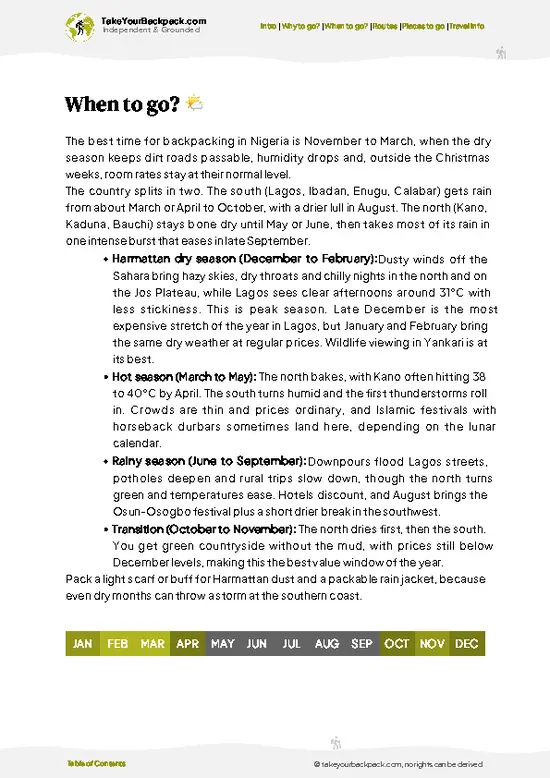
Nigeria’s climate swings between two dominant seasons: the wet and the dry. This isn’t just weather talk—it’s the core factor that will either make your trip smooth or a slog. The wet season drags on with heavy rains and high humidity, turning dirt roads into mud traps and making outdoor attractions a test of patience and gear. If you’re aiming to explore Nigeria’s natural and cultural sites without battling the elements, avoid the months when the rains dominate. The wet season’s relentless downpours can shut down access to many attractions, especially those off the beaten path.

The dry season, on the other hand, offers clearer skies and more reliable conditions for travel. This is when the air is drier, and the sun is out in full force, … read more 👉

Seasonal Realities That Shape Your Nigeria Experience


Nigeria’s climate swings between two dominant seasons: the wet and the dry. This isn’t just weather talk—it’s the core factor that will either make your trip smooth or a slog. The wet season drags on with heavy rains and high humidity, turning dirt roads into mud traps and making outdoor attractions a test of patience and gear. If you’re aiming to explore Nigeria’s natural and cultural sites without battling the elements, avoid the months when the rains dominate. The wet season’s relentless downpours can shut down access to many attractions, especially those off the beaten path.

The dry season, on the other hand, offers clearer skies and more reliable conditions for travel. This is when the air is drier, and the sun is out in full force, making it easier to plan days packed with sightseeing and outdoor activities. However, this season isn’t without its quirks. The harmattan winds sweep in from the Sahara during the early dry months, bringing dusty, sometimes hazy conditions that can affect visibility and air quality. It’s a trade-off: better travel conditions but occasional dust storms that can dull the experience.

Between these extremes lie the shoulder seasons—transitional periods that can be a mixed bag. These months might offer fewer tourists and slightly lower prices, but the weather can be unpredictable. You might catch a dry day perfect for exploring, only to be caught off guard by a sudden shower or a dusty haze. Planning during these times requires flexibility and a readiness to adapt your itinerary on the fly.

Peak travel periods in Nigeria often coincide with local holidays and festivals, which can boost crowds and prices. While these events are culturally rich, they can also mean inflated costs and booked-up accommodations. If your goal is to experience attractions without the hassle of crowds or premium rates, steer clear of these peak windows.

In short, timing your visit to Nigeria demands balancing weather realities with your tolerance for crowds and costs. The dry season is the safest bet for hassle-free exploration, but if you’re after budget savings and don’t mind a bit of unpredictability, the shoulder seasons can work—just pack for rain and dust. Avoid the wet season unless you’re prepared for limited access and a wetter, muddier adventure.

attraction hoppingTips for Visiting Multiple Destinations

Mapping Out Nigeria’s Attractions Without Burning Out

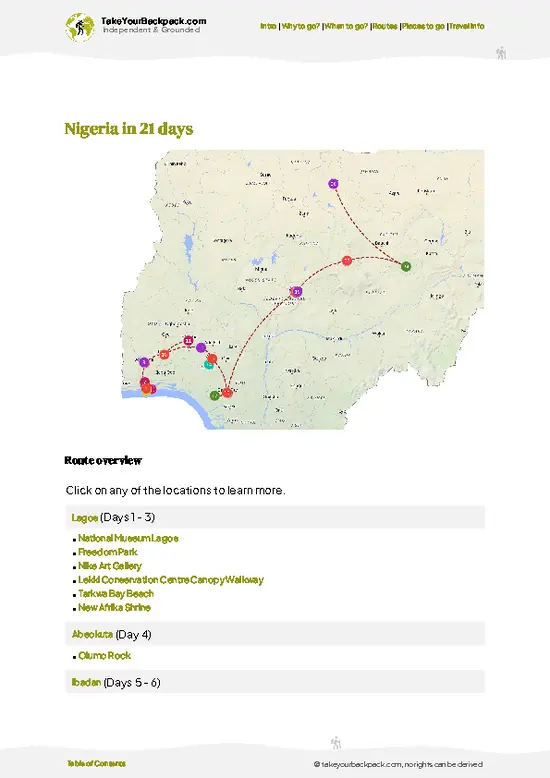
Nigeria is vast and diverse, so the first rule is to think regionally. Group attractions by their geographic clusters—Southwest, Southeast, North, and the Middle Belt—to avoid wasting hours on the road. Jumping back and forth across the country is a rookie mistake that kills time and energy. Start with a clear direction of travel, ideally moving in a loop or a straight line to minimize backtracking.

Timing: The Real Currency

Expect to spend at least two full days at major cultural or natural sites to soak in the experience without rushing. Urban centers with museums and markets might demand less time, but don’t skimp on the pace—half a day can feel like a blur if you’re trying to cram too much. For natural wonders or heritage sites, … read more 👉

Mapping Out Nigeria’s Attractions Without Burning Out

Nigeria is vast and diverse, so the first rule is to think regionally. Group attractions by their geographic clusters—Southwest, Southeast, North, and the Middle Belt—to avoid wasting hours on the road. Jumping back and forth across the country is a rookie mistake that kills time and energy. Start with a clear direction of travel, ideally moving in a loop or a straight line to minimize backtracking.

Timing: The Real Currency

Expect to spend at least two full days at major cultural or natural sites to soak in the experience without rushing. Urban centers with museums and markets might demand less time, but don’t skimp on the pace—half a day can feel like a blur if you’re trying to cram too much. For natural wonders or heritage sites, allocate more time for hiking, exploring, or simply absorbing the atmosphere. Trying to squeeze in too many stops in a short span is a classic trap that leaves you exhausted and underwhelmed.

Balancing Speed, Comfort, and Depth

Nigeria’s infrastructure varies widely. Opting for speed often means sacrificing comfort or missing out on local interactions that make a trip memorable. Budget travelers might lean on buses or shared taxis, but these can be slow and unpredictable. Flying cuts travel time but adds cost and airport hassles. The key is to pick a travel style that matches your priorities: if depth and cultural immersion matter most, slow down and embrace local transport where feasible. If ticking off highlights is your goal, accept the trade-off in comfort and budget.

Flexibility Is Your Best Friend

Weather, road conditions, and local events can throw plans off. Build buffer days into your schedule to absorb delays or to linger longer at places that surprise you. Rigid itineraries are a fast track to frustration. Instead, plan clusters of attractions with flexible timing, so you can pivot without losing the thread of your journey.

Strategic Planning Beats Overpacking

Trying to cover every notable spot in one trip is a recipe for burnout. Prioritize based on what resonates most—whether it’s cultural heritage, natural landscapes, or urban life—and accept that some gems will have to wait for the next visit. This approach preserves your energy and budget for the moments that truly matter, turning a good trip into a great one.

The ListThe Best attractions of Nigeria

1 Lekki Conservation Centre Canopy Walkway

elevated walkway, mangrove forest, wildlife viewing

Traverse a suspended bridge above wetlands, offering close-up views of monkeys, birds, and the dense vegetation of Lagos’s coastal ecosystem.

2 Osun-Osogbo Sacred Grove Shrine Complex

forest sanctuary, Yoruba shrines, sculpted figures

Follow shaded trails past shrines and symbolic sculptures in a riverside forest, central to Yoruba religious practices.

3 Ancient Kano City Walls and Gates

mud fortifications, city gates, centuries-old ramparts

Walk along remnants of defensive walls and pass through monumental gates that once protected one of West Africa’s oldest urban centers.

4 Ogbunike Cave Complex

limestone caverns, underground streams, sacred site

Venture into a network of cool, humid caves with natural tunnels and pools, considered spiritually significant by local communities.

6 Nike Art Centre

gallery space, craft displays, artist residencies

View rotating exhibitions and meet resident artists in a multi-level building focused on visual arts and cultural education.

7 Nike Art and Culture Centre

workshops, textile art, artist studios

Participate in hands-on classes or browse contemporary works in a space dedicated to preserving and promoting Nigerian creative traditions.

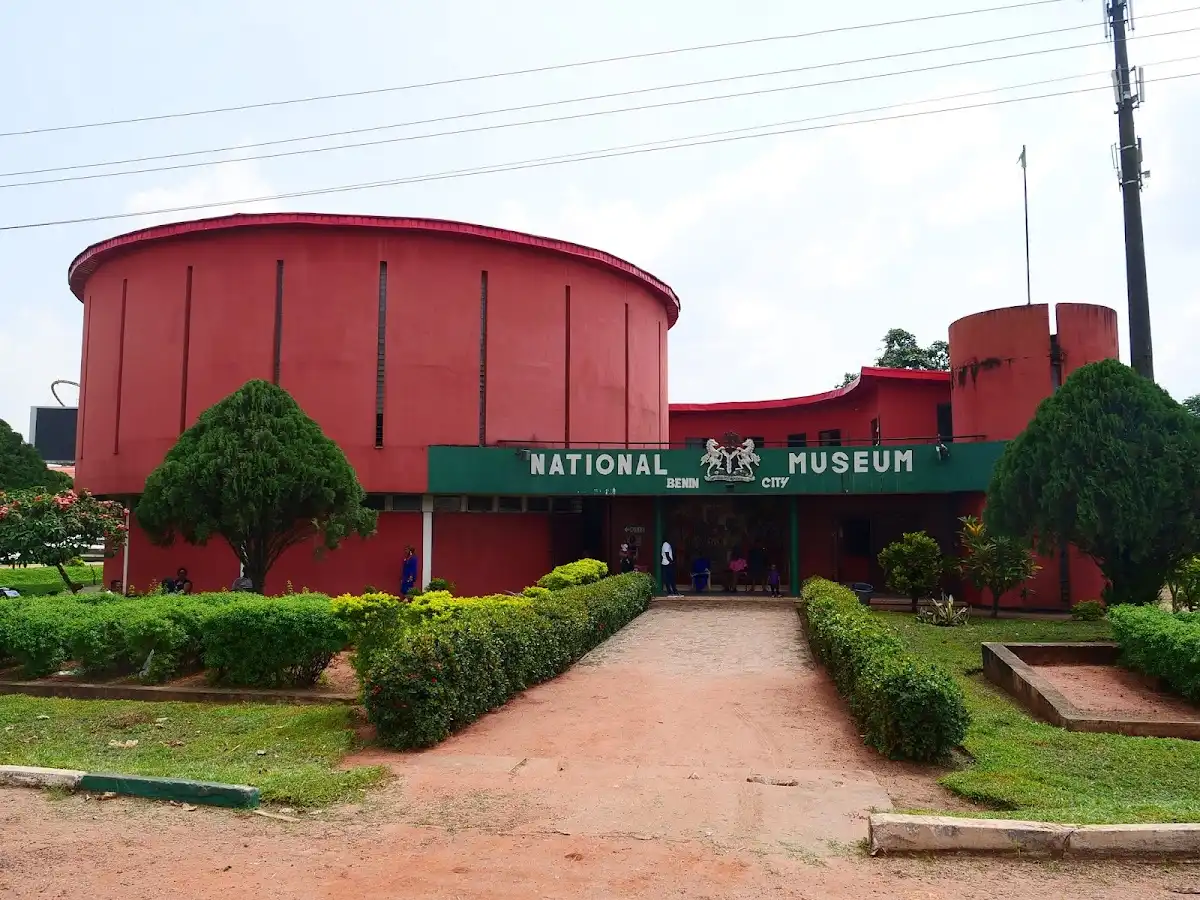
8 Benin City National Museum

bronze plaques, royal regalia, Edo heritage

View a collection of ceremonial artifacts and metalwork that illustrate the political and artistic legacy of the Benin Kingdom.

9 National Museum Lagos

ethnographic displays, Benin bronzes, cultural relics

Survey exhibits ranging from ancient carvings to everyday objects, providing insight into Nigeria’s diverse peoples and histories.

10 Jos Museum and Museum of Traditional Nigerian Architecture

terracotta figures, reconstructed huts, archaeological finds

Examine ancient Nok sculptures and walk among life-sized models of indigenous buildings representing Nigeria’s architectural diversity.

11 Gidan Rumfa

emir’s palace, inner courtyards, ceremonial halls

Tour the residence of Kano’s emir, featuring intricately decorated rooms and spaces used for official and religious functions.

12 Gidan Makama Museum

Hausa architecture, palace relics, traditional costumes

Step inside a 15th-century building to see displays of regional crafts, musical instruments, and objects from Kano’s royal history.

13 National Theatre

iconic structure, performance halls, cultural showcases

Attend live performances or explore the grounds of a landmark venue designed for music, dance, and dramatic arts.

14 Freedom Park

former prison, open lawns, public art installations

Relax on grassy spaces surrounded by sculptures and remnants of colonial architecture, repurposed as a gathering point for cultural events.

15 New Afrika Shrine

live music venue, Afrobeat stage, open-air bar

Join crowds for energetic concerts and community gatherings at the spiritual home of Fela Kuti’s musical legacy.

16 Terra Kulture

theatre space, Nigerian cuisine, bookshop

Sample regional dishes, attend stage performances, or browse literature at a center combining food, art, and cultural programming.

17 Thought Pyramid Art Centre

contemporary art, rotating exhibitions, sculpture garden

Discover works by emerging and established artists in a gallery that emphasizes modern perspectives and outdoor installations.

18 Kalakuta Museum

Fela Kuti’s home, Afrobeat memorabilia, personal artifacts

Experience the preserved residence of Fela Kuti, filled with musical instruments, stage costumes, and photographs chronicling his life.

19 National Mosque

golden dome, minarets, prayer hall

Observe the architectural details and tranquil courtyards of the country’s main mosque, accessible to visitors outside prayer times.

20 National Christian Centre

modern cathedral, stained glass, geometric spire

Admire the soaring interior and distinctive design of Nigeria’s principal Christian worship space, open for services and quiet reflection.

21 National Museum of Colonial History

colonial documents, period furniture, independence artifacts

Trace Nigeria’s transition from colonial rule to nationhood through preserved records, photographs, and objects from the 19th and 20th centuries.

22 Abuja Arts and Crafts Village

handmade textiles, open-air stalls, local artisans

Browse a cluster of thatched huts where craftspeople display woven fabrics, pottery, and woodwork in a relaxed, informal setting.

Think you know Nigeria?

Prove you’re a true local — uncover 12 lesser-known attractions in Nigeria that locals tend to keep to themselves.
Loading the map 🌍

Expert viewInsights from Locals and Experts

Expert Commentary


Navigating Nigeria’s attractions is not about ticking off a checklist but about choosing a handful of experiences that resonate deeply. I recommend aiming for no more than three to five major sites or experiences during a single trip. Nigeria’s sheer size and the diversity of its regions mean that trying to cram in too many attractions will drain your energy and budget without delivering meaningful engagement. The distances between key points can be vast, and travel infrastructure varies wildly—what looks like a short hop on the map can easily turn into a half-day ordeal on the ground.

Budget-wise, expect a broad range depending on your style and the region. Local transport and entry fees are generally affordable, but costs can spike with private guides, domestic flights, … read more 👉

Expert Commentary


Navigating Nigeria’s attractions is not about ticking off a checklist but about choosing a handful of experiences that resonate deeply. I recommend aiming for no more than three to five major sites or experiences during a single trip. Nigeria’s sheer size and the diversity of its regions mean that trying to cram in too many attractions will drain your energy and budget without delivering meaningful engagement. The distances between key points can be vast, and travel infrastructure varies wildly—what looks like a short hop on the map can easily turn into a half-day ordeal on the ground.

Budget-wise, expect a broad range depending on your style and the region. Local transport and entry fees are generally affordable, but costs can spike with private guides, domestic flights, or accommodations in more developed hubs. The real expense is time and patience. Nigeria’s road conditions and traffic congestion are notorious, so factor in generous buffers for travel between attractions. This isn’t a place to rush through; the reward comes from immersing yourself in the local rhythms, not from a frantic itinerary.

Planning your priorities means understanding regional contrasts. The cultural fabric shifts dramatically from one area to another, and so do the logistics. Northern regions often require more preparation, including security awareness and cultural sensitivity, especially for solo travelers or those unfamiliar with local customs. Southern and central areas tend to have better infrastructure and more straightforward access to attractions, but they come with their own challenges, like urban congestion and occasional strikes or disruptions. Always check the latest local advice and be ready to adapt your plans on the fly.

Safety is a non-negotiable factor here. While many parts of Nigeria are perfectly safe for travelers who exercise common sense and respect local norms, others demand heightened caution. Avoid traveling after dark outside major urban centers, and steer clear of politically sensitive areas. Trust your instincts and local contacts over glossy travel brochures. The best experiences come from genuine interactions, but those require a foundation of respect and awareness. Dress conservatively, especially in conservative regions, and be mindful of photography restrictions—some places are sensitive about being filmed or photographed.

Cultural considerations go beyond just safety. Nigeria’s diversity means you’ll encounter a tapestry of languages, religions, and traditions. This is a strength but also a source of potential misunderstandings. Take the time to learn basic greetings and customs for the areas you visit. Engage with local guides who can decode the nuances and help you avoid faux pas that might close doors rather than open them. I’ve seen travelers miss out on authentic experiences simply because they didn’t invest in understanding the local context.

One common pitfall is underestimating the time needed to truly appreciate an attraction. Many sites are not just about the physical location but the stories, the people, and the environment surrounding them. Rushing through a cultural festival or a natural wonder to check it off your list means missing the layers that make it worth the trip. Plan your days with breathing room. If you’re visiting a market or a heritage site, allocate extra time to wander, talk, and absorb. This approach pays dividends in memories and insights.

Another trade-off to consider is the balance between guided tours and independent exploration. Guided tours can offer invaluable context and access, especially in regions where language barriers or security concerns exist. However, they can also be rigid and expensive. Independent travel offers freedom but demands more preparation and local knowledge. A hybrid approach often works best: use guides for complex or sensitive areas and explore independently where infrastructure and safety permit.

Infrastructure challenges are a reality. Power outages, spotty internet, and unpredictable transport schedules are part of the landscape. This means you need to be flexible and self-reliant. Carry essentials like power banks, offline maps, and cash in local currency. Don’t expect every attraction to have tourist facilities or English-speaking staff. The payoff is an experience that feels raw and real, not sanitized for mass tourism.

Finally, temper your expectations about comfort and convenience. Nigeria’s attractions are rich in character but rarely tailored for luxury or ease. If you’re chasing polished tourist experiences, you’ll be disappointed. Instead, embrace the grit and the unpredictability. The moments that stick with you—whether it’s a spontaneous conversation with a local artisan or the unexpected detour to a roadside eatery—are the ones that make the effort worthwhile.

In short, the secret to enjoying Nigeria’s best attractions is to pick a manageable number, plan with patience, respect local realities, and stay flexible. This approach preserves your energy and budget for the moments that truly matter, turning what could be a logistical headache into a rewarding adventure.

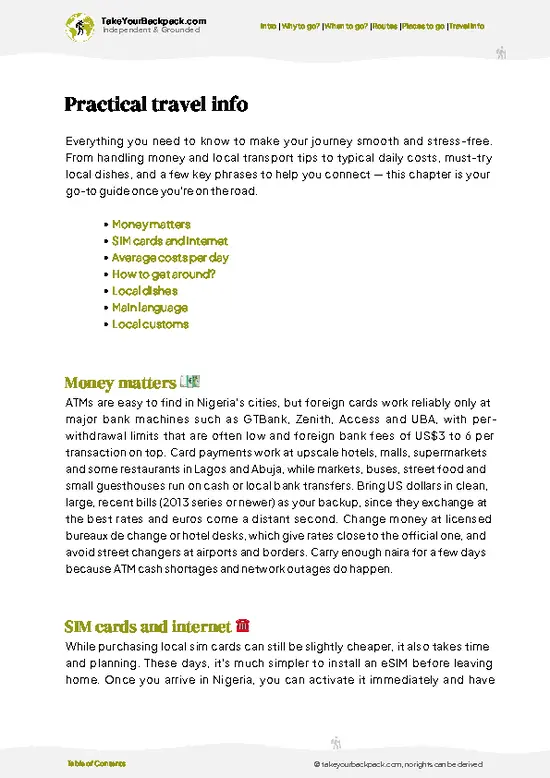
✈️ The backpacker research shortcutNigeria Travel Guide

An offline-friendly backpacking guide with optimized travel routes, ranked highlights, transport advice, and the best areas to stay.
example page 0 from our offline Travel Guide for Nigeriaexample page 1 from our offline Travel Guide for Nigeriaexample page 2 from our offline Travel Guide for Nigeriaexample page 3 from our offline Travel Guide for Nigeriaexample page 4 from our offline Travel Guide for Nigeriaexample page 5 from our offline Travel Guide for Nigeriaexample page 6 from our offline Travel Guide for Nigeriaexample page 7 from our offline Travel Guide for Nigeria
The digital guide (332 pages) contains:
89 highlights, ranked by travel appeal
Optimized 7, 14 & 21-day travel routes
Cities, national parks, landmarks, beaches
How to get around
Offline-friendly for travel without Wi-Fi
👉 Click to see all 30+ guide features

📅 Plan smarter in minutes, not weeks
Month by month travel advice
Festivals & national holidays
Budget expectations

🗺️ Go to the right places, skip the overrated ones
Honest pros & cons of destinations
Top hikes, parks & viewpoints
Lesser-known places most travelers miss
Clear “worth it vs skip it” guidance

🛏️ Travel smoothly without rookie mistakes
Best areas to stay
Transport systems explained simply
Common scams & safety advice
SIM cards, money & practical tips

🌍 Understand the country, not just visit it
Culture & traditions
52 Essential phrases & customs
Festivals worth planning around
Traveler-friendly historical context
Insights that make places more meaningful

📱 Built for real travel conditions
Fully downloadable PDF
Works completely offline
Optimized for phone use
Useful in remote areas & buses
Everything in one place
Save weeks of stressful planning
Get instant access to your full guide. 30‑day money-back guarantee.


By proceeding you agree to our terms.
Sent to your inbox immediately after payment • 100% Secure Checkout
Best Backpacking Travel Advisor 2025 tourism awardBest Backpacking
Travel Advisor
2025
What others say about Take Your Backpack Guides:
⭐⭐⭐⭐⭐
Fantastic, amazing amount of information!
⭐⭐⭐⭐⭐
My goodness this is amazing, it's what I've been looking for hats off too you!
⭐⭐⭐⭐⭐
I think this is absolutely BRILLIANT
⭐⭐⭐⭐
Very complete and informative. It's still missing places, but I gotta to commend you
⭐⭐⭐⭐⭐
This is truly amazing, thank you, can't wait to explore it with my kids!
⭐⭐⭐⭐⭐
Awesome resource, thank you!
⭐⭐⭐⭐⭐
This is amazing! Can't wait to explore the ones I haven't seen
⭐⭐⭐⭐
I love this! Well done, great idea.
⭐⭐⭐⭐⭐
Thanks for taking the time to make this gem!
⭐⭐⭐⭐⭐
This might be the best website I've ever seen.
⭐⭐⭐⭐⭐
Congratulations, and thank you so much for your work; it's incredibly valuable.
⭐⭐⭐⭐
In all seriousness I think you did a great job pointing out the important spots
⭐⭐⭐⭐⭐
10/10 very good
⭐⭐⭐⭐⭐
As someone who's only just starting to visit regularly this is awesome, thank you.
⭐⭐⭐⭐
Thank you very much! I'm going to visit my dad, it's going to be very useful!
⭐⭐⭐⭐⭐
This is really cool! We'll be travelling for the first time and this definitely come in handy.
⭐⭐⭐⭐⭐
You are now our minister of culture, congratulations 👨‍💼
⭐⭐⭐⭐⭐
Just wanted to tell you that this is a pearl! Going to follow your recommendations.
⭐⭐⭐⭐⭐
This is so cool. I'll definitely be using the resource for my travels soon.
⭐⭐⭐⭐⭐
This is very impressive! Good work.
⭐⭐⭐⭐⭐
This is an amazing and informative site. Very well done!

🛏️ Where to stay?Accommodation Highlights

Yes — hostels and budget accommodation are available in Nigeria, concentrated in major cities like Lagos (Victoria Island, Lekki, Yaba, Ikeja), Abuja (Wuse, Garki) and Port Harcourt (GRA/Diobu).
Victoria Island and Lekki put you close to nightlife, beaches and business hubs but are pricier and suffer heavy traffic; Ikeja and Yaba offer cheaper stays with better transit links yet feel busier and less polished.
Wuse and Garki in Abuja are central, relatively secure and convenient for markets and government sites but quiet after dark, while Port Harcourt’s GRA is calmer and safer than industrial areas though budget options are scarcer and expect security checkpoints and fewer late‑night services. … read more 👉
Yes — hostels and budget accommodation are available in Nigeria, concentrated in major cities like Lagos (Victoria Island, Lekki, Yaba, Ikeja), Abuja (Wuse, Garki) and Port Harcourt (GRA/Diobu).
Victoria Island and Lekki put you close to nightlife, beaches and business hubs but are pricier and suffer heavy traffic; Ikeja and Yaba offer cheaper stays with better transit links yet feel busier and less polished.
Wuse and Garki in Abuja are central, relatively secure and convenient for markets and government sites but quiet after dark, while Port Harcourt’s GRA is calmer and safer than industrial areas though budget options are scarcer and expect security checkpoints and fewer late‑night services.

If you enjoy meeting fellow travelers, consider choosing hostels with high ratings for atmosphere. On the other hand, if you prefer having your own space, a hotel might be a better option.

NigeriaSee More of Nigeria

👋 Meet the founderWho’s Behind Take Your Backpack?

Johan, backpacker and founder of TakeYourBackpackHi, I’m Johan (Netherlands 🇳🇱), the creator of TakeYourBackpack. Over the past decade, I’ve backpacked through 80+ countries across six continents, gaining extensive experience with independent travel, long-term trips, and overland routes.

This site is built on a combination of firsthand travel experience and carefully curated insights from other backpackers. Many guides are based on places I’ve personally visited, while others bring together tips, observations, and practical advice shared by trusted travelers I’ve met along the way.

The goal is to provide realistic, experience-driven guidance — not generic itineraries — so you can explore destinations with better context, clearer expectations, and more confidence.

Get full Nigeria guide •
Instant download • 89 highlights • Full Offline guide