×

North Korea🇰🇵 | landmarksKapsanmountain valleys, remote villages, anti-Japanese sites | things to do and best time to go

Explore YongbyonExplore Kumsusan Palace of the Sun

Backpacking in Kapsan
🏆 Top pickunique site ranked #1
By Johan Kruseman 🇳🇱 | Updated June 15, 2026

Everyone hears “Kapsan” and thinks of it as a revolutionary shrine stop on a tightly scripted DPRK itinerary, like a checkbox on a propaganda tour. That’s the brochure version. What actually matters more for a traveler is how it feels to stand in a remote, mountainous county in South Hamgyong Province, far from Pyongyang’s stage-managed boulevards, where daily life is rougher, poorer, and a lot less polished for outsiders. As a backpacker, you’re not rolling in solo here; you’re on a guided, pre-approved route, and that kills spontaneity and hikes the cost. The wow-factor is less about epic architecture and more about the eerie contrast between grand revolutionary narratives and the very modest reality around you. Photo potential is heavily controlled, crowds are mostly locals going about survival, and the vibe is intense, constrained, and morally complicated. It’s fascinating, but not “fun,” and absolutely not casual travel.

Discover everything you want to know in the 📖 North Korea Travel Guide.
Safety warning

The current risk level for North Korea is high. Check the advice before going.


Get your North Korea guide
74 ranked highlights, routes & tips, works offline (296 pages)
Loading the map 🌍
CLICK TO FILTER
cities
towns
landmarks
national parks
hikes
beaches
attractions
festivals
regions
SHOW COUNTRY’S BESTSHOW ALL

✨ Why go?
Ranked #1 unique site in North Korea
Why visitors keep coming back

Kapsan in North Korea isn’t just another stop; it’s a raw experience that cuts through the polished Instagram facade. Yes, you’ll encounter crowds—especially during peak travel seasons—but that’s part of the deal. The effort-to-reward ratio is worth it. You’ll find breathtaking landscapes and a sense of history that’s palpable.

The uniqueness of Kapsan lies in its cultural significance and the chance to see a side of North Korea that many miss. It’s not just about the views; it’s about the stories etched into the rocks and the locals who share them.

Accessibility is surprisingly decent. While you can’t just stroll in, guided tours make it manageable. The low cost of entry means you can stretch your budget while soaking in something truly special.

Kapsan fits seamlessly into a broader … read more 👉
Kapsan in North Korea isn’t just another stop; it’s a raw experience that cuts through the polished Instagram facade. Yes, you’ll encounter crowds—especially during peak travel seasons—but that’s part of the deal. The effort-to-reward ratio is worth it. You’ll find breathtaking landscapes and a sense of history that’s palpable.

The uniqueness of Kapsan lies in its cultural significance and the chance to see a side of North Korea that many miss. It’s not just about the views; it’s about the stories etched into the rocks and the locals who share them.

Accessibility is surprisingly decent. While you can’t just stroll in, guided tours make it manageable. The low cost of entry means you can stretch your budget while soaking in something truly special.

Kapsan fits seamlessly into a broader route through North Korea, often paired with other sites like Pyongyang or Mount Kumgang. It’s not a standalone attraction; it’s part of a narrative that reveals the heart of this enigmatic country. Make time for it, and you’ll walk away with more than just photos—you’ll have a piece of history.
Want to include Kapsan in your North Korea route?
Create a personalized North Korea itinerary that includes Kapsan and the places that fit your trip — based on your travel style, budget, and available time. Get your route in seconds.

Generate my trip

💡 HighlightsEssential experiences to have while visiting Kapsan

  • Kapsan Revolutionary Site (the main complex): The whole outdoor ensemble of monuments, walkways and preserved buildings dedicated to the guerrilla struggle — it’s essentially an open-air revolutionary museum carved into the landscape. It’s the best place to grasp why Kapsan matters in North Korean historical storytelling. (Note: visits are guided and tightly regulated, so you won’t be wandering alone.)
  • Monumental stone inscriptions and bas-reliefs: Massive carved slogans and bas-reliefs in that unmistakable DPRK monumental style — dramatic, graphic and meant to dominate the hillside. They’re striking to see in person and show how politics and art are fused into the terrain here.
  • Preserved guerrilla huts and the ”secret camp”: Small, spartan dwellings and hidden encampments kept as exhibits
read more 👉
  • Kapsan Revolutionary Site (the main complex): The whole outdoor ensemble of monuments, walkways and preserved buildings dedicated to the guerrilla struggle — it’s essentially an open-air revolutionary museum carved into the landscape. It’s the best place to grasp why Kapsan matters in North Korean historical storytelling. (Note: visits are guided and tightly regulated, so you won’t be wandering alone.)
  • Monumental stone inscriptions and bas-reliefs: Massive carved slogans and bas-reliefs in that unmistakable DPRK monumental style — dramatic, graphic and meant to dominate the hillside. They’re striking to see in person and show how politics and art are fused into the terrain here.
  • Preserved guerrilla huts and the ”secret camp”: Small, spartan dwellings and hidden encampments kept as exhibits — the kind of places that make history feel lived in rather than just written about. My personal favorite: those tiny huts have character and give a real sense of daily hardship and improvisation.
  • Local museum displays and artifacts: Indoor rooms with photos, uniforms, weapons replicas and personal effects that provide context to the outdoor monuments. They’re useful for connecting faces and stories to the larger narrative the site promotes.
  • Scenic mountain trails and viewpoints: Kapsan sits amid rolling hills, so short walks reward you with quiet panoramas over farmland and valleys. The contrast between the loud monumental art and calm countryside is surprisingly pleasant.
  • Mural panels and sculptural ensembles: Painted narrative panels and grouped statues stage events like scenes from a play — very cinematic and useful for seeing how the story is visually narrated for visitors.
  • Nearby villages and everyday rural life: A slow stroll around the surrounding hamlets gives a low-key, human side to the area — farmers, fields and simple village architecture that don’t feature on the official plaques but are worth observing.
Spotted a mistake or missing something? Contact us.
🌤️ When to go?Choosing the right time of year


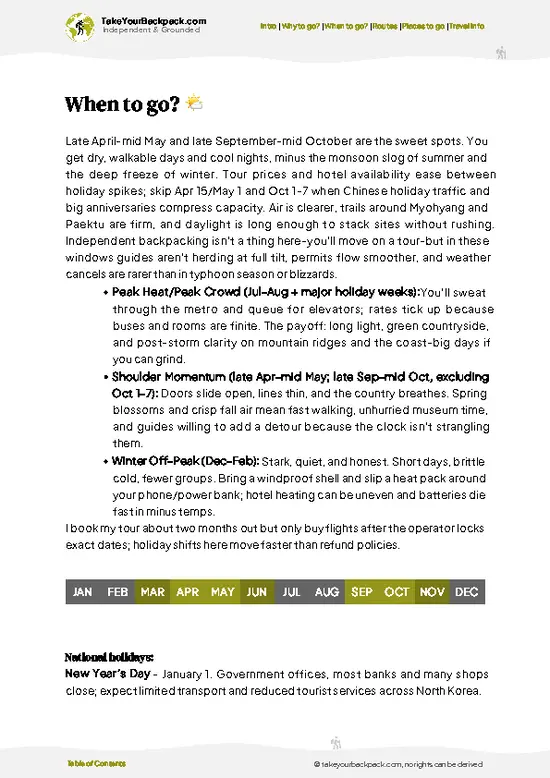
  • Weather: Kapsan’s climate swings sharply. Summers (June to August) hit highs around 28°C (82°F) with sticky humidity, making hiking a sweat-fest. Winters (December to February) plunge below freezing, often -10°C (14°F) or colder, which can freeze your enthusiasm—and your fingers.

  • Temperature: Spring (April-May) and autumn (September-October) offer the sweet spot: mild days around 15-20°C (59-68°F), cool nights, and fewer weather headaches. This is when the air feels crisp but not punishing.

  • Daylight Hours: Peak daylight stretches from May to August, giving you up to 14-15 hours to explore. Winter days shrink to about 9 hours, squeezing your window for trekking and sightseeing.

  • Crowds: Kapsan isn’t exactly a tourist hotspot, but official tours spike in summer and autumn. Spring sees
read more 👉

  • Weather: Kapsan’s climate swings sharply. Summers (June to August) hit highs around 28°C (82°F) with sticky humidity, making hiking a sweat-fest. Winters (December to February) plunge below freezing, often -10°C (14°F) or colder, which can freeze your enthusiasm—and your fingers.

  • Temperature: Spring (April-May) and autumn (September-October) offer the sweet spot: mild days around 15-20°C (59-68°F), cool nights, and fewer weather headaches. This is when the air feels crisp but not punishing.

  • Daylight Hours: Peak daylight stretches from May to August, giving you up to 14-15 hours to explore. Winter days shrink to about 9 hours, squeezing your window for trekking and sightseeing.

  • Crowds: Kapsan isn’t exactly a tourist hotspot, but official tours spike in summer and autumn. Spring sees fewer visitors, so you get more breathing room and a quieter vibe.

  • Seasonal Activities: Autumn brings harvest festivals and local ceremonies that add cultural depth beyond the usual sightseeing. Spring bursts with blooming wildflowers, perfect for those who want nature’s softer side.

  • Price Fluctuations: Expect higher costs during peak seasons (summer and autumn) due to demand for guides and accommodations. Off-season travel can save you some cash but brace for limited services and harsher conditions.


Pro-tip: Aim for late September—cool, calm, and culturally rich. You dodge the summer crush, catch the festivals, and get the best bang for your buck without freezing or frying.


source: climatestotravel.comJANJanuary: below average for travelingFEBFebruary: below average for travelingMARMarch: fair for travelingAPRApril: highly recommended for travelingMAYMay: excellent for travelingJUNJune: good for travelingJULJuly: fair for travelingAUGAugust: fair for travelingSEPSeptember: excellent for travelingOCTOctober: highly recommended for travelingNOVNovember: good for travelingDECDecember: below average for traveling
when-to-go

✈️ The backpacker research shortcutNorth Korea Travel Guide

An offline-friendly backpacking guide with optimized travel routes, ranked highlights, transport advice, and the best areas to stay.
example page 0 from our offline Travel Guide for North Korea
example page 1 from our offline Travel Guide for North Korea
example page 2 from our offline Travel Guide for North Korea
example page 3 from our offline Travel Guide for North Korea
example page 4 from our offline Travel Guide for North Korea
example page 5 from our offline Travel Guide for North Korea
example page 6 from our offline Travel Guide for North Korea
example page 7 from our offline Travel Guide for North Korea
The digital guide (296 pages) contains:
74 highlights, ranked by travel appeal
Optimized 5, 10 & 15-day travel routes
Cities, national parks, landmarks, beaches
How to get around
Offline-friendly for travel without Wi-Fi
👉 Click to see all 30+ guide features

📅 Plan smarter in minutes, not weeks
Month by month travel advice
Festivals & national holidays
Budget expectations

🗺️ Go to the right places, skip the overrated ones
Honest pros & cons of destinations
Top hikes, parks & viewpoints
Lesser-known places most travelers miss
Clear “worth it vs skip it” guidance

🛏️ Travel smoothly without rookie mistakes
Best areas to stay
Transport systems explained simply
Common scams & safety advice
SIM cards, money & practical tips

🌍 Understand the country, not just visit it
Culture & traditions
52 Essential phrases & customs
Festivals worth planning around
Traveler-friendly historical context
Insights that make places more meaningful

📱 Built for real travel conditions
Fully downloadable PDF
Works completely offline
Optimized for phone use
Useful in remote areas & buses
Everything in one place
Save weeks of stressful planning
Get instant access to your full guide. 30‑day money-back guarantee.


By proceeding you agree to our terms.
Sent to your inbox immediately after payment • 100% Secure Checkout
Best Backpacking Travel Advisor 2025 tourism awardBest Backpacking
Travel Advisor
2025
What others say about Take Your Backpack Guides:
⭐⭐⭐⭐⭐
Fantastic, amazing amount of information!
⭐⭐⭐⭐⭐
My goodness this is amazing, it's what I've been looking for hats off too you!
⭐⭐⭐⭐⭐
I think this is absolutely BRILLIANT
⭐⭐⭐⭐
Very complete and informative. It's still missing places, but I gotta to commend you
⭐⭐⭐⭐⭐
This is truly amazing, thank you, can't wait to explore it with my kids!
⭐⭐⭐⭐⭐
Awesome resource, thank you!
⭐⭐⭐⭐⭐
This is amazing! Can't wait to explore the ones I haven't seen
⭐⭐⭐⭐
I love this! Well done, great idea.
⭐⭐⭐⭐⭐
Thanks for taking the time to make this gem!
⭐⭐⭐⭐⭐
This might be the best website I've ever seen.
⭐⭐⭐⭐⭐
Congratulations, and thank you so much for your work; it's incredibly valuable.
⭐⭐⭐⭐
In all seriousness I think you did a great job pointing out the important spots
⭐⭐⭐⭐⭐
10/10 very good
⭐⭐⭐⭐⭐
As someone who's only just starting to visit regularly this is awesome, thank you.
⭐⭐⭐⭐
Thank you very much! I'm going to visit my dad, it's going to be very useful!
⭐⭐⭐⭐⭐
This is really cool! We'll be travelling for the first time and this definitely come in handy.
⭐⭐⭐⭐⭐
You are now our minister of culture, congratulations 👨‍💼
⭐⭐⭐⭐⭐
Just wanted to tell you that this is a pearl! Going to follow your recommendations.
⭐⭐⭐⭐⭐
This is so cool. I'll definitely be using the resource for my travels soon.
⭐⭐⭐⭐⭐
This is very impressive! Good work.
⭐⭐⭐⭐⭐
This is an amazing and informative site. Very well done!

🛏️ Where to stay?How to pick the right area

Kapsan, North Korea, isn’t your typical backpacker destination, but it offers a unique slice of life that’s hard to find elsewhere. The area around Kapsan is relatively quiet, which means you won’t be elbow-to-elbow with tourists. That’s a win right there.

Stay in the nearby city of Samjiyon. It’s a hub for travelers heading to Kapsan and has a few budget-friendly options. You’ll find a mix of locals and fellow backpackers, making it easier to connect and share stories. The vibe is relaxed, and the people are generally welcoming.

Another option is to look for accommodations in the surrounding … read more 👉
Kapsan, North Korea, isn’t your typical backpacker destination, but it offers a unique slice of life that’s hard to find elsewhere. The area around Kapsan is relatively quiet, which means you won’t be elbow-to-elbow with tourists. That’s a win right there.

Stay in the nearby city of Samjiyon. It’s a hub for travelers heading to Kapsan and has a few budget-friendly options. You’ll find a mix of locals and fellow backpackers, making it easier to connect and share stories. The vibe is relaxed, and the people are generally welcoming.

Another option is to look for accommodations in the surrounding countryside. Guesthouses run by local families can provide a more authentic experience. You’ll get a taste of daily life, and the hospitality can be heartwarming. Just be prepared for basic amenities; this isn’t luxury travel.

Transportation to Kapsan can be tricky, so staying close allows you to explore without the hassle. Plus, the scenery is breathtaking. You’ll want to hike and soak in the views, so being nearby is a bonus.

In short, prioritize social spots in Samjiyon or local guesthouses for a genuine experience. Embrace the simplicity and connect with the culture. That’s where the real magic lies.

👛 Costs (as of 11 April 2026)Typical daily expenses

Visiting Kapsan, North Korea, isn’t just about the destination; it’s about navigating a unique landscape of costs and experiences. Here’s what you need to know:
  • Visa and Travel Permit: Expect to pay between €50 to €100 for your visa. This is essential for entry. Travel permits can add another €20 to €50, depending on your itinerary. These costs are non-negotiable and must be arranged through an approved tour operator.
  • Accommodation: Budget around €30 to €70 per night for basic hotels. Options are limited, and you won’t find luxury here. The experience is more about the authenticity of your surroundings than comfort.
  • Guided Tours: Tours are mandatory in North Korea. Prices range from €100 to €200 per day, depending on the length and type of tour. This includes transportation and a guide, but be
read more 👉
Visiting Kapsan, North Korea, isn’t just about the destination; it’s about navigating a unique landscape of costs and experiences. Here’s what you need to know:
  • Visa and Travel Permit: Expect to pay between €50 to €100 for your visa. This is essential for entry. Travel permits can add another €20 to €50, depending on your itinerary. These costs are non-negotiable and must be arranged through an approved tour operator.
  • Accommodation: Budget around €30 to €70 per night for basic hotels. Options are limited, and you won’t find luxury here. The experience is more about the authenticity of your surroundings than comfort.
  • Guided Tours: Tours are mandatory in North Korea. Prices range from €100 to €200 per day, depending on the length and type of tour. This includes transportation and a guide, but be prepared for a tightly controlled experience. Freedom to roam is minimal.
  • Food: Meals can cost between €5 to €15 each. Dining options are limited, often featuring local dishes. Expect a set menu rather than a la carte. It’s a chance to taste the local cuisine, but don’t expect variety.
  • Transportation: If you’re moving around Kapsan, budget around €10 to €30 for local transport. This includes buses or taxis, but again, options are limited. Most travel will be organized through your tour.
  • Souvenirs and Extras: Set aside €20 to €50 for souvenirs. Items are often state-controlled, so choices are limited. Expect to find propaganda art or local crafts, but they can be a unique reminder of your journey.

Kapsan offers a glimpse into a world that feels worlds apart. The costs reflect the unique challenges of traveling in North Korea, but the experience can be eye-opening. Just remember, it’s not about luxury; it’s about understanding a different reality.


source: koryogroup.com
⚠️ Prices can change and everyone travels differently, so take this as a rough guide. Hope it helps you plan your adventure!

Where to go next

Kapsan isn’t the only highlight in North Korea. Explore all what North Korea has to offer.
Country photo of North Korea

We 💚 feedbackSumming up the experience

Kapsan is a raw slice of North Korean life, where you can witness the unfiltered daily hustle of locals. The warmth of the people and their stories is a genuine highlight. But let’s be real: the restrictions can be stifling. You won’t roam freely; guided tours dictate your every move. If you’re okay with that, the experience is eye-opening. Just know that the magic comes with a hefty dose of control.

✈️ When did I visit North Korea?
As part of my 1.5 year travel around the world trip, I visited North Korea in August 2015. I had never expected I was able to get in.

✍️ Help improve this page!
The information on this page is based on my own backpacking experience in North Korea, supplemented with up-to-date research and feedback from other travelers. Travel details can change, so if you notice anything outdated or incomplete, feel free to let me know.


🙋‍♂️ Give feedback

👋 Meet the founderWho’s Behind Take Your Backpack?

Johan, backpacker and founder of TakeYourBackpackHi, I’m Johan (Netherlands 🇳🇱), the creator of TakeYourBackpack. Over the past decade, I’ve backpacked through 80+ countries across six continents, gaining extensive experience with independent travel, long-term trips, and overland routes.

This site is built on a combination of firsthand travel experience and carefully curated insights from other backpackers. Many guides are based on places I’ve personally visited, while others bring together tips, observations, and practical advice shared by trusted travelers I’ve met along the way.

The goal is to provide realistic, experience-driven guidance — not generic itineraries — so you can explore destinations with better context, clearer expectations, and more confidence.

Get full country guide •
Instant download • 74 highlights • Full Offline guide