×

North Korea🇰🇵 | national parksMount Kumganggranite peaks, deep gorges, seasonal waterfalls | things to do and best time to go

Explore MyohyangsanExplore Mount Kuwol

Backpacking in Mount Kumgang
By Johan Kruseman 🇳🇱 | Updated October 15, 2026

Your boots scrape granite slick with mist, pine resin in your nose, the only sound a thin waterfall hitting rock somewhere below the fog. Then a guide’s voice cuts through: time to turn back, schedule says so. This is Mount Kumgang, the “Diamond Mountains,” in southeastern North Korea near the South Korean border, and it’s one of the country’s most controlled but genuinely impressive hiking areas. Trails range from mellow valley walks to steeper stair-like climbs to viewpoints, with jagged peaks, clear pools, and decent birdlife but not much big wildlife you’ll actually see. Access is the real catch: you’re on a tightly managed tour, with fixed routes, fixed times, fixed prices, and entrance fees bundled into an already expensive package. No wild camping; you’re in sanctioned hotels or basic lodges, and you won’t be alone—Chinese and domestic tour groups can clog the main paths. Compared with Myohyangsan or Chilbosan, Mount Kumgang feels more dramatic but less free, more postcard, less exploration.

Discover everything you want to know in the 📖 North Korea Travel Guide.
Safety warning

The current risk level for North Korea is high. Check the advice before going.


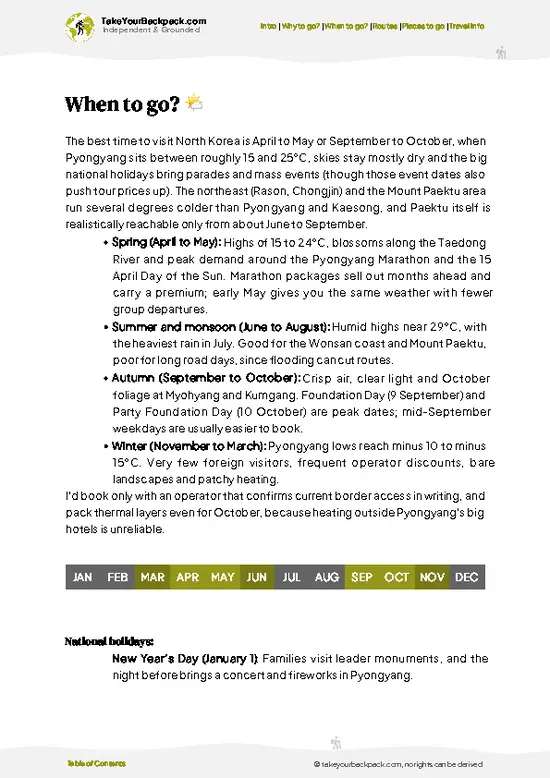
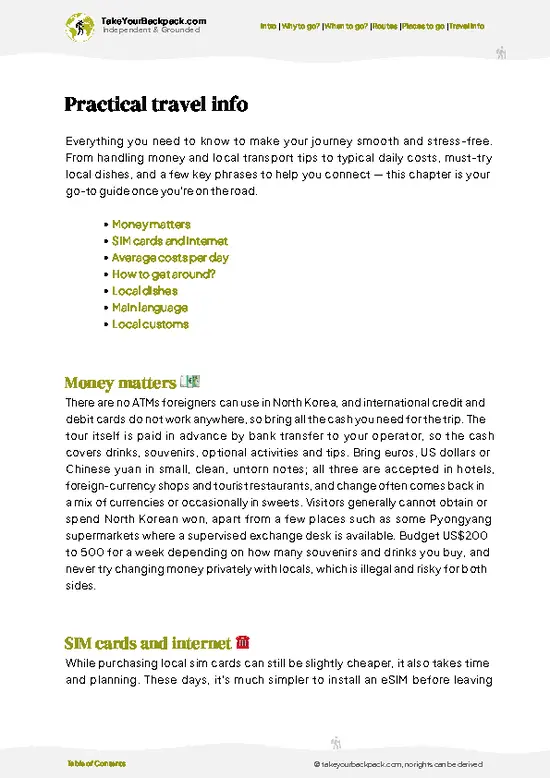
example page 0 from our offline Travel Guide for North Korea
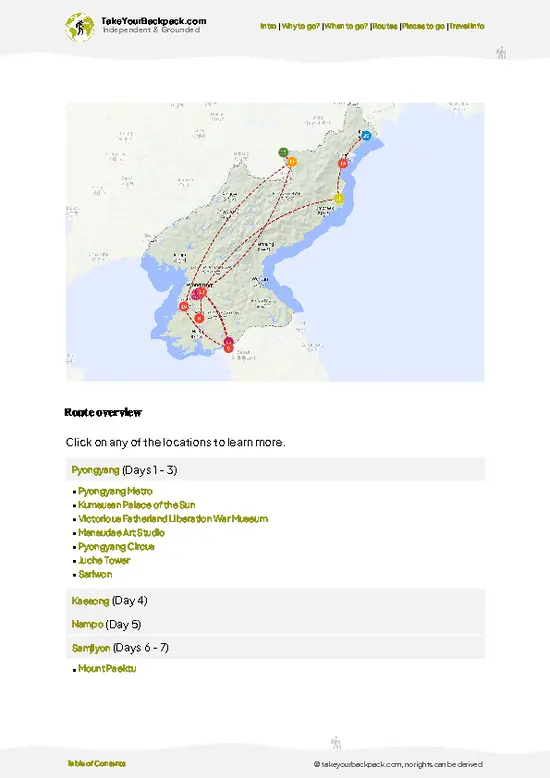
example page 1 from our offline Travel Guide for North Korea
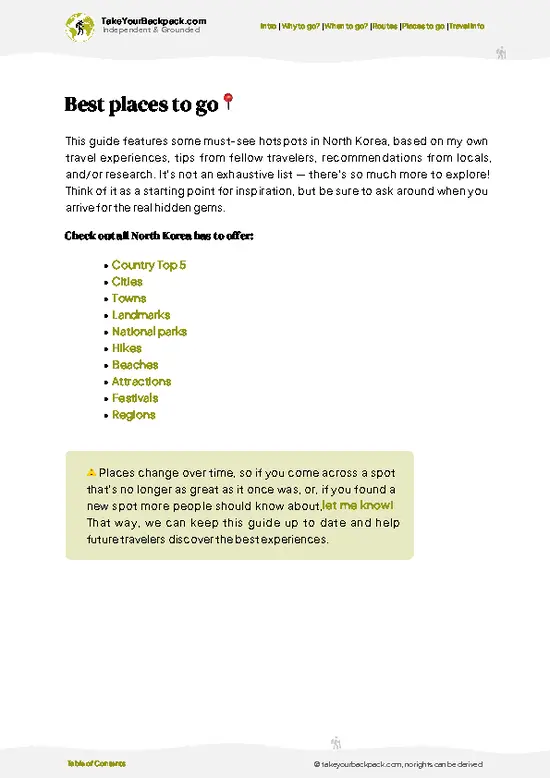
example page 2 from our offline Travel Guide for North Korea
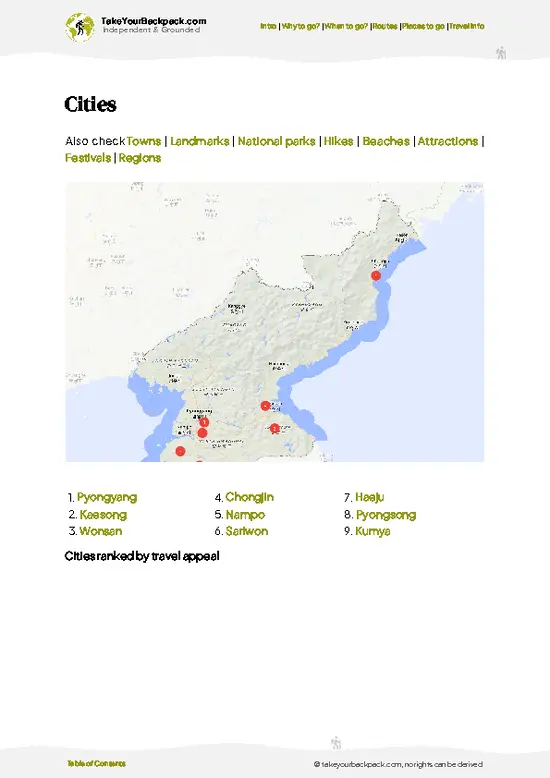
example page 3 from our offline Travel Guide for North Korea
example page 4 from our offline Travel Guide for North Korea
example page 5 from our offline Travel Guide for North Korea
example page 6 from our offline Travel Guide for North Korea
example page 7 from our offline Travel Guide for North Korea
Loading the map 🌍
CLICK TO FILTER
cities
towns
landmarks
national parks
hikes
beaches
attractions
festivals
regions
SHOW COUNTRY’S BESTSHOW ALL

✨ Why go?
Ranked #1 national park in North Korea
Why Mount Kumgang should be on your travel list

Mount Kumgang National Park in North Korea draws backpackers for several compelling reasons. Independent exploration is a major draw. Unlike many destinations in North Korea, this park allows a degree of freedom that’s rare. You can wander its trails without a guide, soaking in the dramatic landscapes at your own pace.

Budget camping options and hostels nearby make it accessible for those watching their wallets. You can pitch a tent or find a basic room, keeping costs down while still enjoying the park’s beauty.

The trail variety is another highlight. From gentle walks to challenging hikes, there’s something for everyone. You can tackle the famous peaks or stroll along serene lakes, all while surrounded by stunning natural scenery.

However, it’s essential to note that while self-guided … read more 👉
Mount Kumgang National Park in North Korea draws backpackers for several compelling reasons. Independent exploration is a major draw. Unlike many destinations in North Korea, this park allows a degree of freedom that’s rare. You can wander its trails without a guide, soaking in the dramatic landscapes at your own pace.

Budget camping options and hostels nearby make it accessible for those watching their wallets. You can pitch a tent or find a basic room, keeping costs down while still enjoying the park’s beauty.

The trail variety is another highlight. From gentle walks to challenging hikes, there’s something for everyone. You can tackle the famous peaks or stroll along serene lakes, all while surrounded by stunning natural scenery.

However, it’s essential to note that while self-guided travel is possible, it’s not without its constraints. Always check local regulations and be prepared for occasional restrictions. This park suits those who appreciate a bit of adventure but also want to respect the local guidelines. Embrace the experience, but stay informed to preserve your energy and budget for the moments that truly matter.

💡 HighlightsWhat this place is best known for

  1. Inner Kumgang (the jagged granite peaks): The classic “diamond mountain” skyline — steep granite spires, narrow ridgelines and dramatic cliffs. Hikes here are more alpine than park-walk, with short scrambles and viewpoints that feel like you’re on top of the world.
  2. Sea Kumgang (coastal cliffs and bays): Where the mountain drops into the East Sea — sheer seaside cliffs, pebble coves and wind-carved rock stacks. Big, empty feels and excellent light for photos; this is my personal favorite because you get mountains and sea in one walk.
  3. Kuryong Falls (Nine-Dragon Waterfall): A multi-tiered waterfall that tumbles through a narrow gorge — dramatic after rain and a very popular stopping point. The sound and spray make it a refreshing break on a hot hike.
  4. Valley walks and river trails: Gentle
… read more 👉
  1. Inner Kumgang (the jagged granite peaks): The classic “diamond mountain” skyline — steep granite spires, narrow ridgelines and dramatic cliffs. Hikes here are more alpine than park-walk, with short scrambles and viewpoints that feel like you’re on top of the world.
  2. Sea Kumgang (coastal cliffs and bays): Where the mountain drops into the East Sea — sheer seaside cliffs, pebble coves and wind-carved rock stacks. Big, empty feels and excellent light for photos; this is my personal favorite because you get mountains and sea in one walk.
  3. Kuryong Falls (Nine-Dragon Waterfall): A multi-tiered waterfall that tumbles through a narrow gorge — dramatic after rain and a very popular stopping point. The sound and spray make it a refreshing break on a hot hike.
  4. Valley walks and river trails: Gentle lower-elevation trails that follow clear streams through mixed forests and rocky gorges. Good for relaxed hiking, picnics, and spotting small wildlife or birds without committing to steep climbs.
  5. Ancient forests and biodiversity pockets: Old-growth beech and fir stands, mossy boulders and a surprisingly rich understory. Look (quietly) for woodland birds and small mammals; the quiet here is part of the charm.
  6. Scenic ridgelines and sunrise viewpoints: Short early-morning climbs reward you with layered peaks and pastel skies. Perfect if you’re up for an early start — less crowded and the light is worth the bleary eyes.
  7. Cliffside temples and rock formations: Small hermitages and carved rock faces tucked into the cliffs — they add human history to the wild scenery and make natural features feel like landmarks on the trail.
Spotted a mistake or missing something? Contact us.

🌤️ When to go?Weather, crowds, and seasonal trade-offs

  • Weather: Spring (April to June) and autumn (September to October) offer the most stable weather. Summers can be hot and humid, pushing temperatures above 30°C (86°F), while winters plunge below freezing, often with snow that limits access.
  • Temperature: Expect mild days around 15-22°C (59-72°F) in spring and autumn, perfect for hiking without overheating or freezing. Winter temperatures can drop to -10°C (14°F) or lower, demanding heavy gear and slowing your pace.
  • Daylight Hours: Spring and autumn provide roughly 11 to 13 hours of daylight, enough to cover long trails without rushing. Winter days shrink to about 9 hours, cutting into your hiking window.
  • Crowds: The park sees a spike in visitors during national holidays and summer months. Visiting in shoulder seasons means fewer groups,
… read more 👉
  • Weather: Spring (April to June) and autumn (September to October) offer the most stable weather. Summers can be hot and humid, pushing temperatures above 30°C (86°F), while winters plunge below freezing, often with snow that limits access.
  • Temperature: Expect mild days around 15-22°C (59-72°F) in spring and autumn, perfect for hiking without overheating or freezing. Winter temperatures can drop to -10°C (14°F) or lower, demanding heavy gear and slowing your pace.
  • Daylight Hours: Spring and autumn provide roughly 11 to 13 hours of daylight, enough to cover long trails without rushing. Winter days shrink to about 9 hours, cutting into your hiking window.
  • Crowds: The park sees a spike in visitors during national holidays and summer months. Visiting in shoulder seasons means fewer groups, more solitude, and better chances to enjoy the landscape quietly.
  • Seasonal Activities: Autumn is prime for fall foliage, turning the mountains into a canvas of reds and golds. Spring brings blooming azaleas and rhododendrons, adding color to your trek. Winter’s snow can be beautiful but restricts trail access.
  • Price Fluctuations: Tours and permits tend to be pricier during peak summer and autumn. Booking in spring or late autumn can save money and avoid the hassle of crowded accommodations.
Pro-tip: Aim for late April or early October—weather is kind, crowds thin, and you’ll get the best bang for your buck without sacrificing the experience.


source: climatestotravel.comJANJanuary: below average for travelingFEBFebruary: below average for travelingMARMarch: fair for travelingAPRApril: excellent for travelingMAYMay: excellent for travelingJUNJune: highly recommended for travelingJULJuly: fair for travelingAUGAugust: fair for travelingSEPSeptember: highly recommended for travelingOCTOctober: excellent for travelingNOVNovember: good for travelingDECDecember: below average for traveling
when-to-go

✈️ The backpacker research shortcutNorth Korea Travel Guide

An offline-friendly backpacking guide with optimized travel routes, ranked highlights, transport advice, and the best areas to stay.
example page 0 from our offline Travel Guide for North Korea
example page 1 from our offline Travel Guide for North Korea
example page 2 from our offline Travel Guide for North Korea
example page 3 from our offline Travel Guide for North Korea
example page 4 from our offline Travel Guide for North Korea
example page 5 from our offline Travel Guide for North Korea
example page 6 from our offline Travel Guide for North Korea
example page 7 from our offline Travel Guide for North Korea
The digital guide (203 pages) contains:
✅ 49 highlights, ranked by travel appeal
✅ Optimized 5, 10 & 15-day travel routes
✅ Cities, national parks, landmarks, beaches
✅ How to get around
✅ Offline-friendly for travel without Wi-Fi
👉 Click to see all 30+ guide features

📅 Plan smarter in minutes, not weeks
✅ Month by month travel advice
✅ Festivals & national holidays
✅ Budget expectations

🗺️ Go to the right places, skip the overrated ones
✅ Honest pros & cons of destinations
✅ Top hikes, parks & viewpoints
✅ Lesser-known places most travelers miss
✅ Clear “worth it vs skip it” guidance

🛏️ Travel smoothly without rookie mistakes
✅ Best areas to stay
✅ Transport systems explained simply
✅ Common scams & safety advice
✅ SIM cards, money & practical tips

🌍 Understand the country, not just visit it
✅ Culture & traditions
✅ 52 Essential phrases & customs
✅ Festivals worth planning around
✅ Traveler-friendly historical context
✅ Insights that make places more meaningful

📱 Built for real travel conditions
✅ Fully downloadable PDF
✅ Works completely offline
✅ Optimized for phone use
✅ Useful in remote areas & buses
✅ Everything in one place
Stop searching, start planning
Get instant access to your full guide. 30‑day money-back guarantee.
+ Add another guide for just

By proceeding you agree to our terms.
Sent to your inbox immediately after payment • 100% Secure Checkout
Best Backpacking Travel Advisor 2025 tourism awardBest Backpacking
Travel Advisor
2025
What others say about Take Your Backpack Guides:
⭐⭐⭐⭐⭐
Fantastic, amazing amount of information!
⭐⭐⭐⭐⭐
My goodness this is amazing, it's what I've been looking for hats off too you!
⭐⭐⭐⭐⭐
I think this is absolutely BRILLIANT
⭐⭐⭐⭐
Very complete and informative. It's still missing places, but I gotta to commend you
⭐⭐⭐⭐⭐
This is truly amazing, thank you, can't wait to explore it with my kids!
⭐⭐⭐⭐⭐
Awesome resource, thank you!
⭐⭐⭐⭐⭐
This is amazing! Can't wait to explore the ones I haven't seen
⭐⭐⭐⭐
I love this! Well done, great idea.
⭐⭐⭐⭐⭐
Thanks for taking the time to make this gem!
⭐⭐⭐⭐⭐
This might be the best website I've ever seen.
⭐⭐⭐⭐⭐
Congratulations, and thank you so much for your work; it's incredibly valuable.
⭐⭐⭐⭐
In all seriousness I think you did a great job pointing out the important spots
⭐⭐⭐⭐⭐
10/10 very good
⭐⭐⭐⭐⭐
As someone who's only just starting to visit regularly this is awesome, thank you.
⭐⭐⭐⭐
Thank you very much! I'm going to visit my dad, it's going to be very useful!
⭐⭐⭐⭐⭐
This is really cool! We'll be travelling for the first time and this definitely come in handy.
⭐⭐⭐⭐⭐
You are now our minister of culture, congratulations 👨‍💼
⭐⭐⭐⭐⭐
Just wanted to tell you that this is a pearl! Going to follow your recommendations.
⭐⭐⭐⭐⭐
This is so cool. I'll definitely be using the resource for my travels soon.
⭐⭐⭐⭐⭐
This is very impressive! Good work.
⭐⭐⭐⭐⭐
This is an amazing and informative site. Very well done!

🛏️ Where to stay?Best areas and accommodation options

Mount Kumgang, North Korea, is a unique destination, and where you stay can shape your experience. Inside the national park, options are limited but exist. The Mount Kumgang Hotel is the primary accommodation. It offers basic amenities and is conveniently located for accessing trails and scenic spots. Expect a no-frills experience, but the proximity to nature makes it worthwhile.

If you’re looking for more variety, consider staying in Wonsan, a city about 90 kilometers away. Wonsan has a few hotels that cater to foreign visitors, like the Songdowon Hotel. This option provides a bit more comfort … read more 👉
Mount Kumgang, North Korea, is a unique destination, and where you stay can shape your experience. Inside the national park, options are limited but exist. The Mount Kumgang Hotel is the primary accommodation. It offers basic amenities and is conveniently located for accessing trails and scenic spots. Expect a no-frills experience, but the proximity to nature makes it worthwhile.

If you’re looking for more variety, consider staying in Wonsan, a city about 90 kilometers away. Wonsan has a few hotels that cater to foreign visitors, like the Songdowon Hotel. This option provides a bit more comfort and access to local culture, though it requires a bit of travel to reach the park.

Be aware that accommodations in North Korea often come with restrictions. You’ll likely need to book through an approved travel agency, and prices can be higher than expected. Always factor in additional costs for meals and guided tours, as self-exploration is typically not allowed.

Plan your budget carefully. The allure of Mount Kumgang lies in its natural beauty, so preserving your funds for guided hikes and experiences will enhance your adventure. Avoid the temptation to overspend on accommodations; focus on what truly matters—the stunning landscapes and the stories they hold.

👛 Costs (as of 15 October 2026)Typical daily expenses

Visiting Mount Kumgang National Park in North Korea is a unique experience, but it comes with specific costs that you should be aware of to avoid surprises.

First, the entry fee for the park typically ranges from €30 to €50. This fee grants you access to the stunning landscapes and hiking trails. However, it’s important to note that this fee can vary based on the season and any special events.

Guided tours are mandatory, and they usually cost between €100 and €200 per day. These tours often include transportation, a guide, and sometimes meals. Opting for a reputable tour operator is crucial; it ensures you get the most out of your visit without hidden charges.

Accommodation is another factor. Prices for hotels near the park can range from €50 to €150 per night, depending on the level of … read more 👉
Visiting Mount Kumgang National Park in North Korea is a unique experience, but it comes with specific costs that you should be aware of to avoid surprises.

First, the entry fee for the park typically ranges from €30 to €50. This fee grants you access to the stunning landscapes and hiking trails. However, it’s important to note that this fee can vary based on the season and any special events.

Guided tours are mandatory, and they usually cost between €100 and €200 per day. These tours often include transportation, a guide, and sometimes meals. Opting for a reputable tour operator is crucial; it ensures you get the most out of your visit without hidden charges.

Accommodation is another factor. Prices for hotels near the park can range from €50 to €150 per night, depending on the level of comfort you seek. Budget options exist, but they may lack essential amenities.

Lastly, factor in the cost of meals. Expect to spend around €10 to €30 per meal, especially if you’re dining at local establishments.

In summary, budgeting around €300 to €500 for a short visit is a safe estimate. This covers entry, guided tours, accommodation, and meals. Being aware of these costs will help you preserve your energy and budget for the experiences that truly matter.
⚠️ Prices can change and everyone travels differently, so take this as a rough guide. Hope it helps you plan your adventure!

🥾 TrailsTrail guide for Mount Kumgang national park

Mount Kumgang is a hidden gem in North Korea, offering some stunning hiking opportunities that are definitely off the beaten path. The scenery is breathtaking, with jagged peaks, lush valleys, and crystal-clear streams. Wildlife is a bonus; you might spot some rare species like the Korean goral or even a black bear if you’re lucky. The terrain can be rugged, so be prepared for some challenging sections, but the views make every step worthwhile.

There are designated trails, and one of the most popular is the Mount Kumgang Trail. Here are the details:
  • Length: 12 km
  • Estimated Duration: 5-6 hours
  • Difficulty
… read more 👉
Mount Kumgang is a hidden gem in North Korea, offering some stunning hiking opportunities that are definitely off the beaten path. The scenery is breathtaking, with jagged peaks, lush valleys, and crystal-clear streams. Wildlife is a bonus; you might spot some rare species like the Korean goral or even a black bear if you’re lucky. The terrain can be rugged, so be prepared for some challenging sections, but the views make every step worthwhile.

There are designated trails, and one of the most popular is the Mount Kumgang Trail. Here are the details:
  • Length: 12 km
  • Estimated Duration: 5-6 hours
  • Difficulty Level: Moderate to Difficult
  • Key Features: Stunning mountain vistas, waterfalls, and ancient temples
  • Terrain: Rocky paths, steep inclines, and some forested areas

Getting to Mount Kumgang isn’t too tricky, but you’ll likely need to book a guided tour from Pyongyang, as independent travel is restricted. The park can get busy, especially during peak tourist seasons, so it’s a good idea to plan ahead. And yes, there’s usually an entrance fee, so be ready to pay that when you arrive. Just remember, this isn’t your average national park experience—it’s a unique adventure that’s worth the effort!
⚠️ Hiking info can sometimes be outdated or inaccurate. Before you hit the trail, check the latest conditions with locals. If you do spot anything that's off, I'd love to hear from you, so I can update it for fellow travelers.

🛡️ SafetyScams, Hazards, and Annoyances

Mount Kumgang offers a unique hiking experience, but it’s essential to stay grounded about what to expect. The weather can shift unexpectedly; sunny mornings can turn into rain by afternoon. Layer your clothing and pack a lightweight waterproof jacket to stay comfortable.

The terrain varies significantly. Some trails are steep and rocky, requiring good footing and careful navigation. Stick to marked paths to avoid getting lost. River crossings can occur, especially after rain, so be prepared to get your feet wet or find alternative routes.

Wildlife encounters are rare but possible. If you spot animals, observe from a distance and avoid feeding them. This keeps both you and the wildlife safe.

First-time visitors often underestimate the importance of pacing. Take breaks to enjoy the scenery … read more 👉
Mount Kumgang offers a unique hiking experience, but it’s essential to stay grounded about what to expect. The weather can shift unexpectedly; sunny mornings can turn into rain by afternoon. Layer your clothing and pack a lightweight waterproof jacket to stay comfortable.

The terrain varies significantly. Some trails are steep and rocky, requiring good footing and careful navigation. Stick to marked paths to avoid getting lost. River crossings can occur, especially after rain, so be prepared to get your feet wet or find alternative routes.

Wildlife encounters are rare but possible. If you spot animals, observe from a distance and avoid feeding them. This keeps both you and the wildlife safe.

First-time visitors often underestimate the importance of pacing. Take breaks to enjoy the scenery and hydrate. Ensure your gear is suitable for the conditions—sturdy boots and trekking poles can make a difference. With these practical preparations, you’ll preserve your energy and budget for the moments that truly matter.

FAQTraveler FAQ

2 to 3 days are sufficient to explore the main sites of Mount Kumgang National Park. This allows time for hiking, sightseeing, and visiting key attractions like the Diamond Waterfall and the Kuryong Falls. Longer stays are possible but not necessary for a thorough visit.
No, you cannot visit Mount Kumgang without a car. Public transportation options are extremely limited or non-existent for tourists, and access is usually arranged through organized tours that provide transportation. Walking between sites is possible but impractical due to distances and terrain.
Yes, an entrance permit is required to visit Mount Kumgang, typically arranged through official tour operators. The permit cost is included in the tour package, which can range from $200 to $500 depending on the length and services. Independent travel is not allowed, so no separate entrance fee is paid on-site.
⚠️ Things can change over time, so always validate details locally before you go.

Other North Korean national parks near Mount Kumgang

Explore more nearby:

  • Rangnamsan—urban forest, walking circuits, city respite| 4 km away
  • Chonmasan—granite domes, panoramic ridges, spring blossoms| 150 km away
  • Mount Myohyang—sacred caves, botanical diversity, cliffside temples| 215 km away

💡 Not sure where to go next?
Create a personalized itinerary for North Korea including Mount Kumgang and the places that fit your trip.

Generate my itinerary

👉 Discover all national parks

Or checkout all North Korea has to offer (think cities, towns, villages, national parks, hikes, beaches, festivals)
Country photo of North Korea

We 💚 feedbackFinal thoughts on exploring Mount Kumgang

Mount Kumgang offers a breathtaking mix of jagged peaks and serene lakes, a landscape that feels untouched by time. The hiking trails are rewarding, leading you through stunning vistas that make every step worthwhile. However, be prepared for strict regulations. The guided tours can feel limiting, and the costs add up quickly. Embrace the beauty, but keep your expectations in check; this isn’t a free-for-all adventure. It’s a unique experience, but one that requires careful planning.

✈️ When did I visit North Korea?
As part of my 1.5 year travel around the world trip, I visited North Korea in August 2015. I had never expected I was able to get in.

✍️ Help improve this page!
The information on this page is based on my own backpacking experience in North Korea, supplemented with up-to-date research and feedback from other travelers. Travel details can change, so if you notice anything outdated or incomplete, feel free to let me know.


🙋‍♂️ Give feedback

👋 Meet the founderWho’s Behind Take Your Backpack?

Johan, backpacker and founder of TakeYourBackpackHi, I’m Johan (Netherlands 🇳🇱), the creator of TakeYourBackpack. Over the past 3 decades, I’ve backpacked through 90+ countries across six continents, gaining extensive experience with independent travel, long-term trips, and overland routes.

This site is built on a combination of firsthand travel experience and carefully curated insights from other backpackers. Many guides are based on places I’ve personally visited, while others bring together tips, observations, and practical advice shared by trusted travelers I’ve met along the way.

The goal is to provide realistic, experience-driven guidance — not generic itineraries — so you can explore destinations with better context, clearer expectations, and more confidence.