×

North Korea🇰🇵 | festivalsPyongyang Marathoncity course, amateur runners, Kim Il Sung Stadium finish | things to do and best time to go

Explore Pyongyang International Film FestivalExplore Mass Games

Backpacking in Pyongyang Marathon
🏆 Top pickfestival ranked #3
By Johan Kruseman 🇳🇱 | Updated June 3, 2026

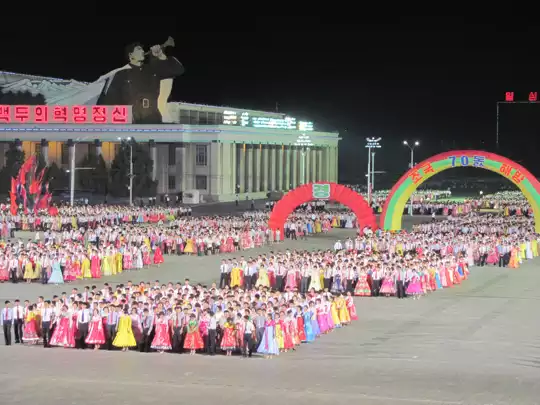
Most people realize too late that the Pyongyang Marathon’s biggest perk is logistical: once you’re in, your tour company handles almost everything—permits, transport, stadium entry—so you burn energy on the run, not on red tape. The race happens in Pyongyang, the capital of North Korea, centered on Kim Il Sung Stadium and looping through the city’s wide, choreographed boulevards. It’s less a music festival and more a state-framed sports spectacle: mass games–style performances, marching bands, and carefully arranged crowds. The audience is a mix of tightly supervised locals and foreign runners chasing a “country tick” and a surreal story. The vibe is intense, controlled, and oddly exhilarating. It’s usually a one-day event inside a mandatory multi-day tour. Worth it if you’re an experienced traveler who understands the ethics and accepts zero spontaneity; not worth it if you crave freedom, street life, or unfiltered contact with locals.

Discover everything you want to know in the 📖 North Korea Travel Guide.
Safety warning

The current risk level for North Korea is high. Check the advice before going.


Get your North Korea guide
74 ranked highlights, routes & tips, works offline (296 pages)
Loading the map 🌍
CLICK TO FILTER
cities
towns
landmarks
national parks
hikes
beaches
attractions
festivals
regions
SHOW COUNTRY’S BESTSHOW ALL

✨ Why go?
Ranked #3 festival in North Korea
What makes this festival worth celebrating

Backpackers often plan their routes around the Pyongyang Marathon for a reason. This isn’t just a race; it’s a social energy explosion. Imagine running alongside locals, feeling the pulse of a temporary community that thrives on shared experience. It’s a chance to immerse yourself in a culture that’s often misunderstood.

The marathon is a cultural immersion opportunity, offering insights into North Korean life that you won’t find in guidebooks. Plus, the affordability compared to similar global events makes it a no-brainer. You get a unique experience without breaking the bank.

Integrating the marathon into your travel plans can also enhance your journey. It’s a perfect way to break up the intensity of exploring a country that can feel heavy at times. You’ll leave with more than just a … read more 👉
Backpackers often plan their routes around the Pyongyang Marathon for a reason. This isn’t just a race; it’s a social energy explosion. Imagine running alongside locals, feeling the pulse of a temporary community that thrives on shared experience. It’s a chance to immerse yourself in a culture that’s often misunderstood.

The marathon is a cultural immersion opportunity, offering insights into North Korean life that you won’t find in guidebooks. Plus, the affordability compared to similar global events makes it a no-brainer. You get a unique experience without breaking the bank.

Integrating the marathon into your travel plans can also enhance your journey. It’s a perfect way to break up the intensity of exploring a country that can feel heavy at times. You’ll leave with more than just a medal; you’ll carry stories and connections that enrich your entire trip.

So, lace up those shoes and get ready to run. The Pyongyang Marathon isn’t just about the finish line; it’s about the moments that fuel your adventure.
Want to include Pyongyang Marathon in your North Korea route?
Create a personalized North Korea itinerary that includes Pyongyang Marathon and the places that fit your trip — based on your travel style, budget, and available time. Get your route in seconds.

Generate my trip

💡 HighlightsDon't-miss highlights and experiences

  • Running through the city’s grand boulevards and monuments — The course takes you down wide, often empty-feeling streets framed by monumental architecture and staged public spaces. It’s oddly cinematic: long sightlines, big façades, and a feeling you don’t get in most city marathons. Personal favorite — nothing beats those sunrise-kinda moments when the city looks like a running set.
  • The organized, high-energy cheering squads — Expect disciplined, rhythmic support from schools and local groups: flags, drums, coordinated chants. It’s not the boozy, spontaneous cheering you’d get elsewhere, but the intensity and uniformity create a unique race-day buzz.
  • Pre- and post-race cultural performances — The event is framed by staged music, dance and opening ceremonies that feel ceremonial rather
read more 👉
  • Running through the city’s grand boulevards and monuments — The course takes you down wide, often empty-feeling streets framed by monumental architecture and staged public spaces. It’s oddly cinematic: long sightlines, big façades, and a feeling you don’t get in most city marathons. Personal favorite — nothing beats those sunrise-kinda moments when the city looks like a running set.
  • The organized, high-energy cheering squads — Expect disciplined, rhythmic support from schools and local groups: flags, drums, coordinated chants. It’s not the boozy, spontaneous cheering you’d get elsewhere, but the intensity and uniformity create a unique race-day buzz.
  • Pre- and post-race cultural performances — The event is framed by staged music, dance and opening ceremonies that feel ceremonial rather than pop-concerty. These performances add context and local color to the day, so you’re not just running—you’re part of a bigger, curated celebration.
  • The rare mix of local and international runners — This is one of the few occasions where foreigners and locals share the same start line in a visible way. You’ll trade smiles, thumbs-up and the occasional “good job” gestures with people you might never otherwise meet, which makes the finish feel more like a shared experience.
  • Finish-line ritual, medals and photo ops — The finish area is structured and ceremonial: medals, group photos, national flags and staged backdrops. If you like tidy souvenirs and strong visual memories, the setup makes it easy to walk away with a clear memento of the day.
Spotted a mistake or missing something? Contact us.

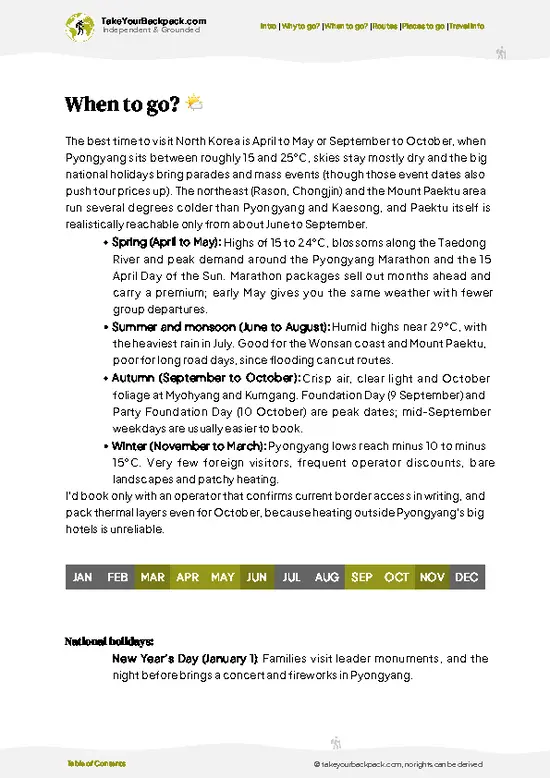
🌤️ When to go?When is the celebration of Pyongyang Marathon?


  • Topic: Weather – The Pyongyang Marathon happens in April, when spring is just waking up. Temperatures hover around 10-15°C (50-59°F), which is cool enough to keep you energized but not freezing your fingers off. Avoid the biting cold of winter or the sticky summer heat that hits later.

  • Topic: Temperature – Early April mornings can dip close to 5°C (41°F), so layer up for the start. By midday, expect a comfortable 15°C (59°F), perfect for running or walking without overheating. This balance keeps your energy steady without the drag of extreme temps.

  • Topic: Daylight Hours – Days stretch to about 12-13 hours, giving you plenty of light to soak in the city before and after the race. This means you can explore Pyongyang’s landmarks without rushing or losing daylight.

  • Topic: Crowds – The
read more 👉

  • Topic: Weather – The Pyongyang Marathon happens in April, when spring is just waking up. Temperatures hover around 10-15°C (50-59°F), which is cool enough to keep you energized but not freezing your fingers off. Avoid the biting cold of winter or the sticky summer heat that hits later.

  • Topic: Temperature – Early April mornings can dip close to 5°C (41°F), so layer up for the start. By midday, expect a comfortable 15°C (59°F), perfect for running or walking without overheating. This balance keeps your energy steady without the drag of extreme temps.

  • Topic: Daylight Hours – Days stretch to about 12-13 hours, giving you plenty of light to soak in the city before and after the race. This means you can explore Pyongyang’s landmarks without rushing or losing daylight.

  • Topic: Crowds – The marathon draws a mix of locals and international runners, but it’s never overwhelming. The crowd size is manageable, letting you soak in the atmosphere without feeling boxed in or rushed.

  • Topic: Seasonal Activities – Spring in Pyongyang means cherry blossoms and fresh greenery, adding a rare softness to the city’s concrete edges. This seasonal bloom is a quiet reward for timing your visit right.

  • Topic: Price Fluctuations – Prices for tours and accommodations spike slightly around the marathon due to demand, but not enough to break the bank. Booking early locks in better rates and avoids last-minute premium hikes.


Pro-tip: Aim for early April to catch the marathon’s cool, crisp air and the city’s spring bloom—this combo fuels your legs and your camera, making every step count.


source: climatestotravel.comJANJanuary: not recommended for travelingFEBFebruary: not recommended for travelingMARMarch: not recommended for travelingAPRApril: excellent for travelingMAYMay: not recommended for travelingJUNJune: not recommended for travelingJULJuly: not recommended for travelingAUGAugust: not recommended for travelingSEPSeptember: not recommended for travelingOCTOctober: not recommended for travelingNOVNovember: not recommended for travelingDECDecember: not recommended for traveling

✈️ The backpacker research shortcutNorth Korea Travel Guide

An offline-friendly backpacking guide with optimized travel routes, ranked highlights, transport advice, and the best areas to stay.
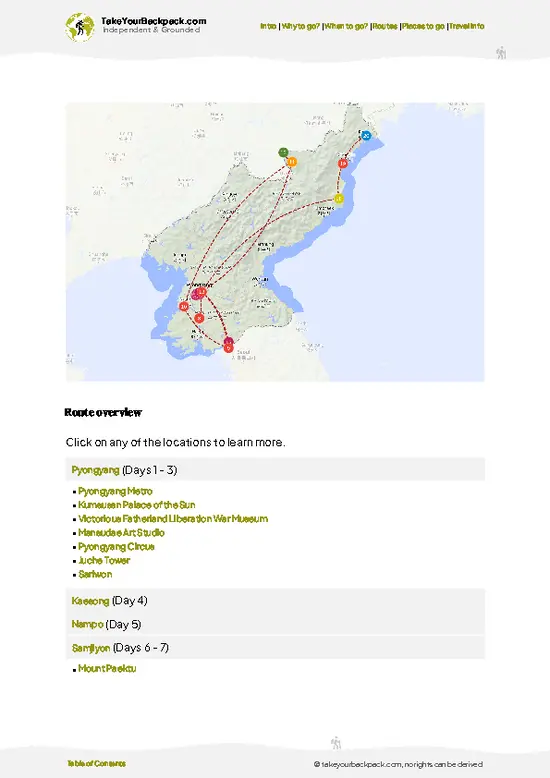
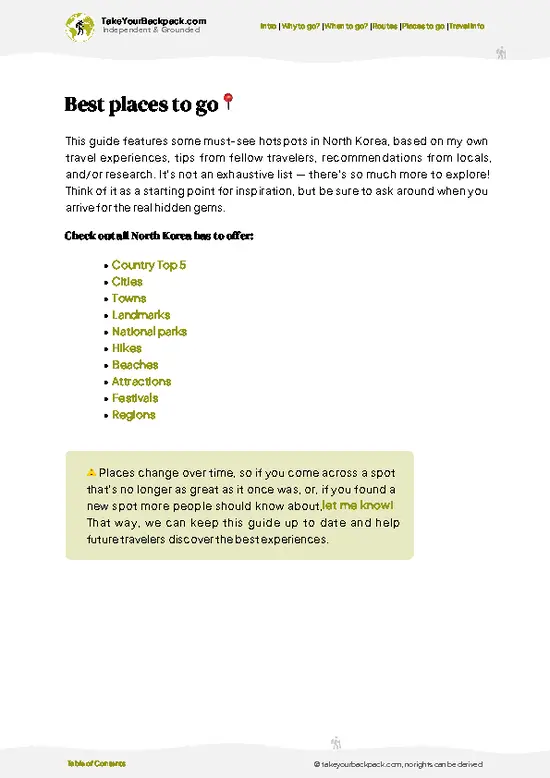
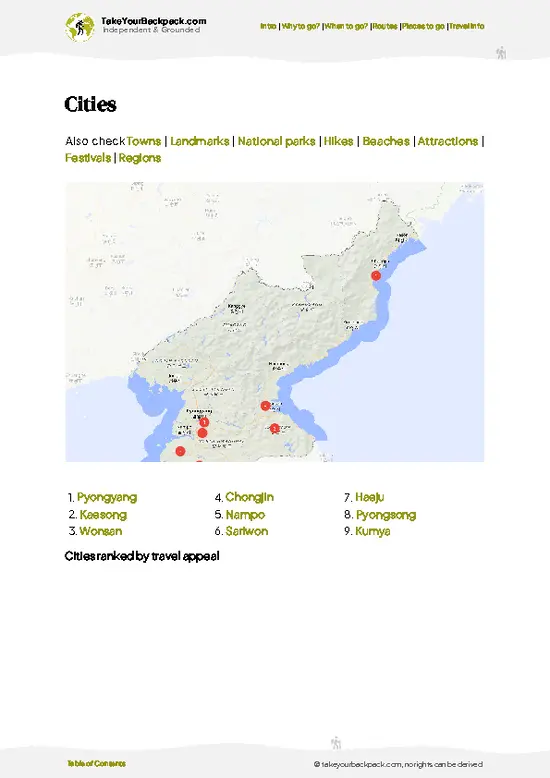
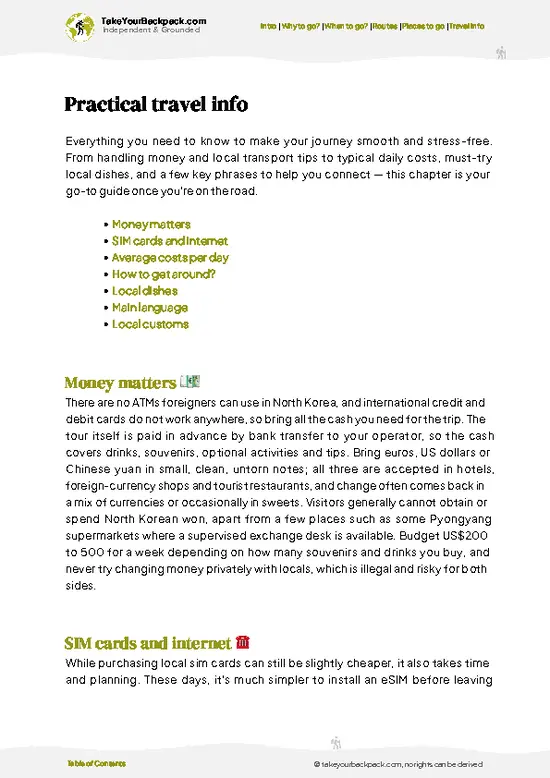
example page 0 from our offline Travel Guide for North Korea
example page 1 from our offline Travel Guide for North Korea
example page 2 from our offline Travel Guide for North Korea
example page 3 from our offline Travel Guide for North Korea
example page 4 from our offline Travel Guide for North Korea
example page 5 from our offline Travel Guide for North Korea
example page 6 from our offline Travel Guide for North Korea
example page 7 from our offline Travel Guide for North Korea
The digital guide (296 pages) contains:
74 highlights, ranked by travel appeal
Optimized 5, 10 & 15-day travel routes
Cities, national parks, landmarks, beaches
How to get around
Offline-friendly for travel without Wi-Fi
👉 Click to see all 30+ guide features

📅 Plan smarter in minutes, not weeks
Month by month travel advice
Festivals & national holidays
Budget expectations

🗺️ Go to the right places, skip the overrated ones
Honest pros & cons of destinations
Top hikes, parks & viewpoints
Lesser-known places most travelers miss
Clear “worth it vs skip it” guidance

🛏️ Travel smoothly without rookie mistakes
Best areas to stay
Transport systems explained simply
Common scams & safety advice
SIM cards, money & practical tips

🌍 Understand the country, not just visit it
Culture & traditions
52 Essential phrases & customs
Festivals worth planning around
Traveler-friendly historical context
Insights that make places more meaningful

📱 Built for real travel conditions
Fully downloadable PDF
Works completely offline
Optimized for phone use
Useful in remote areas & buses
Everything in one place
Save weeks of stressful planning
Get instant access to your full guide. 30‑day money-back guarantee.


By proceeding you agree to our terms.
Sent to your inbox immediately after payment • 100% Secure Checkout
Best Backpacking Travel Advisor 2025 tourism awardBest Backpacking
Travel Advisor
2025
What others say about Take Your Backpack Guides:
⭐⭐⭐⭐⭐
Fantastic, amazing amount of information!
⭐⭐⭐⭐⭐
My goodness this is amazing, it's what I've been looking for hats off too you!
⭐⭐⭐⭐⭐
I think this is absolutely BRILLIANT
⭐⭐⭐⭐
Very complete and informative. It's still missing places, but I gotta to commend you
⭐⭐⭐⭐⭐
This is truly amazing, thank you, can't wait to explore it with my kids!
⭐⭐⭐⭐⭐
Awesome resource, thank you!
⭐⭐⭐⭐⭐
This is amazing! Can't wait to explore the ones I haven't seen
⭐⭐⭐⭐
I love this! Well done, great idea.
⭐⭐⭐⭐⭐
Thanks for taking the time to make this gem!
⭐⭐⭐⭐⭐
This might be the best website I've ever seen.
⭐⭐⭐⭐⭐
Congratulations, and thank you so much for your work; it's incredibly valuable.
⭐⭐⭐⭐
In all seriousness I think you did a great job pointing out the important spots
⭐⭐⭐⭐⭐
10/10 very good
⭐⭐⭐⭐⭐
As someone who's only just starting to visit regularly this is awesome, thank you.
⭐⭐⭐⭐
Thank you very much! I'm going to visit my dad, it's going to be very useful!
⭐⭐⭐⭐⭐
This is really cool! We'll be travelling for the first time and this definitely come in handy.
⭐⭐⭐⭐⭐
You are now our minister of culture, congratulations 👨‍💼
⭐⭐⭐⭐⭐
Just wanted to tell you that this is a pearl! Going to follow your recommendations.
⭐⭐⭐⭐⭐
This is so cool. I'll definitely be using the resource for my travels soon.
⭐⭐⭐⭐⭐
This is very impressive! Good work.
⭐⭐⭐⭐⭐
This is an amazing and informative site. Very well done!

🛏️ Where to stay?Best areas and accommodation options

When you’re gearing up for the Pyongyang Marathon, your base matters. Stay in the central district for easy access to the race and the city’s pulse. This area buzzes with energy, making it perfect for solo travelers and budget backpackers. You’ll find a mix of local eateries and shops, where you can fuel up on hearty meals and mingle with fellow adventurers.

Consider the Juche Tower vicinity as another solid option. It’s a short stroll to the marathon route and offers a unique view of the city. The atmosphere here is vibrant, and you’ll often find other backpackers sharing stories and tips. Plus, … read more 👉
When you’re gearing up for the Pyongyang Marathon, your base matters. Stay in the central district for easy access to the race and the city’s pulse. This area buzzes with energy, making it perfect for solo travelers and budget backpackers. You’ll find a mix of local eateries and shops, where you can fuel up on hearty meals and mingle with fellow adventurers.

Consider the Juche Tower vicinity as another solid option. It’s a short stroll to the marathon route and offers a unique view of the city. The atmosphere here is vibrant, and you’ll often find other backpackers sharing stories and tips. Plus, the proximity to parks means you can stretch your legs before the big day.

Don’t overlook the Kim Il-sung Square area. It’s a cultural hub, rich in history and spectacle. Staying here puts you right in the heart of the action, with easy access to the marathon festivities. Just remember, accommodations can fill up fast, so plan ahead.

By choosing these areas, you’ll save energy and cash for the moments that truly matter—like crossing that finish line.

👛 Costs (as of 30 March 2026)What things cost and how to budget

The Pyongyang Marathon is a unique experience, but navigating the costs can be tricky. Here’s a breakdown to keep your budget intact while you soak in the atmosphere.
  • Festival Tickets: Expect to pay around €30 to €50 for a participant’s entry. If you’re just spectating, tickets can be cheaper, around €10 to €20. Secure these early; they can sell out fast.
  • Accommodation: Options range from €50 to €150 per night, depending on the hotel’s star rating and location. The Yanggakdo Hotel is a popular choice, offering basic amenities and a unique experience. Book in advance to avoid last-minute price hikes.
  • Local Transport: Public transport is limited, but taxis are available. Budget around €5 to €15 for short rides. If you’re part of an organized tour, transport may be included, but check the details
read more 👉
The Pyongyang Marathon is a unique experience, but navigating the costs can be tricky. Here’s a breakdown to keep your budget intact while you soak in the atmosphere.
  • Festival Tickets: Expect to pay around €30 to €50 for a participant’s entry. If you’re just spectating, tickets can be cheaper, around €10 to €20. Secure these early; they can sell out fast.
  • Accommodation: Options range from €50 to €150 per night, depending on the hotel’s star rating and location. The Yanggakdo Hotel is a popular choice, offering basic amenities and a unique experience. Book in advance to avoid last-minute price hikes.
  • Local Transport: Public transport is limited, but taxis are available. Budget around €5 to €15 for short rides. If you’re part of an organized tour, transport may be included, but check the details to avoid surprises.
  • Food & Drinks: Meals can cost between €5 and €20, depending on where you eat. Hotel restaurants tend to be pricier, while local eateries offer more budget-friendly options. Always have some cash on hand; card payments aren’t widely accepted.
  • Miscellaneous Expenses: This includes souvenirs, tips, and entry fees to attractions. Set aside around €20 to €50 for these extras. Be mindful of what you buy; some items can be overpriced.

Stay sharp and plan ahead to enjoy the marathon without breaking the bank.


source: korea-dpr.com
⚠️ Prices can change and everyone travels differently, so take this as a rough guide. Hope it helps you plan your adventure!

🍲 FoodLocal Flavors for Backpackers

At the **Pyongyang Marathon**, food and drinks are as much a part of the experience as the race itself. You’ll find **local specialties** like **naengmyeon**, cold buckwheat noodles served with a tangy broth, perfect for a refreshing bite. Street stalls buzz with energy, offering **mandu** (dumplings) stuffed with meat or vegetables. Don’t miss out on **kimchi**, the spicy fermented cabbage that packs a punch and is a staple in North Korean cuisine.

For drinks, grab a bottle of **Taedonggang beer**—it’s a local favorite and surprisingly smooth. If you’re feeling adventurous, try **soju**, a potent rice liquor that warms you up and adds to the camaraderie of the festival atmosphere.

When it comes to **etiquette**, be prepared for lines; patience is key. Sharing food is common, so don’t hesitate … read more 👉
At the **Pyongyang Marathon**, food and drinks are as much a part of the experience as the race itself. You’ll find **local specialties** like **naengmyeon**, cold buckwheat noodles served with a tangy broth, perfect for a refreshing bite. Street stalls buzz with energy, offering **mandu** (dumplings) stuffed with meat or vegetables. Don’t miss out on **kimchi**, the spicy fermented cabbage that packs a punch and is a staple in North Korean cuisine.

For drinks, grab a bottle of **Taedonggang beer**—it’s a local favorite and surprisingly smooth. If you’re feeling adventurous, try **soju**, a potent rice liquor that warms you up and adds to the camaraderie of the festival atmosphere.

When it comes to **etiquette**, be prepared for lines; patience is key. Sharing food is common, so don’t hesitate to offer a taste of what you’ve got. Cash is king here; credit cards are rare, so stock up on local currency. Serving sizes can be generous, so pace yourself—there’s plenty to savor. Embrace the lively spirit, and let the flavors fuel your adventure!

Other North Korean festivals near Pyongyang Marathon

Explore more nearby:


💡 Not sure where to go next?
Create a personalized itinerary for North Korea including Pyongyang Marathon and the places that fit your trip.

Generate my itinerary

👉 Discover all festivals

Or checkout all North Korea has to offer (think cities, towns, villages, national parks, hikes, beaches, festivals)
Country photo of North Korea

We 💚 feedbackSumming up the experience

Visiting the Pyongyang Marathon is like stepping into a living history book. The energy of thousands running through the city is electric, and the camaraderie among participants is something you won’t find elsewhere. But here’s the catch: navigating the strict regulations can be a buzzkill. Expect to follow rules that might feel stifling. Embrace the challenge, though; it’s part of what makes this experience so unique. Balance your expectations, and you’ll find the joy in every stride.

✈️ When did I visit North Korea?
As part of my 1.5 year travel around the world trip, I visited North Korea in August 2015. I had never expected I was able to get in.

✍️ Help improve this page!
The information on this page is based on my own backpacking experience in North Korea, supplemented with up-to-date research and feedback from other travelers. Travel details can change, so if you notice anything outdated or incomplete, feel free to let me know.


🙋‍♂️ Give feedback

👋 Meet the founderWho’s Behind Take Your Backpack?

Johan, backpacker and founder of TakeYourBackpackHi, I’m Johan (Netherlands 🇳🇱), the creator of TakeYourBackpack. Over the past decade, I’ve backpacked through 80+ countries across six continents, gaining extensive experience with independent travel, long-term trips, and overland routes.

This site is built on a combination of firsthand travel experience and carefully curated insights from other backpackers. Many guides are based on places I’ve personally visited, while others bring together tips, observations, and practical advice shared by trusted travelers I’ve met along the way.

The goal is to provide realistic, experience-driven guidance — not generic itineraries — so you can explore destinations with better context, clearer expectations, and more confidence.

Get full country guide •
Instant download • 74 highlights • Full Offline guide