v2.webp)
The 10th-Century Frescoes: Art That’s Survived Empires
You’ll see tourists snapping selfies in the courtyard, but the real jaw-dropper is inside the original church. The frescoes aren’t just old—they’re survivors. Painted in the 13th and 14th centuries, these walls have outlasted the Ottomans, earthquakes, and more than a few overzealous restoration attempts. The colors are still wild: deep blues, gold halos, saints with eyes that follow you. Forget the filter—this is medieval Balkan art at its most raw and unpolished. If you’ve seen a hundred European churches, you still haven’t seen this.
The Springs of St. Naum: Water So Clear It’s Almost Unfair
Instagram will show you the monastery perched above Lake Ohrid, but it skips the real magic: the springs behind the complex. The water here is … read more 👉
You’ll see tourists snapping selfies in the courtyard, but the real jaw-dropper is inside the original church. The frescoes aren’t just old—they’re survivors. Painted in the 13th and 14th centuries, these walls have outlasted the Ottomans, earthquakes, and more than a few overzealous restoration attempts. The colors are still wild: deep blues, gold halos, saints with eyes that follow you. Forget the filter—this is medieval Balkan art at its most raw and unpolished. If you’ve seen a hundred European churches, you still haven’t seen this.
The Springs of St. Naum: Water So Clear It’s Almost Unfair
Instagram will show you the monastery perched above Lake Ohrid, but it skips the real magic: the springs behind the complex. The water here is … read more 👉
The 10th-Century Frescoes: Art That’s Survived Empires
You’ll see tourists snapping selfies in the courtyard, but the real jaw-dropper is inside the original church. The frescoes aren’t just old—they’re survivors. Painted in the 13th and 14th centuries, these walls have outlasted the Ottomans, earthquakes, and more than a few overzealous restoration attempts. The colors are still wild: deep blues, gold halos, saints with eyes that follow you. Forget the filter—this is medieval Balkan art at its most raw and unpolished. If you’ve seen a hundred European churches, you still haven’t seen this.
The Springs of St. Naum: Water So Clear It’s Almost Unfair
Instagram will show you the monastery perched above Lake Ohrid, but it skips the real magic: the springs behind the complex. The water here is so clear you’ll doubt your own eyes. Take a rowboat (yes, a real wooden one, rowed by a local who’s probably rowed since childhood) and glide over underwater forests, watching fish dart beneath you. It’s not just pretty—it’s a living, breathing ecosystem, and the silence is a rare commodity in the Balkans. This is the kind of place where you can hear your own thoughts, or just the splash of an oar.
Peacocks on Patrol: The Unexpected Mascots
No, you’re not hallucinating. The monastery grounds are patrolled by a small army of peacocks, strutting like they own the place. They’re loud, they’re flashy, and they’re not shy about photobombing your lunch. It’s a surreal, almost comic touch—Byzantine spirituality meets Balkan barnyard. Kids love them, adults pretend not to, but everyone ends up with a peacock story.
The Tomb of St. Naum: A Pilgrimage with a Pulse
Locals will tell you to press your ear to the saint’s stone tomb and listen for his heartbeat. Is it real? Science says no, but the ritual is half the fun. It’s a rare blend of faith, folklore, and a little bit of theater. Even if you’re not spiritual, the energy in the chapel is thick—candles flicker, pilgrims whisper, and for a moment, you’re part of a tradition that’s been alive for a thousand years.
Lake Ohrid Views: The Real Million-Dollar Shot
Forget the drone footage. Stand at the edge of the monastery’s cliff and look out over Lake Ohrid. The water is impossibly blue, the Albanian mountains loom across the way, and if you time it right, the sunset will make you forget every busload of tourists you elbowed past to get here. This isn’t just a photo op—it’s a reminder that geography can be spiritual, too.
Monastery Courtyard Cafés: Coffee with Character
Skip the overpriced restaurant at the entrance and grab a Turkish coffee in the shaded courtyard. The tables are mismatched, the service is Balkan-speed (read: slow), but the people-watching is world-class. You’ll see everything from Orthodox priests to backpackers with muddy boots, all soaking up the same lazy afternoon. This is the kind of place where time slows down, and that’s the real luxury.
You’ll see tourists snapping selfies in the courtyard, but the real jaw-dropper is inside the original church. The frescoes aren’t just old—they’re survivors. Painted in the 13th and 14th centuries, these walls have outlasted the Ottomans, earthquakes, and more than a few overzealous restoration attempts. The colors are still wild: deep blues, gold halos, saints with eyes that follow you. Forget the filter—this is medieval Balkan art at its most raw and unpolished. If you’ve seen a hundred European churches, you still haven’t seen this.
The Springs of St. Naum: Water So Clear It’s Almost Unfair
Instagram will show you the monastery perched above Lake Ohrid, but it skips the real magic: the springs behind the complex. The water here is so clear you’ll doubt your own eyes. Take a rowboat (yes, a real wooden one, rowed by a local who’s probably rowed since childhood) and glide over underwater forests, watching fish dart beneath you. It’s not just pretty—it’s a living, breathing ecosystem, and the silence is a rare commodity in the Balkans. This is the kind of place where you can hear your own thoughts, or just the splash of an oar.
Peacocks on Patrol: The Unexpected Mascots
No, you’re not hallucinating. The monastery grounds are patrolled by a small army of peacocks, strutting like they own the place. They’re loud, they’re flashy, and they’re not shy about photobombing your lunch. It’s a surreal, almost comic touch—Byzantine spirituality meets Balkan barnyard. Kids love them, adults pretend not to, but everyone ends up with a peacock story.
The Tomb of St. Naum: A Pilgrimage with a Pulse
Locals will tell you to press your ear to the saint’s stone tomb and listen for his heartbeat. Is it real? Science says no, but the ritual is half the fun. It’s a rare blend of faith, folklore, and a little bit of theater. Even if you’re not spiritual, the energy in the chapel is thick—candles flicker, pilgrims whisper, and for a moment, you’re part of a tradition that’s been alive for a thousand years.
Lake Ohrid Views: The Real Million-Dollar Shot
Forget the drone footage. Stand at the edge of the monastery’s cliff and look out over Lake Ohrid. The water is impossibly blue, the Albanian mountains loom across the way, and if you time it right, the sunset will make you forget every busload of tourists you elbowed past to get here. This isn’t just a photo op—it’s a reminder that geography can be spiritual, too.
Monastery Courtyard Cafés: Coffee with Character
Skip the overpriced restaurant at the entrance and grab a Turkish coffee in the shaded courtyard. The tables are mismatched, the service is Balkan-speed (read: slow), but the people-watching is world-class. You’ll see everything from Orthodox priests to backpackers with muddy boots, all soaking up the same lazy afternoon. This is the kind of place where time slows down, and that’s the real luxury.
Spotted a mistake or missing something? Contact us.

Monastery Winery Tour and Wine Tasting

Paragliding above Ohrid

Lake Ohrid Boat Trip Bay of Bones Saint Naum and Swim

S&S Winery - Wine Tasting Experience in Ohrid

Ohrid Old Town Panoramic Boat Tour

Ohrid cooking classes

ATV Full Day Adventure through National Park Galicica Ohrid

Stand up Paddle Tour in Lake Ohrid

Discover Ohrid Old Town Through the Eyes of a Local


 Best Backpacking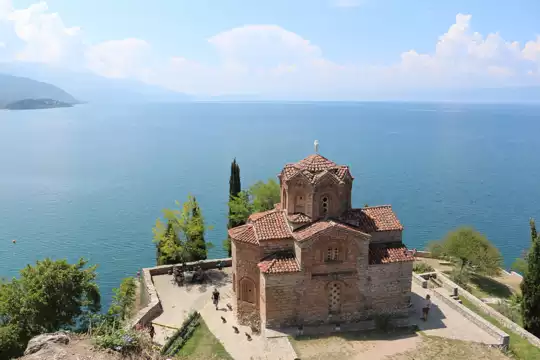
.jpg) Hi, I’m Johan (Netherlands 🇳🇱), the creator of TakeYourBackpack. Over the past 3 decades, I’ve backpacked through 90+ countries across six continents, gaining extensive experience with independent travel, long-term trips, and overland routes.
Hi, I’m Johan (Netherlands 🇳🇱), the creator of TakeYourBackpack. Over the past 3 decades, I’ve backpacked through 90+ countries across six continents, gaining extensive experience with independent travel, long-term trips, and overland routes.