×

Norway🇳🇴 | townsLofotenFishing villages, jagged peaks, white sand beaches | things to do and best time to go

Explore NarvikExplore Svolvær

Backpacking in Lofoten
🏆 Top picktown ranked #1
By Johan Kruseman 🇳🇱 | Updated September 4, 2026

Ten years ago Lofoten felt like a rumor: empty bus stops in the drizzle, fishing villages smelling of cod and seaweed, one German van in the whole parking lot. Now the same islands are on every screen, and you feel it in the summer crush at trailheads and supermarket queues. Lofoten sits far up in Nordland county, above the Arctic Circle, a crooked arm of islands reaching into the Norwegian Sea. As a backpacker destination, think of it less as “a town” and more as a scattered chain of small hubs like Svolvær, Henningsvær, Reine, and Å. They’re your bases, not the main event.

You come here for ridgeline hikes, cold beaches with turquoise water, and evenings cooking pasta in a rorbu while the light refuses to die. Buses exist but run on island time; hitchhiking is common, renting a car or sharing one with hostel mates is the pro move. It’s safe, pricey even by Norway standards, and social in a low-key way: a couple of hostels, a few bars and bakeries where everyone’s in wool and Gore‑Tex, comparing weather apps. Compared with Bodø on the mainland, Lofoten is less practical, more dramatic, and far more seasonal; it works best as a deliberate detour and multi‑night base, not a quick stop between big cities.

Discover everything you want to know in the 📖 Norway Travel Guide.


Get your Norway guide
101 ranked highlights, routes & tips, works offline (380 pages)
Loading the map 🌍
CLICK TO FILTER
cities
towns
villages
landmarks
national parks
hikes
beaches
attractions
festivals
regions
SHOW COUNTRY’S BESTSHOW ALL

✨ Why go?
Ranked #1 town in Norway
What makes it a must-see town

Lofoten draws backpackers for its strategic location within a stunning landscape, making it a perfect base for hikes and beaches. The dramatic peaks and crystal-clear waters are just a short bus ride away, allowing you to dive into nature without wasting time. The town’s walkable streets create a cozy atmosphere, where you can easily pop into small-scale hostels or guesthouses that feel like home. Here, you’ll find friendly locals and fellow travelers, fostering a social vibe that’s perfect for solo adventurers or small groups looking to connect.

Most backpackers tend to linger a few days, soaking in the local food experiences—think fresh fish and hearty stews—while planning their next outdoor escapade. The pace is relaxed, ideal for slow travelers who appreciate the journey as much as the … read more 👉
Lofoten draws backpackers for its strategic location within a stunning landscape, making it a perfect base for hikes and beaches. The dramatic peaks and crystal-clear waters are just a short bus ride away, allowing you to dive into nature without wasting time. The town’s walkable streets create a cozy atmosphere, where you can easily pop into small-scale hostels or guesthouses that feel like home. Here, you’ll find friendly locals and fellow travelers, fostering a social vibe that’s perfect for solo adventurers or small groups looking to connect.

Most backpackers tend to linger a few days, soaking in the local food experiences—think fresh fish and hearty stews—while planning their next outdoor escapade. The pace is relaxed, ideal for slow travelers who appreciate the journey as much as the destination. While Lofoten isn’t a nightlife hub, its charm lies in the quiet evenings spent sharing stories over a warm meal or gazing at the midnight sun. If you’re seeking a blend of adventure and community, Lofoten is more than just a stop; it’s a rewarding chapter in your backpacking story.
Want to include Lofoten in your Norway route?
Create a personalized Norway itinerary that includes Lofoten and the places that fit your trip — based on your travel style, budget, and available time. Get your route in seconds.

Generate my trip

💡 HighlightsThe experiences that define the visit

  • Reine and Reinebringen viewpoint — The picture-postcard fishing village of red rorbuer beneath jagged peaks; the short-but-steep Reinebringen hike rewards you with one of the most jaw-dropping panoramas in Lofoten, great for sunrise or late-evening light.
  • Hamnøy and Sakrisøy — A tiny cluster of classic rorbuer and wooden bridges that photographers and painters obsess over; wandering the wharfs gives a real feel for working fishing-community life, especially at low tide.
  • Nusfjord — One of Norway’s best-preserved traditional fishing villages: original boathouses, a small museum and working fisheries offer a tangible link to Lofoten’s stockfish economy and everyday history.
  • Å (Å i Lofoten) and the Norwegian Fishing Village Museum — The literal end of the E10 and a living museum of stockfish
read more 👉
  • Reine and Reinebringen viewpoint — The picture-postcard fishing village of red rorbuer beneath jagged peaks; the short-but-steep Reinebringen hike rewards you with one of the most jaw-dropping panoramas in Lofoten, great for sunrise or late-evening light.
  • Hamnøy and Sakrisøy — A tiny cluster of classic rorbuer and wooden bridges that photographers and painters obsess over; wandering the wharfs gives a real feel for working fishing-community life, especially at low tide.
  • Nusfjord — One of Norway’s best-preserved traditional fishing villages: original boathouses, a small museum and working fisheries offer a tangible link to Lofoten’s stockfish economy and everyday history.
  • Å (Å i Lofoten) and the Norwegian Fishing Village Museum — The literal end of the E10 and a living museum of stockfish production, drying racks and old wooden houses — you can touch the history and buy locally cured fish from the source.
  • Lofotr Viking Museum (Borg) — A full-scale reconstructed chieftain’s longhouse with hands-on demonstrations, archaeological exhibits and boat reconstructions — the best place to experience Viking-age life in northern Norway.
  • Svolværgeita (the Svolvær “Goat”) and Svolvær harbour — That twin-horned skerry is a local climbing legend you can watch climbers top out on, while Svolvær’s galleries, fish markets and island-hopping boat tours make for a lively town stop.
  • Henningsvær and KaviarFactory — An arty, still-working fishing village spread across tiny islets; the KaviarFactory contemporary art space and the famous football pitch on the rocks show how culture and sea life mix here.
  • Unstad Beach and Arctic surfing — A surprising surf spot tucked into a fjord: Unstad has a small surf community and school, so you can actually try surfing in Arctic conditions (wetsuit and guide recommended).
  • Kvalvika Beach and the Ryten ridge — A properly wild, wind-blown beach only reachable by foot, plus the Ryten summit above it for panoramic views — excellent for hikers who want solitude and dramatic scenery.
  • Uttakleiv and Haukland beaches — Wide, white-sand beaches with sculpted boulders and clear water; popular with photographers for sunsets and northern lights, but roomy enough to find quiet stretches as well.
A few real, visitable highlights just outside Lofoten worth day-tripping to are Andøya for whale safaris, the Narvik area for WWII history and the Ofoten Railway, and the island of Senja for equally dramatic coastal drives and hikes.
Spotted a mistake or missing something? Contact us.

Things to do near Lofoten

Ratings based on Tripadvisor reviews. When you book through this link, you support our work at no extra cost to you.

🏘️ NeighborhoodsWhere things are and how it's laid out

Lofoten is a stunning archipelago that offers a blend of rugged beauty and cozy charm. Each area has its own character, making it essential to choose wisely for your backpacking adventure.

Reine: This picturesque village is a postcard come to life. It’s perfect for short stays, with easy access to hiking trails and stunning views. The vibe is tranquil, ideal for soaking in the scenery. Costs can be higher here, especially for accommodations, but the experience is worth it. You can walk everywhere, and the local eateries serve up fresh seafood that’s hard to beat.

Å: The last village on the road, Å is a quiet spot that feels like stepping back in time. It’s great for those looking to escape the hustle. The atmosphere is serene, making it perfect for longer stays. While the nightlife is minimal, … read more 👉
Lofoten is a stunning archipelago that offers a blend of rugged beauty and cozy charm. Each area has its own character, making it essential to choose wisely for your backpacking adventure.

Reine: This picturesque village is a postcard come to life. It’s perfect for short stays, with easy access to hiking trails and stunning views. The vibe is tranquil, ideal for soaking in the scenery. Costs can be higher here, especially for accommodations, but the experience is worth it. You can walk everywhere, and the local eateries serve up fresh seafood that’s hard to beat.

Å: The last village on the road, Å is a quiet spot that feels like stepping back in time. It’s great for those looking to escape the hustle. The atmosphere is serene, making it perfect for longer stays. While the nightlife is minimal, the local museum and fishing history provide a unique glimpse into the area. Accommodations are more affordable, and you can easily hike or bike to nearby trails.

Svolvær: The capital of Lofoten, Svolvær is where the action is. It’s bustling with restaurants, shops, and nightlife, making it ideal for social backpackers. The transport access is excellent, with ferries and buses connecting you to other islands. While it can be pricier, you’ll find a range of options for all budgets. This area suits both short and longer stays, especially if you want to explore the vibrant local culture.

Henningsvær: Known as the “Venice of Lofoten,” this charming fishing village is a blend of art and nature. It’s walkable and offers a laid-back vibe, perfect for those who appreciate local art galleries and cafes. Costs are moderate, and it’s a great base for exploring nearby hiking spots. The nightlife is low-key, making it suitable for those who prefer quiet evenings after a day of adventure.

⌛️ 1 dayHow to make the most of one day

Lofoten, Norway, is a wild canvas of jagged peaks, deep fjords, and quaint fishing villages. The air is crisp, infused with the scent of salt and pine, and the light dances differently here, especially during the midnight sun. This is a place where nature’s drama unfolds, and every corner invites exploration.

Start your morning in the village of Reine, often hailed as one of the most picturesque spots in Lofoten. Grab a coffee at Reinebringen Café, where the barista might share tales of local hikes while you sip your brew. The view from the café, with its backdrop of towering mountains and the shimmering fjord, sets the tone for the day. Afterward, lace up your boots and tackle the Reinebringen hike. It’s a steep climb, but the payoff is a panoramic vista that feels like you’ve stepped into … read more 👉
Lofoten, Norway, is a wild canvas of jagged peaks, deep fjords, and quaint fishing villages. The air is crisp, infused with the scent of salt and pine, and the light dances differently here, especially during the midnight sun. This is a place where nature’s drama unfolds, and every corner invites exploration.

Start your morning in the village of Reine, often hailed as one of the most picturesque spots in Lofoten. Grab a coffee at Reinebringen Café, where the barista might share tales of local hikes while you sip your brew. The view from the café, with its backdrop of towering mountains and the shimmering fjord, sets the tone for the day. Afterward, lace up your boots and tackle the Reinebringen hike. It’s a steep climb, but the payoff is a panoramic vista that feels like you’ve stepped into a postcard.

By midday, head to the nearby village of Å, a hidden treasure often overlooked by tourists. Here, the traditional rorbuer (fishing cabins) line the waterfront, and the Lofoten Stockfish Museum offers a glimpse into the region’s fishing heritage. The scent of drying fish wafts through the air, a reminder of the town’s storied past. Take a leisurely stroll along the harbor, snapping photos of the vibrant red cabins against the backdrop of the rugged landscape.

As evening approaches, make your way to Henningsvær, a charming fishing village known for its art scene. Dine at Fiskekrogen, where the catch of the day is served fresh, and the atmosphere buzzes with local chatter. After dinner, wander through the narrow streets, where galleries showcase local artists. The soft glow of the setting sun casts a golden hue over the water, making it the perfect backdrop for reflection.

In just one day, you’ll experience the essence of Lofoten: its breathtaking landscapes, rich culture, and the warmth of its people. Each moment, from the climb to the cozy dinner, weaves together a tapestry of adventure that feels both earned and unforgettable.
Turn your Lofoten visit into an Norway adventure
Build a complete Norway route with Lofoten, hidden gems, must-see destinations, and realistic travel times included.

Generate my trip

🌤️ When to go?Choosing the right time of year


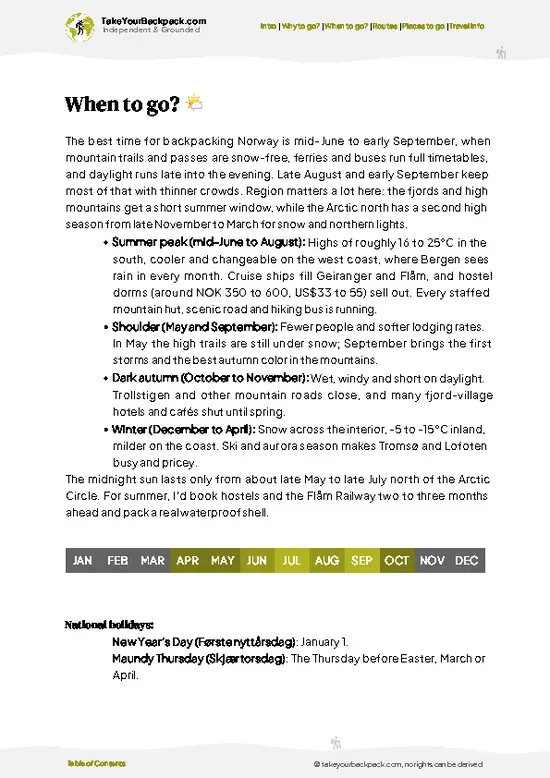
  • Weather: Lofoten’s weather swings wildly. Summer (June to August) offers mild temps around 12-15°C (54-59°F), perfect for hiking without freezing or sweating buckets. Winter plunges to -1 to 3°C (30-37°F), icy but magical with snow-dusted peaks.

  • Daylight Hours: Midnight sun floods the sky from late May to mid-July, giving you endless golden hours to explore. Conversely, polar nights from December to January mean near-total darkness—great for Northern Lights but tricky for daytime trekking.

  • Crowds: Summer draws the bulk of visitors, especially July. Trails and ferries fill up, and prices spike. Shoulder seasons (May and September) offer quieter paths and more breathing room without sacrificing decent weather.

  • Seasonal Activities: Summer is prime for kayaking, fishing, and hiking. Winter
read more 👉

  • Weather: Lofoten’s weather swings wildly. Summer (June to August) offers mild temps around 12-15°C (54-59°F), perfect for hiking without freezing or sweating buckets. Winter plunges to -1 to 3°C (30-37°F), icy but magical with snow-dusted peaks.

  • Daylight Hours: Midnight sun floods the sky from late May to mid-July, giving you endless golden hours to explore. Conversely, polar nights from December to January mean near-total darkness—great for Northern Lights but tricky for daytime trekking.

  • Crowds: Summer draws the bulk of visitors, especially July. Trails and ferries fill up, and prices spike. Shoulder seasons (May and September) offer quieter paths and more breathing room without sacrificing decent weather.

  • Seasonal Activities: Summer is prime for kayaking, fishing, and hiking. Winter transforms Lofoten into a playground for skiing, snowshoeing, and aurora chasing. Spring and autumn bring birdwatching and calmer landscapes.

  • Price Fluctuations: Expect accommodation and transport costs to peak in July and August. Booking outside these months can save you a solid chunk of cash and often lands you better local experiences.


Pro-tip: Aim for late May or early September—cool, crisp air, fewer crowds, and that sweet spot of daylight that lets you soak in the raw, rugged charm without the summer crush.


source: climatestotravel.comJANJanuary: fair for travelingFEBFebruary: fair for travelingMARMarch: good for travelingAPRApril: good for travelingMAYMay: highly recommended for travelingJUNJune: excellent for travelingJULJuly: highly recommended for travelingAUGAugust: highly recommended for travelingSEPSeptember: highly recommended for travelingOCTOctober: good for travelingNOVNovember: fair for travelingDECDecember: fair for traveling
when-to-go

✈️ The backpacker research shortcutNorway Travel Guide

An offline-friendly backpacking guide with optimized travel routes, ranked highlights, transport advice, and the best areas to stay.
example page 0 from our offline Travel Guide for Norway
example page 1 from our offline Travel Guide for Norway
example page 2 from our offline Travel Guide for Norway
example page 3 from our offline Travel Guide for Norway
example page 4 from our offline Travel Guide for Norway
example page 5 from our offline Travel Guide for Norway
example page 6 from our offline Travel Guide for Norway
example page 7 from our offline Travel Guide for Norway
The digital guide (380 pages) contains:
101 highlights, ranked by travel appeal
Optimized 5, 10 & 15-day travel routes
Cities, national parks, landmarks, beaches
How to get around
Offline-friendly for travel without Wi-Fi
👉 Click to see all 30+ guide features

📅 Plan smarter in minutes, not weeks
Month by month travel advice
Festivals & national holidays
Budget expectations

🗺️ Go to the right places, skip the overrated ones
Honest pros & cons of destinations
Top hikes, parks & viewpoints
Lesser-known places most travelers miss
Clear “worth it vs skip it” guidance

🛏️ Travel smoothly without rookie mistakes
Best areas to stay
Transport systems explained simply
Common scams & safety advice
SIM cards, money & practical tips

🌍 Understand the country, not just visit it
Culture & traditions
52 Essential phrases & customs
Festivals worth planning around
Traveler-friendly historical context
Insights that make places more meaningful

📱 Built for real travel conditions
Fully downloadable PDF
Works completely offline
Optimized for phone use
Useful in remote areas & buses
Everything in one place
Save weeks of stressful planning
Get instant access to your full guide. 30‑day money-back guarantee.
+ Add another guide for just US$7.80

By proceeding you agree to our terms.
Sent to your inbox immediately after payment • 100% Secure Checkout
Best Backpacking Travel Advisor 2025 tourism awardBest Backpacking
Travel Advisor
2025
What others say about Take Your Backpack Guides:
⭐⭐⭐⭐⭐
Fantastic, amazing amount of information!
⭐⭐⭐⭐⭐
My goodness this is amazing, it's what I've been looking for hats off too you!
⭐⭐⭐⭐⭐
I think this is absolutely BRILLIANT
⭐⭐⭐⭐
Very complete and informative. It's still missing places, but I gotta to commend you
⭐⭐⭐⭐⭐
This is truly amazing, thank you, can't wait to explore it with my kids!
⭐⭐⭐⭐⭐
Awesome resource, thank you!
⭐⭐⭐⭐⭐
This is amazing! Can't wait to explore the ones I haven't seen
⭐⭐⭐⭐
I love this! Well done, great idea.
⭐⭐⭐⭐⭐
Thanks for taking the time to make this gem!
⭐⭐⭐⭐⭐
This might be the best website I've ever seen.
⭐⭐⭐⭐⭐
Congratulations, and thank you so much for your work; it's incredibly valuable.
⭐⭐⭐⭐
In all seriousness I think you did a great job pointing out the important spots
⭐⭐⭐⭐⭐
10/10 very good
⭐⭐⭐⭐⭐
As someone who's only just starting to visit regularly this is awesome, thank you.
⭐⭐⭐⭐
Thank you very much! I'm going to visit my dad, it's going to be very useful!
⭐⭐⭐⭐⭐
This is really cool! We'll be travelling for the first time and this definitely come in handy.
⭐⭐⭐⭐⭐
You are now our minister of culture, congratulations 👨‍💼
⭐⭐⭐⭐⭐
Just wanted to tell you that this is a pearl! Going to follow your recommendations.
⭐⭐⭐⭐⭐
This is so cool. I'll definitely be using the resource for my travels soon.
⭐⭐⭐⭐⭐
This is very impressive! Good work.
⭐⭐⭐⭐⭐
This is an amazing and informative site. Very well done!

🛏️ Where to stay?Best areas to stay in Norway

In Lofoten, the real backpacker pulse beats strongest in the villages of Svolvær and Henningsvær. These spots aren’t just dots on a map; they’re where the air carries the salt of the sea and the chatter of fellow travelers, making them ideal for solo adventurers craving connection without sacrificing safety. Svolvær, the administrative heart, hums with a practical energy—shops, cafes, and hostels cluster close enough to walk, so you’re never far from a warm meal or a fresh coffee after a day chasing the northern lights or hiking rugged trails. The light here is sharp and clear, especially in the … read more 👉
In Lofoten, the real backpacker pulse beats strongest in the villages of Svolvær and Henningsvær. These spots aren’t just dots on a map; they’re where the air carries the salt of the sea and the chatter of fellow travelers, making them ideal for solo adventurers craving connection without sacrificing safety. Svolvær, the administrative heart, hums with a practical energy—shops, cafes, and hostels cluster close enough to walk, so you’re never far from a warm meal or a fresh coffee after a day chasing the northern lights or hiking rugged trails. The light here is sharp and clear, especially in the low winter sun, casting long shadows that make the wooden piers and fishing boats feel like a living postcard.

Henningsvær, a bit smaller and more intimate, offers a quieter vibe but still draws a steady stream of budget travelers. Its narrow streets and waterfront views create a cozy atmosphere where hostel common rooms become natural gathering spots. Staying here means waking up to the smell of the sea mingled with wood smoke, a sensory reminder that you’re deep in the Arctic rhythm.

Compared to more remote or upscale parts of Lofoten, these villages balance accessibility with authenticity. You avoid the isolation that can come with outlying cabins and the tourist-heavy feel of pricier resorts. Instead, you get a community feel, where swapping stories over a shared kitchen table is as much part of the trip as the landscape itself.

🚌 Getting aroundHow to get around Lofoten

Lofoten moves at its own rhythm—part wild, part deliberate. The daylight shifts dramatically with the seasons, stretching long and golden in summer, then retreating into a quiet, blue twilight in winter. This isn’t a place where you’ll find a frantic rush or a strict timetable stamped on every moment. Instead, the town’s pulse is a blend of nature’s clock and human adaptability. Locals and travelers alike lean into the unpredictability of weather and ferry schedules, learning to read the wind and the waves as much as the bus stops. You’ll find that patience here isn’t just a virtue; it’s the key to unlocking the raw, rugged beauty that makes Lofoten unforgettable. The scent of salt and pine drifts through the air, and the sound of waves crashing against jagged cliffs is a constant backdrop. … read more 👉
Lofoten moves at its own rhythm—part wild, part deliberate. The daylight shifts dramatically with the seasons, stretching long and golden in summer, then retreating into a quiet, blue twilight in winter. This isn’t a place where you’ll find a frantic rush or a strict timetable stamped on every moment. Instead, the town’s pulse is a blend of nature’s clock and human adaptability. Locals and travelers alike lean into the unpredictability of weather and ferry schedules, learning to read the wind and the waves as much as the bus stops. You’ll find that patience here isn’t just a virtue; it’s the key to unlocking the raw, rugged beauty that makes Lofoten unforgettable. The scent of salt and pine drifts through the air, and the sound of waves crashing against jagged cliffs is a constant backdrop. Moving around requires a mix of planning and flexibility, but the payoff is a journey that feels earned, not rushed.


  • Walking: The best way to soak in Lofoten’s intimate villages and dramatic coastline. Trails and paths are well-marked, and distances between key spots like Reine, Å, and Hamnøy are manageable for most hikers. Walking is free, obviously, and lets you catch the crisp sea air and the subtle shifts in light that cars and buses miss.


  • Local Bus (Lofoten Buss): Runs between major villages with a schedule that adapts to the ferry times and school hours. First bus typically starts around 7:00 AM, last around 9:00 PM. Tickets cost about 50-70 NOK per ride, cheaper if you buy a day pass. Buses are reliable but can be slow, especially in winter when weather slows everything down. They’re comfortable enough, with heating and decent seating, but expect a few stops and a scenic, sometimes winding route.


  • Ferries: Essential for crossing fjords and reaching islands like Værøy or Røst. Schedules are fixed but limited—usually a few departures daily, often mid-morning and mid-afternoon. Prices vary but expect around 100-200 NOK per crossing. Ferries are a chance to breathe in the salty air and watch the mountains slide by, but missing one means a long wait, so plan carefully.


  • Car Rentals: The fastest and most flexible way to explore beyond the main villages. Rental prices start around 600 NOK per day, with fuel costs extra. Roads are narrow and twist through tunnels and over bridges, so driving requires focus but rewards you with access to hidden beaches and remote hiking trailheads. Parking in villages is limited but usually free outside peak summer months.


  • Bicycles: A budget-friendly, immersive option for the fit and adventurous. Rentals cost about 200-300 NOK per day. The terrain is challenging—expect steep climbs and sudden weather changes—but the payoff is a visceral connection to the landscape, with the wind in your face and the scent of wildflowers and sea spray close enough to taste.

👛 Costs (as of 4 September 2026)What things cost and how to budget

Backpacking in Lofoten, Norway, means embracing raw nature and crisp, clean air—but it also means facing some of the steepest price tags in Scandinavia. Here’s how the daily costs break down for an independent traveler aiming to keep things real without skimping on the essentials.
  • Dorm Accommodation: Expect to pay between €40 and €70 per night for a bed in a hostel dorm. Lofoten’s remote charm drives prices up, and the options are limited, so booking early is key. The light here is sharp and clear, but your wallet will feel the chill if you wait too long.
  • Meals: Food costs hover around €15 to €30 daily if you mix supermarket buys with occasional café meals. Groceries are pricey—think €3-€5 for a loaf of bread and €1.50 for a liter of milk—so cooking your own meals saves serious cash. A simple
read more 👉
Backpacking in Lofoten, Norway, means embracing raw nature and crisp, clean air—but it also means facing some of the steepest price tags in Scandinavia. Here’s how the daily costs break down for an independent traveler aiming to keep things real without skimping on the essentials.
  • Dorm Accommodation: Expect to pay between €40 and €70 per night for a bed in a hostel dorm. Lofoten’s remote charm drives prices up, and the options are limited, so booking early is key. The light here is sharp and clear, but your wallet will feel the chill if you wait too long.
  • Meals: Food costs hover around €15 to €30 daily if you mix supermarket buys with occasional café meals. Groceries are pricey—think €3-€5 for a loaf of bread and €1.50 for a liter of milk—so cooking your own meals saves serious cash. A simple fish soup or a sandwich in a local café can push you to the higher end, but it’s worth it for the fresh Arctic flavors.
  • Local Transport: Public buses run between villages but are infrequent and can cost €5-€15 per trip depending on distance. Renting a bike or car is common for flexibility, but budget €50+ per day for a car rental. The roads wind through fjords and mountains, so transport isn’t just about getting from A to B—it’s part of the experience, but it comes at a price.
  • Basic Activities/Entry Fees: Most hiking trails and natural attractions are free, which is a huge plus. However, guided tours, museums, or special activities like kayaking or fishing trips start around €30 and can climb to €100+. If you want to catch the Northern Lights or explore the fjords by boat, factor these costs in.
  • Miscellaneous Expenses: Think about extras like laundry (€5-€10), occasional coffee or snacks (€3-€6), and souvenirs. Mobile data can be pricey if you don’t have a local SIM, so plan accordingly. These small costs add up, especially in a place where every euro counts.

All told, a realistic daily budget for backpacking in Lofoten lands between €90 and €160. It’s not cheap, but the payoff is the kind of wild, untouched landscape that feels earned with every step and every krone spent. Planning ahead and mixing self-catering with selective splurges keeps the trip balanced and the experience authentic.


source: visitnorway.com
⚠️ Prices can change and everyone travels differently, so take this as a rough guide. Hope it helps you plan your adventure!

🚌 Day tripsEasy escapes and nearby places

Lofoten, Norway, is a backpacker’s dream base, offering a stunning backdrop for day trips that blend adventure with breathtaking scenery. The rugged peaks, crystal-clear waters, and charming fishing villages create an atmosphere that feels both wild and welcoming. Here are some day trips that will elevate your experience.

Hiking Reinebringen
This hike is a must-do. The trailhead is just a short bus ride from Lofoten’s main hub, and the ascent takes about 1.5 to 2 hours. As you climb, the scent of pine mingles with the salty sea air, and the views unfold like a postcard. At the summit, you’re rewarded with a panoramic vista of Reinefjorden and the surrounding peaks. The best time to tackle this is late spring to early summer when the trails are clear, but the crowds are still manageable. … read more 👉
Lofoten, Norway, is a backpacker’s dream base, offering a stunning backdrop for day trips that blend adventure with breathtaking scenery. The rugged peaks, crystal-clear waters, and charming fishing villages create an atmosphere that feels both wild and welcoming. Here are some day trips that will elevate your experience.

Hiking Reinebringen
This hike is a must-do. The trailhead is just a short bus ride from Lofoten’s main hub, and the ascent takes about 1.5 to 2 hours. As you climb, the scent of pine mingles with the salty sea air, and the views unfold like a postcard. At the summit, you’re rewarded with a panoramic vista of Reinefjorden and the surrounding peaks. The best time to tackle this is late spring to early summer when the trails are clear, but the crowds are still manageable. A common mistake? Underestimating the weather—bring layers, as conditions can change rapidly.


Exploring Å
Take a scenic drive to the village of Å, the last stop on the Lofoten road. This charming fishing village is steeped in history, with its rorbuer (fishermen’s cabins) lining the waterfront. The journey takes about an hour, and the winding roads offer stunning views of fjords and mountains. Spend your time wandering the quaint streets, visiting the Norwegian Fishing Village Museum, and soaking in the local culture. Late spring to early fall is ideal, as the village comes alive with activity. A common rookie error? Skipping the local bakery—grab a freshly baked cinnamon roll to fuel your exploration.


Kayaking in Henningsvær
For a different perspective, rent a kayak in Henningsvær. This picturesque village, known as the “Venice of Lofoten,” is about 30 minutes from your base. Paddle through the archipelago, where the water is a striking blue, and the air is filled with the sound of seabirds. A guided tour typically costs around 600 NOK, but you can save by renting your own kayak. Summer is prime time for this adventure, as the waters are calmer. A common mistake is not checking the tide schedule—timing your trip can make all the difference in your experience.
👉 Explore Henningsvær

Visiting Nusfjord
Nusfjord is one of Norway’s best-preserved fishing villages, and it’s just a 45-minute drive from Lofoten. The village is a living museum, showcasing traditional fishing practices and architecture. Spend a few hours wandering the wooden walkways, and don’t miss the chance to sample local fish dishes at the café. The best time to visit is during the summer months when the village is bustling. A common misstep? Rushing through—take your time to soak in the atmosphere and snap some photos.


These day trips not only showcase the natural beauty of Lofoten but also immerse you in its rich culture. Each adventure is a chance to connect with the land and its people, making your backpacking journey all the more rewarding.
Want to know what more Norway offers?
The Norway Travel Guide describes 101 highlights, from cities to national parks, from beaches to hikes

Get the Travel Guide -

🛡️ SafetySafety Tips and Common Scams in Lofoten

Lofoten is generally safe, but a few practical tips can enhance your experience. The towns are small, and while crime is rare, keep an eye on your belongings in crowded spots like the fishing docks or local markets.

If you’re solo, be mindful of your surroundings, especially at night. The streets are quiet, and while that can feel peaceful, it’s wise to stay in well-lit areas. Trust your instincts; if something feels off, it probably is.

Scams are minimal, but be cautious with cash transactions. Some vendors may not accept cards, so having local currency handy is smart. Everyday annoyances might include the occasional tourist crowd at popular viewpoints. Arriving early or later in the day can help you avoid the rush and soak in the scenery without the hustle.

Overall, carry yourself confidently, … read more 👉
Lofoten is generally safe, but a few practical tips can enhance your experience. The towns are small, and while crime is rare, keep an eye on your belongings in crowded spots like the fishing docks or local markets.

If you’re solo, be mindful of your surroundings, especially at night. The streets are quiet, and while that can feel peaceful, it’s wise to stay in well-lit areas. Trust your instincts; if something feels off, it probably is.

Scams are minimal, but be cautious with cash transactions. Some vendors may not accept cards, so having local currency handy is smart. Everyday annoyances might include the occasional tourist crowd at popular viewpoints. Arriving early or later in the day can help you avoid the rush and soak in the scenery without the hustle.

Overall, carry yourself confidently, engage with locals, and embrace the rhythm of Lofoten. The beauty here feels earned, and being aware will only deepen your connection to this stunning landscape.

FAQFrequently asked questions about Lofoten

Yes, Lofoten is worth visiting for its dramatic landscapes, fishing villages, and outdoor activities like hiking and kayaking. It offers unique experiences such as the midnight sun in summer and northern lights in winter, making it more than just a stopover.
You need at least 3 to 5 days in Lofoten to explore key sites like Reine, Henningsvær, and the beaches, plus time for hiking and fishing. This duration allows for a balanced experience of nature and local culture without rushing.
No, Lofoten cannot be effectively visited as a day trip from nearby cities due to its remote location and travel times. For example, from Bodø, the ferry alone takes about 3 to 4 hours one way, making day trips impractical.
⚠️ Things can change over time, so always validate details locally before you go.

Other Norwegian towns near Lofoten

Explore more nearby:

  • Svolvær—harborfront, sculpture park, cod drying racks| 27 km away
  • Bodø—Saltstraumen maelstrom, aviation museum, Arctic gateway| 105 km away
  • Harstad—Coastal fort, island views, cultural festivals| 125 km away

💡 Not sure where to go next?
Create a personalized itinerary for Norway including Lofoten and the places that fit your trip.

Generate my itinerary

👉 Discover all towns

Or checkout all Norway has to offer (think cities, towns, villages, national parks, hikes, beaches, festivals)
Country photo of Norway

We 💚 feedbackKey takeaways before you go

Lofoten is a dream for anyone craving raw beauty. Picture jagged peaks piercing the sky, their reflections dancing in crystal-clear waters. The air is crisp, filled with the briny scent of the sea and hints of pine. But be ready for the weather; it can turn on a dime. Pack layers and embrace the unpredictability. The payoff? Those breathtaking sunsets that stretch across the horizon, making every gust of wind worth it.

✈️ When did I visit Norway?
Having played floorball, a sport large in the nordic countries, I have visited Norway as well a couple of times from 1999 to 2008.

✍️ Help improve this page!
The information on this page is based on my own backpacking experience in Norway, supplemented with up-to-date research and feedback from other travelers. Travel details can change, so if you notice anything outdated or incomplete, feel free to let me know.


🙋‍♂️ Give feedback

👋 Meet the founderWho’s Behind Take Your Backpack?

Johan, backpacker and founder of TakeYourBackpackHi, I’m Johan (Netherlands 🇳🇱), the creator of TakeYourBackpack. Over the past decade, I’ve backpacked through 80+ countries across six continents, gaining extensive experience with independent travel, long-term trips, and overland routes.

This site is built on a combination of firsthand travel experience and carefully curated insights from other backpackers. Many guides are based on places I’ve personally visited, while others bring together tips, observations, and practical advice shared by trusted travelers I’ve met along the way.

The goal is to provide realistic, experience-driven guidance — not generic itineraries — so you can explore destinations with better context, clearer expectations, and more confidence.

Get full Norway guide •
Instant download • 101 highlights • Full Offline guide