×

Norway🇳🇴 | best townsDiscover the 10 Best towns Across Norway

Norwegian towns are small, wooden and wedged between water and rock, and they change character fast as you move along a coastline of roughly 2,500 km. In the south, white clapboard harbors smell of tar, salt and fried fish cakes, with summer crowds and prices to match. The west feels steeper and wetter, with rain drumming on ferry ramps and waterfalls audible from the pier. Up north, winter darkness and midnight sun rewrite the day, and distances stretch. Independent travelers get excellent trains and buses, yet a pint can cost US$10 to 13. Choose by region first, then by season.

By Johan Kruseman 🇳🇱 | Updated October 18, 2026
Explore the best villages in Norway

Why go?Why Travelers Love These Spots

Norway makes towns the way its geography forces it to: small, scattered and tied to the water. Fjords, mountains and a long, ragged coast left room for settlements only where a harbor, river mouth or flat shelf of land allowed it, so most places are compact and walkable, with a quay at the center and painted timber houses climbing the slope behind. Centuries of fishing, timber and trade shaped them, and wood still defines the look. Fires took many, so you will find a mix of old wooden quarters and plainer, rebuilt streets.

The Gulf Stream keeps even Arctic harbors ice-free, which is why towns exist far above the Arctic Circle. It also means west-coast rain is frequent, and a town can switch from glassy light to horizontal drizzle in an hour. Light itself is a feature: pale, long summer evenings, … read more 👉
Norway makes towns the way its geography forces it to: small, scattered and tied to the water. Fjords, mountains and a long, ragged coast left room for settlements only where a harbor, river mouth or flat shelf of land allowed it, so most places are compact and walkable, with a quay at the center and painted timber houses climbing the slope behind. Centuries of fishing, timber and trade shaped them, and wood still defines the look. Fires took many, so you will find a mix of old wooden quarters and plainer, rebuilt streets.

The Gulf Stream keeps even Arctic harbors ice-free, which is why towns exist far above the Arctic Circle. It also means west-coast rain is frequent, and a town can switch from glassy light to horizontal drizzle in an hour. Light itself is a feature: pale, long summer evenings, and in winter a blue-gray dusk at midday.

Before choosing Norway for towns, know that it is expensive and spread out. Alcohol is heavily taxed, restaurant meals are costly, and supermarkets, bakeries and self-catering hostels are how most backpackers cope. Public transport is reliable but sparse outside the main corridors, so ferries and buses set the pace. Towns here are about setting, not nightlife, and many go quiet by early evening.
Why These Made the Cut
The list of best towns in Norway is created based on charm, local culture, atmosphere, hidden gems, and visitor appeal. If you feel a town is missing in this list, please let us know.

When to go?When to Plan Your Trip

Best months: June to August, with May and September as quieter choices: The best months for Norwegian towns are June to August, when daylight lasts 18 to 24 hours depending on latitude and every ferry, museum and harbor café runs on full summer hours. Coastal temperatures typically sit at 15 to 24°C in the south and 10 to 17°C in the far north, though a cold wind off the water can feel several degrees lower. Bring a rain shell regardless.
Shoulder seasons: May and September cut prices and crowds noticeably. Accommodation can run 20 to 40 percent below July rates, and the light stays long and golden. The catch is partial closures: some seasonal ferries, mountain buses and tourist boats start late in May or stop by mid-September. Expect 5 to 15°C, with heavier rain in the west, where Bergen and … read more 👉
Best months: June to August, with May and September as quieter choices: The best months for Norwegian towns are June to August, when daylight lasts 18 to 24 hours depending on latitude and every ferry, museum and harbor café runs on full summer hours. Coastal temperatures typically sit at 15 to 24°C in the south and 10 to 17°C in the far north, though a cold wind off the water can feel several degrees lower. Bring a rain shell regardless.
Shoulder seasons: May and September cut prices and crowds noticeably. Accommodation can run 20 to 40 percent below July rates, and the light stays long and golden. The catch is partial closures: some seasonal ferries, mountain buses and tourist boats start late in May or stop by mid-September. Expect 5 to 15°C, with heavier rain in the west, where Bergen and the fjord coast can see over 2,000 mm a year.
Winter and peak pressure: From October to March, days shrink to a few hours in the north, and temperatures hover around 0°C on the southern and western coasts and well below in the interior and north. Wooden streets glow with lamplight, and cafés smell of waffles and coffee, but many attractions close or run weekend-only. Northern lights season runs roughly September to March. Peak July brings cruise ships and booked beds in popular fjord areas, so reserve ahead.

town hoppingSuggested Travel Strategies

Plan 7 to 14 days for several towns: A trip linking several Norwegian towns needs 7 to 14 days, and 10 is comfortable for the south and west together. Distances are the real constraint, since a map makes a coast of deep fjords look closer than it drives.
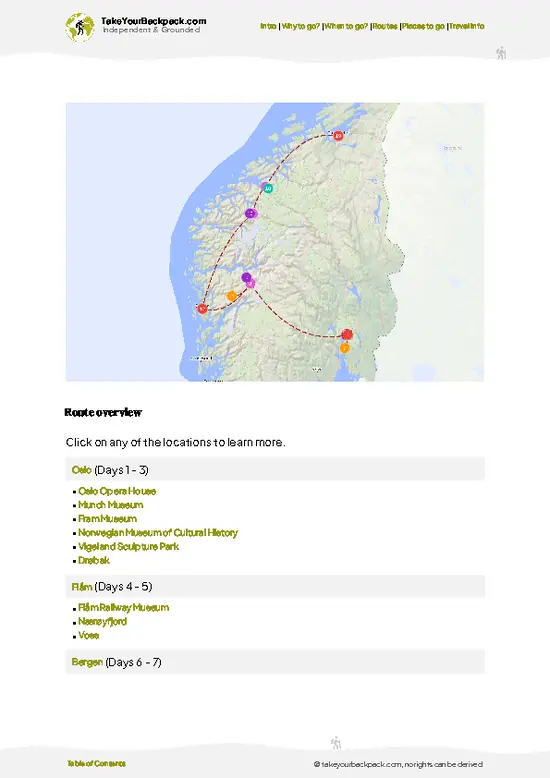
Regions and direction: The south coast and Oslo pair easily by train or bus, and Oslo to Bergen by rail takes about 6.5 to 7 hours over the high Hardangervidda plateau. Western fjord towns cluster around Bergen, linked by buses and ferries, and they work well as a loop. Northern Norway is a separate trip: fly from Oslo or Bergen to Tromsø or Bodø (1.5 to 2 hours) rather than overland, which takes a day or more. A sensible direction is Oslo, then the west, then flying north if time allows, because the dramatic landscapes build and the long transfer … read more 👉
Plan 7 to 14 days for several towns: A trip linking several Norwegian towns needs 7 to 14 days, and 10 is comfortable for the south and west together. Distances are the real constraint, since a map makes a coast of deep fjords look closer than it drives.
Regions and direction: The south coast and Oslo pair easily by train or bus, and Oslo to Bergen by rail takes about 6.5 to 7 hours over the high Hardangervidda plateau. Western fjord towns cluster around Bergen, linked by buses and ferries, and they work well as a loop. Northern Norway is a separate trip: fly from Oslo or Bergen to Tromsø or Bodø (1.5 to 2 hours) rather than overland, which takes a day or more. A sensible direction is Oslo, then the west, then flying north if time allows, because the dramatic landscapes build and the long transfer comes last.
Time per stop: Give each town 1 to 2 nights, and 3 in the far north where weather and boat trips shift. Allow 2 to 5 hours between neighboring western towns, including ferry waits.
Planning mistakes: Travelers often cram one town a night, then spend the trip on buses. Slow down and cut stops. They also ignore ferry and bus timetables, which thin out in the evening and on Sundays, so check them before booking beds. Another error is skipping rail and bus passes or advance fares, which are often far cheaper than same-day tickets.

The ListTop towns of Norway

1 Tromsø

Arctic cathedral, midnight sun, polar research

Join students and scientists in a lively northern city, where summer never gets dark and winter brings a chance to see the aurora.

norway-city-tromso
© Google |

2 Røros

Copper mining, timber buildings, mountain plateau

Step into a UNESCO-listed town where wooden houses and mining relics sit high above the forests, with crisp air and snowy winters.

norway-city-roros
© Google |

3 Svolvær

harborfront, sculpture park, cod drying racks

Sample Arctic seafood, explore outdoor installations, and watch fishing boats unload their catch in the heart of the Lofoten Islands.

4 Voss

Adventure sports, mountain lake, train junction

Try paragliding or rafting in a valley town known for outdoor activities, with easy rail access to both Bergen and Oslo.

5 Bodø

Saltstraumen maelstrom, aviation museum, Arctic gateway

Watch powerful tidal currents, learn about polar flight history, and use this transport hub as a launch point for Lofoten or the north.

6 Kirkenes

Russian border, snow hotel, king crab safaris

Experience Norway’s far east, where border culture mixes with Arctic adventure and winter brings unique ice lodging and seafood tours.

7 Alta

Northern lights, rock carvings, tundra landscapes

Experience Arctic Norway’s ancient artistry and open wilderness, where winter brings auroras and summer reveals prehistoric carvings along the river.

norway-city-alta
© Google |

8 Narvik

War museum, Ofoten railway, mountain cable car

Ride a scenic train above fjords, learn about WWII battles, and take a lift for sweeping views over dramatic northern landscapes.

9 Fredrikstad

Fortified old town, river ferry, cobbled squares

Cross the river to explore a preserved star-shaped fortress, with quiet lanes, local markets, and a relaxed pace by the water.

norway-city-fredrikstad
© Google |

10 Lillehammer

Olympic venues, open-air museum, lakeside trails

Follow the legacy of winter sports, wander historic farmsteads, and hike forested paths along Norway’s largest inland lake.

11 Rjukan

Industrial heritage, cable car, deep valley

Visit a UNESCO-listed site where hydroelectric history meets dramatic cliffs, and ride up for panoramic views over a narrow valley.

norway-city-rjukan
© Google |

12 Molde

Rose gardens, fjord panorama, jazz festival

Enjoy sweeping views over dozens of peaks, stroll through public gardens, and time your visit for live music by the water.

13 Arendal

Harborfront, wooden houses, coastal islets

Wander narrow lanes lined with white timber homes, then catch a boat to nearby islands for a taste of Norway’s southern skerries.

14 Risør

Wooden townscape, art galleries, sheltered harbor

Browse studios and small shops in a town known for its creative community, with calm waters perfect for kayaking or sailing.

15 Skudeneshavn

Whitewashed harbor, summer festival, narrow alleys

Lose yourself in a maze of 19th-century streets, where maritime traditions linger and the harbor fills with boats during local celebrations.

16 Drøbak

Oslofjord views, Christmas shop, fortress island

Visit a small town known for its year-round festive shop and ferry rides to a historic island guarding the approach to Oslo.

17 Mandal

River mouth, sandy beaches, pastel houses

Relax in Norway’s southernmost town, where gentle rivers meet the sea and colorful homes line quiet, walkable streets.

18 Harstad

Coastal fort, island views, cultural festivals

Discover a northern town balancing military history and creative events, with easy access to fjords and scenic archipelago day trips.

norway-city-harstad
© Google |

19 Sandefjord

Whaling museum, ferry port, art nouveau villas

Trace maritime heritage in a town shaped by the sea, with easy ferry connections and leafy neighborhoods dotted with ornate architecture.

20 Hamar

Viking ship hall, lake Mjøsa, cathedral ruins

See a modern arena shaped like a ship, visit medieval ruins under glass, and enjoy cycling or swimming by Norway’s broadest lake.

21 Notodden

Blues festival, industrial sites, lakeside setting

Time your visit for live music or explore the roots of Norway’s power industry, with easy access to hiking and swimming nearby.

22 Hamningberg

Abandoned village, Barents Sea, Arctic remoteness

Reach the end of the road in a windswept outpost, where empty houses and stark coastline offer a glimpse of Norway’s far northeast.

Think you know Norway?

Prove you’re a true local — uncover 12 lesser-known towns in Norway that locals tend to keep to themselves.
Loading the map 🌍

Expert viewExpert Commentary on towns

How many towns to visit: I advise four to six towns on a trip of one to two weeks. Norway’s transfers eat whole mornings, and a town here is best at slow speed: a long harbor walk, a bakery stop, a gray fjord changing color at dusk. Beyond six, you spend more time packing and waiting for ferries than looking. If you have only a long weekend, pick two.
Choosing between kinds of towns: Larger towns and small cities cost more in food but give you hostels, supermarkets, rail links and indoor museums for wet days, so they suit first-timers and anyone on a tight budget. Small fjord and fishing villages are quieter, smell of salt and diesel, and put you close to hikes, but have fewer places to eat and shorter opening hours. Arctic towns give you winter light and aurora, though flights, tours and heating-season … read more 👉
How many towns to visit: I advise four to six towns on a trip of one to two weeks. Norway’s transfers eat whole mornings, and a town here is best at slow speed: a long harbor walk, a bakery stop, a gray fjord changing color at dusk. Beyond six, you spend more time packing and waiting for ferries than looking. If you have only a long weekend, pick two.
Choosing between kinds of towns: Larger towns and small cities cost more in food but give you hostels, supermarkets, rail links and indoor museums for wet days, so they suit first-timers and anyone on a tight budget. Small fjord and fishing villages are quieter, smell of salt and diesel, and put you close to hikes, but have fewer places to eat and shorter opening hours. Arctic towns give you winter light and aurora, though flights, tours and heating-season prices push costs up. For most backpackers, a mix of mostly mid-sized towns and one or two remote villages gives the most for the time and money.
What it costs: Plan on US$90 to 140 a day on a careful budget. A hostel dorm runs about US$35 to 65, a campsite or hut bed US$15 to 40, and a supermarket meal US$8 to 15 against US$25 to 40 for a restaurant main. Local buses cost roughly US$4 to 8 a ride, and longer trains and ferries US$15 to 80, with cheaper advance fares. Museum entry typically costs US$12 to 25, a fjord cruise US$50 to 150, and guided tours US$70 to 200. Per town, expect roughly US$100 to 200 including a night’s bed, food and local transport. Wild camping is legally allowed under the right to roam, which can cut costs sharply, though it must follow the rules on distance from houses and fires.
Safety and cultural notes: Norwegian towns are very safe, with low crime and well-lit centers. The real risks are weather and water. Check forecasts, dress in layers, and treat cold water and slippery wet rock near piers seriously, because summer water is often only 10 to 15°C. Keep to marked trails and never rely on phone coverage in deep valleys.

On manners, queue properly, take shoes off in homes, and keep voices low on trains and in guesthouses. Sundays are quiet, and most shops close, so buy groceries on Saturday. Alcohol is sold in state stores called Vinmonopolet, with limited hours. Cards are accepted almost everywhere, so you rarely need cash. Tap water is excellent, so carry a bottle and save the cost of buying drinks.

✈️ The backpacker research shortcutNorway Travel Guide

An offline-friendly backpacking guide with optimized travel routes, ranked highlights, transport advice, and the best areas to stay.
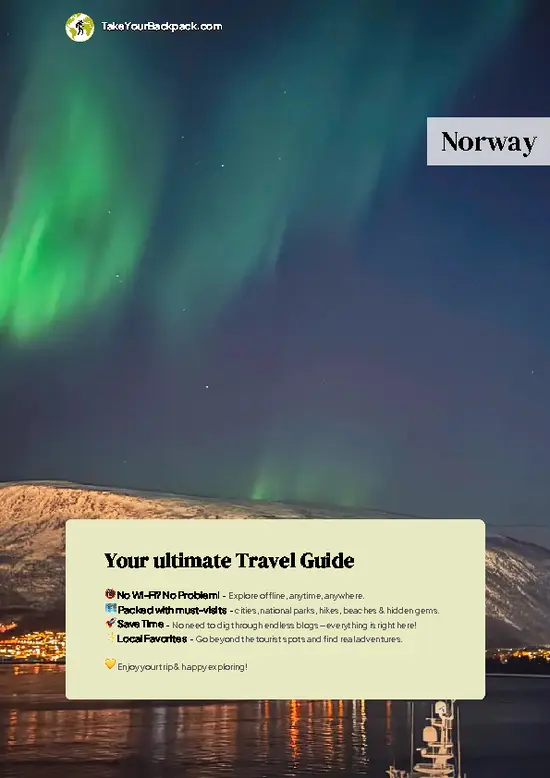
example page 0 from our offline Travel Guide for Norway
example page 1 from our offline Travel Guide for Norway
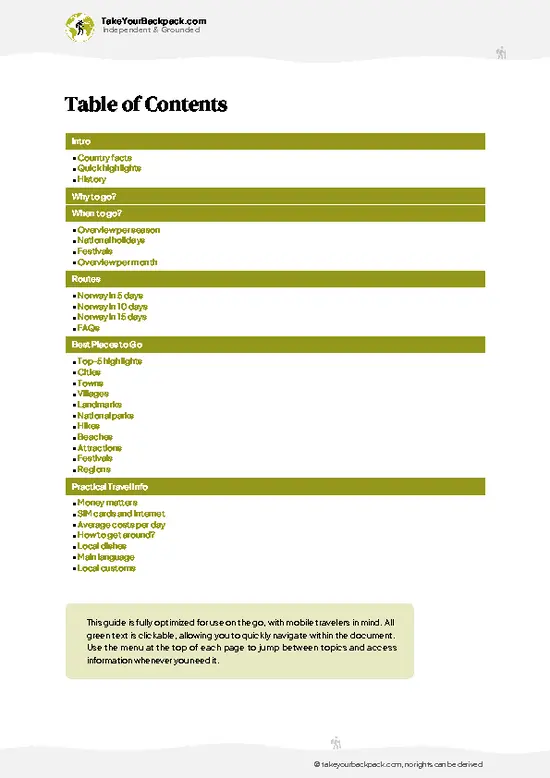
example page 2 from our offline Travel Guide for Norway
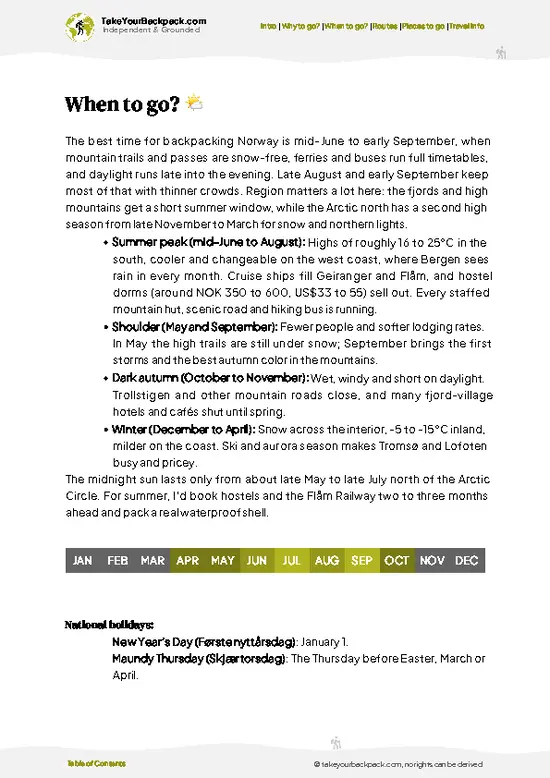
example page 3 from our offline Travel Guide for Norway
example page 4 from our offline Travel Guide for Norway
example page 5 from our offline Travel Guide for Norway
example page 6 from our offline Travel Guide for Norway
example page 7 from our offline Travel Guide for Norway
The digital guide (377 pages) contains:
✅ 101 highlights, ranked by travel appeal
✅ Optimized 5, 10 & 15-day travel routes
✅ Cities, national parks, landmarks, beaches
✅ How to get around
✅ Offline-friendly for travel without Wi-Fi
👉 Click to see all 30+ guide features

📅 Plan smarter in minutes, not weeks
✅ Month by month travel advice
✅ Festivals & national holidays
✅ Budget expectations

🗺️ Go to the right places, skip the overrated ones
✅ Honest pros & cons of destinations
✅ Top hikes, parks & viewpoints
✅ Lesser-known places most travelers miss
✅ Clear “worth it vs skip it” guidance

🛏️ Travel smoothly without rookie mistakes
✅ Best areas to stay
✅ Transport systems explained simply
✅ Common scams & safety advice
✅ SIM cards, money & practical tips

🌍 Understand the country, not just visit it
✅ Culture & traditions
✅ 52 Essential phrases & customs
✅ Festivals worth planning around
✅ Traveler-friendly historical context
✅ Insights that make places more meaningful

📱 Built for real travel conditions
✅ Fully downloadable PDF
✅ Works completely offline
✅ Optimized for phone use
✅ Useful in remote areas & buses
✅ Everything in one place
Stop searching, start planning
Get instant access to your full guide. 30‑day money-back guarantee.
+ Add another guide for just

By proceeding you agree to our terms.
Sent to your inbox immediately after payment • 100% Secure Checkout
Best Backpacking Travel Advisor 2025 tourism awardBest Backpacking
Travel Advisor
2025
What others say about Take Your Backpack Guides:
⭐⭐⭐⭐⭐
Fantastic, amazing amount of information!
⭐⭐⭐⭐⭐
My goodness this is amazing, it's what I've been looking for hats off too you!
⭐⭐⭐⭐⭐
I think this is absolutely BRILLIANT
⭐⭐⭐⭐
Very complete and informative. It's still missing places, but I gotta to commend you
⭐⭐⭐⭐⭐
This is truly amazing, thank you, can't wait to explore it with my kids!
⭐⭐⭐⭐⭐
Awesome resource, thank you!
⭐⭐⭐⭐⭐
This is amazing! Can't wait to explore the ones I haven't seen
⭐⭐⭐⭐
I love this! Well done, great idea.
⭐⭐⭐⭐⭐
Thanks for taking the time to make this gem!
⭐⭐⭐⭐⭐
This might be the best website I've ever seen.
⭐⭐⭐⭐⭐
Congratulations, and thank you so much for your work; it's incredibly valuable.
⭐⭐⭐⭐
In all seriousness I think you did a great job pointing out the important spots
⭐⭐⭐⭐⭐
10/10 very good
⭐⭐⭐⭐⭐
As someone who's only just starting to visit regularly this is awesome, thank you.
⭐⭐⭐⭐
Thank you very much! I'm going to visit my dad, it's going to be very useful!
⭐⭐⭐⭐⭐
This is really cool! We'll be travelling for the first time and this definitely come in handy.
⭐⭐⭐⭐⭐
You are now our minister of culture, congratulations 👨‍💼
⭐⭐⭐⭐⭐
Just wanted to tell you that this is a pearl! Going to follow your recommendations.
⭐⭐⭐⭐⭐
This is so cool. I'll definitely be using the resource for my travels soon.
⭐⭐⭐⭐⭐
This is very impressive! Good work.
⭐⭐⭐⭐⭐
This is an amazing and informative site. Very well done!

🛏️ Where to stay?Where to Stay in Norway

Norway has hostels and budget beds in every major city, with dorms typically running NOK 350 to 600 (about US$33 to 56) a night, plus cheap cabins at campsites along the main touring routes. In Oslo, Sentrum around the central station puts you closest to the waterfront, museums and transport links but gets rowdy and a little rough late at night, while Grünerløkka has the best bars and cafés and a younger crowd, with a 15 to 20 minute walk to the center. In Bergen, the area around Bryggen and the fish market keeps every sight within walking distance but books out early in summer, and in Tromsø the compact city center is small and safe, with most budget beds a short walk from the harbor and the … read more 👉
Norway has hostels and budget beds in every major city, with dorms typically running NOK 350 to 600 (about US$33 to 56) a night, plus cheap cabins at campsites along the main touring routes. In Oslo, Sentrum around the central station puts you closest to the waterfront, museums and transport links but gets rowdy and a little rough late at night, while Grünerløkka has the best bars and cafés and a younger crowd, with a 15 to 20 minute walk to the center. In Bergen, the area around Bryggen and the fish market keeps every sight within walking distance but books out early in summer, and in Tromsø the compact city center is small and safe, with most budget beds a short walk from the harbor and the late-opening pubs.

If you enjoy meeting fellow travelers, consider choosing hostels with high ratings for atmosphere. On the other hand, if you prefer having your own space, a hotel might be a better option.

NorwayMore of Norway

👋 Meet the founderWho’s Behind Take Your Backpack?

Johan, backpacker and founder of TakeYourBackpackHi, I’m Johan (Netherlands 🇳🇱), the creator of TakeYourBackpack. Over the past 3 decades, I’ve backpacked through 90+ countries across six continents, gaining extensive experience with independent travel, long-term trips, and overland routes.

This site is built on a combination of firsthand travel experience and carefully curated insights from other backpackers. Many guides are based on places I’ve personally visited, while others bring together tips, observations, and practical advice shared by trusted travelers I’ve met along the way.

The goal is to provide realistic, experience-driven guidance — not generic itineraries — so you can explore destinations with better context, clearer expectations, and more confidence.