v2.webp)
- Geirangerfjord (boat trip to the Seven Sisters) — The fjord’s steep, farm-dotted sides and thundering waterfalls are a textbook fjord, but what makes Geiranger special is the tiny shoulder-season life here: old mountain farms clinging to impossible ledges and the chance to boat into narrow side-arms few coaches bother with. Go early or late in the day to dodge the cruise-ship crush and listen to local guides tell the farming and landslide stories that shaped the valley.
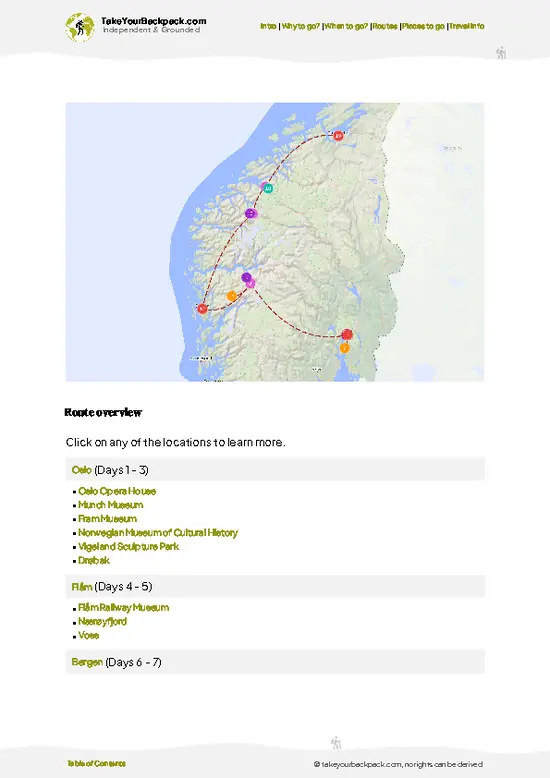
- Nærøyfjord and the village of Undredal — Narrow, tunnel-like fjord walls, silent waters and dramatic reflections: Nærøyfjord is UNESCO-listed for a reason. Pair a slow ferry or kayak with a stop in Undredal for some of Norway’s best goat cheese and a feel of a living mountain-fjord farming community that’s pretty much unchanged.
- Geirangerfjord (boat trip to the Seven Sisters) — The fjord’s steep, farm-dotted sides and thundering waterfalls are a textbook fjord, but what makes Geiranger special is the tiny shoulder-season life here: old mountain farms clinging to impossible ledges and the chance to boat into narrow side-arms few coaches bother with. Go early or late in the day to dodge the cruise-ship crush and listen to local guides tell the farming and landslide stories that shaped the valley.
- Nærøyfjord and the village of Undredal — Narrow, tunnel-like fjord walls, silent waters and dramatic reflections: Nærøyfjord is UNESCO-listed for a reason. Pair a slow ferry or kayak with a stop in Undredal for some of Norway’s best goat cheese and a feel of a living mountain-fjord farming community that’s pretty much unchanged.
- Flåm Railway and Kjosfossen waterfall — One of the steepest standard-gauge railway lines in the world, the Flåm line drops from mountain to fjord through tunnels, waterfalls and high, grassy plateaus; the Kjosfossen stop is theatrically beautiful. It’s a mechanical marvel and a landscape experience you’d struggle to reproduce elsewhere — ride it, then walk the tiny Flåm valley for an off-train perspective.
- Urnes Stave Church (Luster) — The oldest stave church still standing, set on a sheltered bend of the Lustrafjord with carved dragon and vine motifs that link Norse woodcraft to early Christian art. It’s compact, remote-feeling and fraught with history in a way that modern reconstructions can’t copy; getting there by fjord ferry makes the visit feel like stepping back.
- Briksdal Glacier (Briksdalsbreen, Olden) — A short, rewarding hike takes you to the blue-black tongue of one of Jostedalsbreen’s glacier arms, spilling into a milky lake. Close-up glacier experiences here are visceral — cracking ice, meltwater rivers — and the surrounding farming valley gives the walk a human scale that makes the glacier’s power hit harder.
- Hornelen — Europe’s highest sea cliff (Bremanger) — Rugged, exposed and far fewer people than the “big” fjord highlights: the hike up Hornelen gives raw ocean-and-sheer-rock drama and sweeping views of islands and fjords. Hidden-gem vibe — locals use it for serious hiking and fishing lore, and the summit feels earned, not staged.
- Loen Skylift and hikes on Mount Hoven — A lightning-fast cable car from fjord to alpine meadows: once up top you get close views of glaciers, fjords and steep valleys, plus short ridge hikes that feel enormous. It’s modern and a bit brash, but the landscape access it gives is unique — you can have coffee at 1,000 m and be swimming in a fjord two hours later.
- Lovatnet lake and the rockslide scars (Loen/Olden area) — A jewel-blue lake hemmed by steep slopes that carry the memory of catastrophic rockslides in 1905 and 1936; you can kayak the water, hike the shore trails, and the mix of serene beauty with palpable geological history is haunting. Locals still tell the stories and you’ll feel the human cost behind the postcard.
- Runde bird island — An unexpectedly lush seabird colony with puffins, gannets and tens of thousands of nesting birds, and a network of coastal hikes and small fishing-culture museums nearby. It’s accessible, intimate and seasonal in the best way — bring binoculars, respect nesting areas and enjoy the smell of fish and guano that marks a proper seabird island.
- Selja Island and the ruins of Selje Monastery / St. Sunniva’s cave — Hidden gem: a wind-swept isle with medieval monastery ruins and the legendary cave of St. Sunniva, once a pilgrimage site and still quietly atmospheric. You need to take a small boat or local ferry and climb a short trail; the reward is coastal history, few crowds, and an eerie sense of early Christianity entwined with Viking-age stories.
Spotted a mistake or missing something? Contact us.

Private yacht Fjord and waterfalls cruise to Modal / Mostraumen

3-Hour Private Norwegian Hiking Experience with Local Guide

Paint Norwegian landscape with watercolor in Bergen

On Top of Bergen - Private Hike

From Witches to Trolls Bergens Crime and Myth Walk

Essential Bergen: 2-Hour Private Guided Walking Tour

Mostraumen Lux Pontoon Cruise Bergen Fjords

Private yacht evening cruise in Bergen, including champagne

PRIVATE GUIDED TOUR: Highlights of Norway – Trip to the Sognefjord – WINTER


 Best Backpacking
.jpg) Hi, I’m Johan (Netherlands 🇳🇱), the creator of TakeYourBackpack. Over the past 3 decades, I’ve backpacked through 90+ countries across six continents, gaining extensive experience with independent travel, long-term trips, and overland routes.
Hi, I’m Johan (Netherlands 🇳🇱), the creator of TakeYourBackpack. Over the past 3 decades, I’ve backpacked through 90+ countries across six continents, gaining extensive experience with independent travel, long-term trips, and overland routes.