×

Palau🇵🇼 | regionsBabeldaobwaterfalls, traditional villages, forested hills, stone monoliths | things to do and best time to go

Explore Rock Islands Southern LagoonExplore Kayangel Atoll

Backpacking in Babeldaob
🌟 Highlightregion ranked #2
By Johan Kruseman 🇳🇱 | Updated June 9, 2026

Most people online talk about Palau like it’s just Koror and dive boats, but here’s the twist: Babeldaob is the big island, the real countryside, and you can go hours without seeing another traveler. It sits just northeast of Koror, linked by a bridge, and it’s where Palau’s capital and most of its land actually are. For backpackers, Babeldaob is the “slow burn” option: wild coastline, jungle-cloaked hills, stone monoliths, waterfalls, tiny villages, and almost no nightlife. It’s cheaper once you’re there, but getting around is the tax you pay—public transport is thin, hitchhiking is common, and renting a car or scooter eats into your budget. Compared with Koror’s tour shops and resort bubble, Babeldaob feels raw and local, with quiet beaches instead of postcard-perfect lagoons, more family stores than bars, and a vibe that rewards patience, curiosity, and a bit of Type-2 fun.

Discover everything you want to know in the 📖 Palau Travel Guide.


Get your Palau guide
28 ranked highlights, routes & tips, works offline (124 pages)
Loading the map 🌍
CLICK TO FILTER
towns
villages
landmarks
national parks
hikes
beaches
attractions
festivals
regions
SHOW COUNTRY’S BESTSHOW ALL

✨ Why go?
Ranked #2 region in Palau
The unique appeal for travelers

Babeldaob in Palau is a backpacker’s playground, and here’s why savvy travelers flock to this island. First off, the variety of landscapes is mind-blowing. You’ve got lush jungles, stunning waterfalls, and pristine beaches all within a short distance. It’s like nature’s buffet, and you can sample it all without the hassle of constant relocation.

Then there’s the transport flexibility. Renting a scooter or a kayak gives you the freedom to explore at your own pace. You can hit the road early for sunrise at a hidden cove or paddle out to a secluded spot for a picnic. No rigid schedules here; just you and the open road—or water.

What really sets Babeldaob apart is the chance to mix nature and culture seamlessly. You can hike to ancient stone monoliths one day and dive into local traditions the … read more 👉
Babeldaob in Palau is a backpacker’s playground, and here’s why savvy travelers flock to this island. First off, the variety of landscapes is mind-blowing. You’ve got lush jungles, stunning waterfalls, and pristine beaches all within a short distance. It’s like nature’s buffet, and you can sample it all without the hassle of constant relocation.

Then there’s the transport flexibility. Renting a scooter or a kayak gives you the freedom to explore at your own pace. You can hit the road early for sunrise at a hidden cove or paddle out to a secluded spot for a picnic. No rigid schedules here; just you and the open road—or water.

What really sets Babeldaob apart is the chance to mix nature and culture seamlessly. You can hike to ancient stone monoliths one day and dive into local traditions the next. This slow travel approach lets you soak in the island’s essence, making every moment feel rich and rewarding. You’re not just a visitor; you’re part of the experience.
Want to include Babeldaob in your Palau route?
Create a personalized Palau itinerary that includes Babeldaob and the places that fit your trip — based on your travel style, budget, and available time. Get your route in seconds.

Generate my trip

💡 HighlightsMust-see experiences and standout moments

  • Ngardmau Waterfall (Ngardmau Falls) — Palau’s biggest, a short but steep jungle hike drops you into a mossy amphitheater and a swimming pool that feels wild and private; excellent for photographers and a real rainforest experience you won’t get on the coral islands.
  • Lake Ngardok (Ngardok Nature Reserve) — the island’s largest freshwater lake, ringed by swamp forest and mangroves; paddle a canoe, watch endemic birds and freshwater turtles, and get a sense of Palau’s inland ecology that’s totally different from the glassy lagoons offshore.
  • Badrulchau Stone Monoliths — an ancient ceremonial field of standing stones and platforms; fewer crowds than Koror’s museum exhibits, and the stones sit in the middle of working village land, so the place feels lived-in and historically rooted rather than
read more 👉
  • Ngardmau Waterfall (Ngardmau Falls) — Palau’s biggest, a short but steep jungle hike drops you into a mossy amphitheater and a swimming pool that feels wild and private; excellent for photographers and a real rainforest experience you won’t get on the coral islands.
  • Lake Ngardok (Ngardok Nature Reserve) — the island’s largest freshwater lake, ringed by swamp forest and mangroves; paddle a canoe, watch endemic birds and freshwater turtles, and get a sense of Palau’s inland ecology that’s totally different from the glassy lagoons offshore.
  • Badrulchau Stone Monoliths — an ancient ceremonial field of standing stones and platforms; fewer crowds than Koror’s museum exhibits, and the stones sit in the middle of working village land, so the place feels lived-in and historically rooted rather than cordoned-off.
  • Ollei Village and its coastal monoliths — a quiet northern hamlet with its own line of ancient stones, a peaceful mangrove edge and a tiny beach; one of those off-the-beaten-route spots locals still use for fishing and picnics — great for slow wandering and chatting with residents (hidden gem).
  • Airai Bai (traditional men’s meeting house) — a beautifully carved, painted bai near the airport area where you can see traditional Palauan art and social architecture up close; it’s a compact cultural stop you can combine with arrivals or a Ring Road loop.
  • Drive the Babeldaob Ring Road — village stops & sakau houses — the island road is the activity: stop at village bais, roadside food stalls, taro patches and local sakau (kava) houses to taste food and customs that don’t exist in tour-book form. Less polished than Koror’s tourism circuit and far more honest (hidden gem as an experience).
  • Ngeremeduu Bay mangroves and tidal flats — shallow creeks and mangrove tunnels where you can kayak, birdwatch or walk the muddy flats at low tide; good for spotting shorebirds and seeing how coastal communities harvest clams and crabs up close (locals know the best channels) — quiet and under-visited.
  • Mount Ngerchelchuus summit — the highest point on Babeldaob: a sweaty, rewarding short climb through thick forest to wide views over the island’s ridges and the westward coastline. Not a technical hike, but the panorama makes it worth the effort.
  • Ngiwal village & coastal cultural sites — small village culture, shoreline family plots, and a restored traditional bai; visiting here gives a clear look at daily village life, clan paddling traditions and shore-based fishing methods that are getting rarer elsewhere.
  • Accessible WWII relics along the western coast (Ngeremlengui area) — rusting bunkers, concrete emplacements and supply tracks left from the war are scattered along parts of Babeldaob’s west coast; they’re tangible history in the landscape and, when paired with a local guide, reveal the island’s wartime stories without the crowds.
Spotted a mistake or missing something? Contact us.

Things to do around Babeldaob

Ratings based on Tripadvisor reviews. When you book through this link, you support our work at no extra cost to you.

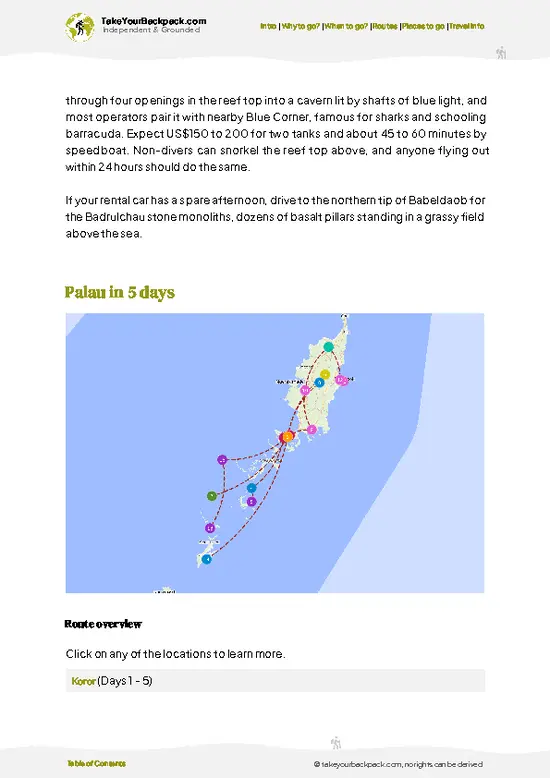
⌛️ 5 daysSeeing the highlights in 5 days

Day 1: Koror
Start your journey in Koror, the bustling hub of Palau. This is where you’ll find the main transport links and a good selection of accommodations. Spend the day acclimating and exploring the local markets. Grab a bite at a local eatery; the fresh seafood is a must. The transport system here is straightforward, with buses and taxis connecting you to other parts of Babeldaob. Use this day to map out your next moves and soak in the local vibe.

Day 2: Babeldaob’s Spine
Head north towards the Spine Road, the main artery of Babeldaob. This road is your lifeline, connecting you to various attractions. Stop at the Belau National Museum to get a sense of the culture. The pace here is slower, so take your time. The bus system runs regularly, but don’t hesitate to hitch a ride with … read more 👉
Day 1: Koror
Start your journey in Koror, the bustling hub of Palau. This is where you’ll find the main transport links and a good selection of accommodations. Spend the day acclimating and exploring the local markets. Grab a bite at a local eatery; the fresh seafood is a must. The transport system here is straightforward, with buses and taxis connecting you to other parts of Babeldaob. Use this day to map out your next moves and soak in the local vibe.

Day 2: Babeldaob’s Spine
Head north towards the Spine Road, the main artery of Babeldaob. This road is your lifeline, connecting you to various attractions. Stop at the Belau National Museum to get a sense of the culture. The pace here is slower, so take your time. The bus system runs regularly, but don’t hesitate to hitch a ride with locals; it’s part of the experience.

Day 3: Ngerulmud
Make your way to Ngerulmud, the capital of Palau. This is where you can see the government buildings and the impressive Capitol Complex. The transport options are limited, so plan to spend a good chunk of the day here. The architecture is striking, and the quiet atmosphere offers a nice contrast to Koror.

Day 4: Off-Path Reward: Ngardmau Waterfall
Take a detour to Ngardmau Waterfall. It’s a bit off the beaten path, but the hike is worth every step. The lush surroundings and the sound of cascading water will rejuvenate you. This is where you can truly connect with Palau’s natural beauty.

Day 5: Return to Koror
Wrap up your trip back in Koror. Spend your last day revisiting your favorite spots or picking up souvenirs. The transport back is easy, and you’ll have a chance to reflect on your journey.

The must-do day? Day 4 at Ngardmau Waterfall. It’s the heart of Palau’s wild beauty and a perfect way to cap off your adventure.
Turn your Babeldaob visit into an Palau adventure
Build a complete Palau route with Babeldaob, hidden gems, must-see destinations, and realistic travel times included.

Generate my trip

🌤️ When to go?Weather, crowds, and seasonal trade-offs


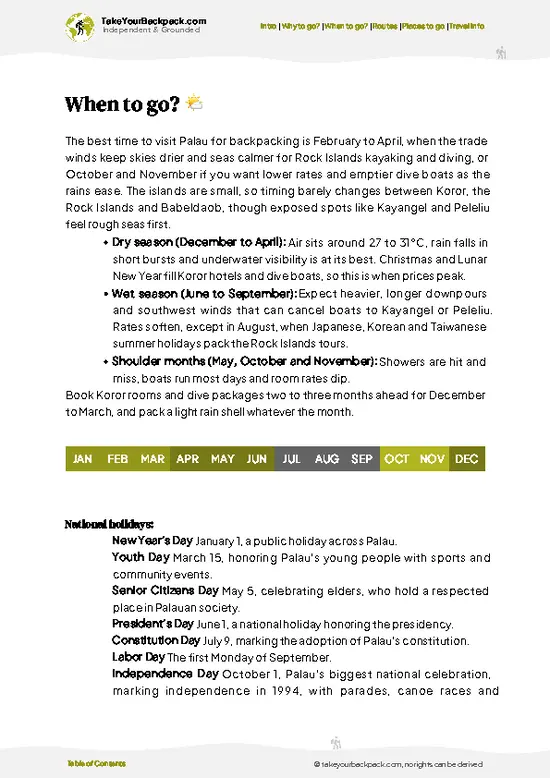
  • Topic: Weather – The dry season from December to April is your golden window. Expect less rain, making jungle trails and snorkeling crystal clear. The wet season (May to November) brings heavy downpours and humidity that can turn your gear into a soggy mess.

  • Topic: Temperature – Temperatures hover between 27°C and 31°C (80°F to 88°F) year-round. It’s warm but manageable if you plan early morning hikes or late afternoon swims to dodge the midday heat.

  • Topic: Daylight Hours – Daylight stays steady around 12 hours daily, but the sun rises and sets quickly. Plan your activities tightly; mornings are your best bet for exploring before the heat and humidity kick in.

  • Topic: Crowds – Palau is never overrun, but the dry season attracts more tourists, especially around holidays. If you want
read more 👉

  • Topic: Weather – The dry season from December to April is your golden window. Expect less rain, making jungle trails and snorkeling crystal clear. The wet season (May to November) brings heavy downpours and humidity that can turn your gear into a soggy mess.

  • Topic: Temperature – Temperatures hover between 27°C and 31°C (80°F to 88°F) year-round. It’s warm but manageable if you plan early morning hikes or late afternoon swims to dodge the midday heat.

  • Topic: Daylight Hours – Daylight stays steady around 12 hours daily, but the sun rises and sets quickly. Plan your activities tightly; mornings are your best bet for exploring before the heat and humidity kick in.

  • Topic: Crowds – Palau is never overrun, but the dry season attracts more tourists, especially around holidays. If you want near solitude, aim for shoulder months like November or May, when the weather is still decent but fewer travelers show up.

  • Topic: Seasonal Activities – Dive season peaks in the dry months with visibility hitting 30 meters or more. Plus, traditional festivals and canoe races often happen in March and April, giving you a front-row seat to local culture.

  • Topic: Price Fluctuations – Expect accommodation and flights to spike during the dry season and holidays. Booking early or targeting shoulder months can save you a solid chunk of cash without sacrificing much on experience.


Pro-tip: Lock in your trip for late March or early April—dry weather, fewer crowds, and local festivals collide for a backpacker’s jackpot.


source: climatestotravel.comJANJanuary: excellent for travelingFEBFebruary: excellent for travelingMARMarch: excellent for travelingAPRApril: excellent for travelingMAYMay: highly recommended for travelingJUNJune: fair for travelingJULJuly: fair for travelingAUGAugust: fair for travelingSEPSeptember: fair for travelingOCTOctober: fair for travelingNOVNovember: highly recommended for travelingDECDecember: excellent for traveling
palau-region-babeldaob
© Google |

✈️ The backpacker research shortcutPalau Travel Guide

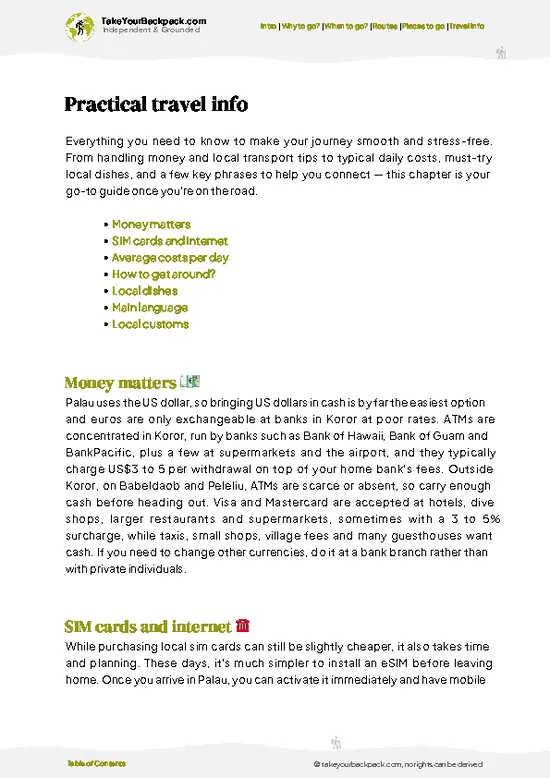
An offline-friendly backpacking guide with optimized travel routes, ranked highlights, transport advice, and the best areas to stay.
example page 0 from our offline Travel Guide for Palau
example page 1 from our offline Travel Guide for Palau
example page 2 from our offline Travel Guide for Palau
example page 3 from our offline Travel Guide for Palau
example page 4 from our offline Travel Guide for Palau
example page 5 from our offline Travel Guide for Palau
example page 6 from our offline Travel Guide for Palau
example page 7 from our offline Travel Guide for Palau
The digital guide (124 pages) contains:
28 highlights, ranked by travel appeal
Optimized 2, 3 & 5-day travel routes
Cities, national parks, landmarks, beaches
How to get around
Offline-friendly for travel without Wi-Fi
👉 Click to see all 30+ guide features

📅 Plan smarter in minutes, not weeks
Month by month travel advice
Festivals & national holidays
Budget expectations

🗺️ Go to the right places, skip the overrated ones
Honest pros & cons of destinations
Top hikes, parks & viewpoints
Lesser-known places most travelers miss
Clear “worth it vs skip it” guidance

🛏️ Travel smoothly without rookie mistakes
Best areas to stay
Transport systems explained simply
Common scams & safety advice
SIM cards, money & practical tips

🌍 Understand the country, not just visit it
Culture & traditions
52 Essential phrases & customs
Festivals worth planning around
Traveler-friendly historical context
Insights that make places more meaningful

📱 Built for real travel conditions
Fully downloadable PDF
Works completely offline
Optimized for phone use
Useful in remote areas & buses
Everything in one place
Save weeks of stressful planning
Get instant access to your full guide. 30‑day money-back guarantee.


By proceeding you agree to our terms.
Sent to your inbox immediately after payment • 100% Secure Checkout
Best Backpacking Travel Advisor 2025 tourism awardBest Backpacking
Travel Advisor
2025
What others say about Take Your Backpack Guides:
⭐⭐⭐⭐⭐
Fantastic, amazing amount of information!
⭐⭐⭐⭐⭐
My goodness this is amazing, it's what I've been looking for hats off too you!
⭐⭐⭐⭐⭐
I think this is absolutely BRILLIANT
⭐⭐⭐⭐
Very complete and informative. It's still missing places, but I gotta to commend you
⭐⭐⭐⭐⭐
This is truly amazing, thank you, can't wait to explore it with my kids!
⭐⭐⭐⭐⭐
Awesome resource, thank you!
⭐⭐⭐⭐⭐
This is amazing! Can't wait to explore the ones I haven't seen
⭐⭐⭐⭐
I love this! Well done, great idea.
⭐⭐⭐⭐⭐
Thanks for taking the time to make this gem!
⭐⭐⭐⭐⭐
This might be the best website I've ever seen.
⭐⭐⭐⭐⭐
Congratulations, and thank you so much for your work; it's incredibly valuable.
⭐⭐⭐⭐
In all seriousness I think you did a great job pointing out the important spots
⭐⭐⭐⭐⭐
10/10 very good
⭐⭐⭐⭐⭐
As someone who's only just starting to visit regularly this is awesome, thank you.
⭐⭐⭐⭐
Thank you very much! I'm going to visit my dad, it's going to be very useful!
⭐⭐⭐⭐⭐
This is really cool! We'll be travelling for the first time and this definitely come in handy.
⭐⭐⭐⭐⭐
You are now our minister of culture, congratulations 👨‍💼
⭐⭐⭐⭐⭐
Just wanted to tell you that this is a pearl! Going to follow your recommendations.
⭐⭐⭐⭐⭐
This is so cool. I'll definitely be using the resource for my travels soon.
⭐⭐⭐⭐⭐
This is very impressive! Good work.
⭐⭐⭐⭐⭐
This is an amazing and informative site. Very well done!

🛏️ Where to stay?Where staying makes the most sense

Babeldaob, the largest island in Palau, is a treasure trove for backpackers seeking a blend of adventure and community.

Start in Koror, the bustling heart of Palau. It’s where the action is, with plenty of eateries and local markets. You’ll find fellow travelers swapping stories over a plate of local fare. The vibe is relaxed, and the proximity to dive shops and tour operators makes it easy to plan your next adventure.

Next, consider Ngerulmud, the capital. It’s quieter but offers a unique glimpse into local life. You can stroll through the government buildings and enjoy the lush surroundings. … read more 👉
Babeldaob, the largest island in Palau, is a treasure trove for backpackers seeking a blend of adventure and community.

Start in Koror, the bustling heart of Palau. It’s where the action is, with plenty of eateries and local markets. You’ll find fellow travelers swapping stories over a plate of local fare. The vibe is relaxed, and the proximity to dive shops and tour operators makes it easy to plan your next adventure.

Next, consider Ngerulmud, the capital. It’s quieter but offers a unique glimpse into local life. You can stroll through the government buildings and enjoy the lush surroundings. It’s a great spot for those who want a more laid-back experience while still being close to Koror.

Don’t overlook Melekeok, a small village with a friendly atmosphere. It’s perfect for solo travelers looking to connect with locals. The beaches here are less crowded, and you can often find a quiet spot to reflect or plan your next move.

Each area has its own charm, so weigh your priorities. If you crave social interaction, Koror is your best bet. For tranquility, Ngerulmud or Melekeok might be your sweet spot. Choose wisely, and you’ll unlock the true essence of Babeldaob.

🚌 Getting aroundMoving around without the hassle

Babeldaob is a realm where time feels fluid, not rigid. The island’s transport system dances between organized chaos and laid-back spontaneity. You won’t find a strict timetable dictating your every move; instead, you’ll embrace the rhythm of island life. Locals and travelers alike hop on and off shared rides, creating a vibrant tapestry of connections. It’s all about intuition here—trust your instincts, and you’ll find your way. Whether you’re chasing waterfalls or seeking out local markets, the journey is as much a part of the adventure as the destination.


  • Shared Vans: These are your best bet for budget travel. They run frequently, usually from early morning until sunset. Expect to pay around $2-$5 per ride, depending on the distance. They’re a bit cramped but offer a genuine local experience.
read more 👉
Babeldaob is a realm where time feels fluid, not rigid. The island’s transport system dances between organized chaos and laid-back spontaneity. You won’t find a strict timetable dictating your every move; instead, you’ll embrace the rhythm of island life. Locals and travelers alike hop on and off shared rides, creating a vibrant tapestry of connections. It’s all about intuition here—trust your instincts, and you’ll find your way. Whether you’re chasing waterfalls or seeking out local markets, the journey is as much a part of the adventure as the destination.


  • Shared Vans: These are your best bet for budget travel. They run frequently, usually from early morning until sunset. Expect to pay around $2-$5 per ride, depending on the distance. They’re a bit cramped but offer a genuine local experience.


  • Bicycles: Rent a bike for about $10 a day. It’s a fantastic way to explore at your own pace. The roads can be a bit bumpy, but the freedom to stop wherever you want is priceless. Just be ready for some hills!


  • Motorbike Rentals: For about $15-$20 a day, you can zip around the island. It’s faster than a bike and gives you access to those hidden spots. Just remember to wear a helmet and keep an eye out for potholes.


  • Taxi Services: While pricier, taxis are available for those who prefer comfort. Fares start at around $10 for short trips. They’re a good option if you’re in a group or need to get somewhere quickly.


  • Walking: Don’t underestimate the power of your own two feet. Many attractions are within walking distance, especially in smaller villages. It’s free and gives you a chance to soak in the local vibe.


Here’s the insider tip: coordinate your shared van rides with local events or market days. These are when the vans are most active, and you’ll find them buzzing with locals. Plus, you’ll get a taste of the community spirit that makes Babeldaob truly special. Embrace the flow, and let the island guide you.

🍲 FoodWhat to Eat & Drink

In Babeldaob, the culinary scene is a delightful blend of tradition and local flavor. Dive into taro, a staple here, often served as a creamy mash or fried into crispy cakes. Don’t miss out on fish caught fresh from the surrounding waters, grilled simply with a sprinkle of salt and a squeeze of lime. The local specialty, bai, is a must-try—a savory stew made with coconut milk, often featuring chicken or seafood, that warms you from the inside out.

For a true backpacker experience, head to the local markets. The vibrant stalls are filled with tropical fruits like papaya and mango, their sweet aromas wafting through the air. Grab a quick bite from a street vendor serving up fish tacos or noodles tossed with fresh veggies. Cafés dot the landscape, offering a laid-back vibe where you can sip … read more 👉
In Babeldaob, the culinary scene is a delightful blend of tradition and local flavor. Dive into taro, a staple here, often served as a creamy mash or fried into crispy cakes. Don’t miss out on fish caught fresh from the surrounding waters, grilled simply with a sprinkle of salt and a squeeze of lime. The local specialty, bai, is a must-try—a savory stew made with coconut milk, often featuring chicken or seafood, that warms you from the inside out.

For a true backpacker experience, head to the local markets. The vibrant stalls are filled with tropical fruits like papaya and mango, their sweet aromas wafting through the air. Grab a quick bite from a street vendor serving up fish tacos or noodles tossed with fresh veggies. Cafés dot the landscape, offering a laid-back vibe where you can sip on bottled coconut water or a local brew while chatting with friendly locals.

Dining here is casual. Don’t be surprised if you’re invited to share a meal; it’s a sign of hospitality. Just remember to say “mesulang” (thank you) after your meal. Embrace the flavors, the warmth, and the community—this is where the real magic happens.

Other Palauan regions near Babeldaob

Explore more nearby:


💡 Not sure where to go next?
Create a personalized itinerary for Palau including Babeldaob and the places that fit your trip.

Generate my itinerary

👉 Discover all regions

Or checkout all Palau has to offer (think cities, towns, villages, national parks, hikes, beaches, festivals)
Country photo of Palau

We 💚 feedbackIs it worth it?

Babeldaob has this chill vibe that feels like stepping into a secret world. The best surprise? The local markets—fresh fruit, handmade crafts, and the friendliest smiles. Grab some ripe mangoes and just soak it all in. But a heads-up: the roads can be a bit rough, so don’t rush. Take your time. Embrace the slow pace. You’ll find that’s where the real magic happens. Trust me, it’s worth every bumpy ride.

✍️ Help improve this page!
The information on this page is based on in-depth research, insights shared by experienced travelers, and feedback from the local travel community in Palau. While every effort is made to keep the information accurate and current, conditions can change — so if you spot anything incorrect or outdated, please get in touch.


🙋‍♂️ Give feedback

👋 Meet the founderWho’s Behind Take Your Backpack?

Johan, backpacker and founder of TakeYourBackpackHi, I’m Johan (Netherlands 🇳🇱), the creator of TakeYourBackpack. Over the past decade, I’ve backpacked through 80+ countries across six continents, gaining extensive experience with independent travel, long-term trips, and overland routes.

This site is built on a combination of firsthand travel experience and carefully curated insights from other backpackers. Many guides are based on places I’ve personally visited, while others bring together tips, observations, and practical advice shared by trusted travelers I’ve met along the way.

The goal is to provide realistic, experience-driven guidance — not generic itineraries — so you can explore destinations with better context, clearer expectations, and more confidence.

Get full Palau guide •
Instant download • 28 highlights • Full Offline guide