×

Palau🇵🇼 | festivalsBelau National Museum FestivalCarved storyboards, Bai meeting house, udoud bead money, clan history | things to do and best time to go

Explore Long BeachExplore Independence Day Celebration

Backpacking in Belau National Museum
By Johan Kruseman 🇳🇱 | Updated October 15, 2026

Walking from most Koror hotels saves you taxi fares, and getting to the museum grounds at opening time keeps you ahead of the tour groups. The Belau National Museum Festival takes place in Koror, Palau’s largest town, and centers on Palauan custom: storytelling, carving, weaving and the clan history that holds the islands together. Expect families, students and curious travelers rather than a party crowd. Schedules shift and are announced locally, so confirm dates with the museum before you book flights, and don’t assume an event starts on time, because island plans slide. Carry small bills for crafts and food stalls, since card machines can fail. Pack a hat and a light rain jacket, as much of the action is outdoors. Unlike the Etpison Museum nearby, a quiet indoor gallery visit, this is a living, hands-on gathering where you can talk to the people who make the objects.

Discover everything you want to know in the 📖 Palau Travel Guide.


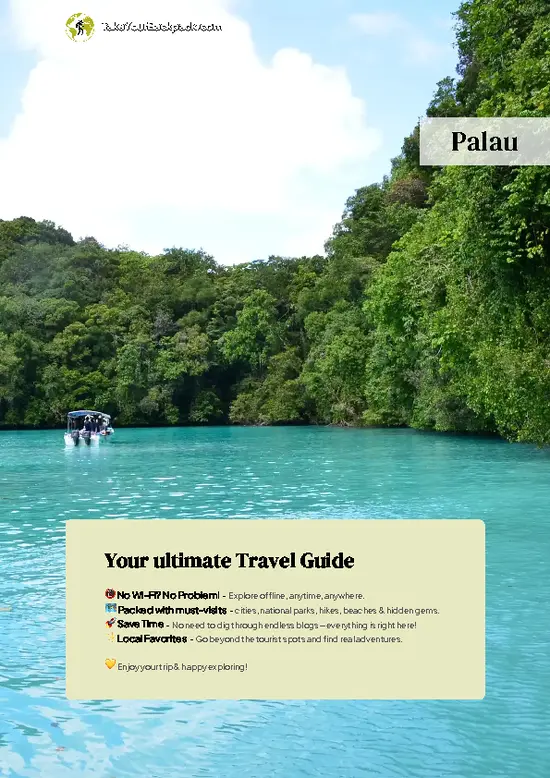
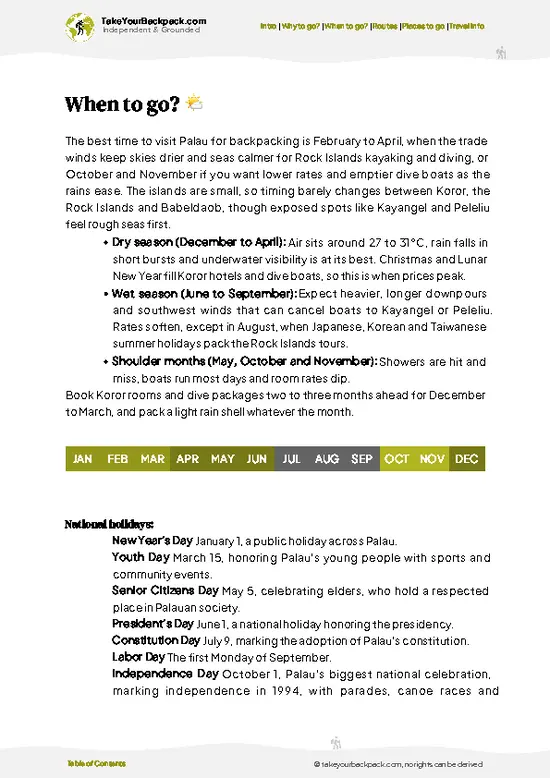
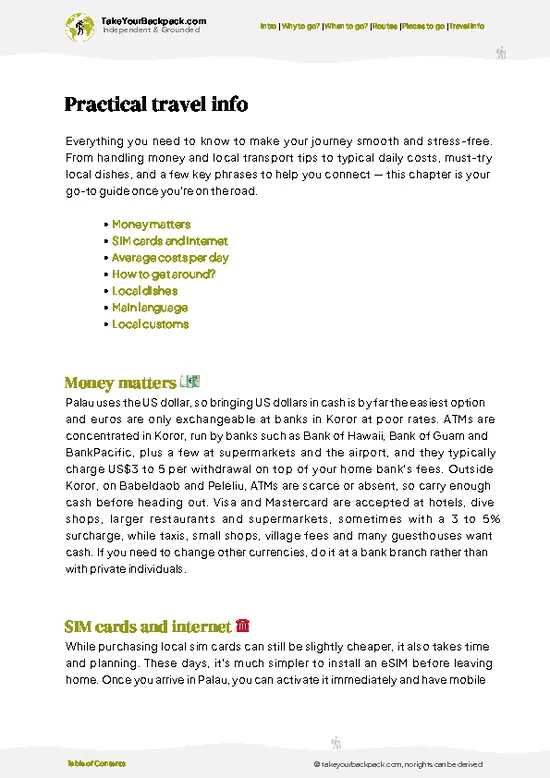
example page 0 from our offline Travel Guide for Palau
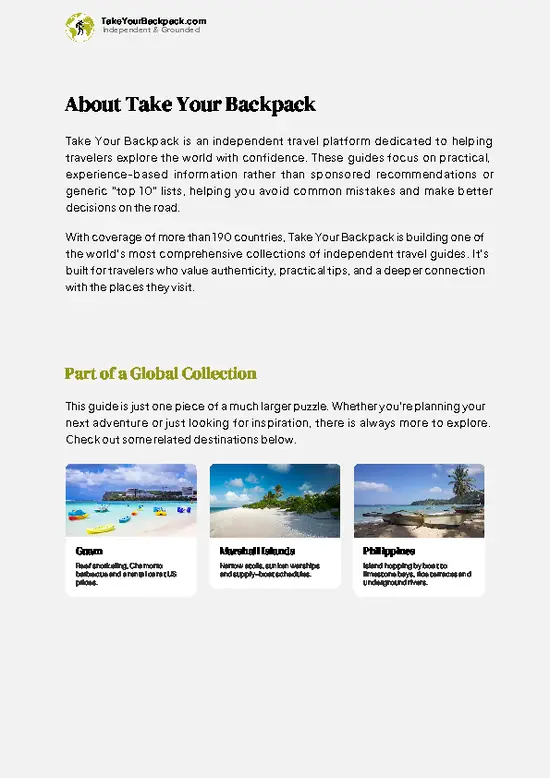
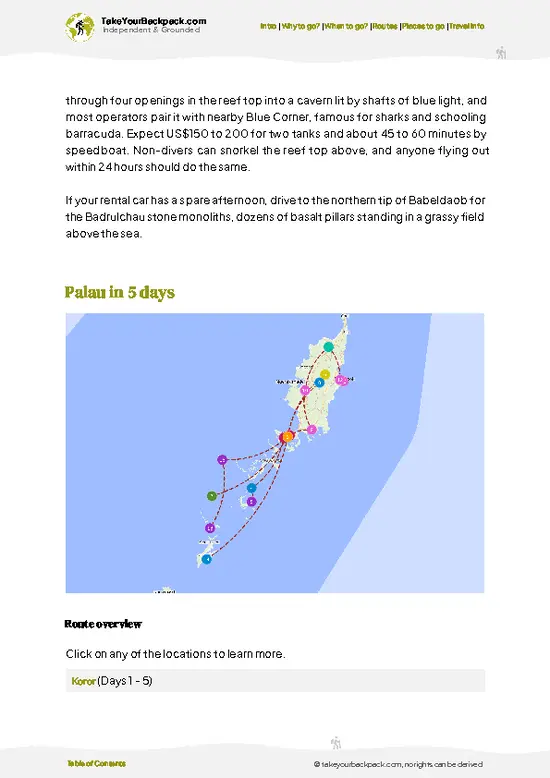
example page 1 from our offline Travel Guide for Palau
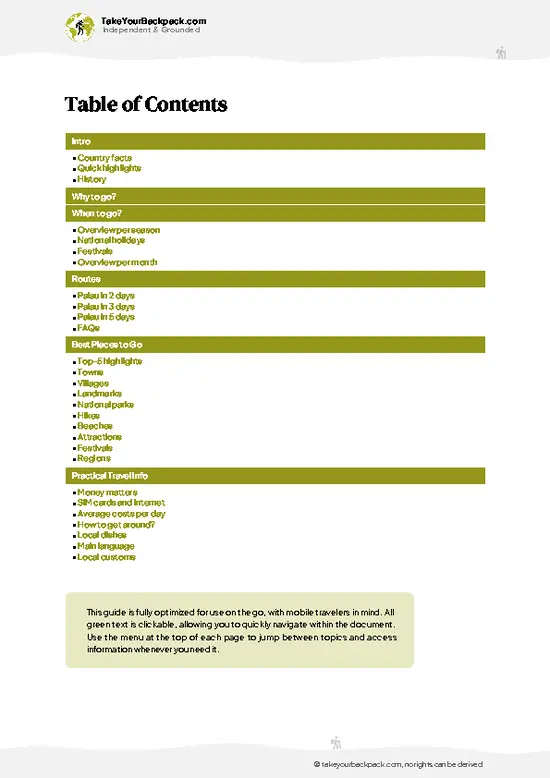
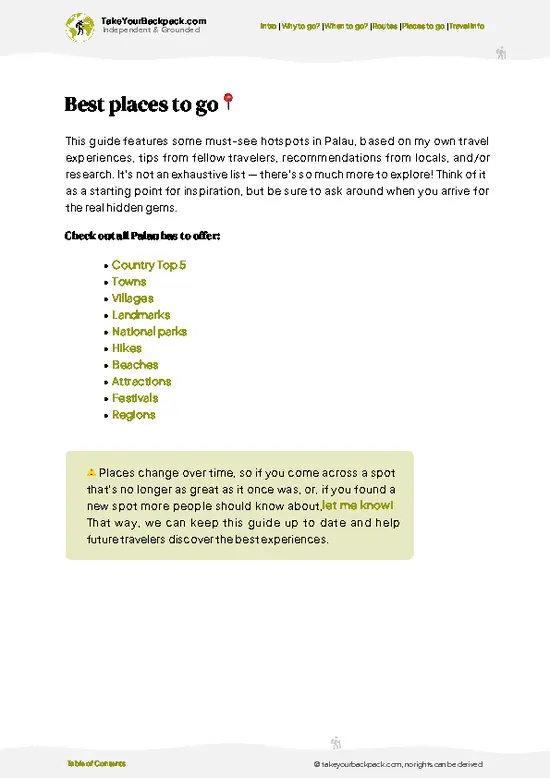
example page 2 from our offline Travel Guide for Palau
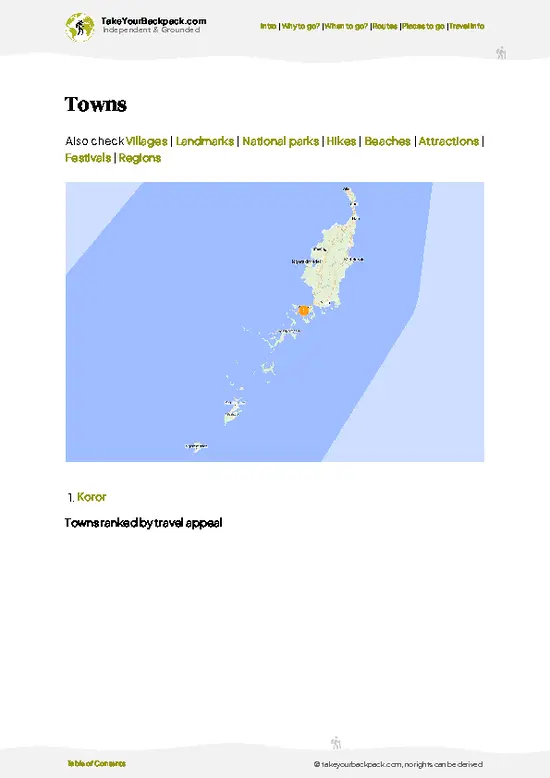
example page 3 from our offline Travel Guide for Palau
example page 4 from our offline Travel Guide for Palau
example page 5 from our offline Travel Guide for Palau
example page 6 from our offline Travel Guide for Palau
example page 7 from our offline Travel Guide for Palau
Loading the map 🌍
CLICK TO FILTER
towns
villages
landmarks
national parks
hikes
beaches
attractions
festivals
regions
SHOW COUNTRY’S BESTSHOW ALL

✨ Why go?
Ranked #99 festival in Palau
What makes this festival worth celebrating

Most backpackers in Palau spend their days underwater or on the Rock Islands, so a day on land with Palauans themselves is the part of the trip people end up quoting. The festival is built around the Belau National Museum, the oldest museum in Micronesia, which means the people running it know the collection and the stories behind it. You can ask a carver why a storyboard is laid out the way it is and get a real answer, not a rehearsed line.

The social side is easy. The crowd is small, so conversations start at the craft tables and around the food, and locals tend to be glad you came. It also costs far less than a dive day, which suits a tight budget.

It fits neatly around a longer route too. Koror is the hub for nearly every Palau trip, so the festival slots in on a surface day between dives, … read more 👉
Most backpackers in Palau spend their days underwater or on the Rock Islands, so a day on land with Palauans themselves is the part of the trip people end up quoting. The festival is built around the Belau National Museum, the oldest museum in Micronesia, which means the people running it know the collection and the stories behind it. You can ask a carver why a storyboard is laid out the way it is and get a real answer, not a rehearsed line.

The social side is easy. The crowd is small, so conversations start at the craft tables and around the food, and locals tend to be glad you came. It also costs far less than a dive day, which suits a tight budget.

It fits neatly around a longer route too. Koror is the hub for nearly every Palau trip, so the festival slots in on a surface day between dives, or before a flight when you want one grounded afternoon. Time it with a visit to the Bai meeting house and you leave understanding the place you have been swimming in.

💡 HighlightsMust-see experiences and standout moments

  1. The Bai (traditional meeting house): The museum’s Bai is the festival’s visual anchor, a steep-roofed wooden men’s meeting house with painted gables and carved beams. Stand inside and you see how Palauan villages organized decisions and rank.
  2. Palauan storyboards: These carved and painted wooden panels are a Palauan art form that began with decorating the Bai and grew into a craft. Each one tells a legend or village tale in pictures, and watching a carver work is the best way to read them.
  3. Traditional money (udoud): Beads of glass and ceramic were the currency of Palauan exchange and still matter in ceremony and clan obligations. Seeing them up close explains why they carry value far beyond what they look like.
  4. Museum collection of artifacts: Canoe models, tools, weaving and shell ornaments sit
… read more 👉
  1. The Bai (traditional meeting house): The museum’s Bai is the festival’s visual anchor, a steep-roofed wooden men’s meeting house with painted gables and carved beams. Stand inside and you see how Palauan villages organized decisions and rank.
  2. Palauan storyboards: These carved and painted wooden panels are a Palauan art form that began with decorating the Bai and grew into a craft. Each one tells a legend or village tale in pictures, and watching a carver work is the best way to read them.
  3. Traditional money (udoud): Beads of glass and ceramic were the currency of Palauan exchange and still matter in ceremony and clan obligations. Seeing them up close explains why they carry value far beyond what they look like.
  4. Museum collection of artifacts: Canoe models, tools, weaving and shell ornaments sit alongside material on Palau’s history under outside rule. It is compact enough to see properly in an hour or two.
For a first visit, start with the Bai, because everything else in the festival makes more sense once you have stood inside it.
Spotted a mistake or missing something? Contact us.

Things to do near Belau National Museum Festival

Ratings based on Tripadvisor reviews. When you book through this link, you support our work at no extra cost to you.

🌤️ When to go?When is the celebration of Belau National Museum Festival?

The Belau National Museum Festival is held in Koror, usually over a few days in the dry months of the year, with the museum grounds in Ngerkesoaol as the main venue; the exact dates shift each year, so confirm with the museum before booking flights.
  • Best day: Go on the opening day for the ceremonies, speeches and the first round of demonstrations. Weekdays are quieter and give you time to talk with the carvers and weavers.
  • Weather: Expect 27 to 31°C (81 to 88°F), high humidity and short, sudden showers even in the drier months. Bring a light rain jacket, a hat, sunscreen, a refillable bottle and sandals you can walk in on wet grass.
  • Booking: Reserve your room and your flight into Palau at least 6 to 8 weeks ahead. Koror room rates can rise 10 to 25 percent when events overlap with holiday travel.
… read more 👉
The Belau National Museum Festival is held in Koror, usually over a few days in the dry months of the year, with the museum grounds in Ngerkesoaol as the main venue; the exact dates shift each year, so confirm with the museum before booking flights.
  • Best day: Go on the opening day for the ceremonies, speeches and the first round of demonstrations. Weekdays are quieter and give you time to talk with the carvers and weavers.
  • Weather: Expect 27 to 31°C (81 to 88°F), high humidity and short, sudden showers even in the drier months. Bring a light rain jacket, a hat, sunscreen, a refillable bottle and sandals you can walk in on wet grass.
  • Booking: Reserve your room and your flight into Palau at least 6 to 8 weeks ahead. Koror room rates can rise 10 to 25 percent when events overlap with holiday travel.
  • Crowds and roads: Koror traffic is thin, but parking near the museum fills up at midday. Arrive before 10 a.m. or walk from downtown, about 15 minutes.
Arrive the day before the opening so jet lag does not eat the ceremonies.


source: climatestotravel.comJANJanuary: excellent for travelingFEBFebruary: not recommended for travelingMARMarch: not recommended for travelingAPRApril: not recommended for travelingMAYMay: not recommended for travelingJUNJune: not recommended for travelingJULJuly: not recommended for travelingAUGAugust: not recommended for travelingSEPSeptember: not recommended for travelingOCTOctober: not recommended for travelingNOVNovember: not recommended for travelingDECDecember: not recommended for traveling

✈️ The backpacker research shortcutPalau Travel Guide

An offline-friendly backpacking guide with optimized travel routes, ranked highlights, transport advice, and the best areas to stay.
example page 0 from our offline Travel Guide for Palau
example page 1 from our offline Travel Guide for Palau
example page 2 from our offline Travel Guide for Palau
example page 3 from our offline Travel Guide for Palau
example page 4 from our offline Travel Guide for Palau
example page 5 from our offline Travel Guide for Palau
example page 6 from our offline Travel Guide for Palau
example page 7 from our offline Travel Guide for Palau
The digital guide (99 pages) contains:
✅ 22 highlights, ranked by travel appeal
✅ Optimized 2, 3 & 5-day travel routes
✅ Cities, national parks, landmarks, beaches
✅ How to get around
✅ Offline-friendly for travel without Wi-Fi
👉 Click to see all 30+ guide features

📅 Plan smarter in minutes, not weeks
✅ Month by month travel advice
✅ Festivals & national holidays
✅ Budget expectations

🗺️ Go to the right places, skip the overrated ones
✅ Honest pros & cons of destinations
✅ Top hikes, parks & viewpoints
✅ Lesser-known places most travelers miss
✅ Clear “worth it vs skip it” guidance

🛏️ Travel smoothly without rookie mistakes
✅ Best areas to stay
✅ Transport systems explained simply
✅ Common scams & safety advice
✅ SIM cards, money & practical tips

🌍 Understand the country, not just visit it
✅ Culture & traditions
✅ 52 Essential phrases & customs
✅ Festivals worth planning around
✅ Traveler-friendly historical context
✅ Insights that make places more meaningful

📱 Built for real travel conditions
✅ Fully downloadable PDF
✅ Works completely offline
✅ Optimized for phone use
✅ Useful in remote areas & buses
✅ Everything in one place
Stop searching, start planning
Get instant access to your full guide. 30‑day money-back guarantee.
+ Add another guide for just

By proceeding you agree to our terms.
Sent to your inbox immediately after payment • 100% Secure Checkout
Best Backpacking Travel Advisor 2025 tourism awardBest Backpacking
Travel Advisor
2025
What others say about Take Your Backpack Guides:
⭐⭐⭐⭐⭐
Fantastic, amazing amount of information!
⭐⭐⭐⭐⭐
My goodness this is amazing, it's what I've been looking for hats off too you!
⭐⭐⭐⭐⭐
I think this is absolutely BRILLIANT
⭐⭐⭐⭐
Very complete and informative. It's still missing places, but I gotta to commend you
⭐⭐⭐⭐⭐
This is truly amazing, thank you, can't wait to explore it with my kids!
⭐⭐⭐⭐⭐
Awesome resource, thank you!
⭐⭐⭐⭐⭐
This is amazing! Can't wait to explore the ones I haven't seen
⭐⭐⭐⭐
I love this! Well done, great idea.
⭐⭐⭐⭐⭐
Thanks for taking the time to make this gem!
⭐⭐⭐⭐⭐
This might be the best website I've ever seen.
⭐⭐⭐⭐⭐
Congratulations, and thank you so much for your work; it's incredibly valuable.
⭐⭐⭐⭐
In all seriousness I think you did a great job pointing out the important spots
⭐⭐⭐⭐⭐
10/10 very good
⭐⭐⭐⭐⭐
As someone who's only just starting to visit regularly this is awesome, thank you.
⭐⭐⭐⭐
Thank you very much! I'm going to visit my dad, it's going to be very useful!
⭐⭐⭐⭐⭐
This is really cool! We'll be travelling for the first time and this definitely come in handy.
⭐⭐⭐⭐⭐
You are now our minister of culture, congratulations 👨‍💼
⭐⭐⭐⭐⭐
Just wanted to tell you that this is a pearl! Going to follow your recommendations.
⭐⭐⭐⭐⭐
This is so cool. I'll definitely be using the resource for my travels soon.
⭐⭐⭐⭐⭐
This is very impressive! Good work.
⭐⭐⭐⭐⭐
This is an amazing and informative site. Very well done!

🛏️ Where to stay?Choosing the right base

Downtown Koror is the best base for the festival, because the museum sits on the edge of town and you can reach it on foot or by a short taxi ride of a few dollars. The streets around the main waterfront and the central market are where budget travelers cluster. You will find small guesthouses, dive-oriented lodging and basic apartments, plus cafes, grocery stores and the few bars the island has. Solo travelers meet others easily here, since most visitors to Palau pass through this same stretch for dive and snorkel trips. It is also safe, with well-lit main roads and a relaxed local pace, though … read more 👉
Downtown Koror is the best base for the festival, because the museum sits on the edge of town and you can reach it on foot or by a short taxi ride of a few dollars. The streets around the main waterfront and the central market are where budget travelers cluster. You will find small guesthouses, dive-oriented lodging and basic apartments, plus cafes, grocery stores and the few bars the island has. Solo travelers meet others easily here, since most visitors to Palau pass through this same stretch for dive and snorkel trips. It is also safe, with well-lit main roads and a relaxed local pace, though you should still lock valuables away.
Malakal, the island southwest of downtown with the main harbor, suits you if you plan to pair the festival with boat trips. It is quieter in the evening and has fewer food options, so you will rely on taxis or a shared ride. Ngermid and the area toward Airai offer cheaper long-stay rooms, but you need transport for almost everything. Choose downtown if you want to move between the festival and meals without a car, and book early because the cheapest rooms in Koror are limited in number.

👛 Costs (as of 15 October 2026)What things cost and how to budget

Plan on roughly US$110 to 215 a day for the festival, with accommodation making up most of that since Palau is an expensive destination that uses the US dollar.
CategoryBudget RangeLocal Reality
Festival ticketsUS$0 to 10Entry to the main grounds is usually free or a small donation, while some workshops or performances may charge a modest fee.
AccommodationUS$60 to 110Guesthouse rooms and small apartments in Koror cost more than elsewhere in the region, and prices rise during busy periods.
Local transportUS$10 to 25Taxis in Koror run about US$5 to 15 per ride, and a public bus runs around Koror for US$1 to 3 a ride.
Food & drinksUS$30 to 50Plate lunches cost US$8 to 14, restaurant dinners US$15 to 30, and imported goods in shops are pricey.
Miscellaneous expensesUS$10 to 20Souvenirs, crafts, water
… read more 👉
Plan on roughly US$110 to 215 a day for the festival, with accommodation making up most of that since Palau is an expensive destination that uses the US dollar.
CategoryBudget RangeLocal Reality
Festival ticketsUS$0 to 10Entry to the main grounds is usually free or a small donation, while some workshops or performances may charge a modest fee.
AccommodationUS$60 to 110Guesthouse rooms and small apartments in Koror cost more than elsewhere in the region, and prices rise during busy periods.
Local transportUS$10 to 25Taxis in Koror run about US$5 to 15 per ride, and a public bus runs around Koror for US$1 to 3 a ride.
Food & drinksUS$30 to 50Plate lunches cost US$8 to 14, restaurant dinners US$15 to 30, and imported goods in shops are pricey.
Miscellaneous expensesUS$10 to 20Souvenirs, crafts, water and sunscreen add up, and the Rock Island permit and other visitor fees apply if you extend your trip.
Total Daily BudgetUS$110 to 215Lower end assumes shared rooms and cooking; upper end suits private rooms and taxis.
⚠️ Prices can change and everyone travels differently, so take this as a rough guide. Hope it helps you plan your adventure!

🍲 FoodEating & Drinking in Belau National Museum

Festival food in Koror leans on local home cooking, sold from small stalls and community tables around the museum grounds. Expect fresh reef fish grilled or in coconut sauce, taro and cassava as the starchy base, and sweet tapioca and coconut treats. Chicken and pork often appear in simple stews and barbecue skewers. Seasonal fruit such as papaya, banana and pineapple turns up on plates and in cut cups.
For authenticity, try anything built on taro, especially if a family group is serving it, and look for coconut crab or fruit bat soup only if it is clearly on offer from a local cook, since both are traditional but not always available. A cold fresh coconut is the easiest drink in the heat. Local beer and soft drinks are usually sold alongside.
Bring small US dollar bills, because Palau uses … read more 👉
Festival food in Koror leans on local home cooking, sold from small stalls and community tables around the museum grounds. Expect fresh reef fish grilled or in coconut sauce, taro and cassava as the starchy base, and sweet tapioca and coconut treats. Chicken and pork often appear in simple stews and barbecue skewers. Seasonal fruit such as papaya, banana and pineapple turns up on plates and in cut cups.
For authenticity, try anything built on taro, especially if a family group is serving it, and look for coconut crab or fruit bat soup only if it is clearly on offer from a local cook, since both are traditional but not always available. A cold fresh coconut is the easiest drink in the heat. Local beer and soft drinks are usually sold alongside.
Bring small US dollar bills, because Palau uses the US dollar and many stalls take cash only. Servings are generous, so share a plate with a travel mate and sample more. Lines move at an island pace, so relax and chat with the people serving. Ask what a dish is called before you buy; cooks usually enjoy explaining it.

FAQCommon questions from travelers

The Belau National Museum Festival takes place in Koror, usually over a few days during the dry months, with the exact dates changing every year. The venue is the Belau National Museum grounds, a short walk or taxi ride from downtown. Check with the museum a couple of months ahead and plan to arrive a day early.
Attending usually costs very little at the gate, often free or a small donation of up to about US$10 for certain events. The real expense is getting there, since a Koror guesthouse room runs about US$60 to 110 a night. Budget US$30 to 50 a day for food and US$10 to 25 for taxis.
Tickets are generally not needed in advance for the main festival grounds, which are typically open to walk in. Any special workshops or evening performances may need a spot reserved, so ask the museum in Koror. What does need early booking is your flight and room, ideally 6 to 8 weeks ahead.
⚠️ Things can change over time, so always validate details locally before you go.

Other Palauan festivals near Belau National Museum

Explore more nearby:


💡 Not sure where to go next?
Create a personalized itinerary for Palau including Belau National Museum and the places that fit your trip.

Generate my itinerary

👉 Discover all festivals

Or checkout all Palau has to offer (think cities, towns, villages, national parks, hikes, beaches, festivals)
Country photo of Palau

We 💚 feedbackSumming up the experience

Go in the morning, when the grounds are cooler, the carvers are fresh and the afternoon showers haven’t arrived. I would pick a dry-season visit if you have the choice, since the outdoor demonstrations run longest then. Bring a little cash for a small storyboard, which makes a far better souvenir than anything from a gift shop.

✍️ Help improve this page!
The information on this page is based on in-depth research, insights shared by experienced travelers, and feedback from the local travel community in Palau. While every effort is made to keep the information accurate and current, conditions can change — so if you spot anything incorrect or outdated, please get in touch.


🙋‍♂️ Give feedback

👋 Meet the founderWho’s Behind Take Your Backpack?

Johan, backpacker and founder of TakeYourBackpackHi, I’m Johan (Netherlands 🇳🇱), the creator of TakeYourBackpack. Over the past 3 decades, I’ve backpacked through 90+ countries across six continents, gaining extensive experience with independent travel, long-term trips, and overland routes.

This site is built on a combination of firsthand travel experience and carefully curated insights from other backpackers. Many guides are based on places I’ve personally visited, while others bring together tips, observations, and practical advice shared by trusted travelers I’ve met along the way.

The goal is to provide realistic, experience-driven guidance — not generic itineraries — so you can explore destinations with better context, clearer expectations, and more confidence.