×

Palau🇵🇼 | festivalsPalau International Coral Reef FestivalReef-themed floats, fishing weigh-in, boat races, conservation displays | things to do and best time to go

Explore Olechotel Belau FairExplore Mount Ngerchelchuus

Backpacking in Palau International Coral Reef
By Johan Kruseman 🇳🇱 | Updated October 15, 2026

You’re standing on a Koror roadside with a paper cup of iced tea, watching schoolkids in matching shirts march past a truck bed packed with painted coral-reef floats, and the drums carry over the harbor. That’s the Palau International Coral Reef Festival, a community celebration held in Koror, the commercial hub of Palau, once a year, usually in the warm early months. Expect island music, Palauan dance, canoe and boat races, fishing contests, craft stalls and grill smoke rather than headline acts. The crowd is mostly Palauan families, dive-shop crews, marine researchers and a small scattering of travelers, so strangers talk to you readily. Arrive early for the parade, since the shade along the road disappears by late morning, and keep small bills handy for food stalls. Compared with Yap Day in neighboring Yap, which centers on traditional dance and village exchange, Palau’s festival puts the ocean and its protection front and center, and feels more like a town fair.

Discover everything you want to know in the 📖 Palau Travel Guide.


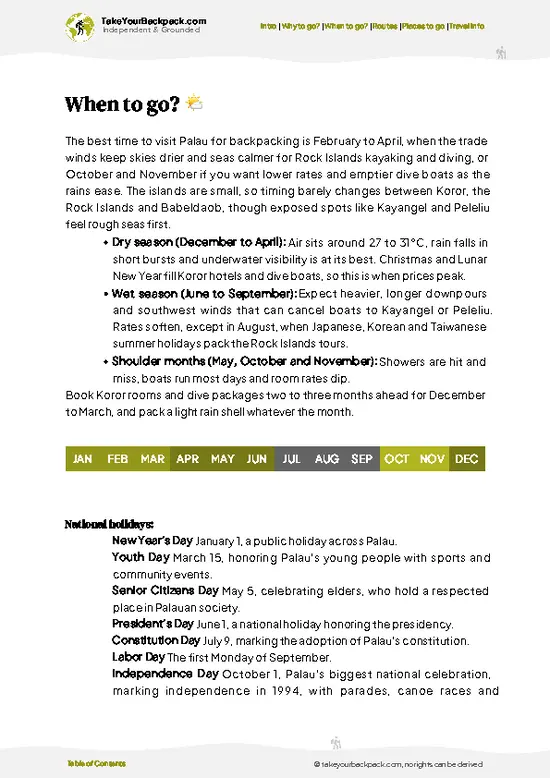
example page 0 from our offline Travel Guide for Palau
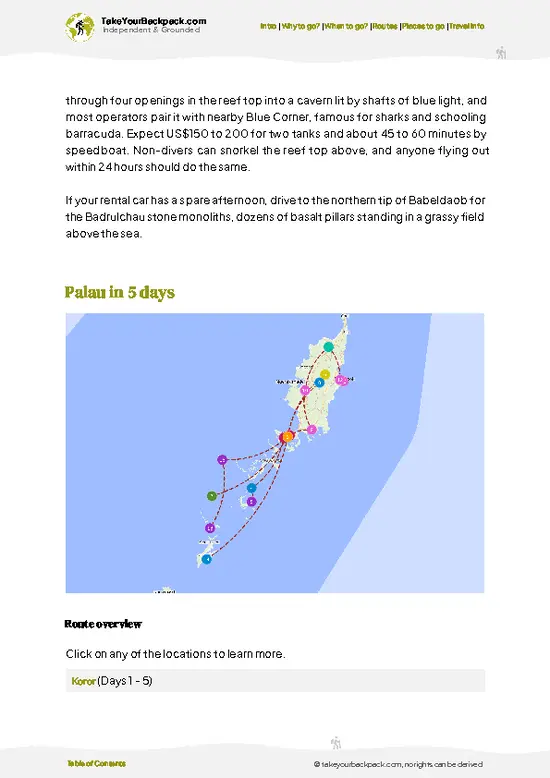
example page 1 from our offline Travel Guide for Palau
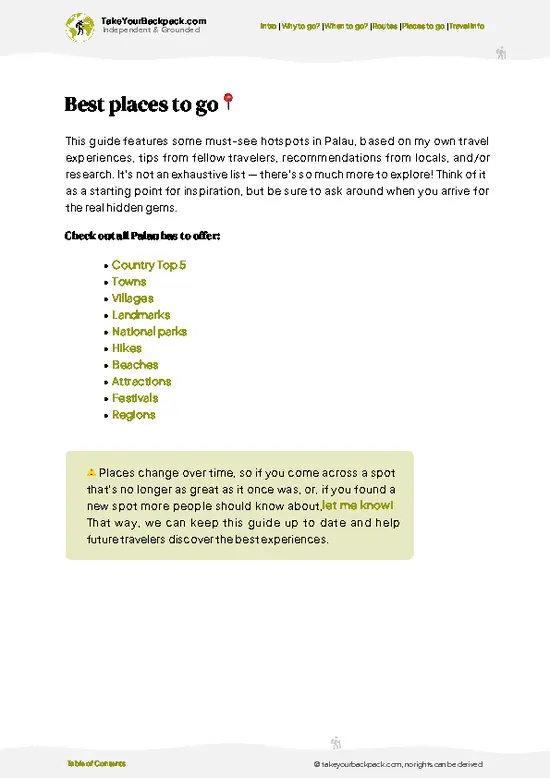
example page 2 from our offline Travel Guide for Palau
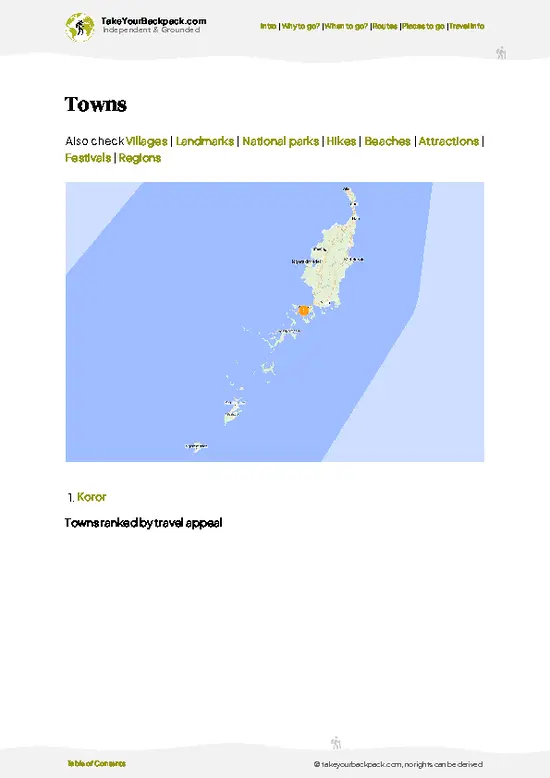
example page 3 from our offline Travel Guide for Palau
example page 4 from our offline Travel Guide for Palau
example page 5 from our offline Travel Guide for Palau
example page 6 from our offline Travel Guide for Palau
example page 7 from our offline Travel Guide for Palau
Loading the map 🌍
CLICK TO FILTER
towns
villages
landmarks
national parks
hikes
beaches
attractions
festivals
regions
SHOW COUNTRY’S BESTSHOW ALL

✨ Why go?
Ranked #99 festival in Palau
What sets this place apart

Backpackers in Palau spend most days underwater or on a boat, so the festival is the rare chance to meet the people who live here on dry land. Koror fills with locals who have time to chat, share a plate and explain why the reef matters to them, which turns a dive-focused trip into something with a face attached. That connection is the main draw. The second reason is the setting. Planning around the festival lets you pair a week of events with the Rock Islands, which sit just offshore, so you can spend mornings on the water and afternoons at the stalls. It also lines up well with the conservation ethos you meet on arrival, including the Palau Pledge stamped into your passport, because here the festival shows that promise in practice, with kids, fishers and elders all in the same crowd. Palau … read more 👉
Backpackers in Palau spend most days underwater or on a boat, so the festival is the rare chance to meet the people who live here on dry land. Koror fills with locals who have time to chat, share a plate and explain why the reef matters to them, which turns a dive-focused trip into something with a face attached. That connection is the main draw. The second reason is the setting. Planning around the festival lets you pair a week of events with the Rock Islands, which sit just offshore, so you can spend mornings on the water and afternoons at the stalls. It also lines up well with the conservation ethos you meet on arrival, including the Palau Pledge stamped into your passport, because here the festival shows that promise in practice, with kids, fishers and elders all in the same crowd. Palau is not a cheap destination, but most festival events are open to the public and the food is a fair way to eat well among locals.

💡 HighlightsWhat this place is best known for

  1. Opening Ceremony and Parade in Koror: The festival’s best-known moment is the street parade, with school groups, community teams and decorated floats moving through town to music. Stake out a spot with shade early and you get the full color of local pride up close.
  2. Outrigger Canoe and Boat Races: Teams paddle and sail across Koror’s waters in races rooted in Palau’s seafaring tradition. The shoreline fills with cheering families, and the sight of hand-built craft cutting through the lagoon is worth the sun on your neck.
  3. Fishing Tournament: Local anglers bring in catches that get weighed on the dock, and the scene is half competition, half neighborhood gossip. It is a clear look at how deeply fishing sits in daily Palauan life, and a good place to ask which fish end up on dinner tables.
  4. Traditional
… read more 👉
  1. Opening Ceremony and Parade in Koror: The festival’s best-known moment is the street parade, with school groups, community teams and decorated floats moving through town to music. Stake out a spot with shade early and you get the full color of local pride up close.
  2. Outrigger Canoe and Boat Races: Teams paddle and sail across Koror’s waters in races rooted in Palau’s seafaring tradition. The shoreline fills with cheering families, and the sight of hand-built craft cutting through the lagoon is worth the sun on your neck.
  3. Fishing Tournament: Local anglers bring in catches that get weighed on the dock, and the scene is half competition, half neighborhood gossip. It is a clear look at how deeply fishing sits in daily Palauan life, and a good place to ask which fish end up on dinner tables.
  4. Traditional Dance and Music Performances: Groups perform Palauan chants and dances alongside island pop and string-band sets. Stand near the front and you hear the rhythms and storytelling that explain the culture far better than any museum label.
  5. Food and Craft Stalls: Vendors sell grilled fish, taro, coconut dishes and handmade crafts, with a lot of conservation-themed displays from schools and environmental groups. It is the easiest place to taste local cooking in one sitting and pick up something made on the islands.
Start with the parade, since it happens early, sets the mood for everything else, and shows you which crowds and teams to follow to the races and stalls afterward.
Spotted a mistake or missing something? Contact us.

Things to do near Palau International Coral Reef Festival

Ratings based on Tripadvisor reviews. When you book through this link, you support our work at no extra cost to you.

🌤️ When to go?When is the celebration of Palau International Coral Reef Festival?

The Palau International Coral Reef Festival is held in Koror, usually over several days in March, with the main events at the Koror waterfront and nearby sites; the exact dates shift each year.
  • Best day: Go on the main weekend day, when the food stalls, cultural performances and ocean-themed contests run at full volume. Weekday sessions are calmer but have less going on.
  • Weather: Expect 27 to 31°C (81 to 88°F), high humidity and short, sudden showers that pass within an hour. Sunrise is around 6:00 and sunset around 18:15. Bring a light rain shell, reef-safe sunscreen, a hat and a refillable bottle.
  • Booking: Reserve a bed 4 to 6 weeks ahead, because Koror has limited rooms and rates can rise 15 to 30 percent when the festival coincides with dive-season demand. Flights into Palau fill earlier
… read more 👉
The Palau International Coral Reef Festival is held in Koror, usually over several days in March, with the main events at the Koror waterfront and nearby sites; the exact dates shift each year.
  • Best day: Go on the main weekend day, when the food stalls, cultural performances and ocean-themed contests run at full volume. Weekday sessions are calmer but have less going on.
  • Weather: Expect 27 to 31°C (81 to 88°F), high humidity and short, sudden showers that pass within an hour. Sunrise is around 6:00 and sunset around 18:15. Bring a light rain shell, reef-safe sunscreen, a hat and a refillable bottle.
  • Booking: Reserve a bed 4 to 6 weeks ahead, because Koror has limited rooms and rates can rise 15 to 30 percent when the festival coincides with dive-season demand. Flights into Palau fill earlier than rooms.
  • Crowds and roads: Koror has no trains, and traffic is light by world standards. Arrive at the waterfront before late morning, since parking near the venue gets tight. Leave before the closing-night crush.
Confirm the year’s schedule with the Palau Visitors Authority before buying flights.


source: climatestotravel.comJANJanuary: excellent for travelingFEBFebruary: not recommended for travelingMARMarch: not recommended for travelingAPRApril: not recommended for travelingMAYMay: not recommended for travelingJUNJune: not recommended for travelingJULJuly: not recommended for travelingAUGAugust: not recommended for travelingSEPSeptember: not recommended for travelingOCTOctober: not recommended for travelingNOVNovember: not recommended for travelingDECDecember: not recommended for traveling

✈️ The backpacker research shortcutPalau Travel Guide

An offline-friendly backpacking guide with optimized travel routes, ranked highlights, transport advice, and the best areas to stay.
example page 0 from our offline Travel Guide for Palau
example page 1 from our offline Travel Guide for Palau
example page 2 from our offline Travel Guide for Palau
example page 3 from our offline Travel Guide for Palau
example page 4 from our offline Travel Guide for Palau
example page 5 from our offline Travel Guide for Palau
example page 6 from our offline Travel Guide for Palau
example page 7 from our offline Travel Guide for Palau
The digital guide (99 pages) contains:
✅ 22 highlights, ranked by travel appeal
✅ Optimized 2, 3 & 5-day travel routes
✅ Cities, national parks, landmarks, beaches
✅ How to get around
✅ Offline-friendly for travel without Wi-Fi
👉 Click to see all 30+ guide features

📅 Plan smarter in minutes, not weeks
✅ Month by month travel advice
✅ Festivals & national holidays
✅ Budget expectations

🗺️ Go to the right places, skip the overrated ones
✅ Honest pros & cons of destinations
✅ Top hikes, parks & viewpoints
✅ Lesser-known places most travelers miss
✅ Clear “worth it vs skip it” guidance

🛏️ Travel smoothly without rookie mistakes
✅ Best areas to stay
✅ Transport systems explained simply
✅ Common scams & safety advice
✅ SIM cards, money & practical tips

🌍 Understand the country, not just visit it
✅ Culture & traditions
✅ 52 Essential phrases & customs
✅ Festivals worth planning around
✅ Traveler-friendly historical context
✅ Insights that make places more meaningful

📱 Built for real travel conditions
✅ Fully downloadable PDF
✅ Works completely offline
✅ Optimized for phone use
✅ Useful in remote areas & buses
✅ Everything in one place
Stop searching, start planning
Get instant access to your full guide. 30‑day money-back guarantee.
+ Add another guide for just

By proceeding you agree to our terms.
Sent to your inbox immediately after payment • 100% Secure Checkout
Best Backpacking Travel Advisor 2025 tourism awardBest Backpacking
Travel Advisor
2025
What others say about Take Your Backpack Guides:
⭐⭐⭐⭐⭐
Fantastic, amazing amount of information!
⭐⭐⭐⭐⭐
My goodness this is amazing, it's what I've been looking for hats off too you!
⭐⭐⭐⭐⭐
I think this is absolutely BRILLIANT
⭐⭐⭐⭐
Very complete and informative. It's still missing places, but I gotta to commend you
⭐⭐⭐⭐⭐
This is truly amazing, thank you, can't wait to explore it with my kids!
⭐⭐⭐⭐⭐
Awesome resource, thank you!
⭐⭐⭐⭐⭐
This is amazing! Can't wait to explore the ones I haven't seen
⭐⭐⭐⭐
I love this! Well done, great idea.
⭐⭐⭐⭐⭐
Thanks for taking the time to make this gem!
⭐⭐⭐⭐⭐
This might be the best website I've ever seen.
⭐⭐⭐⭐⭐
Congratulations, and thank you so much for your work; it's incredibly valuable.
⭐⭐⭐⭐
In all seriousness I think you did a great job pointing out the important spots
⭐⭐⭐⭐⭐
10/10 very good
⭐⭐⭐⭐⭐
As someone who's only just starting to visit regularly this is awesome, thank you.
⭐⭐⭐⭐
Thank you very much! I'm going to visit my dad, it's going to be very useful!
⭐⭐⭐⭐⭐
This is really cool! We'll be travelling for the first time and this definitely come in handy.
⭐⭐⭐⭐⭐
You are now our minister of culture, congratulations 👨‍💼
⭐⭐⭐⭐⭐
Just wanted to tell you that this is a pearl! Going to follow your recommendations.
⭐⭐⭐⭐⭐
This is so cool. I'll definitely be using the resource for my travels soon.
⭐⭐⭐⭐⭐
This is very impressive! Good work.
⭐⭐⭐⭐⭐
This is an amazing and informative site. Very well done!

🛏️ Where to stay?Best areas and accommodation options

Koror is where you want to sleep, because the festival events sit in and around it and everything else is a short walk or a cheap ride away.
The downtown core near the waterfront is the most practical base. You can reach the main festival grounds on foot, grab breakfast at local bakeries, and find dive shops, small supermarkets and ATMs within a few blocks. It is also the best place to meet other travelers, since most solo backpackers and dive-trip crowds end up here, and shared dorms and guesthouse common areas fill with people swapping reef tips in the evening.
The Malakal area, on the island … read more 👉
Koror is where you want to sleep, because the festival events sit in and around it and everything else is a short walk or a cheap ride away.
The downtown core near the waterfront is the most practical base. You can reach the main festival grounds on foot, grab breakfast at local bakeries, and find dive shops, small supermarkets and ATMs within a few blocks. It is also the best place to meet other travelers, since most solo backpackers and dive-trip crowds end up here, and shared dorms and guesthouse common areas fill with people swapping reef tips in the evening.
The Malakal area, on the island just south of the center, suits divers and anyone who wants to be near the harbor where boats leave for the reef. It is quieter at night, so it feels calmer and safe, though you will want a taxi or shared ride back after dark when buses are scarce.
The area toward Airai, near the airport side, offers a few cheaper rooms and local-style stays, but you will trade away walkability and the social buzz. Choose it only if you have transport sorted.
Palau is generally very safe. Koror’s streets are well lit and walkable, and bookings should still be made early for festival dates.

👛 Costs (as of 15 October 2026)What things cost and how to budget

Plan on roughly US$110 to 190 a day for the festival, with accommodation and food taking most of it since Palau is an expensive destination for backpackers.
CategoryBudget RangeLocal Reality
Festival ticketsUS$0 to 10Most outdoor events and stalls are free to enter. A few special activities or evening events may charge a small fee.
AccommodationUS$50 to 90Dorms and basic guesthouse rooms in Koror in high season. Prices climb around the festival, so book early.
Local transportUS$10 to 30Taxis within Koror are a few dollars a ride, and shuttles or shared rides cost less. Boat transfers to reef sites are extra.
Food & drinksUS$30 to 50Festival plates run US$5 to 12, local cafés US$10 to 18, and a beer US$3 to 6. Groceries cut costs.
Miscellaneous expensesUS$10 to 20Reef-safe sunscreen, souvenirs and
… read more 👉
Plan on roughly US$110 to 190 a day for the festival, with accommodation and food taking most of it since Palau is an expensive destination for backpackers.
CategoryBudget RangeLocal Reality
Festival ticketsUS$0 to 10Most outdoor events and stalls are free to enter. A few special activities or evening events may charge a small fee.
AccommodationUS$50 to 90Dorms and basic guesthouse rooms in Koror in high season. Prices climb around the festival, so book early.
Local transportUS$10 to 30Taxis within Koror are a few dollars a ride, and shuttles or shared rides cost less. Boat transfers to reef sites are extra.
Food & drinksUS$30 to 50Festival plates run US$5 to 12, local cafés US$10 to 18, and a beer US$3 to 6. Groceries cut costs.
Miscellaneous expensesUS$10 to 20Reef-safe sunscreen, souvenirs and snorkel gear rental. Palau’s Pristine Paradise Environmental Fee is built into your airfare and is not included here.
Total Daily Budget: about US$110 to 190 using high-season accommodation. Flights are the largest extra cost, and the US dollar is the currency, so no exchange is needed for American travelers.
⚠️ Prices can change and everyone travels differently, so take this as a rough guide. Hope it helps you plan your adventure!

🍲 FoodEating & Drinking in Palau International Coral Reef

Expect a festival of fresh seafood and island comfort food, with stalls grilling reef fish, tuna and crab over open flames while the smoke drifts across the waterfront.
Look for raw tuna and fish plates served with soy and chili, taro and cassava boiled or fried, and coconut crab when a vendor has it. Sweet coconut treats and local fruit like papaya and banana show up on the dessert tables. Drinks run to fresh coconut water, iced tea, soft drinks and local beer sold at designated stands.
For authenticity, try the dishes on community tables run by Palauan families and clubs. They cook what they grew up with, and the plates are generous. Ask what is local that day and pick that over fried standbys.
Quirks worth knowing: bring cash in small US dollar bills (Palau uses the US dollar), because many … read more 👉
Expect a festival of fresh seafood and island comfort food, with stalls grilling reef fish, tuna and crab over open flames while the smoke drifts across the waterfront.
Look for raw tuna and fish plates served with soy and chili, taro and cassava boiled or fried, and coconut crab when a vendor has it. Sweet coconut treats and local fruit like papaya and banana show up on the dessert tables. Drinks run to fresh coconut water, iced tea, soft drinks and local beer sold at designated stands.
For authenticity, try the dishes on community tables run by Palauan families and clubs. They cook what they grew up with, and the plates are generous. Ask what is local that day and pick that over fried standbys.
Quirks worth knowing: bring cash in small US dollar bills (Palau uses the US dollar), because many stalls do not take cards. Lines move at island speed, so relax into it. Portions are large, so share a plate with a travel buddy and sample more. Eat the seafood fresh at the stall rather than carrying it around in the heat, and keep a bottle of water with you since the sun is strong by midday.

FAQTraveler FAQ

The festival is usually held in March in Koror, running over several days around the waterfront and nearby sites. The exact dates change each year, so check with the Palau Visitors Authority before booking flights. Daytime temperatures sit around 27 to 31°C (81 to 88°F), and showers pass quickly.
Attending costs very little, since most events and stalls are free, but Palau itself is expensive. Budget about US$110 to 190 a day including a dorm or guesthouse bed at US$50 to 90, food at US$30 to 50, and local transport at US$10 to 30. Festival plates typically cost US$5 to 12.
General festival events do not require advance tickets, and you can walk into most of the Koror waterfront activities. What you do need to book early are flights and rooms, ideally 4 to 6 weeks ahead, since Koror has limited beds. Any special paid events or tours are best reserved a few days before.
⚠️ Things can change over time, so always validate details locally before you go.

Other Palauan festivals near Palau International Coral Reef

Explore more nearby:


💡 Not sure where to go next?
Create a personalized itinerary for Palau including Palau International Coral Reef and the places that fit your trip.

Generate my itinerary

👉 Discover all festivals

Or checkout all Palau has to offer (think cities, towns, villages, national parks, hikes, beaches, festivals)
Country photo of Palau

We 💚 feedbackIs it worth it?

Build your Palau route around the festival week, then use the rest of your days for the Rock Islands, Jellyfish Lake and a dive or two on the outer reefs. I would book boat trips for the mornings and save evenings for the festival grounds, where the food and conversation peak. Bring a hat, reef-safe sunscreen and small bills, and say yes when a local family waves you over to share a plate.

✍️ Help improve this page!
The information on this page is based on in-depth research, insights shared by experienced travelers, and feedback from the local travel community in Palau. While every effort is made to keep the information accurate and current, conditions can change — so if you spot anything incorrect or outdated, please get in touch.


🙋‍♂️ Give feedback

👋 Meet the founderWho’s Behind Take Your Backpack?

Johan, backpacker and founder of TakeYourBackpackHi, I’m Johan (Netherlands 🇳🇱), the creator of TakeYourBackpack. Over the past 3 decades, I’ve backpacked through 90+ countries across six continents, gaining extensive experience with independent travel, long-term trips, and overland routes.

This site is built on a combination of firsthand travel experience and carefully curated insights from other backpackers. Many guides are based on places I’ve personally visited, while others bring together tips, observations, and practical advice shared by trusted travelers I’ve met along the way.

The goal is to provide realistic, experience-driven guidance — not generic itineraries — so you can explore destinations with better context, clearer expectations, and more confidence.