
×

Palau🇵🇼 | national parksNgerukewid Islands Wildlife PreserveSeabird nesting islets, no-landing preserve, undercut limestone, Ulong Channel drifts | things to do and best time to go

Explore Elauesachel TrailExplore Peleliu Island

Backpacking in Ngerukewid Islands Wildlife Preserve
🏆 Top picknational park ranked #1
By Johan Kruseman 🇳🇱 | Updated October 15, 2026

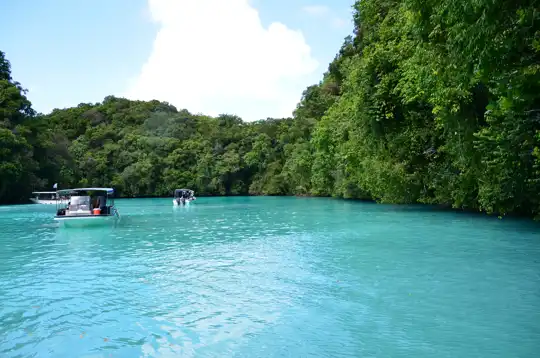
Seabirds are the reason this group of small, uninhabited limestone islets was fenced off from people as far back as the 1950s, and the noddies and terns still use the undercut, tree-capped rocks as nesting ground. The preserve sits in the southern Rock Islands of Palau, southwest of Koror. Be clear on what you’re getting. There are no hiking trails, no landing and no facilities, because the point is to keep people off the islands. What you get is sea-level scenery: green mushroom-shaped rock, water in shifting turquoise and navy, and reef fish by the thousand. Getting here means a boat from Koror, and the smarter move is to book a small-group or private charter, since it can stop at a drifting distance for photos where big tour boats keep moving. Go out early, when the lagoon is flat and the light hits the rock undercuts. A good first day is a morning boat out of Koror, a slow pass along the islets, then snorkeling at a nearby channel before you head back by mid-afternoon.

Discover everything you want to know in the 📖 Palau Travel Guide.


example page 0 from our offline Travel Guide for Palau
example page 1 from our offline Travel Guide for Palau
example page 2 from our offline Travel Guide for Palau
example page 3 from our offline Travel Guide for Palau
example page 4 from our offline Travel Guide for Palau
example page 5 from our offline Travel Guide for Palau
example page 6 from our offline Travel Guide for Palau
example page 7 from our offline Travel Guide for Palau
Loading the map 🌍
CLICK TO FILTER
towns
villages
landmarks
national parks
hikes
beaches
attractions
festivals
regions
SHOW COUNTRY’S BESTSHOW ALL

✨ Why go?
Ranked #1 national park in Palau
What sets this place apart

Backpackers come for the water, not the islets themselves. Independent exploring here means paddling or boating around the Southern Lagoon Rock Islands, a World Heritage area where the limestone rises straight from the sea and the coves are empty of buildings. Because landing at Ngerukewid is off limits, the cheapest and best approach is to share a boat with other travelers from Koror hostels, split the cost, and pass the preserve on the way to the famous snorkel and dive channels. That keeps you flexible, and you can choose a captain who lingers instead of racing to a lunch beach.

The second draw is the wildlife. The preserve was set aside for nesting seabirds, and the surrounding reef is part of a no-take tradition that makes the fish density remarkable by Pacific standards. Kayakers in … read more 👉
Backpackers come for the water, not the islets themselves. Independent exploring here means paddling or boating around the Southern Lagoon Rock Islands, a World Heritage area where the limestone rises straight from the sea and the coves are empty of buildings. Because landing at Ngerukewid is off limits, the cheapest and best approach is to share a boat with other travelers from Koror hostels, split the cost, and pass the preserve on the way to the famous snorkel and dive channels. That keeps you flexible, and you can choose a captain who lingers instead of racing to a lunch beach.

The second draw is the wildlife. The preserve was set aside for nesting seabirds, and the surrounding reef is part of a no-take tradition that makes the fish density remarkable by Pacific standards. Kayakers in the surrounding Southern Lagoon can watch terns wheel over the islands, but the preserve itself is closed to all entry. Self-guided travelers do fine here, as long as a licensed operator handles the boat and permit side, since guided tours are the only legal way into the lagoon.

💡 HighlightsPlaces and moments you shouldn't skip

  1. Ngerukewid Islets: The preserve itself is a cluster of small limestone islands with sharply undercut bases and dense green crowns. They are closed to landing, so you view them from the water, and the contrast of dark rock, white sand patches and bright water is the visual hook.
  2. Seabird Nesting Islands: Black noddies, white terns and other seabirds roost and breed on the islets, which is the reason for the protection. Binoculars help, since boats keep a respectful distance.
  3. Ulong Channel: A fast-moving current channel nearby, popular for drift snorkeling and diving over coral and reef sharks. Only attempt the current with a guide who knows the tide times.
  4. German Channel: A dredged passage in the southern lagoon where manta rays gather to be cleaned and feed, with sightings best around certain
… read more 👉
  1. Ngerukewid Islets: The preserve itself is a cluster of small limestone islands with sharply undercut bases and dense green crowns. They are closed to landing, so you view them from the water, and the contrast of dark rock, white sand patches and bright water is the visual hook.
  2. Seabird Nesting Islands: Black noddies, white terns and other seabirds roost and breed on the islets, which is the reason for the protection. Binoculars help, since boats keep a respectful distance.
  3. Ulong Channel: A fast-moving current channel nearby, popular for drift snorkeling and diving over coral and reef sharks. Only attempt the current with a guide who knows the tide times.
  4. German Channel: A dredged passage in the southern lagoon where manta rays gather to be cleaned and feed, with sightings best around certain tides. Snorkelers float over the cleaning stations from the surface.
  5. Blue Corner: One of Palau’s best-known dive sites, a reef edge where currents draw grey reef sharks, schools of barracuda and big Napoleon wrasse. Experienced divers hook in and watch the show.
  6. Ulong Island Beach: A white sand stop in the Southern Lagoon where boats pause for lunch and shallow snorkeling, with coral gardens close to shore.
Most visitors skip the slow pass along the preserve’s own islets, yet that is where you can watch the seabirds circling and landing on the rock ledges.
Spotted a mistake or missing something? Contact us.

Things to do near Ngerukewid Islands Wildlife Preserve

Ratings based on Tripadvisor reviews. When you book through this link, you support our work at no extra cost to you.

🌤️ When to go?Seasonal considerations and timing

  • Dry Season (December to April): Calm seas make the boat run from Koror smooth and the Ngerukewid dive and snorkel sites easy to reach. Daytime highs sit around 29 to 31°C (84 to 88°F), nights near 25°C (77°F), and sunrise is near 6:00 with sunset near 18:15.
  • Wet Season (July to October): Heavy showers and a rougher Pacific swell cancel more tours, and typhoon-fringe weather occasionally closes boat trips for a day or two. Temperatures are similar, 28 to 31°C (82 to 88°F), with humidity above 80 percent. Dive operators drop rates a little and boats carry fewer people.
  • Transition Months (May, June, November): Showers are short and seas are mostly manageable. Visibility on the outer reefs is often good, and crowds thin out after the holiday rush.
  • Peak Crowds (late December and Japanese holiday weeks):
… read more 👉
  • Dry Season (December to April): Calm seas make the boat run from Koror smooth and the Ngerukewid dive and snorkel sites easy to reach. Daytime highs sit around 29 to 31°C (84 to 88°F), nights near 25°C (77°F), and sunrise is near 6:00 with sunset near 18:15.
  • Wet Season (July to October): Heavy showers and a rougher Pacific swell cancel more tours, and typhoon-fringe weather occasionally closes boat trips for a day or two. Temperatures are similar, 28 to 31°C (82 to 88°F), with humidity above 80 percent. Dive operators drop rates a little and boats carry fewer people.
  • Transition Months (May, June, November): Showers are short and seas are mostly manageable. Visibility on the outer reefs is often good, and crowds thin out after the holiday rush.
  • Peak Crowds (late December and Japanese holiday weeks): Koror hotels and dive boats fill earlier and prices for packages rise.
Book a boat or guided trip a day ahead and keep a spare day in the schedule, since weather decides whether the outer islands are reachable.


source: climatestotravel.comJANJanuary: excellent for travelingFEBFebruary: excellent for travelingMARMarch: excellent for travelingAPRApril: highly recommended for travelingMAYMay: fair for travelingJUNJune: fair for travelingJULJuly: fair for travelingAUGAugust: fair for travelingSEPSeptember: fair for travelingOCTOctober: fair for travelingNOVNovember: highly recommended for travelingDECDecember: excellent for traveling
palau-national-park-ngerukewid-islands-wildlife-preserve
© Google | Kd Philippines

✈️ The backpacker research shortcutPalau Travel Guide

An offline-friendly backpacking guide with optimized travel routes, ranked highlights, transport advice, and the best areas to stay.
example page 0 from our offline Travel Guide for Palau
example page 1 from our offline Travel Guide for Palau
example page 2 from our offline Travel Guide for Palau
example page 3 from our offline Travel Guide for Palau
example page 4 from our offline Travel Guide for Palau
example page 5 from our offline Travel Guide for Palau
example page 6 from our offline Travel Guide for Palau
example page 7 from our offline Travel Guide for Palau
The digital guide (99 pages) contains:
✅ 22 highlights, ranked by travel appeal
✅ Optimized 2, 3 & 5-day travel routes
✅ Cities, national parks, landmarks, beaches
✅ How to get around
✅ Offline-friendly for travel without Wi-Fi
👉 Click to see all 30+ guide features

📅 Plan smarter in minutes, not weeks
✅ Month by month travel advice
✅ Festivals & national holidays
✅ Budget expectations

🗺️ Go to the right places, skip the overrated ones
✅ Honest pros & cons of destinations
✅ Top hikes, parks & viewpoints
✅ Lesser-known places most travelers miss
✅ Clear “worth it vs skip it” guidance

🛏️ Travel smoothly without rookie mistakes
✅ Best areas to stay
✅ Transport systems explained simply
✅ Common scams & safety advice
✅ SIM cards, money & practical tips

🌍 Understand the country, not just visit it
✅ Culture & traditions
✅ 52 Essential phrases & customs
✅ Festivals worth planning around
✅ Traveler-friendly historical context
✅ Insights that make places more meaningful

📱 Built for real travel conditions
✅ Fully downloadable PDF
✅ Works completely offline
✅ Optimized for phone use
✅ Useful in remote areas & buses
✅ Everything in one place
Stop searching, start planning
Get instant access to your full guide. 30‑day money-back guarantee.
+ Add another guide for just

By proceeding you agree to our terms.
Sent to your inbox immediately after payment • 100% Secure Checkout
Best Backpacking Travel Advisor 2025 tourism awardBest Backpacking
Travel Advisor
2025
What others say about Take Your Backpack Guides:
⭐⭐⭐⭐⭐
Fantastic, amazing amount of information!
⭐⭐⭐⭐⭐
My goodness this is amazing, it's what I've been looking for hats off too you!
⭐⭐⭐⭐⭐
I think this is absolutely BRILLIANT
⭐⭐⭐⭐
Very complete and informative. It's still missing places, but I gotta to commend you
⭐⭐⭐⭐⭐
This is truly amazing, thank you, can't wait to explore it with my kids!
⭐⭐⭐⭐⭐
Awesome resource, thank you!
⭐⭐⭐⭐⭐
This is amazing! Can't wait to explore the ones I haven't seen
⭐⭐⭐⭐
I love this! Well done, great idea.
⭐⭐⭐⭐⭐
Thanks for taking the time to make this gem!
⭐⭐⭐⭐⭐
This might be the best website I've ever seen.
⭐⭐⭐⭐⭐
Congratulations, and thank you so much for your work; it's incredibly valuable.
⭐⭐⭐⭐
In all seriousness I think you did a great job pointing out the important spots
⭐⭐⭐⭐⭐
10/10 very good
⭐⭐⭐⭐⭐
As someone who's only just starting to visit regularly this is awesome, thank you.
⭐⭐⭐⭐
Thank you very much! I'm going to visit my dad, it's going to be very useful!
⭐⭐⭐⭐⭐
This is really cool! We'll be travelling for the first time and this definitely come in handy.
⭐⭐⭐⭐⭐
You are now our minister of culture, congratulations 👨‍💼
⭐⭐⭐⭐⭐
Just wanted to tell you that this is a pearl! Going to follow your recommendations.
⭐⭐⭐⭐⭐
This is so cool. I'll definitely be using the resource for my travels soon.
⭐⭐⭐⭐⭐
This is very impressive! Good work.
⭐⭐⭐⭐⭐
This is an amazing and informative site. Very well done!

🛏️ Where to stay?How to pick the right area

Stay in Koror, because the Ngerukewid Islands Wildlife Preserve has no lodging, no campsites and no permitted overnight stays on its islands. The preserve sits in the Rock Islands south of Koror, and every visit is a day trip by boat, usually 45 minutes to an hour each way depending on the sea.

Koror has the widest choice. Backpackers will find hostels and small guesthouses, with dorm beds around US$25 to 40 and simple private rooms around US$60 to 100. Most sit within walking distance of the dive shops and the harbor where tour boats leave, which makes early pickups easy. A few budget hotels … read more 👉
Stay in Koror, because the Ngerukewid Islands Wildlife Preserve has no lodging, no campsites and no permitted overnight stays on its islands. The preserve sits in the Rock Islands south of Koror, and every visit is a day trip by boat, usually 45 minutes to an hour each way depending on the sea.

Koror has the widest choice. Backpackers will find hostels and small guesthouses, with dorm beds around US$25 to 40 and simple private rooms around US$60 to 100. Most sit within walking distance of the dive shops and the harbor where tour boats leave, which makes early pickups easy. A few budget hotels along the main road toward Malakal also offer kitchenettes, handy for cooking your own meals.

Malakal, at the southern edge of Koror, puts you closer to the boat docks used by many dive operators. Expect a quieter evening scene and fewer places to eat on foot.

Babeldaob, the large main island, has a few guesthouses, but it adds a long drive to every boat departure, so it works only if you are also exploring the villages and waterfalls there.

Book in advance for December to April, when rooms near the harbor sell out first. Ask your host to arrange the boat operator and Rock Islands permit, which most hostels and dive shops handle in a single booking.

👛 Costs (as of 15 October 2026)What things cost and how to budget

Expect to spend roughly US$180 to 305 a day for a Ngerukewid visit based in Koror, with boat costs and permits driving most of the total.
CategoryBudget RangeLocal Reality
Permits and entrance feesUS$50 to 60The Rock Islands permit costs US$50 and is valid for 10 days. Your operator usually arranges it, and the Pristine Paradise Environmental Fee is built into your airfare.
Accommodation (high season)US$30 to 70Hostel dorm beds or basic guesthouse rooms in Koror. Rooms are pricier from December to April.
Boat tour or charter shareUS$80 to 130Group day tours to the Rock Islands, with lunch and snorkel gear often included, run in this range. Dive trips cost more.
Food and suppliesUS$15 to 30Local diners and supermarket meals in Koror. Restaurant dinners can reach US$20 or more.
Local transportUS$5
… read more 👉
Expect to spend roughly US$180 to 305 a day for a Ngerukewid visit based in Koror, with boat costs and permits driving most of the total.
CategoryBudget RangeLocal Reality
Permits and entrance feesUS$50 to 60The Rock Islands permit costs US$50 and is valid for 10 days. Your operator usually arranges it, and the Pristine Paradise Environmental Fee is built into your airfare.
Accommodation (high season)US$30 to 70Hostel dorm beds or basic guesthouse rooms in Koror. Rooms are pricier from December to April.
Boat tour or charter shareUS$80 to 130Group day tours to the Rock Islands, with lunch and snorkel gear often included, run in this range. Dive trips cost more.
Food and suppliesUS$15 to 30Local diners and supermarket meals in Koror. Restaurant dinners can reach US$20 or more.
Local transportUS$5 to 15Taxis and hotel shuttles around Koror, with short rides costing a few dollars. Boat pickups are often included in tours.
Total Daily BudgetUS$180 to 305Only a boat day pushes spending toward the top. Non-boat days in Koror cost much less.
⚠️ Prices can change and everyone travels differently, so take this as a rough guide. Hope it helps you plan your adventure!

🥾 TrailsHiking Ngerukewid Islands Wildlife Preserve national park: highlights and difficulty

Ngerukewid is a bird sanctuary, not a hiking park, and the way you explore it is by water. The preserve is a cluster of small limestone islands in the southern Rock Islands lagoon, set aside in the 1950s to protect nesting seabirds. Landing is off limits so the colonies stay undisturbed, which means the walks people actually do here are drifting, paddling and snorkeling routes around the island edges.
  • Boat approach: Guided boats ease along the outer shorelines of the islands. You look up at undercut limestone, thick green canopy and bare branches loaded with nesting birds. Most of it is slow and
… read more 👉
Ngerukewid is a bird sanctuary, not a hiking park, and the way you explore it is by water. The preserve is a cluster of small limestone islands in the southern Rock Islands lagoon, set aside in the 1950s to protect nesting seabirds. Landing is off limits so the colonies stay undisturbed, which means the walks people actually do here are drifting, paddling and snorkeling routes around the island edges.
  • Boat approach: Guided boats ease along the outer shorelines of the islands. You look up at undercut limestone, thick green canopy and bare branches loaded with nesting birds. Most of it is slow and flat, with nothing physical to it beyond keeping your balance on a moving deck.
  • Sea kayaking: Paddling along the sheltered lagoon side is the nearest thing to a trail here. Routes stay outside the preserve, which also covers its waters and reefs, and follow the shores of the neighboring Rock Islands. Difficulty is easy to moderate, depending on wind and tide, and a half day is plenty. Guides decide how close you can get to the nesting areas.
  • Snorkeling and diving: The water around the islands is clear, with walls and coral gardens dropping off the limestone. Currents run strongly through the nearby channels, so a guide matters, and beginners should stay in the calmer shallows.
  • Wildlife: Look for black and brown noddies, white terns, frigatebirds, reef herons and Micronesian imperial pigeons. In the water you may see reef sharks, turtles and schools of fish near the islands. Early morning is best for bird activity, and a pair of binoculars makes a big difference since you stay offshore.
  • Terrain: The islands are steep, jungle-covered limestone mushrooms with sharp, rough rock and almost no beaches. That is part of why they are so good for nesting birds and so poor for walkers.
Access is by boat only, arranged through dive and tour operators based in Koror, the main town. There is no public transport to the water, and independent travelers usually join a day trip or hire a guide with a boat. Rock Islands visitors need a permit, which costs US$50 and is valid for 10 days, and operators often help you get it. Because the preserve is protected, check with your operator that your route is permitted, as the rules are enforced. Crowds are thin compared with the better-known snorkeling stops, and you will often share the water with just one or two other boats. Calm mornings give the best visibility and the quietest conditions, while afternoon wind can make open stretches choppy. Bring reef-safe sunscreen, a hat and plenty of water, since there is no shade or shop out there.
⚠️ Hiking info can sometimes be outdated or inaccurate. Before you hit the trail, check the latest conditions with locals. If you do spot anything that's off, I'd love to hear from you, so I can update it for fellow travelers.

🛡️ SafetyTraveler Safety Guide

The preserve is straightforward for visitors on organized boat trips, and the main risks are sea conditions, sun and sloppy reef manners. There are no maintained hiking trails here, and the islands are protected nesting and seabird habitat, so most time is spent on the water. Boat crossings can be choppy in the wet season, so take seasickness tablets before departure if you are prone. Sun exposure is intense near the equator, and a long-sleeved rash guard, reef-safe sunscreen and a hat cut burns far better than lotion alone. Carry at least 2 liters of water per person.

Currents run strongly through the reef channels, so stay with your guide and follow the briefing on entry points and timing. Sharks are common on the reefs but rarely a concern for calm snorkelers. Do not touch coral or feed … read more 👉
The preserve is straightforward for visitors on organized boat trips, and the main risks are sea conditions, sun and sloppy reef manners. There are no maintained hiking trails here, and the islands are protected nesting and seabird habitat, so most time is spent on the water. Boat crossings can be choppy in the wet season, so take seasickness tablets before departure if you are prone. Sun exposure is intense near the equator, and a long-sleeved rash guard, reef-safe sunscreen and a hat cut burns far better than lotion alone. Carry at least 2 liters of water per person.

Currents run strongly through the reef channels, so stay with your guide and follow the briefing on entry points and timing. Sharks are common on the reefs but rarely a concern for calm snorkelers. Do not touch coral or feed fish, and keep distance from nesting birds. Salt-water crocodiles live in Palau, though sightings around these outer islands are uncommon. Confirm your operator carries a radio, first aid and oxygen.

FAQTraveler FAQ

Plan on one full day for Ngerukewid, since the preserve is reached by boat from Koror in roughly 45 to 60 minutes each way. Most visitors combine it with other Rock Islands stops such as snorkeling lagoons on the same trip. Allow two to three days in Palau if you also want diving at sites like Blue Corner and German Channel.
No, you cannot reach the islands without a boat, but you do not need a car. Koror hostels and dive shops arrange boat transfers from the harbor or Malakal docks, and taxis or shuttles cover the short trips in town. A day tour typically costs US$80 to 130, and a private charter costs more.
Yes, a Rock Islands permit is required and costs US$50, valid for 10 days. Most tour operators and hotels in Koror buy it for you or add it to the booking. Extra rules may apply to protected areas within the preserve, so confirm access with your operator before booking, since some sites are restricted for wildlife protection.
⚠️ Things can change over time, so always validate details locally before you go.

Other destinations worth considering

Ngerukewid Islands Wildlife Preserve isn’t the only highlight in Palau. Explore all what Palau has to offer.
Country photo of Palau

We 💚 feedbackKey takeaways before you go

Most visitors speed past these islands on the way to famous snorkeling stops, so ask your guide to cut the engine near the shoreline and just listen. The noise of the nesting colonies, a chorus of squawks and wingbeats from the canopy, is the real show, and landing is banned because of it. I would bring binoculars and keep the camera zoom lens handy, since the birds stay well above you.

✍️ Help improve this page!
The information on this page is based on in-depth research, insights shared by experienced travelers, and feedback from the local travel community in Palau. While every effort is made to keep the information accurate and current, conditions can change — so if you spot anything incorrect or outdated, please get in touch.


🙋‍♂️ Give feedback

👋 Meet the founderWho’s Behind Take Your Backpack?

Johan, backpacker and founder of TakeYourBackpackHi, I’m Johan (Netherlands 🇳🇱), the creator of TakeYourBackpack. Over the past 3 decades, I’ve backpacked through 90+ countries across six continents, gaining extensive experience with independent travel, long-term trips, and overland routes.

This site is built on a combination of firsthand travel experience and carefully curated insights from other backpackers. Many guides are based on places I’ve personally visited, while others bring together tips, observations, and practical advice shared by trusted travelers I’ve met along the way.

The goal is to provide realistic, experience-driven guidance — not generic itineraries — so you can explore destinations with better context, clearer expectations, and more confidence.