

The Architecture: A Statement in Stone and Light
Let’s get real: most museums are boxes with art inside. The Palestinian Museum is a hillside sculpture, all sharp lines and pale limestone, with terraces that spill down the slope like a modernist olive grove. It’s not just a building—it’s a manifesto. The architecture alone is worth the trip, especially if you’re the kind of traveler who gets goosebumps from spaces that tell a story before you even step inside. The way the light shifts across the stone is a show in itself.
Rotating Exhibitions: More Than Just Artifacts
Forget the dusty dioramas. The exhibitions here are alive, political, and unflinching. You’ll find contemporary art, archival photography, and installations that tackle everything from exile to everyday life. The curation is … read more 👉
The Architecture: A Statement in Stone and Light
Let’s get real: most museums are boxes with art inside. The Palestinian Museum is a hillside sculpture, all sharp lines and pale limestone, with terraces that spill down the slope like a modernist olive grove. It’s not just a building—it’s a manifesto. The architecture alone is worth the trip, especially if you’re the kind of traveler who gets goosebumps from spaces that tell a story before you even step inside. The way the light shifts across the stone is a show in itself.
Rotating Exhibitions: More Than Just Artifacts
Forget the dusty dioramas. The exhibitions here are alive, political, and unflinching. You’ll find contemporary art, archival photography, and installations that tackle everything from exile to everyday life. The curation is sharp—sometimes raw, sometimes poetic, never sanitized for tourist comfort. If you want the Instagram version of Palestine, look elsewhere. If you want to feel the pulse of a culture that refuses to be flattened into a headline, this is your spot.
The Gardens: Living History Underfoot
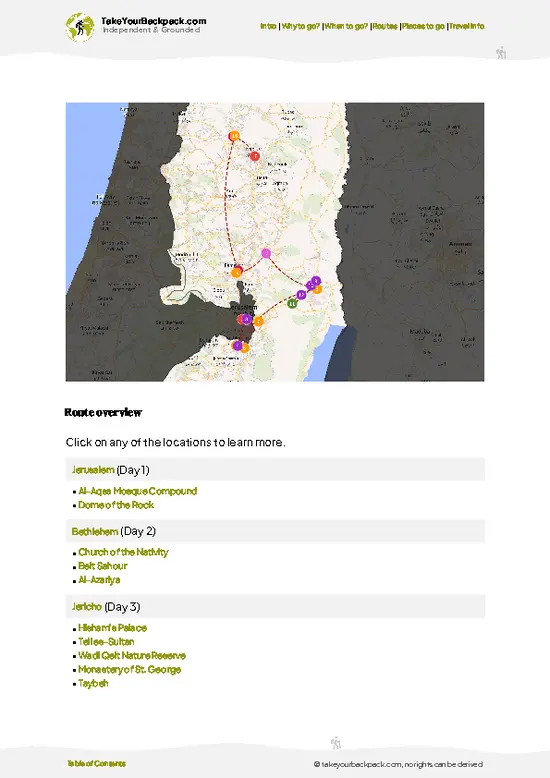
Most people miss this, but the museum’s terraced gardens are a crash course in Palestinian botany and memory. Each level is planted with native species—fig, olive, za’atar—mapped to the regions and stories of Palestine. It’s not just landscaping; it’s a living archive. Walk the paths and you’re literally tracing the roots of a culture. This is my personal favorite—there’s something quietly radical about reclaiming history with every step.
Panoramic Rooftop Views: Context, Not Just Scenery
Yes, you’ll get a killer selfie from the rooftop, but the real payoff is perspective. From up here, you see the museum in its landscape—Birzeit’s hills, the sprawl of Ramallah, the patchwork of olive groves. It’s a reminder that this place isn’t a relic; it’s part of a living, breathing country. The view is a reality check and a celebration, all at once.
Spotted a mistake or missing something? Contact us.

 Best Backpacking
 Hi, I’m Johan (Netherlands 🇳🇱), the creator of TakeYourBackpack. Over the past 3 decades, I’ve backpacked through 90+ countries across six continents, gaining extensive experience with independent travel, long-term trips, and overland routes.