×

Panama🇵🇦 | festivalsFestival de la CarretaOx-cart loading, décima verse, drum contests, Natá countryside | things to do and best time to go

Explore Festival de la NaranjaExplore Festival Nacional de la Cumbia Chorrerana

Backpacking in de la Carreta
👀 For curious travelersfestival ranked #10
By Johan Kruseman 🇳🇱 | Updated October 22, 2026

The Festival de la Carreta happens in late April or early May, not January, and it runs about four days in Capellanía, in the Natá district of Coclé province in the north of Panama. Nothing is held in Penonomé, so base your transport around Natá. The format is rural: ox carts load sugarcane in demonstrations, and folk singers, drummers and décima poets compete. It draws mostly Panamanian families and farm communities, so expect little English and a local pace. I arrived on a dusty road lined with parked pickups, and the first thing I heard was a slow, creaking cart wheel under a drum roll. Go for the craft and authenticity. It suits curious travelers who like folklore and agrarian culture, but not anyone who wants nightlife or a polished program.

Discover everything you want to know in the 📖 Panama Travel Guide.


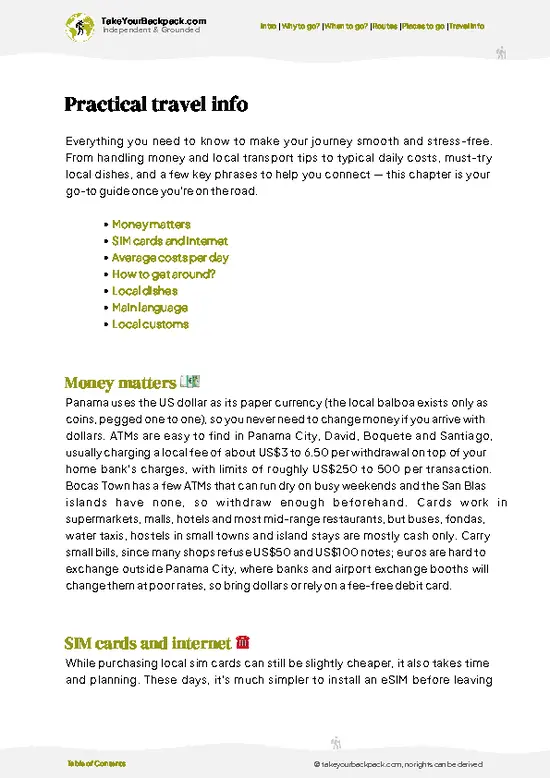
example page 0 from our offline Travel Guide for Panama
example page 1 from our offline Travel Guide for Panama
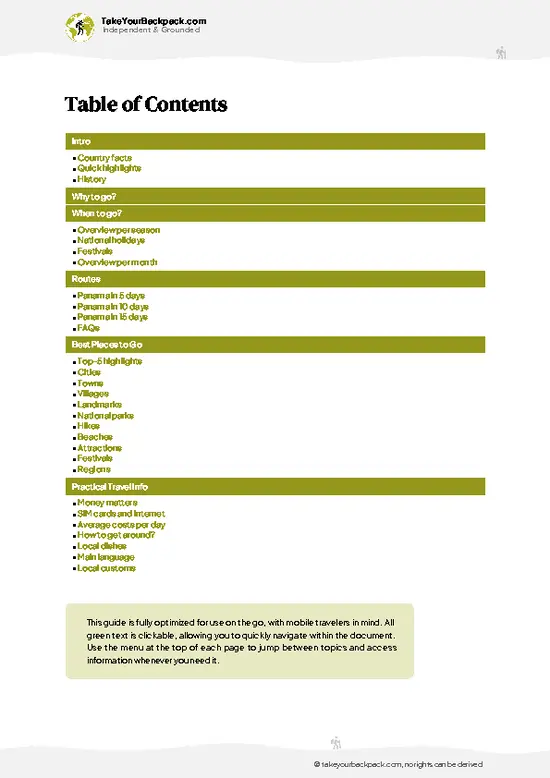
example page 2 from our offline Travel Guide for Panama
example page 3 from our offline Travel Guide for Panama
example page 4 from our offline Travel Guide for Panama
example page 5 from our offline Travel Guide for Panama
example page 6 from our offline Travel Guide for Panama
example page 7 from our offline Travel Guide for Panama
Loading the map 🌍
CLICK TO FILTER
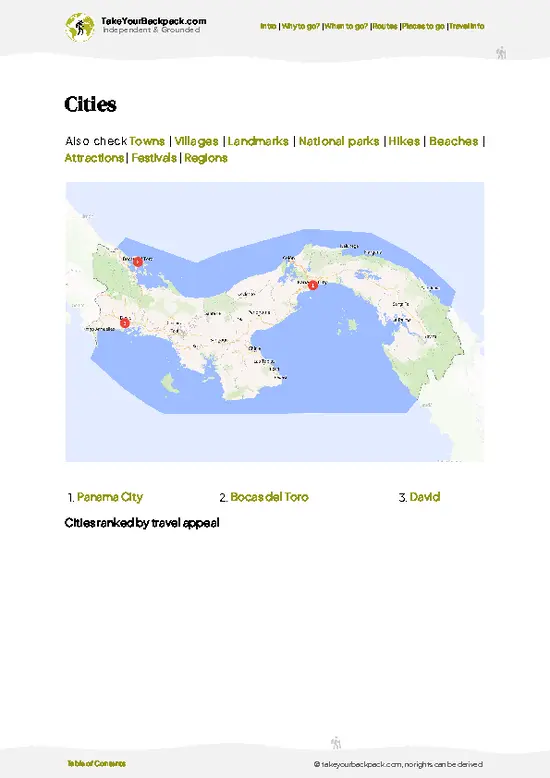
cities
towns
villages
landmarks
national parks
hikes
beaches
attractions
festivals
regions
SHOW COUNTRY’S BESTSHOW ALL

✨ Why go?
Ranked #10 festival in Panama
What makes this festival worth celebrating

Festival de la Carreta pulls backpackers off the standard Panama circuit because it is a working rural tradition, not a staged show. The ox-cart cane-loading demonstrations show how farm labor in Coclé once moved sugarcane, and the people explaining it are the descendants of those who did it. Spending a few days here means you meet farmers, musicians and cooks who treat a stranger as a guest, and conversation comes easily over a plate of food at a stall. The décima contests are the other draw: poets improvise ten-line verses in a Spanish tradition that survives in rural Panama, and even if your Spanish is shaky, the rhythm and the crowd reactions carry it. The timing also helps, since late April or early May lets you pair it with the beaches of the nearby Pacific coast and the highlands before the rainy season settles in.

💡 HighlightsPlaces and moments you shouldn't skip

  1. Ox-cart cane-loading demonstrations: The festival’s signature. Teams guide oxen pulling wooden carts as cane is stacked and hauled, showing the skill and patience the work demanded.
  2. Décima contests: Poets compose and sing ten-line stanzas, often with wit and local jabs. It is the best way to hear the old Spanish verse form still alive.
  3. Drum contests: Tamborito-style drumming brings rhythm, call-and-response singing and dancers in the crowd. Stand close to feel the beat.
  4. Folk singing competitions: Rural singers perform in the high, long-held style of Panama’s interior, usually accompanied by accordion or guitar. Listen for the sung storytelling about country life.
  5. Traditional pollera and montuno dress: Locals wear embroidered polleras and the men wear the straw-hatted montuno outfit. Photograph
… read more 👉
  1. Ox-cart cane-loading demonstrations: The festival’s signature. Teams guide oxen pulling wooden carts as cane is stacked and hauled, showing the skill and patience the work demanded.
  2. Décima contests: Poets compose and sing ten-line stanzas, often with wit and local jabs. It is the best way to hear the old Spanish verse form still alive.
  3. Drum contests: Tamborito-style drumming brings rhythm, call-and-response singing and dancers in the crowd. Stand close to feel the beat.
  4. Folk singing competitions: Rural singers perform in the high, long-held style of Panama’s interior, usually accompanied by accordion or guitar. Listen for the sung storytelling about country life.
  5. Traditional pollera and montuno dress: Locals wear embroidered polleras and the men wear the straw-hatted montuno outfit. Photograph respectfully and ask first.
Start with the cane-loading demonstrations, since they are the reason the festival exists and the best light and the fewest crowds come early in the program.
Spotted a mistake or missing something? Contact us.

Things to do near Festival de la Carreta

Ratings based on Tripadvisor reviews. When you book through this link, you support our work at no extra cost to you.

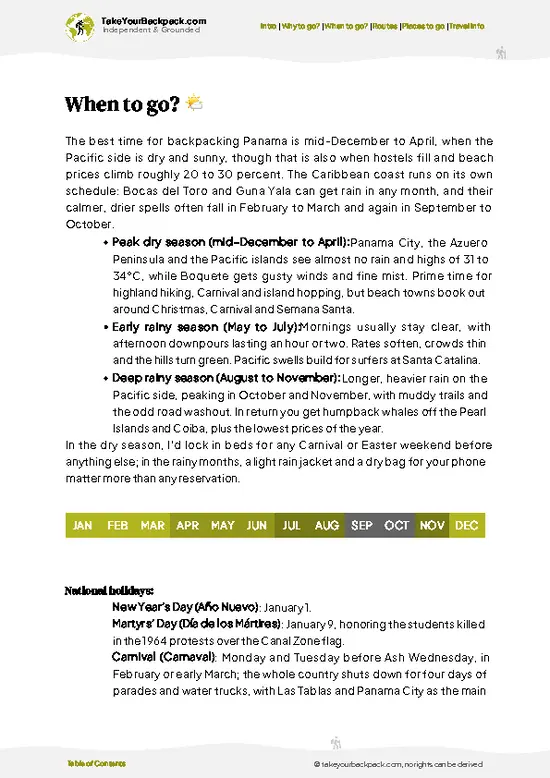
🌤️ When to go?When is the celebration of Festival de la Carreta?

Festival de la Carreta runs about four days in late April or early May in Capellanía, a village in the Natá district of Coclé province, and the exact dates shift from year to year.
  • Best day: Go on the Saturday or the main parade day, when the ox carts load sugarcane in demonstrations and the folk, drum and décima contests peak. Weekdays are calmer but the contests are thinner.
  • Weather: Expect hot, humid days of 31 to 35°C (88 to 95°F) with a chance of afternoon storms as the rainy season begins. Bring a hat, sunscreen, a light rain jacket and shoes that can handle mud.
  • Booking: Reserve beds in Penonomé or Natá at least two to three weeks ahead, since rooms nearby are few and prices can rise 20 to 40 percent.
  • Crowds: Arrive before midday and leave before dark, when buses back to the Pan-American
… read more 👉
Festival de la Carreta runs about four days in late April or early May in Capellanía, a village in the Natá district of Coclé province, and the exact dates shift from year to year.
  • Best day: Go on the Saturday or the main parade day, when the ox carts load sugarcane in demonstrations and the folk, drum and décima contests peak. Weekdays are calmer but the contests are thinner.
  • Weather: Expect hot, humid days of 31 to 35°C (88 to 95°F) with a chance of afternoon storms as the rainy season begins. Bring a hat, sunscreen, a light rain jacket and shoes that can handle mud.
  • Booking: Reserve beds in Penonomé or Natá at least two to three weeks ahead, since rooms nearby are few and prices can rise 20 to 40 percent.
  • Crowds: Arrive before midday and leave before dark, when buses back to the Pan-American Highway thin out.
Carry small bills so you can leave quickly without waiting for change.


source: climatestotravel.comJANJanuary: excellent for travelingFEBFebruary: not recommended for travelingMARMarch: not recommended for travelingAPRApril: not recommended for travelingMAYMay: not recommended for travelingJUNJune: not recommended for travelingJULJuly: not recommended for travelingAUGAugust: not recommended for travelingSEPSeptember: not recommended for travelingOCTOctober: not recommended for travelingNOVNovember: not recommended for travelingDECDecember: not recommended for traveling

✈️ The backpacker research shortcutPanama Travel Guide

An offline-friendly backpacking guide with optimized travel routes, ranked highlights, transport advice, and the best areas to stay.
example page 0 from our offline Travel Guide for Panama
example page 1 from our offline Travel Guide for Panama
example page 2 from our offline Travel Guide for Panama
example page 3 from our offline Travel Guide for Panama
example page 4 from our offline Travel Guide for Panama
example page 5 from our offline Travel Guide for Panama
example page 6 from our offline Travel Guide for Panama
example page 7 from our offline Travel Guide for Panama
The digital guide (272 pages) contains:
✅ 89 highlights, ranked by travel appeal
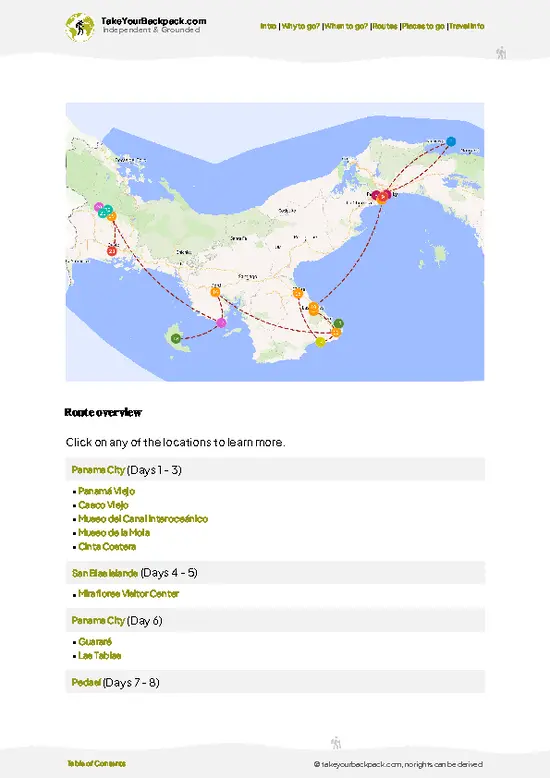
✅ Optimized 5, 10 & 15-day travel routes
✅ Cities, national parks, landmarks, beaches
✅ How to get around
✅ Offline-friendly for travel without Wi-Fi
👉 Click to see all 30+ guide features

📅 Plan smarter in minutes, not weeks
✅ Month by month travel advice
✅ Festivals & national holidays
✅ Budget expectations

🗺️ Go to the right places, skip the overrated ones
✅ Honest pros & cons of destinations
✅ Top hikes, parks & viewpoints
✅ Lesser-known places most travelers miss
✅ Clear “worth it vs skip it” guidance

🛏️ Travel smoothly without rookie mistakes
✅ Best areas to stay
✅ Transport systems explained simply
✅ Common scams & safety advice
✅ SIM cards, money & practical tips

🌍 Understand the country, not just visit it
✅ Culture & traditions
✅ 52 Essential phrases & customs
✅ Festivals worth planning around
✅ Traveler-friendly historical context
✅ Insights that make places more meaningful

📱 Built for real travel conditions
✅ Fully downloadable PDF
✅ Works completely offline
✅ Optimized for phone use
✅ Useful in remote areas & buses
✅ Everything in one place
Stop searching, start planning
Get instant access to your full guide. 30‑day money-back guarantee.
+ Add another guide for just

By proceeding you agree to our terms.
Sent to your inbox immediately after payment • 100% Secure Checkout
Best Backpacking Travel Advisor 2025 tourism awardBest Backpacking
Travel Advisor
2025
What others say about Take Your Backpack Guides:
⭐⭐⭐⭐⭐
Fantastic, amazing amount of information!
⭐⭐⭐⭐⭐
My goodness this is amazing, it's what I've been looking for hats off too you!
⭐⭐⭐⭐⭐
I think this is absolutely BRILLIANT
⭐⭐⭐⭐
Very complete and informative. It's still missing places, but I gotta to commend you
⭐⭐⭐⭐⭐
This is truly amazing, thank you, can't wait to explore it with my kids!
⭐⭐⭐⭐⭐
Awesome resource, thank you!
⭐⭐⭐⭐⭐
This is amazing! Can't wait to explore the ones I haven't seen
⭐⭐⭐⭐
I love this! Well done, great idea.
⭐⭐⭐⭐⭐
Thanks for taking the time to make this gem!
⭐⭐⭐⭐⭐
This might be the best website I've ever seen.
⭐⭐⭐⭐⭐
Congratulations, and thank you so much for your work; it's incredibly valuable.
⭐⭐⭐⭐
In all seriousness I think you did a great job pointing out the important spots
⭐⭐⭐⭐⭐
10/10 very good
⭐⭐⭐⭐⭐
As someone who's only just starting to visit regularly this is awesome, thank you.
⭐⭐⭐⭐
Thank you very much! I'm going to visit my dad, it's going to be very useful!
⭐⭐⭐⭐⭐
This is really cool! We'll be travelling for the first time and this definitely come in handy.
⭐⭐⭐⭐⭐
You are now our minister of culture, congratulations 👨‍💼
⭐⭐⭐⭐⭐
Just wanted to tell you that this is a pearl! Going to follow your recommendations.
⭐⭐⭐⭐⭐
This is so cool. I'll definitely be using the resource for my travels soon.
⭐⭐⭐⭐⭐
This is very impressive! Good work.
⭐⭐⭐⭐⭐
This is an amazing and informative site. Very well done!

🛏️ Where to stay?Choosing the right base

Penonomé is the most practical place to sleep, a lively provincial capital about 30 to 40 minutes by road from Capellanía, with guesthouses, cheap eateries and frequent buses along the Pan-American Highway. Other travelers pass through here, so it is easy to share a taxi to the festival grounds and split the fare. It is also safe to walk around in the evening on the main streets.

Natá, a smaller colonial town closer to the festival, suits you if you want a quiet night near its famous old church. Options are limited and fill fast during festival days, so book early. Evenings are calm, with little … read more 👉
Penonomé is the most practical place to sleep, a lively provincial capital about 30 to 40 minutes by road from Capellanía, with guesthouses, cheap eateries and frequent buses along the Pan-American Highway. Other travelers pass through here, so it is easy to share a taxi to the festival grounds and split the fare. It is also safe to walk around in the evening on the main streets.

Natá, a smaller colonial town closer to the festival, suits you if you want a quiet night near its famous old church. Options are limited and fill fast during festival days, so book early. Evenings are calm, with little nightlife.

If you prefer more company, Panama City is roughly 2.5 to 3 hours away and has the most social hostel scene, but it makes for a long day trip. Coastal Santa Clara and the beaches of Coclé are an option for a beach break after the festival. Whichever you choose, aim to be back at your bed before the last buses thin out.

👛 Costs (as of 22 October 2026)Typical daily expenses

Festival de la Carreta costs roughly US$41 to 100 per day for an independent traveler, including a bed in nearby Penonomé.
CategoryBudget RangeLocal Reality
Festival ticketsUS$0 to 5Entry to the grounds is usually free or a small fee, and some events may have a minor charge.
AccommodationUS$20 to 45Simple guesthouse rooms in Penonomé or Natá, with prices rising during the festival.
Local transportUS$6 to 20Buses along the Pan-American Highway, then a shared taxi for the last stretch to Capellanía.
Food & drinksUS$10 to 20Stall plates cost US$3 to 6, and a beer is about US$1.50 to 2.50.
Miscellaneous expensesUS$5 to 10Sunscreen, rain gear, small crafts and tips for performers.
Total Daily BudgetUS$41 to 100About US$75 on a typical day with a mid-range room.
⚠️ Prices can change and everyone travels differently, so take this as a rough guide. Hope it helps you plan your adventure!

🍲 FoodEating & Drinking in de la Carreta

Food at Festival de la Carreta is rural Coclé country cooking, served from open-air stalls and family kitchens around the grounds. Look for sancocho, the chicken and yuca soup that Panamanians treat as comfort food, plus tamales wrapped in banana leaf and arroz con pollo by the plate. Fried empanadas and carimañolas are easy to eat standing up.

The drink that fits the setting is chicheme or fresh sugarcane juice, pressed on the spot and poured over ice, which suits a festival built around cane carts. Cold Balboa or Atlas beer is sold everywhere, and you may meet seco herrerano, a sugarcane spirit, usually mixed with milk and ice.

Plates cost a few dollars, so bring small bills in cash, since card machines are rare. Lines move slowly while people chat, so treat the wait as part of the day. … read more 👉
Food at Festival de la Carreta is rural Coclé country cooking, served from open-air stalls and family kitchens around the grounds. Look for sancocho, the chicken and yuca soup that Panamanians treat as comfort food, plus tamales wrapped in banana leaf and arroz con pollo by the plate. Fried empanadas and carimañolas are easy to eat standing up.

The drink that fits the setting is chicheme or fresh sugarcane juice, pressed on the spot and poured over ice, which suits a festival built around cane carts. Cold Balboa or Atlas beer is sold everywhere, and you may meet seco herrerano, a sugarcane spirit, usually mixed with milk and ice.

Plates cost a few dollars, so bring small bills in cash, since card machines are rare. Lines move slowly while people chat, so treat the wait as part of the day. Eat early, before the popular dishes run out, and expect locals to offer you a taste while the décima singers perform nearby.

FAQFrequently asked questions about de la Carreta

Festival de la Carreta takes place over about four days in late April or early May in Capellanía, in the Natá district of Coclé. The exact dates change each year, so check locally before booking. The village lies roughly 30 to 40 minutes by road from Penonomé.
Attending Festival de la Carreta is cheap, since entry to the grounds is usually free or costs only a few dollars. Food plates run about US$3 to 6 and a beer US$1.50 to 2.50. A realistic daily budget with a guesthouse bed in Penonomé is roughly US$55 to 100.
Festival de la Carreta does not generally require tickets in advance, because entry to the grounds is open or sold at the gate. The thing to book early is a bed, ideally two to three weeks ahead in Penonomé or Natá. Bring cash in small bills, since card machines are scarce.
⚠️ Things can change over time, so always validate details locally before you go.

Other Panamanian festivals near de la Carreta

Explore more nearby:


💡 Not sure where to go next?
Create a personalized itinerary for Panama including de la Carreta and the places that fit your trip.

Generate my itinerary

👉 Discover all festivals

Or checkout all Panama has to offer (think cities, towns, villages, national parks, hikes, beaches, festivals)
Country photo of Panama

We 💚 feedbackParting advice and final tips

Festival de la Carreta is for people who like folk culture up close: music nerds, photographers, and anyone curious about rural Panama. If you need big stages and late parties, skip it. I would bring a hat, cash in small bills and a few Spanish phrases, then simply sit and listen.

✈️ When did I visit Panama?
Panama I visited during my half year trip through South and Central America back in 2003

✍️ Help improve this page!
The information on this page is based on my own backpacking experience in Panama, supplemented with up-to-date research and feedback from other travelers. Travel details can change, so if you notice anything outdated or incomplete, feel free to let me know.


🙋‍♂️ Give feedback

👋 Meet the founderWho’s Behind Take Your Backpack?

Johan, backpacker and founder of TakeYourBackpackHi, I’m Johan (Netherlands 🇳🇱), the creator of TakeYourBackpack. Over the past 3 decades, I’ve backpacked through 90+ countries across six continents, gaining extensive experience with independent travel, long-term trips, and overland routes.

This site is built on a combination of firsthand travel experience and carefully curated insights from other backpackers. Many guides are based on places I’ve personally visited, while others bring together tips, observations, and practical advice shared by trusted travelers I’ve met along the way.

The goal is to provide realistic, experience-driven guidance — not generic itineraries — so you can explore destinations with better context, clearer expectations, and more confidence.