v2.webp)
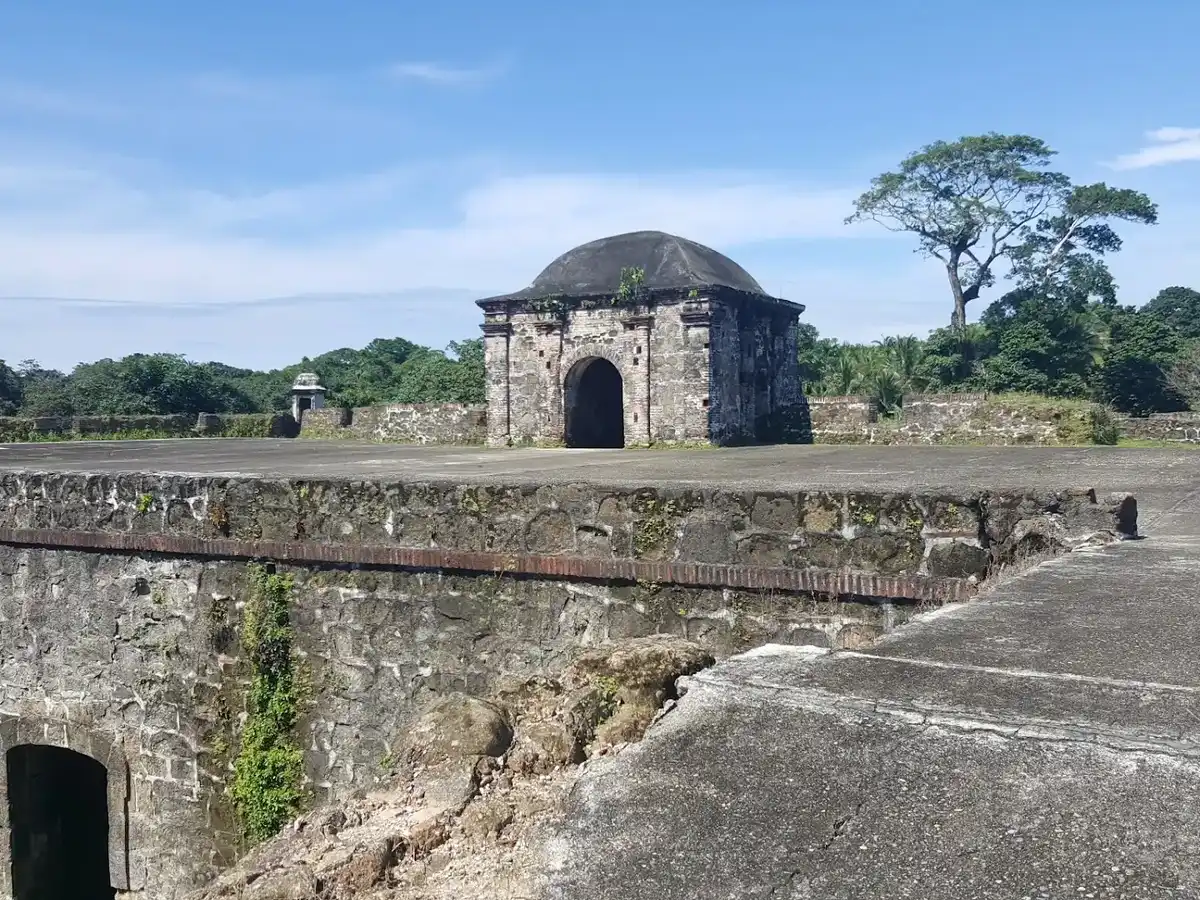
- The Fort Ramparts and Cannon Batteries. The main reason to come: stone walls on a cliff roughly 30 meters above the sea, with old Spanish cannons still pointing at the river mouth. Walk the full perimeter, because the angles show why the position was so hard to attack.
- Chagres River Mouth Lookout. From the cliff edge you see the brown Chagres meeting the Caribbean, with green headland on both sides. It is the best photo spot on site, particularly with a slow cargo ship on the horizon.
- Dry Moat and Entrance Gate. A cut ditch and a bridge-style approach guard the landward side. It shows the engineering the Spanish used against pirates after the fort fell in the seventeenth century.
- San Lorenzo Visitor Center. Opened in September 2026 near the fort, it has exhibitions on the fortifications and the
- The Fort Ramparts and Cannon Batteries. The main reason to come: stone walls on a cliff roughly 30 meters above the sea, with old Spanish cannons still pointing at the river mouth. Walk the full perimeter, because the angles show why the position was so hard to attack.
- Chagres River Mouth Lookout. From the cliff edge you see the brown Chagres meeting the Caribbean, with green headland on both sides. It is the best photo spot on site, particularly with a slow cargo ship on the horizon.
- Dry Moat and Entrance Gate. A cut ditch and a bridge-style approach guard the landward side. It shows the engineering the Spanish used against pirates after the fort fell in the seventeenth century.
- San Lorenzo Visitor Center. Opened in September 2026 near the fort, it has exhibitions on the fortifications and the national park around them. Give it twenty minutes.
- Fort Sherman Jungle Road. The drive in crosses former US military land now part of San Lorenzo Protected Area. Howler monkeys, toucans and sloths are regular sights along the edges, especially early in the day.
- Agua Clara Locks Visitor Center. On the way, a modern canal lock with an observation deck where you can watch full-size ships rise and fall. It adds the engineering side of the canal to a day otherwise about Spanish colonial defenses.
Spotted a mistake or missing something? Contact us.

Cruiseline Excursion Colon: Panama City tour and Miraflores Locks

Cruiseline Excursion Colon: Rainforest, San Lorenzo Fort and Canal Expansion

Full-Day Caribbean Catamaran Cruise: Beaches, Snorkeling & Lunch

Caribbean Catamaran Day Cruise: Beaches, Snorkeling & Lunch

Caribbean Expedition: San Lorenzo Fort, Rainforest & Canal Locks

Colon Shore Excursion: Panama City and Canal Private Tour

Panama City & Canal: 2 Oceans 1 Day FROM COLON PORT BY LAND

DAY TOUR Portobelo & Caribbean Beaches by Speedboat + Snorkeling

Private Catamaran Escape: Caribbean Beaches, Snorkeling & Lunch

 Best Backpacking
.jpg) Hi, I’m Johan (Netherlands 🇳🇱), the creator of TakeYourBackpack. Over the past 3 decades, I’ve backpacked through 90+ countries across six continents, gaining extensive experience with independent travel, long-term trips, and overland routes.
Hi, I’m Johan (Netherlands 🇳🇱), the creator of TakeYourBackpack. Over the past 3 decades, I’ve backpacked through 90+ countries across six continents, gaining extensive experience with independent travel, long-term trips, and overland routes.