×

Panama🇵🇦 | best landmarksDiscover the 3 Best landmarks Across Panama

Landmarks in Panama fall into three camps, and the camp decides your day. Engineering and colonial sites in the Canal corridor and Panama City sit on paved roads and city buses, so access is easy, though entry fees run higher and tour groups arrive in waves. Caribbean fortifications around Portobelo and Colón are cheaper and quieter, but reached by local buses on a rougher timetable. The highlands and Indigenous comarcas such as Guna Yala trade convenience for atmosphere, with permits, community fees and boat transfers. For independent travelers, the compact geography keeps most options within a day of the capital, so the real choice is how much comfort you want to give up.

By Johan Kruseman 🇳🇱 | Updated October 23, 2026
Explore the best national parks in Panama

Why go?What Makes Them Special

Panama’s landmarks exist because of geography. A narrow isthmus between two oceans made it the cheapest crossing in the Americas, first for Spanish silver hauled over the jungle trail, then for the railroad and the Canal. That is why the country’s best-known sites are about transit, trade and defense rather than temples or palaces. Pre-Columbian cultures left less stone than in Peru or Mexico, so Indigenous heritage is mainly living culture, carried by the Guna, Emberá and Ngäbe peoples, rather than ruins you tour.

Infrastructure helps. The country uses the US dollar (the balboa is only a coin name), the capital has a metro, and distances are short, so a landmark rarely costs a full travel day. Prices are the other side of that: Panama is pricier than neighboring Central American countries, … read more 👉
Panama’s landmarks exist because of geography. A narrow isthmus between two oceans made it the cheapest crossing in the Americas, first for Spanish silver hauled over the jungle trail, then for the railroad and the Canal. That is why the country’s best-known sites are about transit, trade and defense rather than temples or palaces. Pre-Columbian cultures left less stone than in Peru or Mexico, so Indigenous heritage is mainly living culture, carried by the Guna, Emberá and Ngäbe peoples, rather than ruins you tour.

Infrastructure helps. The country uses the US dollar (the balboa is only a coin name), the capital has a metro, and distances are short, so a landmark rarely costs a full travel day. Prices are the other side of that: Panama is pricier than neighboring Central American countries, and sites tied to the Canal carry premium fees.

Before choosing Panama for landmarks, know that the rainforest climate shapes everything. Humidity corrodes old stone, rain closes boat routes and jungle trails, and many sites are ruins or fortifications rather than polished museums. Indigenous territories are self-governed, so access follows community rules, fees and schedules rather than national tourism norms. Expect fewer headline monuments than in the Andes, but a more layered story of global trade.
How the List Was Created
The list of best unique sites in Panama is created based on history or culture, wow factor, atmosphere, quirks, and memorability. If you feel a unique site is missing in this list, please let us know.

When to go?Best Time to Visit Panama for landmarks

Best months: The best months for landmarks in Panama are January to mid-April, the dry season on the Pacific side, when mornings are clear and daytime highs sit around 30 to 33°C (86 to 91°F). Rain is minimal, boat transfers run on schedule and trails are firm underfoot.
Shoulder and wet season: From May to December the rainy season brings afternoon downpours, usually starting after noon, and totals of roughly 1,800 to 2,500 mm a year around Panama City. Mornings are often still usable, so landmarks can be seen before the clouds build. May and June and December are good shoulder months, with fewer crowds and hotel rates often 20 to 40 percent below peak. October and November are the wettest, and the Caribbean side can see heavy rain that disrupts boats and rough roads.
Regional differences: … read more 👉
Best months: The best months for landmarks in Panama are January to mid-April, the dry season on the Pacific side, when mornings are clear and daytime highs sit around 30 to 33°C (86 to 91°F). Rain is minimal, boat transfers run on schedule and trails are firm underfoot.
Shoulder and wet season: From May to December the rainy season brings afternoon downpours, usually starting after noon, and totals of roughly 1,800 to 2,500 mm a year around Panama City. Mornings are often still usable, so landmarks can be seen before the clouds build. May and June and December are good shoulder months, with fewer crowds and hotel rates often 20 to 40 percent below peak. October and November are the wettest, and the Caribbean side can see heavy rain that disrupts boats and rough roads.
Regional differences: The Caribbean coast (Colón, Portobelo, Bocas del Toro) gets rain year-round and has no true dry season, though September and October are often drier there than on the Pacific. The highlands around Boquete run cooler, about 15 to 25°C (59 to 77°F), with mist and wind in the wetter months.
Peak periods: Christmas, New Year and Carnival (February or early March) push prices up and fill buses and rooms, especially outside the capital. Book transport and beds ahead then.

unique site hoppingTips for Visiting Multiple Destinations

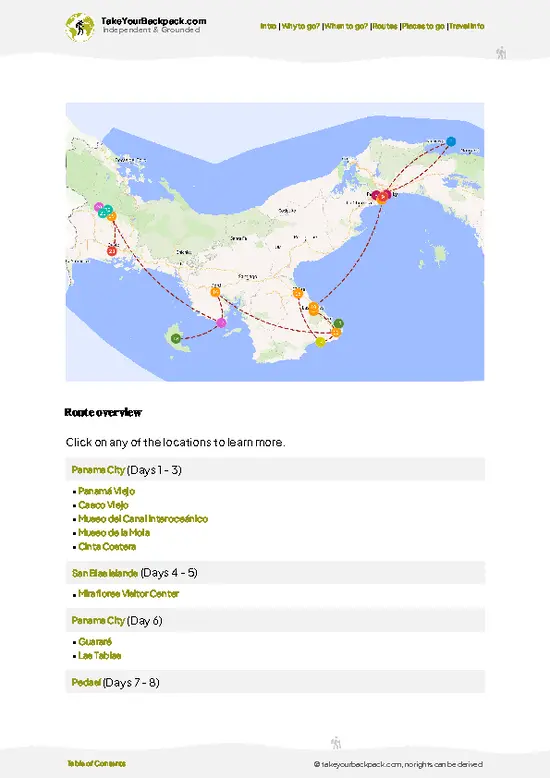
How many days: A trip linking several landmarks in Panama works best in 7 to 10 days, which allows time for transfers and rain delays without rushing. The country’s shape is a thin arc, so the sensible structure is a loop from the capital rather than a long line.
Grouping and direction: Start in Panama City, the main transport hub with the international airport and the Albrook bus terminal. Group the Canal corridor and the capital together, since they are 30 to 60 minutes apart by road or train. Then go to the Caribbean coast toward Colón and Portobelo, about 1.5 to 2.5 hours by bus, and return before heading west. Finish with the highlands, where Santiago or David are the onward hubs, about 5 to 7 hours by bus from the capital. Traveling in this direction keeps the longest haul for last, when … read more 👉
How many days: A trip linking several landmarks in Panama works best in 7 to 10 days, which allows time for transfers and rain delays without rushing. The country’s shape is a thin arc, so the sensible structure is a loop from the capital rather than a long line.
Grouping and direction: Start in Panama City, the main transport hub with the international airport and the Albrook bus terminal. Group the Canal corridor and the capital together, since they are 30 to 60 minutes apart by road or train. Then go to the Caribbean coast toward Colón and Portobelo, about 1.5 to 2.5 hours by bus, and return before heading west. Finish with the highlands, where Santiago or David are the onward hubs, about 5 to 7 hours by bus from the capital. Traveling in this direction keeps the longest haul for last, when you have a feel for the pace of local buses.
Time per stop: Allow 2 to 3 days in the capital and canal area, 1 day for each Caribbean fortification stop, and 1 to 2 days for a highland base. Indigenous territories need 2 to 3 days, because boat or 4x4 transfers eat the first and last day.
Common planning mistakes: The usual error is cramming a comarca visit between flights or a morning bus, when weather can delay boats. Build in a buffer day. Another is traveling after 3 pm in the rainy season, when roads slow down; move in the morning. Last, avoid doubling back to the capital for each excursion, and use day trips instead of changing hotels.

The ListThe Best landmarks of Panama

1 Panama Canal

Ship lock decks, Neopanamax hulls, Gatun Lake, Culebra Cut

Watch ships rise and drop through the locks from the rooftop deck, then compare quieter viewpoints, the lake and the cut dug through the Continental Divide.

Panama - the Panama Canal

2 Fort San Lorenzo

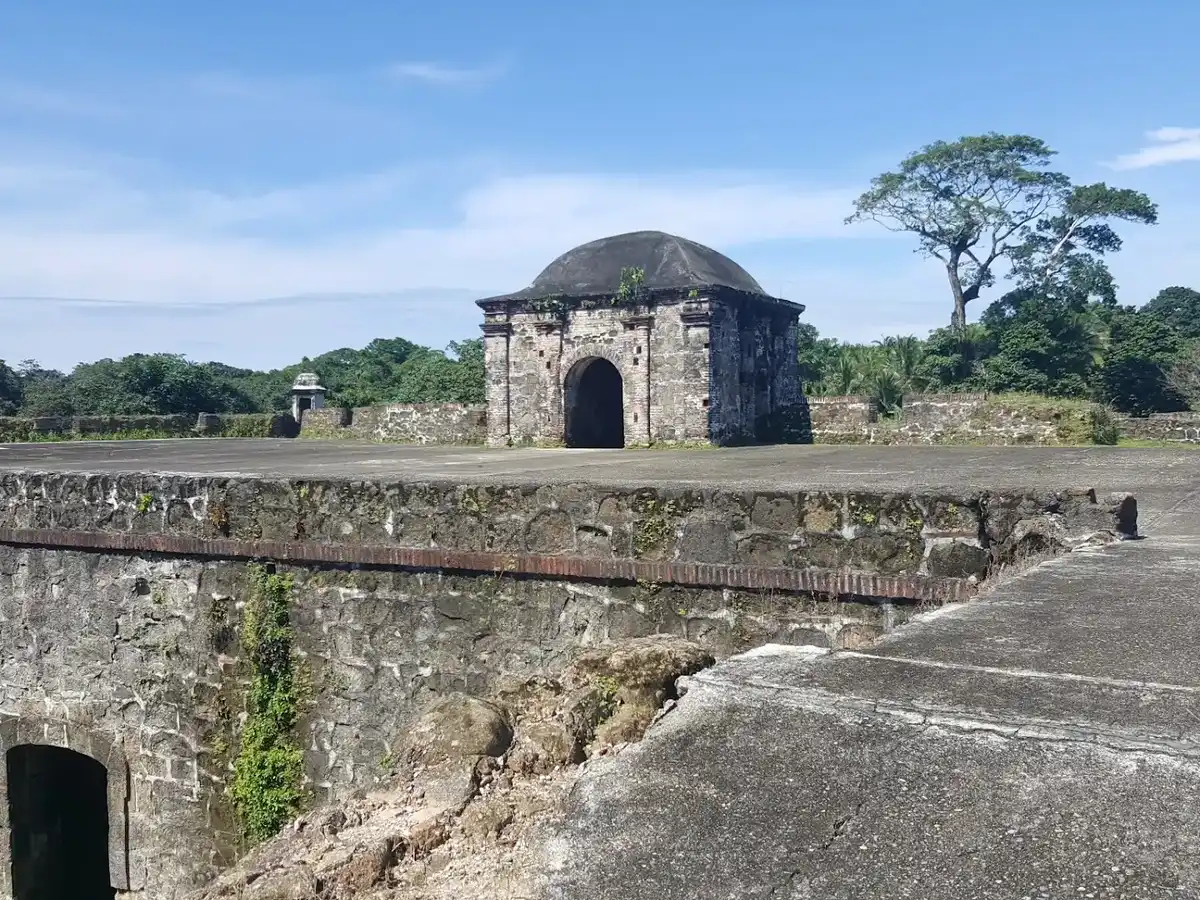
Cliff-top ramparts, Chagres river mouth, cannon batteries, howler monkey road

Walk the stone walls above the Chagres mouth, passing Spanish cannons and a dry moat, after a jungle road alive with toucans and monkeys.

3 Cascadas de La Chorrera

City waterfall, rain-fed cascade, rock-ledge pool, empanada stalls

Watch water spill over rock ledges into a pool inside the city, then pick up fried empanadas and sliced green mango nearby.

panama-unique-site-cascadas-de-la-chorrera
© Google | Joaquin Perez
Loading the map 🌍

Expert viewExpert Commentary on landmarks

How many to visit: Aim for four to six landmarks in a trip of a week or two. Panama’s sites sit far apart relative to their size, and rain, heat and slow buses turn any one visit into a half day at least. Beyond six, you spend more on transfers than looking. Fewer than four, and you miss the contrast between colonial, canal and Indigenous Panama.
Prioritizing by travel style: Budget travelers get the best value from colonial and fortress sites, which cost little and run on public buses. Culture-focused travelers should choose at least one Indigenous community visit, since that is where living heritage is, and it costs more because boats and lodging are bundled. Travelers short on time should lean on the canal and capital cluster, as everything is covered by taxis, the metro and short rides. … read more 👉
How many to visit: Aim for four to six landmarks in a trip of a week or two. Panama’s sites sit far apart relative to their size, and rain, heat and slow buses turn any one visit into a half day at least. Beyond six, you spend more on transfers than looking. Fewer than four, and you miss the contrast between colonial, canal and Indigenous Panama.
Prioritizing by travel style: Budget travelers get the best value from colonial and fortress sites, which cost little and run on public buses. Culture-focused travelers should choose at least one Indigenous community visit, since that is where living heritage is, and it costs more because boats and lodging are bundled. Travelers short on time should lean on the canal and capital cluster, as everything is covered by taxis, the metro and short rides. Hikers can pick highland sites, but should plan around weather.
What it costs: Budget US$30 to 50 a day for hostels, local meals and buses, and US$70 to 120 if you prefer private rooms and tours. Entry fees for most sites run US$3 to 20, with the major canal visitor center near the top of that range and fortifications at the lower end. Local guides cost US$10 to 30 per visit and are worth paying where history is hard to read in ruins. Buses are cheap, US$2 to 5 for short hops and US$15 to 25 for long hauls from the capital. Indigenous territories usually cost US$50 to 120 a night per person including meals and boat transfers, plus a community entry fee of about US$5 to 25 that often has to be paid in cash.
Safety and etiquette: Carry small US bills and coins, because many community sites and rural ticket booths cannot break US$50 or US$100. Use licensed taxis or ride apps in Colón, and avoid wandering outside the tourist zones there, since neighborhoods a few blocks from the main sights can be unsafe. In Panama City, leave the Casco Viejo edges after dark by taxi.
In Guna and Emberá communities, ask before photographing people, and expect to pay a small fee when they agree. Dress modestly in villages and churches. Follow community rules on alcohol and drones, which may be banned. On rain-slick trails and stone steps, wear shoes with grip, and drink plenty of water, because humidity makes dehydration arrive faster than you notice.

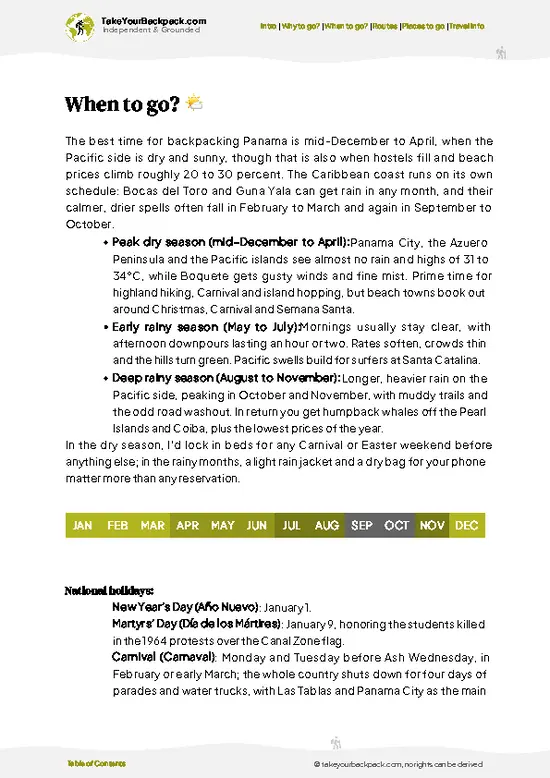
✈️ The backpacker research shortcutPanama Travel Guide

An offline-friendly backpacking guide with optimized travel routes, ranked highlights, transport advice, and the best areas to stay.
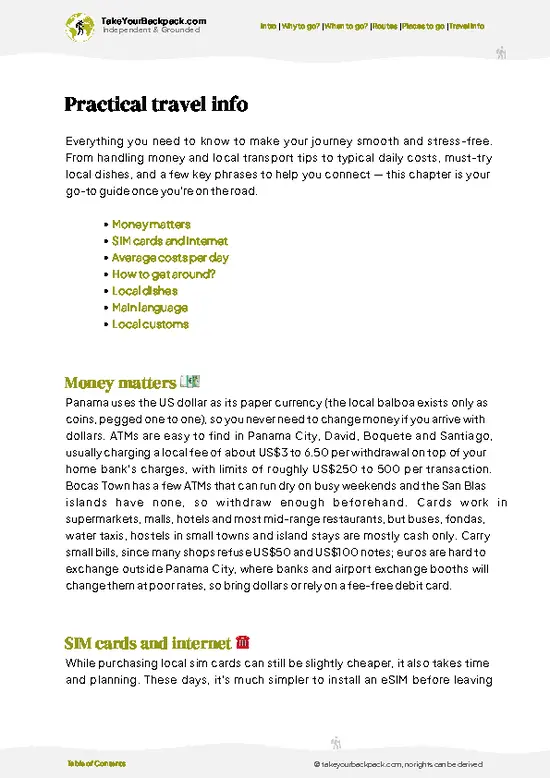
example page 0 from our offline Travel Guide for Panama
example page 1 from our offline Travel Guide for Panama
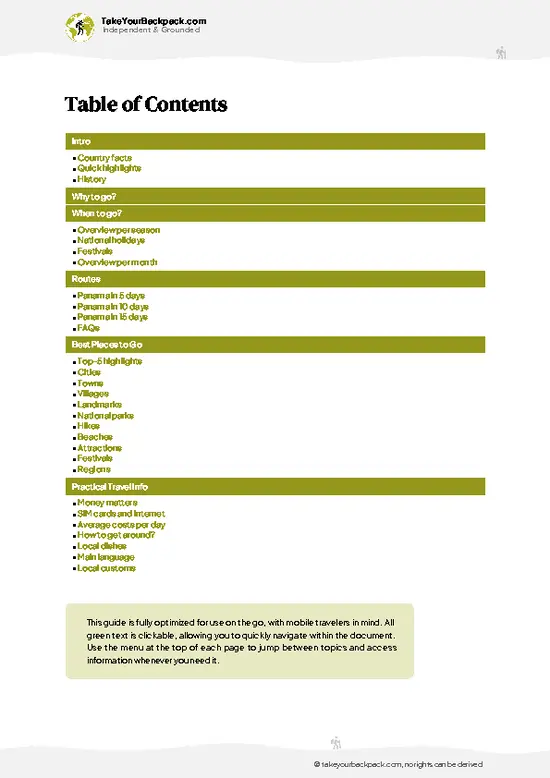
example page 2 from our offline Travel Guide for Panama
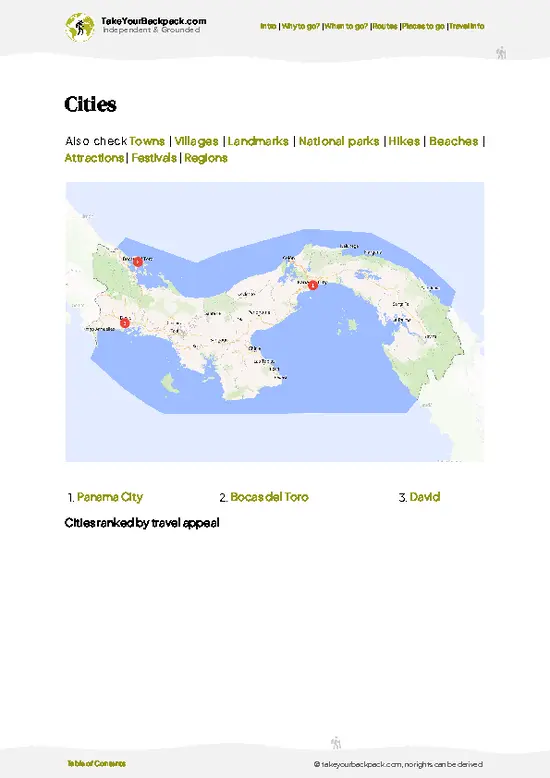
example page 3 from our offline Travel Guide for Panama
example page 4 from our offline Travel Guide for Panama
example page 5 from our offline Travel Guide for Panama
example page 6 from our offline Travel Guide for Panama
example page 7 from our offline Travel Guide for Panama
The digital guide (272 pages) contains:
✅ 89 highlights, ranked by travel appeal
✅ Optimized 5, 10 & 15-day travel routes
✅ Cities, national parks, landmarks, beaches
✅ How to get around
✅ Offline-friendly for travel without Wi-Fi
👉 Click to see all 30+ guide features

📅 Plan smarter in minutes, not weeks
✅ Month by month travel advice
✅ Festivals & national holidays
✅ Budget expectations

🗺️ Go to the right places, skip the overrated ones
✅ Honest pros & cons of destinations
✅ Top hikes, parks & viewpoints
✅ Lesser-known places most travelers miss
✅ Clear “worth it vs skip it” guidance

🛏️ Travel smoothly without rookie mistakes
✅ Best areas to stay
✅ Transport systems explained simply
✅ Common scams & safety advice
✅ SIM cards, money & practical tips

🌍 Understand the country, not just visit it
✅ Culture & traditions
✅ 52 Essential phrases & customs
✅ Festivals worth planning around
✅ Traveler-friendly historical context
✅ Insights that make places more meaningful

📱 Built for real travel conditions
✅ Fully downloadable PDF
✅ Works completely offline
✅ Optimized for phone use
✅ Useful in remote areas & buses
✅ Everything in one place
Stop searching, start planning
Get instant access to your full guide. 30‑day money-back guarantee.
+ Add another guide for just

By proceeding you agree to our terms.
Sent to your inbox immediately after payment • 100% Secure Checkout
Best Backpacking Travel Advisor 2025 tourism awardBest Backpacking
Travel Advisor
2025
What others say about Take Your Backpack Guides:
⭐⭐⭐⭐⭐
Fantastic, amazing amount of information!
⭐⭐⭐⭐⭐
My goodness this is amazing, it's what I've been looking for hats off too you!
⭐⭐⭐⭐⭐
I think this is absolutely BRILLIANT
⭐⭐⭐⭐
Very complete and informative. It's still missing places, but I gotta to commend you
⭐⭐⭐⭐⭐
This is truly amazing, thank you, can't wait to explore it with my kids!
⭐⭐⭐⭐⭐
Awesome resource, thank you!
⭐⭐⭐⭐⭐
This is amazing! Can't wait to explore the ones I haven't seen
⭐⭐⭐⭐
I love this! Well done, great idea.
⭐⭐⭐⭐⭐
Thanks for taking the time to make this gem!
⭐⭐⭐⭐⭐
This might be the best website I've ever seen.
⭐⭐⭐⭐⭐
Congratulations, and thank you so much for your work; it's incredibly valuable.
⭐⭐⭐⭐
In all seriousness I think you did a great job pointing out the important spots
⭐⭐⭐⭐⭐
10/10 very good
⭐⭐⭐⭐⭐
As someone who's only just starting to visit regularly this is awesome, thank you.
⭐⭐⭐⭐
Thank you very much! I'm going to visit my dad, it's going to be very useful!
⭐⭐⭐⭐⭐
This is really cool! We'll be travelling for the first time and this definitely come in handy.
⭐⭐⭐⭐⭐
You are now our minister of culture, congratulations 👨‍💼
⭐⭐⭐⭐⭐
Just wanted to tell you that this is a pearl! Going to follow your recommendations.
⭐⭐⭐⭐⭐
This is so cool. I'll definitely be using the resource for my travels soon.
⭐⭐⭐⭐⭐
This is very impressive! Good work.
⭐⭐⭐⭐⭐
This is an amazing and informative site. Very well done!

🛏️ Where to stay?Top Places to Consider Staying

Panama has a solid hostel scene, with dorm beds typically around US$12 to 25 and private rooms from roughly US$35 to 60 a night. In Panama City, Casco Viejo puts you within walking distance of the old-town sights and the rooftop bars, though it gets loud on weekends and some edges turn sketchy after dark, while El Cangrejo is quieter, cheaper and close to the Metro but lacks the colonial character. Elsewhere, Bocas Town on Isla Colón is the party-and-beaches base (sleep is optional), Boquete trades nightlife for cool mountain air and hiking access, and Santa Catalina offers a mellow surf-village stay with fewer services.

If you enjoy meeting fellow travelers, consider choosing hostels with high … read more 👉
Panama has a solid hostel scene, with dorm beds typically around US$12 to 25 and private rooms from roughly US$35 to 60 a night. In Panama City, Casco Viejo puts you within walking distance of the old-town sights and the rooftop bars, though it gets loud on weekends and some edges turn sketchy after dark, while El Cangrejo is quieter, cheaper and close to the Metro but lacks the colonial character. Elsewhere, Bocas Town on Isla Colón is the party-and-beaches base (sleep is optional), Boquete trades nightlife for cool mountain air and hiking access, and Santa Catalina offers a mellow surf-village stay with fewer services.

If you enjoy meeting fellow travelers, consider choosing hostels with high ratings for atmosphere. On the other hand, if you prefer having your own space, a hotel might be a better option.

PanamaMore Places Across Panama

👋 Meet the founderWho’s Behind Take Your Backpack?

Johan, backpacker and founder of TakeYourBackpackHi, I’m Johan (Netherlands 🇳🇱), the creator of TakeYourBackpack. Over the past 3 decades, I’ve backpacked through 90+ countries across six continents, gaining extensive experience with independent travel, long-term trips, and overland routes.

This site is built on a combination of firsthand travel experience and carefully curated insights from other backpackers. Many guides are based on places I’ve personally visited, while others bring together tips, observations, and practical advice shared by trusted travelers I’ve met along the way.

The goal is to provide realistic, experience-driven guidance — not generic itineraries — so you can explore destinations with better context, clearer expectations, and more confidence.