×

Panama🇵🇦 | national parksIsla Iguana Wildlife Refugewhite sand beaches, frigatebird colony, coral gardens, dry tropical forest | things to do and best time to go

Explore Portobelo National ParkExplore San Lorenzo Protected Forest

Backpacking in Isla Iguana Wildlife Refuge
👀 For curious travelersnational park ranked #16
By Johan Kruseman 🇳🇱 | Updated July 30, 2026

Your first real decision with Isla Iguana is whether it’s worth burning a full day (and the boat cost) for a tiny offshore refuge instead of exploring Panama’s bigger mainland parks. That choice matters, because Isla Iguana Wildlife Refuge sits off the Azuero Peninsula near Pedasí, and once you’ve paid for the boat and entrance fee, you’re committed. The island is small, dry, and more about beaches, snorkeling, and birdlife than hiking; trails are short and hot, with almost no shade. No camping, no real budget beds, and it can feel busy on weekends, especially compared with quieter parks like Cerro Hoya or Sarigua. Still, if you want clear water, frigatebirds overhead, and a simple, low-effort day in nature, it earns its place—just don’t expect a full-on trekking destination.

Discover everything you want to know in the 📖 Panama Travel Guide.


Get your Panama guide
93 ranked highlights, routes & tips, works offline (349 pages)
Loading the map 🌍
CLICK TO FILTER
cities
towns
villages
landmarks
national parks
hikes
beaches
attractions
festivals
regions
SHOW COUNTRY’S BESTSHOW ALL

✨ Why go?
Ranked #16 national park in Panama
What makes it a must-see national park

Backpackers flock to Isla Iguana Wildlife Refuge for its blend of independent exploration and affordable accommodations. You can pitch a tent at nearby campsites or find budget-friendly hostels, keeping costs low while soaking in the natural beauty. The variety of trails caters to all levels, from easy strolls to more challenging paths, allowing you to tailor your adventure.

This park is particularly suited for self-guided travelers. You won’t feel pressured to join a tour; instead, you can set your own pace, discovering hidden spots and wildlife on your terms. Just be mindful of the entry fees and transport costs to reach the island. Planning ahead ensures you preserve your energy and budget for the moments that truly matter.
Want to include Isla Iguana Wildlife Refuge in your Panama route?
Create a personalized Panama itinerary that includes Isla Iguana Wildlife Refuge and the places that fit your trip — based on your travel style, budget, and available time. Get your route in seconds.

Generate my trip

💡 HighlightsMust-see experiences and standout moments

  1. Island viewpoint and short hiking trail — A quick climb to the island’s highest point gives a neat 360° view of the Pacific, nearby mangrove fringes and the Azuero coastline. Short, easy, and worth it for photos and to spot boats or passing dolphins.
  2. Coral reef snorkeling — The patch reefs around Isla Iguana are the real draw: clear water, shallow coral gardens and easy snorkel access from the beach. You’ll see colorful reef fish, sea fans and plenty of nooks to peer into — my personal favorite for a lazy half-day of exploring.
  3. Sea turtle sightings and nesting — Green turtles (and sometimes hawksbills) use the area to feed and nest. If you go in nesting season you might see tracks or even a nesting female — just keep your distance and follow local rules.
  4. Seabird colonies — The island
read more 👉
  1. Island viewpoint and short hiking trail — A quick climb to the island’s highest point gives a neat 360° view of the Pacific, nearby mangrove fringes and the Azuero coastline. Short, easy, and worth it for photos and to spot boats or passing dolphins.
  2. Coral reef snorkeling — The patch reefs around Isla Iguana are the real draw: clear water, shallow coral gardens and easy snorkel access from the beach. You’ll see colorful reef fish, sea fans and plenty of nooks to peer into — my personal favorite for a lazy half-day of exploring.
  3. Sea turtle sightings and nesting — Green turtles (and sometimes hawksbills) use the area to feed and nest. If you go in nesting season you might see tracks or even a nesting female — just keep your distance and follow local rules.
  4. Seabird colonies — The island hosts roosting seabirds like frigatebirds and pelicans. Watching squawking birds wheel overhead and nest on the rocky parts of the island is great for birders and makes for dramatic photography.
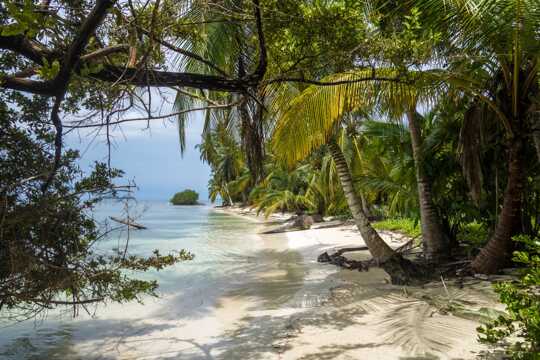
  5. White-sand beaches and easy shore access — Small, palm-dotted beaches make landing and entering the water simple, which is nice if you’ve got limited time or want to combine sunbathing with quick snorkel sessions.
  6. Intertidal zones and tide pools — At low tide look for little tide pools full of crabs, small fish and sea stars. It’s a fun, slow-paced way to find wildlife without going far from shore.
  7. Marine life variety — Beyond coral fish you can spot rays, small reef sharks at a respectful distance, octopus hides and a lively array of invertebrates. It’s a compact spot with surprisingly diverse sea life for such a small refuge.
Spotted a mistake or missing something? Contact us.

🌤️ When to go?Best time to explore Isla Iguana Wildlife Refuge


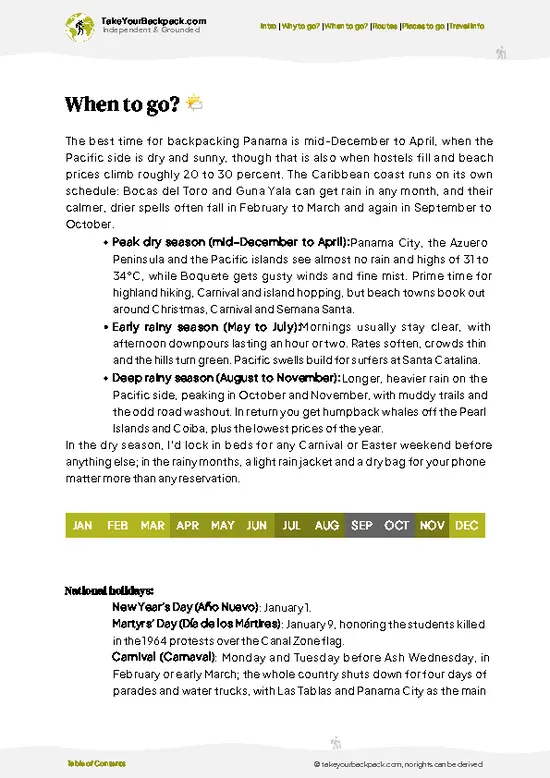
  • Weather: The dry season from mid-December to April offers the most reliable weather for backpacking, with minimal rain and clearer skies. The wet season, May to November, brings heavy showers that can disrupt plans and muddy trails.

  • Temperature: Expect daytime highs around 30-32°C (86-90°F) year-round, with nights cooling to 24-26°C (75-79°F). Humidity spikes during the wet season, making it feel hotter and stickier.

  • Daylight Hours: Daylight remains fairly consistent, roughly 11 to 12 hours daily, so early starts are key to maximizing your time outdoors.

  • Crowds: Peak visitor numbers align with the dry season and local holidays, so expect more people from December through March. The refuge is quieter during the wet months, but some facilities may close.

  • Seasonal Activities: Dry months
read more 👉

  • Weather: The dry season from mid-December to April offers the most reliable weather for backpacking, with minimal rain and clearer skies. The wet season, May to November, brings heavy showers that can disrupt plans and muddy trails.

  • Temperature: Expect daytime highs around 30-32°C (86-90°F) year-round, with nights cooling to 24-26°C (75-79°F). Humidity spikes during the wet season, making it feel hotter and stickier.

  • Daylight Hours: Daylight remains fairly consistent, roughly 11 to 12 hours daily, so early starts are key to maximizing your time outdoors.

  • Crowds: Peak visitor numbers align with the dry season and local holidays, so expect more people from December through March. The refuge is quieter during the wet months, but some facilities may close.

  • Seasonal Activities: Dry months are best for snorkeling and wildlife spotting, as water clarity improves and animals are more active. Wet season limits these activities due to rougher seas and reduced visibility.

  • Price Fluctuations: Accommodation and transport costs rise during the dry season and holidays. Traveling just before or after peak months can save money without sacrificing much on conditions.


Pro-tip: Aim for late November or early December to catch the tail end of the wet season’s lushness with fewer crowds and better prices—just pack a lightweight rain jacket.


source: climatestotravel.comJANJanuary: excellent for travelingFEBFebruary: excellent for travelingMARMarch: excellent for travelingAPRApril: highly recommended for travelingMAYMay: fair for travelingJUNJune: fair for travelingJULJuly: fair for travelingAUGAugust: fair for travelingSEPSeptember: fair for travelingOCTOctober: fair for travelingNOVNovember: good for travelingDECDecember: highly recommended for traveling
when-to-go

✈️ The backpacker research shortcutPanama Travel Guide

An offline-friendly backpacking guide with optimized travel routes, ranked highlights, transport advice, and the best areas to stay.
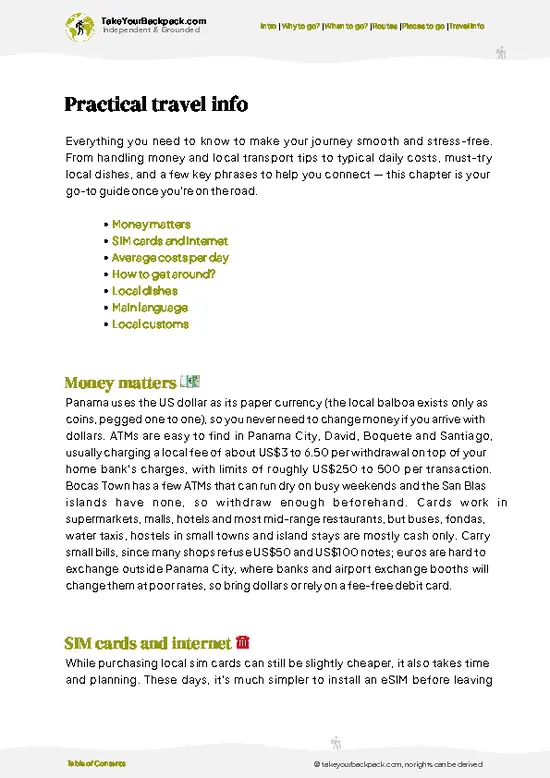
example page 0 from our offline Travel Guide for Panama
example page 1 from our offline Travel Guide for Panama
example page 2 from our offline Travel Guide for Panama
example page 3 from our offline Travel Guide for Panama
example page 4 from our offline Travel Guide for Panama
example page 5 from our offline Travel Guide for Panama
example page 6 from our offline Travel Guide for Panama
example page 7 from our offline Travel Guide for Panama
The digital guide (349 pages) contains:
93 highlights, ranked by travel appeal
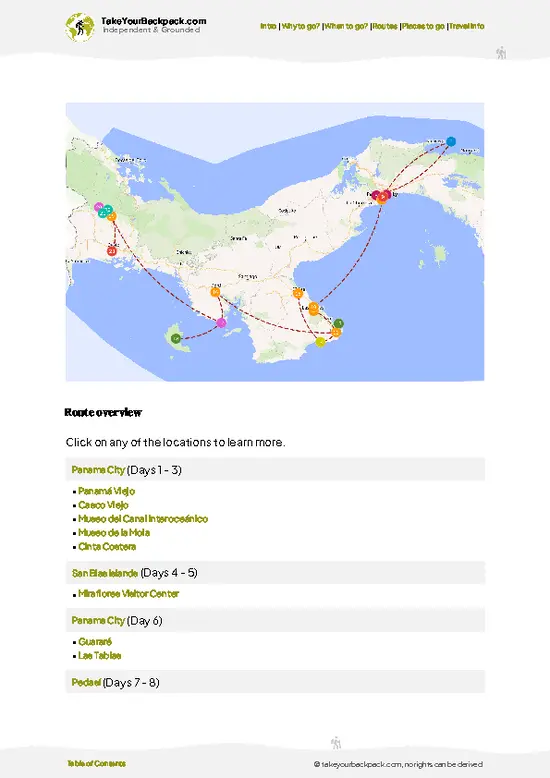
Optimized 5, 10 & 15-day travel routes
Cities, national parks, landmarks, beaches
How to get around
Offline-friendly for travel without Wi-Fi
👉 Click to see all 30+ guide features

📅 Plan smarter in minutes, not weeks
Month by month travel advice
Festivals & national holidays
Budget expectations

🗺️ Go to the right places, skip the overrated ones
Honest pros & cons of destinations
Top hikes, parks & viewpoints
Lesser-known places most travelers miss
Clear “worth it vs skip it” guidance

🛏️ Travel smoothly without rookie mistakes
Best areas to stay
Transport systems explained simply
Common scams & safety advice
SIM cards, money & practical tips

🌍 Understand the country, not just visit it
Culture & traditions
52 Essential phrases & customs
Festivals worth planning around
Traveler-friendly historical context
Insights that make places more meaningful

📱 Built for real travel conditions
Fully downloadable PDF
Works completely offline
Optimized for phone use
Useful in remote areas & buses
Everything in one place
Save weeks of stressful planning
Get instant access to your full guide. 30‑day money-back guarantee.


By proceeding you agree to our terms.
Sent to your inbox immediately after payment • 100% Secure Checkout
Best Backpacking Travel Advisor 2025 tourism awardBest Backpacking
Travel Advisor
2025
What others say about Take Your Backpack Guides:
⭐⭐⭐⭐⭐
Fantastic, amazing amount of information!
⭐⭐⭐⭐⭐
My goodness this is amazing, it's what I've been looking for hats off too you!
⭐⭐⭐⭐⭐
I think this is absolutely BRILLIANT
⭐⭐⭐⭐
Very complete and informative. It's still missing places, but I gotta to commend you
⭐⭐⭐⭐⭐
This is truly amazing, thank you, can't wait to explore it with my kids!
⭐⭐⭐⭐⭐
Awesome resource, thank you!
⭐⭐⭐⭐⭐
This is amazing! Can't wait to explore the ones I haven't seen
⭐⭐⭐⭐
I love this! Well done, great idea.
⭐⭐⭐⭐⭐
Thanks for taking the time to make this gem!
⭐⭐⭐⭐⭐
This might be the best website I've ever seen.
⭐⭐⭐⭐⭐
Congratulations, and thank you so much for your work; it's incredibly valuable.
⭐⭐⭐⭐
In all seriousness I think you did a great job pointing out the important spots
⭐⭐⭐⭐⭐
10/10 very good
⭐⭐⭐⭐⭐
As someone who's only just starting to visit regularly this is awesome, thank you.
⭐⭐⭐⭐
Thank you very much! I'm going to visit my dad, it's going to be very useful!
⭐⭐⭐⭐⭐
This is really cool! We'll be travelling for the first time and this definitely come in handy.
⭐⭐⭐⭐⭐
You are now our minister of culture, congratulations 👨‍💼
⭐⭐⭐⭐⭐
Just wanted to tell you that this is a pearl! Going to follow your recommendations.
⭐⭐⭐⭐⭐
This is so cool. I'll definitely be using the resource for my travels soon.
⭐⭐⭐⭐⭐
This is very impressive! Good work.
⭐⭐⭐⭐⭐
This is an amazing and informative site. Very well done!

🛏️ Where to stay?Best areas to stay in Panama

For backpackers heading to Isla Iguana Wildlife Refuge, options are limited but solid. There are no accommodations directly within the park itself, so you’ll want to base yourself in nearby towns like Pedasí. This charming town offers a few budget-friendly hostels and guesthouses, such as Hostal Casa de Campo and La Casa de los Abuelos. Both provide a cozy atmosphere and easy access to local eateries.

Expect to pay around $15 to $30 per night. Keep in mind that transportation to the refuge involves a short boat ride, which can add to your costs. Plan for about $10 round-trip.

Don’t overlook … read more 👉
For backpackers heading to Isla Iguana Wildlife Refuge, options are limited but solid. There are no accommodations directly within the park itself, so you’ll want to base yourself in nearby towns like Pedasí. This charming town offers a few budget-friendly hostels and guesthouses, such as Hostal Casa de Campo and La Casa de los Abuelos. Both provide a cozy atmosphere and easy access to local eateries.

Expect to pay around $15 to $30 per night. Keep in mind that transportation to the refuge involves a short boat ride, which can add to your costs. Plan for about $10 round-trip.

Don’t overlook the local markets in Pedasí for affordable meals and snacks. This way, you can save your budget for the experiences that truly matter—like snorkeling with vibrant marine life or soaking up the sun on pristine beaches.

👛 Costs (as of 30 July 2026)What things cost and how to budget

Visiting Isla Iguana Wildlife Refuge in Panama can be a rewarding experience, but it’s essential to be aware of the costs involved to avoid any surprises.

The entrance fee to the refuge is typically around $10 USD per person. This fee grants you access to the stunning beaches and the chance to explore the diverse wildlife. Keep in mind that this fee can vary slightly depending on the season or any special events.

If you’re planning to take a boat to the island, expect to pay between $20 to $30 USD for a round trip. Prices can fluctuate based on demand, so it’s wise to check ahead or negotiate if you’re in a group.

Food options on the island are limited. Bringing your own snacks is a smart move. If you do decide to buy food, budget around $10 to $15 USD for a simple meal.

Lastly, consider … read more 👉
Visiting Isla Iguana Wildlife Refuge in Panama can be a rewarding experience, but it’s essential to be aware of the costs involved to avoid any surprises.

The entrance fee to the refuge is typically around $10 USD per person. This fee grants you access to the stunning beaches and the chance to explore the diverse wildlife. Keep in mind that this fee can vary slightly depending on the season or any special events.

If you’re planning to take a boat to the island, expect to pay between $20 to $30 USD for a round trip. Prices can fluctuate based on demand, so it’s wise to check ahead or negotiate if you’re in a group.

Food options on the island are limited. Bringing your own snacks is a smart move. If you do decide to buy food, budget around $10 to $15 USD for a simple meal.

Lastly, consider any additional costs for guided tours or activities like snorkeling. These can range from $30 to $50 USD, depending on the provider and what’s included.

By keeping these costs in mind, you can enjoy your visit without draining your budget.


source: visitpanama.com
⚠️ Prices can change and everyone travels differently, so take this as a rough guide. Hope it helps you plan your adventure!

🥾 TrailsScenic routes and wildlife spotting in Isla Iguana Wildlife Refuge

The hiking opportunities at Isla Iguana Wildlife Refuge are pretty fantastic, especially if you’re into stunning coastal views and diverse wildlife. The terrain is mostly flat, making it accessible for most hikers, but you’ll want to keep an eye out for the occasional rocky patch. As you stroll along, you might spot iguanas sunbathing, colorful birds flitting about, and maybe even some dolphins playing in the water if you’re lucky.

There’s a designated trail called Sendero Playa Larga that’s worth checking out. Here are some details:
  • Length: 2.5 km
  • Estimated Duration: 1-2 hours
  • Difficulty Level:
read more 👉
The hiking opportunities at Isla Iguana Wildlife Refuge are pretty fantastic, especially if you’re into stunning coastal views and diverse wildlife. The terrain is mostly flat, making it accessible for most hikers, but you’ll want to keep an eye out for the occasional rocky patch. As you stroll along, you might spot iguanas sunbathing, colorful birds flitting about, and maybe even some dolphins playing in the water if you’re lucky.

There’s a designated trail called Sendero Playa Larga that’s worth checking out. Here are some details:
  • Length: 2.5 km
  • Estimated Duration: 1-2 hours
  • Difficulty Level: Easy
  • Key Features: Gorgeous beach views, opportunities for wildlife observation, and shaded areas under palm trees.
  • Terrain: Mostly sandy paths with some rocky sections.

Getting to the park is pretty straightforward. You can catch a bus from Pedasí to the nearby town of Isla Iguana, which is convenient and budget-friendly. Just be prepared for it to get a bit crowded, especially on weekends when locals and tourists flock to enjoy the sun and scenery. As for the entrance fee, it’s quite reasonable, making it an easy choice for budget travelers looking to soak up some nature without breaking the bank.
⚠️ Hiking info can sometimes be outdated or inaccurate. Before you hit the trail, check the latest conditions with locals. If you do spot anything that's off, I'd love to hear from you, so I can update it for fellow travelers.

🛡️ SafetyStaying Safe: What Travelers Should Know

Isla Iguana Wildlife Refuge is generally straightforward for backpackers, but a few practical realities can enhance your experience. Weather can shift quickly, so pack a lightweight rain jacket and check forecasts before heading out. The trails are well-marked but can be uneven; sturdy shoes will help with footing, especially on the sandy paths and rocky sections.

Wildlife encounters are common, particularly with iguanas and various bird species. Keep your distance and avoid feeding them to maintain their natural behavior. Timing your hike for early morning or late afternoon can help you avoid the heat and crowds. Stay hydrated and pace yourself; this isn’t a race. Respect the environment and fellow hikers, and you’ll enjoy the refuge’s beauty without unnecessary stress.

Other Panamanian national parks near Isla Iguana Wildlife Refuge

Explore more nearby:


💡 Not sure where to go next?
Create a personalized itinerary for Panama including Isla Iguana Wildlife Refuge and the places that fit your trip.

Generate my itinerary

👉 Discover all national parks

Or checkout all Panama has to offer (think cities, towns, villages, national parks, hikes, beaches, festivals)
Country photo of Panama

We 💚 feedbackIs it worth it?

Isla Iguana Wildlife Refuge is a paradise for wildlife lovers. The chance to see rare birds and playful monkeys makes every moment worthwhile. But be prepared: the heat can be relentless, and the lack of shade means you’ll need to stay hydrated and pace yourself. Embrace the beauty, but don’t underestimate the sun’s power.

✈️ When did I visit Panama?
Panama I visited during my half year trip through South and Central America back in 2003

✍️ Help improve this page!
The information on this page is based on my own backpacking experience in Panama, supplemented with up-to-date research and feedback from other travelers. Travel details can change, so if you notice anything outdated or incomplete, feel free to let me know.


🙋‍♂️ Give feedback

👋 Meet the founderWho’s Behind Take Your Backpack?

Johan, backpacker and founder of TakeYourBackpackHi, I’m Johan (Netherlands 🇳🇱), the creator of TakeYourBackpack. Over the past decade, I’ve backpacked through 80+ countries across six continents, gaining extensive experience with independent travel, long-term trips, and overland routes.

This site is built on a combination of firsthand travel experience and carefully curated insights from other backpackers. Many guides are based on places I’ve personally visited, while others bring together tips, observations, and practical advice shared by trusted travelers I’ve met along the way.

The goal is to provide realistic, experience-driven guidance — not generic itineraries — so you can explore destinations with better context, clearer expectations, and more confidence.

Get full Panama guide •
Instant download • 93 highlights • Full Offline guide