
×

Papua New Guinea🇵🇬 | beachesSamarai Islandhistoric port, colonial ruins, narrow lanes | things to do and best time to go

Explore Nusa IslandExplore Tawali Resort

Backpacking in Samarai Island
👍 Recommendedbeach ranked #15
By Johan Kruseman 🇳🇱 | Updated September 4, 2026

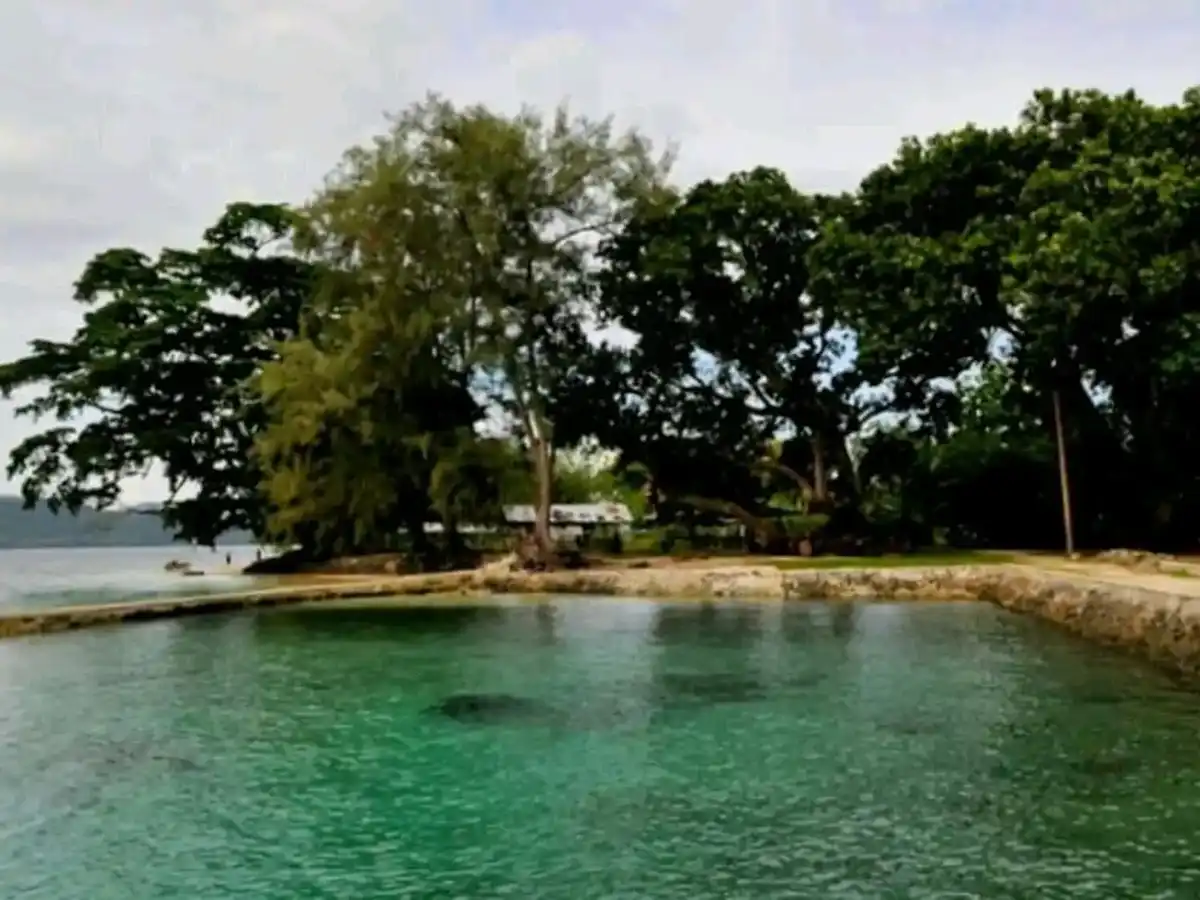
Samarai Island beach is the rare South Pacific spot where the “historic trading port” hype hides the real backpacker perk: you’ll probably have the sand to yourself because most visitors never leave the wharf. Sitting in Milne Bay, off the southeastern tip of Papua New Guinea, it’s a low-key, slightly scruffy beach with clear, calm water that’s better for lazy swims and snorkelling than for surf. The scenery is classic palm-and-reef, but expect some litter and village life rather than resort grooming. Access requires boat logistics, yet homestays and cheap eats beat mainland prices, and while nearby Alotau beaches are easier, Samarai feels wilder and more personal.

Discover everything you want to know in the 📖 Papua New Guinea Travel Guide.
Loading the map 🌍
CLICK TO FILTER
cities
towns
national parks
hikes
beaches
attractions
festivals
regions
SHOW COUNTRY’S BESTSHOW ALL

✨ Why go?
Ranked #15 beach in Papua New Guinea
What makes this beach worth visiting

Samarai Island Beach is a must-stop for backpackers navigating Papua New Guinea’s coast. The laid-back atmosphere feels like a warm hug after days of trekking. It’s affordable, so you can splurge on a cold drink without guilt. The social scene is vibrant, with fellow travelers swapping stories and laughter around bonfires. Plus, the water access is a game-changer; you can dive in or just float your worries away. Think of it as a connector along your route, a place to recharge before diving back into the adventure. It’s not just a beach; it’s a slice of paradise that makes the grind worthwhile.
Want to include Samarai Island in your Papua New Guinea route?
Create a personalized Papua New Guinea itinerary that includes Samarai Island and the places that fit your trip — based on your travel style, budget, and available time. Get your route in seconds.

Generate my trip

💡 HighlightsPlaces and moments you shouldn't skip

  • (Day) Explore the colonial waterfront and ruined townscape — A tiny port frozen in time: weathered concrete buildings, the old wharf remnants and narrow lanes give a real sense of Samarai’s role as a once-busy trading and administrative hub. Great for close-up history and photos without big crowds.
  • (Day) Snorkel the nearshore bommies and WWII relics — Shallow coral bommies lie close to the beach and around the island, with bright soft corals and schools of reef fish; you can also spot scattered wartime fragments that make the reef feel uniquely layered with history.
  • (Day) Short boat hops to neighbouring islets and village visits — Five- to twenty-minute rides open up tiny inhabited islets where everyday island life plays out: informal craft stalls, village architecture, and easy cultural
read more 👉
  • (Day) Explore the colonial waterfront and ruined townscape — A tiny port frozen in time: weathered concrete buildings, the old wharf remnants and narrow lanes give a real sense of Samarai’s role as a once-busy trading and administrative hub. Great for close-up history and photos without big crowds.
  • (Day) Snorkel the nearshore bommies and WWII relics — Shallow coral bommies lie close to the beach and around the island, with bright soft corals and schools of reef fish; you can also spot scattered wartime fragments that make the reef feel uniquely layered with history.
  • (Day) Short boat hops to neighbouring islets and village visits — Five- to twenty-minute rides open up tiny inhabited islets where everyday island life plays out: informal craft stalls, village architecture, and easy cultural exchanges that are more authentic than staged “shows.”
  • (Day) Kayak or paddle through mangrove channels and hidden coves — The maze-like mangrove edges and sheltered coves around Samarai are ideal for quiet paddles; you’ll find tidal wildlife, sheltered snorkeling spots and corners of coastline inaccessible to larger boats.
  • (Day) Sunset at the island’s tips and jetty viewpoints — The compact shoreline gives dramatic, close-in sunset views framed by the old breakwater and scattered wreck silhouettes—small, photogenic scenes you can watch from the sand or a low rock.
  • (Night) Night dives or torch-snorkels to see nocturnal reef life — After dark the reef changes: octopus, cuttlefish, crustaceans and other crepuscular critters come out. Local guides run short night trips that turn ordinary reef snorkels into a scavenger-hunt of weird and fascinating animals.
  • (Night) Stargazing under very low light pollution — With minimal island lighting, the Milky Way and southern constellations are vivid; the combination of sea sounds and clear skies makes it one of the simplest but most memorable island experiences.
  • (Night) Moonlit village strolls and informal community evenings — Dusk often pulls villagers to communal spots for chatting, music or quiet gatherings. There’s no commercial nightlife here—what you find is genuine, low-key community life if you approach respectfully.
  • (Night) Try local-style night fishing off the jetty or from a small boat — Handlines and simple night techniques are still common; joining a local fisher or trying it yourself is a hands-on way to connect with island rhythms and bring home your own small catch (if permitted).
  • (Night) Search for seasonal bioluminescent displays in calm bays — On calm, warm nights sheltered coves and mangrove channels can light up with plankton when stirred. It’s not guaranteed, but when it happens it’s a quiet, otherworldly way to experience the water after dark.
Spotted a mistake or missing something? Contact us.
🌤️ When to go?Choosing the right time of year


  • Topic: Weather – The dry season from May to October is your best bet. Expect less rain, which means fewer mudslides and less chance your gear turns into a soggy mess. The wet season (November to April) is a no-go unless you enjoy impromptu swimming in the jungle.

  • Topic: Temperature – Temperatures hover around 27-31°C (80-88°F) year-round, so pack light but prepare for humidity that feels like a warm, clingy blanket.

  • Topic: Daylight Hours – Roughly 12 hours of daylight year-round, but the sun sets early around 6 PM, so plan your beach time accordingly—no late-night swims under the stars here.

  • Topic: Crowds – Samarai Island beach isn’t exactly a tourist hotspot, but the dry season draws local visitors. If you want near solitude, aim for shoulder months like May or September.

  • Topic:
read more 👉

  • Topic: Weather – The dry season from May to October is your best bet. Expect less rain, which means fewer mudslides and less chance your gear turns into a soggy mess. The wet season (November to April) is a no-go unless you enjoy impromptu swimming in the jungle.

  • Topic: Temperature – Temperatures hover around 27-31°C (80-88°F) year-round, so pack light but prepare for humidity that feels like a warm, clingy blanket.

  • Topic: Daylight Hours – Roughly 12 hours of daylight year-round, but the sun sets early around 6 PM, so plan your beach time accordingly—no late-night swims under the stars here.

  • Topic: Crowds – Samarai Island beach isn’t exactly a tourist hotspot, but the dry season draws local visitors. If you want near solitude, aim for shoulder months like May or September.

  • Topic: Seasonal Activities – Dry season is prime for snorkeling and exploring nearby islets. Wet season? Expect limited boat trips and a lot more mosquito company.

  • Topic: Price Fluctuations – Prices for accommodation and transport spike during the dry season, especially July and August. Budget travelers might find better deals just before or after peak months.


Pro-tip: Time your visit for the dry season’s start or end to dodge crowds and inflated prices while still enjoying decent weather.


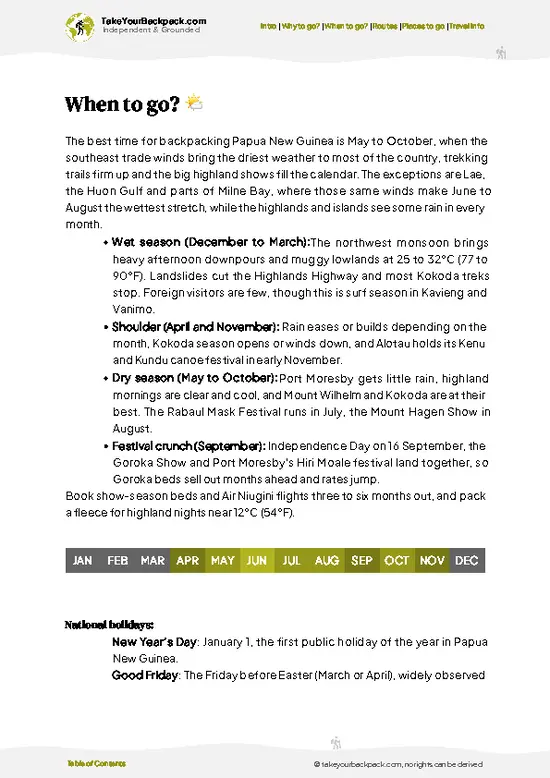
source: climatestotravel.comJANJanuary: below average for travelingFEBFebruary: below average for travelingMARMarch: below average for travelingAPRApril: below average for travelingMAYMay: highly recommended for travelingJUNJune: excellent for travelingJULJuly: highly recommended for travelingAUGAugust: highly recommended for travelingSEPSeptember: highly recommended for travelingOCTOctober: excellent for travelingNOVNovember: below average for travelingDECDecember: below average for traveling
papua-new-guinea-beach-samarai-island
© Google | James Mitau

✈️ The backpacker research shortcutPapua New Guinea Travel Guide

An offline-friendly backpacking guide with optimized travel routes, ranked highlights, transport advice, and the best areas to stay.
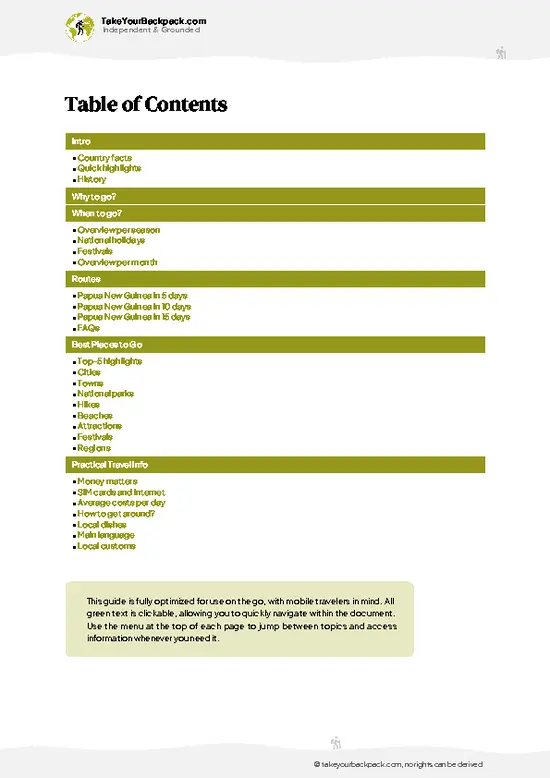
example page 0 from our offline Travel Guide for Papua New Guinea
example page 1 from our offline Travel Guide for Papua New Guinea
example page 2 from our offline Travel Guide for Papua New Guinea
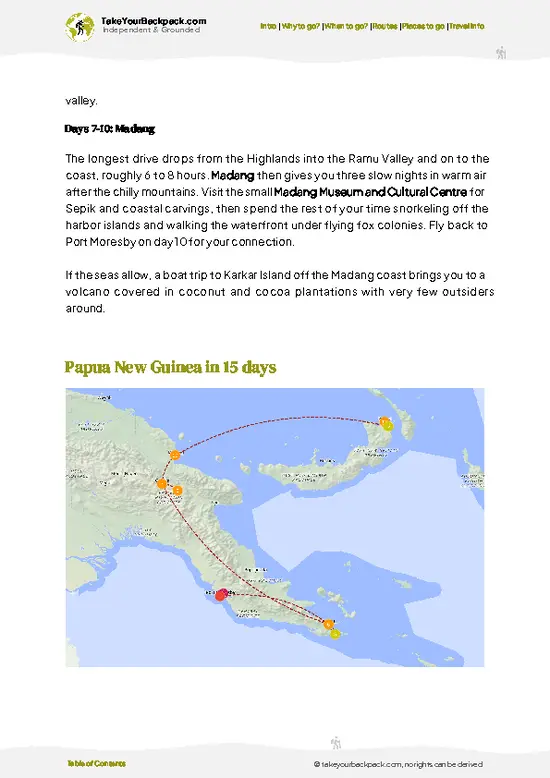
example page 3 from our offline Travel Guide for Papua New Guinea
example page 4 from our offline Travel Guide for Papua New Guinea
example page 5 from our offline Travel Guide for Papua New Guinea
example page 6 from our offline Travel Guide for Papua New Guinea
example page 7 from our offline Travel Guide for Papua New Guinea
The digital guide (319 pages) contains:
86 highlights, ranked by travel appeal
Optimized 5, 10 & 15-day travel routes
Cities, national parks, landmarks, beaches
How to get around
Offline-friendly for travel without Wi-Fi
👉 Click to see all 30+ guide features

📅 Plan smarter in minutes, not weeks
Month by month travel advice
Festivals & national holidays
Budget expectations

🗺️ Go to the right places, skip the overrated ones
Honest pros & cons of destinations
Top hikes, parks & viewpoints
Lesser-known places most travelers miss
Clear “worth it vs skip it” guidance

🛏️ Travel smoothly without rookie mistakes
Best areas to stay
Transport systems explained simply
Common scams & safety advice
SIM cards, money & practical tips

🌍 Understand the country, not just visit it
Culture & traditions
52 Essential phrases & customs
Festivals worth planning around
Traveler-friendly historical context
Insights that make places more meaningful

📱 Built for real travel conditions
Fully downloadable PDF
Works completely offline
Optimized for phone use
Useful in remote areas & buses
Everything in one place
Save weeks of stressful planning
Get instant access to your full guide. 30‑day money-back guarantee.
+ Add another guide for just US$7.80

By proceeding you agree to our terms.
Sent to your inbox immediately after payment • 100% Secure Checkout
Best Backpacking Travel Advisor 2025 tourism awardBest Backpacking
Travel Advisor
2025
What others say about Take Your Backpack Guides:
⭐⭐⭐⭐⭐
Fantastic, amazing amount of information!
⭐⭐⭐⭐⭐
My goodness this is amazing, it's what I've been looking for hats off too you!
⭐⭐⭐⭐⭐
I think this is absolutely BRILLIANT
⭐⭐⭐⭐
Very complete and informative. It's still missing places, but I gotta to commend you
⭐⭐⭐⭐⭐
This is truly amazing, thank you, can't wait to explore it with my kids!
⭐⭐⭐⭐⭐
Awesome resource, thank you!
⭐⭐⭐⭐⭐
This is amazing! Can't wait to explore the ones I haven't seen
⭐⭐⭐⭐
I love this! Well done, great idea.
⭐⭐⭐⭐⭐
Thanks for taking the time to make this gem!
⭐⭐⭐⭐⭐
This might be the best website I've ever seen.
⭐⭐⭐⭐⭐
Congratulations, and thank you so much for your work; it's incredibly valuable.
⭐⭐⭐⭐
In all seriousness I think you did a great job pointing out the important spots
⭐⭐⭐⭐⭐
10/10 very good
⭐⭐⭐⭐⭐
As someone who's only just starting to visit regularly this is awesome, thank you.
⭐⭐⭐⭐
Thank you very much! I'm going to visit my dad, it's going to be very useful!
⭐⭐⭐⭐⭐
This is really cool! We'll be travelling for the first time and this definitely come in handy.
⭐⭐⭐⭐⭐
You are now our minister of culture, congratulations 👨‍💼
⭐⭐⭐⭐⭐
Just wanted to tell you that this is a pearl! Going to follow your recommendations.
⭐⭐⭐⭐⭐
This is so cool. I'll definitely be using the resource for my travels soon.
⭐⭐⭐⭐⭐
This is very impressive! Good work.
⭐⭐⭐⭐⭐
This is an amazing and informative site. Very well done!

🛏️ Where to stay?Best areas to stay in Papua New Guinea

Samarai Island is a backpacker’s playground, but not all spots are created equal. Head for the beachside areas where the vibe is relaxed and the locals are friendly. Look for places near the wharf; they’re buzzing with travelers swapping stories over a cold drink.

The beachfront bungalows are a solid choice—think hammocks, sunsets, and the occasional stray dog looking for a belly rub.

Avoid the overly commercialized spots; they’re like that one friend who always wants to go to the same chain restaurant. Instead, seek out the communal spaces where you can share a laugh or two about the absurdities … read more 👉
Samarai Island is a backpacker’s playground, but not all spots are created equal. Head for the beachside areas where the vibe is relaxed and the locals are friendly. Look for places near the wharf; they’re buzzing with travelers swapping stories over a cold drink.

The beachfront bungalows are a solid choice—think hammocks, sunsets, and the occasional stray dog looking for a belly rub.

Avoid the overly commercialized spots; they’re like that one friend who always wants to go to the same chain restaurant. Instead, seek out the communal spaces where you can share a laugh or two about the absurdities of travel. That’s where the real magic happens.

🛡️ SafetyStaying Safe: What Travelers Should Know

Samarai Island beach is generally a chill spot for swimming, but keep an eye on the tides. Currents can sneak up on you, especially during the afternoon when the wind picks up. Locals know the safe zones, so follow their lead. Jellyfish and rays are around, but they’re not usually a big deal—just watch where you step. The sun can be relentless, so slather on that sunscreen early and often. Theft isn’t rampant, but don’t leave your stuff unattended while you’re splashing about. Enjoy the waves, but stay aware; it’s all part of the adventure.

FAQCommon questions from travelers

You get to Samarai Island beach by taking a boat from Alotau, the capital of Milne Bay Province. The boat ride typically takes about 1 to 2 hours depending on the vessel and weather conditions. There are no direct flights to the island, so water transport is the only option.
Yes, Samarai Island beach is good for swimming and snorkeling due to its clear waters and coral reefs. Surfing is less common here as the waves are generally small and inconsistent. Snorkeling around the island reveals diverse marine life, making it a popular activity for visitors.
Yes, Samarai Island beach is free to visit. There are no entrance fees or permits required to access the beach. However, you should budget for boat transport costs from Alotau, which can vary depending on the operator.
⚠️ Things can change over time, so always validate details locally before you go.

Other Papua New Guinean beaches near Samarai Island

Explore more nearby:


💡 Not sure where to go next?
Create a personalized itinerary for Papua New Guinea including Samarai Island and the places that fit your trip.

Generate my itinerary

👉 Discover all beaches

Or checkout all Papua New Guinea has to offer (think cities, towns, villages, national parks, hikes, beaches, festivals)
Country photo of Papua New Guinea

We 💚 feedbackIs it worth it?

Samarai Island beach? Essential. The vibe is laid-back, with locals who genuinely want to share their world. Best surprise? The fresh coconut water—it’s like nature’s energy drink. Just watch out for the occasional rogue wave; they don’t care if you’re sunbathing.

✍️ Help improve this page!
The information on this page is based on in-depth research, insights shared by experienced travelers, and feedback from the local travel community in Papua New Guinea. While every effort is made to keep the information accurate and current, conditions can change — so if you spot anything incorrect or outdated, please get in touch.


🙋‍♂️ Give feedback

👋 Meet the founderWho’s Behind Take Your Backpack?

Johan, backpacker and founder of TakeYourBackpackHi, I’m Johan (Netherlands 🇳🇱), the creator of TakeYourBackpack. Over the past decade, I’ve backpacked through 80+ countries across six continents, gaining extensive experience with independent travel, long-term trips, and overland routes.

This site is built on a combination of firsthand travel experience and carefully curated insights from other backpackers. Many guides are based on places I’ve personally visited, while others bring together tips, observations, and practical advice shared by trusted travelers I’ve met along the way.

The goal is to provide realistic, experience-driven guidance — not generic itineraries — so you can explore destinations with better context, clearer expectations, and more confidence.

Get full country guide •
Instant download • 86 highlights • Full Offline guide