
×

Papua New Guinea🇵🇬 | townsTabubilOk Tedi company town, Star Mountains foothills, rainforest birding, daily rain | things to do and best time to go

Explore AitapeExplore Kiunga

Backpacking in Tabubil
👍 Recommendedtown ranked #9
By Johan Kruseman 🇳🇱 | Updated October 16, 2026

Tabubil once existed purely as a company town, built in the 1970s for the Ok Tedi copper and gold mine, and outsiders needed a reason to be let near it. Today you can walk in, and the reason is the country that surrounds it. This is a town in the Star Mountains foothills of western Papua New Guinea, in Western Province, and it works as a gateway for rainforest, birdwatching and river trips rather than as a sightseeing stop. Skip the town itself, which is tidy, functional and short on sights. Spend your time on the forest trails and the lookouts. It is reached mainly by air, and the road in is rough. Evenings are quiet and social life is thin, so meeting other travelers takes luck. The best detail is the rain: it falls almost daily, and the forest steams after every shower.

Discover everything you want to know in the 📖 Papua New Guinea Travel Guide.


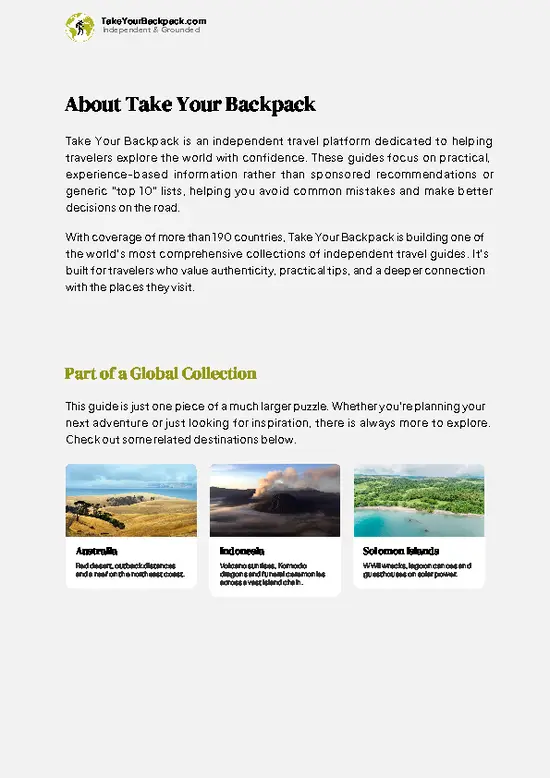
example page 0 from our offline Travel Guide for Papua New Guinea
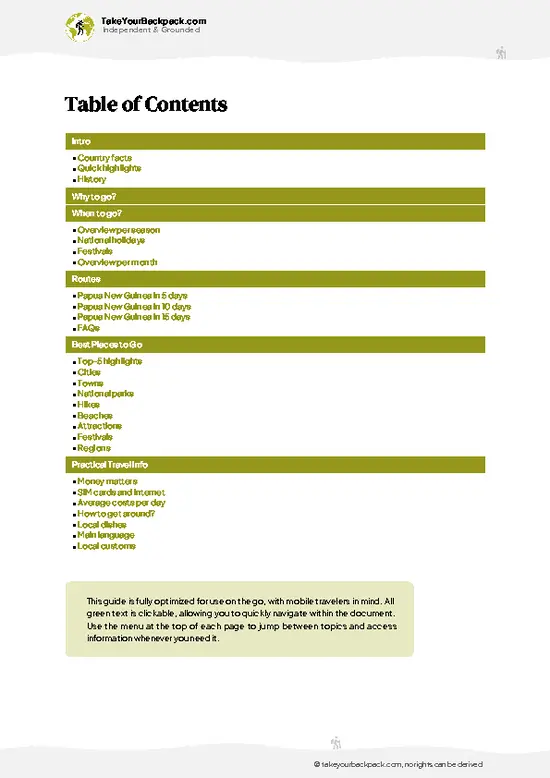
example page 1 from our offline Travel Guide for Papua New Guinea
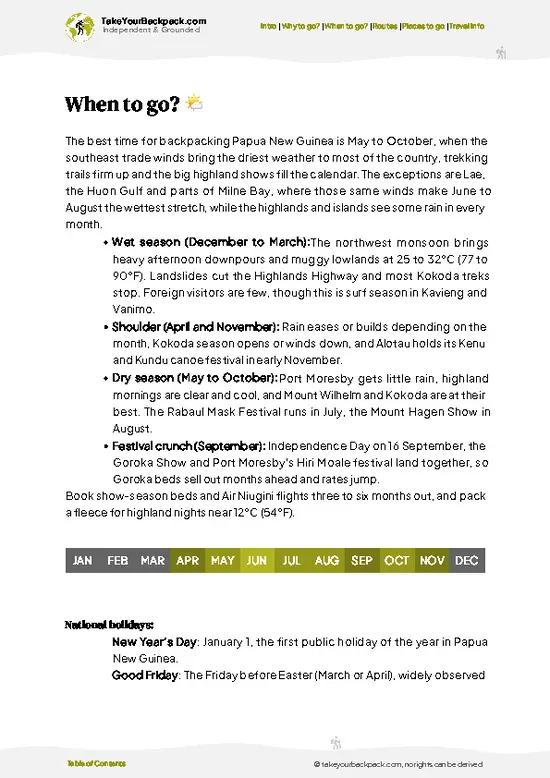
example page 2 from our offline Travel Guide for Papua New Guinea
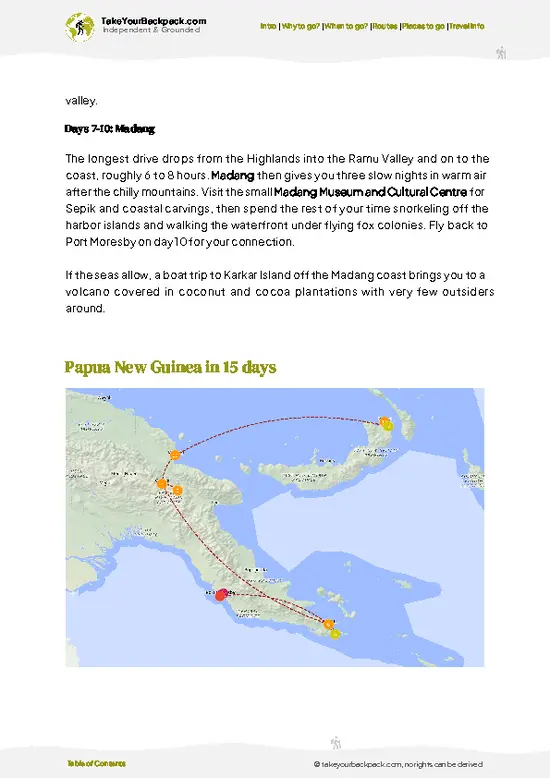
example page 3 from our offline Travel Guide for Papua New Guinea
example page 4 from our offline Travel Guide for Papua New Guinea
example page 5 from our offline Travel Guide for Papua New Guinea
example page 6 from our offline Travel Guide for Papua New Guinea
example page 7 from our offline Travel Guide for Papua New Guinea
Loading the map 🌍
CLICK TO FILTER
cities
towns
national parks
hikes
beaches
attractions
festivals
regions
SHOW COUNTRY’S BESTSHOW ALL

✨ Why go?
Ranked #9 town in Papua New Guinea
The unique appeal for travelers

Tabubil earns a visit because it is the gateway to the Star Mountains and the rainforest that surrounds the Ok Tedi mine. Hikers and birders who want real jungle, with birds of paradise and tree kangaroo country within reach of a town that has a hospital, a supermarket and reliable power, will find a rare combination here. Most travelers stay two or three days: one to arrange guides and sort out permissions, the rest for walks and local contacts. It is a quiet, practical place. Do not expect hostel dorms or a backpacker scene; guesthouses are few and cater mainly to mine workers and contractors. Solo travelers who enjoy making conversation with locals and workers will do well. Those who like planned logistics and flexible days suit it best. If you want nightlife or sightseeing by foot, skip it.

💡 HighlightsPlaces and moments you shouldn't skip

  1. Ok Tedi Mine viewpoint and mine surroundings: The mine defines the town and the region. Visits normally need advance arrangement with the company or a local host, so organize this first. Mornings give the clearest views. Allow 2 to 3 hours.
  2. Tabubil Town Market: Stalls sell sweet potato, greens, bananas, betel nut and bilums (string bags) from surrounding villages. Go in the morning when produce is freshest. Free to browse, about 1 hour. Keep valuables out of sight.
  3. Forest walks around Tabubil: Tracks into the surrounding rainforest give a taste of the lowland-to-mid-altitude wildlife, with birdsong at dawn and a chance of butterflies and orchids. Hire a local guide for around US$15 to 30 (roughly 60 to 120 kina). Early morning is best. Allow 3 to 4 hours.
  4. Tabubil Hospital and community areas:
… read more 👉
  1. Ok Tedi Mine viewpoint and mine surroundings: The mine defines the town and the region. Visits normally need advance arrangement with the company or a local host, so organize this first. Mornings give the clearest views. Allow 2 to 3 hours.
  2. Tabubil Town Market: Stalls sell sweet potato, greens, bananas, betel nut and bilums (string bags) from surrounding villages. Go in the morning when produce is freshest. Free to browse, about 1 hour. Keep valuables out of sight.
  3. Forest walks around Tabubil: Tracks into the surrounding rainforest give a taste of the lowland-to-mid-altitude wildlife, with birdsong at dawn and a chance of butterflies and orchids. Hire a local guide for around US$15 to 30 (roughly 60 to 120 kina). Early morning is best. Allow 3 to 4 hours.
  4. Tabubil Hospital and community areas: Not a sight, but a walk through the residential hillsides shows how the planned company town works alongside Wopkaimin villages. Free, 1 hour.
  5. Sunset from the hillside roads: The slopes above town look over cloud-filled valleys when skies clear, usually late afternoon. Free, about 1 hour.
Beyond town, trips go to the Ok Tedi River, the Star Mountains and Kiunga on the Fly River. All of this fits comfortably into about two days.
Spotted a mistake or missing something? Contact us.

🏘️ NeighborhoodsHow different areas shape the experience

Tabubil is a compact mining town in the Star Mountains foothills, and you can cover its useful corners in a day or two. Skip nothing on this list, but know which parts earn your time.
  • Town Center and Market: This is where you start. Stalls sell sweet potato, bananas, betel nut and cooked kaukau, and it is the best place to talk with locals and find a ride. Walk it in under an hour.
  • Ok Tedi Mine Area (Tabubil Heights and mine lookout): Corporate housing and mine operations dominate the hillside. Worth it for the sheer scale of the open-pit works, but access depends on the mine company, so ask at the town office before you climb.
  • Tabubil Golf Club and Recreation Area: Expats and locals gather here for a cold drink and a meal. Great for meeting people, and the evening is quiet by Papua New Guinea
… read more 👉
Tabubil is a compact mining town in the Star Mountains foothills, and you can cover its useful corners in a day or two. Skip nothing on this list, but know which parts earn your time.
  • Town Center and Market: This is where you start. Stalls sell sweet potato, bananas, betel nut and cooked kaukau, and it is the best place to talk with locals and find a ride. Walk it in under an hour.
  • Ok Tedi Mine Area (Tabubil Heights and mine lookout): Corporate housing and mine operations dominate the hillside. Worth it for the sheer scale of the open-pit works, but access depends on the mine company, so ask at the town office before you climb.
  • Tabubil Golf Club and Recreation Area: Expats and locals gather here for a cold drink and a meal. Great for meeting people, and the evening is quiet by Papua New Guinea standards.
  • Wawoi and surrounding settlements: Local villages beyond the main grid. Go with a local guide, not on a whim, and you will see everyday life that the tidy town hides.
  • Hiking edges toward the Ok Tedi River: Rainforest tracks start right at the outskirts. Push out here for birdsong, mist and mountains. This is the real reason to be in Tabubil.

⌛️ 1 dayA smart one-day plan

7:00 AM, Tabubil Town Market: Start with fresh produce and a cup of tea. Walk the stalls, chat with sellers and pick up fruit for the day. It is the easiest way to see where surrounding villagers meet town life.

9:00 AM, Forest walk with a local guide: Head out along a track into the rainforest while birds are still active. Your guide can point out orchids, butterflies and, with luck, hornbills or birds of paradise calls. Take about three hours, with a break for water and photos.

1:00 PM, Lunch in town: Return for a plain, filling meal at a local eatery or your guesthouse. Rest while the afternoon cloud builds, which is when rain is most likely.

3:00 PM, Wopkaimin village edge and residential hillsides: Most visitors skip these quieter neighborhoods. Walk uphill slowly, greet people and … read more 👉
7:00 AM, Tabubil Town Market: Start with fresh produce and a cup of tea. Walk the stalls, chat with sellers and pick up fruit for the day. It is the easiest way to see where surrounding villagers meet town life.

9:00 AM, Forest walk with a local guide: Head out along a track into the rainforest while birds are still active. Your guide can point out orchids, butterflies and, with luck, hornbills or birds of paradise calls. Take about three hours, with a break for water and photos.

1:00 PM, Lunch in town: Return for a plain, filling meal at a local eatery or your guesthouse. Rest while the afternoon cloud builds, which is when rain is most likely.

3:00 PM, Wopkaimin village edge and residential hillsides: Most visitors skip these quieter neighborhoods. Walk uphill slowly, greet people and ask permission before taking photos. You see how the planned town and the older communities share the same slopes.

5:00 PM, Hillside lookout: Climb to a clear spot as the light softens. Watch cloud pour into the valleys, then walk back before dark for dinner.

🌤️ When to go?Weather, crowds, and seasonal trade-offs

Tabubil is wet nearly all year, with some of the heaviest rainfall in Papua New Guinea, so plan around how much mud you can tolerate.
  • Drier Months (May to October): Showers still arrive most days, but trails dry out a little. Temperatures run about 22 to 30°C (72 to 86°F) by day and cool to around 20°C (68°F) at night at this elevation of roughly 500 meters.
  • Wetter Months (November to April): Downpours are heavy and frequent, and roads and tracks turn to slick clay. Flights can be delayed by cloud. Expect similar temperatures, a touch more humidity.
  • Daylight: Sunrise is near 6 am and sunset near 6 pm throughout the year.
  • Crowds and Prices: Visitors are few at any time. Costs track mine business more than tourism, so rooms can tighten during contractor rotations.
Book transport ahead and pack a rain shell whenever you come.

source: climatestotravel.comJANJanuary: fair for travelingFEBFebruary: fair for travelingMARMarch: fair for travelingAPRApril: fair for travelingMAYMay: good for travelingJUNJune: excellent for travelingJULJuly: excellent for travelingAUGAugust: excellent for travelingSEPSeptember: excellent for travelingOCTOctober: good for travelingNOVNovember: fair for travelingDECDecember: fair for traveling
when-to-go

✈️ The backpacker research shortcutPapua New Guinea Travel Guide

An offline-friendly backpacking guide with optimized travel routes, ranked highlights, transport advice, and the best areas to stay.
example page 0 from our offline Travel Guide for Papua New Guinea
example page 1 from our offline Travel Guide for Papua New Guinea
example page 2 from our offline Travel Guide for Papua New Guinea
example page 3 from our offline Travel Guide for Papua New Guinea
example page 4 from our offline Travel Guide for Papua New Guinea
example page 5 from our offline Travel Guide for Papua New Guinea
example page 6 from our offline Travel Guide for Papua New Guinea
example page 7 from our offline Travel Guide for Papua New Guinea
The digital guide (251 pages) contains:
✅ 81 highlights, ranked by travel appeal
✅ Optimized 5, 10 & 15-day travel routes
✅ Cities, national parks, landmarks, beaches
✅ How to get around
✅ Offline-friendly for travel without Wi-Fi
👉 Click to see all 30+ guide features

📅 Plan smarter in minutes, not weeks
✅ Month by month travel advice
✅ Festivals & national holidays
✅ Budget expectations

🗺️ Go to the right places, skip the overrated ones
✅ Honest pros & cons of destinations
✅ Top hikes, parks & viewpoints
✅ Lesser-known places most travelers miss
✅ Clear “worth it vs skip it” guidance

🛏️ Travel smoothly without rookie mistakes
✅ Best areas to stay
✅ Transport systems explained simply
✅ Common scams & safety advice
✅ SIM cards, money & practical tips

🌍 Understand the country, not just visit it
✅ Culture & traditions
✅ 52 Essential phrases & customs
✅ Festivals worth planning around
✅ Traveler-friendly historical context
✅ Insights that make places more meaningful

📱 Built for real travel conditions
✅ Fully downloadable PDF
✅ Works completely offline
✅ Optimized for phone use
✅ Useful in remote areas & buses
✅ Everything in one place
Stop searching, start planning
Get instant access to your full guide. 30‑day money-back guarantee.
+ Add another guide for just

By proceeding you agree to our terms.
Sent to your inbox immediately after payment • 100% Secure Checkout
Best Backpacking Travel Advisor 2025 tourism awardBest Backpacking
Travel Advisor
2025
What others say about Take Your Backpack Guides:
⭐⭐⭐⭐⭐
Fantastic, amazing amount of information!
⭐⭐⭐⭐⭐
My goodness this is amazing, it's what I've been looking for hats off too you!
⭐⭐⭐⭐⭐
I think this is absolutely BRILLIANT
⭐⭐⭐⭐
Very complete and informative. It's still missing places, but I gotta to commend you
⭐⭐⭐⭐⭐
This is truly amazing, thank you, can't wait to explore it with my kids!
⭐⭐⭐⭐⭐
Awesome resource, thank you!
⭐⭐⭐⭐⭐
This is amazing! Can't wait to explore the ones I haven't seen
⭐⭐⭐⭐
I love this! Well done, great idea.
⭐⭐⭐⭐⭐
Thanks for taking the time to make this gem!
⭐⭐⭐⭐⭐
This might be the best website I've ever seen.
⭐⭐⭐⭐⭐
Congratulations, and thank you so much for your work; it's incredibly valuable.
⭐⭐⭐⭐
In all seriousness I think you did a great job pointing out the important spots
⭐⭐⭐⭐⭐
10/10 very good
⭐⭐⭐⭐⭐
As someone who's only just starting to visit regularly this is awesome, thank you.
⭐⭐⭐⭐
Thank you very much! I'm going to visit my dad, it's going to be very useful!
⭐⭐⭐⭐⭐
This is really cool! We'll be travelling for the first time and this definitely come in handy.
⭐⭐⭐⭐⭐
You are now our minister of culture, congratulations 👨‍💼
⭐⭐⭐⭐⭐
Just wanted to tell you that this is a pearl! Going to follow your recommendations.
⭐⭐⭐⭐⭐
This is so cool. I'll definitely be using the resource for my travels soon.
⭐⭐⭐⭐⭐
This is very impressive! Good work.
⭐⭐⭐⭐⭐
This is an amazing and informative site. Very well done!

🛏️ Where to stay?Choosing the right base

The town center and the area around the main road are the best bets for a budget stay in Tabubil, because everything useful is within a short walk. Dedicated hostels barely exist, so expect guesthouses, lodges and basic rooms that mainly serve contractors and visitors to the mine. Prices lean higher than elsewhere in the country, and cheap beds are limited, so book ahead by phone or email rather than turning up. The center keeps you close to the market, PMV stops and the airstrip road, which matters when buses stop running in the late afternoon. It is also better lit and busier than the outskirts, … read more 👉
The town center and the area around the main road are the best bets for a budget stay in Tabubil, because everything useful is within a short walk. Dedicated hostels barely exist, so expect guesthouses, lodges and basic rooms that mainly serve contractors and visitors to the mine. Prices lean higher than elsewhere in the country, and cheap beds are limited, so book ahead by phone or email rather than turning up. The center keeps you close to the market, PMV stops and the airstrip road, which matters when buses stop running in the late afternoon. It is also better lit and busier than the outskirts, so walking back after dinner feels easier. Noise is minor, mostly vehicles and generators. Rooms near the recreation area are a calm alternative, with easy access to food and drinks, though you will rely more on taxis to get anywhere else. Avoid isolated housing on the edges of town if you are alone.

🚌 Getting aroundHow to get from A to B

Waiting for a ride at the roadside without sorting out a seat in advance burns more hours in Tabubil than any other slip, because the town is small, the roads out of it are long, and nothing runs on a posted timetable. Inside town you can walk almost everything. The center sits on a hillside, the air is cool and wet, and a rain jacket matters more than a bus pass. Beyond the town limits, you rely on shared vehicles, company runs and flights, and you plan around the weather and the road.
  • Walking: Free, and the best way to cover the shops, market, guesthouse streets and the clubs around the center. Distances are short, but slopes and sudden downpours make steep sections slick, so wear shoes with grip and start early in the day. After dark, take a vehicle for anything longer than a few minutes.
… read more 👉
Waiting for a ride at the roadside without sorting out a seat in advance burns more hours in Tabubil than any other slip, because the town is small, the roads out of it are long, and nothing runs on a posted timetable. Inside town you can walk almost everything. The center sits on a hillside, the air is cool and wet, and a rain jacket matters more than a bus pass. Beyond the town limits, you rely on shared vehicles, company runs and flights, and you plan around the weather and the road.
  • Walking: Free, and the best way to cover the shops, market, guesthouse streets and the clubs around the center. Distances are short, but slopes and sudden downpours make steep sections slick, so wear shoes with grip and start early in the day. After dark, take a vehicle for anything longer than a few minutes.
  • PMV minibuses: The public motor vehicles are the backbone of local travel, with fares of roughly K2 to 5 (about US$0.50 to 1.30) for town hops. They have no timetable, so you wave one down and squeeze in. Worth using for the outskirts, and daylight runs are far more frequent than evening ones.
  • Taxis and private hire: A short town ride typically costs K10 to 30 (US$2.50 to 8), agreed before you climb in. Use them at night, with luggage, or when the clouds open. Ask your guesthouse to call a driver you can trust rather than flagging a stranger.
  • Shared trucks and PMVs on the Tabubil to Kiunga road: The Kiunga run is a long, rough haul, usually about 3 hours, at about K80 to 150 (US$20 to 40) depending on the vehicle and conditions. Leave at dawn, carry water and snacks, and expect delays after heavy rain. It is worth the grind if you want the river country, but skip it when the road is reported washed out.
  • Flights from Tabubil airstrip: Light aircraft connect to Kiunga and onward links, and this is the fast option when time is tight. Fares vary widely, often K300 to 700 (US$80 to 190) one way, and seats go to regular workers first. Book as early as you can and keep the schedule loose.

👛 Costs (as of 16 October 2026)What things cost and how to budget

Expect to spend about US$70 to 150 a day in Tabubil, which is notably more than elsewhere in Papua New Guinea because of mine-driven prices.
CategoryBudget RangeLocal Reality
Dorm accommodationUS$35 to 70True dorms are rare, so this is a basic guesthouse room.
MealsUS$15 to 30Market produce and cheap takeaway food are the budget route, restaurants cost more.
Local transportUS$5 to 15PMVs are cheap, taxis add up quickly.
Basic activities/entry feesUS$10 to 25Mostly guide fees and vehicle hire for forest walks.
Miscellaneous expensesUS$5 to 10Water, phone credit and small tips.
Total Daily BudgetUS$70 to 150Based on high-season accommodation.
Buy fruit and vegetables at the market and cook or eat simply to hold costs down.
⚠️ Prices can change and everyone travels differently, so take this as a rough guide. Hope it helps you plan your adventure!

🚌 Day tripsExploring the surroundings

Tabubil works well as a base for hiking and cultural day trips, though nearly everything needs a vehicle or local guide.Ok Tedi Mine Viewpoint: The scale of the open-pit mine is staggering, and it is the one sight everyone talks about. Access depends on permission from the operator, so arrange it through your guesthouse a day or two ahead. Allow half a day, and budget K100 to 250 (US$25 to 65) for transport and any guide. First-timers often show up without clearance and get turned away.
Ok Menga Forest Walks: Rainforest tracks on the town outskirts give you birds, orchids and river crossings within an hour of the center. Go in the drier months from May to October, wear boots and carry water. A local guide for the day typically costs K50 to 150 (US$13 to 40).
Kiunga Road Villages: Hire a vehicle … read more 👉
Tabubil works well as a base for hiking and cultural day trips, though nearly everything needs a vehicle or local guide.Ok Tedi Mine Viewpoint: The scale of the open-pit mine is staggering, and it is the one sight everyone talks about. Access depends on permission from the operator, so arrange it through your guesthouse a day or two ahead. Allow half a day, and budget K100 to 250 (US$25 to 65) for transport and any guide. First-timers often show up without clearance and get turned away.
Ok Menga Forest Walks: Rainforest tracks on the town outskirts give you birds, orchids and river crossings within an hour of the center. Go in the drier months from May to October, wear boots and carry water. A local guide for the day typically costs K50 to 150 (US$13 to 40).
Kiunga Road Villages: Hire a vehicle to visit villages along the road toward Kiunga for a taste of everyday life in the Western Province. Count on 2 to 4 hours each way and K200 to 500 (US$50 to 125) for the hire, split if you find company. Bring small notes and ask permission before photographing people.
👉 Explore Kiunga

🛡️ SafetyTraveler Safety Guide

Tabubil is more orderly than many Papua New Guinea towns, thanks to mine security and a steady workforce, but it still pays to stay alert. Opportunistic theft of phones and bags happens around the market and PMV stops, so keep valuables out of sight and carry only the cash you need. After dark, avoid walking alone away from the main lit roads and take a taxi even for short hops. Solo travelers, women especially, should arrange transport ahead and let your guesthouse know your plans. Fights around alcohol can flare near drinking spots late at night, so leave early if tempers rise. Ask locals before heading onto forest tracks, since land is customary-owned and permission and a guide matter. Scams are rare, but agree fares before any ride.

FAQTraveler FAQ

Tabubil is worth a visit if you want rainforest hiking, birdlife and a look at one of the world’s big mining operations, but it is not a classic backpacker stop. Most people come for 2 to 4 days and spend time on forest tracks around the town and at the market. Costs are higher than in most of the country, around US$70 to 150 a day.
Two to three days is enough for most travelers. That covers a market walk, a forest hike with a local guide, and a trip along the road toward Kiunga, which takes 2 to 4 hours each way. Add a day if you want to arrange access to the mine viewpoint or wait out weather.
Not realistically. Tabubil has no road link to the coast, and the nearest big hubs are reached by air, with flights from Port Moresby or Mount Hagen costing roughly US$150 to 300 one way. Kiunga is the closest town by road, about 3 hours away, so a same-day return is tiring. Plan at least one or two nights.
⚠️ Things can change over time, so always validate details locally before you go.

Other Papua New Guinean towns near Tabubil

Explore more nearby:

  • Kiunga—Fly River wharf, copper sunsets, sago market, Western Province| 95 km away
  • Tari—Huli wigmen, wig school, bird-of-paradise dawns, Hela gardens| 202 km away
  • Aitape—Sandaun government station, black-sand shore, Tumleo canoes, WWII relics| 268 km away

💡 Not sure where to go next?
Create a personalized itinerary for Papua New Guinea including Tabubil and the places that fit your trip.

Generate my itinerary

👉 Discover all towns

Or checkout all Papua New Guinea has to offer (think cities, towns, villages, national parks, hikes, beaches, festivals)
Country photo of Papua New Guinea

We 💚 feedbackFinal thoughts on visiting Tabubil

Tabubil suits patient hikers, birders and solo travelers who like meeting locals and arranging things face to face. Pack a proper rain jacket, because showers come fast. I would book a guide before arriving and keep your schedule loose, since weather and permits decide more than plans do.

✍️ Help improve this page!
The information on this page is based on in-depth research, insights shared by experienced travelers, and feedback from the local travel community in Papua New Guinea. While every effort is made to keep the information accurate and current, conditions can change — so if you spot anything incorrect or outdated, please get in touch.


🙋‍♂️ Give feedback

👋 Meet the founderWho’s Behind Take Your Backpack?

Johan, backpacker and founder of TakeYourBackpackHi, I’m Johan (Netherlands 🇳🇱), the creator of TakeYourBackpack. Over the past 3 decades, I’ve backpacked through 90+ countries across six continents, gaining extensive experience with independent travel, long-term trips, and overland routes.

This site is built on a combination of firsthand travel experience and carefully curated insights from other backpackers. Many guides are based on places I’ve personally visited, while others bring together tips, observations, and practical advice shared by trusted travelers I’ve met along the way.

The goal is to provide realistic, experience-driven guidance — not generic itineraries — so you can explore destinations with better context, clearer expectations, and more confidence.