×

Papua New Guinea🇵🇬 | townsKiungaFly River port, wetland access, barge traffic | things to do and best time to go

Explore TabubilExplore National Museum and Art Gallery

Backpacking in Kiunga
👌 Worth visitingtown ranked #14
By Johan Kruseman 🇳🇱 | Updated September 4, 2026

The air in Kiunga tastes like river mud and diesel, thick and warm, as you step off the PMV and your boots hit the red dust by the Fly River. This small frontier town in Western Province, far from PNG’s coastal hubs, is less a “destination” and more a launchpad into swamps, birding areas, and remote river communities. It’s rough, functional, and spread out, with basic guesthouses instead of hostels and evenings that go quiet fast. You come here to move onward: upriver by dinghy, into the lowland forests, or as a gritty resupply stop between Tabubil and more remote villages. Transport is slow and weather-dependent, roads can turn to sludge, and you’ll rely on local PMVs and boats rather than anything resembling a timetable. Compared with coastal towns like Madang or Alotau, Kiunga feels more worksite than holiday, more practical than pretty, but that’s exactly why it’s useful if you’re chasing serious off-grid adventure and can handle higher costs, low comfort, and the need to stay alert with your gear.

Discover everything you want to know in the 📖 Papua New Guinea Travel Guide.
Loading the map 🌍
CLICK TO FILTER
cities
towns
national parks
hikes
beaches
attractions
festivals
regions
SHOW COUNTRY’S BESTSHOW ALL

✨ Why go?
Ranked #14 town in Papua New Guinea
What makes this town worth visiting

Kiunga serves as a gateway for backpackers venturing into Papua New Guinea’s wild heart. Its convenience is undeniable; you can easily access nearby hikes and cultural sites that showcase the region’s rich heritage. The walkable streets invite exploration, and the small-scale hostels and guesthouses foster a friendly, communal vibe. Here, you’ll find fellow travelers sharing stories over local dishes, the scent of grilled fish mingling with the salty air. Most visitors stay a few days, soaking in the relaxed atmosphere before heading deeper into the bush. This town is perfect for slow travelers and solo adventurers who appreciate a blend of nature and culture without the distractions of nightlife. If you’re looking for a place to connect and recharge, Kiunga is your spot.
Want to include Kiunga in your Papua New Guinea route?
Create a personalized Papua New Guinea itinerary that includes Kiunga and the places that fit your trip — based on your travel style, budget, and available time. Get your route in seconds.

Generate my trip

💡 HighlightsPlaces and moments you shouldn't skip

  • Kiunga Market (riverfront market) — The town’s beating heart: piles of sago, fresh fish, small produce stalls and hand-made goods. Visiting in the morning is the best way to watch locals trade, taste sago pancakes and see the real day-to-day economy in action.
  • Fly River wharf and boat ramps — The working riverfront where launches, cargo punts and passenger boats load and unload. It’s the practical gateway to life on the Fly: great for people-watching, catching boats, and seeing the river’s working culture up close.
  • Kiunga Airport (KIE) viewing area — A tiny bush airport but hugely important to the region; planes, charter flights and supply runs arrive here. Standing near the strip you get a sense of how remote PNG connects to the outside world.
  • Riverside canoe and boat-building sheds
read more 👉
  • Kiunga Market (riverfront market) — The town’s beating heart: piles of sago, fresh fish, small produce stalls and hand-made goods. Visiting in the morning is the best way to watch locals trade, taste sago pancakes and see the real day-to-day economy in action.
  • Fly River wharf and boat ramps — The working riverfront where launches, cargo punts and passenger boats load and unload. It’s the practical gateway to life on the Fly: great for people-watching, catching boats, and seeing the river’s working culture up close.
  • Kiunga Airport (KIE) viewing area — A tiny bush airport but hugely important to the region; planes, charter flights and supply runs arrive here. Standing near the strip you get a sense of how remote PNG connects to the outside world.
  • Riverside canoe and boat-building sheds — Small workshops along the bank where local craftsmen shape dugout canoes and maintain motorboats. Watching the work and talking to builders gives real insight into river travel traditions and skills that haven’t changed much.
  • Sago-processing yards — Practical, hands-on demonstration of a staple food: you can often see sago being pounded, washed and dried and sometimes sample it fresh. It’s one of the clearest cultural-food experiences in town.
  • Kiunga Hotel / local pub — More than accommodation: a social hub where fly-in workers, traders and locals swap news. It’s a good spot to meet people, hear local stories and pick up practical travel tips for the region.
  • Town churches and mission compound — Modest, active mission and parish churches that play central roles in community life. Attend a service if timing allows to see communal singing, meet families and understand social rhythms.
  • Community art and craft stalls — Scattered around town are small vendors selling carvings, shell necklaces and woven items. These stalls are where you’ll find genuine local souvenirs and can speak directly with makers about materials and meaning.
  • Short riverside jungle walks at the town edge — Easy hikes from Kiunga’s edge into secondary rainforest and riverine scrub where birdlife, butterflies and plant-use knowledge are accessible with a local guide. Great for a half-day nature fix without long travel.
  • Local school and community center (visit by arrangement) — Schools and the community hall are where language, dance and cultural programs happen; with permission a visit can include performances, classroom chats and a real sense of everyday community life.
A few real, visitable highlights a short trip from Kiunga worth doing as day excursions are Tabubil and the Ok Tedi viewing areas (industrial history and mine-related landscapes), the Bamu River wetlands for wildlife and birdwatching, and parts of Lake Murray for extensive river-wetland scenery.
Spotted a mistake or missing something? Contact us.

Things to do near Kiunga

Ratings based on Tripadvisor reviews. When you book through this link, you support our work at no extra cost to you.

🏘️ NeighborhoodsUnderstanding the local layout

Kiunga, a small town in Papua New Guinea, offers a unique blend of local culture and adventure. Here’s how to navigate its neighborhoods for the best backpacking experience.

Town Center: This is the heartbeat of Kiunga. You’ll find local markets buzzing with vendors selling fresh produce and handmade crafts. It’s walkable, with affordable accommodations and eateries. Perfect for short stays, the nightlife is low-key, but you can enjoy a cold drink at a local bar.

Waterfront: The views here are stunning, with the river reflecting the sunset. It’s a quieter area, ideal for those seeking peace after a day of exploration. Accommodations are slightly pricier, but the ambiance makes it worth it. Great for longer stays, you can easily access boat tours from here.

Outskirts: Venture a bit further … read more 👉
Kiunga, a small town in Papua New Guinea, offers a unique blend of local culture and adventure. Here’s how to navigate its neighborhoods for the best backpacking experience.

Town Center: This is the heartbeat of Kiunga. You’ll find local markets buzzing with vendors selling fresh produce and handmade crafts. It’s walkable, with affordable accommodations and eateries. Perfect for short stays, the nightlife is low-key, but you can enjoy a cold drink at a local bar.

Waterfront: The views here are stunning, with the river reflecting the sunset. It’s a quieter area, ideal for those seeking peace after a day of exploration. Accommodations are slightly pricier, but the ambiance makes it worth it. Great for longer stays, you can easily access boat tours from here.

Outskirts: Venture a bit further for a taste of local life. This area is less touristy, offering a more authentic experience. It’s less walkable, so consider renting a bike or using local transport. Ideal for longer stays, you’ll get to know the community and its rhythms.

Each area has its charm, so choose based on your vibe and how you want to experience Kiunga.

⌛️ 1 dayHow to make the most of one day

Kiunga, a small coastal town in Papua New Guinea, offers a unique blend of vibrant local culture and stunning natural beauty. The air is thick with the scent of salt and tropical flora, and the sound of waves crashing against the shore sets a rhythmic backdrop for your day.

Start your morning with a stroll along the waterfront. The early light dances on the water, and you can grab a fresh coconut from a local vendor. Sip the cool, sweet water while watching fishermen haul in their catch. This is a perfect moment to soak in the local vibe before diving into the day.

In the afternoon, head to the nearby Kiunga Wildlife Sanctuary. This spot is often overlooked by tourists, but it’s a treasure trove of biodiversity. The lush greenery is alive with the calls of exotic birds and the rustle of … read more 👉
Kiunga, a small coastal town in Papua New Guinea, offers a unique blend of vibrant local culture and stunning natural beauty. The air is thick with the scent of salt and tropical flora, and the sound of waves crashing against the shore sets a rhythmic backdrop for your day.

Start your morning with a stroll along the waterfront. The early light dances on the water, and you can grab a fresh coconut from a local vendor. Sip the cool, sweet water while watching fishermen haul in their catch. This is a perfect moment to soak in the local vibe before diving into the day.

In the afternoon, head to the nearby Kiunga Wildlife Sanctuary. This spot is often overlooked by tourists, but it’s a treasure trove of biodiversity. The lush greenery is alive with the calls of exotic birds and the rustle of unseen creatures. Bring your camera; the colors here are vivid, and the tranquility is palpable. A guided walk will enhance your experience, as local guides share stories about the flora and fauna.

As evening approaches, return to town and find a local eatery. Try the grilled fish, seasoned with native spices, while enjoying the sunset over the bay. The sky transforms into a canvas of oranges and purples, reflecting the warmth of the community.

Wrap up your day by mingling with locals at a nearby market. The atmosphere buzzes with laughter and chatter, making it a perfect end to a day well spent in Kiunga.
Turn your Kiunga visit into an Papua New Guinea adventure
Build a complete Papua New Guinea route with Kiunga, hidden gems, must-see destinations, and realistic travel times included.

Generate my trip

🌤️ When to go?Choosing the right time of year


  • Topic: Weather – Kiunga’s tropical climate means heavy rains from December to March, turning trails into slippery mudslides. The drier months, May to October, offer clearer skies and manageable humidity, making trekking and river trips far more enjoyable.

  • Topic: Temperature – Expect daytime highs around 28-32°C (82-90°F) year-round, but the dry season feels less oppressive. Nights cool to about 20°C (68°F), perfect for camping without waking up drenched in sweat.

  • Topic: Daylight Hours – Near the equator, daylight stays steady at roughly 12 hours daily, so you won’t lose precious hiking time to early sunsets regardless of when you visit.

  • Topic: Crowds – Kiunga sees few tourists year-round, but the dry season attracts more local guides and river tours, so booking early is smart to secure
read more 👉

  • Topic: Weather – Kiunga’s tropical climate means heavy rains from December to March, turning trails into slippery mudslides. The drier months, May to October, offer clearer skies and manageable humidity, making trekking and river trips far more enjoyable.

  • Topic: Temperature – Expect daytime highs around 28-32°C (82-90°F) year-round, but the dry season feels less oppressive. Nights cool to about 20°C (68°F), perfect for camping without waking up drenched in sweat.

  • Topic: Daylight Hours – Near the equator, daylight stays steady at roughly 12 hours daily, so you won’t lose precious hiking time to early sunsets regardless of when you visit.

  • Topic: Crowds – Kiunga sees few tourists year-round, but the dry season attracts more local guides and river tours, so booking early is smart to secure the best spots.

  • Topic: Seasonal Activities – Wildlife spotting peaks in the dry months when animals gather near shrinking water sources. Fishing and village visits also become more accessible without the rain-swollen rivers.

  • Topic: Price Fluctuations – Accommodation and tours tend to cost less during the wet season, but the trade-off is tougher conditions and limited access to key sites.


Pro-tip: Aim for June to September—when the air smells fresh after rain, the rivers are navigable, and the jungle hums with life—so you get the full Kiunga experience without the slog.


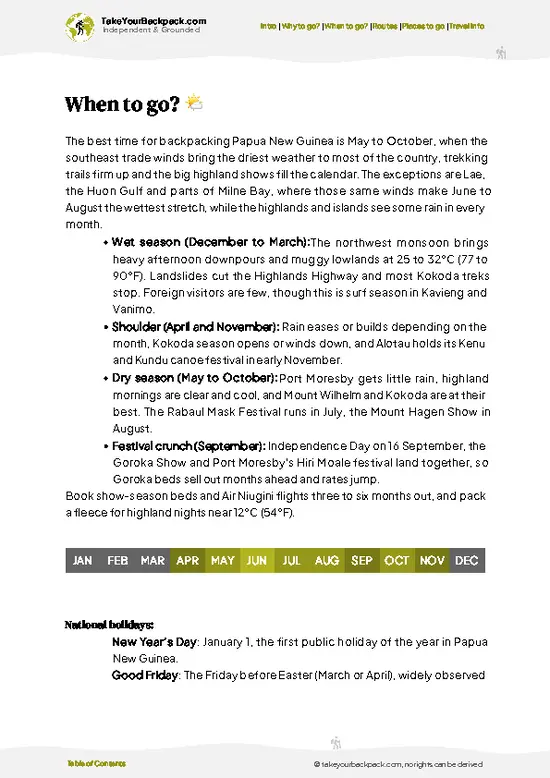
source: climatestotravel.comJANJanuary: fair for travelingFEBFebruary: fair for travelingMARMarch: fair for travelingAPRApril: good for travelingMAYMay: highly recommended for travelingJUNJune: excellent for travelingJULJuly: excellent for travelingAUGAugust: excellent for travelingSEPSeptember: excellent for travelingOCTOctober: highly recommended for travelingNOVNovember: good for travelingDECDecember: fair for traveling
when-to-go

✈️ The backpacker research shortcutPapua New Guinea Travel Guide

An offline-friendly backpacking guide with optimized travel routes, ranked highlights, transport advice, and the best areas to stay.
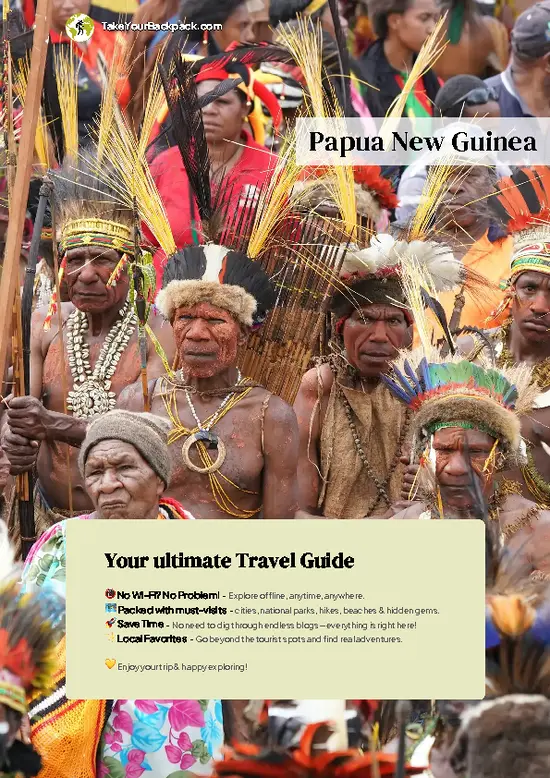
example page 0 from our offline Travel Guide for Papua New Guinea
example page 1 from our offline Travel Guide for Papua New Guinea
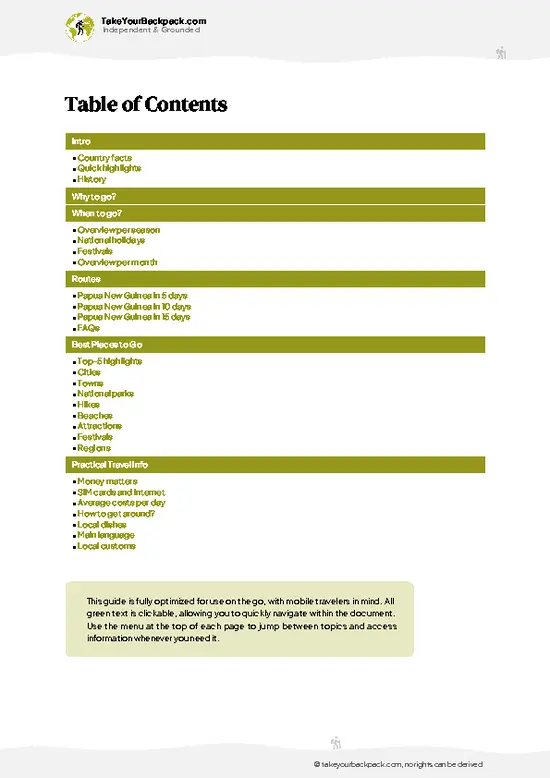
example page 2 from our offline Travel Guide for Papua New Guinea
example page 3 from our offline Travel Guide for Papua New Guinea
example page 4 from our offline Travel Guide for Papua New Guinea
example page 5 from our offline Travel Guide for Papua New Guinea
example page 6 from our offline Travel Guide for Papua New Guinea
example page 7 from our offline Travel Guide for Papua New Guinea
The digital guide (319 pages) contains:
86 highlights, ranked by travel appeal
Optimized 5, 10 & 15-day travel routes
Cities, national parks, landmarks, beaches
How to get around
Offline-friendly for travel without Wi-Fi
👉 Click to see all 30+ guide features

📅 Plan smarter in minutes, not weeks
Month by month travel advice
Festivals & national holidays
Budget expectations

🗺️ Go to the right places, skip the overrated ones
Honest pros & cons of destinations
Top hikes, parks & viewpoints
Lesser-known places most travelers miss
Clear “worth it vs skip it” guidance

🛏️ Travel smoothly without rookie mistakes
Best areas to stay
Transport systems explained simply
Common scams & safety advice
SIM cards, money & practical tips

🌍 Understand the country, not just visit it
Culture & traditions
52 Essential phrases & customs
Festivals worth planning around
Traveler-friendly historical context
Insights that make places more meaningful

📱 Built for real travel conditions
Fully downloadable PDF
Works completely offline
Optimized for phone use
Useful in remote areas & buses
Everything in one place
Save weeks of stressful planning
Get instant access to your full guide. 30‑day money-back guarantee.
+ Add another guide for just US$7.80

By proceeding you agree to our terms.
Sent to your inbox immediately after payment • 100% Secure Checkout
Best Backpacking Travel Advisor 2025 tourism awardBest Backpacking
Travel Advisor
2025
What others say about Take Your Backpack Guides:
⭐⭐⭐⭐⭐
Fantastic, amazing amount of information!
⭐⭐⭐⭐⭐
My goodness this is amazing, it's what I've been looking for hats off too you!
⭐⭐⭐⭐⭐
I think this is absolutely BRILLIANT
⭐⭐⭐⭐
Very complete and informative. It's still missing places, but I gotta to commend you
⭐⭐⭐⭐⭐
This is truly amazing, thank you, can't wait to explore it with my kids!
⭐⭐⭐⭐⭐
Awesome resource, thank you!
⭐⭐⭐⭐⭐
This is amazing! Can't wait to explore the ones I haven't seen
⭐⭐⭐⭐
I love this! Well done, great idea.
⭐⭐⭐⭐⭐
Thanks for taking the time to make this gem!
⭐⭐⭐⭐⭐
This might be the best website I've ever seen.
⭐⭐⭐⭐⭐
Congratulations, and thank you so much for your work; it's incredibly valuable.
⭐⭐⭐⭐
In all seriousness I think you did a great job pointing out the important spots
⭐⭐⭐⭐⭐
10/10 very good
⭐⭐⭐⭐⭐
As someone who's only just starting to visit regularly this is awesome, thank you.
⭐⭐⭐⭐
Thank you very much! I'm going to visit my dad, it's going to be very useful!
⭐⭐⭐⭐⭐
This is really cool! We'll be travelling for the first time and this definitely come in handy.
⭐⭐⭐⭐⭐
You are now our minister of culture, congratulations 👨‍💼
⭐⭐⭐⭐⭐
Just wanted to tell you that this is a pearl! Going to follow your recommendations.
⭐⭐⭐⭐⭐
This is so cool. I'll definitely be using the resource for my travels soon.
⭐⭐⭐⭐⭐
This is very impressive! Good work.
⭐⭐⭐⭐⭐
This is an amazing and informative site. Very well done!

🛏️ Where to stay?Best areas to stay in Papua New Guinea

In Kiunga, the best spot for backpackers is the town center near the riverfront. This area hums with local life—early mornings bring the scent of fresh fish and wet earth, while evenings cool down with chatter from nearby markets. Staying here means you’re within walking distance of basic amenities and the few budget hostels that cater to solo travelers and small groups. It’s not flashy, but the vibe is genuine and social, with travelers swapping stories over shared meals or impromptu games.

Avoid the outskirts where safety and services drop off sharply; the town center’s compact layout makes … read more 👉
In Kiunga, the best spot for backpackers is the town center near the riverfront. This area hums with local life—early mornings bring the scent of fresh fish and wet earth, while evenings cool down with chatter from nearby markets. Staying here means you’re within walking distance of basic amenities and the few budget hostels that cater to solo travelers and small groups. It’s not flashy, but the vibe is genuine and social, with travelers swapping stories over shared meals or impromptu games.

Avoid the outskirts where safety and services drop off sharply; the town center’s compact layout makes it easier to navigate on foot, reducing the need for costly or unreliable transport. This proximity also means you can soak in the raw, unfiltered pulse of Kiunga without feeling isolated or overwhelmed.

🚌 Getting aroundTransportation options and practical tips

Kiunga moves at its own rhythm—less a clock-driven city and more a place where intuition and local know-how shape your day. The air carries a mix of salty river breeze and earth, punctuated by the distant calls of market vendors and the occasional hum of a motorbike. Here, schedules are loose, and the best way to get around is to blend into the flow rather than fight it. You’ll find that patience pays off, and a willingness to ask locals for directions or timing can unlock smoother, faster connections than any timetable ever could.


  • Walking: The heart of Kiunga is compact enough to explore on foot. Walking lets you soak in the humid air, the vibrant street life, and the scent of fresh fish drying in the sun. It’s free, flexible, and often the quickest way to navigate the narrow, uneven
read more 👉
Kiunga moves at its own rhythm—less a clock-driven city and more a place where intuition and local know-how shape your day. The air carries a mix of salty river breeze and earth, punctuated by the distant calls of market vendors and the occasional hum of a motorbike. Here, schedules are loose, and the best way to get around is to blend into the flow rather than fight it. You’ll find that patience pays off, and a willingness to ask locals for directions or timing can unlock smoother, faster connections than any timetable ever could.


  • Walking: The heart of Kiunga is compact enough to explore on foot. Walking lets you soak in the humid air, the vibrant street life, and the scent of fresh fish drying in the sun. It’s free, flexible, and often the quickest way to navigate the narrow, uneven streets where vehicles hesitate.


  • Motorbike Taxis (Boda Bodas): These are the go-to for short hops or when the sun is too fierce. Expect to negotiate fares upfront—usually a few hundred Kenyan shillings. They dart through traffic with agility, cutting your travel time in half compared to walking, but hold on tight; the ride can be bumpy on unpaved roads.


  • Minibus Matatus: For longer trips out of town, matatus offer a budget-friendly option. They run irregularly, often filling up before departure, so arriving early is key. Fares are low, but expect crowded conditions and a stop-and-go pace that lets you watch the town’s outskirts unfold slowly.


  • Boat Transport: Given Kiunga’s location near the river, boats serve as a practical link to nearby villages and fishing spots. They’re slower and weather-dependent but offer a unique perspective on the landscape—watch the light shift on the water and the mangroves sway as you glide along.

👛 Costs (as of 4 September 2026)How expensive it really is

Backpacking in Kiunga, Papua New Guinea, means embracing a raw, off-the-beaten-path vibe where costs stay modest but the experience is rich with local color and rugged charm.
  • Dorm Accommodation: Expect basic guesthouses or lodges with shared rooms, often simple but clean enough. Prices hover around $10 to $20 USD per night. Don’t expect luxury—think mosquito nets, ceiling fans, and the occasional power outage.
  • Meals: Local food is straightforward and filling. Street stalls and small eateries serve up dishes like sago, fish, and root vegetables for about $3 to $6 USD per meal. Western-style meals or imported goods push prices higher, so sticking local saves you cash and delivers authentic flavors.
  • Local Transport: Transport options are limited and rustic—motorcycle taxis or shared pickups
read more 👉
Backpacking in Kiunga, Papua New Guinea, means embracing a raw, off-the-beaten-path vibe where costs stay modest but the experience is rich with local color and rugged charm.
  • Dorm Accommodation: Expect basic guesthouses or lodges with shared rooms, often simple but clean enough. Prices hover around $10 to $20 USD per night. Don’t expect luxury—think mosquito nets, ceiling fans, and the occasional power outage.
  • Meals: Local food is straightforward and filling. Street stalls and small eateries serve up dishes like sago, fish, and root vegetables for about $3 to $6 USD per meal. Western-style meals or imported goods push prices higher, so sticking local saves you cash and delivers authentic flavors.
  • Local Transport: Transport options are limited and rustic—motorcycle taxis or shared pickups dominate. A typical short ride costs around $1 to $3 USD. Longer trips or hiring a vehicle for the day can run $20 to $40 USD, but expect rough roads and slow travel.
  • Basic Activities/Entry Fees: Most local attractions, like village visits or nature walks, have minimal or no entry fees, often under $5 USD. Guided tours, if available, might cost $20 to $30 USD, but these are rare and usually arranged through local contacts.
  • Miscellaneous Expenses: Budget a few dollars for essentials like bottled water, snacks, or phone credit—around $2 to $5 USD daily. Keep cash handy; card payments are rare, and ATMs are scarce.

All told, you’re looking at roughly $20 to $50 USD per day to cover the basics in Kiunga. This range reflects the straightforward lifestyle here—no frills, but enough to keep you comfortable and connected while you soak in the unique atmosphere of this remote Papua New Guinea town.


source: papuanewguinea.travel
⚠️ Prices can change and everyone travels differently, so take this as a rough guide. Hope it helps you plan your adventure!

🚌 Day tripsWhere to go beyond the main area

Kiunga, Papua New Guinea, is a backpacker’s launchpad for unforgettable day trips into the wild heart of the region. The vibrant local culture and stunning landscapes are just a boat ride away.

Lake Murray Adventure
A trip to Lake Murray is like stepping into a postcard. The journey takes about two hours by boat, winding through lush mangroves and spotting local wildlife. Once there, you can swim in the lake’s warm waters or kayak among the floating villages. Bring a packed lunch; the local food stalls can be hit or miss. Expect to spend around 50 PGK for the boat ride and a few extra for snacks. The dry season, from May to October, is ideal for this trip. A common mistake? Underestimating the sun—bring sunscreen and a hat.


Oro Province Cultural Experience
Head to Oro Province for … read more 👉
Kiunga, Papua New Guinea, is a backpacker’s launchpad for unforgettable day trips into the wild heart of the region. The vibrant local culture and stunning landscapes are just a boat ride away.

Lake Murray Adventure
A trip to Lake Murray is like stepping into a postcard. The journey takes about two hours by boat, winding through lush mangroves and spotting local wildlife. Once there, you can swim in the lake’s warm waters or kayak among the floating villages. Bring a packed lunch; the local food stalls can be hit or miss. Expect to spend around 50 PGK for the boat ride and a few extra for snacks. The dry season, from May to October, is ideal for this trip. A common mistake? Underestimating the sun—bring sunscreen and a hat.


Oro Province Cultural Experience
Head to Oro Province for a deep dive into local traditions. It’s about a three-hour boat ride, but the vibrant markets and traditional dances make it worthwhile. You’ll see artisans at work and can even join in on a dance if you’re feeling brave. Budget around 70 PGK for transport and a little more for souvenirs. The best time to visit is during local festivals, which happen throughout the year. Many first-timers miss the chance to interact with locals—don’t be shy; they love sharing their stories.


Tabubil Exploration
A day trip to Tabubil offers a glimpse into the mining industry and its impact on the region. It’s a two-hour drive from Kiunga, and you’ll pass through stunning landscapes. Once there, explore the local market and enjoy a meal at a local eatery. Expect to spend about 60 PGK for transport and food. The dry season is best for clear views. A common pitfall? Not asking locals for tips on where to eat—some of the best meals are off the beaten path.
👉 Explore Tabubil
Want to know what more Papua New Guinea offers?
The Papua New Guinea Travel Guide describes 86 highlights, from cities to national parks, from beaches to hikes

Get the Travel Guide -

🛡️ SafetySafety Tips and Common Scams in Kiunga

Kiunga is generally safe, but awareness is key. Stick to well-lit areas after dark, especially near the waterfront where shadows can play tricks. If you’re solo, blend in—avoid flashy gear that screams “tourist.”

Watch for the occasional friendly face that might ask for a favor; it’s often a prelude to a request for money. Local markets can be bustling, so keep your belongings close and be mindful of your surroundings.

The heat can be oppressive, and the humidity thick, so stay hydrated and take breaks. Embrace the rhythm of the town, and you’ll find that the small annoyances are just part of the experience, not the whole story.

FAQFrequently asked questions about Kiunga

Kiunga is primarily a stopover rather than a destination for extended visits. It serves as a gateway to the Fly River region and nearby wildlife areas but has limited tourist infrastructure. Most travelers pass through on their way to more remote locations.
One to two days are sufficient to explore Kiunga and its immediate surroundings. This allows time to visit local markets, arrange river tours, or explore nearby villages. Staying longer is generally unnecessary unless using it as a base for Fly River excursions.
No, Kiunga cannot be visited as a day trip from a nearby city due to its remote location and limited transport options. The closest major town, Tabubil, is about 3-4 hours away by road, making day trips impractical. Overnight stays are recommended for travel to and from Kiunga.
⚠️ Things can change over time, so always validate details locally before you go.

Other Papua New Guinean towns near Kiunga

Explore more nearby:

  • Tabubil—Ok Tedi mine, rainforest hills, expat community| 95 km away
  • Tari—Huli Wigmen, misty valleys, birdwatching| 186 km away
  • Mount Hagen—mountain backdrop, tribal gatherings, produce markets| 327 km away

💡 Not sure where to go next?
Create a personalized itinerary for Papua New Guinea including Kiunga and the places that fit your trip.

Generate my itinerary

👉 Discover all towns

Or checkout all Papua New Guinea has to offer (think cities, towns, villages, national parks, hikes, beaches, festivals)
Country photo of Papua New Guinea

We 💚 feedbackKey takeaways before you go

Kiunga is raw and real, a place where the air hums with the chatter of locals and the scent of saltwater lingers. The best surprise? The warmth of the community; they’ll share stories that make you feel at home. Just a heads-up: the roads can be rough, so pack patience along with your gear. It’s all part of the adventure.

✍️ Help improve this page!
The information on this page is based on in-depth research, insights shared by experienced travelers, and feedback from the local travel community in Papua New Guinea. While every effort is made to keep the information accurate and current, conditions can change — so if you spot anything incorrect or outdated, please get in touch.


🙋‍♂️ Give feedback

👋 Meet the founderWho’s Behind Take Your Backpack?

Johan, backpacker and founder of TakeYourBackpackHi, I’m Johan (Netherlands 🇳🇱), the creator of TakeYourBackpack. Over the past decade, I’ve backpacked through 80+ countries across six continents, gaining extensive experience with independent travel, long-term trips, and overland routes.

This site is built on a combination of firsthand travel experience and carefully curated insights from other backpackers. Many guides are based on places I’ve personally visited, while others bring together tips, observations, and practical advice shared by trusted travelers I’ve met along the way.

The goal is to provide realistic, experience-driven guidance — not generic itineraries — so you can explore destinations with better context, clearer expectations, and more confidence.

Get full country guide •
Instant download • 86 highlights • Full Offline guide