v2.webp)
- Main Church Ruins (Iglesia Mayor) — The huge, partially intact nave and towering façade are the visual centerpiece: you can still feel the scale of a once-thriving religious and social hub, with light pouring through broken arches in a way that makes the stones feel alive.
- UNESCO World Heritage & Historical Context — Trinidad is one of the best-preserved Jesuit reductions, a rare physical record of the 17th-18th century Jesuit-Guaraní experiment in communal living, education and craft — knowing that story gives the ruins real emotional weight.
- Stone Carvings and Syncretic Art — Look closely at capitals, lintels and altar fragments: you’ll see European baroque forms mixed with Guaraní motifs, a quiet visual conversation between two worlds carved in sandstone.
- Original Urban Layout & Central
- Main Church Ruins (Iglesia Mayor) — The huge, partially intact nave and towering façade are the visual centerpiece: you can still feel the scale of a once-thriving religious and social hub, with light pouring through broken arches in a way that makes the stones feel alive.
- UNESCO World Heritage & Historical Context — Trinidad is one of the best-preserved Jesuit reductions, a rare physical record of the 17th-18th century Jesuit-Guaraní experiment in communal living, education and craft — knowing that story gives the ruins real emotional weight.
- Stone Carvings and Syncretic Art — Look closely at capitals, lintels and altar fragments: you’ll see European baroque forms mixed with Guaraní motifs, a quiet visual conversation between two worlds carved in sandstone.
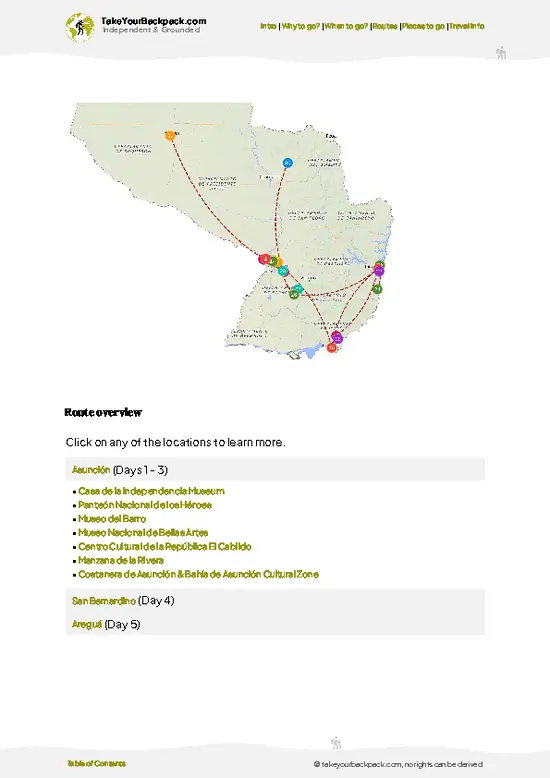
- Original Urban Layout & Central Plaza — The grid of streets and the open plaza survive well enough to read the town plan; it’s an excellent place to picture daily life in a reduction — markets, ceremonies, children playing — rather than just a church ruin.
- Bell Towers and Masonry Details — The twin towers and the craftsmanship in the stonework are striking up close: irregular stones fitted with care, surviving buttresses and window openings that reveal construction techniques of the era.
- Archaeological Remains of Workshops and Houses — Scattered foundations and workshop areas show where craftsmen, blacksmiths and weavers worked; those traces make the site feel like a real community, not just an architectural relic.
- Sunsets, Photography Spots and Local Events — The ruins catch light beautifully at golden hour; plus, when local festivals or music events happen here you get a living culture overlaying the ruins—perfect for photos and feeling connected to the place.
Spotted a mistake or missing something? Contact us.

 Best Backpacking
.jpg) Hi, I’m Johan (Netherlands 🇳🇱), the creator of TakeYourBackpack. Over the past 3 decades, I’ve backpacked through 90+ countries across six continents, gaining extensive experience with independent travel, long-term trips, and overland routes.
Hi, I’m Johan (Netherlands 🇳🇱), the creator of TakeYourBackpack. Over the past 3 decades, I’ve backpacked through 90+ countries across six continents, gaining extensive experience with independent travel, long-term trips, and overland routes.