×

Peru🇵🇪 | festivalsFestival de la Chichafermented corn drink, rural gatherings, traditional brewing | things to do and best time to go

Explore Festival de la Cerveza CusqueñaExplore Choquequirao Trek

Backpacking in de la Chicha
By Johan Kruseman 🇳🇱 | Updated October 20, 2026

Your plastic cup sloshes as the brass band punches another chorus, chicha foam licking your knuckles while wood smoke, sweat, and fermenting corn blur into one thick, sweet-sour cloud. Kids dart between your legs; an abuela shouts over the drums to sell you another bottle. This is the Festival de la Chicha in southern Peru’s Andean highlands, a rough-around-the-edges celebration of corn beer, folk bands, and village pride that pulls mostly locals, a few curious backpackers, and anyone willing to trade clean shoes and quiet nights for loud, muddy, gloriously chaotic fun.

Discover everything you want to know in the 📖 Peru Travel Guide.


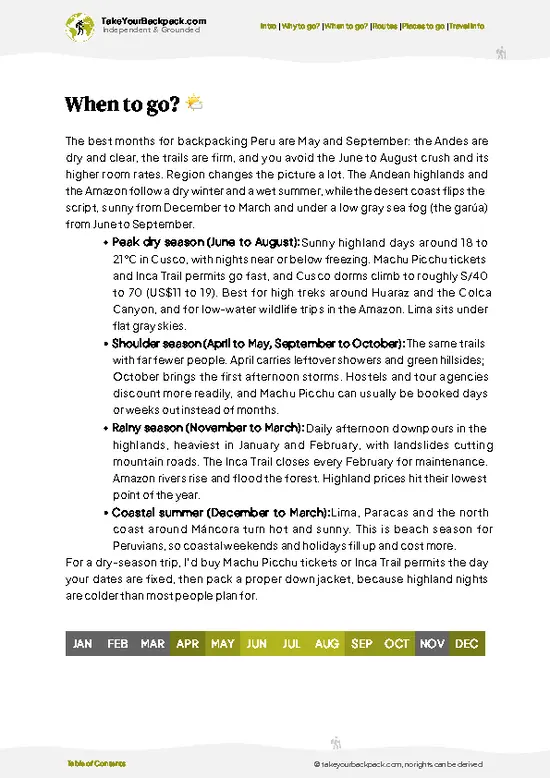
example page 0 from our offline Travel Guide for Peru
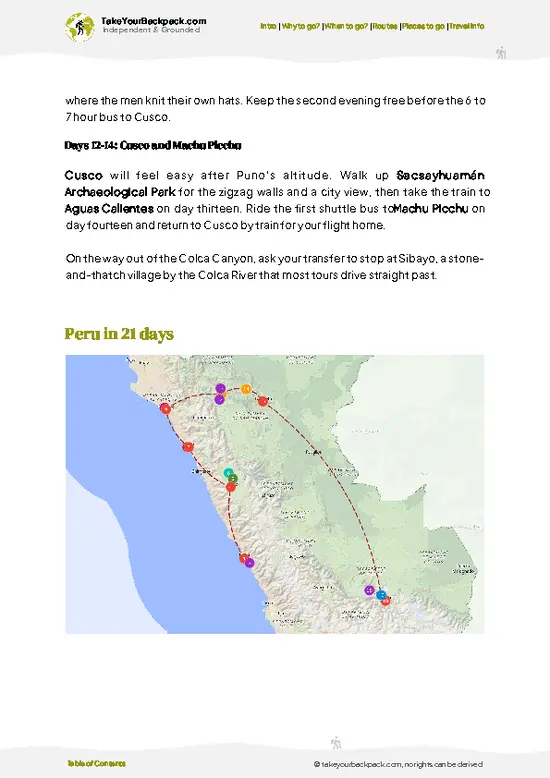
example page 1 from our offline Travel Guide for Peru
example page 2 from our offline Travel Guide for Peru
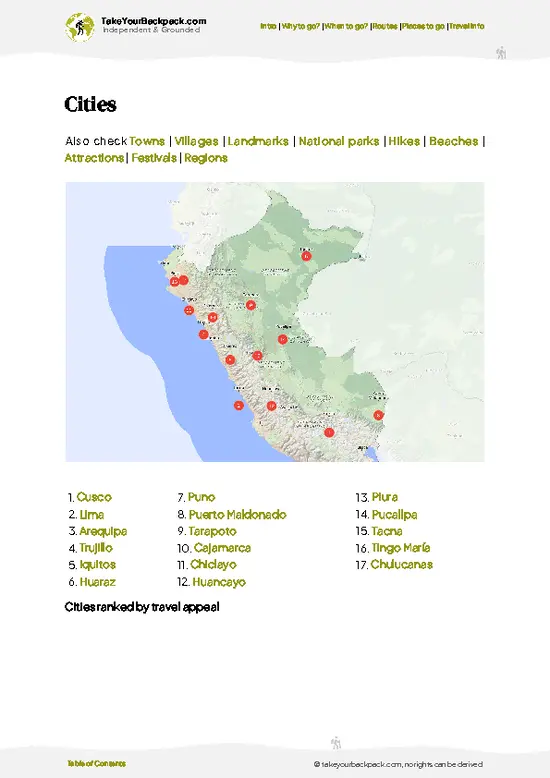
example page 3 from our offline Travel Guide for Peru
example page 4 from our offline Travel Guide for Peru
example page 5 from our offline Travel Guide for Peru
example page 6 from our offline Travel Guide for Peru
example page 7 from our offline Travel Guide for Peru
Loading the map 🌍
CLICK TO FILTER
cities
towns
villages
landmarks
national parks
hikes
beaches
attractions
festivals
regions
SHOW COUNTRY’S BESTSHOW ALL

✨ Why go?
Ranked #99 festival in Peru
The unique appeal for travelers

Backpackers flock to the Festival de la Chicha in Peru for a reason. This isn’t just a party; it’s a temporary community bursting with social energy. Imagine dancing with locals, sharing stories over homemade chicha, and immersing yourself in vibrant traditions. It’s a chance to connect deeply with the culture, far beyond the typical tourist experience.

Planning your route around this festival isn’t just smart; it’s essential. The festival offers affordability compared to similar events, allowing you to stretch your budget for other adventures. Plus, it fits seamlessly into longer travel plans. You can explore the stunning landscapes of the Sacred Valley before diving into the festival’s lively atmosphere.

Don’t overlook the hidden costs of missing out. The festival’s unique experiences … read more 👉
Backpackers flock to the Festival de la Chicha in Peru for a reason. This isn’t just a party; it’s a temporary community bursting with social energy. Imagine dancing with locals, sharing stories over homemade chicha, and immersing yourself in vibrant traditions. It’s a chance to connect deeply with the culture, far beyond the typical tourist experience.

Planning your route around this festival isn’t just smart; it’s essential. The festival offers affordability compared to similar events, allowing you to stretch your budget for other adventures. Plus, it fits seamlessly into longer travel plans. You can explore the stunning landscapes of the Sacred Valley before diving into the festival’s lively atmosphere.

Don’t overlook the hidden costs of missing out. The festival’s unique experiences can recharge your spirit and provide a refreshing break from the grind of travel. Prioritize this event, and you’ll find that the journey becomes as rewarding as the destination itself.

💡 HighlightsTop highlights of de la Chicha

  1. Ripping live chicha bands (my personal favorite) — Loud, sweaty, and impossibly danceable: electric guitars drenched in reverb, vintage organs, and high-energy percussion turning Andean melodies into a tropical cumbia blast. The mix of surfy guitar solos and folk riffs is what makes chicha instantly addictive and different from any other Latin sound you’ll hear.
  2. Communal dancing and sing-alongs — Expect a crowd that doesn’t just watch music — they join it. Generations dance together, people teach you the steps, and the whole place becomes a single rolling party with call-and-response choruses and plenty of spontaneous choreography.
  3. Chicha tastings and street-food alley — The festival links the music to the drink: sample different chicha de jora brews (and the sweeter chicha morada), often
… read more 👉
  1. Ripping live chicha bands (my personal favorite) — Loud, sweaty, and impossibly danceable: electric guitars drenched in reverb, vintage organs, and high-energy percussion turning Andean melodies into a tropical cumbia blast. The mix of surfy guitar solos and folk riffs is what makes chicha instantly addictive and different from any other Latin sound you’ll hear.
  2. Communal dancing and sing-alongs — Expect a crowd that doesn’t just watch music — they join it. Generations dance together, people teach you the steps, and the whole place becomes a single rolling party with call-and-response choruses and plenty of spontaneous choreography.
  3. Chicha tastings and street-food alley — The festival links the music to the drink: sample different chicha de jora brews (and the sweeter chicha morada), often straight from samplers or communal jars. Food stalls sell the greasy, perfect pairings — think skewers and fried snacks — so you can dance without ever leaving the flavor loop.
  4. Retro visuals, posters, and record stalls — Hand-painted banners, neon-faded concert posters, and vendors hawking vinyl and old cassettes give the event a wonderfully analogue feel. If you like digging for obscure pressings or picking up a vintage band tee, this part feels like a flea market for music nerds.
  5. Workshops, oral history, and instrument showcases — Beyond the party there are panels and informal talks about chicha’s working-class roots and cultural meaning, plus demonstrations on how those signature guitar/organ sounds are made. It’s a neat way to connect the fun to the history — short, hands-on, and usually led by people who actually lived the scene.
Spotted a mistake or missing something? Contact us.

Things to do around Festival de la Chicha

Ratings based on Tripadvisor reviews. When you book through this link, you support our work at no extra cost to you.

🌤️ When to go?When is the celebration of Festival de la Chicha?

  • Topic: Weather - The Festival de la Chicha thrives in Peru’s dry season, May to September. Expect clear skies and minimal rain, perfect for trekking and outdoor celebrations without soggy gear weighing you down.
  • Topic: Temperature - Days hover around 18-22°C (64-72°F), cool but comfortable. Nights dip to 5-8°C (41-46°F), so pack layers to stay warm after sunset when the party heats down.
  • Topic: Daylight Hours - With roughly 11-12 hours of daylight, you get ample time to explore the festival and surrounding landscapes before nightfall.
  • Topic: Crowds - Peak festival days draw local and regional visitors, so expect lively but manageable crowds. Arriving early in the dry season helps you avoid the thickest throngs and snag better accommodations.
  • Topic: Seasonal Activities - The dry season
… read more 👉
  • Topic: Weather - The Festival de la Chicha thrives in Peru’s dry season, May to September. Expect clear skies and minimal rain, perfect for trekking and outdoor celebrations without soggy gear weighing you down.
  • Topic: Temperature - Days hover around 18-22°C (64-72°F), cool but comfortable. Nights dip to 5-8°C (41-46°F), so pack layers to stay warm after sunset when the party heats down.
  • Topic: Daylight Hours - With roughly 11-12 hours of daylight, you get ample time to explore the festival and surrounding landscapes before nightfall.
  • Topic: Crowds - Peak festival days draw local and regional visitors, so expect lively but manageable crowds. Arriving early in the dry season helps you avoid the thickest throngs and snag better accommodations.
  • Topic: Seasonal Activities - The dry season aligns with harvest time, so you’ll catch authentic chicha tastings and traditional dances at their freshest and most vibrant.
  • Topic: Price Fluctuations - Prices for lodging and transport spike during the festival’s core days. Booking ahead or arriving just before the main events can save you serious soles.
Pro-tip: Aim for early dry season visits to dodge rain, crowds, and inflated costs—keeping your energy and wallet intact for the moments that truly count.


source: climatestotravel.comJANJanuary: not recommended for travelingFEBFebruary: not recommended for travelingMARMarch: not recommended for travelingAPRApril: not recommended for travelingMAYMay: excellent for travelingJUNJune: not recommended for travelingJULJuly: not recommended for travelingAUGAugust: not recommended for travelingSEPSeptember: not recommended for travelingOCTOctober: not recommended for travelingNOVNovember: not recommended for travelingDECDecember: not recommended for traveling

✈️ The backpacker research shortcutPeru Travel Guide

An offline-friendly backpacking guide with optimized travel routes, ranked highlights, transport advice, and the best areas to stay.
example page 0 from our offline Travel Guide for Peru
example page 1 from our offline Travel Guide for Peru
example page 2 from our offline Travel Guide for Peru
example page 3 from our offline Travel Guide for Peru
example page 4 from our offline Travel Guide for Peru
example page 5 from our offline Travel Guide for Peru
example page 6 from our offline Travel Guide for Peru
example page 7 from our offline Travel Guide for Peru
The digital guide (310 pages) contains:
✅ 102 highlights, ranked by travel appeal
✅ Optimized 7, 14 & 21-day travel routes
✅ Cities, national parks, landmarks, beaches
✅ How to get around
✅ Offline-friendly for travel without Wi-Fi
👉 Click to see all 30+ guide features

📅 Plan smarter in minutes, not weeks
✅ Month by month travel advice
✅ Festivals & national holidays
✅ Budget expectations

🗺️ Go to the right places, skip the overrated ones
✅ Honest pros & cons of destinations
✅ Top hikes, parks & viewpoints
✅ Lesser-known places most travelers miss
✅ Clear “worth it vs skip it” guidance

🛏️ Travel smoothly without rookie mistakes
✅ Best areas to stay
✅ Transport systems explained simply
✅ Common scams & safety advice
✅ SIM cards, money & practical tips

🌍 Understand the country, not just visit it
✅ Culture & traditions
✅ 52 Essential phrases & customs
✅ Festivals worth planning around
✅ Traveler-friendly historical context
✅ Insights that make places more meaningful

📱 Built for real travel conditions
✅ Fully downloadable PDF
✅ Works completely offline
✅ Optimized for phone use
✅ Useful in remote areas & buses
✅ Everything in one place
Stop searching, start planning
Get instant access to your full guide. 30‑day money-back guarantee.
+ Add another guide for just

By proceeding you agree to our terms.
Sent to your inbox immediately after payment • 100% Secure Checkout
Best Backpacking Travel Advisor 2025 tourism awardBest Backpacking
Travel Advisor
2025
What others say about Take Your Backpack Guides:
⭐⭐⭐⭐⭐
Fantastic, amazing amount of information!
⭐⭐⭐⭐⭐
My goodness this is amazing, it's what I've been looking for hats off too you!
⭐⭐⭐⭐⭐
I think this is absolutely BRILLIANT
⭐⭐⭐⭐
Very complete and informative. It's still missing places, but I gotta to commend you
⭐⭐⭐⭐⭐
This is truly amazing, thank you, can't wait to explore it with my kids!
⭐⭐⭐⭐⭐
Awesome resource, thank you!
⭐⭐⭐⭐⭐
This is amazing! Can't wait to explore the ones I haven't seen
⭐⭐⭐⭐
I love this! Well done, great idea.
⭐⭐⭐⭐⭐
Thanks for taking the time to make this gem!
⭐⭐⭐⭐⭐
This might be the best website I've ever seen.
⭐⭐⭐⭐⭐
Congratulations, and thank you so much for your work; it's incredibly valuable.
⭐⭐⭐⭐
In all seriousness I think you did a great job pointing out the important spots
⭐⭐⭐⭐⭐
10/10 very good
⭐⭐⭐⭐⭐
As someone who's only just starting to visit regularly this is awesome, thank you.
⭐⭐⭐⭐
Thank you very much! I'm going to visit my dad, it's going to be very useful!
⭐⭐⭐⭐⭐
This is really cool! We'll be travelling for the first time and this definitely come in handy.
⭐⭐⭐⭐⭐
You are now our minister of culture, congratulations 👨‍💼
⭐⭐⭐⭐⭐
Just wanted to tell you that this is a pearl! Going to follow your recommendations.
⭐⭐⭐⭐⭐
This is so cool. I'll definitely be using the resource for my travels soon.
⭐⭐⭐⭐⭐
This is very impressive! Good work.
⭐⭐⭐⭐⭐
This is an amazing and informative site. Very well done!

🛏️ Where to stay?How to pick the right area

When you’re gearing up for the Festival de la Chicha in Peru, your choice of where to stay can make or break your experience. Head straight to the heart of the action in the vibrant neighborhoods of Ayacucho. This area buzzes with energy, especially during the festival. You’ll find a mix of budget-friendly hostels and guesthouses that cater to solo travelers and backpackers.

Look for spots near the main square; they’re not just convenient but also social hubs. You’ll meet fellow adventurers, swap stories, and maybe even find a festival buddy. Safety is key, so stick to well-lit streets and populated … read more 👉
When you’re gearing up for the Festival de la Chicha in Peru, your choice of where to stay can make or break your experience. Head straight to the heart of the action in the vibrant neighborhoods of Ayacucho. This area buzzes with energy, especially during the festival. You’ll find a mix of budget-friendly hostels and guesthouses that cater to solo travelers and backpackers.

Look for spots near the main square; they’re not just convenient but also social hubs. You’ll meet fellow adventurers, swap stories, and maybe even find a festival buddy. Safety is key, so stick to well-lit streets and populated areas.

Another option is Huamanga, just a short walk from the festival grounds. It’s a bit quieter but still offers a friendly vibe. You can recharge after a day of festivities and enjoy local eateries without breaking the bank.

Choose wisely, and you’ll preserve your energy and budget for the real magic of the festival.

👛 Costs (as of 20 October 2026)How expensive it really is

The Festival de la Chicha in Peru is a vibrant celebration, but navigating the costs can feel like a maze. Here’s a breakdown to keep your budget in check and your energy focused on the fun.
  • Festival Tickets: Expect to pay around $10 to $30 for a day pass. Prices can vary based on the day and events. Secure your tickets early to avoid last-minute price hikes.
  • Accommodation: Options range from budget hostels at $10 to $20 per night to mid-range hotels costing $40 to $80. Book ahead, especially during the festival, to dodge inflated prices.
  • Local Transport: Budget about $5 to $15 for public transport or shared taxis within the city. If you’re venturing further, consider allocating $20 to $50 for longer rides or private transport.
  • Food & Drinks: Street food is your friend here. You can grab a meal
… read more 👉
The Festival de la Chicha in Peru is a vibrant celebration, but navigating the costs can feel like a maze. Here’s a breakdown to keep your budget in check and your energy focused on the fun.
  • Festival Tickets: Expect to pay around $10 to $30 for a day pass. Prices can vary based on the day and events. Secure your tickets early to avoid last-minute price hikes.
  • Accommodation: Options range from budget hostels at $10 to $20 per night to mid-range hotels costing $40 to $80. Book ahead, especially during the festival, to dodge inflated prices.
  • Local Transport: Budget about $5 to $15 for public transport or shared taxis within the city. If you’re venturing further, consider allocating $20 to $50 for longer rides or private transport.
  • Food & Drinks: Street food is your friend here. You can grab a meal for $3 to $7. If you prefer sit-down restaurants, expect to spend $10 to $20 per meal. Don’t forget to try the local chicha!
  • Miscellaneous Expenses: Set aside $20 to $50 for souvenirs, tips, or unexpected costs. It’s always wise to have a little cushion for those spontaneous moments.

Stay sharp, plan ahead, and you’ll have the energy and budget to dive into the festival’s vibrant atmosphere without a hitch.


source: peru.travel
⚠️ Prices can change and everyone travels differently, so take this as a rough guide. Hope it helps you plan your adventure!

🍲 FoodWhat to Eat & Drink

At the Festival de la Chicha in Peru, your taste buds are in for a wild ride. Dive into local specialties like anticuchos—grilled skewers of marinated beef heart that pack a punch. Pair that with pachamanca, a traditional dish cooked underground with hot stones, bursting with flavor.

Don’t skip the chicha morada, a sweet, purple corn drink that’s as refreshing as it is unique. If you’re feeling adventurous, try the fermented version, chicha de jora; it’s a rite of passage here.

Expect bustling festival stalls where sharing is part of the experience. Grab a plate, and don’t be shy about offering a taste to your fellow festival-goers. Lines can get long, so be patient and enjoy the vibrant atmosphere. Cash is king here; many vendors don’t accept cards, so stock up before you dive in.

Serving … read more 👉
At the Festival de la Chicha in Peru, your taste buds are in for a wild ride. Dive into local specialties like anticuchos—grilled skewers of marinated beef heart that pack a punch. Pair that with pachamanca, a traditional dish cooked underground with hot stones, bursting with flavor.

Don’t skip the chicha morada, a sweet, purple corn drink that’s as refreshing as it is unique. If you’re feeling adventurous, try the fermented version, chicha de jora; it’s a rite of passage here.

Expect bustling festival stalls where sharing is part of the experience. Grab a plate, and don’t be shy about offering a taste to your fellow festival-goers. Lines can get long, so be patient and enjoy the vibrant atmosphere. Cash is king here; many vendors don’t accept cards, so stock up before you dive in.

Serving sizes are generous, so pace yourself. This festival isn’t just about eating; it’s about connecting with the culture. Embrace the flavors, the people, and the rhythm of the celebration.

FAQFrequently asked questions about de la Chicha

Festival de la Chicha takes place annually in late August. It usually lasts for about three days. The exact dates can vary slightly each year depending on local scheduling.
The cost to attend Festival de la Chicha is generally low or free for most events. Some special concerts or activities may charge around 10 to 20 Peruvian soles. Budget around 15 soles for entry fees if you want to join all main events.
Tickets in advance are not usually required for the general festival activities. However, for specific concerts or popular events within the festival, buying tickets ahead is recommended. This helps avoid last-minute availability issues, especially during peak festival days.
⚠️ Things can change over time, so always validate details locally before you go.

Other Peruvian festivals near de la Chicha

Explore more nearby:


💡 Not sure where to go next?
Create a personalized itinerary for Peru including de la Chicha and the places that fit your trip.

Generate my itinerary

👉 Discover all festivals

Or checkout all Peru has to offer (think cities, towns, villages, national parks, hikes, beaches, festivals)
Country photo of Peru

We 💚 feedbackKey takeaways before you go

Festival de la Chicha is a wild celebration of culture and community, where the music pulses through your veins and the local flavors explode on your palate. But beware: the crowds can be overwhelming, especially if you’re not a fan of tight spaces. Embrace the chaos, though; it’s part of the experience. Just keep your energy for the dance floor, where the real magic happens.

✈️ When did I visit Peru?
Peru I visited during my half year trip through South and Central America back in 2003

✍️ Help improve this page!
The information on this page is based on my own backpacking experience in Peru, supplemented with up-to-date research and feedback from other travelers. Travel details can change, so if you notice anything outdated or incomplete, feel free to let me know.


🙋‍♂️ Give feedback

👋 Meet the founderWho’s Behind Take Your Backpack?

Johan, backpacker and founder of TakeYourBackpackHi, I’m Johan (Netherlands 🇳🇱), the creator of TakeYourBackpack. Over the past 3 decades, I’ve backpacked through 90+ countries across six continents, gaining extensive experience with independent travel, long-term trips, and overland routes.

This site is built on a combination of firsthand travel experience and carefully curated insights from other backpackers. Many guides are based on places I’ve personally visited, while others bring together tips, observations, and practical advice shared by trusted travelers I’ve met along the way.

The goal is to provide realistic, experience-driven guidance — not generic itineraries — so you can explore destinations with better context, clearer expectations, and more confidence.