

×

Peru🇵🇪 | hikesChoquequirao Trekremote ruins, steep switchbacks, cloud forest | things to do and best time to go

Explore Festival de la ChichaExplore Colca Canyon

Backpacking in Choquequirao Trek
🏆 Top pickhike ranked #3
By Johan Kruseman 🇳🇱 | Updated June 8, 2026

Most blogs sell Choquequirao as “Machu Picchu without the crowds,” but the real shock is this: the ruins are only half the reward—the trail itself is the main event, and it’s brutally good. Choquequirao Trek sits in southern Peru, in the Apurímac canyon west of Cusco, hanging above a river that feels a mile straight down. You drop and climb thousands of meters over 4–5 days, staring at dry, baking canyon walls one hour and cloud forest the next. It’s tougher than the classic Inca Trail, closer in grind to Salkantay but with far fewer people and almost no infrastructure. Public transport gets you most of the way—Cusco to Cachora or Capuliyoc by bus and colectivo—then your legs do the rest. The downside: repetitive switchbacks, punishing heat, and basic camps. The upside: you walk into a vast, quiet citadel and share it with maybe a dozen dusty, grinning strangers.

Discover everything you want to know in the 📖 Peru Travel Guide.
Best time to go: May - September
Duration: 4 to 6 days
Distance: 62 kilometers
Total ascent: 1,800 meters


Get your Peru guide
118 ranked highlights, routes & tips, works offline (442 pages)
Loading the map 🌍
CLICK TO FILTER
cities
towns
villages
landmarks
national parks
hikes
beaches
attractions
festivals
regions
SHOW COUNTRY’S BESTSHOW ALL

✨ Why go?
Ranked #3 hike in Peru
What makes it a must-see hike

The Choquequirao Trek is a magnet for backpackers craving adventure. It’s not just about the scenery-to-effort ratio—though that’s a big draw. Picture steep, rugged trails that wind through lush valleys, with every turn revealing jaw-dropping vistas of the Andes. You’re not just hiking; you’re immersed in a living postcard.

Accessing the trek is a breeze. Public transport whisks you from Cusco to the trailhead, making it easy to jump in without breaking the bank. The low cost of permits and camping means you can stretch your budget while still enjoying the thrill of the journey.

What’s more, the trek offers flexible distances. Whether you’re a seasoned pro or a newbie, you can tailor your days to match your energy levels. And it seamlessly fits into a longer backpacking route through Peru, … read more 👉
The Choquequirao Trek is a magnet for backpackers craving adventure. It’s not just about the scenery-to-effort ratio—though that’s a big draw. Picture steep, rugged trails that wind through lush valleys, with every turn revealing jaw-dropping vistas of the Andes. You’re not just hiking; you’re immersed in a living postcard.

Accessing the trek is a breeze. Public transport whisks you from Cusco to the trailhead, making it easy to jump in without breaking the bank. The low cost of permits and camping means you can stretch your budget while still enjoying the thrill of the journey.

What’s more, the trek offers flexible distances. Whether you’re a seasoned pro or a newbie, you can tailor your days to match your energy levels. And it seamlessly fits into a longer backpacking route through Peru, allowing you to explore more without feeling rushed.

At the end of the day, reaching the ancient ruins of Choquequirao is a reward like no other—a moment where sweat meets satisfaction, and the views are worth every step.
Want to include Choquequirao Trek in your Peru route?
Create a personalized Peru itinerary that includes Choquequirao Trek and the places that fit your trip — based on your travel style, budget, and available time. Get your route in seconds.

Generate my trip

💡 HighlightsEssential experiences to have while hiking the Choquequirao Trek

  1. Choquequirao ruins — The reason you’re on this trail: huge, multi-tiered Inca terraces, plazas and carved stonework carved into a steep ridge. It feels like Machu Picchu’s bigger, quieter cousin — same craft, way fewer people — which gives you space to wander and imagine how the site functioned without the crowds.
  2. Apurímac Canyon views from Capuliyoc — A jaw-dropping look down into one of the deepest canyons in South America. The trail drops sharply here and the panorama of layered ridges, river below and distant peaks is the kind of viewpoint other hikes only brag about. Light at golden hour is especially dramatic.
  3. Sunrise over the ruins (personal favorite) — Getting up early, climbing to the higher mirador and watching dawn hit the terraces is what sticks with most people. The ruins
read more 👉
  1. Choquequirao ruins — The reason you’re on this trail: huge, multi-tiered Inca terraces, plazas and carved stonework carved into a steep ridge. It feels like Machu Picchu’s bigger, quieter cousin — same craft, way fewer people — which gives you space to wander and imagine how the site functioned without the crowds.
  2. Apurímac Canyon views from Capuliyoc — A jaw-dropping look down into one of the deepest canyons in South America. The trail drops sharply here and the panorama of layered ridges, river below and distant peaks is the kind of viewpoint other hikes only brag about. Light at golden hour is especially dramatic.
  3. Sunrise over the ruins (personal favorite) — Getting up early, climbing to the higher mirador and watching dawn hit the terraces is what sticks with most people. The ruins glow, mist slides out of the canyon and you’ve basically got a private theater of light — peaceful, small crowds, and absolutely worth the chill and early alarm.
  4. Cloud-forest biodiversity — The trail moves through dry puna into cloud forest pockets: orchids, moss-draped trees, colorful hummingbirds and the occasional spectacle of butterflies and bromeliads. It’s a quiet, species-rich stretch that makes the trek feel like a mini naturalist trip as well as a cultural one.
  5. River descent & remote trail life — The steep drop to the Apurímac river, the switchbacked trails, riverside camps and small Quechua hamlets you pass on the way give the trek a real sense of remoteness. You’ll notice changing ecosystems, traditional agriculture and a slower pace of life — that human element separates Choquequirao from more commercial routes.
Spotted a mistake or missing something? Contact us.

Things to do near Choquequirao Trek

Ratings based on Tripadvisor reviews. When you book through this link, you support our work at no extra cost to you.

🌤️ When to go?Choosing the right time of year


  • Weather: Dry season from May to September is your best bet—clear skies and minimal rain make the trail manageable. The wet season (October to April) turns paths slippery and rivers unpredictable, adding unnecessary risk.

  • Temperature: Daytime highs hover around 18-22°C (64-72°F), perfect for trekking without overheating. Nights drop sharply to 0-5°C (32-41°F), so pack layers for chilly camps.

  • Daylight Hours: Around 11-12 hours of daylight year-round, but the dry season offers more consistent sunny mornings, letting you hit the trail early and avoid afternoon clouds or showers.

  • Crowds: Choquequirao is still off the beaten path, but dry season draws more trekkers. Expect solitude compared to Machu Picchu, but plan ahead to secure guides and campsites during peak months.

  • Seasonal Activities:
read more 👉

  • Weather: Dry season from May to September is your best bet—clear skies and minimal rain make the trail manageable. The wet season (October to April) turns paths slippery and rivers unpredictable, adding unnecessary risk.

  • Temperature: Daytime highs hover around 18-22°C (64-72°F), perfect for trekking without overheating. Nights drop sharply to 0-5°C (32-41°F), so pack layers for chilly camps.

  • Daylight Hours: Around 11-12 hours of daylight year-round, but the dry season offers more consistent sunny mornings, letting you hit the trail early and avoid afternoon clouds or showers.

  • Crowds: Choquequirao is still off the beaten path, but dry season draws more trekkers. Expect solitude compared to Machu Picchu, but plan ahead to secure guides and campsites during peak months.

  • Seasonal Activities: Harvest time in late dry season brings local festivals and fresh produce, adding cultural flavor to your trek. Avoid the wet season when landslides can shut down access.

  • Price Fluctuations: Dry season commands higher prices for guides and gear rentals. Booking early can lock in better rates; off-season deals exist but come with weather trade-offs.


Pro-tip: Start your trek early in the dry season—May or June—when the trail is firm, the air is crisp, and the crowds are just waking up. That’s when the climb feels like a personal conquest, not a slog.


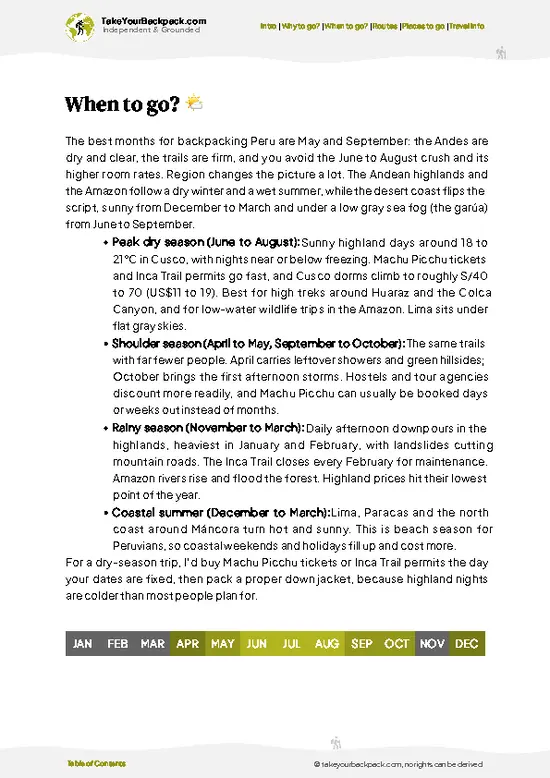
source: climatestotravel.comJANJanuary: fair for travelingFEBFebruary: below average for travelingMARMarch: fair for travelingAPRApril: fair for travelingMAYMay: excellent for travelingJUNJune: excellent for travelingJULJuly: excellent for travelingAUGAugust: excellent for travelingSEPSeptember: highly recommended for travelingOCTOctober: fair for travelingNOVNovember: fair for travelingDECDecember: fair for traveling
peru-hike-choquequirao-trek
© Google | Tilman Giese

✈️ The backpacker research shortcutPeru Travel Guide

An offline-friendly backpacking guide with optimized travel routes, ranked highlights, transport advice, and the best areas to stay.
example page 0 from our offline Travel Guide for Peru
example page 1 from our offline Travel Guide for Peru
example page 2 from our offline Travel Guide for Peru
example page 3 from our offline Travel Guide for Peru
example page 4 from our offline Travel Guide for Peru
example page 5 from our offline Travel Guide for Peru
example page 6 from our offline Travel Guide for Peru
example page 7 from our offline Travel Guide for Peru
The digital guide (442 pages) contains:
118 highlights, ranked by travel appeal
Optimized 7, 14 & 21-day travel routes
Cities, national parks, landmarks, beaches
How to get around
Offline-friendly for travel without Wi-Fi
👉 Click to see all 30+ guide features

📅 Plan smarter in minutes, not weeks
Month by month travel advice
Festivals & national holidays
Budget expectations

🗺️ Go to the right places, skip the overrated ones
Honest pros & cons of destinations
Top hikes, parks & viewpoints
Lesser-known places most travelers miss
Clear “worth it vs skip it” guidance

🛏️ Travel smoothly without rookie mistakes
Best areas to stay
Transport systems explained simply
Common scams & safety advice
SIM cards, money & practical tips

🌍 Understand the country, not just visit it
Culture & traditions
52 Essential phrases & customs
Festivals worth planning around
Traveler-friendly historical context
Insights that make places more meaningful

📱 Built for real travel conditions
Fully downloadable PDF
Works completely offline
Optimized for phone use
Useful in remote areas & buses
Everything in one place
Save weeks of stressful planning
Get instant access to your full guide. 30‑day money-back guarantee.


By proceeding you agree to our terms.
Sent to your inbox immediately after payment • 100% Secure Checkout
Best Backpacking Travel Advisor 2025 tourism awardBest Backpacking
Travel Advisor
2025
What others say about Take Your Backpack Guides:
⭐⭐⭐⭐⭐
Fantastic, amazing amount of information!
⭐⭐⭐⭐⭐
My goodness this is amazing, it's what I've been looking for hats off too you!
⭐⭐⭐⭐⭐
I think this is absolutely BRILLIANT
⭐⭐⭐⭐
Very complete and informative. It's still missing places, but I gotta to commend you
⭐⭐⭐⭐⭐
This is truly amazing, thank you, can't wait to explore it with my kids!
⭐⭐⭐⭐⭐
Awesome resource, thank you!
⭐⭐⭐⭐⭐
This is amazing! Can't wait to explore the ones I haven't seen
⭐⭐⭐⭐
I love this! Well done, great idea.
⭐⭐⭐⭐⭐
Thanks for taking the time to make this gem!
⭐⭐⭐⭐⭐
This might be the best website I've ever seen.
⭐⭐⭐⭐⭐
Congratulations, and thank you so much for your work; it's incredibly valuable.
⭐⭐⭐⭐
In all seriousness I think you did a great job pointing out the important spots
⭐⭐⭐⭐⭐
10/10 very good
⭐⭐⭐⭐⭐
As someone who's only just starting to visit regularly this is awesome, thank you.
⭐⭐⭐⭐
Thank you very much! I'm going to visit my dad, it's going to be very useful!
⭐⭐⭐⭐⭐
This is really cool! We'll be travelling for the first time and this definitely come in handy.
⭐⭐⭐⭐⭐
You are now our minister of culture, congratulations 👨‍💼
⭐⭐⭐⭐⭐
Just wanted to tell you that this is a pearl! Going to follow your recommendations.
⭐⭐⭐⭐⭐
This is so cool. I'll definitely be using the resource for my travels soon.
⭐⭐⭐⭐⭐
This is very impressive! Good work.
⭐⭐⭐⭐⭐
This is an amazing and informative site. Very well done!

🛏️ Where to stay?Where staying makes the most sense

If you enjoy meeting fellow travelers, consider choosing hostels with high ratings for atmosphere. On the other hand, if you prefer having your own space, a hotel might be a better option.

🥾 Hike detailsEverything you need to know before hiking Choquequirao Trek

Total Distance: The Choquequirao Trek spans about 62 kilometers (around 38 miles) round trip. It’s not a stroll in the park, but the payoff is worth every step.

Estimated Duration: Most hikers take about 4 to 5 days to complete the trek. This gives you time to soak in the views and explore the ruins without racing against the clock.

Difficulty Level: This trail is considered challenging. Expect steep ascents and descents, and be prepared for some rugged terrain. Good fitness and acclimatization to the altitude are key.

Starting Point: The trek kicks off from a small village called Cachora.
  • Getting
read more 👉
Total Distance: The Choquequirao Trek spans about 62 kilometers (around 38 miles) round trip. It’s not a stroll in the park, but the payoff is worth every step.

Estimated Duration: Most hikers take about 4 to 5 days to complete the trek. This gives you time to soak in the views and explore the ruins without racing against the clock.

Difficulty Level: This trail is considered challenging. Expect steep ascents and descents, and be prepared for some rugged terrain. Good fitness and acclimatization to the altitude are key.

Starting Point: The trek kicks off from a small village called Cachora.
  • Getting There: You can catch a bus or shared taxi from Cusco to Cachora, which takes about 3 to 4 hours. Buses leave from the main terminal, and it’s a good idea to leave early to maximize your day.

Major Landmarks Along the Route:
  • Choquequirao Ruins: The highlight of the trek, these impressive Incan ruins are often less crowded than Machu Picchu, giving you a chance to explore in relative peace.
  • Mirador de Choquequirao: A stunning viewpoint that offers breathtaking vistas of the Apurímac Canyon and the surrounding mountains.
  • Santa Rosa: A small village where you can find basic supplies and interact with local communities.

Type of Terrain and Scenery: The trail features a mix of steep, rocky paths, lush valleys, and high-altitude landscapes. You’ll encounter both dry and humid sections, with some parts feeling like you’re in a jungle while others are more arid. The views are jaw-dropping, with mountains and valleys stretching as far as the eye can see.

Typical Vegetation and Wildlife: Expect to see a variety of plant life, from cacti to lush ferns as you ascend and descend.
  • Vegetation: The lower elevations are rich with tropical plants, while higher up, you’ll find more hardy shrubs and grasses.
  • Wildlife: Keep an eye out for Andean condors soaring overhead and the occasional deer or other wildlife. If you’re lucky, you might spot some unique bird species endemic to the region.

This trek demands respect and preparation, but if you’re up for the challenge, it’s an unforgettable adventure!
⚠️ Hiking info can sometimes be outdated or inaccurate. Before you hit the trail, check the latest conditions with locals. If you do spot anything that's off, I'd love to hear from you, so I can update it for fellow travelers.

🛡️ SafetyScams, Hazards, and Annoyances

The Choquequirao Trek is a wild ride, but it’s manageable with the right mindset. Expect steep ascents and descents that will test your legs and lungs. The trail can be slippery after rain, so sturdy footwear is a must. Navigation is straightforward, but keep an eye on trail markers; they can be sparse in places.

Weather can shift quickly. Mornings might greet you with sunshine, but don’t be surprised by afternoon showers. Layering is key—pack a light rain jacket and quick-dry clothes.

Wildlife encounters are part of the charm. You might spot a condor soaring overhead or a curious llama. Keep your distance and don’t feed them; they’re part of the ecosystem, not your hiking buddies.

Prepare for altitude; acclimatization is crucial. Take it slow, drink plenty of water, and savor the views. … read more 👉
The Choquequirao Trek is a wild ride, but it’s manageable with the right mindset. Expect steep ascents and descents that will test your legs and lungs. The trail can be slippery after rain, so sturdy footwear is a must. Navigation is straightforward, but keep an eye on trail markers; they can be sparse in places.

Weather can shift quickly. Mornings might greet you with sunshine, but don’t be surprised by afternoon showers. Layering is key—pack a light rain jacket and quick-dry clothes.

Wildlife encounters are part of the charm. You might spot a condor soaring overhead or a curious llama. Keep your distance and don’t feed them; they’re part of the ecosystem, not your hiking buddies.

Prepare for altitude; acclimatization is crucial. Take it slow, drink plenty of water, and savor the views. The reward? Reaching Choquequirao’s ruins, where history and nature collide in a breathtaking panorama.

Other Peruvian hikes near Choquequirao Trek

Explore more nearby:

  • Huchuy Qosqo Trek—Inca terraces, rolling hills, quiet ruins| 6 km away
  • Lares Trek—highland villages, weaving traditions, alpaca herds| 36 km away
  • Huayna Picchu—narrow stone steps, panoramic summit, vertiginous drop-offs| 79 km away

💡 Not sure where to go next?
Create a personalized itinerary for Peru including Choquequirao Trek and the places that fit your trip.

Generate my itinerary

👉 Discover all hikes

Or checkout all Peru has to offer (think cities, towns, villages, national parks, hikes, beaches, festivals)
Country photo of Peru

We 💚 feedbackWhat to keep in mind

The Choquequirao Trek is a raw, exhilarating challenge that rewards you with the haunting beauty of ancient ruins perched high above the Apurímac Canyon. You’ll feel the burn in your legs, but that first glimpse of the site—shrouded in mist—is worth every step. Just know this: the remoteness means fewer comforts. Pack wisely; the trail can be unforgiving, but the payoff is a connection to history that’s hard to shake.

✈️ When did I visit Peru?
Peru I visited during my half year trip through South and Central America back in 2003

✍️ Help improve this page!
The information on this page is based on my own backpacking experience in Peru, supplemented with up-to-date research and feedback from other travelers. Travel details can change, so if you notice anything outdated or incomplete, feel free to let me know.


🙋‍♂️ Give feedback

👋 Meet the founderWho’s Behind Take Your Backpack?

Johan, backpacker and founder of TakeYourBackpackHi, I’m Johan (Netherlands 🇳🇱), the creator of TakeYourBackpack. Over the past decade, I’ve backpacked through 80+ countries across six continents, gaining extensive experience with independent travel, long-term trips, and overland routes.

This site is built on a combination of firsthand travel experience and carefully curated insights from other backpackers. Many guides are based on places I’ve personally visited, while others bring together tips, observations, and practical advice shared by trusted travelers I’ve met along the way.

The goal is to provide realistic, experience-driven guidance — not generic itineraries — so you can explore destinations with better context, clearer expectations, and more confidence.

Get full Peru guide •
Instant download • 118 highlights • Full Offline guide