×

Philippines🇵🇭 | national parksMount Pulag National Parkgrassland summit, sea of clouds, dwarf bamboo | things to do and best time to go

Explore Mount Hamiguitan Range Wildlife SanctuaryExplore Puerto Princesa Subterranean River National Park

Backpacking in Mount Pulag
🏆 Top picknational park ranked #3
By Johan Kruseman 🇳🇱 | Updated May 8, 2026

One of the first real decisions with Mount Pulag is whether you treat it as a quick “summit-and-go” weekend or slow it down into a two‑night trip with acclimatization and side trails; that single choice decides if you enjoy the sunrise or just endure the cold, thin air and crowds. Mount Pulag National Park sits in the Cordillera region of Northern Luzon, straddling Benguet, Ifugao, and Nueva Vizcaya. For backpackers, it’s a classic: rolling grassland ridges, sea-of-clouds sunrises, mossy forests, and the chance to spot dwarf bamboo ecosystems and, if you’re lucky, some endemic birds. It’s cheaper than many Southeast Asian “famous peaks,” but not dirt‑cheap once you add transport, guides, and mandatory fees. Trails are well‑established, camping is regulated but basic, and weekends can feel like a pilgrimage line. Compared with Banaue–Batad or Sagada, Pulag is less about culture and caves and more a focused, high-altitude hike with stricter rules and a slightly more controlled, park‑ranger vibe.

Discover everything you want to know in the 📖 Philippines Travel Guide.
Loading the map 🌍
CLICK TO FILTER
cities
towns
landmarks
national parks
hikes
beaches
attractions
festivals
regions
SHOW COUNTRY’S BESTSHOW ALL

✨ Why go?
Ranked #3 national park in Philippines
Why Mount Pulag should be on your travel list

Mount Pulag National Park attracts backpackers for several compelling reasons. First, independent exploration is a major draw. The park’s well-marked trails allow you to navigate without a guide, giving you the freedom to set your own pace and discover hidden spots.

Budget-conscious travelers appreciate the affordable camping options and nearby hostels. You can pitch a tent under the stars or find a cozy bed without breaking the bank. This flexibility means you can allocate your funds to experiences that matter, like local food or guided night hikes.

The trail variety is another highlight. Whether you’re after a leisurely stroll or a challenging ascent, there’s something for everyone. The iconic summit offers breathtaking views, especially at sunrise, rewarding your efforts with a panorama … read more 👉
Mount Pulag National Park attracts backpackers for several compelling reasons. First, independent exploration is a major draw. The park’s well-marked trails allow you to navigate without a guide, giving you the freedom to set your own pace and discover hidden spots.

Budget-conscious travelers appreciate the affordable camping options and nearby hostels. You can pitch a tent under the stars or find a cozy bed without breaking the bank. This flexibility means you can allocate your funds to experiences that matter, like local food or guided night hikes.

The trail variety is another highlight. Whether you’re after a leisurely stroll or a challenging ascent, there’s something for everyone. The iconic summit offers breathtaking views, especially at sunrise, rewarding your efforts with a panorama that feels earned.

Lastly, Mount Pulag suits self-guided travelers perfectly. While tours are available, the park’s layout encourages solo adventurers to explore at their own rhythm. This balance of independence and accessibility makes it a top choice for backpackers seeking authentic experiences.
Get the complete Travel Guide for Philippines
Everything organized for offline planning — routes, highlights, costs & tips

See what’s inside 👉

Get the Travel Guide -

💡 HighlightsDon't-miss highlights and experiences

  1. Mount Pulag summit — Sea of Clouds & Sunrise
    The classic reason people climb Pulag: a sweeping “sea of clouds” that fills the valleys at dawn and a sunrise that slowly lights up the grassland summit. It’s ethereal, wildly photogenic, and best seen after an overnight camp so you’re already on the ridge when the light hits.
  2. Mossy Forest
    A short, otherworldly walk through stunted, moss-draped trees that look like something out of a fantasy film. The humidity turns everything into green velvet — lichens, ferns, and twisted trunks — and the cool air makes it feel like a different planet. Personal favorite: quiet, spooky, and strangely calming compared with the summit crowds.
  3. Alpine Grassland Plateau
    The open, rolling grasslands at the very top are rare in the Philippines. They make for easy walking,
read more 👉
  1. Mount Pulag summit — Sea of Clouds & Sunrise
    The classic reason people climb Pulag: a sweeping “sea of clouds” that fills the valleys at dawn and a sunrise that slowly lights up the grassland summit. It’s ethereal, wildly photogenic, and best seen after an overnight camp so you’re already on the ridge when the light hits.
  2. Mossy Forest
    A short, otherworldly walk through stunted, moss-draped trees that look like something out of a fantasy film. The humidity turns everything into green velvet — lichens, ferns, and twisted trunks — and the cool air makes it feel like a different planet. Personal favorite: quiet, spooky, and strangely calming compared with the summit crowds.
  3. Alpine Grassland Plateau
    The open, rolling grasslands at the very top are rare in the Philippines. They make for easy walking, wide views, and dramatic photos — and in the right season the grasses glow gold. Great for slow, peaceful wandering and a picnic if you pack the right gear.
  4. Ambangeg & Akiki trails — Hiking contrasts
    Two very different ways up: Ambangeg is the popular, steady route with scenic switchbacks; Akiki (the “killer trail”) is steeper, rockier, and more challenging, with ladders and boulder sections. Pick Ambangeg if you want a more relaxed ascent, Akiki if you want to test your legs and earn the bragging rights.
  5. Endemic flora and wildlife
    Pulag hosts unique highland plants like Benguet pine, dwarf bamboo, and lots of moss species, plus highland wildlife — think cloud rats, shy deer, and mountain birds — that favor the cooler, misty habitat. Not a zoo, so sightings are a treat and often fleeting.
  6. Panoramic views of the Cordilleras and surrounding provinces
    On clear days the summit gives sweeping vistas across the Cordillera Range and neighboring provinces. The scale of the ridgelines and valleys is surprisingly dramatic — one of those places that makes you pay attention to geography for a second.
  7. Night sky & cold highland camping
    At 2,900+ meters the air is thin, the nights are cold, and the stars are vivid. Campfires aren’t allowed everywhere, but a properly equipped overnight gives you big sky stargazing and the crunch of cold grass underfoot — plus a sunrise payoff the next morning.
Spotted a mistake or missing something? Contact us.

🌤️ When to go?Seasonal considerations and timing


  • Topic: Weather – The dry season from November to April is your best bet. Rain is frequent and heavy from May to October, turning trails into slippery mud pits and increasing the risk of landslides. Avoid the wet months unless you’re prepared for serious slogging and limited visibility.

  • Topic: Temperature – Expect chilly nights, especially from December to February, with lows around 2°C to 5°C (36°F to 41°F). Daytime temps hover between 10°C and 18°C (50°F to 64°F). Dress in layers; the cold can sneak up on you at the summit.

  • Topic: Daylight Hours – Daylight is fairly consistent year-round, roughly 11 to 12 hours. Start early to maximize hiking time and avoid descending in the dark, as trails can be tricky and poorly lit.

  • Topic: Crowds – Peak season coincides with the dry months, especially
read more 👉

  • Topic: Weather – The dry season from November to April is your best bet. Rain is frequent and heavy from May to October, turning trails into slippery mud pits and increasing the risk of landslides. Avoid the wet months unless you’re prepared for serious slogging and limited visibility.

  • Topic: Temperature – Expect chilly nights, especially from December to February, with lows around 2°C to 5°C (36°F to 41°F). Daytime temps hover between 10°C and 18°C (50°F to 64°F). Dress in layers; the cold can sneak up on you at the summit.

  • Topic: Daylight Hours – Daylight is fairly consistent year-round, roughly 11 to 12 hours. Start early to maximize hiking time and avoid descending in the dark, as trails can be tricky and poorly lit.

  • Topic: Crowds – Peak season coincides with the dry months, especially December to February. Expect more hikers on weekends and holidays. If you want solitude, aim for weekdays in November or March.

  • Topic: Seasonal Activities – The dry season is perfect for summit camping and catching the famous sea of clouds. Avoid the wet season if you want clear skies and safe trails.

  • Topic: Price Fluctuations – Local guides and accommodations hike prices during peak season and holidays. Booking off-peak can save you money and secure better deals.


Pro-tip: Plan your trek just after the rainy season ends in November—trails are fresh, crowds are lighter, and you’ll dodge the worst of the cold and price surges.


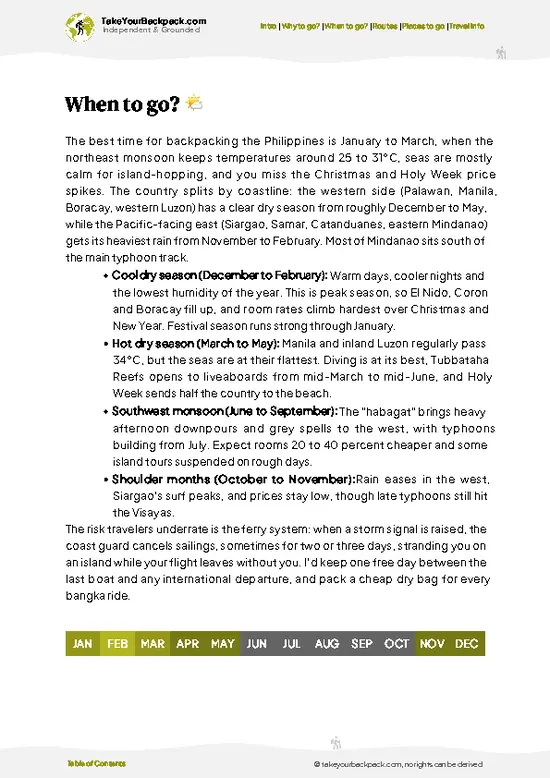
source: climatestotravel.comJANJanuary: excellent for travelingFEBFebruary: excellent for travelingMARMarch: highly recommended for travelingAPRApril: highly recommended for travelingMAYMay: fair for travelingJUNJune: fair for travelingJULJuly: fair for travelingAUGAugust: fair for travelingSEPSeptember: fair for travelingOCTOctober: fair for travelingNOVNovember: highly recommended for travelingDECDecember: excellent for traveling
when-to-go

✈️ The backpacker research shortcutPhilippines Travel Guide

An offline-friendly backpacking guide with optimized travel routes, ranked highlights, transport advice, and the best areas to stay.
example page 0 from our offline Travel Guide for Philippinesexample page 1 from our offline Travel Guide for Philippinesexample page 2 from our offline Travel Guide for Philippinesexample page 3 from our offline Travel Guide for Philippinesexample page 4 from our offline Travel Guide for Philippinesexample page 5 from our offline Travel Guide for Philippinesexample page 6 from our offline Travel Guide for Philippinesexample page 7 from our offline Travel Guide for Philippines
The digital guide (505 pages) contains:
144 highlights, ranked by travel appeal
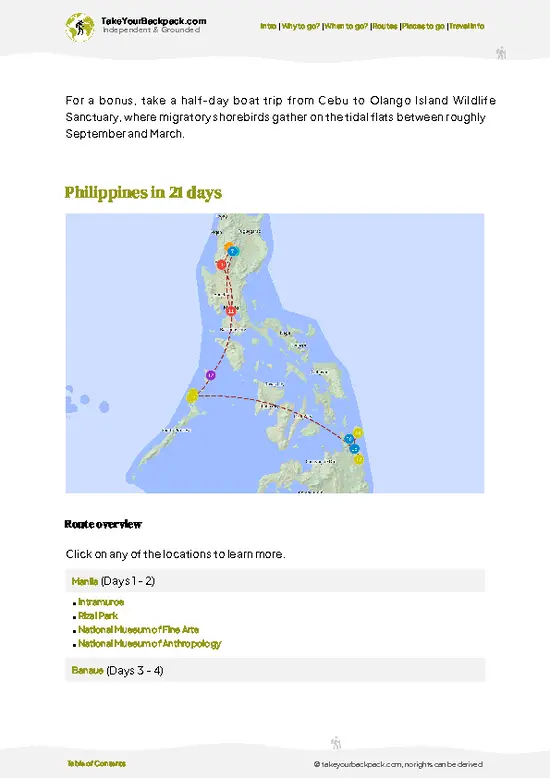
Optimized 7, 14 & 21-day travel routes
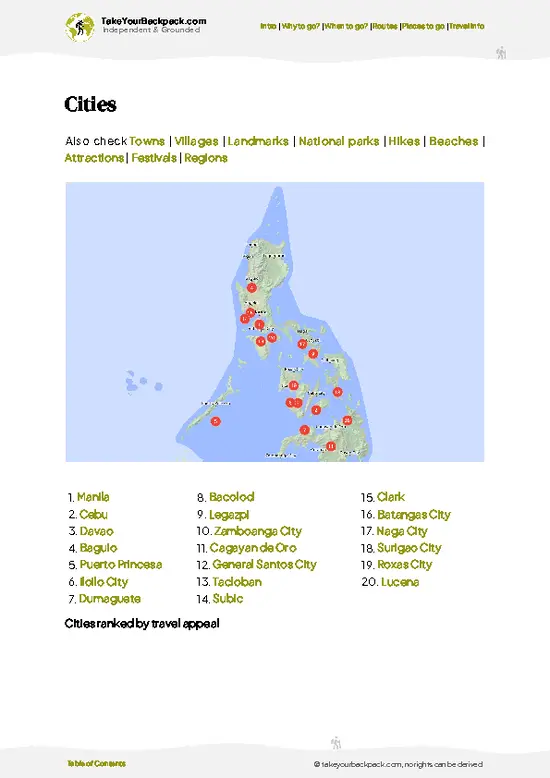
Cities, national parks, beaches, historical sites, ...
How to get around
Offline-friendly for travel without Wi-Fi
👉 Click to see all 30+ guide features

📅 Plan smarter in minutes, not weeks
Month by month travel advice
Festivals & national holidays
Budget expectations

🗺️ Go to the right places, skip the overrated ones
Honest pros & cons of destinations
Top hikes, parks & viewpoints
Lesser-known places most travelers miss
Clear “worth it vs skip it” guidance

🛏️ Travel smoothly without rookie mistakes
Best areas to stay
Transport systems explained simply
Common scams & safety advice
SIM cards, money & practical tips

🌍 Understand the country, not just visit it
Culture & traditions
52 Essential phrases & customs
Festivals worth planning around
Traveler-friendly historical context
Insights that make places more meaningful

📱 Built for real travel conditions
Fully downloadable PDF
Works completely offline
Optimized for phone use
Useful in remote areas & buses
Everything in one place
Save weeks of stressful planning
Get instant access to the full guide directly. 30-day money-back guarantee.


Sent to your inbox immediately after payment • 100% Secure Checkout
Best Backpacking Travel Advisor 2025 tourism awardBest Backpacking
Travel Advisor
2025
What others say about Take Your Backpack Guides:
⭐⭐⭐⭐⭐
Fantastic, amazing amount of information!
⭐⭐⭐⭐⭐
My goodness this is amazing, it's what I've been looking for hats off too you!
⭐⭐⭐⭐⭐
I think this is absolutely BRILLIANT
⭐⭐⭐⭐
Very complete and informative. It's still missing places, but I gotta to commend you
⭐⭐⭐⭐⭐
This is truly amazing, thank you, can't wait to explore it with my kids!
⭐⭐⭐⭐⭐
Awesome resource, thank you!
⭐⭐⭐⭐⭐
This is amazing! Can't wait to explore the ones I haven't seen
⭐⭐⭐⭐
I love this! Well done, great idea.
⭐⭐⭐⭐⭐
Thanks for taking the time to make this gem!
⭐⭐⭐⭐⭐
This might be the best website I've ever seen.
⭐⭐⭐⭐⭐
Congratulations, and thank you so much for your work; it's incredibly valuable.
⭐⭐⭐⭐
In all seriousness I think you did a great job pointing out the important spots
⭐⭐⭐⭐⭐
10/10 very good
⭐⭐⭐⭐⭐
As someone who's only just starting to visit regularly this is awesome, thank you.
⭐⭐⭐⭐
Thank you very much! I'm going to visit my dad, it's going to be very useful!
⭐⭐⭐⭐⭐
This is really cool! We'll be travelling for the first time and this definitely come in handy.
⭐⭐⭐⭐⭐
You are now our minister of culture, congratulations 👨‍💼
⭐⭐⭐⭐⭐
Just wanted to tell you that this is a pearl! Going to follow your recommendations.
⭐⭐⭐⭐⭐
This is so cool. I'll definitely be using the resource for my travels soon.
⭐⭐⭐⭐⭐
This is very impressive! Good work.
⭐⭐⭐⭐⭐
This is an amazing and informative site. Very well done!

🛏️ Where to stay?Best areas to stay in Philippines

Mount Pulag National Park offers a few solid options for backpackers, but you’ll need to plan ahead. Inside the park, there are no formal accommodations. Camping is the way to go if you want to immerse yourself in the stunning scenery. Just remember to secure a permit in advance. The park can get crowded, especially during peak season, so don’t wait until the last minute.

If you prefer a bed, head to nearby towns like Bokod or Kabayan. Bokod has budget-friendly guesthouses where you can rest your head after a long day of hiking. Kabayan is another good option, with homestays that provide a cozy … read more 👉
Mount Pulag National Park offers a few solid options for backpackers, but you’ll need to plan ahead. Inside the park, there are no formal accommodations. Camping is the way to go if you want to immerse yourself in the stunning scenery. Just remember to secure a permit in advance. The park can get crowded, especially during peak season, so don’t wait until the last minute.

If you prefer a bed, head to nearby towns like Bokod or Kabayan. Bokod has budget-friendly guesthouses where you can rest your head after a long day of hiking. Kabayan is another good option, with homestays that provide a cozy atmosphere and local insights.

Expect to pay around 500 to 1,000 PHP per night for basic accommodations. Bring cash; ATMs are scarce. Also, factor in transportation costs to reach the park. Jeepneys or tricycles are your best bet, but they can be unpredictable, so allow extra time.

Plan your meals too. Some guesthouses offer food, but it’s wise to stock up on snacks before heading into the park. This way, you’ll have energy for those breathtaking views without breaking the bank.

👛 Costs (as of 30 September 2025)Travel costs and budget guide for Mount Pulag

Visiting Mount Pulag National Park in the Philippines requires some budgeting. Here’s what you need to know to avoid surprises.

Entrance fees are typically around 50 PHP (about 1 USD) per person. This is a small price for access to the park’s stunning landscapes. However, if you plan to camp, expect to pay an additional fee of around 200 PHP (approximately 4 USD) per night.

Transportation can add up quickly. If you’re coming from Baguio, a van ride to the park can cost between 300 to 500 PHP (6 to 10 USD) one way. If you opt for a private vehicle, factor in fuel costs and possible parking fees.

Guided tours are popular for navigating the trails. Prices for these can range from 1,500 to 3,000 PHP (30 to 60 USD) depending on the group size and inclusions. This often covers a local guide, … read more 👉
Visiting Mount Pulag National Park in the Philippines requires some budgeting. Here’s what you need to know to avoid surprises.

Entrance fees are typically around 50 PHP (about 1 USD) per person. This is a small price for access to the park’s stunning landscapes. However, if you plan to camp, expect to pay an additional fee of around 200 PHP (approximately 4 USD) per night.

Transportation can add up quickly. If you’re coming from Baguio, a van ride to the park can cost between 300 to 500 PHP (6 to 10 USD) one way. If you opt for a private vehicle, factor in fuel costs and possible parking fees.

Guided tours are popular for navigating the trails. Prices for these can range from 1,500 to 3,000 PHP (30 to 60 USD) depending on the group size and inclusions. This often covers a local guide, which is essential for safety and to enhance your experience.

Food options are limited within the park. Bringing your own supplies is wise. If you choose to buy meals from local vendors, budget around 100 to 300 PHP (2 to 6 USD) per meal.

Lastly, consider the weather. The best time to visit is during the dry season, from November to April. This will save you from potential weather-related disruptions and ensure you get the most out of your trip.

Plan ahead, and you’ll preserve your energy and budget for the moments that truly matter.
⚠️ Prices can change and everyone travels differently, so take this as a rough guide. Hope it helps you plan your adventure!

🥾 TrailsHiking Mount Pulag national park: highlights and difficulty

Mount Pulag National Park is a gem in the Philippines, offering some truly breathtaking hiking opportunities. The highlight? The sea of clouds that blankets the summit at sunrise—it’s like stepping into a postcard. The terrain varies, from grasslands to mossy forests, making every step an adventure. Keep an eye out for the unique wildlife, like the endemic Luzon pine and various bird species, including the striking Philippine eagle.

One of the popular trails is Ambangeg Trail, which is a great option for those looking to tackle Mount Pulag without being overly challenged.
  • Length: 8 kilometers
read more 👉
Mount Pulag National Park is a gem in the Philippines, offering some truly breathtaking hiking opportunities. The highlight? The sea of clouds that blankets the summit at sunrise—it’s like stepping into a postcard. The terrain varies, from grasslands to mossy forests, making every step an adventure. Keep an eye out for the unique wildlife, like the endemic Luzon pine and various bird species, including the striking Philippine eagle.

One of the popular trails is Ambangeg Trail, which is a great option for those looking to tackle Mount Pulag without being overly challenged.
  • Length: 8 kilometers (round trip)
  • Estimated Duration: 4-6 hours
  • Difficulty Level: Easy to Moderate
  • Key Features: Stunning views, diverse flora, and the iconic ”sea of clouds” at the summit
  • Terrain: Well-maintained path, with sections of gradual ascent and some rocky areas

Another option is Akiki Trail, which is more for those seeking a challenge.
  • Length: 12 kilometers (one way)
  • Estimated Duration: 6-8 hours
  • Difficulty Level: Moderate to Difficult
  • Key Features: Steeper sections, breathtaking vistas, and a more rugged experience
  • Terrain: Steep inclines, rocky paths, and some muddy areas

Getting to the park is pretty straightforward. You can hop on a bus from Manila to Baguio, then catch a jeepney to the park entrance. Just be ready for the crowds, especially on weekends; it can get busy, particularly during the peak season. There’s also an entrance fee, so keep some cash handy for that. All in all, it’s a fantastic spot for both new and seasoned hikers, just make sure you pack your sense of adventure!
⚠️ Hiking info can sometimes be outdated or inaccurate. Before you hit the trail, check the latest conditions with locals. If you do spot anything that's off, I'd love to hear from you, so I can update it for fellow travelers.

🛡️ SafetyTraveler Safety Guide

Mount Pulag National Park offers a rewarding experience, but it’s essential to be prepared for its realities. Weather can shift quickly; temperatures drop significantly at night, so pack layers. The altitude can catch you off guard, especially if you’re not acclimatized. Take it slow on the ascent to avoid altitude sickness.

The trails are generally well-maintained, but some sections are steep and rocky. Good footwear is crucial; sturdy hiking boots will save you from slips. Navigation is straightforward, but always carry a map or GPS.

Wildlife encounters are rare, but if you spot a Philippine Eagle, keep your distance and observe quietly. Respect the environment by sticking to trails and packing out what you bring in.

First-timers often underestimate the chill at night and overpack for … read more 👉
Mount Pulag National Park offers a rewarding experience, but it’s essential to be prepared for its realities. Weather can shift quickly; temperatures drop significantly at night, so pack layers. The altitude can catch you off guard, especially if you’re not acclimatized. Take it slow on the ascent to avoid altitude sickness.

The trails are generally well-maintained, but some sections are steep and rocky. Good footwear is crucial; sturdy hiking boots will save you from slips. Navigation is straightforward, but always carry a map or GPS.

Wildlife encounters are rare, but if you spot a Philippine Eagle, keep your distance and observe quietly. Respect the environment by sticking to trails and packing out what you bring in.

First-timers often underestimate the chill at night and overpack for day hikes. Focus on essentials, and you’ll preserve your energy for the stunning views that await.

Other Filipino national parks near Mount Pulag

Explore more nearby:


👉 Discover all national parks

Or checkout all Philippines has to offer (think cities, towns, villages, national parks, hikes, beaches, festivals)
Country photo of Philippines

We 💚 feedbackKey takeaways before you go

Mount Pulag National Park is a must-visit for its breathtaking sea of clouds at sunrise—it’s a sight that stays with you. But be prepared for the cold; temperatures can drop sharply, especially at night. Bring layers and a solid sleeping bag to keep warm. This park rewards those who come ready, ensuring your experience is as memorable as the views. Embrace the chill; it’s part of the adventure.

✈️ When did I visit Philippines?
Philippines being one of my favorites, due to the people and their mentality. I visited it first in 2010 and came back in January 2016 as part of my 1.5 year world trip.

✍️ Help improve this page!
The information on this page is based on my own backpacking experience in Philippines, supplemented with up-to-date research and feedback from other travelers. Travel details can change, so if you notice anything outdated or incomplete, feel free to let me know.


🙋‍♂️ Give feedback

👋 Meet the founderWho’s Behind Take Your Backpack?

Johan, backpacker and founder of TakeYourBackpackHi, I’m Johan (Netherlands 🇳🇱), the creator of TakeYourBackpack. Over the past decade, I’ve backpacked through 80+ countries across six continents, gaining extensive experience with independent travel, long-term trips, and overland routes.

This site is built on a combination of firsthand travel experience and carefully curated insights from other backpackers. Many guides are based on places I’ve personally visited, while others bring together tips, observations, and practical advice shared by trusted travelers I’ve met along the way.

The goal is to provide realistic, experience-driven guidance — not generic itineraries — so you can explore destinations with better context, clearer expectations, and more confidence.

Get full country guide •
Instant download • 144 highlights • Full Offline guide