×

Philippines🇵🇭 | national parksNorthern Sierra Madre Natural Parkold-growth forest, river gorges, endemic wildlife | things to do and best time to go

Explore Taal Volcano Protected LandscapeExplore Balinsasayao Twin Lakes Natural Park

Backpacking in Northern Sierra Madre Natural Park
🏆 Top picknational park ranked #6
By Johan Kruseman 🇳🇱 | Updated April 25, 2026

Your first real decision with Northern Sierra Madre Natural Park is whether you’re willing to trade comfort and predictability for raw, remote wilderness; that choice matters, because once you commit, there are no easy exits, no quick supply runs, and every mistake costs time, money, and energy. The park sprawls along the eastern flank of Luzon in Isabela province, facing the Pacific, far from the usual Manila–Banaue–Palawan loop. For backpackers, it’s serious-country: long, humid jungle hikes, river crossings, coastal forest, real chances of seeing hornbills and, if you’re absurdly lucky, traces of Philippine eagle. Access is slow, permits and guides add up, and public transport is patchy. Camping is basic, homestays limited, and you won’t get the social buzz of Sagada or the tidy trails of Mt. Pulag—just a big, quiet, demanding park that gives more the more you’re willing to work for it. Compared with easier Philippine parks, this is the one you do when you care more about wildness than convenience.

Discover everything you want to know in the 📖 Philippines Travel Guide.
Loading the map 🌍
CLICK TO FILTER
city
town
unique site
national park
hike
beach
attraction
festival
region
SHOW COUNTRY’S BESTSHOW ALL

✨ Why go?
Ranked #6 national park in Philippines
Why visitors keep coming back

Backpackers flock to Northern Sierra Madre Natural Park for its blend of independent exploration and affordable accommodations. The park offers a range of budget camping options and nearby hostels, making it easy to stretch your funds. With trail variety that caters to different skill levels, you can choose your own adventure—whether that’s a leisurely stroll or a challenging hike.

What sets this park apart is its suitability for self-guided travelers. You won’t find the usual tour groups here, allowing for a more authentic experience. The trails are well-marked, and the chance to connect with nature without the crowds is a significant draw. Just be prepared for the occasional unexpected weather and pack accordingly; it’s all part of the adventure.
Get the complete Travel Guide for Philippines
Everything organized for offline planning — routes, highlights, costs & tips

See what’s inside 👉

Get the Travel Guide -

💡 HighlightsWhat this place is best known for

  • Ancient lowland and montane rainforest — Big, old trees, thick understory and a sense of being the last untouched bit of Luzon. This is where you feel the park’s scale: cathedral-like dipterocarps, hanging vines and orchids everywhere. Trails can be muddy and slow, but the payoff is prime habitat and solitude few other Philippine parks still offer.
  • Palanan & Divilacan coastline — Remote bays and quiet beaches framed by jungle. Not a resort strip but clear water, coral outcrops for snorkeling and fishing villages that make good low-cost base camps. Boats in and out mean you actually get a frontier-feel to the place.
  • Mangrove forests and estuaries — Dense mangrove stands that act as fish nurseries and bird magnets. Great for early-morning paddles or slow walks at low tide; expect fiddler
read more 👉
  • Ancient lowland and montane rainforest — Big, old trees, thick understory and a sense of being the last untouched bit of Luzon. This is where you feel the park’s scale: cathedral-like dipterocarps, hanging vines and orchids everywhere. Trails can be muddy and slow, but the payoff is prime habitat and solitude few other Philippine parks still offer.
  • Palanan & Divilacan coastline — Remote bays and quiet beaches framed by jungle. Not a resort strip but clear water, coral outcrops for snorkeling and fishing villages that make good low-cost base camps. Boats in and out mean you actually get a frontier-feel to the place.
  • Mangrove forests and estuaries — Dense mangrove stands that act as fish nurseries and bird magnets. Great for early-morning paddles or slow walks at low tide; expect fiddler crabs, herons and a surprising amount of life in a very small patch of mud.
  • Rivers, waterfalls and swimming holes — The park’s watercourses cut deep channels with lovely cascades. You’ll find cold, clean plunge pools after sweaty stretches of trail — perfect for cooling off. Trails to these spots are often informal, so local guides are worth hiring.
  • Birdwatching hotspot — Look for hornbills, kingfishers, parrots and other Philippine forest species; mornings are magical. You won’t have the comforts of a hide, but the raw, close-up sightings make up for it.
  • Wild mammals and nocturnal life — Expect Philippine deer, long-tailed macaques and a bunch of small, hard-to-see endemics (think cloud rats and nocturnal rodents). Night walks and listening to the forest at dusk are when the place really comes alive.
  • Multi-day jungle treks and remote camping — Trails here aren’t polished — they’re real jungle routes that reward planning and patience. Pack lightweight camping gear, hire a local guide, get permits sorted with DENR/local offices, and be ready for basic conditions. The remoteness is the point.
  • Personal favorite — Palanan & Divilacan coastline — I’ll pick the coastline: after a few days slogging through the forest, stepping out onto those empty beaches and snorkeling over living coral feels like a tiny reward for all the effort. Salt, silence and a hammock — hard to beat.
Spotted a mistake or missing something? Contact us.

🌤️ When to go?Weather, crowds, and seasonal trade-offs


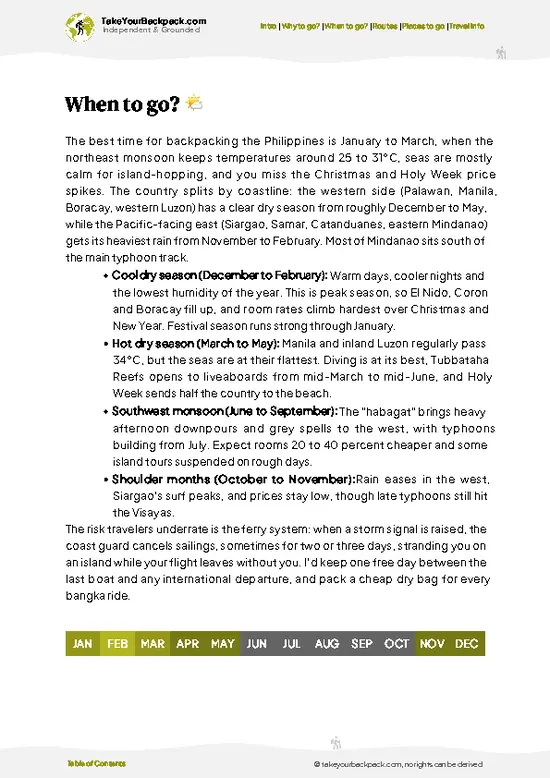
  • Topic: Weather – The dry season from November to May is your best bet. Rainfall drops sharply, reducing the risk of slippery trails and flash floods that can shut down access. Avoid June to October when typhoons and heavy rains dominate.

  • Topic: Temperature – Expect daytime highs around 28-32°C (82-90°F) during dry months, cooling to 20-24°C (68-75°F) at night. The wet season brings more humidity and slightly lower daytime temps but less comfortable hiking conditions.

  • Topic: Daylight Hours – Roughly 11 to 12 hours of daylight year-round, but the dry season offers clearer skies, making early starts and late finishes more practical and safer.

  • Topic: Crowds – The park is remote, so crowds are minimal year-round. Still, local holidays and weekends in the dry season see a slight uptick
read more 👉

  • Topic: Weather – The dry season from November to May is your best bet. Rainfall drops sharply, reducing the risk of slippery trails and flash floods that can shut down access. Avoid June to October when typhoons and heavy rains dominate.

  • Topic: Temperature – Expect daytime highs around 28-32°C (82-90°F) during dry months, cooling to 20-24°C (68-75°F) at night. The wet season brings more humidity and slightly lower daytime temps but less comfortable hiking conditions.

  • Topic: Daylight Hours – Roughly 11 to 12 hours of daylight year-round, but the dry season offers clearer skies, making early starts and late finishes more practical and safer.

  • Topic: Crowds – The park is remote, so crowds are minimal year-round. Still, local holidays and weekends in the dry season see a slight uptick in visitors, especially at popular entry points.

  • Topic: Seasonal Activities – Dry months favor trekking, birdwatching, and river crossings. Wet months limit access to some trails and make river levels unpredictable, cutting off certain routes.

  • Topic: Price Fluctuations – Local guides and accommodations may hike prices slightly during peak dry season and holidays. Off-season rates can be more budget-friendly but come with weather risks.


Pro-tip: Plan your trip for late dry season (March to May) to balance stable weather, longer days, and fewer crowds—just watch for rising temperatures and pack accordingly.


source: climatestotravel.comJANJanuary: excellent for travelingFEBFebruary: excellent for travelingMARMarch: excellent for travelingAPRApril: excellent for travelingMAYMay: highly recommended for travelingJUNJune: fair for travelingJULJuly: below average for travelingAUGAugust: below average for travelingSEPSeptember: below average for travelingOCTOctober: fair for travelingNOVNovember: excellent for travelingDECDecember: excellent for traveling
when-to-go

✈️ The backpacker research shortcutPhilippines Travel Guide

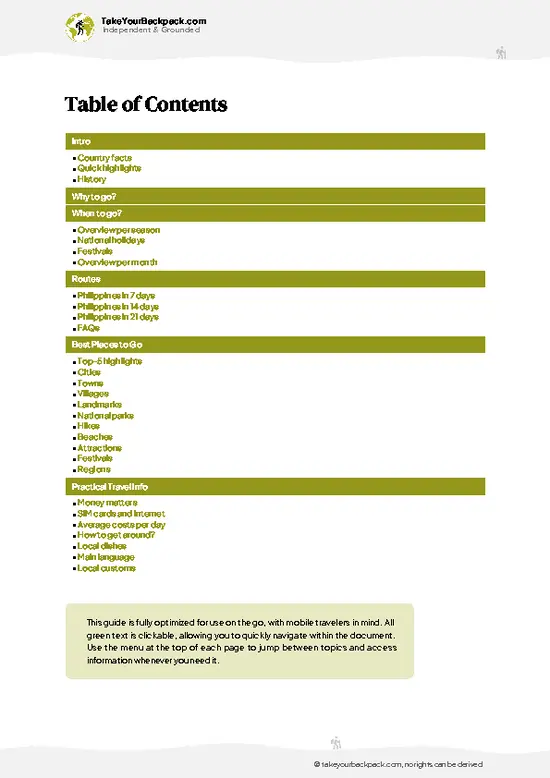
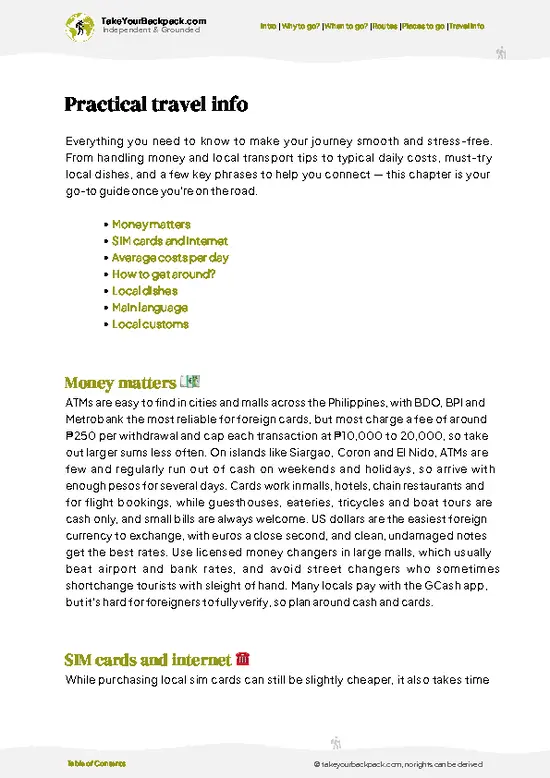
An offline-friendly backpacking guide with optimized travel routes, ranked highlights, transport advice, and the best areas to stay.
example page 0 from our offline Travel Guide for Philippinesexample page 1 from our offline Travel Guide for Philippinesexample page 2 from our offline Travel Guide for Philippinesexample page 3 from our offline Travel Guide for Philippinesexample page 4 from our offline Travel Guide for Philippinesexample page 5 from our offline Travel Guide for Philippinesexample page 6 from our offline Travel Guide for Philippinesexample page 7 from our offline Travel Guide for Philippines
The digital guide (505 pages) contains:
144 highlights, ranked by travel appeal
Optimized 7, 14 & 21-day travel routes
Cities, national parks, beaches, historical sites, ...
How to get around
Offline-friendly for travel without Wi-Fi
👉 Click to see all 30+ guide features

📅 Plan smarter in minutes, not weeks
Month by month travel advice
Festivals & national holidays
Budget expectations

🗺️ Go to the right places, skip the overrated ones
Honest pros & cons of destinations
Top hikes, parks & viewpoints
Lesser-known places most travelers miss
Clear “worth it vs skip it” guidance

🛏️ Travel smoothly without rookie mistakes
Best areas to stay
Transport systems explained simply
Common scams & safety advice
SIM cards, money & practical tips

🌍 Understand the country, not just visit it
Culture & traditions
52 Essential phrases & customs
Festivals worth planning around
Traveler-friendly historical context
Insights that make places more meaningful

📱 Built for real travel conditions
Fully downloadable PDF
Works completely offline
Optimized for phone use
Useful in remote areas & buses
Everything in one place
Save weeks of stressful planning
Get instant access to the full guide directly. 30-day money-back guarantee.


Sent to your inbox immediately after payment • 100% Secure Checkout
Best Backpacking Travel Advisor 2025 tourism awardBest Backpacking
Travel Advisor
2025
What others say about Take Your Backpack Guides:
⭐⭐⭐⭐⭐
Fantastic, amazing amount of information!
⭐⭐⭐⭐⭐
My goodness this is amazing, it's what I've been looking for hats off too you!
⭐⭐⭐⭐⭐
I think this is absolutely BRILLIANT
⭐⭐⭐⭐
Very complete and informative. It's still missing places, but I gotta to commend you
⭐⭐⭐⭐⭐
This is truly amazing, thank you, can't wait to explore it with my kids!
⭐⭐⭐⭐⭐
Awesome resource, thank you!
⭐⭐⭐⭐⭐
This is amazing! Can't wait to explore the ones I haven't seen
⭐⭐⭐⭐
I love this! Well done, great idea.
⭐⭐⭐⭐⭐
Thanks for taking the time to make this gem!
⭐⭐⭐⭐⭐
This might be the best website I've ever seen.
⭐⭐⭐⭐⭐
Congratulations, and thank you so much for your work; it's incredibly valuable.
⭐⭐⭐⭐
In all seriousness I think you did a great job pointing out the important spots
⭐⭐⭐⭐⭐
10/10 very good
⭐⭐⭐⭐⭐
As someone who's only just starting to visit regularly this is awesome, thank you.
⭐⭐⭐⭐
Thank you very much! I'm going to visit my dad, it's going to be very useful!
⭐⭐⭐⭐⭐
This is really cool! We'll be travelling for the first time and this definitely come in handy.
⭐⭐⭐⭐⭐
You are now our minister of culture, congratulations 👨‍💼
⭐⭐⭐⭐⭐
Just wanted to tell you that this is a pearl! Going to follow your recommendations.
⭐⭐⭐⭐⭐
This is so cool. I'll definitely be using the resource for my travels soon.
⭐⭐⭐⭐⭐
This is very impressive! Good work.
⭐⭐⭐⭐⭐
This is an amazing and informative site. Very well done!

🛏️ Where to stay?Best areas to stay in Philippines

For backpackers heading to Northern Sierra Madre Natural Park, options are limited but rewarding. Inside the park, accommodations are sparse. You might find basic campsites, but be prepared for minimal amenities. Bring your own gear and food; this is about embracing the wild.

Nearby, the town of San Mariano offers a few budget-friendly guesthouses. These spots provide a roof over your head and a chance to connect with locals. Expect simple rooms and shared facilities. It’s a good base for exploring the park.

Another option is the city of Cauayan, about an hour away. Here, you’ll find more choices, … read more 👉
For backpackers heading to Northern Sierra Madre Natural Park, options are limited but rewarding. Inside the park, accommodations are sparse. You might find basic campsites, but be prepared for minimal amenities. Bring your own gear and food; this is about embracing the wild.

Nearby, the town of San Mariano offers a few budget-friendly guesthouses. These spots provide a roof over your head and a chance to connect with locals. Expect simple rooms and shared facilities. It’s a good base for exploring the park.

Another option is the city of Cauayan, about an hour away. Here, you’ll find more choices, from hostels to budget hotels. This gives you a bit more comfort before or after your park adventures.

Keep in mind, transportation can be tricky. Plan your travel times carefully to avoid wasting precious hours. Prioritize your energy and budget for the experiences that truly matter in this stunning wilderness.

👛 Costs (as of 21 September 2025)How expensive it really is

Visiting Northern Sierra Madre Natural Park in the Philippines can be a rewarding experience, but it’s essential to be aware of the costs involved to avoid surprises.

Entrance fees typically range from $2 to $5 per person. This fee helps maintain the park and its facilities. If you’re planning to camp, expect to pay around $10 to $15 per night for a campsite.

Guided tours can vary significantly. A basic day tour might cost between $30 and $50, depending on the inclusions. If you want a more immersive experience, multi-day guided treks can range from $100 to $300, depending on the length and amenities provided.

Transportation is another factor. If you’re traveling from nearby towns, budget around $10 to $20 for a jeepney or van ride. Hiring a private vehicle can push that cost up to $50 … read more 👉
Visiting Northern Sierra Madre Natural Park in the Philippines can be a rewarding experience, but it’s essential to be aware of the costs involved to avoid surprises.

Entrance fees typically range from $2 to $5 per person. This fee helps maintain the park and its facilities. If you’re planning to camp, expect to pay around $10 to $15 per night for a campsite.

Guided tours can vary significantly. A basic day tour might cost between $30 and $50, depending on the inclusions. If you want a more immersive experience, multi-day guided treks can range from $100 to $300, depending on the length and amenities provided.

Transportation is another factor. If you’re traveling from nearby towns, budget around $10 to $20 for a jeepney or van ride. Hiring a private vehicle can push that cost up to $50 or more, but it offers flexibility.

Food options are generally affordable. Street food can cost as little as $1 to $3 per meal, while dining in local restaurants might set you back $5 to $10 for a decent meal.

Be prepared for additional costs like permits for specific activities, which can add another $5 to $20. Always check for any seasonal fees or changes in pricing.

Planning ahead will help you allocate your budget wisely, ensuring you have the energy and funds for the experiences that truly matter.
⚠️ Prices can change and everyone travels differently, so take this as a rough guide. Hope it helps you plan your adventure!

🥾 TrailsTrail guide for Northern Sierra Madre Natural Park national park

The Northern Sierra Madre Natural Park is a hidden gem for hikers looking to immerse themselves in lush landscapes and diverse wildlife. The park is a mix of rugged mountains, dense forests, and stunning coastal views, making it a fantastic spot for both seasoned trekkers and those looking for a more leisurely stroll. Wildlife enthusiasts will be thrilled to spot endemic species like the Philippine Eagle and various monkeys swinging through the trees. The terrain varies from steep ascents to flat, shaded trails, so there’s something for everyone.

One of the standout trails is the La Mesa Trail, … read more 👉
The Northern Sierra Madre Natural Park is a hidden gem for hikers looking to immerse themselves in lush landscapes and diverse wildlife. The park is a mix of rugged mountains, dense forests, and stunning coastal views, making it a fantastic spot for both seasoned trekkers and those looking for a more leisurely stroll. Wildlife enthusiasts will be thrilled to spot endemic species like the Philippine Eagle and various monkeys swinging through the trees. The terrain varies from steep ascents to flat, shaded trails, so there’s something for everyone.

One of the standout trails is the La Mesa Trail, which is about 8 kilometers long and typically takes around 3-4 hours to complete. Here’s a quick breakdown:
  • Length: 8 km
  • Estimated Duration: 3-4 hours
  • Difficulty Level: Moderate
  • Key Features: Scenic views, diverse flora, potential wildlife sightings
  • Terrain: Mixed, with both flat sections and some steep climbs

Getting to the park isn’t too tricky. Public transport options are available from nearby towns, but be prepared for a bit of a journey. It can get crowded during weekends and holidays, so if you prefer a quieter experience, aim for a weekday visit. As for the entrance fee, it’s generally affordable, but it’s a good idea to check in advance since fees can change. Pack your essentials, and enjoy the adventure!
⚠️ Hiking info can sometimes be outdated or inaccurate. Before you hit the trail, check the latest conditions with locals. If you do spot anything that's off, I'd love to hear from you, so I can update it for fellow travelers.

🛡️ SafetySafety Tips and Common Scams in Northern Sierra Madre Natural Park

Northern Sierra Madre Natural Park offers a rewarding experience, but it’s essential to be prepared. Weather can shift quickly; pack for rain and cooler temperatures, especially in the higher elevations. The terrain varies, with steep sections and occasional river crossings that can be tricky after heavy rain. Good footwear is crucial for navigating rocky paths and muddy spots.

Wildlife is present, including snakes and larger mammals. Keep a respectful distance and avoid feeding animals. Many first-timers underestimate the park’s remoteness; ensure you have a reliable map and a charged GPS. Pace yourself, stay hydrated, and embrace the slower rhythm of the trail. This approach will help you savor the park’s beauty without unnecessary stress.

Other Filipino national parks near Northern Sierra Madre Natural Park

Explore more nearby:


👉 Discover all national parks

Or checkout all Philippines has to offer (think cities, towns, villages, national parks, hikes, beaches, festivals)
Country photo of Philippines

We 💚 feedbackSumming up the experience

Northern Sierra Madre Natural Park is a treasure for those seeking raw, untamed nature. The biodiversity here is staggering; you might spot rare wildlife that’s hard to find elsewhere. But be prepared: the trails can be tough, and the weather unpredictable. Bring your patience and a solid plan, and you’ll save your energy for the moments that truly matter.

✈️ When did I visit Philippines?
Philippines being one of my favorites, due to the people and their mentality. I visited it first in 2010 and came back in January 2016 as part of my 1.5 year world trip.

✍️ Help improve this page!
The information on this page is based on my own backpacking experience in Philippines, supplemented with up-to-date research and feedback from other travelers. Travel details can change, so if you notice anything outdated or incomplete, feel free to let me know.


🙋‍♂️ Give feedback

👋 Meet the founderWho’s Behind Take Your Backpack?

Johan, backpacker and founder of TakeYourBackpackHi, I’m Johan (Netherlands 🇳🇱), the creator of TakeYourBackpack. Over the past decade, I’ve backpacked through 80+ countries across six continents, gaining extensive experience with independent travel, long-term trips, and overland routes.

This site is built on a combination of firsthand travel experience and carefully curated insights from other backpackers. Many guides are based on places I’ve personally visited, while others bring together tips, observations, and practical advice shared by trusted travelers I’ve met along the way.

The goal is to provide realistic, experience-driven guidance — not generic itineraries — so you can explore destinations with better context, clearer expectations, and more confidence.

Get full country guide •
Instant download • 144 highlights • Full Offline guide