×

Philippines🇵🇭 | regionsRice Terraces of the Philippine CordillerasAncient terraces, mountain villages, Ifugao culture | things to do and best time to go

Explore PalawanExplore Siargao Island

Backpacking in Rice Terraces of the Philippine Cordilleras
UNESCO World Heritage site
👍 Recommendedregion ranked #6
By Johan Kruseman 🇳🇱 | Updated April 25, 2026

Your boots sink into cold mud as a farmer whistles to his carabao, and the echo bounces off a hundred green steps disappearing into the mist. Somewhere below, a rooster screams. Somewhere above, a kid laughs and the smell of woodsmoke and garlic rice drifts down the valley. That’s the Rice Terraces of the Philippine Cordilleras: carved into the mountains of Ifugao, Mountain Province, and Benguet in Northern Luzon.

For backpackers, this region is magic and mildly punishing. Places like Banaue, Batad, and Sagada give you wild scenery, cheap homestays, and real village life, but you pay in time and sore knees. Buses are slow, transfers clumsy, and comfort is basic, yet it feels far more genuine than Baguio or the Ilocos coast. If you want nightlife and easy beaches, go elsewhere. If you want mist, mud, and quiet, come here.

Discover everything you want to know in the 📖 Philippines Travel Guide.
Loading the map 🌍
CLICK TO FILTER
cities
towns
landmarks
national parks
hikes
beaches
attractions
festivals
regions
SHOW COUNTRY’S BESTSHOW ALL

✨ Why go?
Ranked #6 region in Philippines
What makes it a must-see region

Backpackers flock to the Rice Terraces of the Philippine Cordilleras for a reason. The variety of landscapes here is jaw-dropping. You can hike through lush green terraces, explore misty mountains, and dip into vibrant local villages—all without the hassle of constant relocation.

Transport is surprisingly flexible. Jeepneys and tricycles zip you around, making it easy to hop from one breathtaking view to another. This region is a playground for those who crave both nature and culture. You can spend a day trekking, then unwind in a local homestay, sharing stories over a home-cooked meal.

The beauty of this slow travel is that it allows you to truly soak in the surroundings. You’re not just passing through; you’re becoming part of the landscape. Each moment spent here is a chance to connect … read more 👉
Backpackers flock to the Rice Terraces of the Philippine Cordilleras for a reason. The variety of landscapes here is jaw-dropping. You can hike through lush green terraces, explore misty mountains, and dip into vibrant local villages—all without the hassle of constant relocation.

Transport is surprisingly flexible. Jeepneys and tricycles zip you around, making it easy to hop from one breathtaking view to another. This region is a playground for those who crave both nature and culture. You can spend a day trekking, then unwind in a local homestay, sharing stories over a home-cooked meal.

The beauty of this slow travel is that it allows you to truly soak in the surroundings. You’re not just passing through; you’re becoming part of the landscape. Each moment spent here is a chance to connect with the land and its people, making your experience rich and layered.
Want to include Rice Terraces of the Philippine Cordilleras in your Philippines route?
Create a personalized Philippines itinerary that includes Rice Terraces of the Philippine Cordilleras and the places that fit your trip — based on your travel style, budget, and available time. Get your route in seconds.

Generate my trip

💡 HighlightsThe experiences that define the visit

  1. Banaue Rice Terraces (Banaue Viewpoint) — The classic, sweeping panorama people picture: layered terraces carved into steep mountains that you can see without hours of trekking. Great for sunrise photos, short hikes down a few switchbacks, and catching the scale of Ifugao engineering in one glance.
  2. Batad Amphitheater & Tappiya Falls — The amphitheater-shaped cluster of terraces is pure landscape drama: vertical walls of rice paddies ring a bowl with trails that drop to Tappiya Falls. You have to hike in (roughly 1-2 hours from the rim), but the rice terraces, local village life and swimming below the falls make it worth every sweaty step. (Personal favorite.)
  3. Bangaan Village & its Terraces — A living Ifugao village where terraces, stone houses and communal rice granaries still function
read more 👉
  1. Banaue Rice Terraces (Banaue Viewpoint) — The classic, sweeping panorama people picture: layered terraces carved into steep mountains that you can see without hours of trekking. Great for sunrise photos, short hikes down a few switchbacks, and catching the scale of Ifugao engineering in one glance.
  2. Batad Amphitheater & Tappiya Falls — The amphitheater-shaped cluster of terraces is pure landscape drama: vertical walls of rice paddies ring a bowl with trails that drop to Tappiya Falls. You have to hike in (roughly 1-2 hours from the rim), but the rice terraces, local village life and swimming below the falls make it worth every sweaty step. (Personal favorite.)
  3. Bangaan Village & its Terraces — A living Ifugao village where terraces, stone houses and communal rice granaries still function as they did generations ago. Bangaan is famous for its homestays — sleep in a traditional house, eat village-cooked rice meals, and ride along the local irrigation channels (muyong) that keep the fields alive.
  4. Hapao Rice Terraces & Hot Springs — Hidden gem. Less crowded than Banaue or Batad, Hapao combines terraced walls with natural hot springs where you can soak after a trek. It feels remote and intimate; excellent for relaxed multi-day hikes and chatting with farmers on terrace edges.
  5. Mayoyao Viewpoint & Terraces — Hidden gem. High-altitude terraces with wide, distant views and a quieter, more local pace. The town has an old-school market and vantage points that let you watch cloud movement across the terraces — a terrific place for late-afternoon light and calmer cultural encounters.
  6. Nagacadan Rice Terraces — Hidden gem. Smaller, neighborly terraces where you’ll see routine agricultural life up close: elders tending channels, kids walking the terraces, simple village rituals. Few tour buses go here, so it’s a good stop if you want uncurated Ifugao everyday life and photo ops without crowds.
  7. Banaue Public Market (market mornings) — Not a museum: this is where farmers trade rice, vegetables, native textiles and goods. Visit early (best before mid-morning) to hear Ifugao languages, haggle a bit, try local snacks and see the produce that keeps the terrace economy moving.
  8. Ridge and Rim Treks (Batad-Bangaan loop) — The walking routes along ridgelines and amphitheater rims are an experience in themselves: endless terrace vistas from different angles, village-to-village paths, and a real sense of scale you miss from viewpoints. Trails are low-tech and community-maintained; take a guide from the village for local stories.
  9. Bangaan’s Muyong (communal forest & irrigation systems) — The muyong are sacred communal forests and the ancient water-management structures behind the terraces’ survival. Visiting a maintained muyong shows how Ifugao communities protect headwaters and share water rights — a cultural-ecological system you won’t easily find anywhere else.
  10. Terrace-side Homestays & Rice-work Experiences — Staying with a family in Batad, Bangaan or a Mayoyao village and joining in rice planting/harvesting, rice pounding, or evening gong music is the core human part of visiting the terraces. It’s not a show — you help, you learn, and you eat what the family eats. Best way to see how the terraces are lived-in.
Spotted a mistake or missing something? Contact us.

Things to do near Rice Terraces of the Philippine Cordilleras

Ratings based on Tripadvisor reviews. When you book through this link, you support our work at no extra cost to you.

⌛️ 5 daysWhat you can realistically do in a week

Day 1: Banaue
Start your adventure in Banaue, the gateway to the rice terraces. The transport system here is a mix of jeepneys and tricycles, which are your best friends. They run frequently, but don’t expect a strict schedule. Embrace the spontaneity; it’s part of the charm. Spend your day soaking in the views and visiting the local market. Grab some street food—trust me, the grilled skewers are a must.

Day 2: Batad
Take a jeepney to Batad. This is where the real magic happens. The terraces here are less commercialized, and the hike to the viewpoint is a rewarding challenge. The trail can be steep, but the payoff is a panoramic view that feels like stepping into a postcard. The transport options are limited, so plan to stay overnight.

Day 3: Bangaan
Head to Bangaan next. It’s a … read more 👉
Day 1: Banaue
Start your adventure in Banaue, the gateway to the rice terraces. The transport system here is a mix of jeepneys and tricycles, which are your best friends. They run frequently, but don’t expect a strict schedule. Embrace the spontaneity; it’s part of the charm. Spend your day soaking in the views and visiting the local market. Grab some street food—trust me, the grilled skewers are a must.

Day 2: Batad
Take a jeepney to Batad. This is where the real magic happens. The terraces here are less commercialized, and the hike to the viewpoint is a rewarding challenge. The trail can be steep, but the payoff is a panoramic view that feels like stepping into a postcard. The transport options are limited, so plan to stay overnight.

Day 3: Bangaan
Head to Bangaan next. It’s a short trek from Batad, and the path is lined with lush greenery. The village is quaint, and you can interact with locals who still practice traditional farming. This is a great spot for photography and immersing yourself in the culture.

Day 4: Kiangan
Travel to Kiangan, where you can visit the local museum and learn about the rich history of the Ifugao people. The bus ride is scenic, and you’ll see how the landscape shifts. This is a good day to rest and recharge.

Day 5: Off-Path Reward – Mayoyao
Take a detour to Mayoyao. It’s a bit off the beaten path, but the untouched terraces here are breathtaking. You’ll feel like you’ve discovered a secret. The journey is longer, but the tranquility is worth it.

The must-do day? Day 2 in Batad. The combination of the hike and the views is what makes this trip unforgettable. You’ll leave with a sense of accomplishment and a heart full of memories.
Turn your Rice Terraces of the Philippine Cordilleras visit into an Philippines adventure
Build a complete Philippines route with Rice Terraces of the Philippine Cordilleras, hidden gems, must-see destinations, and realistic travel times included.

Generate my trip

🌤️ When to go?Choosing the right time of year


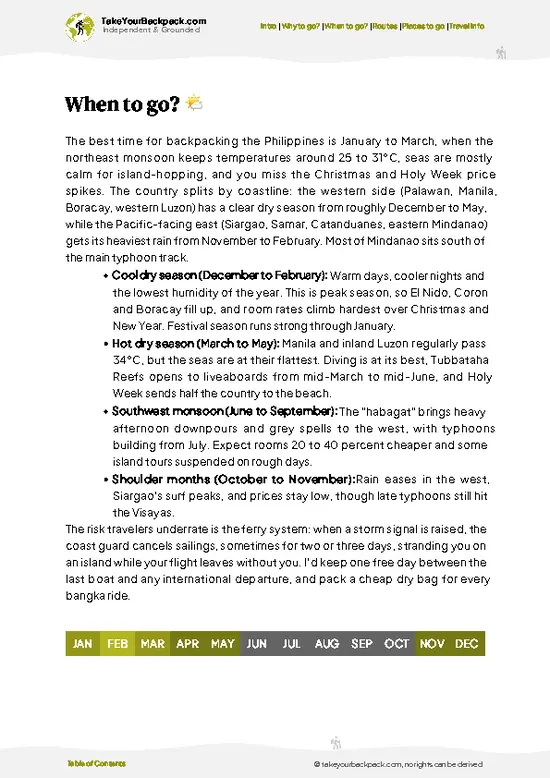
  • Topic: Weather – The dry season from November to May is your golden window. Expect minimal rain, which means the terraces stay accessible and the paths less slippery. June to October is the wet season, turning trails into mudslides and views into misty obscurities.

  • Topic: Temperature – Daytime temps hover around 20-25°C (68-77°F), perfect for trekking without overheating. Nights can dip to 10-15°C (50-59°F), so pack a light jacket. The cooler months (December to February) bring crisp air that feels like a fresh reset.

  • Topic: Daylight Hours – From November to February, you get about 11 to 12 hours of daylight, enough to start early and finish hikes before dusk. The sun rises around 6 AM and sets close to 5:30 PM, giving you a solid window for exploration.

  • Topic: Crowds – Peak season
read more 👉

  • Topic: Weather – The dry season from November to May is your golden window. Expect minimal rain, which means the terraces stay accessible and the paths less slippery. June to October is the wet season, turning trails into mudslides and views into misty obscurities.

  • Topic: Temperature – Daytime temps hover around 20-25°C (68-77°F), perfect for trekking without overheating. Nights can dip to 10-15°C (50-59°F), so pack a light jacket. The cooler months (December to February) bring crisp air that feels like a fresh reset.

  • Topic: Daylight Hours – From November to February, you get about 11 to 12 hours of daylight, enough to start early and finish hikes before dusk. The sun rises around 6 AM and sets close to 5:30 PM, giving you a solid window for exploration.

  • Topic: Crowds – Peak season (December to April) draws more tourists, especially around Holy Week and Christmas. If you want quiet mornings and fewer selfie sticks, aim for the shoulder months of November or May.

  • Topic: Seasonal Activities – Visit during April or May to catch the rice terraces at their greenest, just before harvest. Festivals like the Panagbenga (Flower Festival) in nearby Baguio in February add cultural spice but also crowds.

  • Topic: Price Fluctuations – Accommodation and tours spike during peak months and holidays. Booking in shoulder seasons can save you 20-30%, plus you get more personalized experiences from local guides eager for business.


Pro-tip: Arrive just after the harvest season in June for golden terraces and near-empty trails—a rare combo that feels like you’ve hacked the system.


source: climatestotravel.comJANJanuary: highly recommended for travelingFEBFebruary: highly recommended for travelingMARMarch: highly recommended for travelingAPRApril: excellent for travelingMAYMay: excellent for travelingJUNJune: highly recommended for travelingJULJuly: fair for travelingAUGAugust: fair for travelingSEPSeptember: fair for travelingOCTOctober: fair for travelingNOVNovember: highly recommended for travelingDECDecember: highly recommended for traveling
philippines-region-rice-terraces-of-the-philippine-cordilleras
© Google |

✈️ The backpacker research shortcutPhilippines Travel Guide

An offline-friendly backpacking guide with optimized travel routes, ranked highlights, transport advice, and the best areas to stay.
example page 0 from our offline Travel Guide for Philippinesexample page 1 from our offline Travel Guide for Philippinesexample page 2 from our offline Travel Guide for Philippinesexample page 3 from our offline Travel Guide for Philippinesexample page 4 from our offline Travel Guide for Philippinesexample page 5 from our offline Travel Guide for Philippinesexample page 6 from our offline Travel Guide for Philippinesexample page 7 from our offline Travel Guide for Philippines
The digital guide (505 pages) contains:
144 highlights, ranked by travel appeal
Optimized 7, 14 & 21-day travel routes
Cities, national parks, landmarks, beaches
How to get around
Offline-friendly for travel without Wi-Fi
👉 Click to see all 30+ guide features

📅 Plan smarter in minutes, not weeks
Month by month travel advice
Festivals & national holidays
Budget expectations

🗺️ Go to the right places, skip the overrated ones
Honest pros & cons of destinations
Top hikes, parks & viewpoints
Lesser-known places most travelers miss
Clear “worth it vs skip it” guidance

🛏️ Travel smoothly without rookie mistakes
Best areas to stay
Transport systems explained simply
Common scams & safety advice
SIM cards, money & practical tips

🌍 Understand the country, not just visit it
Culture & traditions
52 Essential phrases & customs
Festivals worth planning around
Traveler-friendly historical context
Insights that make places more meaningful

📱 Built for real travel conditions
Fully downloadable PDF
Works completely offline
Optimized for phone use
Useful in remote areas & buses
Everything in one place
Save weeks of stressful planning
Get instant access to your full guide. 30‑day money-back guarantee.


Sent to your inbox immediately after payment • 100% Secure Checkout
Best Backpacking Travel Advisor 2025 tourism awardBest Backpacking
Travel Advisor
2025
What others say about Take Your Backpack Guides:
⭐⭐⭐⭐⭐
Fantastic, amazing amount of information!
⭐⭐⭐⭐⭐
My goodness this is amazing, it's what I've been looking for hats off too you!
⭐⭐⭐⭐⭐
I think this is absolutely BRILLIANT
⭐⭐⭐⭐
Very complete and informative. It's still missing places, but I gotta to commend you
⭐⭐⭐⭐⭐
This is truly amazing, thank you, can't wait to explore it with my kids!
⭐⭐⭐⭐⭐
Awesome resource, thank you!
⭐⭐⭐⭐⭐
This is amazing! Can't wait to explore the ones I haven't seen
⭐⭐⭐⭐
I love this! Well done, great idea.
⭐⭐⭐⭐⭐
Thanks for taking the time to make this gem!
⭐⭐⭐⭐⭐
This might be the best website I've ever seen.
⭐⭐⭐⭐⭐
Congratulations, and thank you so much for your work; it's incredibly valuable.
⭐⭐⭐⭐
In all seriousness I think you did a great job pointing out the important spots
⭐⭐⭐⭐⭐
10/10 very good
⭐⭐⭐⭐⭐
As someone who's only just starting to visit regularly this is awesome, thank you.
⭐⭐⭐⭐
Thank you very much! I'm going to visit my dad, it's going to be very useful!
⭐⭐⭐⭐⭐
This is really cool! We'll be travelling for the first time and this definitely come in handy.
⭐⭐⭐⭐⭐
You are now our minister of culture, congratulations 👨‍💼
⭐⭐⭐⭐⭐
Just wanted to tell you that this is a pearl! Going to follow your recommendations.
⭐⭐⭐⭐⭐
This is so cool. I'll definitely be using the resource for my travels soon.
⭐⭐⭐⭐⭐
This is very impressive! Good work.
⭐⭐⭐⭐⭐
This is an amazing and informative site. Very well done!

🛏️ Where to stay?Best areas and accommodation options

If you’re diving into the Rice Terraces of the Philippine Cordilleras, you’ll want to set up camp in a few key spots that scream backpacker-friendly.

Start with Banaue. It’s the gateway to the terraces, buzzing with fellow travelers. You’ll find a mix of local eateries and shops, perfect for swapping stories over a bowl of rice. The vibe is laid-back, and the views? They’ll make your jaw drop.

Next, head to Batad. This village is a bit off the beaten path but worth every step. It’s a tight-knit community, and you’ll feel the warmth of the locals. The terraces here are less crowded, giving … read more 👉
If you’re diving into the Rice Terraces of the Philippine Cordilleras, you’ll want to set up camp in a few key spots that scream backpacker-friendly.

Start with Banaue. It’s the gateway to the terraces, buzzing with fellow travelers. You’ll find a mix of local eateries and shops, perfect for swapping stories over a bowl of rice. The vibe is laid-back, and the views? They’ll make your jaw drop.

Next, head to Batad. This village is a bit off the beaten path but worth every step. It’s a tight-knit community, and you’ll feel the warmth of the locals. The terraces here are less crowded, giving you that authentic experience. Plus, the hikes around Batad are stunning.

Don’t skip Sagada. Known for its hanging coffins and cool caves, it’s a social hub where you can meet other solo travelers. The atmosphere is friendly, and the coffee shops are perfect for planning your next adventure.

Each of these spots offers a unique slice of Cordillera life, making your journey not just a trip, but a collection of rich experiences.

🚌 Getting aroundTransportation options and practical tips

The Rice Terraces of the Philippine Cordilleras pulse with a rhythm that’s anything but rigid. Here, time bends and flows like the winding paths carved into the mountains. Schedules? They’re more of a suggestion than a rule. You’ll find locals moving with an intuitive grace, while travelers darting between villages often feel the delightful chaos of the region. It’s a place where you can hop on a jeepney, share a laugh with a stranger, and suddenly find yourself in a conversation about the best rice wine. Embrace the spontaneity; it’s part of the charm.


  • Jeepney: The quintessential local transport. Fares range from 10 to 50 PHP depending on distance. They run from dawn until around 6 PM, offering a colorful, cramped ride that’s as much about the journey as the destination.


  • Tricycle: Perfect
read more 👉
The Rice Terraces of the Philippine Cordilleras pulse with a rhythm that’s anything but rigid. Here, time bends and flows like the winding paths carved into the mountains. Schedules? They’re more of a suggestion than a rule. You’ll find locals moving with an intuitive grace, while travelers darting between villages often feel the delightful chaos of the region. It’s a place where you can hop on a jeepney, share a laugh with a stranger, and suddenly find yourself in a conversation about the best rice wine. Embrace the spontaneity; it’s part of the charm.


  • Jeepney: The quintessential local transport. Fares range from 10 to 50 PHP depending on distance. They run from dawn until around 6 PM, offering a colorful, cramped ride that’s as much about the journey as the destination.


  • Tricycle: Perfect for short hops between villages. Expect to pay around 20 to 100 PHP. These can be found buzzing around town, and while they’re not the fastest, they’re a fun way to navigate the narrow roads.


  • Bus: For longer distances, buses connect major towns like Banaue and Sagada. Prices vary from 150 to 300 PHP, with departures typically starting at 6 AM and the last ones around 4 PM. They’re slower but offer a chance to soak in the scenery.


  • Hiking: Not a transport option in the traditional sense, but the best way to truly experience the terraces. Trails connect villages and viewpoints, and it’s free! Just be prepared for some steep climbs and breathtaking views.


  • Private Van: If you’re in a group, consider renting a private van. Costs can range from 2,500 to 4,000 PHP for a day. It’s the most comfortable option, allowing you to set your own schedule and stop wherever you please.


For seamless travel, coordinate your jeepney or bus schedules with local market days. This way, you’ll not only get where you need to go but also dive into the local culture, making your journey as rich as the landscapes around you.

🍲 FoodLocal Flavors for Backpackers

In the **Rice Terraces of the Philippine Cordilleras**, food is a celebration of the land and its people. Dive into **local specialties** like **pinikpikan**, a traditional chicken dish prepared with a unique ritual that adds depth to its flavor. Pair that with **tinola**, a comforting ginger soup that warms you from the inside out. Don’t miss out on **biko**, a sweet rice cake that’s a staple at local gatherings.

For a true taste of the region, hit up the **local markets**. The vibrant stalls are filled with fresh produce, and the air is thick with the scent of grilled meats and spices. Street food vendors serve up **kwek-kwek**, quail eggs coated in orange batter, perfect for a quick snack.

Dining here is a communal affair. Expect to share dishes and stories, and don’t be surprised if … read more 👉
In the **Rice Terraces of the Philippine Cordilleras**, food is a celebration of the land and its people. Dive into **local specialties** like **pinikpikan**, a traditional chicken dish prepared with a unique ritual that adds depth to its flavor. Pair that with **tinola**, a comforting ginger soup that warms you from the inside out. Don’t miss out on **biko**, a sweet rice cake that’s a staple at local gatherings.

For a true taste of the region, hit up the **local markets**. The vibrant stalls are filled with fresh produce, and the air is thick with the scent of grilled meats and spices. Street food vendors serve up **kwek-kwek**, quail eggs coated in orange batter, perfect for a quick snack.

Dining here is a communal affair. Expect to share dishes and stories, and don’t be surprised if you’re invited to join a meal with locals. Remember, it’s polite to say **“mangan tayon!”** (let’s eat!) before digging in. Embrace the warmth of the community, and savor every bite.

Other Filipino regions near Rice Terraces of the Philippine Cordilleras

Explore more nearby:

  • Batanes’ Sabtang Island—Ivatan villages, limestone cliffs, centuries-old churches| 104 km away
  • Baler—Pacific surf, coastal cliffs, colonial church| 142 km away
  • Batanes Islands—Stone houses, rolling hills, wind-swept coastlines| 403 km away

💡 Not sure where to go next?
Create a personalized itinerary for Philippines including Rice Terraces of the Philippine Cordilleras and the places that fit your trip.

Generate my itinerary

👉 Discover all regions

Or checkout all Philippines has to offer (think cities, towns, villages, national parks, hikes, beaches, festivals)
Country photo of Philippines

We 💚 feedbackWhat to keep in mind

The Rice Terraces are a breathtaking testament to human ingenuity, carved into the mountains over 2,000 years ago. You’ll feel like you’ve stepped into a living postcard. But here’s the kicker: getting there can be a slog. Expect winding roads and a few hours of travel. It’s worth it for the views and the culture, but be ready for some patience. Embrace the journey; it’s part of the adventure.

✈️ When did I visit Philippines?
Philippines being one of my favorites, due to the people and their mentality. I visited it first in 2010 and came back in January 2016 as part of my 1.5 year world trip.

✍️ Help improve this page!
The information on this page is based on my own backpacking experience in Philippines, supplemented with up-to-date research and feedback from other travelers. Travel details can change, so if you notice anything outdated or incomplete, feel free to let me know.


🙋‍♂️ Give feedback

👋 Meet the founderWho’s Behind Take Your Backpack?

Johan, backpacker and founder of TakeYourBackpackHi, I’m Johan (Netherlands 🇳🇱), the creator of TakeYourBackpack. Over the past decade, I’ve backpacked through 80+ countries across six continents, gaining extensive experience with independent travel, long-term trips, and overland routes.

This site is built on a combination of firsthand travel experience and carefully curated insights from other backpackers. Many guides are based on places I’ve personally visited, while others bring together tips, observations, and practical advice shared by trusted travelers I’ve met along the way.

The goal is to provide realistic, experience-driven guidance — not generic itineraries — so you can explore destinations with better context, clearer expectations, and more confidence.

Get full country guide •
Instant download • 144 highlights • Full Offline guide