v2.webp)
The South Portal
Forget the main entrance—walk around to the south side and you’ll see why this monastery is a poster child for Portugal’s Age of Discovery. The portal is a riot of stonework: saints, explorers, ropes, and armillary spheres all tangled together in Manueline style. It’s less a doorway, more a fever dream carved in limestone. Yes, you’ll be shoulder-to-shoulder with tour groups, but the craftsmanship is so over-the-top you’ll barely notice the selfie sticks. This is the kind of detail you can stare at for twenty minutes and still spot something new.
The Cloisters
Here’s where the Instagram crowd gets it half-right. The cloisters are photogenic, sure, but they’re also a masterclass in architectural excess. Every column is different—look closely and you’ll find sea monsters, ropes, … read more 👉
Forget the main entrance—walk around to the south side and you’ll see why this monastery is a poster child for Portugal’s Age of Discovery. The portal is a riot of stonework: saints, explorers, ropes, and armillary spheres all tangled together in Manueline style. It’s less a doorway, more a fever dream carved in limestone. Yes, you’ll be shoulder-to-shoulder with tour groups, but the craftsmanship is so over-the-top you’ll barely notice the selfie sticks. This is the kind of detail you can stare at for twenty minutes and still spot something new.
The Cloisters
Here’s where the Instagram crowd gets it half-right. The cloisters are photogenic, sure, but they’re also a masterclass in architectural excess. Every column is different—look closely and you’ll find sea monsters, ropes, … read more 👉
The South Portal
Forget the main entrance—walk around to the south side and you’ll see why this monastery is a poster child for Portugal’s Age of Discovery. The portal is a riot of stonework: saints, explorers, ropes, and armillary spheres all tangled together in Manueline style. It’s less a doorway, more a fever dream carved in limestone. Yes, you’ll be shoulder-to-shoulder with tour groups, but the craftsmanship is so over-the-top you’ll barely notice the selfie sticks. This is the kind of detail you can stare at for twenty minutes and still spot something new.
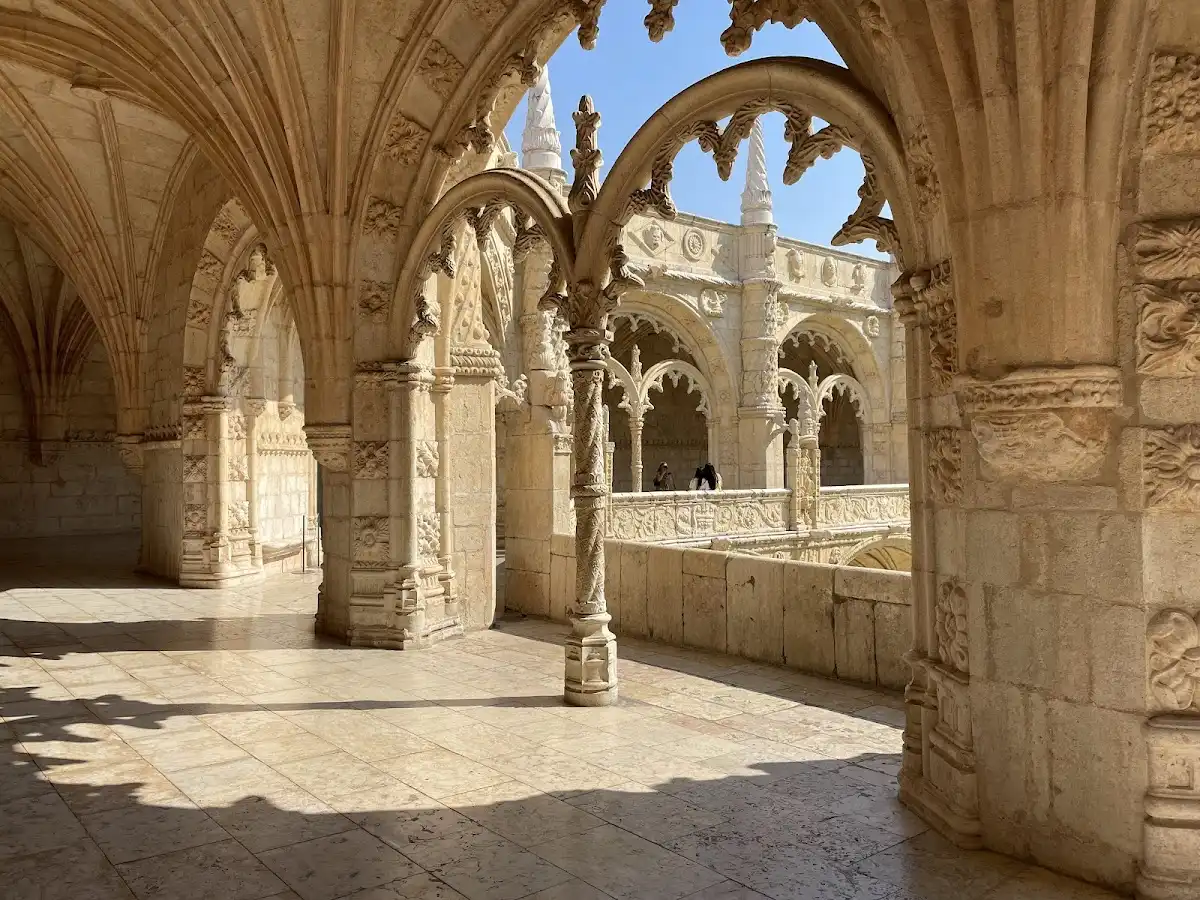
The Cloisters
Here’s where the Instagram crowd gets it half-right. The cloisters are photogenic, sure, but they’re also a masterclass in architectural excess. Every column is different—look closely and you’ll find sea monsters, ropes, and botanical motifs, all nods to Portugal’s seafaring swagger. The light shifts through the arches in a way that feels almost theatrical. If you want a moment of actual peace, come late in the day when the crowds thin and the stone glows gold. This is the real magic: a space that feels both grand and oddly intimate.
The Church of Santa Maria de Belém
Most people rush through the church to snap Vasco da Gama’s tomb, but slow down. The nave is a forest of slender columns that look like they shouldn’t be able to hold up the roof, but somehow do. The ceiling is a web of stone ribs—impossibly delicate, almost weightless. The acoustics are so good you can hear your own footsteps echo. It’s a rare church that feels both monumental and alive.
Vasco da Gama’s Tomb
Yes, it’s a tourist magnet, but it’s also a piece of national mythology. The tomb itself is surprisingly understated, but the symbolism is heavy: this is where Portugal’s greatest explorer rests, just steps from the river he sailed out on. If you want to understand Portuguese pride, watch the locals pause here. It’s not about the marble; it’s about the story.
The Chapter House
My personal favorite. The Chapter House is usually overlooked, but step inside and you’ll feel the temperature drop and the noise fade. The vaulted ceiling is a marvel of engineering, and the room has a hush that feels almost sacred. Sometimes you’ll catch a shaft of sunlight cutting through the gloom, illuminating the stone in a way that feels cinematic. It’s the kind of place that makes you want to whisper, even if you’re alone.
The Refectory
If you’ve ever wondered where monks ate in style, this is it. The walls are lined with blue-and-white azulejos depicting biblical scenes, and the proportions are grand without being cold. It’s easy to imagine the clatter of bowls and the low murmur of voices. The refectory is a reminder that even daily routines can be elevated to art.
Forget the main entrance—walk around to the south side and you’ll see why this monastery is a poster child for Portugal’s Age of Discovery. The portal is a riot of stonework: saints, explorers, ropes, and armillary spheres all tangled together in Manueline style. It’s less a doorway, more a fever dream carved in limestone. Yes, you’ll be shoulder-to-shoulder with tour groups, but the craftsmanship is so over-the-top you’ll barely notice the selfie sticks. This is the kind of detail you can stare at for twenty minutes and still spot something new.
The Cloisters
Here’s where the Instagram crowd gets it half-right. The cloisters are photogenic, sure, but they’re also a masterclass in architectural excess. Every column is different—look closely and you’ll find sea monsters, ropes, and botanical motifs, all nods to Portugal’s seafaring swagger. The light shifts through the arches in a way that feels almost theatrical. If you want a moment of actual peace, come late in the day when the crowds thin and the stone glows gold. This is the real magic: a space that feels both grand and oddly intimate.
The Church of Santa Maria de Belém
Most people rush through the church to snap Vasco da Gama’s tomb, but slow down. The nave is a forest of slender columns that look like they shouldn’t be able to hold up the roof, but somehow do. The ceiling is a web of stone ribs—impossibly delicate, almost weightless. The acoustics are so good you can hear your own footsteps echo. It’s a rare church that feels both monumental and alive.
Vasco da Gama’s Tomb
Yes, it’s a tourist magnet, but it’s also a piece of national mythology. The tomb itself is surprisingly understated, but the symbolism is heavy: this is where Portugal’s greatest explorer rests, just steps from the river he sailed out on. If you want to understand Portuguese pride, watch the locals pause here. It’s not about the marble; it’s about the story.
The Chapter House
My personal favorite. The Chapter House is usually overlooked, but step inside and you’ll feel the temperature drop and the noise fade. The vaulted ceiling is a marvel of engineering, and the room has a hush that feels almost sacred. Sometimes you’ll catch a shaft of sunlight cutting through the gloom, illuminating the stone in a way that feels cinematic. It’s the kind of place that makes you want to whisper, even if you’re alone.
The Refectory
If you’ve ever wondered where monks ate in style, this is it. The walls are lined with blue-and-white azulejos depicting biblical scenes, and the proportions are grand without being cold. It’s easy to imagine the clatter of bowls and the low murmur of voices. The refectory is a reminder that even daily routines can be elevated to art.
Spotted a mistake or missing something? Contact us.

Lisbon Cinematic Photoshoot with Top-Rated Photographer

Lisbon Sunset Experience: Cruise, Wine and Live Music by the Capt

4 Hours Tuktuk City Tour in Lisbon

Lisbon Private 4H Tuk Tuk Tour: Complete Lisbon & Belém

4h Private Boat Tour - Sailing, Swimming and Sunbathing

Private Lisbon sidecar tour – Belém, views & sensations

Private Tuk-tuk Tour of Lisbon and Belém

2 hours Tuk Tuk Tour of the Beautiful Belém District! must do while in Lisbon!

Sight Sailing in Lisbon

 Best Backpacking
.jpg) Hi, I’m Johan (Netherlands 🇳🇱), the creator of TakeYourBackpack. Over the past 3 decades, I’ve backpacked through 90+ countries across six continents, gaining extensive experience with independent travel, long-term trips, and overland routes.
Hi, I’m Johan (Netherlands 🇳🇱), the creator of TakeYourBackpack. Over the past 3 decades, I’ve backpacked through 90+ countries across six continents, gaining extensive experience with independent travel, long-term trips, and overland routes.