
×

Puerto Rico🇵🇷 | national parksCañón de San CristóbalCanyon rim miradores, river gorge, plunge pools | things to do and best time to go

Explore Toro Negro State ForestExplore Bosque Estatal de Carite

Backpacking in Cañón de San Cristóbal
👌 Worth visitingnational park ranked #10
By Johan Kruseman 🇳🇱 | Updated October 22, 2026

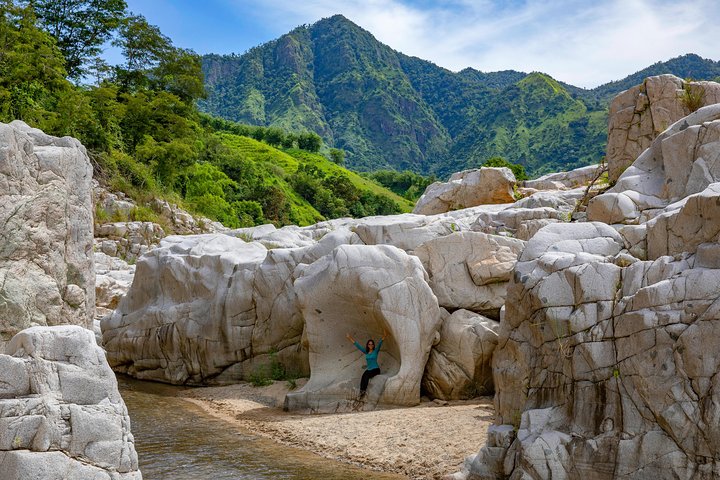
The canyon is not a national park: it is a protected gorge cut by the Río Usabón, cared for by Para la Naturaleza, and you enter it by reservation or with a guide, since the access crosses private land. It sits in the interior of Puerto Rico, in the municipality of Aibonito and Barranquitas, in the central mountains south of San Juan. The payoff is a deep green ravine with waterfalls, big ferns and a few rough footpaths, often with nobody else around. Arrive early, because the light drops into the gorge fast and the clay trail turns slick after rain. Access is rough, signage is thin and there is no real infrastructure. Independent hikers who like scrambling will love it; anyone wanting tidy boardwalks should skip it.

Discover everything you want to know in the 📖 Puerto Rico Travel Guide.


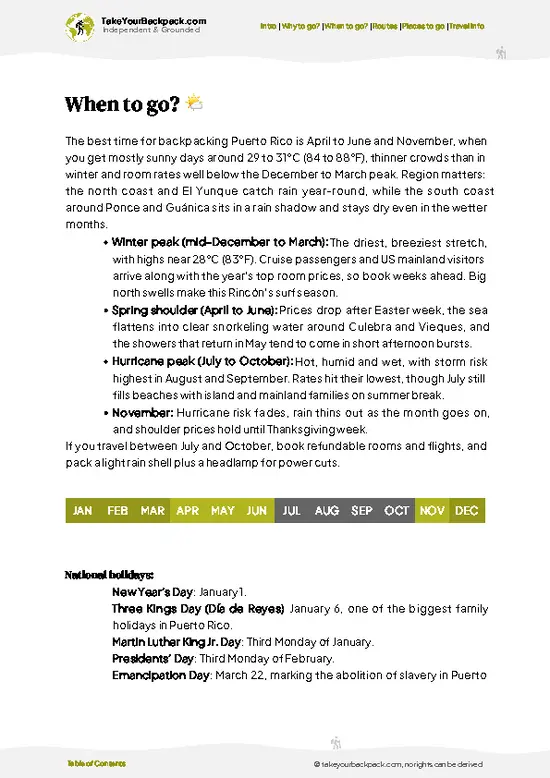
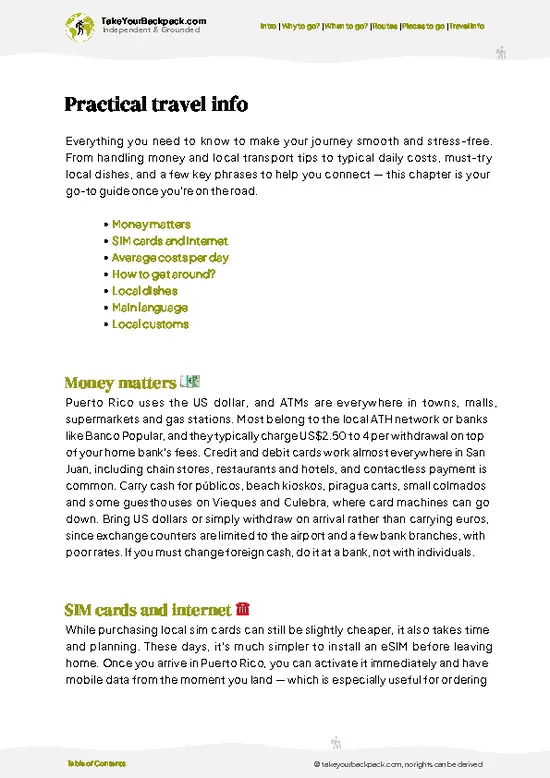
example page 0 from our offline Travel Guide for Puerto Rico
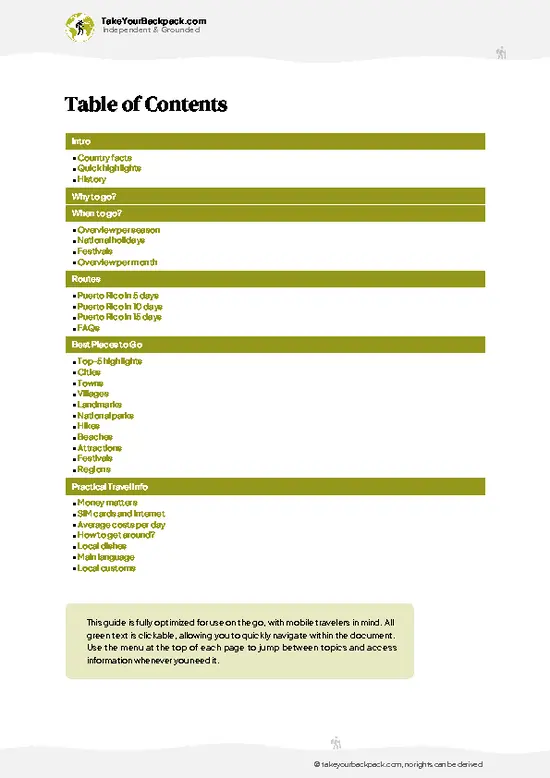
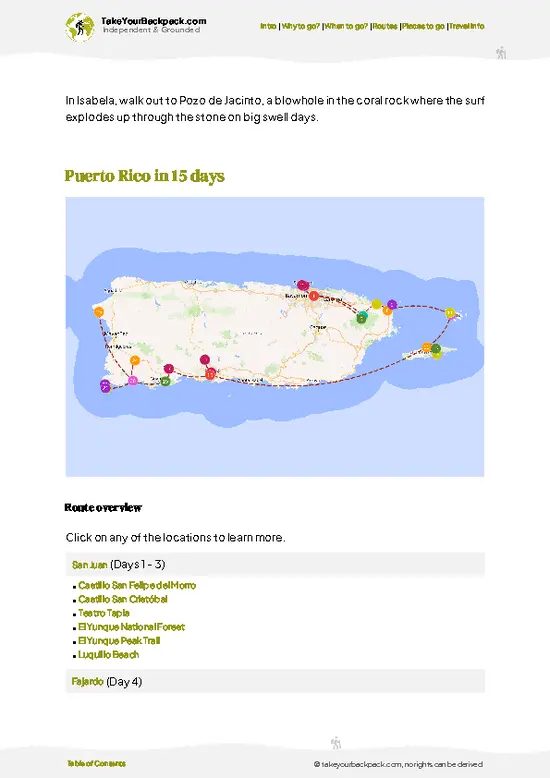
example page 1 from our offline Travel Guide for Puerto Rico
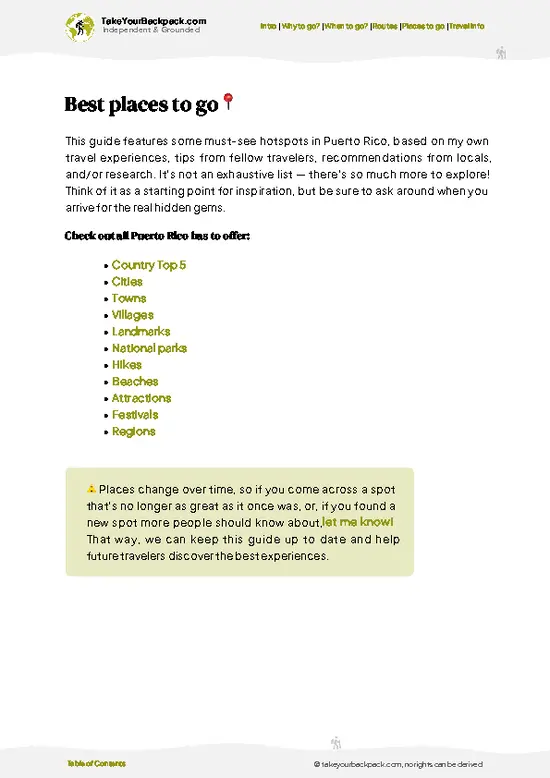
example page 2 from our offline Travel Guide for Puerto Rico
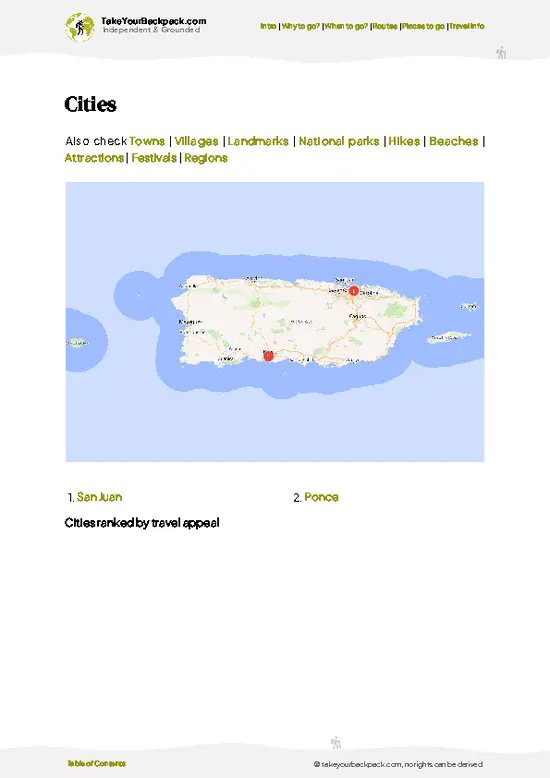
example page 3 from our offline Travel Guide for Puerto Rico
example page 4 from our offline Travel Guide for Puerto Rico
example page 5 from our offline Travel Guide for Puerto Rico
example page 6 from our offline Travel Guide for Puerto Rico
example page 7 from our offline Travel Guide for Puerto Rico
Loading the map 🌍
CLICK TO FILTER
cities
towns
villages
landmarks
national parks
hikes
beaches
attractions
festivals
regions
SHOW COUNTRY’S BESTSHOW ALL

✨ Why go?
Ranked #10 national park in Puerto Rico
What makes it a must-see national park

Cañón de San Cristóbal rewards backpackers who like finding their own line. The draw is the scramble down to the river, following it past the waterfalls of the Usabón gorge, and stop wherever the water pools look good. The canyon is among the deepest in Puerto Rico, with walls covered in tree ferns and giant bamboo that you rarely see on the coast. The surrounding mountain towns, including Aibonito with its flower festival and cool highland air, make a cheap, local base with roadside kitchens and small lodgings. Self-guided travelers with sturdy shoes, a sense of direction and a taste for mud get the most from it.

💡 HighlightsMust-see experiences and standout moments

  1. Usabón River Gorge: the main draw, a steep ravine where the river drops through boulders and pools beneath dense forest.
  2. Canyon Rim Viewpoints: roadside lookouts near the Aibonito side give a wide view into the green depths, ideal for a quick look before you descend.
  3. Waterfalls of the Usabón: seasonal cascades that swell after rain and thin to ribbons in dry spells, each with a plunge pool beneath.
  4. Tree Fern Forest: cool, damp slopes where tall ferns and bamboo arch over the trail, and coquí frogs call after dusk.
  5. Riverbed Scramble: boulder hopping and wading along the water, the closest thing here to a signature route.
  6. Birdlife of the Gorge: Puerto Rican tody and woodpecker sightings are common in the canopy if you go early and stay quiet.
  7. Aibonito Town Overlooks: the nearby highland town offers
… read more 👉
  1. Usabón River Gorge: the main draw, a steep ravine where the river drops through boulders and pools beneath dense forest.
  2. Canyon Rim Viewpoints: roadside lookouts near the Aibonito side give a wide view into the green depths, ideal for a quick look before you descend.
  3. Waterfalls of the Usabón: seasonal cascades that swell after rain and thin to ribbons in dry spells, each with a plunge pool beneath.
  4. Tree Fern Forest: cool, damp slopes where tall ferns and bamboo arch over the trail, and coquí frogs call after dusk.
  5. Riverbed Scramble: boulder hopping and wading along the water, the closest thing here to a signature route.
  6. Birdlife of the Gorge: Puerto Rican tody and woodpecker sightings are common in the canopy if you go early and stay quiet.
  7. Aibonito Town Overlooks: the nearby highland town offers hillside views and local fritters to eat after your muddy hike.
Start with the Canyon Rim Viewpoints, because seeing the gorge's depth first helps you judge the descent and the weather before you commit.
Spotted a mistake or missing something? Contact us.

Things to do near Cañón de San Cristóbal

Ratings based on Tripadvisor reviews. When you book through this link, you support our work at no extra cost to you.

🌤️ When to go?Seasonal considerations and timing

  • Dry Season (December to April): Cañón de San Cristóbal is easiest to hike now, with highs of 27 to 30°C (81 to 86°F), nights near 19 to 21°C (66 to 70°F) and trails firmer underfoot. Daylight runs roughly 11 to 12 hours.
  • Shoulder Months (May and June): Showers start building in the afternoon, so start early. Highs reach 29 to 32°C (84 to 90°F), and the creek and waterfalls run fuller.
  • Wet Season (July to November): Heavy downpours and hurricane risk make the clay trails slick and the stream crossings dangerous. Lodging near Aibonito can be cheaper midweek.
  • Holidays and Weekends: Local families fill the trailhead on Saturdays and Sundays, and around Christmas and Easter, so lodging rates edge up.
Pick a weekday morning in February or March for dry footing and quiet trails.

source: climatestotravel.comJANJanuary: highly recommended for travelingFEBFebruary: highly recommended for travelingMARMarch: excellent for travelingAPRApril: excellent for travelingMAYMay: fair for travelingJUNJune: fair for travelingJULJuly: fair for travelingAUGAugust: fair for travelingSEPSeptember: fair for travelingOCTOctober: fair for travelingNOVNovember: fair for travelingDECDecember: highly recommended for traveling
puerto-rico-national-park-canon-de-san-cristobal
© Google |

✈️ The backpacker research shortcutPuerto Rico Travel Guide

An offline-friendly backpacking guide with optimized travel routes, ranked highlights, transport advice, and the best areas to stay.
example page 0 from our offline Travel Guide for Puerto Rico
example page 1 from our offline Travel Guide for Puerto Rico
example page 2 from our offline Travel Guide for Puerto Rico
example page 3 from our offline Travel Guide for Puerto Rico
example page 4 from our offline Travel Guide for Puerto Rico
example page 5 from our offline Travel Guide for Puerto Rico
example page 6 from our offline Travel Guide for Puerto Rico
example page 7 from our offline Travel Guide for Puerto Rico
The digital guide (310 pages) contains:
✅ 81 highlights, ranked by travel appeal
✅ Optimized 5, 10 & 15-day travel routes
✅ Cities, national parks, landmarks, beaches
✅ How to get around
✅ Offline-friendly for travel without Wi-Fi
👉 Click to see all 30+ guide features

📅 Plan smarter in minutes, not weeks
✅ Month by month travel advice
✅ Festivals & national holidays
✅ Budget expectations

🗺️ Go to the right places, skip the overrated ones
✅ Honest pros & cons of destinations
✅ Top hikes, parks & viewpoints
✅ Lesser-known places most travelers miss
✅ Clear “worth it vs skip it” guidance

🛏️ Travel smoothly without rookie mistakes
✅ Best areas to stay
✅ Transport systems explained simply
✅ Common scams & safety advice
✅ SIM cards, money & practical tips

🌍 Understand the country, not just visit it
✅ Culture & traditions
✅ 52 Essential phrases & customs
✅ Festivals worth planning around
✅ Traveler-friendly historical context
✅ Insights that make places more meaningful

📱 Built for real travel conditions
✅ Fully downloadable PDF
✅ Works completely offline
✅ Optimized for phone use
✅ Useful in remote areas & buses
✅ Everything in one place
Stop searching, start planning
Get instant access to your full guide. 30‑day money-back guarantee.
+ Add another guide for just

By proceeding you agree to our terms.
Sent to your inbox immediately after payment • 100% Secure Checkout
Best Backpacking Travel Advisor 2025 tourism awardBest Backpacking
Travel Advisor
2025
What others say about Take Your Backpack Guides:
⭐⭐⭐⭐⭐
Fantastic, amazing amount of information!
⭐⭐⭐⭐⭐
My goodness this is amazing, it's what I've been looking for hats off too you!
⭐⭐⭐⭐⭐
I think this is absolutely BRILLIANT
⭐⭐⭐⭐
Very complete and informative. It's still missing places, but I gotta to commend you
⭐⭐⭐⭐⭐
This is truly amazing, thank you, can't wait to explore it with my kids!
⭐⭐⭐⭐⭐
Awesome resource, thank you!
⭐⭐⭐⭐⭐
This is amazing! Can't wait to explore the ones I haven't seen
⭐⭐⭐⭐
I love this! Well done, great idea.
⭐⭐⭐⭐⭐
Thanks for taking the time to make this gem!
⭐⭐⭐⭐⭐
This might be the best website I've ever seen.
⭐⭐⭐⭐⭐
Congratulations, and thank you so much for your work; it's incredibly valuable.
⭐⭐⭐⭐
In all seriousness I think you did a great job pointing out the important spots
⭐⭐⭐⭐⭐
10/10 very good
⭐⭐⭐⭐⭐
As someone who's only just starting to visit regularly this is awesome, thank you.
⭐⭐⭐⭐
Thank you very much! I'm going to visit my dad, it's going to be very useful!
⭐⭐⭐⭐⭐
This is really cool! We'll be travelling for the first time and this definitely come in handy.
⭐⭐⭐⭐⭐
You are now our minister of culture, congratulations 👨‍💼
⭐⭐⭐⭐⭐
Just wanted to tell you that this is a pearl! Going to follow your recommendations.
⭐⭐⭐⭐⭐
This is so cool. I'll definitely be using the resource for my travels soon.
⭐⭐⭐⭐⭐
This is very impressive! Good work.
⭐⭐⭐⭐⭐
This is an amazing and informative site. Very well done!

🛏️ Where to stay?Choosing the right base

Aibonito is the best base for Cañón de San Cristóbal, about 10 minutes from the canyon by car, and there is no lodging or camping inside the canyon itself. The town has a handful of small guesthouses and family-run inns, typically US$70 to 130 a night, and a few vacation rentals that sleep groups for less per person. Dedicated hostels are scarce in the mountains, so backpackers on a tight budget often stay in Barranquitas (roughly 20 minutes away) or Coamo, which has simple hotels and a thermal-spring area. Cayey, about 30 minutes east, offers more chain and mid-range options plus restaurants … read more 👉
Aibonito is the best base for Cañón de San Cristóbal, about 10 minutes from the canyon by car, and there is no lodging or camping inside the canyon itself. The town has a handful of small guesthouses and family-run inns, typically US$70 to 130 a night, and a few vacation rentals that sleep groups for less per person. Dedicated hostels are scarce in the mountains, so backpackers on a tight budget often stay in Barranquitas (roughly 20 minutes away) or Coamo, which has simple hotels and a thermal-spring area. Cayey, about 30 minutes east, offers more chain and mid-range options plus restaurants and groceries. Aibonito is also known for its flower festival in June, when rooms fill, so book ahead. If you have a car, a rural cabin or Airbnb in the surrounding hills gives cooler nights and quiet mornings. Stock up on water and snacks in town before heading to the trailhead.

👛 Costs (as of 22 October 2026)Money, prices, and spending tips

Cañón de San Cristóbal costs roughly US$90 to 270 a day for a backpacker, mostly for a rental car and a guesthouse in Aibonito.
CategoryBudget RangeLocal Reality
Entrance feeUS$0 to 10Access is generally free, though some local operators or guides charge for guided canyon trips.
AccommodationUS$50 to 130Guesthouses and rentals in Aibonito or Barranquitas. Hostels are rare, so the lower end suits shared stays in the off-season.
Local transportUS$25 to 60A rental car or rideshare is the practical option. Gas and parking near the trailhead are minimal costs.
Food and suppliesUS$15 to 30Local fondas serve rice, beans and pork plates for US$8 to 14. Groceries in Aibonito cover water and trail snacks.
Guide (optional)US$0 to 40Useful for a first visit during wet months.
Total Daily BudgetUS$90 to 270Typical
… read more 👉
Cañón de San Cristóbal costs roughly US$90 to 270 a day for a backpacker, mostly for a rental car and a guesthouse in Aibonito.
CategoryBudget RangeLocal Reality
Entrance feeUS$0 to 10Access is generally free, though some local operators or guides charge for guided canyon trips.
AccommodationUS$50 to 130Guesthouses and rentals in Aibonito or Barranquitas. Hostels are rare, so the lower end suits shared stays in the off-season.
Local transportUS$25 to 60A rental car or rideshare is the practical option. Gas and parking near the trailhead are minimal costs.
Food and suppliesUS$15 to 30Local fondas serve rice, beans and pork plates for US$8 to 14. Groceries in Aibonito cover water and trail snacks.
Guide (optional)US$0 to 40Useful for a first visit during wet months.
Total Daily BudgetUS$90 to 270Typical total for one day, counting high-season lodging.
⚠️ Prices can change and everyone travels differently, so take this as a rough guide. Hope it helps you plan your adventure!

🥾 TrailsHiking Cañón de San Cristóbal national park: highlights and difficulty

Cañón de San Cristóbal is a rugged place where the hiking is informal and follows the river and rough footpaths rather than marked trails. Most people walk in from the road near the rim, drop down a steep, often muddy path and then follow the Usabón through boulders and shallow pools. Allow a half day for a short out-and-back to the first falls, and longer if you push farther downstream.
  • Rim to river descent: a steep, clay-and-root path, difficult after rain, usually one to two hours round trip to reach the water.
  • Riverbed route: wading and boulder hopping along the Usabón, moderate to hard, with
… read more 👉
Cañón de San Cristóbal is a rugged place where the hiking is informal and follows the river and rough footpaths rather than marked trails. Most people walk in from the road near the rim, drop down a steep, often muddy path and then follow the Usabón through boulders and shallow pools. Allow a half day for a short out-and-back to the first falls, and longer if you push farther downstream.
  • Rim to river descent: a steep, clay-and-root path, difficult after rain, usually one to two hours round trip to reach the water.
  • Riverbed route: wading and boulder hopping along the Usabón, moderate to hard, with slippery rock and deep pools in places.
  • Terrain: loose soil, tree roots, wet stone and occasional rope-style handholds on the steeper sections.
  • Wildlife: coquí frogs, lizards, native birds and abundant ferns, best on cooler mornings.
The canyon is rarely crowded, and you may meet only a few local hikers on weekends. Visits into the canyon need a reservation with Para la Naturaleza or a guided trek, since access crosses private land. Public transport to this mountain area is thin, so most travelers arrive by rental car or ride from nearby towns. Wear shoes with real grip, carry water and a dry layer, and turn back if the river rises, since flash flooding is a real risk in the gorge.
⚠️ Hiking info can sometimes be outdated or inaccurate. Before you hit the trail, check the latest conditions with locals. If you do spot anything that's off, I'd love to hear from you, so I can update it for fellow travelers.

🛡️ SafetySafety Tips and Common Scams in Cañón de San Cristóbal

The main hazards at Cañón de San Cristóbal are slippery terrain and rain-swollen water. The trail drops steeply over wet rock, roots and clay, and some sections involve scrambling and creek crossings, so wear shoes with real grip and skip sandals. Flash floods can arrive quickly after mountain downpours, even if the sky above you is clear, so turn back when the water rises or turns brown. Check the forecast and start early. Cell reception is patchy in the canyon, so tell someone your plan and consider going with a local guide if you are new to it. Carry at least 2 liters of water, insect repellent and a small first-aid kit. Wildlife is not a concern beyond mosquitoes, coquí frogs and the occasional wasp nest. Pack out your trash.

FAQCommon questions from travelers

Cañón de San Cristóbal needs half a day to a full day for most hikers. The main descent and return takes roughly 3 to 5 hours depending on how long you linger at the creek and waterfalls. Adding a second day lets you explore Aibonito and nearby Barranquitas.
Reaching Cañón de San Cristóbal without a car is difficult. Public transit in Puerto Rico's mountains is limited, and there is no regular bus to the trailhead near Aibonito. Most backpackers rent a car in San Juan (about 1 hour 15 minutes away) or use rideshare or a local guide from Aibonito.
Cañón de San Cristóbal does not have a formal national park entrance fee. Access into the canyon is by reservation through Para la Naturaleza or on a guided trek, which costs about US$150 per person with outfitters such as Go Hiking PR. Check conditions locally before you go, since access points can change after storms.
⚠️ Things can change over time, so always validate details locally before you go.

Other Puerto Rican national parks near Cañón de San Cristóbal

Explore more nearby:


💡 Not sure where to go next?
Create a personalized itinerary for Puerto Rico including Cañón de San Cristóbal and the places that fit your trip.

Generate my itinerary

👉 Discover all national parks

Or checkout all Puerto Rico has to offer (think cities, towns, villages, national parks, hikes, beaches, festivals)
Country photo of Puerto Rico

We 💚 feedbackIs it worth it?

Give Cañón de San Cristóbal a long morning, or a full day if you want to follow the river to the pools. I would bring grippy shoes and a dry change of socks, and I would stay overnight in Aibonito so you start fresh and early.

✍️ Help improve this page!
The information on this page is based on in-depth research, insights shared by experienced travelers, and feedback from the local travel community in Puerto Rico. While every effort is made to keep the information accurate and current, conditions can change — so if you spot anything incorrect or outdated, please get in touch.


🙋‍♂️ Give feedback

👋 Meet the founderWho’s Behind Take Your Backpack?

Johan, backpacker and founder of TakeYourBackpackHi, I’m Johan (Netherlands 🇳🇱), the creator of TakeYourBackpack. Over the past 3 decades, I’ve backpacked through 90+ countries across six continents, gaining extensive experience with independent travel, long-term trips, and overland routes.

This site is built on a combination of firsthand travel experience and carefully curated insights from other backpackers. Many guides are based on places I’ve personally visited, while others bring together tips, observations, and practical advice shared by trusted travelers I’ve met along the way.

The goal is to provide realistic, experience-driven guidance — not generic itineraries — so you can explore destinations with better context, clearer expectations, and more confidence.