×

Puerto Rico🇵🇷 | best national parksExplore the 10 Best national parks in Puerto Rico

In Puerto Rico, national parks are defined by their rich biodiversity and unique ecosystems, offering a blend of lush rainforests, stunning coastlines, and mountainous terrains. Each park presents distinct opportunities for backpacking and independent travel, shaped by regional characteristics and seasonal variations. For instance, El Yunque is ideal for those seeking vibrant flora and waterfalls, while Cabo Rojo offers coastal adventures and birdwatching. Choosing the right park influences your experience—affecting the vibe, safety, and cultural immersion. Timing your visit can also impact accessibility and budget, making it essential to align your travel style with the park’s offerings for a fulfilling exploration.

By Johan Kruseman 🇳🇱 | Updated September 5, 2026
Explore the best hikes in Puerto Rico

Why go?What Makes Them Special

The national parks in Puerto Rico are a unique blend of tropical ecosystems and rich cultural history, setting them apart from parks in other countries. The island’s biodiversity is staggering, with lush rainforests, coastal mangroves, and coral reefs, all teeming with life. This variety offers a playground for adventurers, from hiking to snorkeling, but it also presents a challenge: the trade-off between accessibility and immersive experiences. Some parks are easily reachable, yet they may lack the depth of exploration found in more remote areas.

Puerto Rico’s geographic location contributes to its distinct climate, with a mix of tropical and subtropical conditions. This means that while the weather is often favorable for outdoor activities, it can also lead to sudden rain showers, especially … read more 👉
The national parks in Puerto Rico are a unique blend of tropical ecosystems and rich cultural history, setting them apart from parks in other countries. The island’s biodiversity is staggering, with lush rainforests, coastal mangroves, and coral reefs, all teeming with life. This variety offers a playground for adventurers, from hiking to snorkeling, but it also presents a challenge: the trade-off between accessibility and immersive experiences. Some parks are easily reachable, yet they may lack the depth of exploration found in more remote areas.

Puerto Rico’s geographic location contributes to its distinct climate, with a mix of tropical and subtropical conditions. This means that while the weather is often favorable for outdoor activities, it can also lead to sudden rain showers, especially in the mountains. Travelers should be prepared for these shifts, as they can impact plans and safety.

Infrastructure varies across the parks. Some areas are well-developed with amenities, while others require a more rugged approach. This disparity can affect the overall experience, as those seeking solitude may find themselves in less accessible regions, enhancing their connection to nature but demanding more effort to reach. Understanding these dynamics is crucial for making the most of Puerto Rico’s national parks, ensuring a rewarding adventure that balances exploration with practicality.
Evaluating the Top Choices
The list of best national parks in Puerto Rico is created based on landscapes, wildlife, adventure opportunities, facilities, and overall experience. If you feel a national park is missing in this list, please let us know.

When to go?Seasonal Guide to Visiting

Seasonality plays a crucial role in planning visits to national parks in Puerto Rico. The island experiences a tropical climate, with two main seasons: dry and wet. The dry season, typically from December to April, offers the best conditions for exploration. Expect lower humidity, pleasant temperatures, and clearer skies. Wildlife visibility is also heightened during this period, making it ideal for spotting birds and other fauna.

Optimal months for visiting are January through March. These months provide a sweet spot for comfortable hiking conditions and vibrant scenery. However, this is also peak tourist season, leading to crowded trails and higher accommodation costs.

Shoulder seasons, like late April to June and September to November, present trade-offs. Late spring can still offer … read more 👉
Seasonality plays a crucial role in planning visits to national parks in Puerto Rico. The island experiences a tropical climate, with two main seasons: dry and wet. The dry season, typically from December to April, offers the best conditions for exploration. Expect lower humidity, pleasant temperatures, and clearer skies. Wildlife visibility is also heightened during this period, making it ideal for spotting birds and other fauna.

Optimal months for visiting are January through March. These months provide a sweet spot for comfortable hiking conditions and vibrant scenery. However, this is also peak tourist season, leading to crowded trails and higher accommodation costs.

Shoulder seasons, like late April to June and September to November, present trade-offs. Late spring can still offer decent weather, but expect increasing humidity and occasional rain. Fall brings fewer crowds and lower prices, but also the risk of tropical storms.

Rainfall is a significant factor, especially from May to October. Trails can become muddy and challenging, impacting accessibility. Planning around these patterns ensures a more rewarding experience, balancing the allure of lush landscapes with the realities of weather and crowds.

national park hoppingSuggested Travel Strategies

Start in the West. Begin your journey in the northwest, hitting Rincón and Guanica first. These parks are relatively close, about an hour apart. Spend half a day in each to soak in the coastal views and unique ecosystems.

Move Eastward. After the west, head to El Yunque. This rainforest park deserves a full day. The trails vary from easy to challenging, so choose based on your energy levels. The drive from Guanica to El Yunque takes about two hours, so plan for a late afternoon arrival.

Consider Timing. Early mornings are best for both Rincón and El Yunque to avoid crowds and catch wildlife. In contrast, Guanica shines during sunset, with its golden hour lighting up the coast.

Watch for Common Pitfalls. Many travelers underestimate travel times between parks. Factor in winding roads and … read more 👉
Start in the West. Begin your journey in the northwest, hitting Rincón and Guanica first. These parks are relatively close, about an hour apart. Spend half a day in each to soak in the coastal views and unique ecosystems.

Move Eastward. After the west, head to El Yunque. This rainforest park deserves a full day. The trails vary from easy to challenging, so choose based on your energy levels. The drive from Guanica to El Yunque takes about two hours, so plan for a late afternoon arrival.

Consider Timing. Early mornings are best for both Rincón and El Yunque to avoid crowds and catch wildlife. In contrast, Guanica shines during sunset, with its golden hour lighting up the coast.

Watch for Common Pitfalls. Many travelers underestimate travel times between parks. Factor in winding roads and potential traffic. Avoid cramming too many parks into one day; it leads to fatigue and missed experiences.

Balance Depth and Speed. If time is tight, prioritize parks that align with your interests. For a deeper experience, spend more time in fewer parks. Flexibility is key; adjust plans based on weather or energy levels.

The ListTop national parks of Puerto Rico

1 El Yunque National Forest

rainforest canopy, waterfalls, cloud forest, endemic species

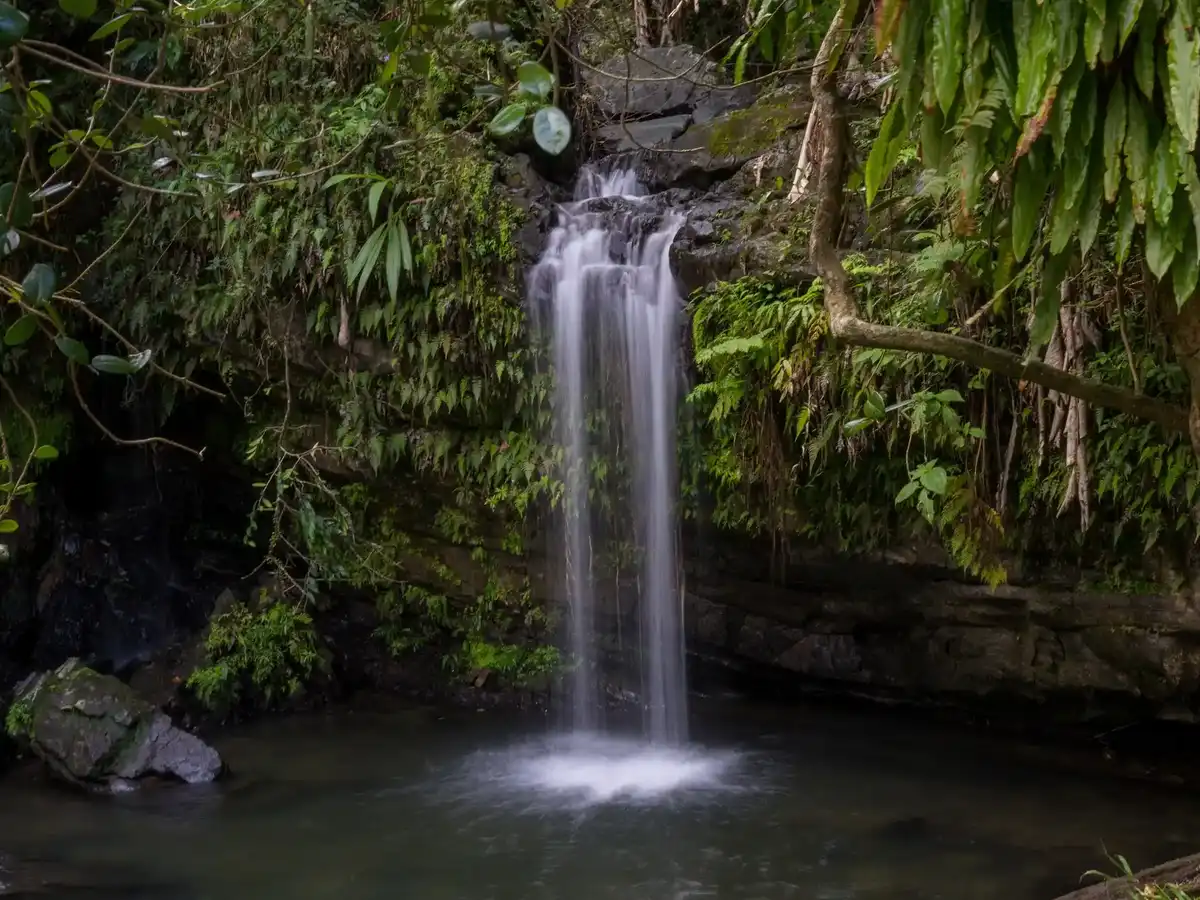
Ascend misty slopes through dense jungle, listen for coquí calls, and cool off beneath waterfalls surrounded by lush, ever-changing greenery.

puerto-rico-national-park-el-yunque-national-forest
© Google | Nate Limback

2 Vieques National Wildlife Refuge

wild beaches, sea turtle nesting, coastal lagoons, subtropical brush

Wander undeveloped coastlines, watch for nesting turtles, and explore quiet trails through brushland and tranquil lagoons on an offshore island.

puerto-rico-national-park-vieques-national-wildlife-refuge
© Google | William Cortes

3 Guánica State Forest

dry forest, cactus stands, limestone hills, rare flora

Walk sun-baked trails through the Caribbean’s largest dry forest, encountering unusual plants and panoramic views over the southern coast.

puerto-rico-national-park-guanica-state-forest
© Google | Raul M-c

4 Las Cabezas de San Juan Nature Reserve

bioluminescent lagoon, mangroves, lighthouse, coastal boardwalks

Experience shifting ecosystems on short walks, from glowing waters at night to mangrove tunnels and a historic lighthouse overlooking the Atlantic.

puerto-rico-national-park-las-cabezas-de-san-juan-nature-reserve v1
© Google |

5 Mona Island

limestone cliffs, sea caves, endemic iguanas, remote beaches

Camp on an isolated island where rugged trails lead to hidden caves, rare wildlife, and untouched Caribbean shores far from crowds.

puerto-rico-national-park-mona-island
© Google | Jason Ramirez

6 Cabo Rojo National Wildlife Refuge

salt flats, birdwatching, coastal lagoons, arid trails

Spot migratory birds along saline flats, hike dry coastal paths, and observe unique wildlife in a landscape shaped by wind and salt.

puerto-rico-national-park-cabo-rojo-national-wildlife-refuge v1
© Google |

7 Toro Negro State Forest

highest peaks, mountain streams, dense forest, cool climate

Trek through Puerto Rico’s highest terrain, crossing clear streams and shaded paths in a region known for its refreshing temperatures.

puerto-rico-national-park-toro-negro-state-forest
© Google |

8 Maricao State Forest

mountain ridges, coffee plantations, observation towers, cloud mist

Climb winding roads through cool, high-altitude forests, pausing at lookouts and discovering remnants of Puerto Rico’s coffee-growing heritage.

9 Bosque Estatal de Guajataca

limestone caves, sinkholes, forested ridges, scenic overlooks

Explore a network of trails leading to caves and sinkholes, with frequent breaks for sweeping views across the island’s northern interior.

10 Cañón de San Cristóbal

deep canyon, waterfalls, vertical cliffs, river crossings

Descend into a dramatic gorge where steep walls and rushing water create challenging hikes and rare glimpses of Puerto Rico’s interior wildness.

puerto-rico-national-park-canon-de-san-cristobal
© Google |

11 Bosque Estatal de Carite

mountain lakes, pine groves, misty hills, cool breezes

Hike through pine-scented air along ridges and lakes, enjoying cooler temperatures and views stretching across Puerto Rico’s southeast.

12 Rio Abajo State Forest

karst formations, underground rivers, parrot habitat, limestone caves

Venture into a landscape of sinkholes and caves, listening for the calls of endangered parrots amid thick, tangled forest.

puerto-rico-national-park-rio-abajo-state-forest
© Google |

13 Bosque Estatal de Cambalache

karst hills, shaded trails, cycling routes, lowland forest

Cycle or walk beneath a canopy of broadleaf trees, winding through limestone hills and shaded paths favored by local wildlife.

puerto-rico-national-park-bosque-estatal-de-cambalache
© Google |

14 Bosque Estatal de Susúa

semi-dry forest, rare orchids, rolling hills, bird habitat

Follow gentle slopes through a patchwork of dry and moist forest, searching for orchids and spotting birds unique to Puerto Rico’s southwest.

Think you know Puerto Rico?

Prove you’re a true local — uncover 4 lesser-known national parks in Puerto Rico that locals tend to keep to themselves.
Loading the map 🌍

Expert viewPro Tips for Exploring the Best

Terrain
Puerto Rico’s national parks offer a stunning variety of terrains, from lush rainforests to rugged coastlines. El Yunque National Forest, the crown jewel, is a tropical rainforest that demands your attention. Expect steep trails, cascading waterfalls, and a canopy that feels alive. The terrain can be challenging; some trails are steep and slippery, especially after rain. If you’re short on time, focus on the main trails like La Mina or Big Tree. They pack a punch in terms of scenery without requiring a full day.

In contrast, the dry forests of Guánica State Forest provide a different experience. Here, the trails are less strenuous, making it easier to cover more ground. However, the trade-off is that you might miss the vibrant biodiversity found in the rainforest. If you want to … read more 👉
Terrain
Puerto Rico’s national parks offer a stunning variety of terrains, from lush rainforests to rugged coastlines. El Yunque National Forest, the crown jewel, is a tropical rainforest that demands your attention. Expect steep trails, cascading waterfalls, and a canopy that feels alive. The terrain can be challenging; some trails are steep and slippery, especially after rain. If you’re short on time, focus on the main trails like La Mina or Big Tree. They pack a punch in terms of scenery without requiring a full day.

In contrast, the dry forests of Guánica State Forest provide a different experience. Here, the trails are less strenuous, making it easier to cover more ground. However, the trade-off is that you might miss the vibrant biodiversity found in the rainforest. If you want to hit multiple parks, consider the terrain and your energy levels. Mixing a rainforest hike with a coastal stroll can balance your experience.

Park Infrastructure
Infrastructure varies significantly across parks. El Yunque is well-equipped with visitor centers, restrooms, and marked trails, making it accessible for families and first-timers. However, during peak seasons, it can feel crowded. Arrive early to snag parking and enjoy the trails before the masses.

On the flip side, parks like Cabo Rojo National Wildlife Refuge have limited facilities. You’ll find fewer marked trails and amenities, but the trade-off is solitude and a chance to connect with nature. If you’re planning to visit multiple parks, factor in travel time and the availability of facilities. A well-planned day can mean hitting two parks, but be prepared for a more rugged experience at the less developed sites.

Wildlife Activity
Wildlife is a major draw in Puerto Rico’s national parks. El Yunque is home to the endangered Puerto Rican parrot, but spotting one requires patience and a bit of luck. Early mornings are your best bet for wildlife activity. The cooler temperatures mean animals are more active, and you’ll have a better chance of seeing them.

In contrast, the coastal parks like Vieques National Wildlife Refuge offer different wildlife experiences. Here, you can see sea turtles and a variety of bird species. The trade-off? You’ll need to plan your visit around the tides for the best beach access and wildlife sightings. If you’re keen on wildlife, dedicate time to each park’s unique offerings, but don’t expect to see everything in one trip.

Time Management
Realistically, aim to visit two to three parks in a week. Each park deserves at least half a day to appreciate its unique features. If you’re crunched for time, prioritize based on your interests—rainforest hikes, coastal views, or wildlife spotting.

Consider the travel constraints; some parks are more remote, requiring longer drives. Factor in time for meals and rest, especially if you’re hiking. A well-planned itinerary can help you maximize your experience without feeling rushed.

Safety & Cultural Considerations
Safety is paramount. While Puerto Rico is generally safe for tourists, be aware of your surroundings, especially in remote areas. Carry enough water and snacks, as some parks lack amenities.

Culturally, respect local customs and the environment. Many parks are sacred to the indigenous Taino people. Leave no trace and be mindful of your impact. Engaging with local guides can enhance your experience and provide deeper insights into the culture and ecology of the area.

In summary, Puerto Rico’s national parks offer diverse experiences that cater to various interests. Plan wisely, respect the environment, and you’ll walk away with a richer understanding of this beautiful island.

✈️ The backpacker research shortcutPuerto Rico Travel Guide

An offline-friendly backpacking guide with optimized travel routes, ranked highlights, transport advice, and the best areas to stay.
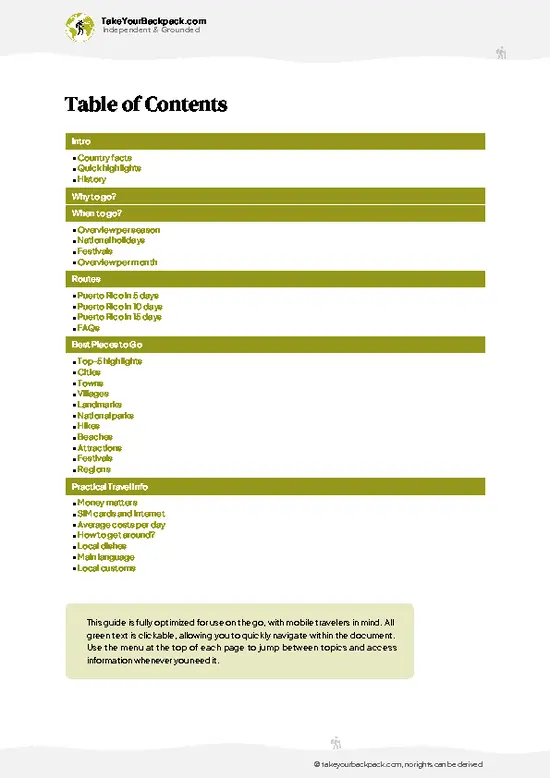
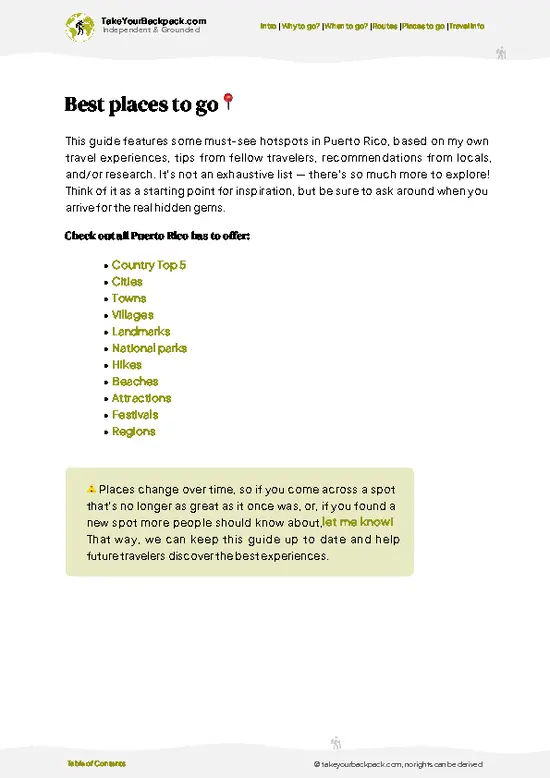
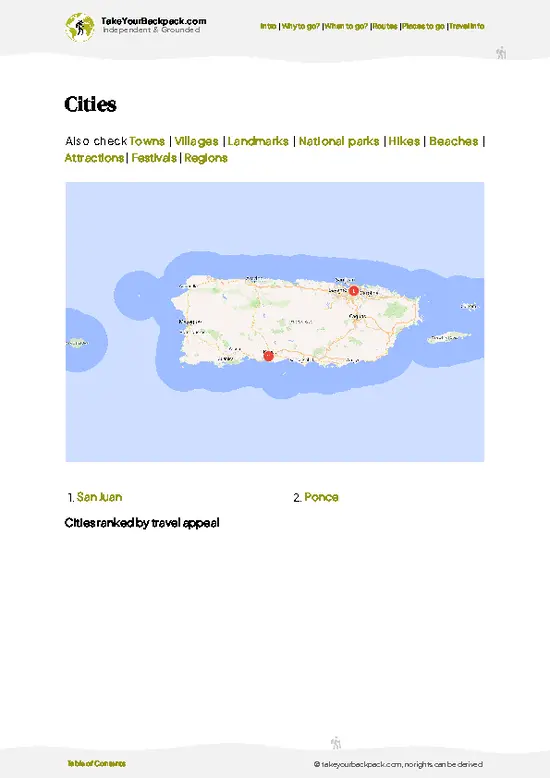
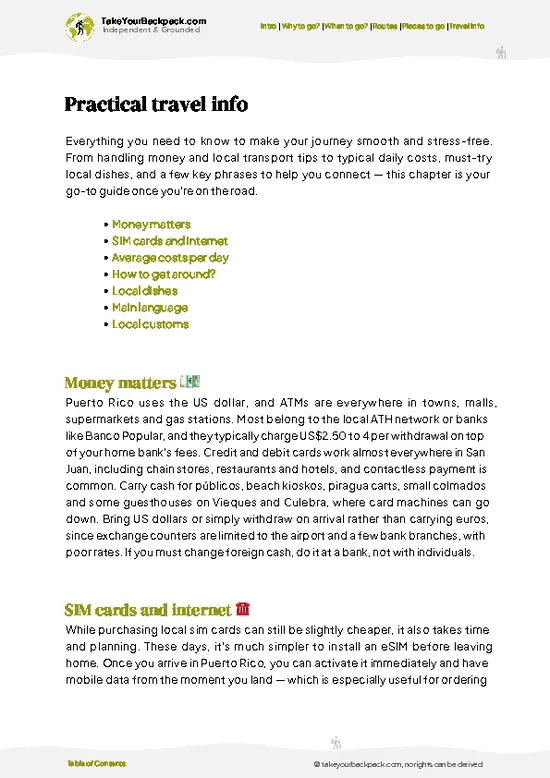
example page 0 from our offline Travel Guide for Puerto Rico
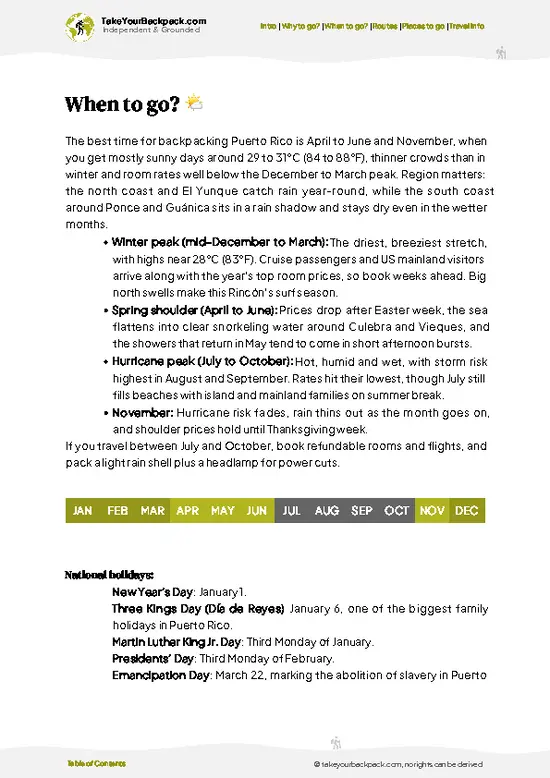
example page 1 from our offline Travel Guide for Puerto Rico
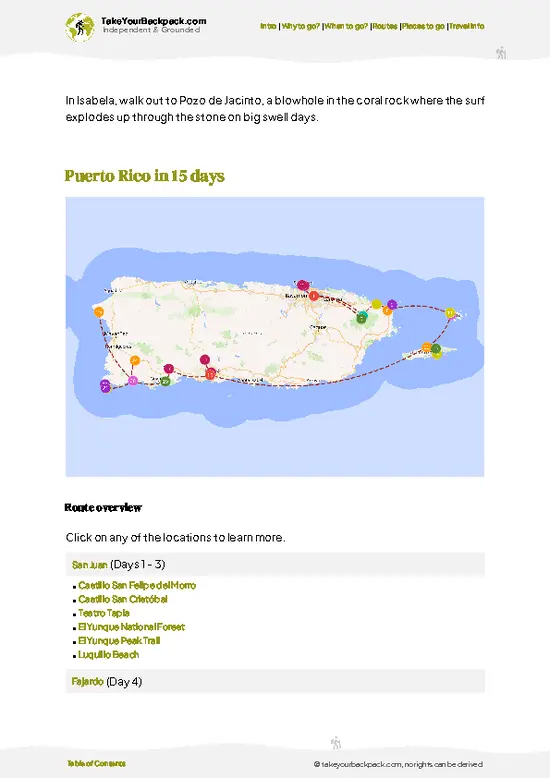
example page 2 from our offline Travel Guide for Puerto Rico
example page 3 from our offline Travel Guide for Puerto Rico
example page 4 from our offline Travel Guide for Puerto Rico
example page 5 from our offline Travel Guide for Puerto Rico
example page 6 from our offline Travel Guide for Puerto Rico
example page 7 from our offline Travel Guide for Puerto Rico
The digital guide (323 pages) contains:
88 highlights, ranked by travel appeal
Optimized 5, 10 & 15-day travel routes
Cities, national parks, landmarks, beaches
How to get around
Offline-friendly for travel without Wi-Fi
👉 Click to see all 30+ guide features

📅 Plan smarter in minutes, not weeks
Month by month travel advice
Festivals & national holidays
Budget expectations

🗺️ Go to the right places, skip the overrated ones
Honest pros & cons of destinations
Top hikes, parks & viewpoints
Lesser-known places most travelers miss
Clear “worth it vs skip it” guidance

🛏️ Travel smoothly without rookie mistakes
Best areas to stay
Transport systems explained simply
Common scams & safety advice
SIM cards, money & practical tips

🌍 Understand the country, not just visit it
Culture & traditions
52 Essential phrases & customs
Festivals worth planning around
Traveler-friendly historical context
Insights that make places more meaningful

📱 Built for real travel conditions
Fully downloadable PDF
Works completely offline
Optimized for phone use
Useful in remote areas & buses
Everything in one place
Save weeks of stressful planning
Get instant access to your full guide. 30‑day money-back guarantee.
+ Add another guide for just US$7.80

By proceeding you agree to our terms.
Sent to your inbox immediately after payment • 100% Secure Checkout
Best Backpacking Travel Advisor 2025 tourism awardBest Backpacking
Travel Advisor
2025
What others say about Take Your Backpack Guides:
⭐⭐⭐⭐⭐
Fantastic, amazing amount of information!
⭐⭐⭐⭐⭐
My goodness this is amazing, it's what I've been looking for hats off too you!
⭐⭐⭐⭐⭐
I think this is absolutely BRILLIANT
⭐⭐⭐⭐
Very complete and informative. It's still missing places, but I gotta to commend you
⭐⭐⭐⭐⭐
This is truly amazing, thank you, can't wait to explore it with my kids!
⭐⭐⭐⭐⭐
Awesome resource, thank you!
⭐⭐⭐⭐⭐
This is amazing! Can't wait to explore the ones I haven't seen
⭐⭐⭐⭐
I love this! Well done, great idea.
⭐⭐⭐⭐⭐
Thanks for taking the time to make this gem!
⭐⭐⭐⭐⭐
This might be the best website I've ever seen.
⭐⭐⭐⭐⭐
Congratulations, and thank you so much for your work; it's incredibly valuable.
⭐⭐⭐⭐
In all seriousness I think you did a great job pointing out the important spots
⭐⭐⭐⭐⭐
10/10 very good
⭐⭐⭐⭐⭐
As someone who's only just starting to visit regularly this is awesome, thank you.
⭐⭐⭐⭐
Thank you very much! I'm going to visit my dad, it's going to be very useful!
⭐⭐⭐⭐⭐
This is really cool! We'll be travelling for the first time and this definitely come in handy.
⭐⭐⭐⭐⭐
You are now our minister of culture, congratulations 👨‍💼
⭐⭐⭐⭐⭐
Just wanted to tell you that this is a pearl! Going to follow your recommendations.
⭐⭐⭐⭐⭐
This is so cool. I'll definitely be using the resource for my travels soon.
⭐⭐⭐⭐⭐
This is very impressive! Good work.
⭐⭐⭐⭐⭐
This is an amazing and informative site. Very well done!

🛏️ Where to stay?Accommodation Highlights

Yes — hostels and budget guesthouses are available across Puerto Rico, concentrated in Old San Juan, the San Juan metro (notably Santurce, Condado and Isla Verde) and in surf/beach towns like Rincón and the Fajardo/Luquillo area.
Old San Juan: excellent for walking to forts, museums and nightlife but expect tourist prices, narrow streets and nighttime noise; Santurce: cheaper dorms, vibrant arts and bars but spotty safety after dark in parts; Condado/Isla Verde: beachfront and close to the airport with more private budget rooms than true dorms, higher costs and easy beach access.
Rincón and other west-coast towns: cheaper in high season, great for surfing and a quieter nightlife but limited … read more 👉
Yes — hostels and budget guesthouses are available across Puerto Rico, concentrated in Old San Juan, the San Juan metro (notably Santurce, Condado and Isla Verde) and in surf/beach towns like Rincón and the Fajardo/Luquillo area.
Old San Juan: excellent for walking to forts, museums and nightlife but expect tourist prices, narrow streets and nighttime noise; Santurce: cheaper dorms, vibrant arts and bars but spotty safety after dark in parts; Condado/Isla Verde: beachfront and close to the airport with more private budget rooms than true dorms, higher costs and easy beach access.
Rincón and other west-coast towns: cheaper in high season, great for surfing and a quieter nightlife but limited public transit; Fajardo/Luquillo: best base for El Yunque and island ferries with fewer dorm-style options and extra ferry costs to consider.

If you enjoy meeting fellow travelers, consider choosing hostels with high ratings for atmosphere. On the other hand, if you prefer having your own space, a hotel might be a better option.

Puerto RicoSee More of Puerto Rico

👋 Meet the founderWho’s Behind Take Your Backpack?

Johan, backpacker and founder of TakeYourBackpackHi, I’m Johan (Netherlands 🇳🇱), the creator of TakeYourBackpack. Over the past decade, I’ve backpacked through 80+ countries across six continents, gaining extensive experience with independent travel, long-term trips, and overland routes.

This site is built on a combination of firsthand travel experience and carefully curated insights from other backpackers. Many guides are based on places I’ve personally visited, while others bring together tips, observations, and practical advice shared by trusted travelers I’ve met along the way.

The goal is to provide realistic, experience-driven guidance — not generic itineraries — so you can explore destinations with better context, clearer expectations, and more confidence.

Get full country guide •
Instant download • 88 highlights • Full Offline guide