×

Réunion🇷🇪 | best citiesDiscover the Best cities Across Réunion

Cities in Réunion are small, French-speaking, and pressed between volcanic slopes and the Indian Ocean. Expect the smell of diesel, frangipani and curry, Creole grills smoking on pavements, and tropical light that turns harsh by noon. The coast is warm, busy and car-friendly, the cooler highland towns are quieter, and independent travelers pay European prices, so the right pick depends on your budget and appetite for traffic.

By Johan Kruseman 🇳🇱 | Updated October 23, 2026
Explore the best towns in Réunion

Why go?Key Factors That Shape the Experience

Réunion is a French overseas department, so its towns run on French infrastructure: bakeries at dawn, euro prices, tidy pavements and roundabouts. Yet the population descends from African, Indian, Chinese and European settlers, and that mix shows in spice stalls, temples beside churches, and Creole spoken over French. Geography shapes everything. A young volcanic island rises to over 3,000 meters, so settlement hugs a narrow coastal strip, and urban life stays compact rather than sprawling.

Before choosing Réunion for its cities, know that it is not a budget destination. Groceries and rooms cost close to mainland France, and public buses are slow, with limited evening service. Heat and humidity peak from December to March, when cyclones can bring heavy rain. Many travelers treat towns as … read more 👉
Réunion is a French overseas department, so its towns run on French infrastructure: bakeries at dawn, euro prices, tidy pavements and roundabouts. Yet the population descends from African, Indian, Chinese and European settlers, and that mix shows in spice stalls, temples beside churches, and Creole spoken over French. Geography shapes everything. A young volcanic island rises to over 3,000 meters, so settlement hugs a narrow coastal strip, and urban life stays compact rather than sprawling.

Before choosing Réunion for its cities, know that it is not a budget destination. Groceries and rooms cost close to mainland France, and public buses are slow, with limited evening service. Heat and humidity peak from December to March, when cyclones can bring heavy rain. Many travelers treat towns as bases for hiking, so expect cities to be pleasant and walkable, not monumental.
Evaluating the Top Choices
The list of best cities in Réunion is created based on culture, vibe, attractions, transport ease, and local charm. If you feel a city is missing in this list, please let us know.

When to go?Seasonal Guide to Visiting

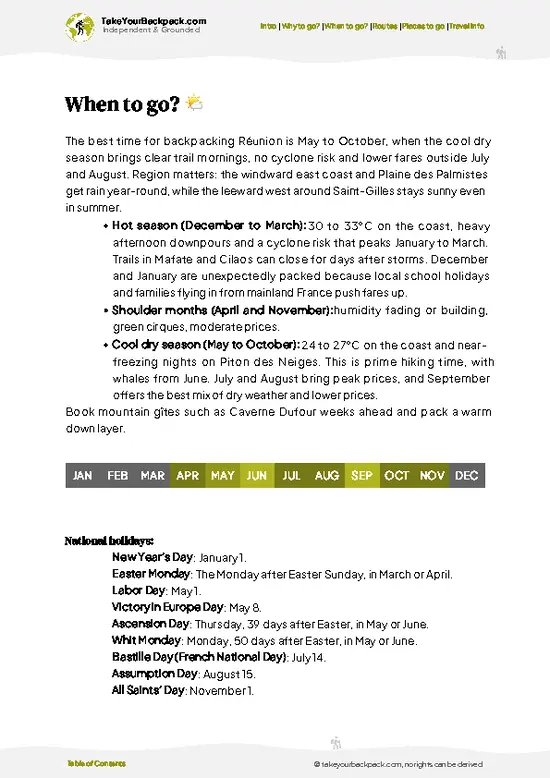
Best months: The best months for Réunion’s cities are May to October, the dry austral winter, when coastal days sit around 24 to 28°C, humidity drops and the light is clear and soft. Rain is rare on the western, leeward coast, while the east stays wetter all year.
Shoulder and peak: November and April are the shoulder months, with warmer days near 28 to 30°C and lighter crowds, and usually lower flight and rental prices. July and August, plus the December holidays, bring French vacationers, so rooms and rental cars cost 20 to 40 percent more and sell out early. Wet season: From January to March, expect 30 to 33°C, thick humidity, afternoon downpours and the risk of cyclone alerts that close roads and shops. Highland towns turn chilly at night, often 10 to 15°C in winter, so pack a layer.

city hoppingOptimizing Your Multi-Stop Itinerary

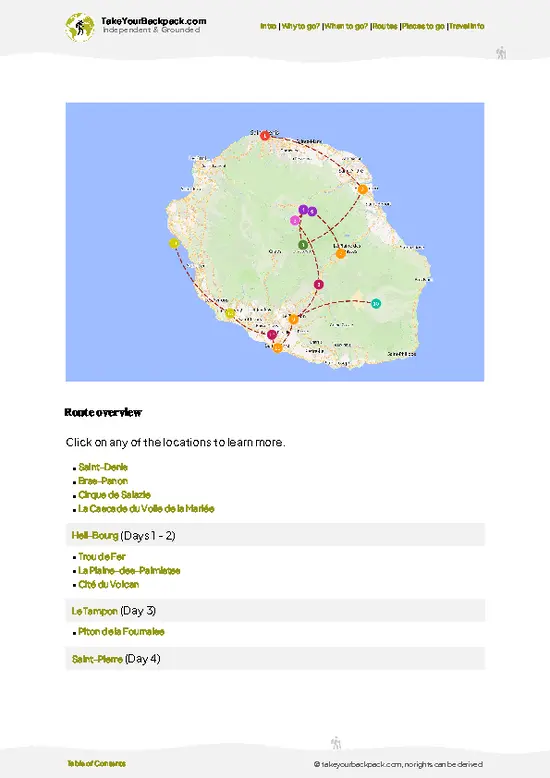
Time and direction: A trip linking several cities in Réunion needs 5 to 8 days, with 1 to 2 nights per stop. The island’s coastal road circles most of the shoreline, so the west and south cluster well, while the east sits a further 1.5 to 2 hours by road. Start in the north near the Saint-Denis airport, move down the western coast, then loop east through the south, which keeps backtracking low.
Getting between regions: Coastal drives between main regions typically take 45 minutes to 2 hours, but morning and evening traffic around the northwest can double that. Buses (Car Jaune) are cheap yet infrequent, so a rental car saves hours. Common mistakes: Travelers often cram in too many stops and ignore slow roads. Instead, limit moves, leave the afternoons clear for market browsing, and finish drives … read more 👉
Time and direction: A trip linking several cities in Réunion needs 5 to 8 days, with 1 to 2 nights per stop. The island’s coastal road circles most of the shoreline, so the west and south cluster well, while the east sits a further 1.5 to 2 hours by road. Start in the north near the Saint-Denis airport, move down the western coast, then loop east through the south, which keeps backtracking low.
Getting between regions: Coastal drives between main regions typically take 45 minutes to 2 hours, but morning and evening traffic around the northwest can double that. Buses (Car Jaune) are cheap yet infrequent, so a rental car saves hours. Common mistakes: Travelers often cram in too many stops and ignore slow roads. Instead, limit moves, leave the afternoons clear for market browsing, and finish drives before dusk, which falls around 6 pm year-round.

The ListThe Best cities of Réunion

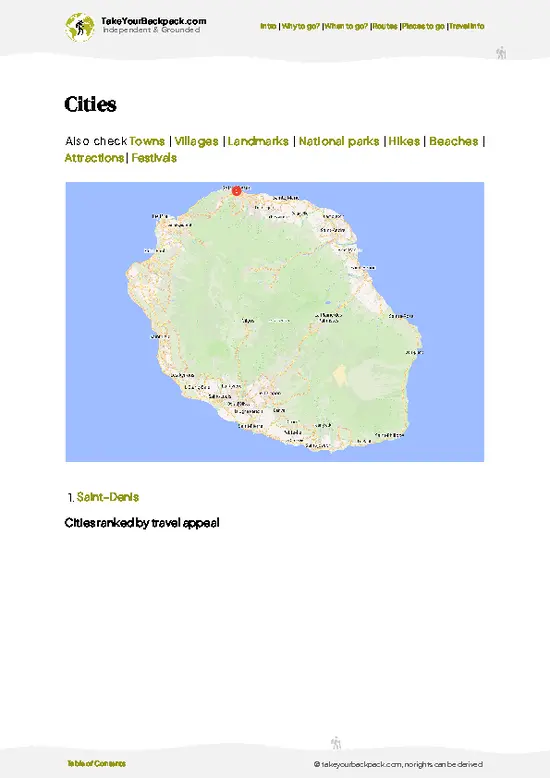
1 Saint-Denis

Cases créoles, Barachois promenade, Léon-Dierx museum, Grand Marché, Noor-e-Islam mosque

Walk Rue de Paris past carved wooden verandas, browse spice stalls and fine-art galleries, then watch the sea from the old cannons at the Barachois.

Loading the map 🌍

Expert viewTips and Advice from Travelers

How many cities: I advise visiting 3 or 4 cities. Réunion is only about 63 km by 45 km, but winding roads and traffic make each transfer longer than the map suggests. Fewer stops mean time to linger over a market morning, with fresh pineapple, samosas and the sound of vendors calling in Creole.
Choosing your kind of city: Pick coastal towns if you want beaches, open-air markets and nightlife along warm promenades. Choose highland or cooler inland towns if hiking is the priority, since they put you on trails by sunrise and the air is crisp enough for a fleece. Foodies should favor larger southern and northern centers, where Creole, Chinese and Indian kitchens sit side by side.
What it costs: Plan on roughly €55 to 90 a day for a careful independent traveler. Dorms and basic guesthouses run €25 … read more 👉
How many cities: I advise visiting 3 or 4 cities. Réunion is only about 63 km by 45 km, but winding roads and traffic make each transfer longer than the map suggests. Fewer stops mean time to linger over a market morning, with fresh pineapple, samosas and the sound of vendors calling in Creole.
Choosing your kind of city: Pick coastal towns if you want beaches, open-air markets and nightlife along warm promenades. Choose highland or cooler inland towns if hiking is the priority, since they put you on trails by sunrise and the air is crisp enough for a fleece. Foodies should favor larger southern and northern centers, where Creole, Chinese and Indian kitchens sit side by side.
What it costs: Plan on roughly €55 to 90 a day for a careful independent traveler. Dorms and basic guesthouses run €25 to 45 a night, a plate of rougail saucisse or a cari at a snack counter costs €8 to 14, and a bakery breakfast is €3 to 5. Rental cars add €30 to 55 a day plus fuel, while single bus rides cost around €2 to 4. Most city sights are free, and museums charge about €5 to 10.
Safety and culture: Réunion is among the safer places in the Indian Ocean, with petty theft the main concern, so lock cars and keep valuables out of sight. Swimming is the real hazard. Shark bans apply on many beaches, so swim only in marked lagoons or supervised zones. Greet shopkeepers with “bonjour” first, since people notice the courtesy. Lunch breaks can close shops from noon to 2 pm, and Sundays are quiet. Sun is fierce, so carry water and a hat.

✈️ The backpacker research shortcutRéunion Travel Guide

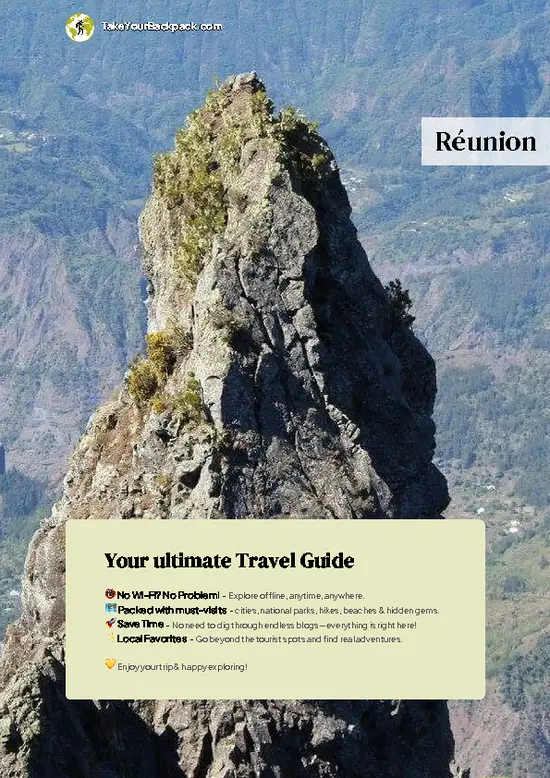
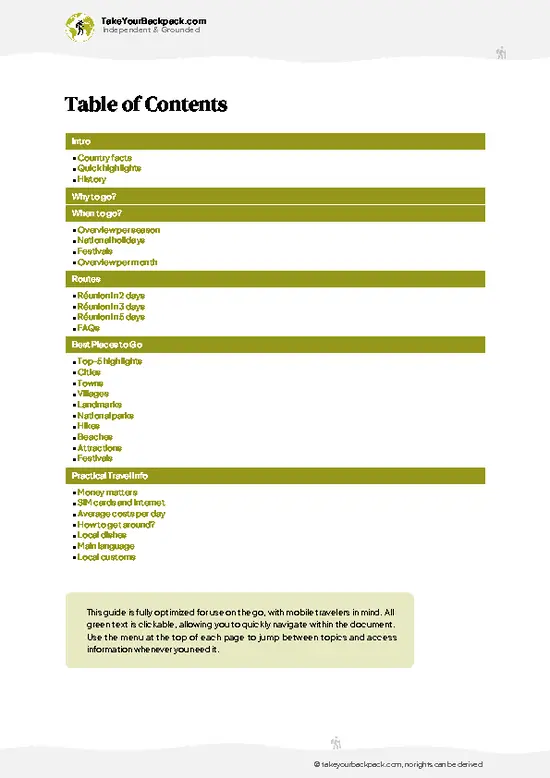
An offline-friendly backpacking guide with optimized travel routes, ranked highlights, transport advice, and the best areas to stay.
example page 0 from our offline Travel Guide for Réunion
example page 1 from our offline Travel Guide for Réunion
example page 2 from our offline Travel Guide for Réunion
example page 3 from our offline Travel Guide for Réunion
example page 4 from our offline Travel Guide for Réunion
example page 5 from our offline Travel Guide for Réunion
example page 6 from our offline Travel Guide for Réunion
example page 7 from our offline Travel Guide for Réunion
The digital guide (232 pages) contains:
✅ 64 highlights, ranked by travel appeal
✅ Optimized 2, 3 & 5-day travel routes
✅ Cities, national parks, landmarks, beaches
✅ How to get around
✅ Offline-friendly for travel without Wi-Fi
👉 Click to see all 30+ guide features

📅 Plan smarter in minutes, not weeks
✅ Month by month travel advice
✅ Festivals & national holidays
✅ Budget expectations

🗺️ Go to the right places, skip the overrated ones
✅ Honest pros & cons of destinations
✅ Top hikes, parks & viewpoints
✅ Lesser-known places most travelers miss
✅ Clear “worth it vs skip it” guidance

🛏️ Travel smoothly without rookie mistakes
✅ Best areas to stay
✅ Transport systems explained simply
✅ Common scams & safety advice
✅ SIM cards, money & practical tips

🌍 Understand the country, not just visit it
✅ Culture & traditions
✅ 52 Essential phrases & customs
✅ Festivals worth planning around
✅ Traveler-friendly historical context
✅ Insights that make places more meaningful

📱 Built for real travel conditions
✅ Fully downloadable PDF
✅ Works completely offline
✅ Optimized for phone use
✅ Useful in remote areas & buses
✅ Everything in one place
Stop searching, start planning
Get instant access to your full guide. 30‑day money-back guarantee.
+ Add another guide for just

By proceeding you agree to our terms.
Sent to your inbox immediately after payment • 100% Secure Checkout
Best Backpacking Travel Advisor 2025 tourism awardBest Backpacking
Travel Advisor
2025
What others say about Take Your Backpack Guides:
⭐⭐⭐⭐⭐
Fantastic, amazing amount of information!
⭐⭐⭐⭐⭐
My goodness this is amazing, it's what I've been looking for hats off too you!
⭐⭐⭐⭐⭐
I think this is absolutely BRILLIANT
⭐⭐⭐⭐
Very complete and informative. It's still missing places, but I gotta to commend you
⭐⭐⭐⭐⭐
This is truly amazing, thank you, can't wait to explore it with my kids!
⭐⭐⭐⭐⭐
Awesome resource, thank you!
⭐⭐⭐⭐⭐
This is amazing! Can't wait to explore the ones I haven't seen
⭐⭐⭐⭐
I love this! Well done, great idea.
⭐⭐⭐⭐⭐
Thanks for taking the time to make this gem!
⭐⭐⭐⭐⭐
This might be the best website I've ever seen.
⭐⭐⭐⭐⭐
Congratulations, and thank you so much for your work; it's incredibly valuable.
⭐⭐⭐⭐
In all seriousness I think you did a great job pointing out the important spots
⭐⭐⭐⭐⭐
10/10 very good
⭐⭐⭐⭐⭐
As someone who's only just starting to visit regularly this is awesome, thank you.
⭐⭐⭐⭐
Thank you very much! I'm going to visit my dad, it's going to be very useful!
⭐⭐⭐⭐⭐
This is really cool! We'll be travelling for the first time and this definitely come in handy.
⭐⭐⭐⭐⭐
You are now our minister of culture, congratulations 👨‍💼
⭐⭐⭐⭐⭐
Just wanted to tell you that this is a pearl! Going to follow your recommendations.
⭐⭐⭐⭐⭐
This is so cool. I'll definitely be using the resource for my travels soon.
⭐⭐⭐⭐⭐
This is very impressive! Good work.
⭐⭐⭐⭐⭐
This is an amazing and informative site. Very well done!

🛏️ Where to stay?Best Places to Stay in Réunion

Réunion has only a handful of true hostels, so budget travelers mostly sleep in gîtes, chambres d’hôtes and mountain gîtes with dorm bunks, where a bed runs roughly €18 to 30 and a private double €50 to 80. Saint-Gilles-les-Bains on the west coast has the widest spread of cheap rooms, close to the lagoon beaches and the island’s liveliest bars, though weekends get loud and prices rise in peak season, while Saint-Pierre in the south offers a strong restaurant and nightlife scene with easier access to the volcano and the wild south coast. For hiking, the cirque villages of Cilaos and Hell-Bourg are quiet, cool and right at the trailheads but go silent after dinner, and Saint-Denis works best for … read more 👉
Réunion has only a handful of true hostels, so budget travelers mostly sleep in gîtes, chambres d’hôtes and mountain gîtes with dorm bunks, where a bed runs roughly €18 to 30 and a private double €50 to 80. Saint-Gilles-les-Bains on the west coast has the widest spread of cheap rooms, close to the lagoon beaches and the island’s liveliest bars, though weekends get loud and prices rise in peak season, while Saint-Pierre in the south offers a strong restaurant and nightlife scene with easier access to the volcano and the wild south coast. For hiking, the cirque villages of Cilaos and Hell-Bourg are quiet, cool and right at the trailheads but go silent after dinner, and Saint-Denis works best for a first or last night near the airport, with good transport but empty streets after dark.

If you enjoy meeting fellow travelers, consider choosing hostels with high ratings for atmosphere. On the other hand, if you prefer having your own space, a hotel might be a better option.

RéunionExplore Réunion

👋 Meet the founderWho’s Behind Take Your Backpack?

Johan, backpacker and founder of TakeYourBackpackHi, I’m Johan (Netherlands 🇳🇱), the creator of TakeYourBackpack. Over the past 3 decades, I’ve backpacked through 90+ countries across six continents, gaining extensive experience with independent travel, long-term trips, and overland routes.

This site is built on a combination of firsthand travel experience and carefully curated insights from other backpackers. Many guides are based on places I’ve personally visited, while others bring together tips, observations, and practical advice shared by trusted travelers I’ve met along the way.

The goal is to provide realistic, experience-driven guidance — not generic itineraries — so you can explore destinations with better context, clearer expectations, and more confidence.