×

Réunion🇷🇪 | attractionsCité du VolcanVolcano exhibition, lava footage, basalt samples, Plaine des Cafres | things to do and best time to go

Explore Hell-BourgExplore Jardin des Parfums et des Épices

Backpacking in Cité du Volcan
🏆 Top pickattraction ranked #1
By Johan Kruseman 🇳🇱 | Updated October 22, 2026

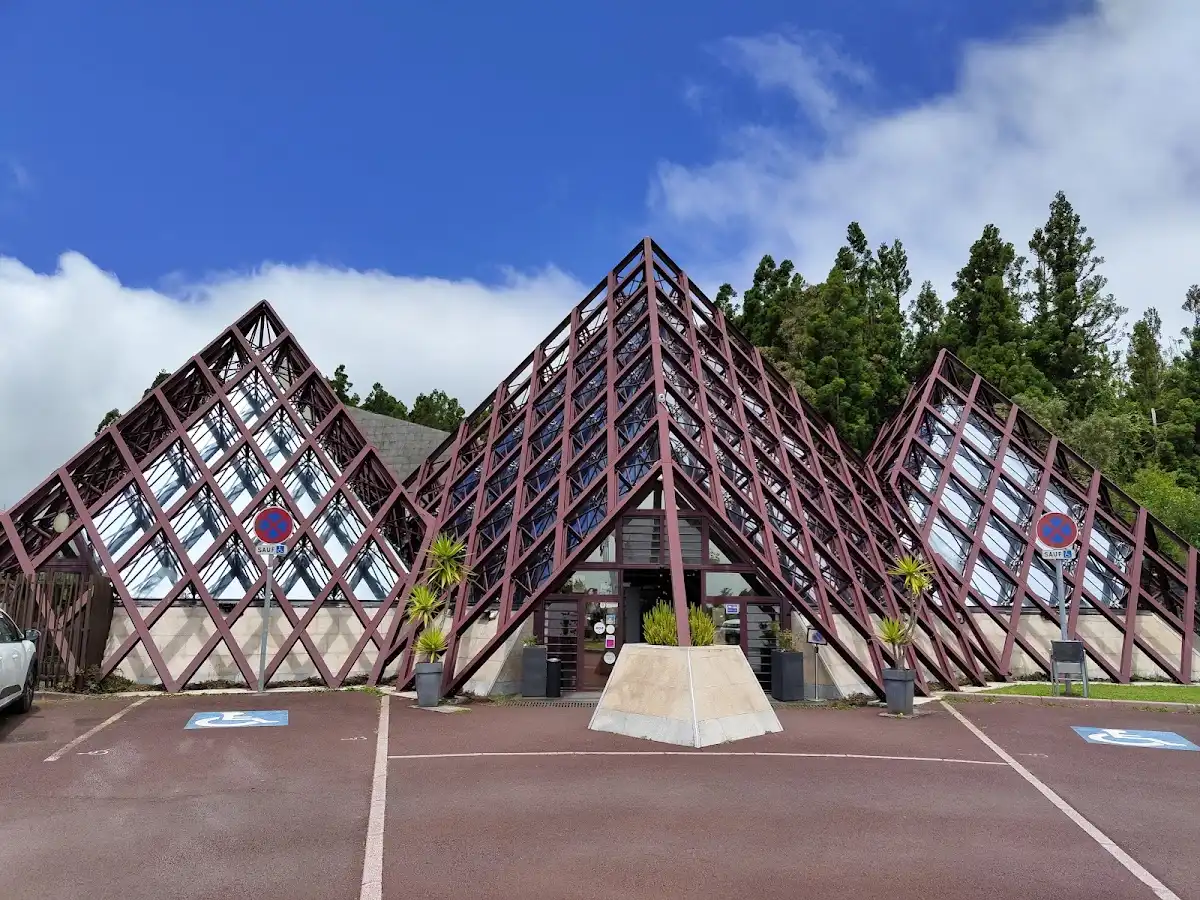
Cité du Volcan is a museum, and it sits about 25 kilometers from the crater it explains, so nobody gets to watch lava from its doorstep. You will find it in Bourg-Murat on the Plaine des Cafres, in the highlands of southern Réunion, above the town of Le Tampon. The air up here is cool and often smells of wet grass and woodsmoke, and cloud can swallow the car park by noon. Entry costs real money for a few hours indoors, and weekends and school holidays bring queues of families around the screens. In return you get dark galleries lit by glowing lava footage, basalt you can touch, and a clear grasp of how the Piton de la Fournaise works before you hike toward it. It teaches volcanology, where Stella Matutina on the west coast tells the story of sugar and the plantation economy.

Discover everything you want to know in the 📖 Réunion Travel Guide.


example page 0 from our offline Travel Guide for Réunion
example page 1 from our offline Travel Guide for Réunion
example page 2 from our offline Travel Guide for Réunion
example page 3 from our offline Travel Guide for Réunion
example page 4 from our offline Travel Guide for Réunion
example page 5 from our offline Travel Guide for Réunion
example page 6 from our offline Travel Guide for Réunion
example page 7 from our offline Travel Guide for Réunion
Loading the map 🌍
CLICK TO FILTER
cities
towns
villages
landmarks
national parks
hikes
beaches
attractions
festivals
SHOW COUNTRY’S BESTSHOW ALL

✨ Why go?
Ranked #1 attraction in Réunion
What makes it a must-see attraction

Cité du Volcan gives a hiker the context that makes the Piton de la Fournaise make sense, which is why it works best as a stop before you tackle the crater rim. Here you learn how Réunion’s hotspot built the island, why eruptions here are mostly effusive and walkable rather than explosive, and what the monitoring network picks up before each eruption. That knowledge changes how you read the black lava fields and cones at Pas de Bellecombe the next morning.
It is also the one reliable plan for a day when the summit is wrapped in cloud or the access road is closed because of an eruption. Few other wet-weather options on the island teach you this much. Budget travelers who have already walked the coast will find the highlands a pleasant change in temperature, with cool evenings and fireplaces … read more 👉
Cité du Volcan gives a hiker the context that makes the Piton de la Fournaise make sense, which is why it works best as a stop before you tackle the crater rim. Here you learn how Réunion’s hotspot built the island, why eruptions here are mostly effusive and walkable rather than explosive, and what the monitoring network picks up before each eruption. That knowledge changes how you read the black lava fields and cones at Pas de Bellecombe the next morning.
It is also the one reliable plan for a day when the summit is wrapped in cloud or the access road is closed because of an eruption. Few other wet-weather options on the island teach you this much. Budget travelers who have already walked the coast will find the highlands a pleasant change in temperature, with cool evenings and fireplaces rather than beach heat. Put the museum on the route between the south coast and the volcano road and the day has a clear shape.

💡 HighlightsMust-see experiences and standout moments

  1. The permanent volcano exhibition: the main galleries explain how volcanoes form around the world, then narrow to Réunion, with rock samples, models and film. Start here, because everything else builds on it.
  2. The Piton de la Fournaise displays: the history of eruptions at Réunion’s active volcano, with maps of past lava flows and the craters you can later see from the trail. They show which parts of the island have been reshaped, and how often.
  3. Lava and rock collection: you can see the textures of basalt, from ropy surfaces to glassy fragments. It is the closest you get to feeling the rock without a hike.
  4. Seismology and monitoring exhibits: panels and screens show how scientists track tremors and swelling before an eruption. These are the signals that decide whether the volcano road opens.
  5. The
… read more 👉
  1. The permanent volcano exhibition: the main galleries explain how volcanoes form around the world, then narrow to Réunion, with rock samples, models and film. Start here, because everything else builds on it.
  2. The Piton de la Fournaise displays: the history of eruptions at Réunion’s active volcano, with maps of past lava flows and the craters you can later see from the trail. They show which parts of the island have been reshaped, and how often.
  3. Lava and rock collection: you can see the textures of basalt, from ropy surfaces to glassy fragments. It is the closest you get to feeling the rock without a hike.
  4. Seismology and monitoring exhibits: panels and screens show how scientists track tremors and swelling before an eruption. These are the signals that decide whether the volcano road opens.
  5. The audiovisual shows: darkened rooms with projected eruption footage give a sense of scale and sound that a photo cannot. They are especially good on a rainy afternoon.
  6. The museum shop and the surrounding Plaine des Cafres views: a place for maps and local books, then a short walk outside to take in the cool highland air and the pastures around Bourg-Murat.
Adult entry is around €14 to 16, and the museum takes two to three hours at a relaxed pace.
Spotted a mistake or missing something? Contact us.
🌤️ When to go?When to go for the best experience

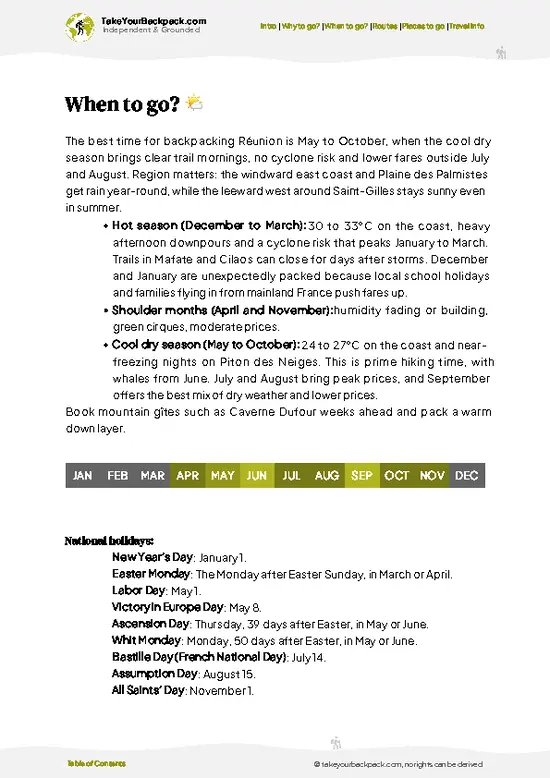
  • Austral Winter (May to October): Cité du Volcan, in Bourg-Murat on the Plaine des Cafres, sits at about 1,600 m, so expect 5 to 18°C (41 to 64°F) by day and near-freezing nights. Skies are drier and clearer, so this is the better window for the volcano views and the Piton de la Fournaise trails. Daylight lasts roughly 11 hours.
  • Austral Summer (November to April): Days reach 15 to 24°C (59 to 75°F) and afternoons often cloud over or turn to rain. Cyclone season peaks January to March, and heavy rain can close trails and the road to the crater. Daylight stretches to about 13 hours.
  • School Holidays (July to August, and December to January): Local families fill the museum and lodging fills fast. Prices for beds and rental cars climb, and weekends are the busiest.
  • Shoulder Months (April to May, October
… read more 👉
  • Austral Winter (May to October): Cité du Volcan, in Bourg-Murat on the Plaine des Cafres, sits at about 1,600 m, so expect 5 to 18°C (41 to 64°F) by day and near-freezing nights. Skies are drier and clearer, so this is the better window for the volcano views and the Piton de la Fournaise trails. Daylight lasts roughly 11 hours.
  • Austral Summer (November to April): Days reach 15 to 24°C (59 to 75°F) and afternoons often cloud over or turn to rain. Cyclone season peaks January to March, and heavy rain can close trails and the road to the crater. Daylight stretches to about 13 hours.
  • School Holidays (July to August, and December to January): Local families fill the museum and lodging fills fast. Prices for beds and rental cars climb, and weekends are the busiest.
  • Shoulder Months (April to May, October to November): Mild, fairly dry and quiet, with the best balance of space and weather.
Arrive when the doors open on a weekday morning, before clouds roll up the slopes by midday.


source: climatestotravel.comJANJanuary: fair for travelingFEBFebruary: fair for travelingMARMarch: fair for travelingAPRApril: good for travelingMAYMay: excellent for travelingJUNJune: excellent for travelingJULJuly: highly recommended for travelingAUGAugust: highly recommended for travelingSEPSeptember: excellent for travelingOCTOctober: highly recommended for travelingNOVNovember: good for travelingDECDecember: fair for traveling
reunion-attraction-cite-du-volcan
© Google |

✈️ The backpacker research shortcutRéunion Travel Guide

An offline-friendly backpacking guide with optimized travel routes, ranked highlights, transport advice, and the best areas to stay.
example page 0 from our offline Travel Guide for Réunion
example page 1 from our offline Travel Guide for Réunion
example page 2 from our offline Travel Guide for Réunion
example page 3 from our offline Travel Guide for Réunion
example page 4 from our offline Travel Guide for Réunion
example page 5 from our offline Travel Guide for Réunion
example page 6 from our offline Travel Guide for Réunion
example page 7 from our offline Travel Guide for Réunion
The digital guide (232 pages) contains:
✅ 64 highlights, ranked by travel appeal
✅ Optimized 2, 3 & 5-day travel routes
✅ Cities, national parks, landmarks, beaches
✅ How to get around
✅ Offline-friendly for travel without Wi-Fi
👉 Click to see all 30+ guide features

📅 Plan smarter in minutes, not weeks
✅ Month by month travel advice
✅ Festivals & national holidays
✅ Budget expectations

🗺️ Go to the right places, skip the overrated ones
✅ Honest pros & cons of destinations
✅ Top hikes, parks & viewpoints
✅ Lesser-known places most travelers miss
✅ Clear “worth it vs skip it” guidance

🛏️ Travel smoothly without rookie mistakes
✅ Best areas to stay
✅ Transport systems explained simply
✅ Common scams & safety advice
✅ SIM cards, money & practical tips

🌍 Understand the country, not just visit it
✅ Culture & traditions
✅ 52 Essential phrases & customs
✅ Festivals worth planning around
✅ Traveler-friendly historical context
✅ Insights that make places more meaningful

📱 Built for real travel conditions
✅ Fully downloadable PDF
✅ Works completely offline
✅ Optimized for phone use
✅ Useful in remote areas & buses
✅ Everything in one place
Stop searching, start planning
Get instant access to your full guide. 30‑day money-back guarantee.
+ Add another guide for just

By proceeding you agree to our terms.
Sent to your inbox immediately after payment • 100% Secure Checkout
Best Backpacking Travel Advisor 2025 tourism awardBest Backpacking
Travel Advisor
2025
What others say about Take Your Backpack Guides:
⭐⭐⭐⭐⭐
Fantastic, amazing amount of information!
⭐⭐⭐⭐⭐
My goodness this is amazing, it's what I've been looking for hats off too you!
⭐⭐⭐⭐⭐
I think this is absolutely BRILLIANT
⭐⭐⭐⭐
Very complete and informative. It's still missing places, but I gotta to commend you
⭐⭐⭐⭐⭐
This is truly amazing, thank you, can't wait to explore it with my kids!
⭐⭐⭐⭐⭐
Awesome resource, thank you!
⭐⭐⭐⭐⭐
This is amazing! Can't wait to explore the ones I haven't seen
⭐⭐⭐⭐
I love this! Well done, great idea.
⭐⭐⭐⭐⭐
Thanks for taking the time to make this gem!
⭐⭐⭐⭐⭐
This might be the best website I've ever seen.
⭐⭐⭐⭐⭐
Congratulations, and thank you so much for your work; it's incredibly valuable.
⭐⭐⭐⭐
In all seriousness I think you did a great job pointing out the important spots
⭐⭐⭐⭐⭐
10/10 very good
⭐⭐⭐⭐⭐
As someone who's only just starting to visit regularly this is awesome, thank you.
⭐⭐⭐⭐
Thank you very much! I'm going to visit my dad, it's going to be very useful!
⭐⭐⭐⭐⭐
This is really cool! We'll be travelling for the first time and this definitely come in handy.
⭐⭐⭐⭐⭐
You are now our minister of culture, congratulations 👨‍💼
⭐⭐⭐⭐⭐
Just wanted to tell you that this is a pearl! Going to follow your recommendations.
⭐⭐⭐⭐⭐
This is so cool. I'll definitely be using the resource for my travels soon.
⭐⭐⭐⭐⭐
This is very impressive! Good work.
⭐⭐⭐⭐⭐
This is an amazing and informative site. Very well done!

🛏️ Where to stay?Where staying makes the most sense

The best base for Cité du Volcan is Bourg-Murat itself or the nearby highland towns of Le Tampon and Plaine des Cafres, with Saint-Pierre on the coast as the social option. Bourg-Murat puts you a short walk from the museum and on the road toward the Piton de la Fournaise. It is quiet, with a handful of guesthouses and gîtes, a bakery and a few small restaurants. Nights are cold, so a warm room matters more than a pool. The trade-off is that evenings are calm, with little nightlife.
Le Tampon and the Plaine des Cafres stretch along the same road and offer more self-catering rooms, supermarkets and … read more 👉
The best base for Cité du Volcan is Bourg-Murat itself or the nearby highland towns of Le Tampon and Plaine des Cafres, with Saint-Pierre on the coast as the social option. Bourg-Murat puts you a short walk from the museum and on the road toward the Piton de la Fournaise. It is quiet, with a handful of guesthouses and gîtes, a bakery and a few small restaurants. Nights are cold, so a warm room matters more than a pool. The trade-off is that evenings are calm, with little nightlife.
Le Tampon and the Plaine des Cafres stretch along the same road and offer more self-catering rooms, supermarkets and farm stays, which suits anyone cooking on a budget. Hosts here are friendly and often share hiking advice.
If you want hostels, travelers to meet and bars, Saint-Pierre is the answer. It is the main backpacker hub of the south, with a lively seafront, a market on Saturday mornings and plenty of beds. Buses and hitching connect it to the highlands, though a rental car makes early starts much easier. Pair a night or two there with a highland stay. Booking ahead is wise during school holidays, when rooms in the highlands disappear quickly.

👛 Costs (as of 22 October 2026)Money, prices, and spending tips

A day at Cité du Volcan costs about €63 for a backpacker, including a bed, food, transport and the museum ticket.
CategoryBudget RangeLocal Reality
Museum entry€10 to 14Adult ticket, with reduced rates for children and students. Check for combined offers.
Accommodation (high season)€25 to 40Dorm beds are mostly in Saint-Pierre. Highland guesthouses and gîtes run higher.
Accommodation (low season)€20 to 32Easier to haggle for longer stays and walk-in rooms.
Food€10 to 18Bakery lunch, supermarket groceries, or a Creole plate (rougail or cari) at a modest restaurant.
Local transport€2 to 8Interurban Car Jaune buses serve the Plaine des Cafres from Saint-Pierre, and fares are low but services are infrequent.
Car rental (optional)€30 to 45Per day for a small car, the easiest way to reach the volcano road
… read more 👉
A day at Cité du Volcan costs about €63 for a backpacker, including a bed, food, transport and the museum ticket.
CategoryBudget RangeLocal Reality
Museum entry€10 to 14Adult ticket, with reduced rates for children and students. Check for combined offers.
Accommodation (high season)€25 to 40Dorm beds are mostly in Saint-Pierre. Highland guesthouses and gîtes run higher.
Accommodation (low season)€20 to 32Easier to haggle for longer stays and walk-in rooms.
Food€10 to 18Bakery lunch, supermarket groceries, or a Creole plate (rougail or cari) at a modest restaurant.
Local transport€2 to 8Interurban Car Jaune buses serve the Plaine des Cafres from Saint-Pierre, and fares are low but services are infrequent.
Car rental (optional)€30 to 45Per day for a small car, the easiest way to reach the volcano road and trailheads.
Total Daily Budget€47 to 80About €63 with a mid-range choice per row.
Payment is in euros, cards are widely accepted in Bourg-Murat, and a little cash helps at small snack stops.
⚠️ Prices can change and everyone travels differently, so take this as a rough guide. Hope it helps you plan your adventure!

FAQFrequently asked questions about Cité du Volcan

Allow 2 to 3 hours for Cité du Volcan itself, which covers the exhibitions, the film and the planetarium-style shows. If you add a drive up to the Pas de Bellecombe viewpoint and a walk toward the Piton de la Fournaise crater, plan a full day. Starting from Saint-Pierre, the drive adds roughly 45 minutes each way.
For most visitors Cité du Volcan is worth the roughly €10 to 14 adult ticket, especially before hiking Piton de la Fournaise. The exhibits explain eruption history, lava flows and the island’s formation through models and film, which makes the landscape easier to read. On a rainy or cloudy day it is also a dry, useful backup when the summit views are hidden.
Driving is the simplest way to reach Cité du Volcan in Bourg-Murat, about 40 to 50 minutes from Saint-Pierre and roughly 1.5 hours from Saint-Denis via the RN3 road. Buses from Saint-Pierre to the Plaine des Cafres exist but run infrequently, so check timetables before you set out. Parking at the site is easy, and a rental car costs about €30 to 45 a day.
⚠️ Things can change over time, so always validate details locally before you go.

Other Réunionnais attractions near Cité du Volcan

Explore more nearby:


💡 Not sure where to go next?
Create a personalized itinerary for Réunion including Cité du Volcan and the places that fit your trip.

Generate my itinerary

👉 Discover all attractions

Or checkout all Réunion has to offer (think cities, towns, villages, national parks, hikes, beaches, festivals)
Country photo of Réunion

We 💚 feedbackKey takeaways before you go

Cité du Volcan has a small detail many people rush past: the displays on how scientists read tremors and ground swelling. Slow down there, because it explains why the volcano road closes without warning. I would come in the morning, before the highland cloud settles in, then check the road status before driving up to the crater. Bring a light jacket, since Bourg-Murat is far cooler than the coast.

✍️ Help improve this page!
The information on this page is based on in-depth research, insights shared by experienced travelers, and feedback from the local travel community in Réunion. While every effort is made to keep the information accurate and current, conditions can change — so if you spot anything incorrect or outdated, please get in touch.


🙋‍♂️ Give feedback

👋 Meet the founderWho’s Behind Take Your Backpack?

Johan, backpacker and founder of TakeYourBackpackHi, I’m Johan (Netherlands 🇳🇱), the creator of TakeYourBackpack. Over the past 3 decades, I’ve backpacked through 90+ countries across six continents, gaining extensive experience with independent travel, long-term trips, and overland routes.

This site is built on a combination of firsthand travel experience and carefully curated insights from other backpackers. Many guides are based on places I’ve personally visited, while others bring together tips, observations, and practical advice shared by trusted travelers I’ve met along the way.

The goal is to provide realistic, experience-driven guidance — not generic itineraries — so you can explore destinations with better context, clearer expectations, and more confidence.