×

Réunion🇷🇪 | beachesPlage de Trou d’EauShallow lagoon flat, beginner snorkeling, coconut stalls, low-tide wading | things to do and best time to go

Explore Plage de L’Étang-SaléExplore Plage de la Saline

Backpacking in Plage de Trou d’Eau
🌟 Highlightbeach ranked #4
By Johan Kruseman 🇳🇱 | Updated October 22, 2026

Warm, shallow water laps at your ankles while a coconut vendor's machete thuds somewhere behind the filao trees, and the sand underfoot is coarse and pale gray-gold. Plage de Trou d’Eau is on the west coast of Réunion, a short stretch south of Saint-Gilles and part of the Trou d’Eau lagoon near L’Hermitage and La Saline. The lagoon is the draw: protected by the reef, calm and clear, with small fish around the coral heads that make easy snorkeling for beginners. The downsides are plain. Weekends fill with local families, parking disappears, and the reef flat is shallow, so real swimming laps are out. Surf is nonexistent here, so skip it for waves. Budget snacks come from roadside stalls and bakeries nearby, and beds are easier to find in Saint-Gilles. A first day could mean snorkeling early before the crowds, a picnic under the filaos, then a slow walk along the lagoon.

Discover everything you want to know in the 📖 Réunion Travel Guide.


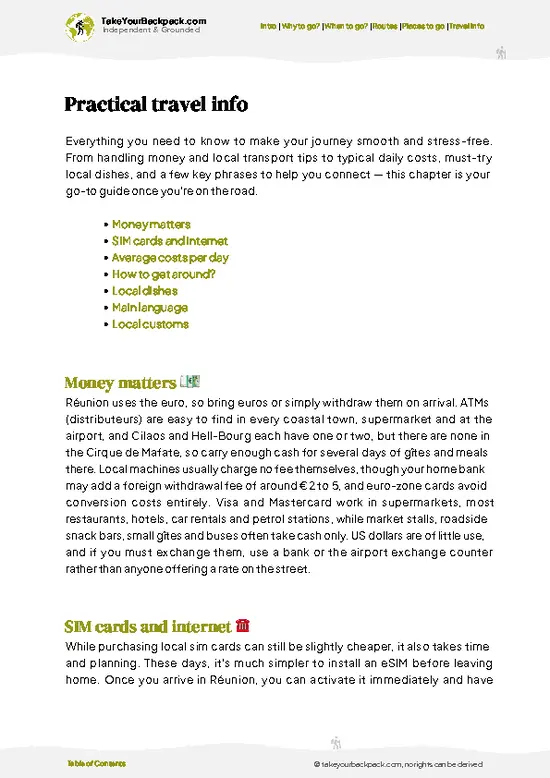
example page 0 from our offline Travel Guide for Réunion
example page 1 from our offline Travel Guide for Réunion
example page 2 from our offline Travel Guide for Réunion
example page 3 from our offline Travel Guide for Réunion
example page 4 from our offline Travel Guide for Réunion
example page 5 from our offline Travel Guide for Réunion
example page 6 from our offline Travel Guide for Réunion
example page 7 from our offline Travel Guide for Réunion
Loading the map 🌍
CLICK TO FILTER
cities
towns
villages
landmarks
national parks
hikes
beaches
attractions
festivals
SHOW COUNTRY’S BESTSHOW ALL

✨ Why go?
Ranked #4 beach in Réunion
What sets this place apart

Plage de Trou d’Eau earns its stop because the reef-sheltered lagoon behind it is one of the calmest places to get in the water on Réunion's west coast, where open sea beaches often carry strong currents and shark-related bans. Here you can float in knee-to-waist-deep water with a mask and watch small reef fish without needing a boat or a tour. The second reason is the local atmosphere. On weekends, Réunionese families set up under the filao trees with cooler boxes, speakers and full lunches, and the beach turns into a long, noisy picnic you are welcome to drift through. It is a good place to meet people over a shared stretch of shade. It also works as a rest stop on the coast road. The beach sits between the livelier resort strip of Saint-Gilles and quieter southern villages, so it breaks … read more 👉
Plage de Trou d’Eau earns its stop because the reef-sheltered lagoon behind it is one of the calmest places to get in the water on Réunion's west coast, where open sea beaches often carry strong currents and shark-related bans. Here you can float in knee-to-waist-deep water with a mask and watch small reef fish without needing a boat or a tour. The second reason is the local atmosphere. On weekends, Réunionese families set up under the filao trees with cooler boxes, speakers and full lunches, and the beach turns into a long, noisy picnic you are welcome to drift through. It is a good place to meet people over a shared stretch of shade. It also works as a rest stop on the coast road. The beach sits between the livelier resort strip of Saint-Gilles and quieter southern villages, so it breaks up a day of driving or bus hopping without demanding much planning.

💡 HighlightsTop highlights of Plage de Trou d’Eau

  1. Snorkeling the Trou d’Eau lagoon. This is what the beach is known for. The reef holds the water calm and shallow, and you can see small tropical fish and bits of coral just off the sand. Bring your own mask to keep it free, and stay inside the marked lagoon, since the reef edge is where currents can pick up.
  2. Picnic under the filao trees. The shaded strip behind the sand is where locals gather, especially on Sundays. Grab samosas, bouchons or fresh bread from a nearby shop and join the long lunch culture. It is the most authentic thing to do here.
  3. Wading the lagoon at low tide. When the tide drops, the water is warm and very shallow, good for slow walks along the reef flat. Wear reef shoes, because the coral and sea urchins are sharp.
  4. Coconut and fruit stalls. Vendors near the entrance sell cut
… read more 👉
  1. Snorkeling the Trou d’Eau lagoon. This is what the beach is known for. The reef holds the water calm and shallow, and you can see small tropical fish and bits of coral just off the sand. Bring your own mask to keep it free, and stay inside the marked lagoon, since the reef edge is where currents can pick up.
  2. Picnic under the filao trees. The shaded strip behind the sand is where locals gather, especially on Sundays. Grab samosas, bouchons or fresh bread from a nearby shop and join the long lunch culture. It is the most authentic thing to do here.
  3. Wading the lagoon at low tide. When the tide drops, the water is warm and very shallow, good for slow walks along the reef flat. Wear reef shoes, because the coral and sea urchins are sharp.
  4. Coconut and fruit stalls. Vendors near the entrance sell cut coconut and seasonal fruit. A cold coconut in the heat is a simple pleasure and gives you a sense of local daily life.
  5. Sunset walk along the coast. In the evening the beach empties and the light softens over the reef. A stroll toward L’Hermitage or Saint-Gilles shows how the lagoon changes along the coast, and there is no nightlife on the sand itself.
The picnic and the sunset walk cost nothing, and a mask you already own makes the snorkeling free too.
Spotted a mistake or missing something? Contact us.

🌤️ When to go?When to go for the best experience

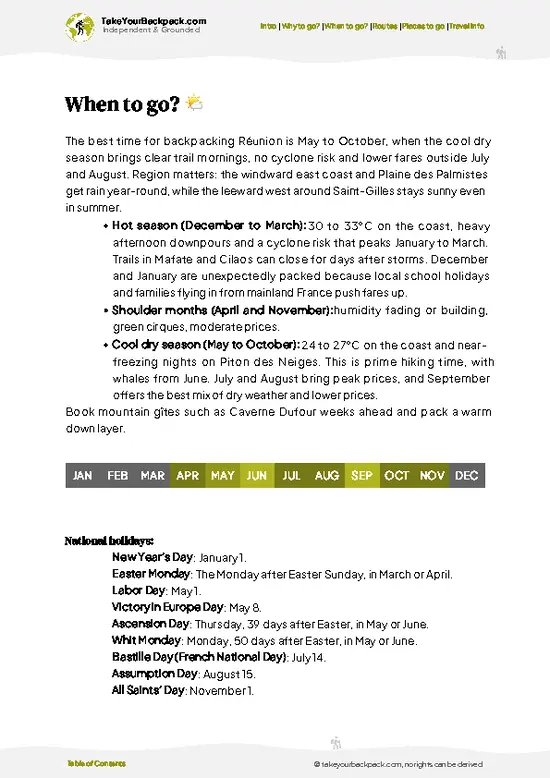
  • Austral Winter (May to October): Dry, sunny and the easiest season for beach days, with daytime highs around 24 to 26°C (75 to 79°F) and nights near 17 to 19°C (63 to 66°F). Sunlight lasts about 11 to 12 hours, and the water cools to roughly 23 to 24°C (73 to 75°F).
  • Summer (December to March): Hot and humid at 29 to 32°C (84 to 90°F), with the sea near 27 to 29°C (81 to 84°F) and daylight stretching to about 13 hours. Cyclone season runs here, so downpours and swell can shut the water for days.
  • School Holidays: Late December to January and the July to August break fill the lagoon with local families, and beds near the coast cost more, often €15 to 40 extra for a double.
  • Shoulder Months (April, November): Fewer people, calmer prices and warm water, with occasional showers.
Book weekdays if you … read more 👉
  • Austral Winter (May to October): Dry, sunny and the easiest season for beach days, with daytime highs around 24 to 26°C (75 to 79°F) and nights near 17 to 19°C (63 to 66°F). Sunlight lasts about 11 to 12 hours, and the water cools to roughly 23 to 24°C (73 to 75°F).
  • Summer (December to March): Hot and humid at 29 to 32°C (84 to 90°F), with the sea near 27 to 29°C (81 to 84°F) and daylight stretching to about 13 hours. Cyclone season runs here, so downpours and swell can shut the water for days.
  • School Holidays: Late December to January and the July to August break fill the lagoon with local families, and beds near the coast cost more, often €15 to 40 extra for a double.
  • Shoulder Months (April, November): Fewer people, calmer prices and warm water, with occasional showers.
Book weekdays if you can, since Saturdays and Sundays pack the shade under the filao trees.


source: climatestotravel.comJANJanuary: fair for travelingFEBFebruary: fair for travelingMARMarch: fair for travelingAPRApril: good for travelingMAYMay: highly recommended for travelingJUNJune: highly recommended for travelingJULJuly: excellent for travelingAUGAugust: excellent for travelingSEPSeptember: excellent for travelingOCTOctober: highly recommended for travelingNOVNovember: highly recommended for travelingDECDecember: good for traveling
reunion-beach-plage-de-trou-deau v1
© Google |

✈️ The backpacker research shortcutRéunion Travel Guide

An offline-friendly backpacking guide with optimized travel routes, ranked highlights, transport advice, and the best areas to stay.
example page 0 from our offline Travel Guide for Réunion
example page 1 from our offline Travel Guide for Réunion
example page 2 from our offline Travel Guide for Réunion
example page 3 from our offline Travel Guide for Réunion
example page 4 from our offline Travel Guide for Réunion
example page 5 from our offline Travel Guide for Réunion
example page 6 from our offline Travel Guide for Réunion
example page 7 from our offline Travel Guide for Réunion
The digital guide (232 pages) contains:
✅ 64 highlights, ranked by travel appeal
✅ Optimized 2, 3 & 5-day travel routes
✅ Cities, national parks, landmarks, beaches
✅ How to get around
✅ Offline-friendly for travel without Wi-Fi
👉 Click to see all 30+ guide features

📅 Plan smarter in minutes, not weeks
✅ Month by month travel advice
✅ Festivals & national holidays
✅ Budget expectations

🗺️ Go to the right places, skip the overrated ones
✅ Honest pros & cons of destinations
✅ Top hikes, parks & viewpoints
✅ Lesser-known places most travelers miss
✅ Clear “worth it vs skip it” guidance

🛏️ Travel smoothly without rookie mistakes
✅ Best areas to stay
✅ Transport systems explained simply
✅ Common scams & safety advice
✅ SIM cards, money & practical tips

🌍 Understand the country, not just visit it
✅ Culture & traditions
✅ 52 Essential phrases & customs
✅ Festivals worth planning around
✅ Traveler-friendly historical context
✅ Insights that make places more meaningful

📱 Built for real travel conditions
✅ Fully downloadable PDF
✅ Works completely offline
✅ Optimized for phone use
✅ Useful in remote areas & buses
✅ Everything in one place
Stop searching, start planning
Get instant access to your full guide. 30‑day money-back guarantee.
+ Add another guide for just

By proceeding you agree to our terms.
Sent to your inbox immediately after payment • 100% Secure Checkout
Best Backpacking Travel Advisor 2025 tourism awardBest Backpacking
Travel Advisor
2025
What others say about Take Your Backpack Guides:
⭐⭐⭐⭐⭐
Fantastic, amazing amount of information!
⭐⭐⭐⭐⭐
My goodness this is amazing, it's what I've been looking for hats off too you!
⭐⭐⭐⭐⭐
I think this is absolutely BRILLIANT
⭐⭐⭐⭐
Very complete and informative. It's still missing places, but I gotta to commend you
⭐⭐⭐⭐⭐
This is truly amazing, thank you, can't wait to explore it with my kids!
⭐⭐⭐⭐⭐
Awesome resource, thank you!
⭐⭐⭐⭐⭐
This is amazing! Can't wait to explore the ones I haven't seen
⭐⭐⭐⭐
I love this! Well done, great idea.
⭐⭐⭐⭐⭐
Thanks for taking the time to make this gem!
⭐⭐⭐⭐⭐
This might be the best website I've ever seen.
⭐⭐⭐⭐⭐
Congratulations, and thank you so much for your work; it's incredibly valuable.
⭐⭐⭐⭐
In all seriousness I think you did a great job pointing out the important spots
⭐⭐⭐⭐⭐
10/10 very good
⭐⭐⭐⭐⭐
As someone who's only just starting to visit regularly this is awesome, thank you.
⭐⭐⭐⭐
Thank you very much! I'm going to visit my dad, it's going to be very useful!
⭐⭐⭐⭐⭐
This is really cool! We'll be travelling for the first time and this definitely come in handy.
⭐⭐⭐⭐⭐
You are now our minister of culture, congratulations 👨‍💼
⭐⭐⭐⭐⭐
Just wanted to tell you that this is a pearl! Going to follow your recommendations.
⭐⭐⭐⭐⭐
This is so cool. I'll definitely be using the resource for my travels soon.
⭐⭐⭐⭐⭐
This is very impressive! Good work.
⭐⭐⭐⭐⭐
This is an amazing and informative site. Very well done!

🛏️ Where to stay?Best areas and accommodation options

Saint-Gilles-les-Bains is the base I would choose, about 5 to 10 minutes by bus or car from the lagoon, with dorm beds and guesthouse rooms mostly around €20 to 45 a night. It has the island’s densest cluster of budget stays, plus cafés, surf shops and a harbor strip with evening bars, so solo travelers meet people easily without trying.
L’Hermitage-les-Bains sits right beside the beach and is calmer, with small guesthouses and self-catering studios, often €45 to 80. It suits you if you want a sunrise walk along the lagoon and a quiet night, and cooking your own meals cuts costs since markets and … read more 👉
Saint-Gilles-les-Bains is the base I would choose, about 5 to 10 minutes by bus or car from the lagoon, with dorm beds and guesthouse rooms mostly around €20 to 45 a night. It has the island’s densest cluster of budget stays, plus cafés, surf shops and a harbor strip with evening bars, so solo travelers meet people easily without trying.
L’Hermitage-les-Bains sits right beside the beach and is calmer, with small guesthouses and self-catering studios, often €45 to 80. It suits you if you want a sunrise walk along the lagoon and a quiet night, and cooking your own meals cuts costs since markets and supermarkets are close.
La Saline-les-Bains, a little south, is quieter again and good for longer stays with a kitchen, and it keeps you close to the surf break at Les Roches Noires.
Staying inland in Saint-Paul is cheaper, but you will want a car or patience with the bus network. Rent a scooter or share a car with other guests, since evening buses thin out. Book ahead for July, August and late December.

🛡️ SafetyStaying Safe: What Travelers Should Know

Plage de Trou d’Eau is a protected lagoon beach, shallow and calm, and it is among the safer places to swim on an island known for sharks and strong surf. Swimming is encouraged inside the coral barrier, where water is often knee to chest deep. Stay inside it, since the passes in the reef carry currents out to open water, and follow the flags and signs posted by lifeguards.
Sea urchins and sharp coral sit on the rocky patches, so wear reef shoes and avoid standing on the coral. Sun is strong all year, especially around midday, and shade under the filao trees fills early on weekends.
Thefts from parked cars and unattended bags happen at busy coastal lots, so leave nothing visible and take only what you need to the sand. Locals swim in the morning and late afternoon, which are the most comfortable hours.

FAQTraveler FAQ

Plage de Trou d’Eau is on the west coast near L’Hermitage and Saint-Gilles-les-Bains, about 5 to 10 minutes by car from Saint-Gilles. From Saint-Denis it is roughly 45 minutes to an hour by road via the N1, and from Roland Garros airport about 1 hour 15 minutes. Buses on the Car Jaune network and local lines serve the coast, with fares around €2 to 4.
Plage de Trou d’Eau is best for swimming and snorkeling, since the coral-barrier lagoon keeps water shallow and calm, often at 1 to 2 meters deep. Bring a mask and fins, as you can see small reef fish near the coral patches, and wear reef shoes. Surfing is not done inside the lagoon, so head to Les Roches Noires or the Saint-Leu breaks, about 10 to 30 minutes away.
Yes, Plage de Trou d’Eau is free to enter, with no gate or ticket. Parking nearby is often free but fills early on weekends and school holidays, so arrive before 9 am. Showers and toilets are available at public facilities, and snack stalls and picnic tables nearby let you eat for about €5 to 12.
⚠️ Things can change over time, so always validate details locally before you go.

Other Réunionnais beaches near Plage de Trou d’Eau

Explore more nearby:


💡 Not sure where to go next?
Create a personalized itinerary for Réunion including Plage de Trou d’Eau and the places that fit your trip.

Generate my itinerary

👉 Discover all beaches

Or checkout all Réunion has to offer (think cities, towns, villages, national parks, hikes, beaches, festivals)
Country photo of Réunion

We 💚 feedbackIs it worth it?

Plage de Trou d’Eau suits easygoing snorkelers, families and anyone who likes sharing a beach with locals more than a polished resort. I would arrive early on a weekday, bring my own mask and reef shoes, and skip Sunday afternoons unless a loud, joyful crowd is exactly what you want.

✍️ Help improve this page!
The information on this page is based on in-depth research, insights shared by experienced travelers, and feedback from the local travel community in Réunion. While every effort is made to keep the information accurate and current, conditions can change — so if you spot anything incorrect or outdated, please get in touch.


🙋‍♂️ Give feedback

👋 Meet the founderWho’s Behind Take Your Backpack?

Johan, backpacker and founder of TakeYourBackpackHi, I’m Johan (Netherlands 🇳🇱), the creator of TakeYourBackpack. Over the past 3 decades, I’ve backpacked through 90+ countries across six continents, gaining extensive experience with independent travel, long-term trips, and overland routes.

This site is built on a combination of firsthand travel experience and carefully curated insights from other backpackers. Many guides are based on places I’ve personally visited, while others bring together tips, observations, and practical advice shared by trusted travelers I’ve met along the way.

The goal is to provide realistic, experience-driven guidance — not generic itineraries — so you can explore destinations with better context, clearer expectations, and more confidence.