×

Réunion🇷🇪 | townsSaint-LeuParagliding launch, turtle lagoon, sugar-factory museum | things to do and best time to go

Explore L’Étang-SaléExplore Petite-Île

Backpacking in Saint-Leu
🌟 Highlighttown ranked #6
By Johan Kruseman 🇳🇱 | Updated October 22, 2026

Saint-Leu puts you beside one of the Indian Ocean’s best paragliding launches and a lagoon you can snorkel without a boat. It sits on the west coast of Réunion, south of Saint-Paul, where the dry sun bakes the cane fields and the black volcanic rock. Evenings smell of grilled fish and sugar smoke, and the surf thuds against the lava shore. The Ravine des Poux market and the old sugar-mill chimney are fine for an hour. The church can be skipped unless you pass it. Hostels are few, so meeting other backpackers happens on the launch pad, in beach cafés, and over cheap rum on the seafront. Buses and the coast road make arrival easy. Unlike party-minded Saint-Gilles-les-Bains, Saint-Leu is slower, rougher around the edges and far more about wind, waves and sky.

Discover everything you want to know in the 📖 Réunion Travel Guide.


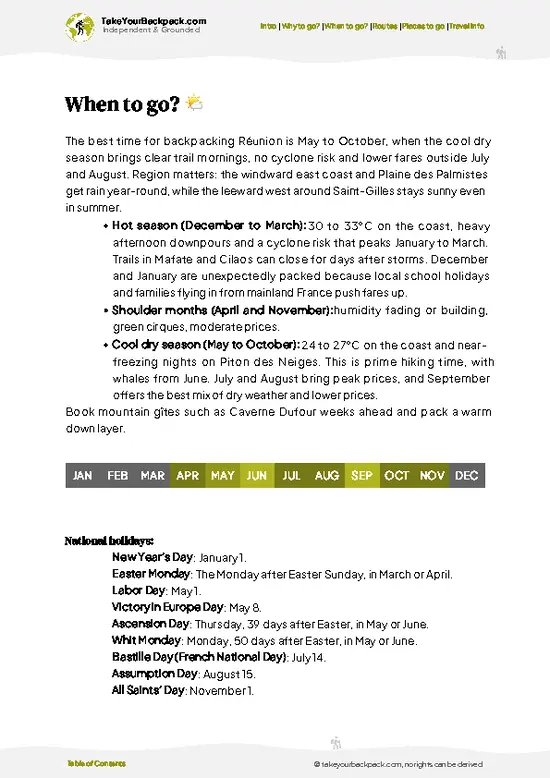
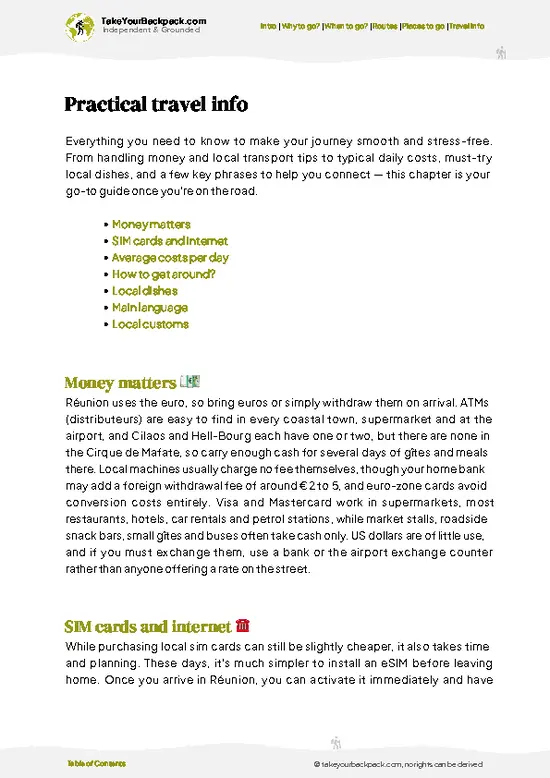
example page 0 from our offline Travel Guide for Réunion
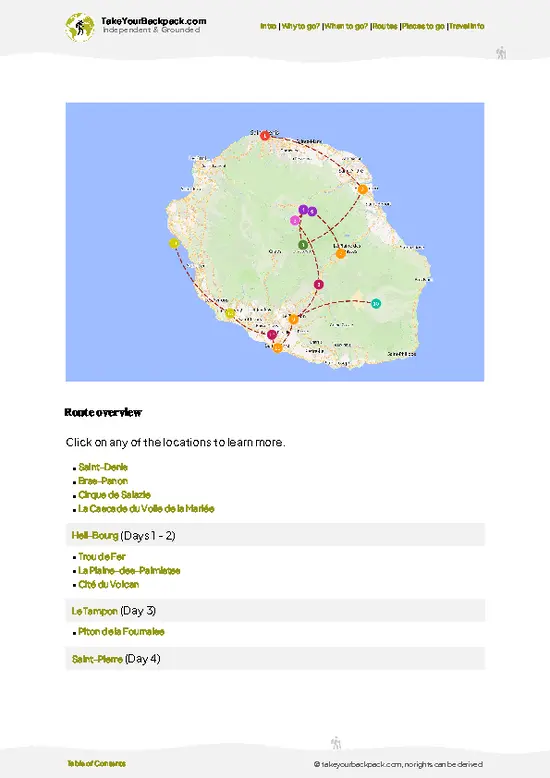
example page 1 from our offline Travel Guide for Réunion
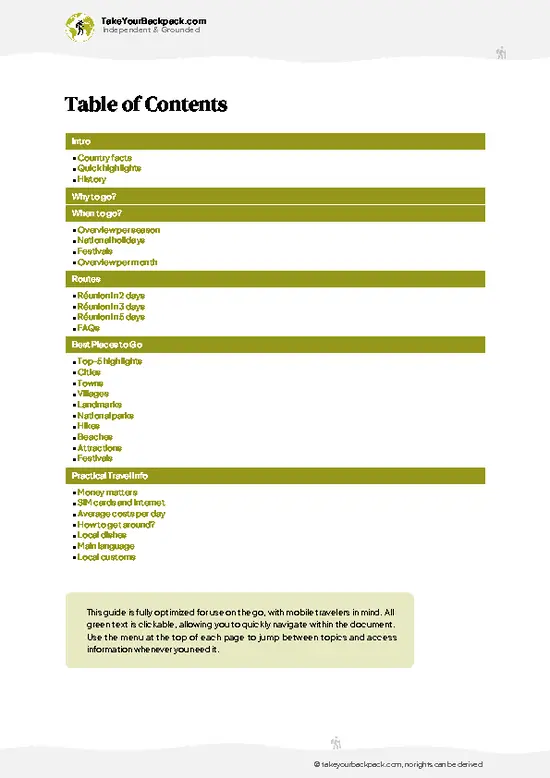
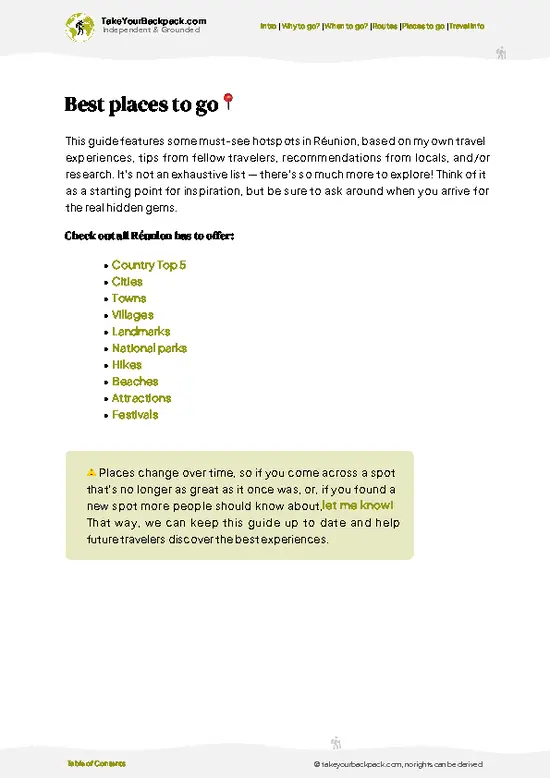
example page 2 from our offline Travel Guide for Réunion
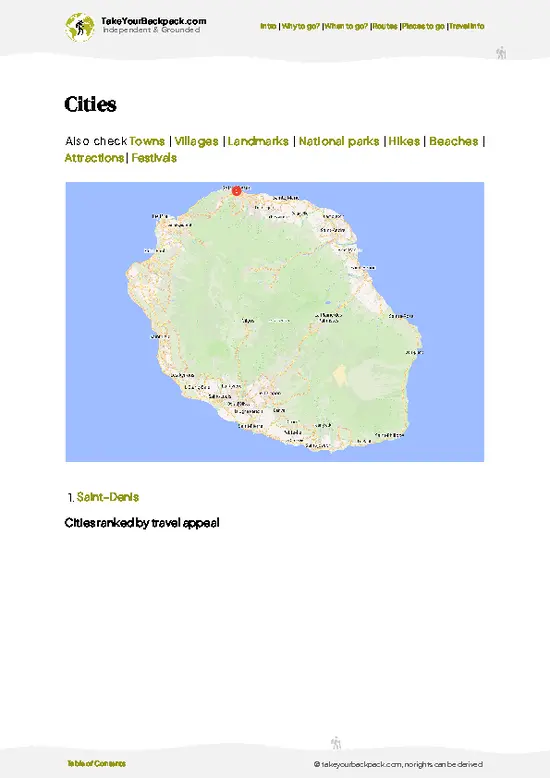
example page 3 from our offline Travel Guide for Réunion
example page 4 from our offline Travel Guide for Réunion
example page 5 from our offline Travel Guide for Réunion
example page 6 from our offline Travel Guide for Réunion
example page 7 from our offline Travel Guide for Réunion
Loading the map 🌍
CLICK TO FILTER
cities
towns
villages
landmarks
national parks
hikes
beaches
attractions
festivals
SHOW COUNTRY’S BESTSHOW ALL

✨ Why go?
Ranked #6 town in Réunion
What makes this town worth visiting

Saint-Leu is where Réunion’s west coast gets serious about air and water. The main draw is the Piton Saint-Leu paragliding launch, where tandem flights drop you onto the beach, and the surf at Les Roches Noires and the Saint-Leu lagoon keep surfers and snorkelers busy all week. Most backpackers stay two or three nights, longer if they take lessons or just like mornings on the sea wall. It suits solo travelers, active types and slow travelers who want a real town rather than a resort strip. Evenings are quiet, with a few beach bars and a Saturday-morning market feel in the center, so this is no place for clubbing. The stays are mostly guesthouses and small rentals, which means you will talk to the owners as much as to other guests. Hikers can use it as a calm base for the highlands behind.

💡 HighlightsThe experiences that define the visit

  1. Paragliding from Piton Saint-Leu: the town’s signature, with tandem flights landing on the beach near the lagoon. Go in the morning, when the air is smooth. Flights cost roughly €80 to 100, and you should allow 2 to 3 hours including transfers.
  2. Saint-Leu Lagoon: a shallow reef strip with turtles and colorful fish close to shore. Early morning has the clearest water. Free to enter, with mask rental around €5 to 10, and 1 to 2 hours is plenty.
  3. Les Roches Noires and the surf spots: black lava rock and a long left-hand wave that pulls surfers, with swimming only for experts. Watching from the rocks is free and best in late afternoon, taking about an hour.
  4. Stella Matutina Museum: a former sugar factory turned museum on the hill above town, covering cane, rum and industrial history. Entry is about
… read more 👉
  1. Paragliding from Piton Saint-Leu: the town’s signature, with tandem flights landing on the beach near the lagoon. Go in the morning, when the air is smooth. Flights cost roughly €80 to 100, and you should allow 2 to 3 hours including transfers.
  2. Saint-Leu Lagoon: a shallow reef strip with turtles and colorful fish close to shore. Early morning has the clearest water. Free to enter, with mask rental around €5 to 10, and 1 to 2 hours is plenty.
  3. Les Roches Noires and the surf spots: black lava rock and a long left-hand wave that pulls surfers, with swimming only for experts. Watching from the rocks is free and best in late afternoon, taking about an hour.
  4. Stella Matutina Museum: a former sugar factory turned museum on the hill above town, covering cane, rum and industrial history. Entry is about €8 to 10, and the visit takes 1.5 to 2 hours. Come in the morning before the heat.
  5. Saint-Leu Seafront and Market: a walk along the sea wall with fishing boats, food stalls and a lively weekend market. Morning is best, it costs nothing, and you can spend an hour or two sampling snacks.
Near Saint-Leu, day trips take in the Cirque de Cilaos, the Maïdo viewpoint, and the tidal pools at Étang-Salé. Paragliding needs advance booking, especially on weekends.
Spotted a mistake or missing something? Contact us.

🏘️ NeighborhoodsKey areas and districts to know

Saint-Leu stretches along a few kilometers of coast and slopes, and the best bits sit within an easy walk or a short bus hop of each other.
  • Centre-ville and the church quarter: Worth your first hour. Low Creole houses with painted shutters line the streets near the Notre-Dame-de-Bon-Secours church, and the air smells of frying bouchons and cut sugarcane. It's flat, shaded in patches and entirely walkable, with bakeries opening before the heat arrives.
  • Seafront and Pointe des Châteaux: The sea promenade is where the town gathers at dusk, with a calm, dark-sand stretch of shore, a few bars and the thud of surf on black lava rock. Walk it slowly. Evenings are the liveliest, though still low-key by any city standard.
  • Roches Noires and the Étang: The lagoon side of Saint-Leu is the one to visit for
… read more 👉
Saint-Leu stretches along a few kilometers of coast and slopes, and the best bits sit within an easy walk or a short bus hop of each other.
  • Centre-ville and the church quarter: Worth your first hour. Low Creole houses with painted shutters line the streets near the Notre-Dame-de-Bon-Secours church, and the air smells of frying bouchons and cut sugarcane. It's flat, shaded in patches and entirely walkable, with bakeries opening before the heat arrives.
  • Seafront and Pointe des Châteaux: The sea promenade is where the town gathers at dusk, with a calm, dark-sand stretch of shore, a few bars and the thud of surf on black lava rock. Walk it slowly. Evenings are the liveliest, though still low-key by any city standard.
  • Roches Noires and the Étang: The lagoon side of Saint-Leu is the one to visit for snorkeling over coral and for the long, sunburnt boardwalk. Shade is scarce at midday, so go early. The Étang-Salé black sand beach to the south is a short drive away and needs a bus or car.
  • Les Colimaçons and the heights: Cooler, green and quiet, with forest smells and winding roads, but steep. Skip it unless you have a vehicle or come for the paragliding launch above town, where the view over the lagoon opens up.
  • Saturday market area: Noisy, crowded and delicious, with piles of lychees, vanilla pods and spiced rum. Arrive before the heat sets in.

⌛️ 1 daySeeing the highlights in 24 hours

8:00 AM, Saint-Leu Seafront: Start with coffee and a croissant near the sea wall while fishing boats unload. Walk the front slowly, then head toward the lagoon.
9:00 AM, Saint-Leu Lagoon: Rent a mask and snorkel over the reef while the water is clear. Turtles often graze close to the edge. Dry off on the sand, then walk back to town.
11:30 AM, Stella Matutina: Take a short ride uphill to the old sugar factory. The museum is cool inside, and the cane and rum exhibits explain why the coast looks the way it does.
1:00 PM, Lunch in the center: Order a Creole plate of rougail saucisse or fresh fish at a local snack bar, and eat on a shaded terrace.
3:00 PM, Les Roches Noires: Walk to the black rocks and watch surfers work the wave. Stay on the dry stones and keep away from the edge.
5:00 PM, Notre-Dame-de-la-Salette … read more 👉
8:00 AM, Saint-Leu Seafront: Start with coffee and a croissant near the sea wall while fishing boats unload. Walk the front slowly, then head toward the lagoon.
9:00 AM, Saint-Leu Lagoon: Rent a mask and snorkel over the reef while the water is clear. Turtles often graze close to the edge. Dry off on the sand, then walk back to town.
11:30 AM, Stella Matutina: Take a short ride uphill to the old sugar factory. The museum is cool inside, and the cane and rum exhibits explain why the coast looks the way it does.
1:00 PM, Lunch in the center: Order a Creole plate of rougail saucisse or fresh fish at a local snack bar, and eat on a shaded terrace.
3:00 PM, Les Roches Noires: Walk to the black rocks and watch surfers work the wave. Stay on the dry stones and keep away from the edge.
5:00 PM, Notre-Dame-de-la-Salette church area: Hardly any tourists come here. Wander the quiet streets above the shore, where locals sit outside their homes, and see the old chapel with its sea views.
7:00 PM, Piton Saint-Leu viewpoint: Drive or walk up to watch paragliders landing and the sky changing color, then return for dinner by the water.

🌤️ When to go?When to go for the best experience

Saint-Leu is driest and sunniest from May to October, with the strongest case for a visit in the cooler months of the southern winter.
  • May to October (winter): Days of 24 to 27°C (75 to 81°F), nights around 17 to 20°C (63 to 68°F), little rain on this leeward coast. Daylight is shorter, roughly 11 hours. Humpback whales pass from July to September, and prices rise around French school holidays in July and August.
  • November to December: Warm and mostly dry, 27 to 30°C (81 to 86°F), with longer days and fewer visitors. Paragliding conditions stay good.
  • January to April (summer and cyclone season): Hot and humid, 29 to 32°C (84 to 90°F), with afternoon downpours and a risk of cyclones, mainly February and March. Sea is warmest, daylight reaches about 13 hours, and lodging is often cheaper.
Book ahead … read more 👉
Saint-Leu is driest and sunniest from May to October, with the strongest case for a visit in the cooler months of the southern winter.
  • May to October (winter): Days of 24 to 27°C (75 to 81°F), nights around 17 to 20°C (63 to 68°F), little rain on this leeward coast. Daylight is shorter, roughly 11 hours. Humpback whales pass from July to September, and prices rise around French school holidays in July and August.
  • November to December: Warm and mostly dry, 27 to 30°C (81 to 86°F), with longer days and fewer visitors. Paragliding conditions stay good.
  • January to April (summer and cyclone season): Hot and humid, 29 to 32°C (84 to 90°F), with afternoon downpours and a risk of cyclones, mainly February and March. Sea is warmest, daylight reaches about 13 hours, and lodging is often cheaper.
Book ahead for July and August, and visit on a Saturday morning for the market.


source: climatestotravel.comJANJanuary: fair for travelingFEBFebruary: fair for travelingMARMarch: fair for travelingAPRApril: good for travelingMAYMay: highly recommended for travelingJUNJune: highly recommended for travelingJULJuly: highly recommended for travelingAUGAugust: highly recommended for travelingSEPSeptember: highly recommended for travelingOCTOctober: highly recommended for travelingNOVNovember: good for travelingDECDecember: fair for traveling
when-to-go

✈️ The backpacker research shortcutRéunion Travel Guide

An offline-friendly backpacking guide with optimized travel routes, ranked highlights, transport advice, and the best areas to stay.
example page 0 from our offline Travel Guide for Réunion
example page 1 from our offline Travel Guide for Réunion
example page 2 from our offline Travel Guide for Réunion
example page 3 from our offline Travel Guide for Réunion
example page 4 from our offline Travel Guide for Réunion
example page 5 from our offline Travel Guide for Réunion
example page 6 from our offline Travel Guide for Réunion
example page 7 from our offline Travel Guide for Réunion
The digital guide (232 pages) contains:
✅ 64 highlights, ranked by travel appeal
✅ Optimized 2, 3 & 5-day travel routes
✅ Cities, national parks, landmarks, beaches
✅ How to get around
✅ Offline-friendly for travel without Wi-Fi
👉 Click to see all 30+ guide features

📅 Plan smarter in minutes, not weeks
✅ Month by month travel advice
✅ Festivals & national holidays
✅ Budget expectations

🗺️ Go to the right places, skip the overrated ones
✅ Honest pros & cons of destinations
✅ Top hikes, parks & viewpoints
✅ Lesser-known places most travelers miss
✅ Clear “worth it vs skip it” guidance

🛏️ Travel smoothly without rookie mistakes
✅ Best areas to stay
✅ Transport systems explained simply
✅ Common scams & safety advice
✅ SIM cards, money & practical tips

🌍 Understand the country, not just visit it
✅ Culture & traditions
✅ 52 Essential phrases & customs
✅ Festivals worth planning around
✅ Traveler-friendly historical context
✅ Insights that make places more meaningful

📱 Built for real travel conditions
✅ Fully downloadable PDF
✅ Works completely offline
✅ Optimized for phone use
✅ Useful in remote areas & buses
✅ Everything in one place
Stop searching, start planning
Get instant access to your full guide. 30‑day money-back guarantee.
+ Add another guide for just

By proceeding you agree to our terms.
Sent to your inbox immediately after payment • 100% Secure Checkout
Best Backpacking Travel Advisor 2025 tourism awardBest Backpacking
Travel Advisor
2025
What others say about Take Your Backpack Guides:
⭐⭐⭐⭐⭐
Fantastic, amazing amount of information!
⭐⭐⭐⭐⭐
My goodness this is amazing, it's what I've been looking for hats off too you!
⭐⭐⭐⭐⭐
I think this is absolutely BRILLIANT
⭐⭐⭐⭐
Very complete and informative. It's still missing places, but I gotta to commend you
⭐⭐⭐⭐⭐
This is truly amazing, thank you, can't wait to explore it with my kids!
⭐⭐⭐⭐⭐
Awesome resource, thank you!
⭐⭐⭐⭐⭐
This is amazing! Can't wait to explore the ones I haven't seen
⭐⭐⭐⭐
I love this! Well done, great idea.
⭐⭐⭐⭐⭐
Thanks for taking the time to make this gem!
⭐⭐⭐⭐⭐
This might be the best website I've ever seen.
⭐⭐⭐⭐⭐
Congratulations, and thank you so much for your work; it's incredibly valuable.
⭐⭐⭐⭐
In all seriousness I think you did a great job pointing out the important spots
⭐⭐⭐⭐⭐
10/10 very good
⭐⭐⭐⭐⭐
As someone who's only just starting to visit regularly this is awesome, thank you.
⭐⭐⭐⭐
Thank you very much! I'm going to visit my dad, it's going to be very useful!
⭐⭐⭐⭐⭐
This is really cool! We'll be travelling for the first time and this definitely come in handy.
⭐⭐⭐⭐⭐
You are now our minister of culture, congratulations 👨‍💼
⭐⭐⭐⭐⭐
Just wanted to tell you that this is a pearl! Going to follow your recommendations.
⭐⭐⭐⭐⭐
This is so cool. I'll definitely be using the resource for my travels soon.
⭐⭐⭐⭐⭐
This is very impressive! Good work.
⭐⭐⭐⭐⭐
This is an amazing and informative site. Very well done!

🛏️ Where to stay?Choosing the right base

The center and seafront of Saint-Leu are the best areas for a budget stay, with guesthouses and a few hostel beds within walking distance of the sea.
The center suits most backpackers. Bakeries, supermarkets, bars and the main bus stop are all close, and streets stay lit and lively until late evening. Expect some noise on weekend nights near the promenade, but nothing that earplugs won’t solve. Dorm beds are limited, so book several weeks ahead for July, August and December, when French families fill the coast.
The lagoon side toward Roches Noires is the alternative. It is quieter, with simple guesthouses … read more 👉
The center and seafront of Saint-Leu are the best areas for a budget stay, with guesthouses and a few hostel beds within walking distance of the sea.
The center suits most backpackers. Bakeries, supermarkets, bars and the main bus stop are all close, and streets stay lit and lively until late evening. Expect some noise on weekend nights near the promenade, but nothing that earplugs won’t solve. Dorm beds are limited, so book several weeks ahead for July, August and December, when French families fill the coast.
The lagoon side toward Roches Noires is the alternative. It is quieter, with simple guesthouses and self-catering studios that suit longer stays and snorkelers who want to be at the water by dawn. The trade-off is distance: you will walk 15 to 25 minutes to shops and restaurants, and the road is poorly lit at night, so a flashlight or phone light helps.
The heights above town have the best views and the coolest nights, yet transport links are poor and you will need a car. Most solo travelers are better off staying low and using Saint-Leu as a base for the west coast.

🚌 Getting aroundTransportation options and practical tips

From the Saint-Leu bus stop on the main road, the center and seafront are a flat five to ten minute walk downhill, with the smell of salt and fried snacks leading the way. Saint-Leu is compact enough that your feet do most of the work, but the heat from 11 am to 3 pm makes distances feel longer, and the hill neighborhoods are steep. Public transport exists yet thins out sharply after dark and on Sundays.
  • Walking: Best for the center, church quarter and seafront promenade. Free, shaded in patches, and the only way to enjoy the Saturday market crowds. Wear a hat and carry water.
  • Car’Jaune intercity buses: The yellow buses link Saint-Leu with Saint-Paul, Saint-Louis, Étang-Salé and Saint-Pierre, typically €1.80 to 3 per ride. Services run from about 5:30 am to 7 pm on weekdays, with fewer on weekends.
… read more 👉
From the Saint-Leu bus stop on the main road, the center and seafront are a flat five to ten minute walk downhill, with the smell of salt and fried snacks leading the way. Saint-Leu is compact enough that your feet do most of the work, but the heat from 11 am to 3 pm makes distances feel longer, and the hill neighborhoods are steep. Public transport exists yet thins out sharply after dark and on Sundays.
  • Walking: Best for the center, church quarter and seafront promenade. Free, shaded in patches, and the only way to enjoy the Saturday market crowds. Wear a hat and carry water.
  • Car’Jaune intercity buses: The yellow buses link Saint-Leu with Saint-Paul, Saint-Louis, Étang-Salé and Saint-Pierre, typically €1.80 to 3 per ride. Services run from about 5:30 am to 7 pm on weekdays, with fewer on weekends. Expect air conditioning that is either arctic or absent.
  • Local Kar’Ouest buses: These serve the town’s heights and neighboring villages for about €1.20 to 2. They are infrequent, sometimes only hourly, so check the timetable the day before.
  • Rental car or scooter: A small car costs roughly €30 to 50 a day, and a scooter about €25 to 35. It is the sensible choice for the heights, the Maïdo road and remote beaches. Parking by the seafront fills on weekends.
  • Taxi: A short town hop is about €10 to 15, and a ride to Saint-Gilles about €30 to 40. Book by phone, since street hailing is rare.
Hitchhiking is common among locals along the coast road, but sensible only in daylight. Rely on the bus for the coast and rent wheels for anything above 500 meters.

👛 Costs (as of 22 October 2026)How expensive it really is

Saint-Leu costs roughly €85 to 95 a day for a budget traveler, noticeably more than most tropical backpacking destinations because it follows French price levels.
CategoryBudget RangeLocal Reality
Dorm accommodation€28 to 38 (high season); €22 to 30 (low season)Beds are few, so guesthouse rooms at €50 to 70 are common fallbacks.
Meals€25 to 35Bakery breakfast €3 to 5, a plat du jour €12 to 16, and market snacks (bouchons, samoussas) €3 to 6.
Local transport€4 to 10Buses cost €1.20 to 3 per ride. A rental car is €30 to 50 a day.
Basic activities/entry fees€8 to 20Beaches and viewpoints are free. Snorkel gear rental is about €10 to 15, and paragliding costs around €90 to 110.
Miscellaneous€5 to 10Sunscreen, water, a beer at €4 to 6, and groceries.
Total Daily Budget€93Dorm, meals, buses and modest
… read more 👉
Saint-Leu costs roughly €85 to 95 a day for a budget traveler, noticeably more than most tropical backpacking destinations because it follows French price levels.
CategoryBudget RangeLocal Reality
Dorm accommodation€28 to 38 (high season); €22 to 30 (low season)Beds are few, so guesthouse rooms at €50 to 70 are common fallbacks.
Meals€25 to 35Bakery breakfast €3 to 5, a plat du jour €12 to 16, and market snacks (bouchons, samoussas) €3 to 6.
Local transport€4 to 10Buses cost €1.20 to 3 per ride. A rental car is €30 to 50 a day.
Basic activities/entry fees€8 to 20Beaches and viewpoints are free. Snorkel gear rental is about €10 to 15, and paragliding costs around €90 to 110.
Miscellaneous€5 to 10Sunscreen, water, a beer at €4 to 6, and groceries.
Total Daily Budget€93Dorm, meals, buses and modest activities.
Buy lunch at the Saturday market and the supermarket, then cook or picnic. It can cut your food spending by a third.
⚠️ Prices can change and everyone travels differently, so take this as a rough guide. Hope it helps you plan your adventure!

🚌 Day tripsExploring the surroundings

Saint-Leu works well as a base because the west coast bus line and a rental car put several big sights within an hour or so.
Étang-Salé les Bains:
The black volcanic sand beach and pine forest sit about 20 minutes south by bus or car. Expect €2 to 5 round trip by bus, a free beach and a picnic from the bakery. Go on a weekday morning, and avoid swimming outside the supervised zone, because currents are strong.

Saint-Gilles-les-Bains:
The island’s main beach resort is 25 to 30 minutes north, with a harbor, reef snorkeling and a lively evening scene. A bus costs about €3 to 5 round trip, and a half day is enough. Whale watching boats run roughly July to September at about €45 to 65.
👉 Explore Saint-Gilles-les-Bains
Maïdo viewpoint:
The road climbs to over 2,000 meters for a dizzying look into … read more 👉
Saint-Leu works well as a base because the west coast bus line and a rental car put several big sights within an hour or so.
Étang-Salé les Bains:
The black volcanic sand beach and pine forest sit about 20 minutes south by bus or car. Expect €2 to 5 round trip by bus, a free beach and a picnic from the bakery. Go on a weekday morning, and avoid swimming outside the supervised zone, because currents are strong.

Saint-Gilles-les-Bains:
The island’s main beach resort is 25 to 30 minutes north, with a harbor, reef snorkeling and a lively evening scene. A bus costs about €3 to 5 round trip, and a half day is enough. Whale watching boats run roughly July to September at about €45 to 65.
👉 Explore Saint-Gilles-les-Bains
Maïdo viewpoint:
The road climbs to over 2,000 meters for a dizzying look into the Mafate cirque, about 1.5 hours by car. Arrive at dawn before clouds fill the canyon by mid-morning, and carry a jacket, since it is often 10 to 12°C (50 to 54°F) colder than the coast. There is no regular bus, so expect €15 to 25 for fuel or shared car costs.

Cilaos:
A switchback road of more than 400 bends leads to the spa village in a cirque, about 1.5 to 2 hours by car. Allow €10 to 20 for fuel, with lentils and wine on the menu. Nauseous passengers should sit in front and avoid a heavy breakfast.
👉 Explore Cilaos

🛡️ SafetyScams, Hazards, and Annoyances

Saint-Leu is broadly safe, and most problems are petty and avoidable. Leave nothing visible in parked cars at beaches and trailheads, where break-ins are the most common complaint, and carry only what you need onto the sand. Solo travelers, including women, generally walk the center and seafront comfortably in the evening, though the quieter lagoon road is dim and best done in a group or by taxi after dark. Sun and sea are the real hazards. Swim only in the supervised lagoon areas, since shark-related restrictions and strong currents have closed several surf spots on this coast, and obey the flags. Midday UV is intense, so use high SPF. On hikes, tell your hostel where you are going, since fog rolls in quickly above 1,000 meters. Scams are rare. Agree taxi fares in advance and keep emergency number 112 handy.

FAQFrequently asked questions about Saint-Leu

Saint-Leu is worth a real stop rather than a stopover, especially if you like water and heights. The lagoon snorkeling, the paragliding launch above town and the Saturday market fill the days, and whale season from July to September adds boat trips at about €45 to 65. The west coast is also the driest and sunniest part of Réunion.
Three days is enough to cover Saint-Leu well, and four or five suit you if you add paragliding or hikes. Spend one day on the lagoon and market, one at Étang-Salé les Bains (about 20 minutes away), and another at the Maïdo viewpoint at dawn. Longer stays make sense if you use it as a west coast base.
Yes, Saint-Leu can be done in a day from Saint-Gilles-les-Bains (about 25 to 30 minutes by bus) or Saint-Pierre (around 40 minutes). Buses run roughly from 5:30 am to 7 pm, so you need to leave by 4 pm to be safe. A day trip covers the market, lagoon and seafront, but you will miss the sunset promenade and paragliding.
⚠️ Things can change over time, so always validate details locally before you go.

Other Réunionnais towns near Saint-Leu

Explore more nearby:


💡 Not sure where to go next?
Create a personalized itinerary for Réunion including Saint-Leu and the places that fit your trip.

Generate my itinerary

👉 Discover all towns

Or checkout all Réunion has to offer (think cities, towns, villages, national parks, hikes, beaches, festivals)
Country photo of Réunion

We 💚 feedbackSumming up the experience

Saint-Leu is best in the early morning, when the air is still, the lagoon is clear and the paragliders are lifting off. I would book a flight for first slot, snorkel afterward, and keep afternoons for shade and cold drinks. Bring reef-safe sunscreen and sandals for the black rocks.

✍️ Help improve this page!
The information on this page is based on in-depth research, insights shared by experienced travelers, and feedback from the local travel community in Réunion. While every effort is made to keep the information accurate and current, conditions can change — so if you spot anything incorrect or outdated, please get in touch.


🙋‍♂️ Give feedback

👋 Meet the founderWho’s Behind Take Your Backpack?

Johan, backpacker and founder of TakeYourBackpackHi, I’m Johan (Netherlands 🇳🇱), the creator of TakeYourBackpack. Over the past 3 decades, I’ve backpacked through 90+ countries across six continents, gaining extensive experience with independent travel, long-term trips, and overland routes.

This site is built on a combination of firsthand travel experience and carefully curated insights from other backpackers. Many guides are based on places I’ve personally visited, while others bring together tips, observations, and practical advice shared by trusted travelers I’ve met along the way.

The goal is to provide realistic, experience-driven guidance — not generic itineraries — so you can explore destinations with better context, clearer expectations, and more confidence.