v2.webp)
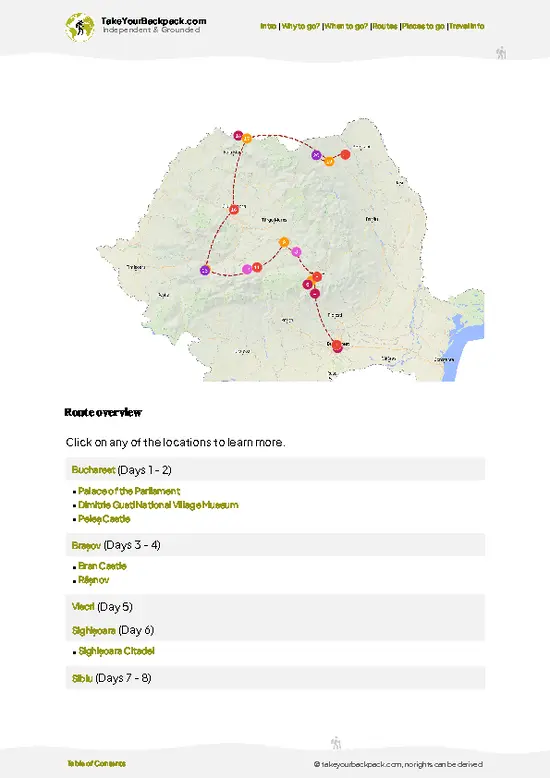
- Sighișoara Citadel (Historic Centre) — A living medieval town: cobbled streets, pastel guild houses and fortifications that are still inhabited. Walking the citadel is the best way to feel the Saxon-era rhythm of the place.
- Clock Tower (Turnul cu Ceas) — The town’s symbol: a 14th-century tower with a small history museum, the original clock mechanism and a rooftop viewpoint that gives the best panorama over the citadel and the valley below.
- Covered Staircase (Scara Acoperită) — A long, wooden, roofed stairway built to protect schoolchildren from winter weather; it’s atmospheric to climb and lands you right by the Church on the Hill.
- Church on the Hill (Biserica din Deal) and the Hill Cemetery — A Gothic hilltop church with a fine organ and one of the most evocative cemeteries in Transylvania:
- Sighișoara Citadel (Historic Centre) — A living medieval town: cobbled streets, pastel guild houses and fortifications that are still inhabited. Walking the citadel is the best way to feel the Saxon-era rhythm of the place.
- Clock Tower (Turnul cu Ceas) — The town’s symbol: a 14th-century tower with a small history museum, the original clock mechanism and a rooftop viewpoint that gives the best panorama over the citadel and the valley below.
- Covered Staircase (Scara Acoperită) — A long, wooden, roofed stairway built to protect schoolchildren from winter weather; it’s atmospheric to climb and lands you right by the Church on the Hill.
- Church on the Hill (Biserica din Deal) and the Hill Cemetery — A Gothic hilltop church with a fine organ and one of the most evocative cemeteries in Transylvania: weathered carved crosses, Saxon tombstones and sweeping views of Sighișoara.
- Vlad Dracul House (Casa Vlad Dracul) — The 15th-century house that claims ties to Vlad Țepeș; even if you’re not there for Dracula lore, the old rooms, period decor and small museum capture daily life in medieval Sighișoara.
- Medieval Defensive Towers — The citadel is ringed by guild towers (Tailors’, Tinsmiths’, Butchers’, etc.). Even if not all are open inside, their facades, coats of arms and locations tell the story of the town’s craftsmen and defenses.
- Piața Cetății and the Guild Houses — The central square is where locals gather: colorful guild houses, cafés, occasional markets and festivals. It’s an easy place to people-watch and read the town through its façades.
- Casa cu Cerb (House with the Stag) — One of the most photogenic Baroque houses in the citadel, named for its carved stag motif. It’s a neat example of the decorative townhouses that wealthy Saxon burghers once built.
- Small private museums and niche collections — Scattered through the citadel are compact, quirky museums (local history, medieval weapons/torture artifacts, folk displays). They’re small, sometimes family-run, and full of period objects you won’t see in bigger museums.
- Strada Cetății and the artisan lanes — Don’t rush this stretch: narrow streets lined with craft shops, bakeries, traditional guesthouses and locals selling pottery or wool. It’s where the town’s everyday craft culture still shows up.
Spotted a mistake or missing something? Contact us.

Transylvania: Dracula's Castle and Birthplace Tour

Sighisoara and Biertan: UNESCO in Transylvania

Sighisoara Fortress Quest: Exploration Game and Tour

City Tour Sighisoara Legends & Landmarks A Walk Through Time

Guilds Towers and Dracula Self Guided Tour of Sighisoara

Castle Tour of Transylvania

Sighișoara Vlad Dracula Medieval Self Guided Audio Walking Tour

Sighisoara walking tour or the real house of Dracula -Outdoor experience

Sighisoara to Bucharest - Private Guided Transfer - Car and Driver


 Best Backpacking
.jpg) Hi, I’m Johan (Netherlands 🇳🇱), the creator of TakeYourBackpack. Over the past 3 decades, I’ve backpacked through 90+ countries across six continents, gaining extensive experience with independent travel, long-term trips, and overland routes.
Hi, I’m Johan (Netherlands 🇳🇱), the creator of TakeYourBackpack. Over the past 3 decades, I’ve backpacked through 90+ countries across six continents, gaining extensive experience with independent travel, long-term trips, and overland routes.