×

Russia🇷🇺 | landmarksKizhi PogostWooden churches, island setting, shingled domes | things to do and best time to go

Explore Kazan KremlinExplore Kremlin and Red Square

Backpacking in Kizhi Pogost
UNESCO World Heritage site
👍 Recommendedunique site ranked #3
By Johan Kruseman 🇳🇱 | Updated May 28, 2026

Everyone shows up to Kizhi Pogost for the postcard shot of the wooden Transfiguration Church, counting domes like it’s a checklist. That’s fine, but the real reason to come is the feeling of standing on a windswept island in Lake Onega, way out in Karelia in northwest Russia, where an entire wooden universe somehow hasn’t burned, collapsed, or been turned into a theme park. As a backpacker, you’re not here for nightlife or cheap thrills; you’re here for slow, quiet awe and the craft of people who built without nails and still out-designed most modern architects. It’s expensive and logistically awkward to reach, with boats, timetables, and weather all bossing you around, and in peak season tour groups can clog the paths. But step away from the main cluster, let the lake wind cut through the silence, and it stops being an “attraction” and starts feeling like time travel.

Discover everything you want to know in the 📖 Russia Travel Guide.
Safety warning

The current risk level for Russia is high. Check the advice before going.


Get your Russia guide
115 ranked highlights, routes & tips, works offline (425 pages)
Loading the map 🌍
CLICK TO FILTER
cities
towns
villages
landmarks
national parks
hikes
beaches
attractions
festivals
regions
SHOW COUNTRY’S BESTSHOW ALL

✨ Why go?
Ranked #3 unique site in Russia
What sets this place apart

Kizhi Pogost isn’t just another stop; it’s a living testament to Russian wooden architecture. Sure, you’ll share the space with tourists, but that’s part of the experience. The crowds can be a drag, but they also mean you’re witnessing something that resonates with many.

The cost is surprisingly low, especially considering the rich history and craftsmanship on display. You’ll see the iconic Church of the Transfiguration, with its 22 domes, and the Kizhi Pogost itself, both UNESCO World Heritage sites. This isn’t just a photo op; it’s a deep dive into a culture that’s often overlooked.

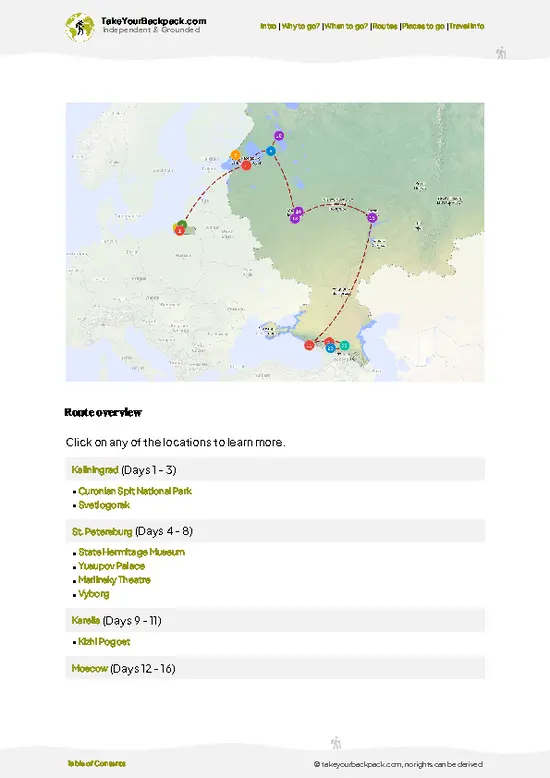
Kizhi fits perfectly into a broader route through Russia’s Karelia region. Combine it with a trek around Lake Onega or a visit to Petrozavodsk. The effort-to-reward ratio is solid; you’ll leave with stories … read more 👉
Kizhi Pogost isn’t just another stop; it’s a living testament to Russian wooden architecture. Sure, you’ll share the space with tourists, but that’s part of the experience. The crowds can be a drag, but they also mean you’re witnessing something that resonates with many.

The cost is surprisingly low, especially considering the rich history and craftsmanship on display. You’ll see the iconic Church of the Transfiguration, with its 22 domes, and the Kizhi Pogost itself, both UNESCO World Heritage sites. This isn’t just a photo op; it’s a deep dive into a culture that’s often overlooked.

Kizhi fits perfectly into a broader route through Russia’s Karelia region. Combine it with a trek around Lake Onega or a visit to Petrozavodsk. The effort-to-reward ratio is solid; you’ll leave with stories and insights that Instagram can’t capture. It’s about the authenticity of the experience, not just the likes. Make time for Kizhi, and you’ll understand why it’s worth it.
Get the complete Travel Guide for Russia
Everything organized for offline planning — routes, highlights, costs & tips

See what’s inside 👉

Get the Travel Guide -

💡 HighlightsMust-see experiences and standout moments

  • Church of the Transfiguration (22 domes) — The showstopper: a towering, 22-domed wooden church that looks impossibly delicate for something built of logs and shingles. It’s a masterpiece of traditional carpentry (mostly interlocking joints, not nails) and the skyline it makes against the lake is what postcards are jealous of.
  • Church of the Intercession (9 domes) — The smaller, cozier sister to the Transfiguration. Built for winter services, it’s a great contrast in scale and mood, with a more intimate interior and richer folk-church atmosphere that shows how practical and beautiful rural Orthodox buildings could be.
  • Pogost bell tower and enclosing fence — The separate bell tower and the log fence that frames the site turn the churches into a single, balanced ensemble. The tower’s silhouette
read more 👉
  • Church of the Transfiguration (22 domes) — The showstopper: a towering, 22-domed wooden church that looks impossibly delicate for something built of logs and shingles. It’s a masterpiece of traditional carpentry (mostly interlocking joints, not nails) and the skyline it makes against the lake is what postcards are jealous of.
  • Church of the Intercession (9 domes) — The smaller, cozier sister to the Transfiguration. Built for winter services, it’s a great contrast in scale and mood, with a more intimate interior and richer folk-church atmosphere that shows how practical and beautiful rural Orthodox buildings could be.
  • Pogost bell tower and enclosing fence — The separate bell tower and the log fence that frames the site turn the churches into a single, balanced ensemble. The tower’s silhouette and the wooden enclosure give the whole place that iconic “island village church” look that’s uniquely Russian.
  • Traditional wooden construction and shingles — Look close and you’ll see why people nerd out over Kizhi: layered wooden shingles, scalloped patterns, and centuries-old joinery techniques. The craftsmanship—how everything fits together without metal fasteners—is a window into pre-industrial building skills.
  • UNESCO-listed cultural landscape — Kizhi isn’t just a couple of pretty churches; it’s an intact example of northern Russian wooden architecture and community planning, recognized globally. That UNESCO tag matters because it reflects the site’s rarity and the lengths people go to preserve it.
  • Open-air museum of Pomor life — Beyond the pogost you’ll find dozens of relocated houses, barns, windmills and workshops that recreate everyday life in the region. Craftspeople sometimes demonstrate carving, weaving or boatbuilding, which makes the history feel lived-in, not staged.
  • Island setting, boat approaches and seasonal drama — Getting there by boat (or seeing it from the mainland) is part of the thrill: the churches rise out of water and reflect on calm days, and winters turn the scene stark and cinematic. Sunsets, reflections and snow-clad roofs are the photography jackpot.
Spotted a mistake or missing something? Contact us.

🌤️ When to go?Weather, crowds, and seasonal trade-offs


  • Weather: Summers (June to August) bring mild, wet weather with temperatures around 15-20°C (59-68°F). Winters are brutally cold, often plunging below -20°C (-4°F), making access tough and the experience harsh unless you’re well-prepared for Siberian chill.

  • Temperature: Spring and fall hover between 5-15°C (41-59°F), but expect unpredictable swings. Summer is your safest bet for warmth and comfort, while winter demands serious gear and patience.

  • Daylight Hours: Summer offers long days, with up to 18 hours of daylight in June, perfect for exploring the wooden churches and island trails without rushing. Winter days shrink to just 5-6 hours, limiting sightseeing time.

  • Crowds: Peak season in summer means more tourists, especially Russian day-trippers. Early June or late August can ease
read more 👉

  • Weather: Summers (June to August) bring mild, wet weather with temperatures around 15-20°C (59-68°F). Winters are brutally cold, often plunging below -20°C (-4°F), making access tough and the experience harsh unless you’re well-prepared for Siberian chill.

  • Temperature: Spring and fall hover between 5-15°C (41-59°F), but expect unpredictable swings. Summer is your safest bet for warmth and comfort, while winter demands serious gear and patience.

  • Daylight Hours: Summer offers long days, with up to 18 hours of daylight in June, perfect for exploring the wooden churches and island trails without rushing. Winter days shrink to just 5-6 hours, limiting sightseeing time.

  • Crowds: Peak season in summer means more tourists, especially Russian day-trippers. Early June or late August can ease the crush without sacrificing weather. Winter sees almost no tourists, but the isolation is intense.

  • Seasonal Activities: Summer lets you kayak, hike, and attend local festivals celebrating Kizhi’s heritage. Winter offers a surreal snow-covered landscape but minimal activities beyond photography and braving the cold.

  • Price Fluctuations: Expect higher prices for accommodation and tours in summer. Off-season, especially winter, sees steep discounts but fewer services and transport options.


Pro-tip: Aim for late June to early July—enough warmth to enjoy the island fully, long daylight to soak in every detail, and manageable crowds that won’t drown out the magic.


source: climatestotravel.comJANJanuary: below average for travelingFEBFebruary: below average for travelingMARMarch: fair for travelingAPRApril: good for travelingMAYMay: good for travelingJUNJune: excellent for travelingJULJuly: excellent for travelingAUGAugust: highly recommended for travelingSEPSeptember: good for travelingOCTOctober: fair for travelingNOVNovember: below average for travelingDECDecember: below average for traveling
when-to-go

✈️ The backpacker research shortcutRussia Travel Guide

An offline-friendly backpacking guide with optimized travel routes, ranked highlights, transport advice, and the best areas to stay.
example page 0 from our offline Travel Guide for Russiaexample page 1 from our offline Travel Guide for Russiaexample page 2 from our offline Travel Guide for Russiaexample page 3 from our offline Travel Guide for Russiaexample page 4 from our offline Travel Guide for Russiaexample page 5 from our offline Travel Guide for Russiaexample page 6 from our offline Travel Guide for Russiaexample page 7 from our offline Travel Guide for Russia
The digital guide (425 pages) contains:
115 highlights, ranked by travel appeal
Optimized 14, 21 & 30-day travel routes
Cities, national parks, beaches, historical sites, ...
How to get around
Offline-friendly for travel without Wi-Fi
👉 Click to see all 30+ guide features

📅 Plan smarter in minutes, not weeks
Month by month travel advice
Festivals & national holidays
Budget expectations

🗺️ Go to the right places, skip the overrated ones
Honest pros & cons of destinations
Top hikes, parks & viewpoints
Lesser-known places most travelers miss
Clear “worth it vs skip it” guidance

🛏️ Travel smoothly without rookie mistakes
Best areas to stay
Transport systems explained simply
Common scams & safety advice
SIM cards, money & practical tips

🌍 Understand the country, not just visit it
Culture & traditions
52 Essential phrases & customs
Festivals worth planning around
Traveler-friendly historical context
Insights that make places more meaningful

📱 Built for real travel conditions
Fully downloadable PDF
Works completely offline
Optimized for phone use
Useful in remote areas & buses
Everything in one place
Save weeks of stressful planning
Get instant access to the full guide directly. 30-day money-back guarantee.


Sent to your inbox immediately after payment • 100% Secure Checkout
Best Backpacking Travel Advisor 2025 tourism awardBest Backpacking
Travel Advisor
2025
What others say about Take Your Backpack Guides:
⭐⭐⭐⭐⭐
Fantastic, amazing amount of information!
⭐⭐⭐⭐⭐
My goodness this is amazing, it's what I've been looking for hats off too you!
⭐⭐⭐⭐⭐
I think this is absolutely BRILLIANT
⭐⭐⭐⭐
Very complete and informative. It's still missing places, but I gotta to commend you
⭐⭐⭐⭐⭐
This is truly amazing, thank you, can't wait to explore it with my kids!
⭐⭐⭐⭐⭐
Awesome resource, thank you!
⭐⭐⭐⭐⭐
This is amazing! Can't wait to explore the ones I haven't seen
⭐⭐⭐⭐
I love this! Well done, great idea.
⭐⭐⭐⭐⭐
Thanks for taking the time to make this gem!
⭐⭐⭐⭐⭐
This might be the best website I've ever seen.
⭐⭐⭐⭐⭐
Congratulations, and thank you so much for your work; it's incredibly valuable.
⭐⭐⭐⭐
In all seriousness I think you did a great job pointing out the important spots
⭐⭐⭐⭐⭐
10/10 very good
⭐⭐⭐⭐⭐
As someone who's only just starting to visit regularly this is awesome, thank you.
⭐⭐⭐⭐
Thank you very much! I'm going to visit my dad, it's going to be very useful!
⭐⭐⭐⭐⭐
This is really cool! We'll be travelling for the first time and this definitely come in handy.
⭐⭐⭐⭐⭐
You are now our minister of culture, congratulations 👨‍💼
⭐⭐⭐⭐⭐
Just wanted to tell you that this is a pearl! Going to follow your recommendations.
⭐⭐⭐⭐⭐
This is so cool. I'll definitely be using the resource for my travels soon.
⭐⭐⭐⭐⭐
This is very impressive! Good work.
⭐⭐⭐⭐⭐
This is an amazing and informative site. Very well done!

🛏️ Where to stay?Where staying makes the most sense

Staying near Kizhi Pogost is about finding that sweet spot between accessibility and authenticity. The island itself is a UNESCO World Heritage site, but let’s be real: it can get crowded, especially in peak season.

Look for accommodations in the nearby town of Petrozavodsk. It’s a hub for backpackers, with a lively vibe and plenty of budget-friendly options. You’ll find hostels that encourage socializing, making it easy to connect with fellow travelers. Plus, the local cafes serve up hearty meals without breaking the bank.

Another option is to seek out guesthouses on Kizhi Island itself. These … read more 👉
Staying near Kizhi Pogost is about finding that sweet spot between accessibility and authenticity. The island itself is a UNESCO World Heritage site, but let’s be real: it can get crowded, especially in peak season.

Look for accommodations in the nearby town of Petrozavodsk. It’s a hub for backpackers, with a lively vibe and plenty of budget-friendly options. You’ll find hostels that encourage socializing, making it easy to connect with fellow travelers. Plus, the local cafes serve up hearty meals without breaking the bank.

Another option is to seek out guesthouses on Kizhi Island itself. These can be a bit pricier, but they offer a unique experience. You’ll wake up surrounded by nature and the sound of the lake, and you can explore the island before the day-trippers arrive.

Don’t overlook the chance to stay with local families. It’s a more intimate experience, giving you a taste of authentic Russian hospitality. Just be prepared for a language barrier; it adds to the adventure. Embrace the quirks, and you’ll find the real magic of Kizhi.

👛 Costs (as of 30 April 2026)Travel costs and budget guide for Kizhi Pogost

Visiting Kizhi Pogost in Russia isn’t just about the stunning wooden architecture; it’s also about navigating the costs that come with it. Here’s the real deal on what you can expect to spend.
  • Entry Fee: The ticket to Kizhi Pogost typically ranges from €10 to €15. This grants you access to the island and its iconic structures, including the Church of the Transfiguration. It’s worth every cent for the history and craftsmanship you’ll witness.
  • Transportation: Getting to Kizhi involves a boat ride from Petrozavodsk. Expect to pay around €20 to €30 for a round trip. The journey is scenic, but be prepared for potential delays during peak tourist season.
  • Accommodation: If you plan to stay overnight, budget around €30 to €60 for a basic guesthouse. Options are limited, so book ahead, especially in summer.
read more 👉
Visiting Kizhi Pogost in Russia isn’t just about the stunning wooden architecture; it’s also about navigating the costs that come with it. Here’s the real deal on what you can expect to spend.
  • Entry Fee: The ticket to Kizhi Pogost typically ranges from €10 to €15. This grants you access to the island and its iconic structures, including the Church of the Transfiguration. It’s worth every cent for the history and craftsmanship you’ll witness.
  • Transportation: Getting to Kizhi involves a boat ride from Petrozavodsk. Expect to pay around €20 to €30 for a round trip. The journey is scenic, but be prepared for potential delays during peak tourist season.
  • Accommodation: If you plan to stay overnight, budget around €30 to €60 for a basic guesthouse. Options are limited, so book ahead, especially in summer. Staying overnight lets you soak in the tranquility after day-trippers leave.
  • Food: Meals on the island can be pricey. Expect to spend about €10 to €20 per meal. The local cuisine is hearty, but options are limited, so consider packing snacks to save some cash.
  • Guided Tours: If you want deeper insights, guided tours are available for around €15 to €25. They can enrich your experience, especially if you’re keen on the history and architecture.

Kizhi Pogost is a unique experience, but it’s essential to plan your budget wisely. The costs can add up, but the authenticity and beauty of the site make it a worthwhile investment.


source: visitrussia.org.uk
⚠️ Prices can change and everyone travels differently, so take this as a rough guide. Hope it helps you plan your adventure!

Other Russian landmarks near Kizhi Pogost

Explore more nearby:


👉 Discover all landmarks

Or checkout all Russia has to offer (think cities, towns, villages, national parks, hikes, beaches, festivals)
Country photo of Russia

We 💚 feedbackIs it worth it?

Kizhi Pogost is a marvel of wooden architecture, with its iconic church towers that seem to defy gravity. The craftsmanship is mind-blowing, and standing there, you can almost hear the whispers of history. But let’s be real: the crowds can be overwhelming, especially in summer. If you can handle the hustle, the experience is worth it. Just be prepared to share the view with a few hundred other travelers.

✈️ When did I visit Russia?
Before visiting Georgia (September 2018), I had a stop-over in Moscow.

✍️ Help improve this page!
The information on this page is based on my own backpacking experience in Russia, supplemented with up-to-date research and feedback from other travelers. Travel details can change, so if you notice anything outdated or incomplete, feel free to let me know.


🙋‍♂️ Give feedback

👋 Meet the founderWho’s Behind Take Your Backpack?

Johan, backpacker and founder of TakeYourBackpackHi, I’m Johan (Netherlands 🇳🇱), the creator of TakeYourBackpack. Over the past decade, I’ve backpacked through 80+ countries across six continents, gaining extensive experience with independent travel, long-term trips, and overland routes.

This site is built on a combination of firsthand travel experience and carefully curated insights from other backpackers. Many guides are based on places I’ve personally visited, while others bring together tips, observations, and practical advice shared by trusted travelers I’ve met along the way.

The goal is to provide realistic, experience-driven guidance — not generic itineraries — so you can explore destinations with better context, clearer expectations, and more confidence.

Get full Russia guide •
Instant download • 115 highlights • Full Offline guide