
×

Russia🇷🇺 | national parksLand of the LeopardLeopard habitat, Amur forest, Far East hills | things to do and best time to go

Explore Lake BaikalExplore Lena Pillars Nature Park

Backpacking in Land of the Leopard
🌟 Highlightnational park ranked #9
By Johan Kruseman 🇳🇱 | Updated October 15, 2026

Your breath fogs in the cold, wet air as you step from taiga shade into a raw, open slope, boots crunching on frost-stiff grass; somewhere below, a river murmurs under ice, and a ranger’s radio crackles in the distance while you scan a muddy track that might, just might, be leopard. Land of the Leopard National Park sits in Russia’s far southeast, near Vladivostok and the borders with China and North Korea. For backpackers, it’s a serious, wildlife-first park: controlled trails, guided routes, and more “research station” than free-roaming playground. Scenery is rugged rather than postcard-pretty, with thick forest, ridges, and foggy valleys; hiking is rewarding but limited, camping is tightly regulated, and budget beds cluster outside the core zone. Compared with nearby Kedrovaya Pad or the coastal stretches of Primorsky reserves, Land of the Leopard feels stricter, pricier in permits, and less flexible, but also more focused: you come here to respect the ecosystem, not to rack up trail mileage.

Discover everything you want to know in the 📖 Russia Travel Guide.
Safety warning

The current risk level for Russia is high. Check the advice before going.


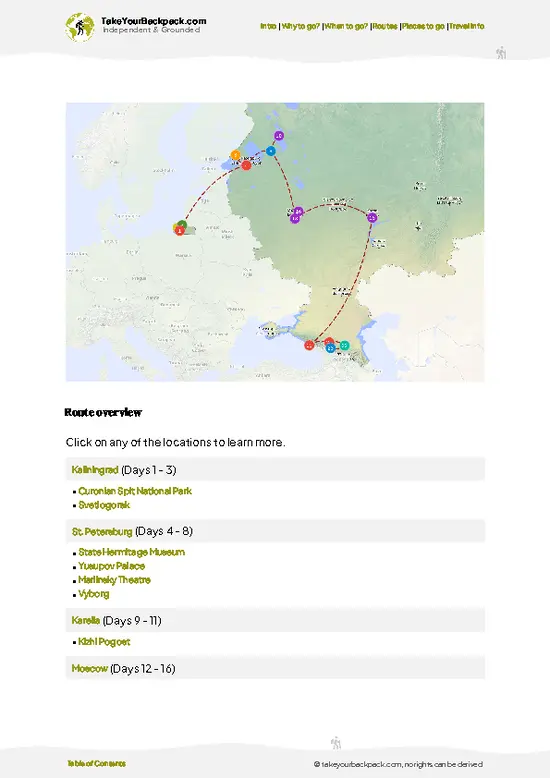
example page 0 from our offline Travel Guide for Russia
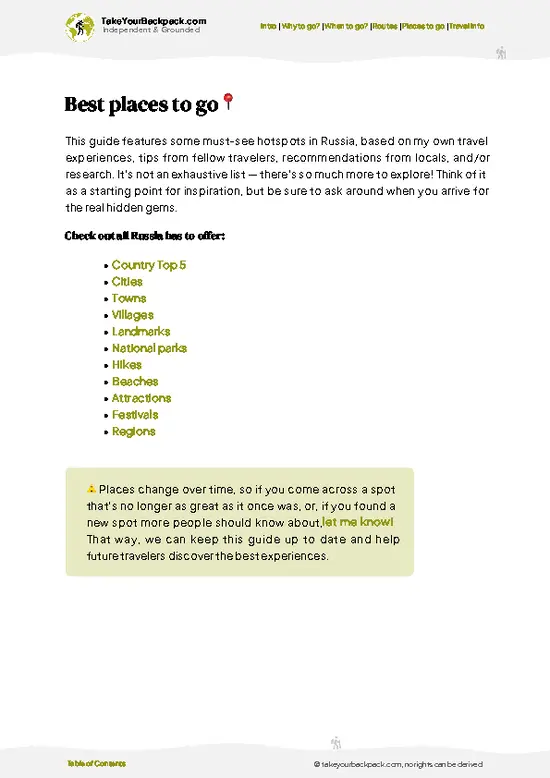
example page 1 from our offline Travel Guide for Russia
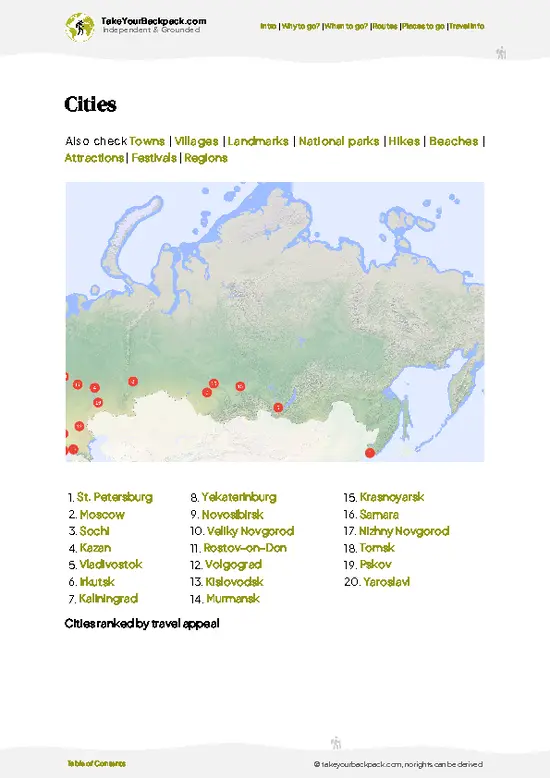
example page 2 from our offline Travel Guide for Russia
example page 3 from our offline Travel Guide for Russia
example page 4 from our offline Travel Guide for Russia
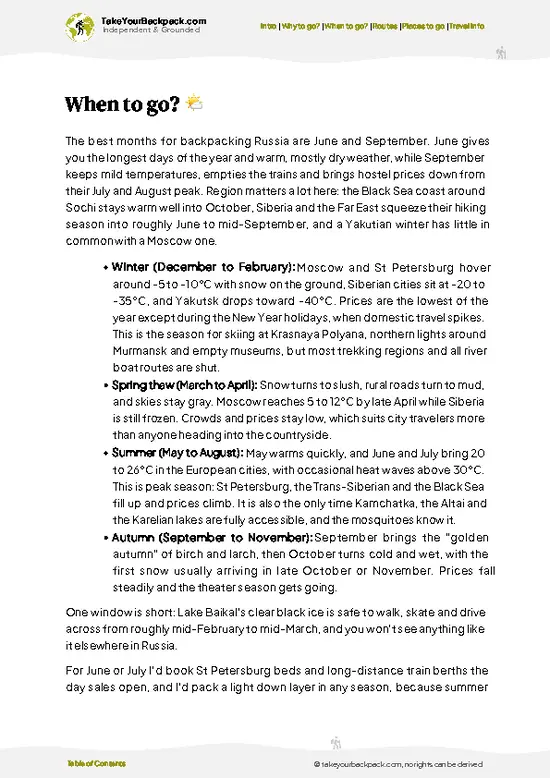
example page 5 from our offline Travel Guide for Russia
example page 6 from our offline Travel Guide for Russia
example page 7 from our offline Travel Guide for Russia
Loading the map 🌍
CLICK TO FILTER
cities
towns
villages
landmarks
national parks
hikes
beaches
attractions
festivals
regions
SHOW COUNTRY’S BESTSHOW ALL

✨ Why go?
Ranked #9 national park in Russia
What makes this national park worth exploring

Backpackers flock to the Land of the Leopard for its unique blend of independent exploration and affordable accommodations. This national park isn’t just about stunning landscapes; it’s a playground for those who prefer to chart their own course. With a variety of trails ranging from easy strolls to challenging hikes, you can tailor your adventure to your skill level.

Camping options are plentiful, allowing you to pitch your tent under the stars without breaking the bank. If you prefer a roof over your head, nearby hostels offer budget-friendly stays that keep you close to the action.

What sets this park apart is its suitability for self-guided travelers. While guided tours exist, the park’s well-marked trails and accessible maps empower you to explore at your own pace. Just keep an eye … read more 👉
Backpackers flock to the Land of the Leopard for its unique blend of independent exploration and affordable accommodations. This national park isn’t just about stunning landscapes; it’s a playground for those who prefer to chart their own course. With a variety of trails ranging from easy strolls to challenging hikes, you can tailor your adventure to your skill level.

Camping options are plentiful, allowing you to pitch your tent under the stars without breaking the bank. If you prefer a roof over your head, nearby hostels offer budget-friendly stays that keep you close to the action.

What sets this park apart is its suitability for self-guided travelers. While guided tours exist, the park’s well-marked trails and accessible maps empower you to explore at your own pace. Just keep an eye out for the weather; conditions can change quickly. By planning wisely, you’ll preserve your energy and budget for the moments that truly matter—like spotting a rare leopard in its natural habitat.

💡 HighlightsMust-see experiences and standout moments

  • Amur leopard habitat and camera-trap corridors — The whole park is centered on saving the world’s rarest big cat, so much of the interesting stuff is where the leopards live. You won’t be strolling up to one (don’t be that person), but guided tours, ranger-led walks and the park’s camera-trap network give you the best chance to see photos, fresh tracks or scat—real evidence of these animals in their native landscape.
  • Old-growth Ussuri taiga (Korean pine-broadleaf forest) — Dense, layered forest with towering Korean pines, maples and viburnum. It’s a botanist’s dream and a photographer’s dreamier place: rich undergrowth, mushrooms in season, big trees draped in moss, and a feeling of real wilderness you won’t find near Russian cities.
  • Sikhote-Alin ridges and hiking trails — Rugged ridgelines,
… read more 👉
  • Amur leopard habitat and camera-trap corridors — The whole park is centered on saving the world’s rarest big cat, so much of the interesting stuff is where the leopards live. You won’t be strolling up to one (don’t be that person), but guided tours, ranger-led walks and the park’s camera-trap network give you the best chance to see photos, fresh tracks or scat—real evidence of these animals in their native landscape.
  • Old-growth Ussuri taiga (Korean pine-broadleaf forest) — Dense, layered forest with towering Korean pines, maples and viburnum. It’s a botanist’s dream and a photographer’s dreamier place: rich undergrowth, mushrooms in season, big trees draped in moss, and a feeling of real wilderness you won’t find near Russian cities.
  • Sikhote-Alin ridges and hiking trails — Rugged ridgelines, mixed forest slopes and clear viewpoints that make for satisfying day hikes or multi-day treks. Trails vary from gentle valley walks to steep climbs with panoramic views—good boots and basic navigation skills recommended.
  • Amur tiger and other large mammals — The park isn’t just about leopards: Amur tigers, Asiatic black bears, roe and sika deer, and sable all inhabit the area. Sightings are rare, but you’ll frequently encounter signs—tracks, scrapes, rubs—and the park’s wildlife photo records are impressive.
  • River valleys, wetlands and birdlife — Meandering rivers and floodplain wetlands create great birdwatching opportunities, especially during spring and autumn migration. Expect herons, woodpeckers, grouse and a variety of waterfowl; quieter sections are perfect for slow photography or just listening.
  • Observation hides, ranger stations and research posts — The park runs hides and research points where you can join guided observation sessions to see wildlife at closer range (through scopes or via camera feeds). These give real insight into conservation work and increase your chance of memorable views without disturbing animals.
  • Seasonal contrasts—snow tracking in winter and wildflowers in summer — Winter turns the forest into a tracking map: fresh snow makes animal movements obvious and photos dramatic. Summer brings lush understory and flowering meadows. Plan your trip for what you want to see—tracks and stark landscapes, or greens and active birdlife.
Spotted a mistake or missing something? Contact us.

🌤️ When to go?Weather, crowds, and seasonal trade-offs

  • Weather: Spring and early autumn offer mild conditions, with temperatures ranging from 5°C to 15°C (41°F to 59°F). Summers can be warm but humid, while winters plunge below freezing, often below -20°C (-4°F), making trekking tough and gear-intensive.
  • Temperature: Summer highs hover around 20°C to 25°C (68°F to 77°F), comfortable for hiking but expect mosquitoes. Winter is brutally cold, with lows that can freeze exposed skin quickly.
  • Daylight Hours: Long summer days stretch up to 16 hours, maximizing hiking time. Winter days shrink to 6-7 hours, limiting exploration and increasing risk.
  • Crowds: The park sees a modest influx in summer, but it’s never overrun. Spring and autumn are quieter, offering solitude but less predictable weather.
  • Seasonal Activities: Summer is prime for wildlife
… read more 👉
  • Weather: Spring and early autumn offer mild conditions, with temperatures ranging from 5°C to 15°C (41°F to 59°F). Summers can be warm but humid, while winters plunge below freezing, often below -20°C (-4°F), making trekking tough and gear-intensive.
  • Temperature: Summer highs hover around 20°C to 25°C (68°F to 77°F), comfortable for hiking but expect mosquitoes. Winter is brutally cold, with lows that can freeze exposed skin quickly.
  • Daylight Hours: Long summer days stretch up to 16 hours, maximizing hiking time. Winter days shrink to 6-7 hours, limiting exploration and increasing risk.
  • Crowds: The park sees a modest influx in summer, but it’s never overrun. Spring and autumn are quieter, offering solitude but less predictable weather.
  • Seasonal Activities: Summer is prime for wildlife spotting and river crossings. Winter offers snowshoeing but requires advanced skills and gear.
  • Price Fluctuations: Accommodation and permits peak in summer; booking early saves money. Off-season rates drop but services may be limited or closed.

Pro-tip: Aim for late spring or early autumn to dodge crowds, avoid extreme weather, and keep costs reasonable—this window balances comfort and access without the hassle.


source: climatestotravel.comJANJanuary: below average for travelingFEBFebruary: below average for travelingMARMarch: fair for travelingAPRApril: highly recommended for travelingMAYMay: excellent for travelingJUNJune: highly recommended for travelingJULJuly: highly recommended for travelingAUGAugust: highly recommended for travelingSEPSeptember: excellent for travelingOCTOctober: highly recommended for travelingNOVNovember: fair for travelingDECDecember: below average for traveling
when-to-go

✈️ The backpacker research shortcutRussia Travel Guide

An offline-friendly backpacking guide with optimized travel routes, ranked highlights, transport advice, and the best areas to stay.
example page 0 from our offline Travel Guide for Russia
example page 1 from our offline Travel Guide for Russia
example page 2 from our offline Travel Guide for Russia
example page 3 from our offline Travel Guide for Russia
example page 4 from our offline Travel Guide for Russia
example page 5 from our offline Travel Guide for Russia
example page 6 from our offline Travel Guide for Russia
example page 7 from our offline Travel Guide for Russia
The digital guide (392 pages) contains:
✅ 104 highlights, ranked by travel appeal
✅ Optimized 14, 21 & 30-day travel routes
✅ Cities, national parks, landmarks, beaches
✅ How to get around
✅ Offline-friendly for travel without Wi-Fi
👉 Click to see all 30+ guide features

📅 Plan smarter in minutes, not weeks
✅ Month by month travel advice
✅ Festivals & national holidays
✅ Budget expectations

🗺️ Go to the right places, skip the overrated ones
✅ Honest pros & cons of destinations
✅ Top hikes, parks & viewpoints
✅ Lesser-known places most travelers miss
✅ Clear “worth it vs skip it” guidance

🛏️ Travel smoothly without rookie mistakes
✅ Best areas to stay
✅ Transport systems explained simply
✅ Common scams & safety advice
✅ SIM cards, money & practical tips

🌍 Understand the country, not just visit it
✅ Culture & traditions
✅ 52 Essential phrases & customs
✅ Festivals worth planning around
✅ Traveler-friendly historical context
✅ Insights that make places more meaningful

📱 Built for real travel conditions
✅ Fully downloadable PDF
✅ Works completely offline
✅ Optimized for phone use
✅ Useful in remote areas & buses
✅ Everything in one place
Stop searching, start planning
Get instant access to your full guide. 30‑day money-back guarantee.
+ Add another guide for just

By proceeding you agree to our terms.
Sent to your inbox immediately after payment • 100% Secure Checkout
Best Backpacking Travel Advisor 2025 tourism awardBest Backpacking
Travel Advisor
2025
What others say about Take Your Backpack Guides:
⭐⭐⭐⭐⭐
Fantastic, amazing amount of information!
⭐⭐⭐⭐⭐
My goodness this is amazing, it's what I've been looking for hats off too you!
⭐⭐⭐⭐⭐
I think this is absolutely BRILLIANT
⭐⭐⭐⭐
Very complete and informative. It's still missing places, but I gotta to commend you
⭐⭐⭐⭐⭐
This is truly amazing, thank you, can't wait to explore it with my kids!
⭐⭐⭐⭐⭐
Awesome resource, thank you!
⭐⭐⭐⭐⭐
This is amazing! Can't wait to explore the ones I haven't seen
⭐⭐⭐⭐
I love this! Well done, great idea.
⭐⭐⭐⭐⭐
Thanks for taking the time to make this gem!
⭐⭐⭐⭐⭐
This might be the best website I've ever seen.
⭐⭐⭐⭐⭐
Congratulations, and thank you so much for your work; it's incredibly valuable.
⭐⭐⭐⭐
In all seriousness I think you did a great job pointing out the important spots
⭐⭐⭐⭐⭐
10/10 very good
⭐⭐⭐⭐⭐
As someone who's only just starting to visit regularly this is awesome, thank you.
⭐⭐⭐⭐
Thank you very much! I'm going to visit my dad, it's going to be very useful!
⭐⭐⭐⭐⭐
This is really cool! We'll be travelling for the first time and this definitely come in handy.
⭐⭐⭐⭐⭐
You are now our minister of culture, congratulations 👨‍💼
⭐⭐⭐⭐⭐
Just wanted to tell you that this is a pearl! Going to follow your recommendations.
⭐⭐⭐⭐⭐
This is so cool. I'll definitely be using the resource for my travels soon.
⭐⭐⭐⭐⭐
This is very impressive! Good work.
⭐⭐⭐⭐⭐
This is an amazing and informative site. Very well done!

🛏️ Where to stay?Best areas to stay in Russia

When it comes to staying near Land of the Leopard National Park, your options are limited but solid. Inside the park, there are no formal accommodations. This is intentional; the focus is on preserving the wildlife and natural environment.

Your best bet is to base yourself in nearby towns like Slavyanka or the larger city of Vladivostok. Slavyanka is about an hour’s drive from the park entrance. It offers a few guesthouses and local eateries, giving you a taste of Russian hospitality without breaking the bank.

Vladivostok, while further away (around two hours), has a wider range of accommodations, … read more 👉
When it comes to staying near Land of the Leopard National Park, your options are limited but solid. Inside the park, there are no formal accommodations. This is intentional; the focus is on preserving the wildlife and natural environment.

Your best bet is to base yourself in nearby towns like Slavyanka or the larger city of Vladivostok. Slavyanka is about an hour’s drive from the park entrance. It offers a few guesthouses and local eateries, giving you a taste of Russian hospitality without breaking the bank.

Vladivostok, while further away (around two hours), has a wider range of accommodations, from budget hostels to mid-range hotels. Staying here gives you access to more amenities, including restaurants and shops, which can be a lifesaver for stocking up on supplies before heading into the park.

Keep in mind that transportation can be tricky. Renting a car or arranging a local guide is often necessary to navigate the area efficiently. This upfront planning saves you from unexpected delays and helps you maximize your time in the park. Prioritize your energy and budget for the experiences that truly matter—like spotting the elusive Amur leopard in its natural habitat.

👛 Costs (as of 15 October 2026)Travel costs and budget guide for Land of the Leopard

Visiting Land of the Leopard National Park in Russia requires some careful budgeting. Here’s what you need to know to avoid surprises.

First, the entrance fee is around €10 to €15 per person. This is a straightforward cost, but it’s essential to have cash on hand, as card payments may not always be accepted.

Accommodation options vary widely. If you’re looking at basic lodges or guesthouses, expect to pay between €30 and €60 per night. For more comfortable stays, prices can rise to €100 or more. Booking in advance is wise, especially during peak seasons.

Transportation is another factor. If you’re flying into Vladivostok, budget for a domestic flight to a nearby city, which can range from €50 to €150. From there, local transport to the park can add another €20 to €50, depending on your … read more 👉
Visiting Land of the Leopard National Park in Russia requires some careful budgeting. Here’s what you need to know to avoid surprises.

First, the entrance fee is around €10 to €15 per person. This is a straightforward cost, but it’s essential to have cash on hand, as card payments may not always be accepted.

Accommodation options vary widely. If you’re looking at basic lodges or guesthouses, expect to pay between €30 and €60 per night. For more comfortable stays, prices can rise to €100 or more. Booking in advance is wise, especially during peak seasons.

Transportation is another factor. If you’re flying into Vladivostok, budget for a domestic flight to a nearby city, which can range from €50 to €150. From there, local transport to the park can add another €20 to €50, depending on your choice of vehicle.

Guided tours are popular for navigating the park. These can cost anywhere from €50 to €200, depending on the length and inclusivity of the tour. Always clarify what’s included—some may cover meals and gear, while others may not.

Food costs are generally reasonable. Expect to spend about €10 to €20 per day if you’re eating at local spots. However, if you’re in a more remote area, prices can spike.

Lastly, consider the cost of gear if you don’t have your own. Renting equipment can add another €20 to €50, depending on what you need.

By keeping these costs in mind, you can preserve your energy and budget for the experiences that truly matter in this unique park.


source: russiatourism.ru
⚠️ Prices can change and everyone travels differently, so take this as a rough guide. Hope it helps you plan your adventure!

🥾 TrailsPlan your hike in Land of the Leopard: routes, terrain, and sights

The hiking opportunities in Land of the Leopard National Park are pretty special, especially if you’re into breathtaking views and a bit of adventure. The terrain ranges from rugged mountains to lush valleys, and you might even catch a glimpse of the rare Amur leopard if you’re lucky. Wildlife here is diverse, with bears, deer, and various bird species adding to the experience.

While there aren’t a ton of designated trails, one notable option is the Leopard Trail. Here are the details:
  • Length: 10 km
  • Estimated Duration: 4-5 hours
  • Difficulty Level: Moderate
  • Key Features: Scenic vistas, potential wildlife
… read more 👉
The hiking opportunities in Land of the Leopard National Park are pretty special, especially if you’re into breathtaking views and a bit of adventure. The terrain ranges from rugged mountains to lush valleys, and you might even catch a glimpse of the rare Amur leopard if you’re lucky. Wildlife here is diverse, with bears, deer, and various bird species adding to the experience.

While there aren’t a ton of designated trails, one notable option is the Leopard Trail. Here are the details:
  • Length: 10 km
  • Estimated Duration: 4-5 hours
  • Difficulty Level: Moderate
  • Key Features: Scenic vistas, potential wildlife sightings, and diverse flora
  • Terrain: Mixed, with some steep sections and rocky paths

Getting to the park isn’t too tricky. You can take a train or bus to the nearest town, then catch a local taxi or arrange for a ride to the park entrance. It’s not usually overrun with tourists, so you can enjoy the peace and quiet, but it’s always good to check for any local events or holidays that might draw a crowd. As for entrance fees, there’s usually a small charge, but it’s worth it for the chance to explore such a unique landscape. Just make sure to pack snacks and plenty of water—there’s not much out there!
⚠️ Hiking info can sometimes be outdated or inaccurate. Before you hit the trail, check the latest conditions with locals. If you do spot anything that's off, I'd love to hear from you, so I can update it for fellow travelers.

🛡️ SafetyScams, Hazards, and Annoyances

In the Land of the Leopard, safety is about preparation and respect for nature. Weather can shift quickly; sunny mornings can turn into rain-soaked afternoons. Always check forecasts and pack layers to stay comfortable. The terrain varies, with steep sections and rocky paths that demand attention. Good footwear is essential—think sturdy, grippy soles to navigate uneven ground.

Wildlife encounters are a possibility, especially with the park’s namesake. Keep a respectful distance from animals and never approach them. If you spot a leopard, enjoy the moment but maintain your space.

First-timers often underestimate river crossings. Some trails may require you to wade through streams, so waterproof gear is a must.

Timing your hikes is crucial; early mornings or late afternoons are best for … read more 👉
In the Land of the Leopard, safety is about preparation and respect for nature. Weather can shift quickly; sunny mornings can turn into rain-soaked afternoons. Always check forecasts and pack layers to stay comfortable. The terrain varies, with steep sections and rocky paths that demand attention. Good footwear is essential—think sturdy, grippy soles to navigate uneven ground.

Wildlife encounters are a possibility, especially with the park’s namesake. Keep a respectful distance from animals and never approach them. If you spot a leopard, enjoy the moment but maintain your space.

First-timers often underestimate river crossings. Some trails may require you to wade through streams, so waterproof gear is a must.

Timing your hikes is crucial; early mornings or late afternoons are best for both wildlife viewing and avoiding the heat. Stick to marked trails and practice good trail etiquette to preserve the park’s beauty for everyone.

FAQCommon questions from travelers

3 to 5 days are recommended to explore Land of the Leopard thoroughly, allowing time for wildlife viewing and hiking. This duration covers key areas like the Amur leopard habitats and nearby forests. Longer stays increase chances of spotting rare animals.
No, visiting Land of the Leopard without a car is difficult due to limited public transport and remote locations. Most visitors rely on guided tours or private vehicles to access the park's main sites. Some accommodations may offer shuttle services from nearby towns.
Yes, an entrance permit is required to visit Land of the Leopard, typically costing around 500 to 1000 rubles. Permits must be obtained in advance through the park administration or authorized tour operators. This helps regulate visitor numbers and protect wildlife.
⚠️ Things can change over time, so always validate details locally before you go.

Other Russian national parks near Land of the Leopard

Explore more nearby:


💡 Not sure where to go next?
Create a personalized itinerary for Russia including Land of the Leopard and the places that fit your trip.

Generate my itinerary

👉 Discover all national parks

Or checkout all Russia has to offer (think cities, towns, villages, national parks, hikes, beaches, festivals)
Country photo of Russia

We 💚 feedbackSumming up the experience

Visiting the Land of the Leopard is a chance to witness one of the rarest big cats in its natural habitat. The thrill of spotting a leopard is unmatched. But be prepared: the logistics can be tricky. Limited access points and the need for permits can eat into your time and budget. Plan ahead to avoid frustration, and you’ll be free to soak in the wild beauty that makes this place special.

✈️ When did I visit Russia?
Before visiting Georgia (September 2018), I had a stop-over in Moscow.

✍️ Help improve this page!
The information on this page is based on my own backpacking experience in Russia, supplemented with up-to-date research and feedback from other travelers. Travel details can change, so if you notice anything outdated or incomplete, feel free to let me know.


🙋‍♂️ Give feedback

👋 Meet the founderWho’s Behind Take Your Backpack?

Johan, backpacker and founder of TakeYourBackpackHi, I’m Johan (Netherlands 🇳🇱), the creator of TakeYourBackpack. Over the past 3 decades, I’ve backpacked through 90+ countries across six continents, gaining extensive experience with independent travel, long-term trips, and overland routes.

This site is built on a combination of firsthand travel experience and carefully curated insights from other backpackers. Many guides are based on places I’ve personally visited, while others bring together tips, observations, and practical advice shared by trusted travelers I’ve met along the way.

The goal is to provide realistic, experience-driven guidance — not generic itineraries — so you can explore destinations with better context, clearer expectations, and more confidence.