Saint Barthélemy is easy to travel independently because it is tiny, safe and French-run, but it is hard to do on a backpacker budget since there are no hostels and camping is not allowed.
The cheapest rooms are small guesthouses and simple hotels in
Lorient,
St. Jean and
Gustavia, typically €150 to 250 a night for a double, more in December to April. Self-catering from supermarkets keeps food to €25 to 40 a day. Most travelers arrive by ferry from Sint Maarten (45 to 75 minutes, about €60 to 90 one way) or a 10 to 15 minute flight, and every beach is within a 30-minute drive.
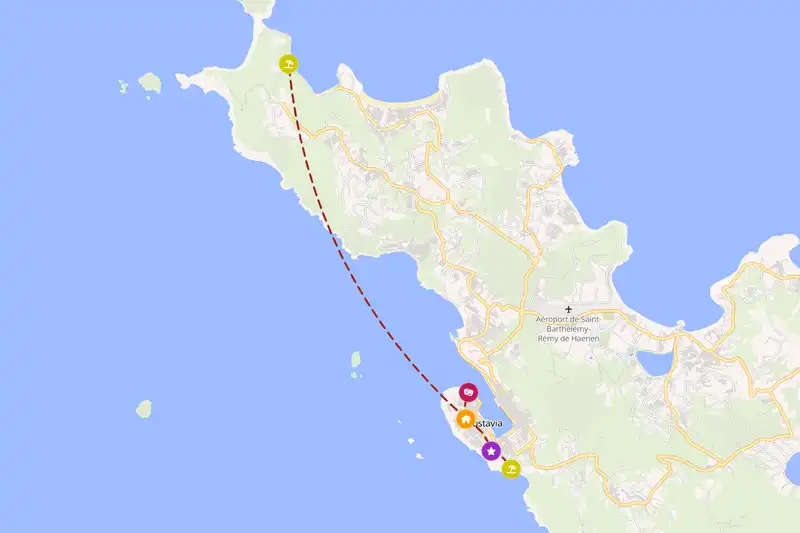
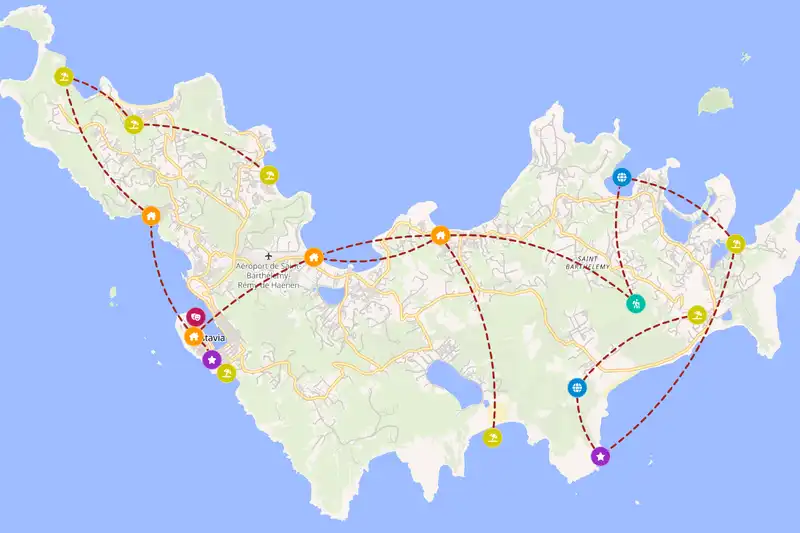
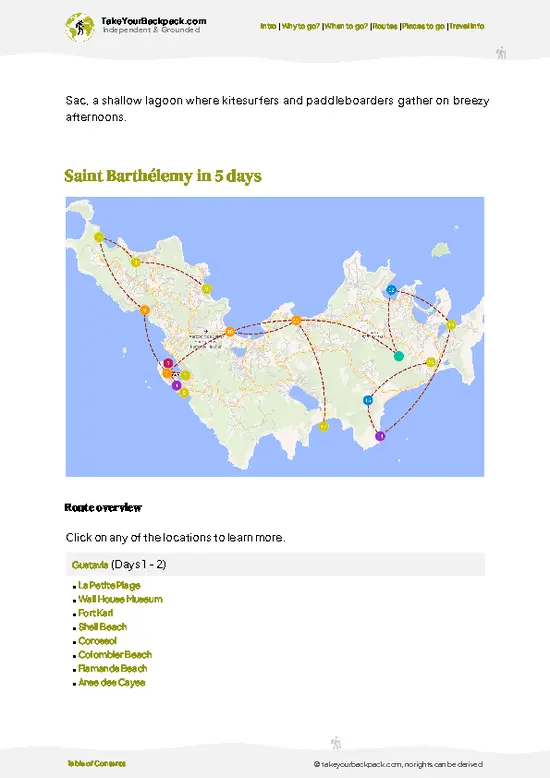
Two to five days is enough for Saint Barthélemy, since the whole island measures only about 25 square kilometers and no drive takes longer than 30 minutes.
With
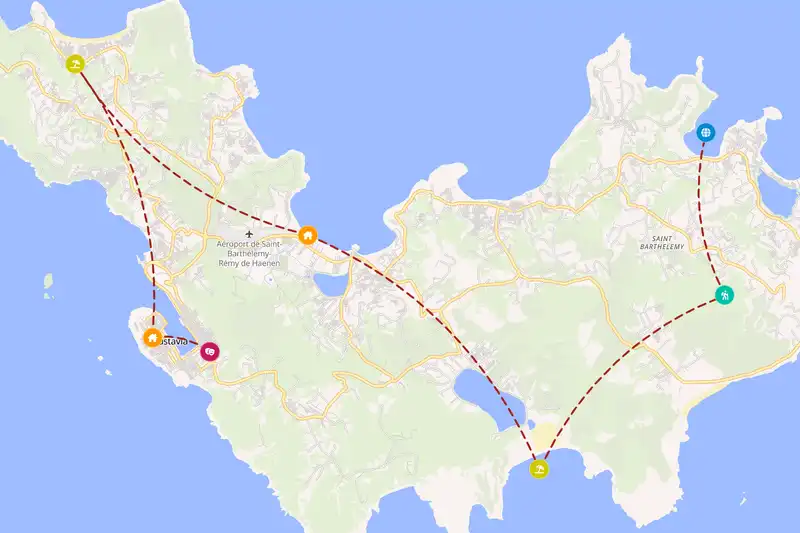
2 days, stay in
Gustavia and cover the harbor, Fort Karl, Shell Beach and the hike to
Colombier Beach. With
3 days, add
Anse de Grande Saline,
Flamands Beach and snorkeling in Marigot Bay.
Five days lets you climb
Morne du Vitet (1.5 to 2 hours round trip) and explore the rugged east around Grand Fond. Given room prices of €150 to 250 a night, many budget travelers do a day trip from Sint Maarten instead.
You can get around Saint Barthélemy without a car, but there is no public bus network, so you rely on walking, taxis and hitchhiking.
Hitching is common and widely accepted among locals. Taxis run €20 to 40 for most hops, for example
Gustavia to
St. Jean takes about 10 minutes by road. From Gustavia you can walk to
Shell Beach and
Fort Karl in 10 to 15 minutes. For the east coast, a rented scooter at roughly €35 to 50 a day is the cheapest motorized option, while small rental cars cost €50 to 100 or more a day, with higher rates in peak season.
The must-visits in Saint Barthélemy are the harbor town of Gustavia, the roadless Colombier Beach and the wild sweep of Anse de Grande Saline.
In
Gustavia, the
Wall House Museum covers the Swedish period (1784 to 1878), and the ruins of
Fort Karl look straight down on Shell Beach.
Colombier Beach takes a 20 to 30 minute hike each way and often has turtles in the shallows.
Anse de Grande Saline has no shade or facilities, so bring water. If you have an extra half day, climb
Morne du Vitet, the island’s highest point at about 286 meters.
If you are short on time in Saint Barthélemy, skip the boutique streets of Gustavia and the rough east coast beaches, where swimming is often unsafe.
Toiny Beach is dramatic but too wild for swimming, so it can wait for a longer trip.
Corossol and
Lorient are pleasant villages, though neither needs more than an hour. The designer shops near the harbor charge mainland luxury prices, so window-shopping is enough. Spend your limited 1 to 2 days on
Colombier Beach,
Shell Beach and
Anse de Grande Saline instead, all reachable within 10 to 20 minutes by road from
Gustavia.
Yes, our itinerary-planner does exactly that. Set your trip length in days, give your interests and travel style, optionally give start- and end location and/or some mandatory stops you would like to include and the itinerary planner creates your personalized routes for Saint Barthélemy in seconds. Try it out!
Try the itinerary plannerv2.webp)
 Best Backpacking