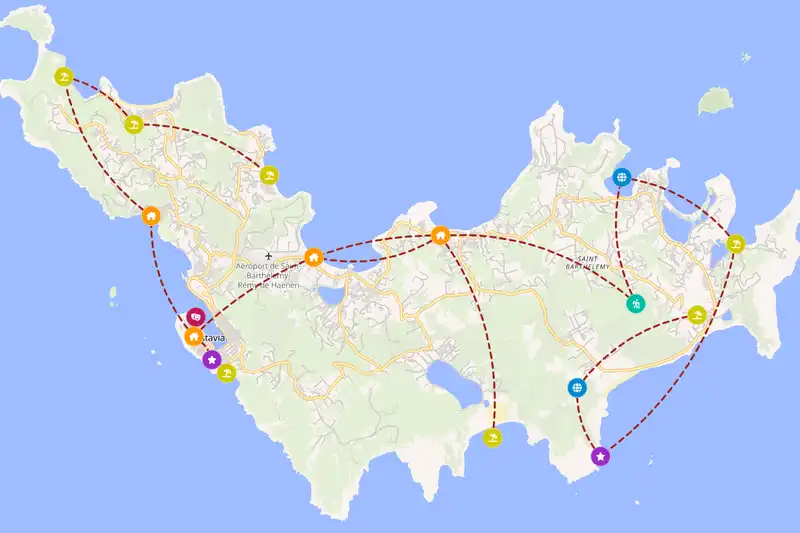
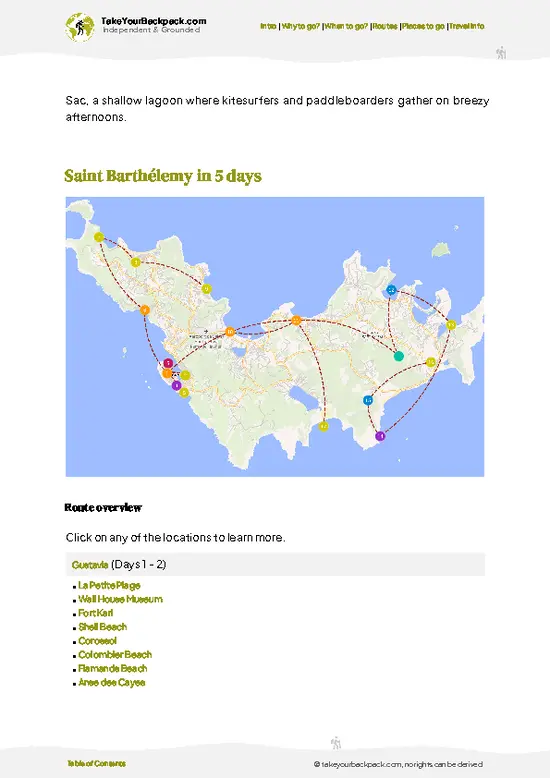
Five days on Saint Barthélemy is enough to see both sides of the island: the yachts and Swedish-era stone of Gustavia, and the windy, goat-grazed east coast where the road narrows and the hotels thin out. This route suits travelers who want depth at a relaxed pace, with one beach or walk per half-day and long lunches in between. St. Barth has no public bus network, so plan on a rented car or scooter for the second half (roughly €50 to 90 a day), taxis for short hops out of Gustavia, and your own feet for the trails to Colombier and up Morne du Vitet.
Days 1-2: Gustavia and the Harbor Side
Start car-free in
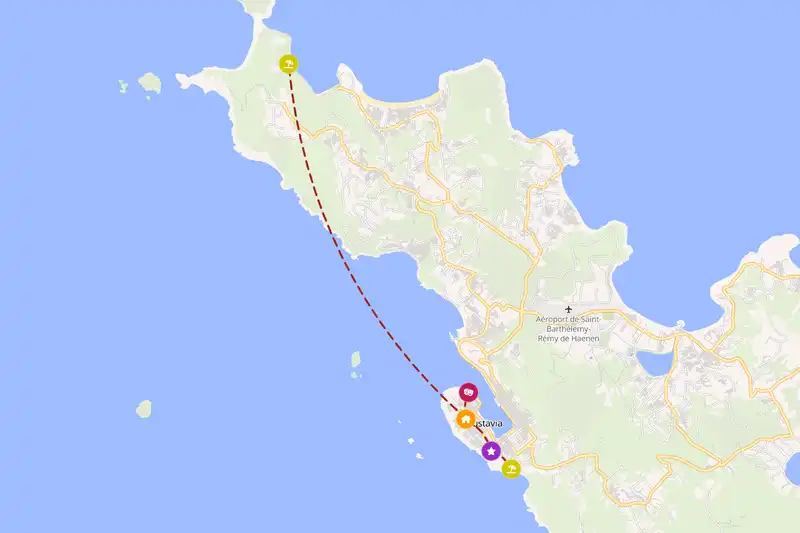
Gustavia, where everything worth seeing sits within a 20-minute walk of the harbor. Spend your first morning at
La Petite Plage, a short strip of sand right by the port where you can swim with the superyachts parked in front of you. Then cross to La Pointe for the
Wall House Museum, set in an old stone warehouse, which explains how a French island ended up under Swedish rule from 1784 …
read more 👉Five days on Saint Barthélemy is enough to see both sides of the island: the yachts and Swedish-era stone of Gustavia, and the windy, goat-grazed east coast where the road narrows and the hotels thin out. This route suits travelers who want depth at a relaxed pace, with one beach or walk per half-day and long lunches in between. St. Barth has no public bus network, so plan on a rented car or scooter for the second half (roughly €50 to 90 a day), taxis for short hops out of Gustavia, and your own feet for the trails to Colombier and up Morne du Vitet.
Days 1-2: Gustavia and the Harbor Side
Start car-free in Gustavia, where everything worth seeing sits within a 20-minute walk of the harbor. Spend your first morning at La Petite Plage, a short strip of sand right by the port where you can swim with the superyachts parked in front of you. Then cross to La Pointe for the Wall House Museum, set in an old stone warehouse, which explains how a French island ended up under Swedish rule from 1784 to 1878 and why the capital carries a Swedish king’s name.
Day 2 is for the climb to Fort Karl, a ten-minute uphill walk to scattered ruins and a view straight down onto Shell Beach. Walk down and give the afternoon to that beach: the sand is mostly crushed shells, the water is calm, and sunset drinks at the beach bar cost less than anything on the harbor front.
Day 3: Corossol, Colombier and the Northwest Beaches
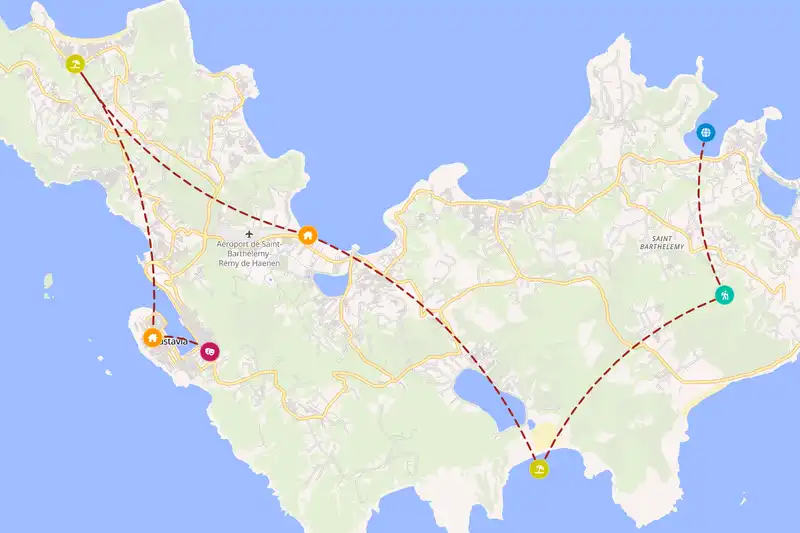
Pick up your rental car and head west. Stop in Corossol, a fishing village where older women still weave hats and baskets from latanier palm and the small Inter Oceans shell museum fills a quiet half hour. Continue to the end of the road at Colombier and take the trail into the Colombier Beach and Nature Reserve. The path down to Colombier Beach takes 20 to 30 minutes over rocky slopes with cactus and sea views; the climb back is the sweaty part, so carry at least a liter of water. Snorkel along the rocks for turtles before you leave.
On the way east, cool off at Flamands Beach, the island’s widest stretch of sand, then check the swell at Anse des Cayes, where local surfers ride the reef break in winter. Drive on to Lorient to check in for three nights.
Days 4-5: Lorient and the Wild East
Lorient is where the first French settlers landed in the 1640s, and it still has the island’s most local rhythm: an old church, a cemetery of white crosses facing the sea, surfers waiting for waves and a burger shack that fills up at lunch. It is also the most practical base for the east, with some of the island’s less extravagant guesthouses.
On Day 4, go early for Morne du Vitet, the island’s highest point at about 286 meters. The steep trail takes 1.5 to 2 hours round trip and opens onto views of the whole island and neighboring Saint Martin. Spend the afternoon snorkeling in sheltered Marigot Bay, then continue to Petit Cul de Sac and walk out to the Natural Aquarium, a rock-enclosed pool on the rugged coast where fish gather in clear, calm water.
Day 5 runs along the wild southeast. Drive through Grand Fond, with its dry-stone walls and wind-bent scrub, to Toiny Beach, a raw, rocky coast best admired rather than swum because of strong currents. Finish at Anse de Grande Saline, reached by a five-minute walk over a dune behind old salt ponds. There is no shade or facilities, so bring an umbrella and snacks. End the trip in St. Jean, a short drive from the airport, with a swim beside the runway as planes drop over the hill.
If you can stretch the budget for a half-day boat trip, the uninhabited island of Île Fourchue, a horseshoe of bare hills just off the northwest coast, offers some of the clearest snorkeling water around St. Barth.
 Best Backpacking