×

Saint Barthélemy🇧🇱 | landmarksFort KarlSwedish battery ruins, Shell Beach, Gustavia harbor outlook, free entry | things to do and best time to go

Explore St. JeanExplore Grand Fond Natural Pools

Backpacking in Fort Karl
🏆 Top pickunique site ranked #1
By Johan Kruseman 🇳🇱 | Updated October 23, 2026

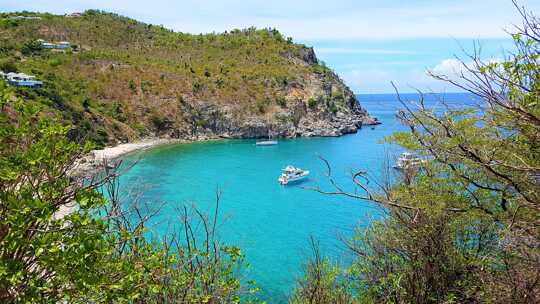
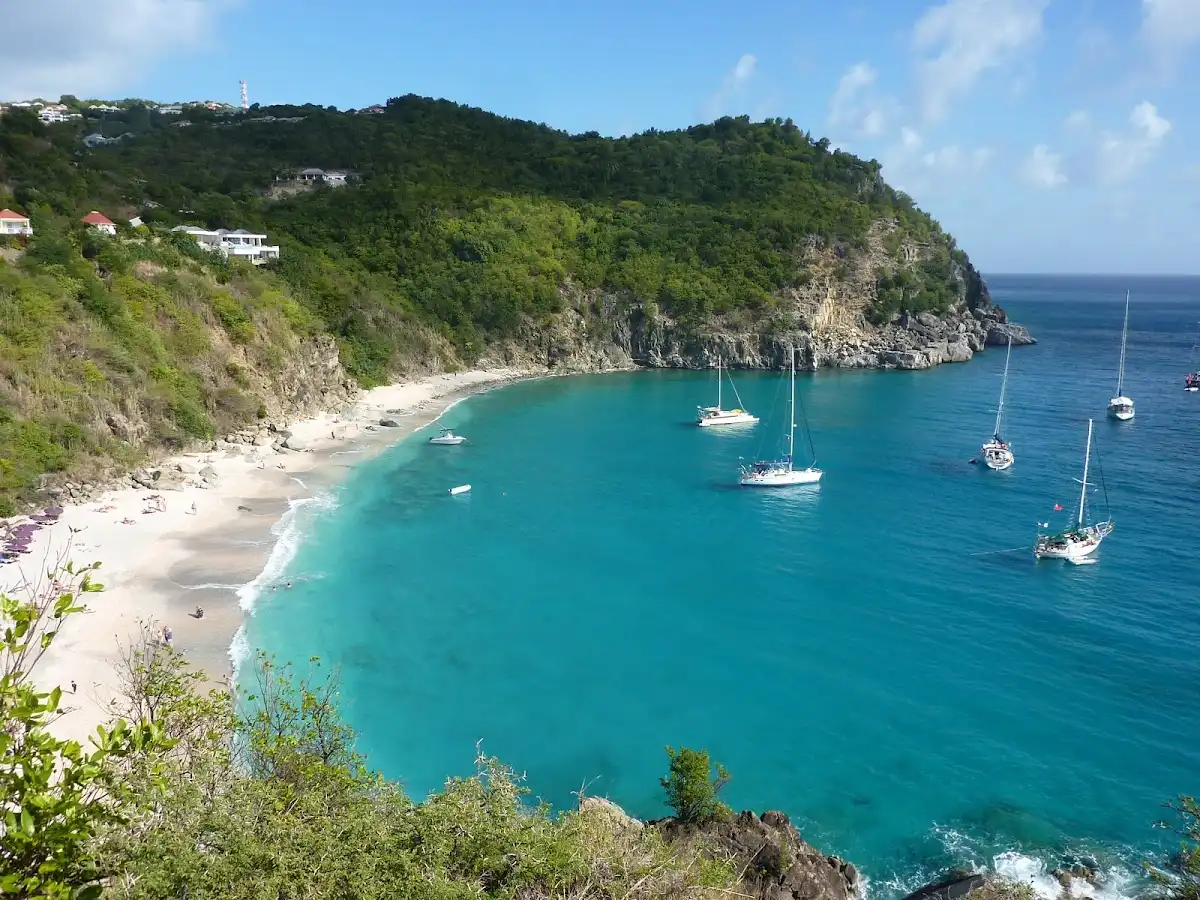
Fort Karl is a ruin, and a modest one. Most people come for the view over Gustavia’s harbor and the Swedish-era story behind it, yet the stretch of shore below the hill is what makes the walk more than a history stop: Shell Beach, where the sand is made of tiny broken shells. Fort Karl stands on the headland east of the harbor in Gustavia, the capital of Saint Barthélemy. There is no ticket booth, no café on the hilltop and little interpretation, so go for the setting rather than the stonework. Crowds stay thin, though the beach below fills with day visitors and diners, and the surrounding prices are among the highest in the Caribbean. The fort itself costs nothing. Photo potential is good in the morning, when the harbor and the ridge behind it are lit from the east. A sensible first day: walk the harbor to Shell Beach, climb up to the ruins while the air is still cool, then drop back down for a swim.

Discover everything you want to know in the 📖 Saint Barthélemy Travel Guide.


example page 0 from our offline Travel Guide for Saint Barthélemy
example page 1 from our offline Travel Guide for Saint Barthélemy
example page 2 from our offline Travel Guide for Saint Barthélemy
example page 3 from our offline Travel Guide for Saint Barthélemy
example page 4 from our offline Travel Guide for Saint Barthélemy
example page 5 from our offline Travel Guide for Saint Barthélemy
example page 6 from our offline Travel Guide for Saint Barthélemy
example page 7 from our offline Travel Guide for Saint Barthélemy
Loading the map 🌍
CLICK TO FILTER
towns
landmarks
hikes
beaches
attractions
festivals
regions
SHOW COUNTRY’S BESTSHOW ALL

✨ Why go?
Ranked #1 unique site in Saint Barthélemy
Why Fort Karl should be on your travel list

Fort Karl is one of the few spots on Saint Barthélemy where the island’s Swedish past is still readable in the landscape, and it costs nothing to stand where the gunners once watched the harbor. Swedish rule from 1784 to 1878 left Gustavia its name, its street grid and a ring of defensive hills, and Karl is the one that sits quietly above a swimming beach instead of a villa gate.

The effort is small. You walk from the harbor, climb a short path and have the view mostly to yourself, which on an island this expensive counts for a great deal. The payoff is the angle: Gustavia harbor spread out below, the fort’s old position making sense of why the entrance was worth guarding.

The site also works as part of a loop. Pair it with Shell Beach directly beneath, then continue through town to the … read more 👉
Fort Karl is one of the few spots on Saint Barthélemy where the island’s Swedish past is still readable in the landscape, and it costs nothing to stand where the gunners once watched the harbor. Swedish rule from 1784 to 1878 left Gustavia its name, its street grid and a ring of defensive hills, and Karl is the one that sits quietly above a swimming beach instead of a villa gate.

The effort is small. You walk from the harbor, climb a short path and have the view mostly to yourself, which on an island this expensive counts for a great deal. The payoff is the angle: Gustavia harbor spread out below, the fort’s old position making sense of why the entrance was worth guarding.

The site also works as part of a loop. Pair it with Shell Beach directly beneath, then continue through town to the museum and the other fortified hills. For a backpacker watching every euro on Saint Barthélemy, that is a full, free half day built around one good ruin.

💡 HighlightsEssential experiences to have while visiting Fort Karl

  1. Fort Karl ruins: The remains of the Swedish battery on the hill above Shell Beach. What is left are low masonry walls and the footprint of the gun platform, but the position tells you exactly how the harbor entrance was covered. It is quiet, free and open at any hour of daylight.
  2. Shell Beach (Grand Galet): The beach at the foot of the hill, named for the thousands of small shells that mix into its sand. It sits in a sheltered cove with calm water, and a couple of restaurants sit behind it. Bring your own water and a snack if you are watching costs.
  3. Harbor viewpoint from the ramparts: The outlook over the Gustavia waterfront, with the red roofs, the yachts at the quay and the hills behind. Early light is the best for photographs, when the harbor is calm and the glare has not yet flattened everything.
… read more 👉
  1. Fort Karl ruins: The remains of the Swedish battery on the hill above Shell Beach. What is left are low masonry walls and the footprint of the gun platform, but the position tells you exactly how the harbor entrance was covered. It is quiet, free and open at any hour of daylight.
  2. Shell Beach (Grand Galet): The beach at the foot of the hill, named for the thousands of small shells that mix into its sand. It sits in a sheltered cove with calm water, and a couple of restaurants sit behind it. Bring your own water and a snack if you are watching costs.
  3. Harbor viewpoint from the ramparts: The outlook over the Gustavia waterfront, with the red roofs, the yachts at the quay and the hills behind. Early light is the best for photographs, when the harbor is calm and the glare has not yet flattened everything.
  4. Fort Gustav: The best preserved of Gustavia’s forts, on the hill above the town near the lighthouse. Cannons still point out to sea from the old battery, and the panorama takes in the harbor and the offshore islets. It is a short climb from the town center.
  5. Wall House Museum: The territorial museum on the harbor point, housed in a former stone merchant building. It covers the island’s Swedish and French history, with old photographs, tools and household objects from the period when Gustavia was a free port.
  6. Swedish Clock Tower and the Gustavia quay: A walk along the waterfront takes in the old Swedish bell tower, Swedish-named streets and the stone warehouses that once served the free port. It is the easiest way to see how the town was laid out around the forts.
Fort Karl and Shell Beach combine easily in one morning, with the climb first and the swim to follow.
Spotted a mistake or missing something? Contact us.
🌤️ When to go?Best time to visit Fort Karl

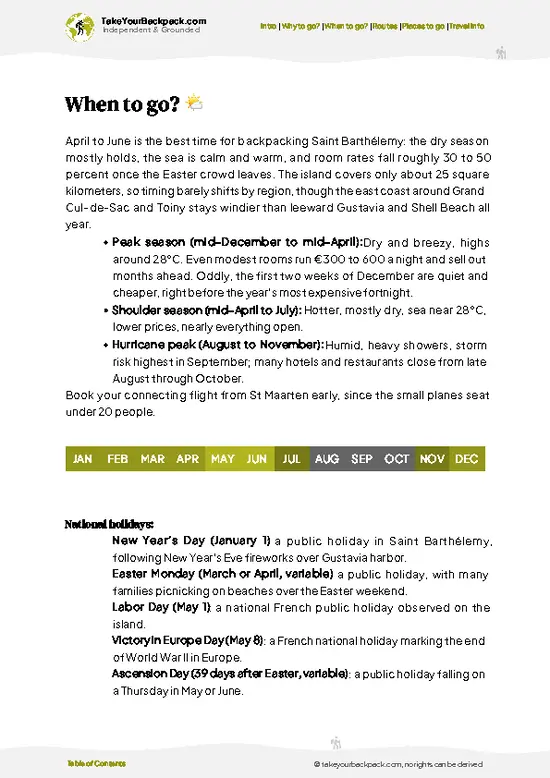
  • Dry Season (December to April): Fort Karl, the ruined hilltop battery above Gustavia harbor, is most pleasant now, with clear skies for the view over the harbor and the Gustaf III lighthouse. Highs run 27 to 30°C (81 to 86°F), nights 22 to 24°C (72 to 75°F), and the breeze keeps the exposed hilltop tolerable. Christmas to New Year sees the highest prices and the busiest harbor.
  • Hurricane Season (August to October): Heavy downpours and storms are likely, with peak risk in September. Many restaurants and some lodging close, but rooms are noticeably cheaper. Temperatures reach 30 to 32°C (86 to 90°F) with sticky humidity.
  • Shoulder Months (May to July, November): Showers are short and the crowds thin out. Daylight stretches to about 13 hours in June and shrinks to about 11 in December. Prices fall
… read more 👉
  • Dry Season (December to April): Fort Karl, the ruined hilltop battery above Gustavia harbor, is most pleasant now, with clear skies for the view over the harbor and the Gustaf III lighthouse. Highs run 27 to 30°C (81 to 86°F), nights 22 to 24°C (72 to 75°F), and the breeze keeps the exposed hilltop tolerable. Christmas to New Year sees the highest prices and the busiest harbor.
  • Hurricane Season (August to October): Heavy downpours and storms are likely, with peak risk in September. Many restaurants and some lodging close, but rooms are noticeably cheaper. Temperatures reach 30 to 32°C (86 to 90°F) with sticky humidity.
  • Shoulder Months (May to July, November): Showers are short and the crowds thin out. Daylight stretches to about 13 hours in June and shrinks to about 11 in December. Prices fall and the ruins are nearly empty.
Go for a late-afternoon visit at any time of year, when the stone walls shade the heat and the harbor light turns soft.


source: climatestotravel.comJANJanuary: highly recommended for travelingFEBFebruary: highly recommended for travelingMARMarch: highly recommended for travelingAPRApril: highly recommended for travelingMAYMay: excellent for travelingJUNJune: good for travelingJULJuly: fair for travelingAUGAugust: fair for travelingSEPSeptember: fair for travelingOCTOctober: good for travelingNOVNovember: excellent for travelingDECDecember: highly recommended for traveling
saint-barthelemy-unique-site-fort-karl
© Google |

✈️ The backpacker research shortcutSaint Barthélemy Travel Guide

An offline-friendly backpacking guide with optimized travel routes, ranked highlights, transport advice, and the best areas to stay.
example page 0 from our offline Travel Guide for Saint Barthélemy
example page 1 from our offline Travel Guide for Saint Barthélemy
example page 2 from our offline Travel Guide for Saint Barthélemy
example page 3 from our offline Travel Guide for Saint Barthélemy
example page 4 from our offline Travel Guide for Saint Barthélemy
example page 5 from our offline Travel Guide for Saint Barthélemy
example page 6 from our offline Travel Guide for Saint Barthélemy
example page 7 from our offline Travel Guide for Saint Barthélemy
The digital guide (107 pages) contains:
✅ 22 highlights, ranked by travel appeal
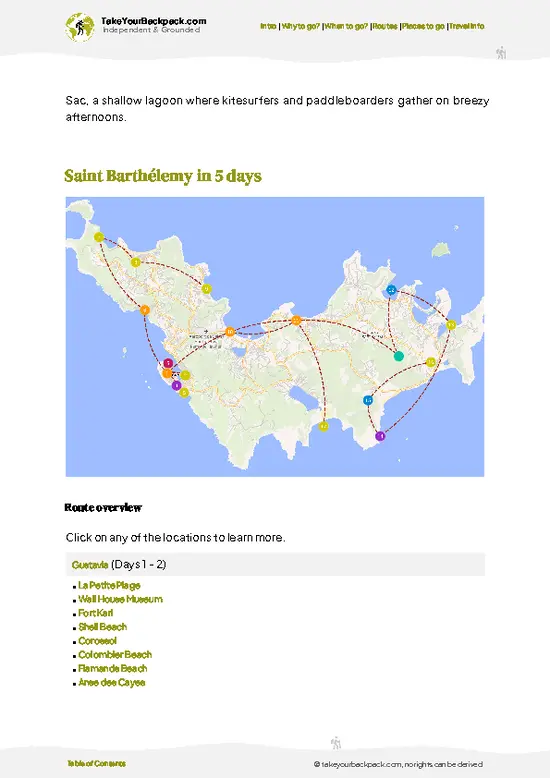
✅ Optimized 2, 3 & 5-day travel routes
✅ Cities, national parks, landmarks, beaches
✅ How to get around
✅ Offline-friendly for travel without Wi-Fi
👉 Click to see all 30+ guide features

📅 Plan smarter in minutes, not weeks
✅ Month by month travel advice
✅ Festivals & national holidays
✅ Budget expectations

🗺️ Go to the right places, skip the overrated ones
✅ Honest pros & cons of destinations
✅ Top hikes, parks & viewpoints
✅ Lesser-known places most travelers miss
✅ Clear “worth it vs skip it” guidance

🛏️ Travel smoothly without rookie mistakes
✅ Best areas to stay
✅ Transport systems explained simply
✅ Common scams & safety advice
✅ SIM cards, money & practical tips

🌍 Understand the country, not just visit it
✅ Culture & traditions
✅ 52 Essential phrases & customs
✅ Festivals worth planning around
✅ Traveler-friendly historical context
✅ Insights that make places more meaningful

📱 Built for real travel conditions
✅ Fully downloadable PDF
✅ Works completely offline
✅ Optimized for phone use
✅ Useful in remote areas & buses
✅ Everything in one place
Stop searching, start planning
Get instant access to your full guide. 30‑day money-back guarantee.
+ Add another guide for just

By proceeding you agree to our terms.
Sent to your inbox immediately after payment • 100% Secure Checkout
Best Backpacking Travel Advisor 2025 tourism awardBest Backpacking
Travel Advisor
2025
What others say about Take Your Backpack Guides:
⭐⭐⭐⭐⭐
Fantastic, amazing amount of information!
⭐⭐⭐⭐⭐
My goodness this is amazing, it's what I've been looking for hats off too you!
⭐⭐⭐⭐⭐
I think this is absolutely BRILLIANT
⭐⭐⭐⭐
Very complete and informative. It's still missing places, but I gotta to commend you
⭐⭐⭐⭐⭐
This is truly amazing, thank you, can't wait to explore it with my kids!
⭐⭐⭐⭐⭐
Awesome resource, thank you!
⭐⭐⭐⭐⭐
This is amazing! Can't wait to explore the ones I haven't seen
⭐⭐⭐⭐
I love this! Well done, great idea.
⭐⭐⭐⭐⭐
Thanks for taking the time to make this gem!
⭐⭐⭐⭐⭐
This might be the best website I've ever seen.
⭐⭐⭐⭐⭐
Congratulations, and thank you so much for your work; it's incredibly valuable.
⭐⭐⭐⭐
In all seriousness I think you did a great job pointing out the important spots
⭐⭐⭐⭐⭐
10/10 very good
⭐⭐⭐⭐⭐
As someone who's only just starting to visit regularly this is awesome, thank you.
⭐⭐⭐⭐
Thank you very much! I'm going to visit my dad, it's going to be very useful!
⭐⭐⭐⭐⭐
This is really cool! We'll be travelling for the first time and this definitely come in handy.
⭐⭐⭐⭐⭐
You are now our minister of culture, congratulations 👨‍💼
⭐⭐⭐⭐⭐
Just wanted to tell you that this is a pearl! Going to follow your recommendations.
⭐⭐⭐⭐⭐
This is so cool. I'll definitely be using the resource for my travels soon.
⭐⭐⭐⭐⭐
This is very impressive! Good work.
⭐⭐⭐⭐⭐
This is an amazing and informative site. Very well done!

🛏️ Where to stay?Choosing the right base

Gustavia is the base to choose, because Fort Karl sits on a hillside within a 10 to 15 minute walk of the waterfront. It is the only town with any real concentration of budget-minded options, and it is also where the island’s buses, supermarkets and ferry dock cluster. Staying here means you can reach the ruins, the harbor bars and the quay on foot and skip a rental car, which is a major saving on an island where cars add up quickly.

Saint Barthélemy has no true hostel scene, so backpackers piece together a stay. The streets just behind the harbor and the slopes toward Lorient and Public are … read more 👉
Gustavia is the base to choose, because Fort Karl sits on a hillside within a 10 to 15 minute walk of the waterfront. It is the only town with any real concentration of budget-minded options, and it is also where the island’s buses, supermarkets and ferry dock cluster. Staying here means you can reach the ruins, the harbor bars and the quay on foot and skip a rental car, which is a major saving on an island where cars add up quickly.

Saint Barthélemy has no true hostel scene, so backpackers piece together a stay. The streets just behind the harbor and the slopes toward Lorient and Public are where small guesthouses, villa rooms and shared rentals tend to sit, usually cheaper than the waterfront. Expect to share with other travelers only if you book a room in a larger rental. Lorient on the north coast offers a quieter, village feel, a decent bakery and a beach, but you will need a bus or scooter to reach Gustavia. Saint-Jean is livelier, with an airport nearby and a beach strip, though prices are higher. Crime is very low across the island, and walking at night in Gustavia feels safe. Book well ahead from December to April, when even basic rooms fill.

👛 Costs (as of 23 October 2026)Travel costs and budget guide for Fort Karl

Fort Karl costs nothing to enter, so a realistic backpacker day in Gustavia comes to about €150 once lodging is included. Prices are among the highest in the Caribbean, and travelers pay in euros.
CategoryBudget RangeLocal Reality
Fort Karl entry€0The ruins are open-air with no ticket or gate.
Accommodation (high season)€90 to 150Basic rooms and shared rentals are scarce and fill early between December and April. Low season can drop to €70 to 100.
Food€25 to 45Bakery sandwiches, supermarket picnic items and a lunch plate at a snack stand keep costs down. Restaurant dinners often start near €30 for a main.
Local transport€0 to 10Gustavia is walkable. Island buses and shuttles are limited, and taxis between towns commonly cost €15 to 30.
Drinks and extras€8 to 15A beer or coffee in the harbor costs
… read more 👉
Fort Karl costs nothing to enter, so a realistic backpacker day in Gustavia comes to about €150 once lodging is included. Prices are among the highest in the Caribbean, and travelers pay in euros.
CategoryBudget RangeLocal Reality
Fort Karl entry€0The ruins are open-air with no ticket or gate.
Accommodation (high season)€90 to 150Basic rooms and shared rentals are scarce and fill early between December and April. Low season can drop to €70 to 100.
Food€25 to 45Bakery sandwiches, supermarket picnic items and a lunch plate at a snack stand keep costs down. Restaurant dinners often start near €30 for a main.
Local transport€0 to 10Gustavia is walkable. Island buses and shuttles are limited, and taxis between towns commonly cost €15 to 30.
Drinks and extras€8 to 15A beer or coffee in the harbor costs roughly €4 to 8.
Total Daily Budget€123 to 220About €150 for a typical high-season day.
⚠️ Prices can change and everyone travels differently, so take this as a rough guide. Hope it helps you plan your adventure!

FAQCommon questions from travelers

Fort Karl is a ruined Swedish-era fort on a hill above Gustavia harbor, built in the late 1700s and named after King Charles XIII. Only parts of the walls and cannon positions remain, and the fortification looks across the harbor toward Fort Gustav and its lighthouse. Entry is free, and the site gives wide views over the harbor and the red roofs of town.
Plan on 30 to 60 minutes for Fort Karl, which includes the short climb and time for photos. Combined with a stroll through Gustavia’s museum and harbor, a half day is easy to fill. The site is open air, so it is best in the morning or late afternoon.
Fort Karl is reached on foot from the Gustavia waterfront in about 10 to 15 minutes, along signed paths uphill. Most travelers fly into Saint Barthélemy’s Gustaf III Airport near Saint-Jean, with small planes from Saint Martin taking about 10 to 15 minutes, or take a ferry from Saint Martin that runs roughly 45 to 60 minutes. From the airport, a taxi to Gustavia costs around €15 to 25.
⚠️ Things can change over time, so always validate details locally before you go.

Expanding your trip beyond this stop

Fort Karl isn’t the only highlight in Saint Barthélemy. Explore all what Saint Barthélemy has to offer.
Country photo of Saint Barthélemy

We 💚 feedbackIs it worth it?

Fort Karl needs about an hour, but I would give the whole morning to it and the beach below. Go early, before the day-trippers reach Shell Beach, and bring water and sturdy sandals for the dusty path. Skip lunch at the beach restaurants if the budget is tight, and eat back in Gustavia instead.

✍️ Help improve this page!
The information on this page is based on in-depth research, insights shared by experienced travelers, and feedback from the local travel community in Saint Barthélemy. While every effort is made to keep the information accurate and current, conditions can change — so if you spot anything incorrect or outdated, please get in touch.


🙋‍♂️ Give feedback

👋 Meet the founderWho’s Behind Take Your Backpack?

Johan, backpacker and founder of TakeYourBackpackHi, I’m Johan (Netherlands 🇳🇱), the creator of TakeYourBackpack. Over the past 3 decades, I’ve backpacked through 90+ countries across six continents, gaining extensive experience with independent travel, long-term trips, and overland routes.

This site is built on a combination of firsthand travel experience and carefully curated insights from other backpackers. Many guides are based on places I’ve personally visited, while others bring together tips, observations, and practical advice shared by trusted travelers I’ve met along the way.

The goal is to provide realistic, experience-driven guidance — not generic itineraries — so you can explore destinations with better context, clearer expectations, and more confidence.