×

Saint Barthélemy🇧🇱 | regionsGrand FondAtlantic surf, cliff walks, dry stone walls, grazing goats | things to do and best time to go

Explore Colombier Beach and Nature ReserveExplore Marigot Bay

Backpacking in Grand Fond
👍 Recommendedregion ranked #2
By Johan Kruseman 🇳🇱 | Updated October 20, 2026

Grand Fond asks you to decide whether you want a beach day or a coastline day, and the surf settles it: this side of the island faces open Atlantic swell, so swimming is mostly off the table and walking is the point. The area lies on the southeast coast of Saint Barthélemy, well away from the yacht-and-boutique polish of the west. Roads here are narrow and twisting, lined with dry stone walls, cactus and the occasional grazing cow or goat. Houses sit low on the hillsides, and traffic is thin enough that you hear the wind before any engine. You get long, empty views of breaking waves over rock, and the walking is easy to improvise because the ground is open and the landmarks are few. There are no big attractions, and that suits a traveler who likes to look at things slowly. The road ends at a cliff edge where the ocean drives white water into black rock.

Discover everything you want to know in the 📖 Saint Barthélemy Travel Guide.


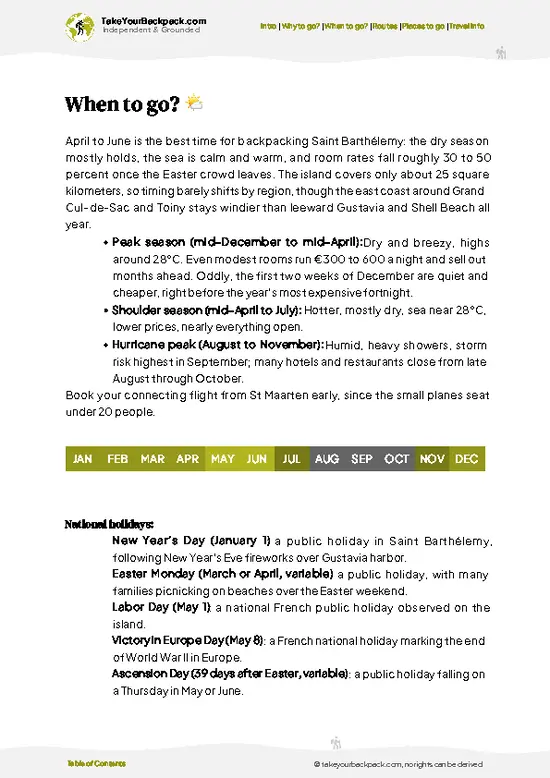
example page 0 from our offline Travel Guide for Saint Barthélemy
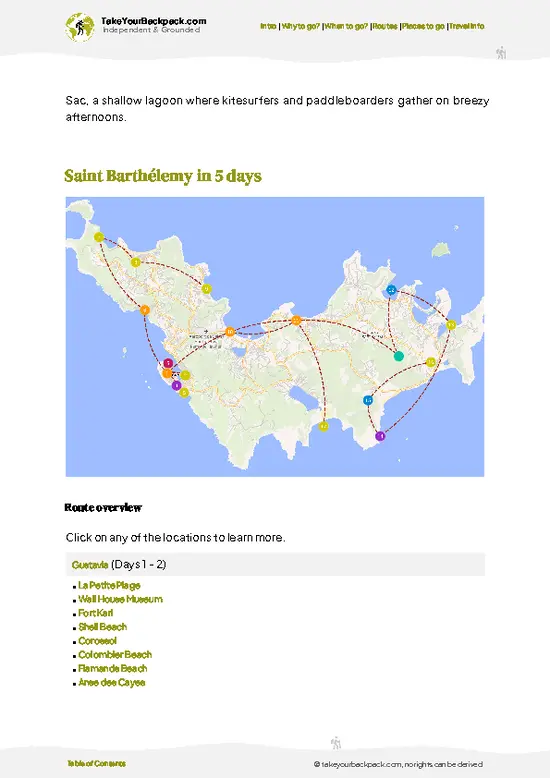
example page 1 from our offline Travel Guide for Saint Barthélemy
example page 2 from our offline Travel Guide for Saint Barthélemy
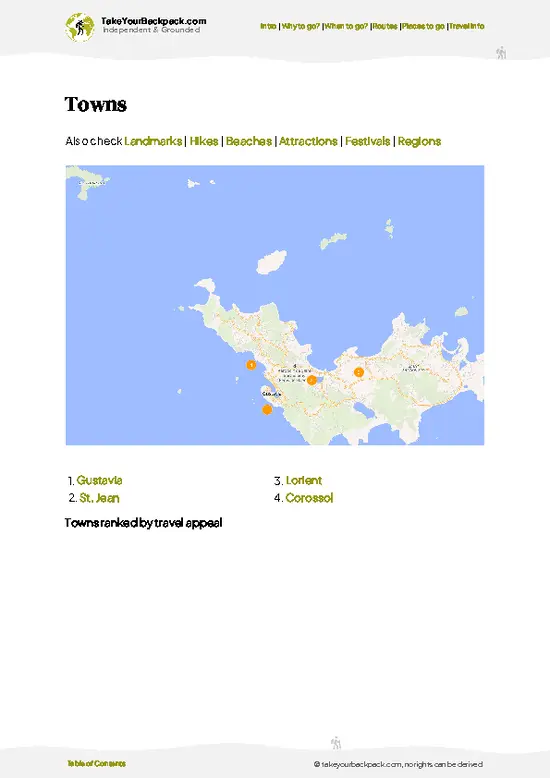
example page 3 from our offline Travel Guide for Saint Barthélemy
example page 4 from our offline Travel Guide for Saint Barthélemy
example page 5 from our offline Travel Guide for Saint Barthélemy
example page 6 from our offline Travel Guide for Saint Barthélemy
example page 7 from our offline Travel Guide for Saint Barthélemy
Loading the map 🌍
CLICK TO FILTER
towns
landmarks
hikes
beaches
attractions
festivals
regions
SHOW COUNTRY’S BESTSHOW ALL

✨ Why go?
Ranked #2 region in Saint Barthélemy
What sets this place apart

Grand Fond gives you the version of Saint Barthélemy that the beach clubs don’t, and it does so within a short hop of the better-known sand. The first reason to spend time here is the Atlantic-facing coastline, where the swell has carved rock pools and ledges you can look down on from a path, with almost nobody else around. The second is the stone-walled pastures that still hold livestock, a reminder that this was farming country long before villas arrived. That gives you something to look at on a walk besides the sea, and it makes the stroll feel like part of a working island rather than a stage set. The third is pace. The area is small enough that a slow morning on foot covers the main sights, which leaves the afternoon free to cross to a sheltered beach on the south or west coast. Slow … read more 👉
Grand Fond gives you the version of Saint Barthélemy that the beach clubs don’t, and it does so within a short hop of the better-known sand. The first reason to spend time here is the Atlantic-facing coastline, where the swell has carved rock pools and ledges you can look down on from a path, with almost nobody else around. The second is the stone-walled pastures that still hold livestock, a reminder that this was farming country long before villas arrived. That gives you something to look at on a walk besides the sea, and it makes the stroll feel like part of a working island rather than a stage set. The third is pace. The area is small enough that a slow morning on foot covers the main sights, which leaves the afternoon free to cross to a sheltered beach on the south or west coast. Slow travel works well here: one base, short drives, and a clear contrast between rough water and calm bays within a few minutes of each other.

💡 HighlightsEssential experiences to have while visiting Grand Fond

  1. Anse du Grand Fond: The area’s main beach, a wide, wild cove of pebbles and sand backed by scrub. Strong surf makes it a place to watch the Atlantic roll in rather than swim, and the view along the cliffs is the best on this side of the island.
  2. Grand Fond natural pools: Rock basins along the shoreline where waves spill over and settle. They look inviting in calm spells, but the ocean can surge without warning, so most people stay at the rim and photograph.
  3. Grand Fond coastal path: A rough walking route along the shore above the cliffs, passing goat tracks, cactus and open sea. Wear closed shoes, since the ground is loose stone and thorny scrub.
  4. Stone-walled pastures: The dry stone walls that divide the hillsides here date from farming days. Cattle and goats still graze behind them, and the walls
… read more 👉
  1. Anse du Grand Fond: The area’s main beach, a wide, wild cove of pebbles and sand backed by scrub. Strong surf makes it a place to watch the Atlantic roll in rather than swim, and the view along the cliffs is the best on this side of the island.
  2. Grand Fond natural pools: Rock basins along the shoreline where waves spill over and settle. They look inviting in calm spells, but the ocean can surge without warning, so most people stay at the rim and photograph.
  3. Grand Fond coastal path: A rough walking route along the shore above the cliffs, passing goat tracks, cactus and open sea. Wear closed shoes, since the ground is loose stone and thorny scrub.
  4. Stone-walled pastures: The dry stone walls that divide the hillsides here date from farming days. Cattle and goats still graze behind them, and the walls make a good guide for an unhurried stroll inland from the coast.
  5. Anse de Toiny: A rugged bay just along the coast with big, pounding surf and very few people. It is a place to stand and watch, not to swim, and the cliffs around it frame the best wave views.
  6. Toiny coast road: A twisting, scenic road above the sea with dramatic drops and hillside villas. Go slowly, because the bends are tight and the verges are narrow.
  7. Anse du Gouverneur: A sheltered golden beach reached down a steep road, popular with those who prefer calm water. It’s a quieter alternative to the busier beaches, and the hills behind it give it shade-free but private-feeling space. Free to visit.
  8. Saline Beach: A long, open stretch of sand backed by dunes and coconut palms, with no development on the sand itself. You reach it by a short footpath, and the clear water here is calmer than on the Atlantic side.
Grand Fond itself takes a relaxed half day to cover on foot and by car, and the nearby beaches can fill out a full day.
Spotted a mistake or missing something? Contact us.

⌛️ 5 daysWhat you can realistically do in a week

Take this route at a walking pace with a car or taxi for the transfers, since buses are thin and distances are short but the hills are steep. Plan outdoor walking for early morning, break through the midday heat in shade or on a calm beach, and return to the coast late afternoon.
Day 1: Grand Fond: Start on the coast path above Anse du Grand Fond while the light is soft and the rocks are cooler. Watching the surf first gives you a feel for how rough this shore is, which is why the later beach days matter. Spend the afternoon on the pastures and walls inland, where there is more shade.
Day 2: Toiny: Drive the coast road to Anse de Toiny and walk its overlooks. It is close enough that you can return to your base for lunch and a rest during the hottest hours, then head out again for an evening … read more 👉
Take this route at a walking pace with a car or taxi for the transfers, since buses are thin and distances are short but the hills are steep. Plan outdoor walking for early morning, break through the midday heat in shade or on a calm beach, and return to the coast late afternoon.
Day 1: Grand Fond: Start on the coast path above Anse du Grand Fond while the light is soft and the rocks are cooler. Watching the surf first gives you a feel for how rough this shore is, which is why the later beach days matter. Spend the afternoon on the pastures and walls inland, where there is more shade.
Day 2: Toiny: Drive the coast road to Anse de Toiny and walk its overlooks. It is close enough that you can return to your base for lunch and a rest during the hottest hours, then head out again for an evening look at the waves.
Day 3: Gouverneur and Saline: Move to the calm side of the island. Gouverneur works for a morning swim, and Saline makes a good afternoon walk across the dunes with a swim at the end. Pairing them avoids extra driving because both sit on the south coast.
Day 4: Detour to Corossol: This fishing village on the west side adds a different cultural layer, with traditional straw-weaving and small boats on the shore. It fits easily as a half-day loop and breaks up the beach rhythm with some local texture.
Day 5: Grand Fond again: Return for a slow final morning on the coast path and a last look at the open Atlantic. If you can only keep one day, make it this one: with the route already in your legs, the surf and the quiet cliffs make sense, and it justifies the whole trip.

🌤️ When to go?Best time to visit Grand Fond

  • Peak Season (mid-December to April): Dry, breezy days of 27 to 30°C (81 to 86°F) with the lowest humidity of the year. Days run about 11 to 12 hours. Christmas and New Year bring the highest prices, with beds and flights at their most expensive and everything booked months ahead.
  • Shoulder Months (May and early June, late November): Highs of 29 to 31°C (84 to 88°F), thinner crowds and noticeably lower rates. Some restaurants start closing for their annual break.
  • Hurricane Season (July to October): Hot, muggy, 29 to 32°C (84 to 90°F), with sudden downpours. August and September carry the highest storm risk, and many businesses shut for weeks. Rates drop sharply for those willing to gamble.
  • Swell Season (December to March): Trade winds push big Atlantic swell onto Grand Fond’s cliffs. Dramatic to
… read more 👉
  • Peak Season (mid-December to April): Dry, breezy days of 27 to 30°C (81 to 86°F) with the lowest humidity of the year. Days run about 11 to 12 hours. Christmas and New Year bring the highest prices, with beds and flights at their most expensive and everything booked months ahead.
  • Shoulder Months (May and early June, late November): Highs of 29 to 31°C (84 to 88°F), thinner crowds and noticeably lower rates. Some restaurants start closing for their annual break.
  • Hurricane Season (July to October): Hot, muggy, 29 to 32°C (84 to 90°F), with sudden downpours. August and September carry the highest storm risk, and many businesses shut for weeks. Rates drop sharply for those willing to gamble.
  • Swell Season (December to March): Trade winds push big Atlantic swell onto Grand Fond’s cliffs. Dramatic to watch, though the rock pool is often too rough for swimming.
January to April gives the best mix of dry weather and open businesses, and booking by autumn keeps costs manageable.


source: climatestotravel.comJANJanuary: excellent for travelingFEBFebruary: excellent for travelingMARMarch: excellent for travelingAPRApril: highly recommended for travelingMAYMay: fair for travelingJUNJune: fair for travelingJULJuly: fair for travelingAUGAugust: fair for travelingSEPSeptember: below average for travelingOCTOctober: fair for travelingNOVNovember: good for travelingDECDecember: highly recommended for traveling
saint-barthelemy-region-grand-fond
© Google | Pierre Yves Muller

✈️ The backpacker research shortcutSaint Barthélemy Travel Guide

An offline-friendly backpacking guide with optimized travel routes, ranked highlights, transport advice, and the best areas to stay.
example page 0 from our offline Travel Guide for Saint Barthélemy
example page 1 from our offline Travel Guide for Saint Barthélemy
example page 2 from our offline Travel Guide for Saint Barthélemy
example page 3 from our offline Travel Guide for Saint Barthélemy
example page 4 from our offline Travel Guide for Saint Barthélemy
example page 5 from our offline Travel Guide for Saint Barthélemy
example page 6 from our offline Travel Guide for Saint Barthélemy
example page 7 from our offline Travel Guide for Saint Barthélemy
The digital guide (107 pages) contains:
✅ 22 highlights, ranked by travel appeal
✅ Optimized 2, 3 & 5-day travel routes
✅ Cities, national parks, landmarks, beaches
✅ How to get around
✅ Offline-friendly for travel without Wi-Fi
👉 Click to see all 30+ guide features

📅 Plan smarter in minutes, not weeks
✅ Month by month travel advice
✅ Festivals & national holidays
✅ Budget expectations

🗺️ Go to the right places, skip the overrated ones
✅ Honest pros & cons of destinations
✅ Top hikes, parks & viewpoints
✅ Lesser-known places most travelers miss
✅ Clear “worth it vs skip it” guidance

🛏️ Travel smoothly without rookie mistakes
✅ Best areas to stay
✅ Transport systems explained simply
✅ Common scams & safety advice
✅ SIM cards, money & practical tips

🌍 Understand the country, not just visit it
✅ Culture & traditions
✅ 52 Essential phrases & customs
✅ Festivals worth planning around
✅ Traveler-friendly historical context
✅ Insights that make places more meaningful

📱 Built for real travel conditions
✅ Fully downloadable PDF
✅ Works completely offline
✅ Optimized for phone use
✅ Useful in remote areas & buses
✅ Everything in one place
Stop searching, start planning
Get instant access to your full guide. 30‑day money-back guarantee.
+ Add another guide for just

By proceeding you agree to our terms.
Sent to your inbox immediately after payment • 100% Secure Checkout
Best Backpacking Travel Advisor 2025 tourism awardBest Backpacking
Travel Advisor
2025
What others say about Take Your Backpack Guides:
⭐⭐⭐⭐⭐
Fantastic, amazing amount of information!
⭐⭐⭐⭐⭐
My goodness this is amazing, it's what I've been looking for hats off too you!
⭐⭐⭐⭐⭐
I think this is absolutely BRILLIANT
⭐⭐⭐⭐
Very complete and informative. It's still missing places, but I gotta to commend you
⭐⭐⭐⭐⭐
This is truly amazing, thank you, can't wait to explore it with my kids!
⭐⭐⭐⭐⭐
Awesome resource, thank you!
⭐⭐⭐⭐⭐
This is amazing! Can't wait to explore the ones I haven't seen
⭐⭐⭐⭐
I love this! Well done, great idea.
⭐⭐⭐⭐⭐
Thanks for taking the time to make this gem!
⭐⭐⭐⭐⭐
This might be the best website I've ever seen.
⭐⭐⭐⭐⭐
Congratulations, and thank you so much for your work; it's incredibly valuable.
⭐⭐⭐⭐
In all seriousness I think you did a great job pointing out the important spots
⭐⭐⭐⭐⭐
10/10 very good
⭐⭐⭐⭐⭐
As someone who's only just starting to visit regularly this is awesome, thank you.
⭐⭐⭐⭐
Thank you very much! I'm going to visit my dad, it's going to be very useful!
⭐⭐⭐⭐⭐
This is really cool! We'll be travelling for the first time and this definitely come in handy.
⭐⭐⭐⭐⭐
You are now our minister of culture, congratulations 👨‍💼
⭐⭐⭐⭐⭐
Just wanted to tell you that this is a pearl! Going to follow your recommendations.
⭐⭐⭐⭐⭐
This is so cool. I'll definitely be using the resource for my travels soon.
⭐⭐⭐⭐⭐
This is very impressive! Good work.
⭐⭐⭐⭐⭐
This is an amazing and informative site. Very well done!

🛏️ Where to stay?Best areas to stay in Saint Barthélemy

Gustavia is the best base for backpackers, with the widest range of lower-priced rooms and the most social evenings. Grand Fond itself is a quiet residential stretch of private villas and stone walls, so it suits a day visit better than a stay. The island is small enough that a base elsewhere never puts you far from it.
Saint-Jean is the most practical choice for budget travelers. It sits beside the airport, has supermarkets, a pair of casual beachfront cafés and a long strip of sand for easy snorkeling. Dorm-style beds do not really exist on the island, so small guesthouses and shared apartments … read more 👉
Gustavia is the best base for backpackers, with the widest range of lower-priced rooms and the most social evenings. Grand Fond itself is a quiet residential stretch of private villas and stone walls, so it suits a day visit better than a stay. The island is small enough that a base elsewhere never puts you far from it.
Saint-Jean is the most practical choice for budget travelers. It sits beside the airport, has supermarkets, a pair of casual beachfront cafés and a long strip of sand for easy snorkeling. Dorm-style beds do not really exist on the island, so small guesthouses and shared apartments here give the best value, roughly €90 to 180 a night outside peak season. Everyone walks to the beach, which makes it easy to meet other travelers.
Lorient is the calmest option. It has a village feel, a bakery, a church and a beach with gentle surf, and it is closest to the east coast by road. Prices tend to run lower than in Gustavia, and the setting is safe, with locals walking at all hours.
Gustavia suits those wanting harbor views, bars and restaurants within walking distance. Staying here means more choice for food and nightlife, but a vehicle is needed to reach Grand Fond. Book months ahead for December to April.

🚌 Getting aroundGetting around like a local

Grand Fond has no public bus service, so a rented scooter or small car is the easiest way to reach it, and the only way to move at your own pace. The island is about 10 km (6 miles) long, roads are paved but steep and narrow, and drivers are courteous. Taxis and hitching fill the gaps.
  • Rental scooter: About €45 to 70 a day. The road down to the east coast drops through dry hills of cactus and stone walls, and you arrive with salt wind in your face and the whole Atlantic ahead. Helmets are required, and the hairpins deserve a slow hand.
  • Rental car or Mini Moke: About €60 to 110 a day, with discounts for several days. Gears and handbrakes matter on the steep grades. Parking at the end of the Grand Fond track is a wide gravel verge, a few steps from the cliff edge and the view.
  • Taxi: Fixed tariffs,
… read more 👉
Grand Fond has no public bus service, so a rented scooter or small car is the easiest way to reach it, and the only way to move at your own pace. The island is about 10 km (6 miles) long, roads are paved but steep and narrow, and drivers are courteous. Taxis and hitching fill the gaps.
  • Rental scooter: About €45 to 70 a day. The road down to the east coast drops through dry hills of cactus and stone walls, and you arrive with salt wind in your face and the whole Atlantic ahead. Helmets are required, and the hairpins deserve a slow hand.
  • Rental car or Mini Moke: About €60 to 110 a day, with discounts for several days. Gears and handbrakes matter on the steep grades. Parking at the end of the Grand Fond track is a wide gravel verge, a few steps from the cliff edge and the view.
  • Taxi: Fixed tariffs, roughly €20 to 30 from the airport or Gustavia, higher after dark and on Sundays. Drivers wait at stands rather than being hailed, so calling ahead is normal. Drivers also tend to talk about the island’s history on the way, which is a decent bonus.
  • Hitching: Common among locals and workers, and usually quick on the main road toward Lorient and Saint-Jean. Cars are few on the east side, so expect waits of 15 to 30 minutes. A ride often ends in a conversation in French or English with someone who has lived here for decades.
  • Walking: The coastal path along Grand Fond’s cliffs toward Toiny and Gouverneur takes 1 to 2 hours one way and is free. The ground is uneven limestone and loose rock, with goats grazing among the scrub. Bring water and good shoes, and you get quiet views of surf breaking on dark rock.
Fill the tank in Gustavia or Lorient and park before sunset, since the east side has few streetlights and almost no services.

🍲 FoodLocal Flavors for Backpackers

Grand Fond has almost nowhere to eat, so food here means stocking up elsewhere and bringing it with you. Start in Lorient or Saint-Jean, where boulangeries open early with warm baguettes, croissants and flaky savory pastries that make a good picnic for the cliff walk. Bring plenty of water.
The island’s signature bites are accras de morue, crisp salt cod fritters with a peppery bite, and boudin créole, a spiced blood sausage. Fresh langouste (spiny lobster) is the classic splurge, around €45 to 70 a plate. Grilled fish, lime and chile heat turn up across the menus.
For a backpacker, the best value sits with snack bars and lunch trucks near the beaches, where plates run about €12 to 20. Supermarkets in Gustavia and Saint-Jean sell cheese, charcuterie and wine for an easy sunset spread. Drink … read more 👉
Grand Fond has almost nowhere to eat, so food here means stocking up elsewhere and bringing it with you. Start in Lorient or Saint-Jean, where boulangeries open early with warm baguettes, croissants and flaky savory pastries that make a good picnic for the cliff walk. Bring plenty of water.
The island’s signature bites are accras de morue, crisp salt cod fritters with a peppery bite, and boudin créole, a spiced blood sausage. Fresh langouste (spiny lobster) is the classic splurge, around €45 to 70 a plate. Grilled fish, lime and chile heat turn up across the menus.
For a backpacker, the best value sits with snack bars and lunch trucks near the beaches, where plates run about €12 to 20. Supermarkets in Gustavia and Saint-Jean sell cheese, charcuterie and wine for an easy sunset spread. Drink a ti’ punch of rhum agricole, sugar and a lime wedge, stirred by hand. It is stronger than it looks. Local Carib beer is a cheaper, cooler choice.
Greet staff with a “bonjour” before ordering, because the French manners are taken seriously. Service is included in the price, though rounding up is appreciated. Prices are in euros, and many kitchens close between lunch and dinner.

FAQFrequently asked questions about Grand Fond

Half a day is enough for Grand Fond, since the main sights are the coastal cliffs, the natural rock pool and the walking path toward Toiny. A visit takes 2 to 4 hours, including the 1 to 2 hour walk along the cliffs. Most travelers combine it with Lorient and Saint-Jean on a single 1 to 2 day loop of the island.
Without a car, Grand Fond is reached by taxi, scooter rental or hitching, since the island has no public bus service. A taxi from Gustavia or the airport costs about €20 to 30 each way. Scooters cost about €45 to 70 a day, and hitching along the main road toward Lorient is common, with waits of 15 to 30 minutes.
Grand Fond is known for its wild Atlantic coast, with limestone cliffs, crashing surf and a natural rock pool that is calm only in gentle conditions. The area feels remote and rural compared with the island’s beaches, with grazing goats, stone walls and a rugged coastal path. Dramatic swell makes it a popular viewing spot from December to March, while the cliff walk toward Toiny is free and takes 1 to 2 hours.
⚠️ Things can change over time, so always validate details locally before you go.

More places to explore across Saint Barthélemy

Grand Fond isn’t the only highlight in Saint Barthélemy. Explore all what Saint Barthélemy has to offer.
Country photo of Saint Barthélemy

We 💚 feedbackWhat to keep in mind

Grand Fond works best as one slow day or two, not a week, because the sights are few and the main pleasure is the open coast. I would stay two nights in the area, bring sturdy shoes and a hat, and skip any plan to swim at the Atlantic coves. Pair it with a calmer beach nearby and you’ll leave satisfied.

✍️ Help improve this page!
The information on this page is based on in-depth research, insights shared by experienced travelers, and feedback from the local travel community in Saint Barthélemy. While every effort is made to keep the information accurate and current, conditions can change — so if you spot anything incorrect or outdated, please get in touch.


🙋‍♂️ Give feedback

👋 Meet the founderWho’s Behind Take Your Backpack?

Johan, backpacker and founder of TakeYourBackpackHi, I’m Johan (Netherlands 🇳🇱), the creator of TakeYourBackpack. Over the past 3 decades, I’ve backpacked through 90+ countries across six continents, gaining extensive experience with independent travel, long-term trips, and overland routes.

This site is built on a combination of firsthand travel experience and carefully curated insights from other backpackers. Many guides are based on places I’ve personally visited, while others bring together tips, observations, and practical advice shared by trusted travelers I’ve met along the way.

The goal is to provide realistic, experience-driven guidance — not generic itineraries — so you can explore destinations with better context, clearer expectations, and more confidence.