×

St. Lucia🇱🇨 | townsCastriesCentral market, ferry terminal, cathedral square | things to do and best time to go

Explore CanariesExplore Rodney Bay

Backpacking in Castries
🏆 Top picktown ranked #2
By Johan Kruseman 🇳🇱 | Updated September 23, 2026

The smell hits first: fried fish and wood smoke curling out of a tiny stall by the Castries market, sweat on your back, reggae leaking from a minibus idling in the sun. You’re dodging puddles and crates of mangoes while cruise-ship day trippers shuffle past with lanyards and shopping bags. This is Castries, the busy port capital on the northwest coast of St. Lucia, more working town than postcard.

For backpackers, Castries is a functional hub, not the dream itself. It’s where you land, grab cash, taste real street food, and jump on a minibus toward Gros Islet, Rodney Bay, or down-island to Soufrière. The center is walkable but traffic-choked, and beaches nearby are decent rather than wild. It’s cheaper than the resort zones, with a few budget guesthouses, but not a big hostel scene, so meeting other backpackers takes effort. Compared to Soufrière’s drama or Rodney Bay’s nightlife, Castries feels practical, local, a little rough around the edges—and useful if you treat it as a launchpad, not the main event.

Discover everything you want to know in the 📖 St. Lucia Travel Guide.
Loading the map 🌍
CLICK TO FILTER
towns
villages
landmarks
national parks
hikes
beaches
attractions
festivals
regions
SHOW COUNTRY’S BESTSHOW ALL

✨ Why go?
Ranked #2 town in St. Lucia
Why visitors keep coming back

Castries, the capital of St. Lucia, serves as a gateway for backpackers seeking both adventure and culture. Its convenient location makes it easy to access stunning hikes like the Piton Mountains or the lush trails of Morne Fortune. You can pop into a local guesthouse or hostel that feels more like home than a hotel, where the scent of fresh bake and saltfish wafts through the air, inviting you to try the local cuisine.

The streets are walkable, lined with vibrant markets and friendly faces, perfect for solo travelers or small groups wanting to connect. While some backpackers might only stay a night or two, many linger to soak in the laid-back vibe and explore nearby beaches like Vigie or Anse des Sables.

This town isn’t about wild nightlife; it’s about community and authentic experiences. … read more 👉
Castries, the capital of St. Lucia, serves as a gateway for backpackers seeking both adventure and culture. Its convenient location makes it easy to access stunning hikes like the Piton Mountains or the lush trails of Morne Fortune. You can pop into a local guesthouse or hostel that feels more like home than a hotel, where the scent of fresh bake and saltfish wafts through the air, inviting you to try the local cuisine.

The streets are walkable, lined with vibrant markets and friendly faces, perfect for solo travelers or small groups wanting to connect. While some backpackers might only stay a night or two, many linger to soak in the laid-back vibe and explore nearby beaches like Vigie or Anse des Sables.

This town isn’t about wild nightlife; it’s about community and authentic experiences. If you’re a slow traveler or a hiker looking for a base to explore the island, Castries offers a blend of social atmosphere and quiet corners. It’s a place where the journey feels as rewarding as the destination.
Want to include Castries in your St. Lucia route?
Create a personalized St. Lucia itinerary that includes Castries and the places that fit your trip — based on your travel style, budget, and available time. Get your route in seconds.

Generate my trip

💡 HighlightsDon't-miss highlights and experiences

  • Derek Walcott Square — The heart of downtown: shady palms, the statue and flagpole, and a real feel for Castries’ colonial grid. Great for people-watching, photos, and catching local life when cruise ships are in.
  • Castries Market (Central Market) — A chaotic, colorful market where you can buy fresh fruit, fish, herbs and handcrafts. Early morning is best — the sights, smells and banter give you the most honest taste of local daily life.
  • Cathedral Basilica of the Immaculate Conception — An impressive church that dominates the skyline downtown. Step inside for stained glass, murals and the calm contrast to the noisy market outside.
  • Fort Charlotte — Old British-era fortifications perched above the harbor with rusting cannons and one of the best panoramic views of Castries and the approaching
… read more 👉
  • Derek Walcott Square — The heart of downtown: shady palms, the statue and flagpole, and a real feel for Castries’ colonial grid. Great for people-watching, photos, and catching local life when cruise ships are in.
  • Castries Market (Central Market) — A chaotic, colorful market where you can buy fresh fruit, fish, herbs and handcrafts. Early morning is best — the sights, smells and banter give you the most honest taste of local daily life.
  • Cathedral Basilica of the Immaculate Conception — An impressive church that dominates the skyline downtown. Step inside for stained glass, murals and the calm contrast to the noisy market outside.
  • Fort Charlotte — Old British-era fortifications perched above the harbor with rusting cannons and one of the best panoramic views of Castries and the approaching cruise ships. Short hike or quick taxi — worth it for the sunset.
  • Vigie Lighthouse & Vigie Headland — A windy headland walk that gives you sweeping views of the harbor, neighboring islets and the airport runways. Good for a short, quiet escape from the city bustle.
  • Castries Harbour & Waterfront Promenade — The working waterfront, ferry docks and cruise terminals — this is where the city’s connection to the sea is most obvious. Walk the promenade to watch fishermen, watch boats come and go, and sample nearby street food.
  • Morne Fortune (historic hill) — A short drive up from downtown to a historic lookout with military remnants and memorials. The site explains Castries’ strategic past and gives another excellent vantage point over the town.
  • St. Lucia National Archives / local heritage exhibits — Small but useful for history buffs: documents, photos and displays that tell more of Saint Lucia’s colonial and cultural story — a good stop if you want context after wandering the streets.
  • Castries Central Library & Cultural Spaces — The library and nearby cultural centers host rotating exhibits, talks and local arts events. Drop in for community exhibitions, music listings or to cool off with some local reading.
  • Downtown walking circuit (Bridge St, Jeremie St, local eateries) — Not a single building, but a must-do: wander the narrow commercial streets for roadside vendors, tiny eateries serving local dishes, old colonial façades and everyday Castries life that guidebooks miss.
If you have a day to spare, easy nearby trips from Castries include Pigeon Island National Landmark, the Rodney Bay/Reduit Beach area, and the Sulphur Springs and Pitons around Soufrière — all great for day outings.
Spotted a mistake or missing something? Contact us.
🏘️ NeighborhoodsNeighborhood guide to Castries

Castries, the capital of St. Lucia, is a vibrant hub that offers a mix of local culture, stunning views, and practical amenities for backpackers. Here’s how to navigate its neighborhoods:

City Center: This is the heartbeat of Castries. Bustling markets fill the air with the scent of fresh produce and spices. It’s walkable, with plenty of budget-friendly eateries. Nightlife is lively but not overwhelming, making it suitable for short stays. Grab a local beer at a nearby bar after exploring the vendors at the Central Market.

Gros Islet: Known for its beach parties and nightlife, Gros Islet is a short bus ride from the City Center. The vibe here is energetic, especially on Friday nights during the street party. Accommodations range from hostels to guesthouses, catering to various budgets. If … read more 👉
Castries, the capital of St. Lucia, is a vibrant hub that offers a mix of local culture, stunning views, and practical amenities for backpackers. Here’s how to navigate its neighborhoods:

City Center: This is the heartbeat of Castries. Bustling markets fill the air with the scent of fresh produce and spices. It’s walkable, with plenty of budget-friendly eateries. Nightlife is lively but not overwhelming, making it suitable for short stays. Grab a local beer at a nearby bar after exploring the vendors at the Central Market.

Gros Islet: Known for its beach parties and nightlife, Gros Islet is a short bus ride from the City Center. The vibe here is energetic, especially on Friday nights during the street party. Accommodations range from hostels to guesthouses, catering to various budgets. If you’re looking for a mix of relaxation and fun, this area is perfect for longer stays.

Rodney Bay: A bit more upscale, Rodney Bay offers a blend of luxury and backpacker-friendly options. The marina is picturesque, and the beach is perfect for sunbathing. While it’s pricier than other areas, the walkability and access to restaurants make it worth it. Ideal for those wanting a longer stay with a touch of comfort.

Morne Fortune: For a quieter experience, head to Morne Fortune. This hillside neighborhood provides stunning views of the harbor and is less touristy. It’s a bit of a trek from the main action, so it’s better suited for longer stays where you can soak in the local atmosphere. Public transport is available, but be prepared for some uphill walks.

⌛️ 1 dayHow to make the most of one day

Castries, the capital of St. Lucia, pulses with a vibrant mix of history, culture, and the scent of the Caribbean sea. The town is a canvas of colonial architecture, bustling markets, and the warm smiles of locals. It’s a place where you can feel the rhythm of island life, making it a perfect spot for a day of exploration.

Start your morning at the Castries Market. The air is thick with the aroma of fresh spices and ripe tropical fruits. Vendors call out, showcasing their colorful wares. Grab a ripe mango or some local bread for a quick breakfast. The market is not just a place to shop; it’s a sensory experience that immerses you in the local culture.

After fueling up, stroll over to Derek Walcott Square. This green oasis is framed by historic buildings and the towering statue of the Nobel … read more 👉
Castries, the capital of St. Lucia, pulses with a vibrant mix of history, culture, and the scent of the Caribbean sea. The town is a canvas of colonial architecture, bustling markets, and the warm smiles of locals. It’s a place where you can feel the rhythm of island life, making it a perfect spot for a day of exploration.

Start your morning at the Castries Market. The air is thick with the aroma of fresh spices and ripe tropical fruits. Vendors call out, showcasing their colorful wares. Grab a ripe mango or some local bread for a quick breakfast. The market is not just a place to shop; it’s a sensory experience that immerses you in the local culture.

After fueling up, stroll over to Derek Walcott Square. This green oasis is framed by historic buildings and the towering statue of the Nobel laureate himself. Take a moment to soak in the atmosphere, perhaps sketching or simply enjoying the shade of the flamboyant trees.

In the afternoon, head to the nearby neighborhood of Morne Fortune. This area is often overlooked by tourists, but it offers stunning views of the harbor and the surrounding hills. Explore the remnants of Fort Charlotte, where you can almost hear the echoes of history. The panoramic vistas here are worth the uphill trek.

As the sun begins to set, make your way back to the waterfront. The sunset paints the sky in hues of orange and pink, a perfect backdrop for dinner. Try a local eatery like The Coal Pot, where you can savor fresh catch of the day while listening to the gentle lapping of waves.

End your day with a leisurely walk along the harbor. The soft glow of the streetlights and the distant sound of laughter create a magical ambiance. In just one day, you’ve tasted the essence of Castries, a blend of culture, history, and the undeniable charm of St. Lucia.
Turn your Castries visit into an St. Lucia adventure
Build a complete St. Lucia route with Castries, hidden gems, must-see destinations, and realistic travel times included.

Generate my trip

🌤️ When to go?Seasonal considerations and timing

  • Weather: St. Lucia’s dry season runs from December to May, offering warm, sunny days with less humidity and minimal rain—ideal for backpackers who want to avoid soggy gear and slippery trails. The wet season, June through November, brings frequent showers and the risk of hurricanes, which can disrupt plans and dampen spirits.
  • Temperature: Expect daytime highs between 27°C and 31°C (80°F to 88°F) year-round, but the dry season feels more comfortable thanks to lower humidity. Nights cool down to around 22°C (72°F), perfect for sleeping without a fan or AC.
  • Daylight Hours: Daylight stays steady at about 11 to 12 hours daily, with sunrise around 6 a.m. and sunset near 6 p.m., giving you plenty of time to explore without rushing.
  • Crowds: Peak tourist season coincides with the dry months, especially
… read more 👉
  • Weather: St. Lucia’s dry season runs from December to May, offering warm, sunny days with less humidity and minimal rain—ideal for backpackers who want to avoid soggy gear and slippery trails. The wet season, June through November, brings frequent showers and the risk of hurricanes, which can disrupt plans and dampen spirits.
  • Temperature: Expect daytime highs between 27°C and 31°C (80°F to 88°F) year-round, but the dry season feels more comfortable thanks to lower humidity. Nights cool down to around 22°C (72°F), perfect for sleeping without a fan or AC.
  • Daylight Hours: Daylight stays steady at about 11 to 12 hours daily, with sunrise around 6 a.m. and sunset near 6 p.m., giving you plenty of time to explore without rushing.
  • Crowds: Peak tourist season coincides with the dry months, especially December to April, so expect busier streets and higher prices. Visiting shoulder months like May or November means fewer tourists and a more relaxed vibe.
  • Seasonal Activities: Carnival in July is a cultural highlight but draws crowds and spikes prices. If you want local festivals without the crush, aim for the quieter months when fishing villages and markets hum with authentic daily life.
  • Price Fluctuations: Accommodation and flights peak in the dry season, especially around Christmas and Easter. Booking early or targeting the shoulder months can save you serious cash without sacrificing the experience.
Pro-tip: Arrive just before the dry season peaks—in late November or early December—to catch clear skies, manageable crowds, and better deals, setting you up for a smooth, sunlit adventure.


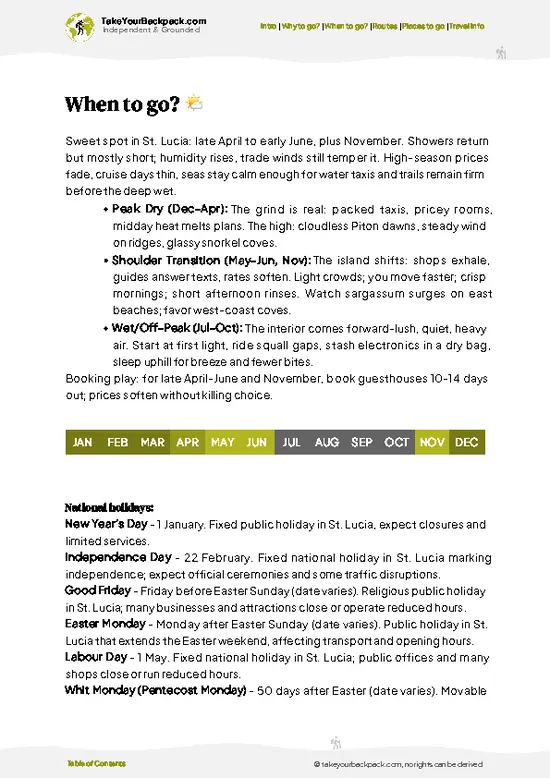
source: climatestotravel.comJANJanuary: excellent for travelingFEBFebruary: excellent for travelingMARMarch: excellent for travelingAPRApril: excellent for travelingMAYMay: highly recommended for travelingJUNJune: fair for travelingJULJuly: good for travelingAUGAugust: fair for travelingSEPSeptember: fair for travelingOCTOctober: fair for travelingNOVNovember: highly recommended for travelingDECDecember: excellent for traveling
when-to-go

✈️ The backpacker research shortcutSt. Lucia Travel Guide

An offline-friendly backpacking guide with optimized travel routes, ranked highlights, transport advice, and the best areas to stay.
example page 0 from our offline Travel Guide for Saint Lucia
example page 1 from our offline Travel Guide for Saint Lucia
example page 2 from our offline Travel Guide for Saint Lucia
example page 3 from our offline Travel Guide for Saint Lucia
example page 4 from our offline Travel Guide for Saint Lucia
example page 5 from our offline Travel Guide for Saint Lucia
example page 6 from our offline Travel Guide for Saint Lucia
example page 7 from our offline Travel Guide for Saint Lucia
The digital guide (151 pages) contains:
✅ 35 highlights, ranked by travel appeal
✅ Optimized 2, 3 & 5-day travel routes
✅ Cities, national parks, landmarks, beaches
✅ How to get around
✅ Offline-friendly for travel without Wi-Fi
👉 Click to see all 30+ guide features

📅 Plan smarter in minutes, not weeks
✅ Month by month travel advice
✅ Festivals & national holidays
✅ Budget expectations

🗺️ Go to the right places, skip the overrated ones
✅ Honest pros & cons of destinations
✅ Top hikes, parks & viewpoints
✅ Lesser-known places most travelers miss
✅ Clear “worth it vs skip it” guidance

🛏️ Travel smoothly without rookie mistakes
✅ Best areas to stay
✅ Transport systems explained simply
✅ Common scams & safety advice
✅ SIM cards, money & practical tips

🌍 Understand the country, not just visit it
✅ Culture & traditions
✅ Local customs
✅ Festivals worth planning around
✅ Traveler-friendly historical context
✅ Insights that make places more meaningful

📱 Built for real travel conditions
✅ Fully downloadable PDF
✅ Works completely offline
✅ Optimized for phone use
✅ Useful in remote areas & buses
✅ Everything in one place
Save weeks of stressful planning
Get instant access to your full guide. 30‑day money-back guarantee.
+ Add another guide for just

By proceeding you agree to our terms.
Sent to your inbox immediately after payment • 100% Secure Checkout
Best Backpacking Travel Advisor 2025 tourism awardBest Backpacking
Travel Advisor
2025
What others say about Take Your Backpack Guides:
⭐⭐⭐⭐⭐
Fantastic, amazing amount of information!
⭐⭐⭐⭐⭐
My goodness this is amazing, it's what I've been looking for hats off too you!
⭐⭐⭐⭐⭐
I think this is absolutely BRILLIANT
⭐⭐⭐⭐
Very complete and informative. It's still missing places, but I gotta to commend you
⭐⭐⭐⭐⭐
This is truly amazing, thank you, can't wait to explore it with my kids!
⭐⭐⭐⭐⭐
Awesome resource, thank you!
⭐⭐⭐⭐⭐
This is amazing! Can't wait to explore the ones I haven't seen
⭐⭐⭐⭐
I love this! Well done, great idea.
⭐⭐⭐⭐⭐
Thanks for taking the time to make this gem!
⭐⭐⭐⭐⭐
This might be the best website I've ever seen.
⭐⭐⭐⭐⭐
Congratulations, and thank you so much for your work; it's incredibly valuable.
⭐⭐⭐⭐
In all seriousness I think you did a great job pointing out the important spots
⭐⭐⭐⭐⭐
10/10 very good
⭐⭐⭐⭐⭐
As someone who's only just starting to visit regularly this is awesome, thank you.
⭐⭐⭐⭐
Thank you very much! I'm going to visit my dad, it's going to be very useful!
⭐⭐⭐⭐⭐
This is really cool! We'll be travelling for the first time and this definitely come in handy.
⭐⭐⭐⭐⭐
You are now our minister of culture, congratulations 👨‍💼
⭐⭐⭐⭐⭐
Just wanted to tell you that this is a pearl! Going to follow your recommendations.
⭐⭐⭐⭐⭐
This is so cool. I'll definitely be using the resource for my travels soon.
⭐⭐⭐⭐⭐
This is very impressive! Good work.
⭐⭐⭐⭐⭐
This is an amazing and informative site. Very well done!

🛏️ Where to stay?Best areas to stay in St. Lucia

In Castries, St. Lucia, the best spot for backpackers is the area around the city center, especially near the waterfront and the bustling market district. This zone hums with life—vendors shouting over the scent of fresh spices and tropical fruit, the salty breeze mixing with the occasional rum aroma from nearby bars. It’s safe enough during the day, and the streets stay lively into the evening without feeling sketchy, which is a rare balance in a Caribbean capital.

Why this area? Because it’s where you’ll find the few hostels catering to budget travelers and solo backpackers. These places aren’t … read more 👉
In Castries, St. Lucia, the best spot for backpackers is the area around the city center, especially near the waterfront and the bustling market district. This zone hums with life—vendors shouting over the scent of fresh spices and tropical fruit, the salty breeze mixing with the occasional rum aroma from nearby bars. It’s safe enough during the day, and the streets stay lively into the evening without feeling sketchy, which is a rare balance in a Caribbean capital.

Why this area? Because it’s where you’ll find the few hostels catering to budget travelers and solo backpackers. These places aren’t just cheap beds; they’re social hubs where you’ll swap stories over shared meals or plan your next island adventure. Staying here means you’re steps away from the ferry terminal if you want to island-hop, and close to local eateries that serve up authentic Creole flavors without the tourist markup.

Avoid the quieter, residential neighborhoods on the outskirts—they’re safer but dead after dark, and you’ll miss the pulse of the city. The waterfront area, with its mix of street life and backpacker energy, offers a real taste of St. Lucia’s rhythm. It’s not polished, but that’s the point: you’re in the thick of it, soaking up the sights, sounds, and smells that make Castries feel like a lived-in, breathing place rather than a postcard.

🚌 Getting aroundGetting around like a local

Castries moves at its own rhythm, a blend of island ease and bursts of urban hustle. The sun hits the streets with a sharp, golden glare by mid-morning, and the air carries the scent of salt from the nearby harbor mixed with the faint spice of street food vendors setting up for the day. This isn’t a place where you’ll find strict timetables or polished transit apps guiding your every move. Instead, it’s a dance of intuition and local knowledge, where catching a ride means reading the flow of people and vehicles, and sometimes just waving down the right van or bus at the right moment. The payoff is a city that feels alive, where every trip is a chance to soak in the pulse of St. Lucia’s capital.
  • Walking: Castries is compact enough to explore on foot, especially around the central market and
… read more 👉
Castries moves at its own rhythm, a blend of island ease and bursts of urban hustle. The sun hits the streets with a sharp, golden glare by mid-morning, and the air carries the scent of salt from the nearby harbor mixed with the faint spice of street food vendors setting up for the day. This isn’t a place where you’ll find strict timetables or polished transit apps guiding your every move. Instead, it’s a dance of intuition and local knowledge, where catching a ride means reading the flow of people and vehicles, and sometimes just waving down the right van or bus at the right moment. The payoff is a city that feels alive, where every trip is a chance to soak in the pulse of St. Lucia’s capital.
  • Walking: Castries is compact enough to explore on foot, especially around the central market and waterfront. The streets are a patchwork of sun-dappled sidewalks and occasional potholes, so sturdy shoes are a must. Walking lets you catch the vibrant street scenes, the chatter of vendors, and the smell of fresh produce—plus, it’s free and flexible.
  • Minibus Taxis: These are the lifeblood of local transit. They run on set routes but without strict schedules—expect them to leave once full, which can mean waiting or a quick departure. Fares hover around EC$3-5 (about US$1-2), making them the cheapest way to get around. They’re cramped and lively, with windows down to catch the breeze and the soundtrack of island radio.
  • Route Taxis: Slightly more formal than minibuses, these shared taxis follow specific routes and often run more frequently. They’re a bit faster and more comfortable, with fixed fares usually a few dollars more than minibuses. They’re a solid middle ground if you want speed without the cost of a private taxi.
  • Private Taxis: For those moments when time is tight or you’re hauling gear, private taxis offer door-to-door service. They’re negotiable but expect to pay significantly more than shared options—think EC$20-40 for short trips within Castries. Use them sparingly if you’re on a budget, but they’re invaluable for early mornings or late nights when other options fade.
  • Ferry to Gros Islet: Not exactly transit within Castries, but a quick ferry ride from the harbor to Gros Islet is a budget-friendly way to explore beyond the city. The ferry runs roughly from 6:30 AM to 6 PM, costs around EC$10, and offers a refreshing breeze and a different perspective on the island’s coastline.

👛 Costs (as of 23 September 2026)How expensive it really is

Backpacking in Castries, St. Lucia, means balancing the island’s laid-back charm with the realities of a Caribbean town where prices can surprise you if you’re not prepared. Here’s the breakdown to help you navigate daily costs without losing the vibe.
  • Dorm Accommodation: Expect to pay around $15 to $30 USD per night for a bed in a basic hostel dorm. Options are limited but functional, often with shared bathrooms and simple amenities. If you want a bit more comfort, guesthouses push closer to $40, but dorms keep it lean.
  • Meals: Street food and local eateries serve up hearty, flavorful meals for $5 to $10. Think fried fish, roti, or doubles with a side of tropical fruit. If you hit touristy spots or restaurants, meals can jump to $15 or more, so sticking to local joints saves both money and
… read more 👉
Backpacking in Castries, St. Lucia, means balancing the island’s laid-back charm with the realities of a Caribbean town where prices can surprise you if you’re not prepared. Here’s the breakdown to help you navigate daily costs without losing the vibe.
  • Dorm Accommodation: Expect to pay around $15 to $30 USD per night for a bed in a basic hostel dorm. Options are limited but functional, often with shared bathrooms and simple amenities. If you want a bit more comfort, guesthouses push closer to $40, but dorms keep it lean.
  • Meals: Street food and local eateries serve up hearty, flavorful meals for $5 to $10. Think fried fish, roti, or doubles with a side of tropical fruit. If you hit touristy spots or restaurants, meals can jump to $15 or more, so sticking to local joints saves both money and offers a more authentic taste.
  • Local Transport: Minibuses are the go-to, costing about $1 to $3 per ride within town or to nearby areas. Taxis are pricier, often $10 to $20 for short trips, so use them sparingly or share rides. Walking is a solid option in Castries’ compact center, letting you soak in the street scenes and ocean breeze.
  • Basic Activities/Entry Fees: Many natural attractions like beaches are free, but expect to pay $5 to $15 for entry to botanical gardens or small museums. Guided hikes or boat tours start around $30, so plan accordingly if you want those experiences without breaking the bank.
  • Miscellaneous Expenses: Bottled water, snacks, and occasional treats add up to about $3 to $7 daily. Keep in mind that internet cafes or SIM cards for data can cost $10 to $20 upfront, but that’s a one-time setup for staying connected.

All told, a realistic daily budget for backpackers in Castries hovers between $30 and $60 USD. This range covers the essentials without cutting corners on comfort or experiences, letting you enjoy the island’s rhythm without the sticker shock.


source: stlucia.org
⚠️ Prices can change and everyone travels differently, so take this as a rough guide. Hope it helps you plan your adventure!

🚌 Day tripsEasy escapes and nearby places

Castries is a fantastic launchpad for exploring the lush wonders of St. Lucia. With its vibrant markets and easy access to transport, you can dive into the island’s rich experiences without breaking the bank. Here are some day trips that truly capture the essence of this Caribbean paradise.

Soufrière and the Pitons
A trip to Soufrière is a must. The drive takes about 45 minutes, winding through banana plantations and coastal views that will make you feel alive. Once there, the iconic Pitons rise dramatically from the sea, creating a backdrop that’s pure magic. Hike the Tet Paul Nature Trail for stunning views without the grueling climb of the Gros Piton. Expect to spend around $10 for the trail and maybe $20 for lunch at a local eatery. The best time to visit is early morning to beat the … read more 👉
Castries is a fantastic launchpad for exploring the lush wonders of St. Lucia. With its vibrant markets and easy access to transport, you can dive into the island’s rich experiences without breaking the bank. Here are some day trips that truly capture the essence of this Caribbean paradise.

Soufrière and the Pitons
A trip to Soufrière is a must. The drive takes about 45 minutes, winding through banana plantations and coastal views that will make you feel alive. Once there, the iconic Pitons rise dramatically from the sea, creating a backdrop that’s pure magic. Hike the Tet Paul Nature Trail for stunning views without the grueling climb of the Gros Piton. Expect to spend around $10 for the trail and maybe $20 for lunch at a local eatery. The best time to visit is early morning to beat the heat and crowds. A common mistake? Skipping the local food scene; grab a plate of green fig and saltfish for a true taste of St. Lucia.
👉 Explore Soufrière

Marigot Bay
Just a short 30-minute ride from Castries, Marigot Bay feels like a postcard. This tranquil spot is perfect for a day of relaxation. Rent a kayak to explore the mangroves or simply lounge on the beach with a cold Piton beer. The bay is often less crowded in the early afternoon, so plan your visit accordingly. You can easily spend under $30 for a kayak rental and snacks. Avoid the mistake of sticking to the main beach; venture to the quieter corners for a more intimate experience.


Anse Chastanet Beach
For those craving a slice of paradise, Anse Chastanet Beach is about an hour away. The vibrant coral reefs make it a snorkeler’s dream. Pack your gear or rent equipment on-site for around $15. The beach is less crowded in the morning, allowing you to soak in the beauty without distraction. The drive offers breathtaking views, so don’t rush it. A common rookie error is forgetting sunscreen; the sun can be relentless here.


Diamond Falls Botanical Gardens
A quick 30-minute jaunt from Castries, the Diamond Falls Botanical Gardens are a feast for the senses. The gardens are filled with tropical plants and the stunning waterfall is a highlight. Entry is about $7, and you can easily spend a couple of hours wandering. The best time to visit is right after a rain shower when the falls are at their most vibrant. Many first-timers overlook the nearby mineral baths; don’t miss the chance to soak in the warm waters after your stroll.
Want to know what more St. Lucia offers?
The St. Lucia Travel Guide describes 35 highlights, from cities to national parks, from beaches to hikes

Get the Travel Guide -

🛡️ SafetyScams, Hazards, and Annoyances

Castries, the capital of St. Lucia, is generally safe, but a little awareness goes a long way. Stick to well-lit areas at night, especially if you’re solo. The waterfront can be lively, but it’s best to avoid quieter streets after dark.

Watch for the occasional street vendor who might push their wares a bit too hard. Politely decline if you’re not interested; a firm but friendly demeanor works wonders.

Transportation can be a bit chaotic. If you’re using local buses, know your route and have small bills ready. Drivers might not always have change, and you don’t want to miss your stop while fumbling for coins.

Keep your belongings close, especially in crowded markets. It’s easy to get distracted by the vibrant colors and enticing scents of fresh fruit and spices. Enjoy the atmosphere, … read more 👉
Castries, the capital of St. Lucia, is generally safe, but a little awareness goes a long way. Stick to well-lit areas at night, especially if you’re solo. The waterfront can be lively, but it’s best to avoid quieter streets after dark.

Watch for the occasional street vendor who might push their wares a bit too hard. Politely decline if you’re not interested; a firm but friendly demeanor works wonders.

Transportation can be a bit chaotic. If you’re using local buses, know your route and have small bills ready. Drivers might not always have change, and you don’t want to miss your stop while fumbling for coins.

Keep your belongings close, especially in crowded markets. It’s easy to get distracted by the vibrant colors and enticing scents of fresh fruit and spices. Enjoy the atmosphere, but stay aware. With these simple strategies, you can navigate Castries like a pro and focus on the beauty of your surroundings.

FAQCommon questions from travelers

Yes, Castries is worth visiting for its vibrant market, colonial architecture, and waterfront views, especially if you enjoy cultural experiences and local cuisine. It is more than just a stopover, offering a glimpse into Saint Lucia's urban life and history.
Two days are sufficient to explore Castries thoroughly, including the Central Market, Derek Walcott Square, and nearby beaches. This allows time for both sightseeing and relaxing without rushing.
Yes, Castries can be visited as a day trip from nearby towns like Gros Islet, which is about 15 minutes away by car. This makes it easy to experience the city’s highlights without overnight accommodation.
⚠️ Things can change over time, so always validate details locally before you go.

Other Saint Lucian towns near Castries

Explore more nearby:

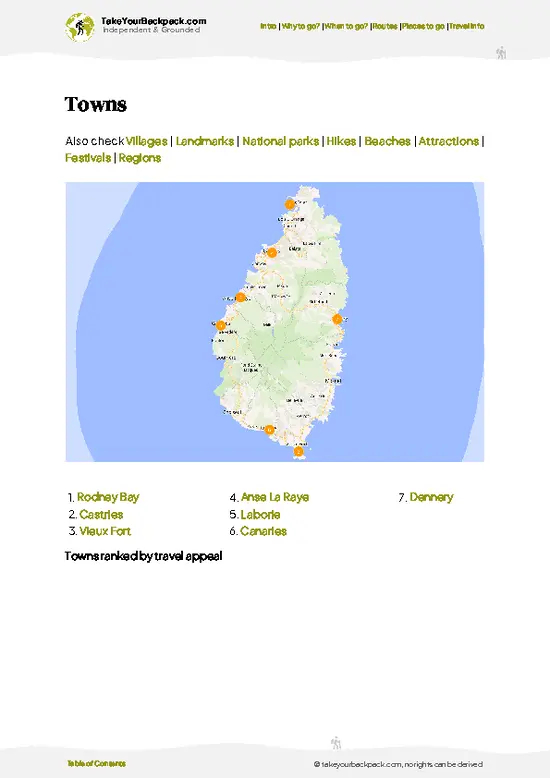
  • Rodney Bay—Marina, nightlife strip, shopping mall| 8 km away
  • Anse La Raye—Seaside fishing village, Friday fish fry, painted wooden houses| 9 km away
  • Canaries—Steep hillsides, quiet bay, bread ovens| 14 km away

💡 Not sure where to go next?
Create a personalized itinerary for St. Lucia including Castries and the places that fit your trip.

Generate my itinerary

👉 Discover all towns

Or checkout all St. Lucia has to offer (think cities, towns, villages, national parks, hikes, beaches, festivals)
Country photo of St. Lucia

We 💚 feedbackKey takeaways before you go

Castries has a pulse that’s hard to ignore. The market buzzes with the scent of fresh spices and ripe fruits, a sensory feast that feels like a warm embrace. Don’t miss the local street food; the fish cakes are a delightful surprise. Just be ready for the heat—stay hydrated and pace yourself. The views from Morne Fortune are worth the climb, offering a perspective that makes every drop of sweat feel like a badge of honor. Embrace the rhythm, and you’ll find St. Lucia’s heart.

✍️ Help improve this page!
The information on this page is based on in-depth research, insights shared by experienced travelers, and feedback from the local travel community in St. Lucia. While every effort is made to keep the information accurate and current, conditions can change — so if you spot anything incorrect or outdated, please get in touch.


🙋‍♂️ Give feedback

👋 Meet the founderWho’s Behind Take Your Backpack?

Johan, backpacker and founder of TakeYourBackpackHi, I’m Johan (Netherlands 🇳🇱), the creator of TakeYourBackpack. Over the past decade, I’ve backpacked through 80+ countries across six continents, gaining extensive experience with independent travel, long-term trips, and overland routes.

This site is built on a combination of firsthand travel experience and carefully curated insights from other backpackers. Many guides are based on places I’ve personally visited, while others bring together tips, observations, and practical advice shared by trusted travelers I’ve met along the way.

The goal is to provide realistic, experience-driven guidance — not generic itineraries — so you can explore destinations with better context, clearer expectations, and more confidence.

Get full St. Lucia guide •
Instant download • 35 highlights • Full Offline guide