×

Samoa🇼🇸 | landmarksSaleaula Lava FieldsBlack lava crust, buried church, Virgin’s Grave, coastal lava edge | things to do and best time to go

Explore Papaseea Sliding RocksExplore Taga Blowholes

Backpacking in Saleaula Lava Fields
👌 Worth visitingunique site ranked #4
By Johan Kruseman 🇳🇱 | Updated October 15, 2026

Bring sturdy closed shoes and a small entry fee in tala, and you can walk the whole field in an hour or two without a guide. Saleaula Lava Fields lies on the north-east coast of Savai’i in Samoa, a few kilometers of black rock spread along the shore. The Mt Matavanu eruptions of 1905 to 1911 poured lava over villages here, and the flow hardened into a crunchy, uneven crust that rings underfoot and bakes in the midday sun. Crowds are thin, often just a few visitors and a caretaker. The site is small, and a short visit is all most people need, so it will not fill a day alone. The payoff is a ruined church with its walls still standing in a sea of rock, plus a lava-ringed tomb and the smell of hot stone and salt. Start early, walk the path while it is cool, then swim at a nearby beach.

Discover everything you want to know in the 📖 Samoa Travel Guide.


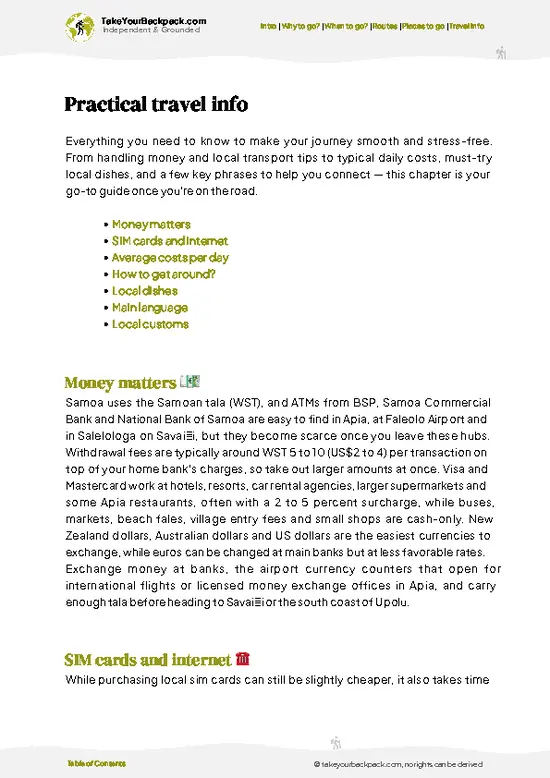
example page 0 from our offline Travel Guide for Samoa
example page 1 from our offline Travel Guide for Samoa
example page 2 from our offline Travel Guide for Samoa
example page 3 from our offline Travel Guide for Samoa
example page 4 from our offline Travel Guide for Samoa
example page 5 from our offline Travel Guide for Samoa
example page 6 from our offline Travel Guide for Samoa
example page 7 from our offline Travel Guide for Samoa
Loading the map 🌍
CLICK TO FILTER
towns
villages
landmarks
national parks
hikes
beaches
attractions
festivals
regions
SHOW COUNTRY’S BESTSHOW ALL

✨ Why go?
Ranked #4 unique site in Samoa
Why Saleaula Lava Fields should be on your travel list

Saleaula earns a stop because it shows what a volcano does to a village, and few places let you walk across the result. The 1905 to 1911 Matavanu eruption buried several settlements, and the evidence is still visible in the Virgin’s Grave and the roofless Congregational church standing in the rock. You see the destruction up close, with no glass or barriers, which is rare on the Pacific circuit.

It also fits easily into a loop of Savai’i. The coast road runs past the site, so you can combine it with beaches, blowholes and village stays rather than making a dedicated trip. The ferry crossing from Upolu is part of the adventure, and the island’s slower pace suits travelers who like to linger. Because the site is small, it works as a morning stop that leaves the rest of the day free. If you … read more 👉
Saleaula earns a stop because it shows what a volcano does to a village, and few places let you walk across the result. The 1905 to 1911 Matavanu eruption buried several settlements, and the evidence is still visible in the Virgin’s Grave and the roofless Congregational church standing in the rock. You see the destruction up close, with no glass or barriers, which is rare on the Pacific circuit.

It also fits easily into a loop of Savai’i. The coast road runs past the site, so you can combine it with beaches, blowholes and village stays rather than making a dedicated trip. The ferry crossing from Upolu is part of the adventure, and the island’s slower pace suits travelers who like to linger. Because the site is small, it works as a morning stop that leaves the rest of the day free. If you are coming for volcanic landscapes, this is the one with a human story attached.

💡 HighlightsPlaces and moments you shouldn't skip

  1. Virgin’s Grave: a hollow in the lava, edged by a low wall, where a woman is said to have been spared as the flow parted around her. Rock and tree roots now surround the pool-like pit, which is the site’s best-known photo.
  2. Lava-buried Congregational church: its coral-stone walls still rise from the black field, and the lava came up to the window line. Walk around it to see how the flow solidified against the masonry.
  3. The lava crust trail: a rough path crosses ropy, glassy and broken basalt. It crunches and shifts slightly underfoot, and it holds heat by late morning.
  4. Coastal lava edge: where the flow met the sea, the rock drops in jagged shelves and surf thumps against it. It is a good spot for wide shots with the green hills behind.
  5. Remnant village foundations: low stone outlines and fragments
… read more 👉
  1. Virgin’s Grave: a hollow in the lava, edged by a low wall, where a woman is said to have been spared as the flow parted around her. Rock and tree roots now surround the pool-like pit, which is the site’s best-known photo.
  2. Lava-buried Congregational church: its coral-stone walls still rise from the black field, and the lava came up to the window line. Walk around it to see how the flow solidified against the masonry.
  3. The lava crust trail: a rough path crosses ropy, glassy and broken basalt. It crunches and shifts slightly underfoot, and it holds heat by late morning.
  4. Coastal lava edge: where the flow met the sea, the rock drops in jagged shelves and surf thumps against it. It is a good spot for wide shots with the green hills behind.
  5. Remnant village foundations: low stone outlines and fragments poke through in places, a quiet reminder that people lived on this ground. Caretakers can point out what is what.
  6. Roadside views of Mt Matavanu’s flank: the slope that sent the flow down is visible inland, its forested crater rim far above the plain.
Do the Virgin’s Grave and the church first, in the early light, because the rock is cooler and the shadows make the textures stand out.
Spotted a mistake or missing something? Contact us.

Things to do near Saleaula Lava Fields

Ratings based on Tripadvisor reviews. When you book through this link, you support our work at no extra cost to you.

🌤️ When to go?Best time to visit Saleaula Lava Fields

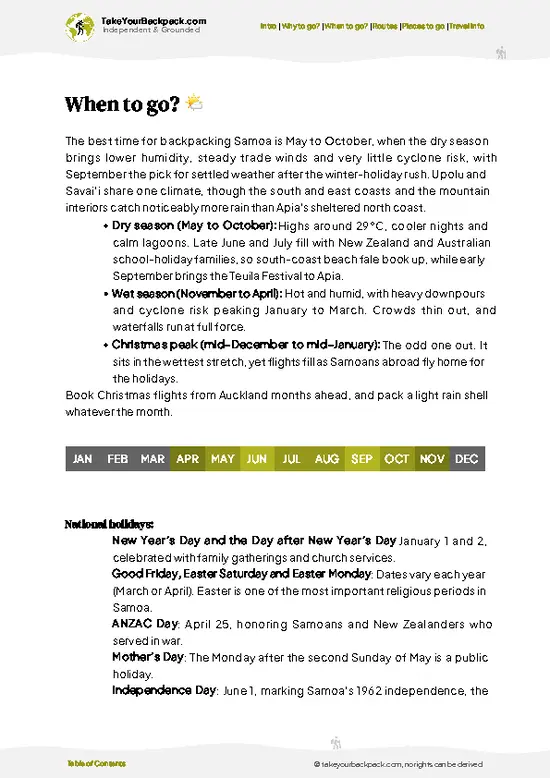
May to October is the window for Saleaula, when the lava fields on Savai’i’s north coast stay dry enough to walk without slogging through mud.
  • Dry Season (May to October): Days run 27 to 30°C (81 to 86°F) with lower humidity and far less rain, so the black rock and the Virgin’s Grave are easy to explore. Daylight lasts about 11.5 to 12.5 hours. Ferry crossings from Upolu are calmest now, but beds and rental cars fill in July and August.
  • Wet Season (November to April): Expect 28 to 31°C (82 to 88°F), heavy humidity and sudden downpours. Cyclones are possible, mostly January to March, and ferries can be canceled. Prices for rooms dip, and the rock is hot underfoot by midday.
  • Festival Periods: Independence celebrations in early June bring Samoan families traveling between islands, so transport and
… read more 👉
May to October is the window for Saleaula, when the lava fields on Savai’i’s north coast stay dry enough to walk without slogging through mud.
  • Dry Season (May to October): Days run 27 to 30°C (81 to 86°F) with lower humidity and far less rain, so the black rock and the Virgin’s Grave are easy to explore. Daylight lasts about 11.5 to 12.5 hours. Ferry crossings from Upolu are calmest now, but beds and rental cars fill in July and August.
  • Wet Season (November to April): Expect 28 to 31°C (82 to 88°F), heavy humidity and sudden downpours. Cyclones are possible, mostly January to March, and ferries can be canceled. Prices for rooms dip, and the rock is hot underfoot by midday.
  • Festival Periods: Independence celebrations in early June bring Samoan families traveling between islands, so transport and rooms get tight.
Arrive before 10 a.m. to walk the lava on cooler rock, and book a Savai’i room early if you travel in July or August.


source: climatestotravel.comJANJanuary: fair for travelingFEBFebruary: fair for travelingMARMarch: fair for travelingAPRApril: fair for travelingMAYMay: highly recommended for travelingJUNJune: excellent for travelingJULJuly: excellent for travelingAUGAugust: excellent for travelingSEPSeptember: highly recommended for travelingOCTOctober: excellent for travelingNOVNovember: fair for travelingDECDecember: fair for traveling
when-to-go

✈️ The backpacker research shortcutSamoa Travel Guide

An offline-friendly backpacking guide with optimized travel routes, ranked highlights, transport advice, and the best areas to stay.
example page 0 from our offline Travel Guide for Samoa
example page 1 from our offline Travel Guide for Samoa
example page 2 from our offline Travel Guide for Samoa
example page 3 from our offline Travel Guide for Samoa
example page 4 from our offline Travel Guide for Samoa
example page 5 from our offline Travel Guide for Samoa
example page 6 from our offline Travel Guide for Samoa
example page 7 from our offline Travel Guide for Samoa
The digital guide (138 pages) contains:
✅ 37 highlights, ranked by travel appeal
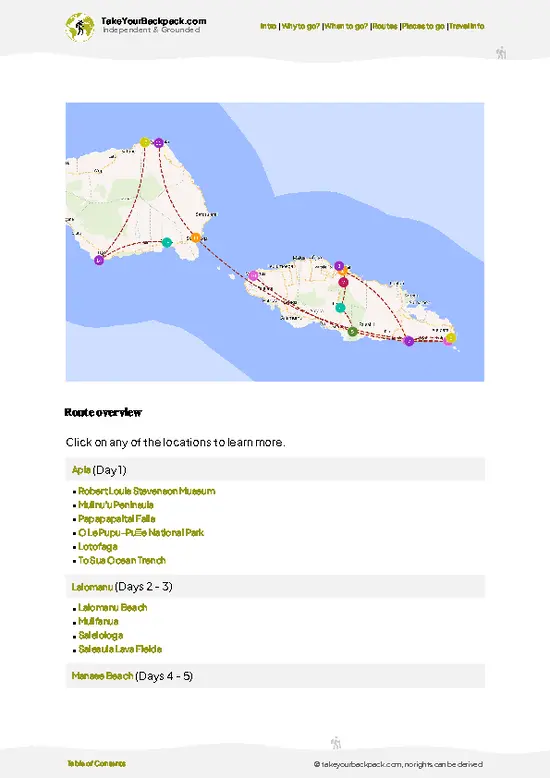
✅ Optimized 2, 3 & 5-day travel routes
✅ Cities, national parks, landmarks, beaches
✅ How to get around
✅ Offline-friendly for travel without Wi-Fi
👉 Click to see all 30+ guide features

📅 Plan smarter in minutes, not weeks
✅ Month by month travel advice
✅ Festivals & national holidays
✅ Budget expectations

🗺️ Go to the right places, skip the overrated ones
✅ Honest pros & cons of destinations
✅ Top hikes, parks & viewpoints
✅ Lesser-known places most travelers miss
✅ Clear “worth it vs skip it” guidance

🛏️ Travel smoothly without rookie mistakes
✅ Best areas to stay
✅ Transport systems explained simply
✅ Common scams & safety advice
✅ SIM cards, money & practical tips

🌍 Understand the country, not just visit it
✅ Culture & traditions
✅ 52 Essential phrases & customs
✅ Festivals worth planning around
✅ Traveler-friendly historical context
✅ Insights that make places more meaningful

📱 Built for real travel conditions
✅ Fully downloadable PDF
✅ Works completely offline
✅ Optimized for phone use
✅ Useful in remote areas & buses
✅ Everything in one place
Stop searching, start planning
Get instant access to your full guide. 30‑day money-back guarantee.
+ Add another guide for just

By proceeding you agree to our terms.
Sent to your inbox immediately after payment • 100% Secure Checkout
Best Backpacking Travel Advisor 2025 tourism awardBest Backpacking
Travel Advisor
2025
What others say about Take Your Backpack Guides:
⭐⭐⭐⭐⭐
Fantastic, amazing amount of information!
⭐⭐⭐⭐⭐
My goodness this is amazing, it's what I've been looking for hats off too you!
⭐⭐⭐⭐⭐
I think this is absolutely BRILLIANT
⭐⭐⭐⭐
Very complete and informative. It's still missing places, but I gotta to commend you
⭐⭐⭐⭐⭐
This is truly amazing, thank you, can't wait to explore it with my kids!
⭐⭐⭐⭐⭐
Awesome resource, thank you!
⭐⭐⭐⭐⭐
This is amazing! Can't wait to explore the ones I haven't seen
⭐⭐⭐⭐
I love this! Well done, great idea.
⭐⭐⭐⭐⭐
Thanks for taking the time to make this gem!
⭐⭐⭐⭐⭐
This might be the best website I've ever seen.
⭐⭐⭐⭐⭐
Congratulations, and thank you so much for your work; it's incredibly valuable.
⭐⭐⭐⭐
In all seriousness I think you did a great job pointing out the important spots
⭐⭐⭐⭐⭐
10/10 very good
⭐⭐⭐⭐⭐
As someone who's only just starting to visit regularly this is awesome, thank you.
⭐⭐⭐⭐
Thank you very much! I'm going to visit my dad, it's going to be very useful!
⭐⭐⭐⭐⭐
This is really cool! We'll be travelling for the first time and this definitely come in handy.
⭐⭐⭐⭐⭐
You are now our minister of culture, congratulations 👨‍💼
⭐⭐⭐⭐⭐
Just wanted to tell you that this is a pearl! Going to follow your recommendations.
⭐⭐⭐⭐⭐
This is so cool. I'll definitely be using the resource for my travels soon.
⭐⭐⭐⭐⭐
This is very impressive! Good work.
⭐⭐⭐⭐⭐
This is an amazing and informative site. Very well done!

🛏️ Where to stay?Where staying makes the most sense

Base yourself along Savai’i’s north and east coast, within 5 to 30 minutes’ drive of Saleaula, because the lava fields have no accommodation of their own.
The northeast coast around Manase is the most social option. It has a long white beach, a cluster of beachfront fale (open-sided huts on the sand) at budget prices, and enough other travelers to share rental cars and cut costs. It sits roughly 5 to 10 minutes from the lava fields, and the village road is quiet and safe after dark.
The area around Lalomalava and Salelologa near the ferry wharf suits arrival and departure days. Options are more … read more 👉
Base yourself along Savai’i’s north and east coast, within 5 to 30 minutes’ drive of Saleaula, because the lava fields have no accommodation of their own.
The northeast coast around Manase is the most social option. It has a long white beach, a cluster of beachfront fale (open-sided huts on the sand) at budget prices, and enough other travelers to share rental cars and cut costs. It sits roughly 5 to 10 minutes from the lava fields, and the village road is quiet and safe after dark.
The area around Lalomalava and Salelologa near the ferry wharf suits arrival and departure days. Options are more basic and less sociable, but you avoid a long drive after the crossing from Upolu, and shops and an ATM are close.
The Safotu and Sasina stretch on the north coast, a little further west, with a few family-run guesthouses and beach fale. It is quieter, with fewer backpackers.
Fale stays usually include mosquito nets and shared meals, which makes meeting other travelers easy. Ask your host about village etiquette and modest dress.

👛 Costs (as of 15 October 2026)Money, prices, and spending tips

A day at Saleaula Lava Fields costs about US$62 for a backpacker who stays on Savai’i, with the entry fee a small part of that. Travelers pay in Samoan tala, and prices below are converted to US dollars.
CategoryBudget RangeLocal Reality
Site entryUS$3 to 6The village collects a small fee per person at the Virgin’s Grave and the lava field walkways. Bring coins or small notes, since change is not always available.
Accommodation (high season)US$25 to 40Beach fale on the north and east coasts of Savai’i cost less than guesthouses. Rates rise in the dry months from May to October.
Accommodation (low season)US$18 to 30Rates ease during the wetter months, and walk-in discounts are common.
Local transportUS$2 to 8Buses run along the coast road from Salelologa wharf and cost a few dollars a trip. They
… read more 👉
A day at Saleaula Lava Fields costs about US$62 for a backpacker who stays on Savai’i, with the entry fee a small part of that. Travelers pay in Samoan tala, and prices below are converted to US dollars.
CategoryBudget RangeLocal Reality
Site entryUS$3 to 6The village collects a small fee per person at the Virgin’s Grave and the lava field walkways. Bring coins or small notes, since change is not always available.
Accommodation (high season)US$25 to 40Beach fale on the north and east coasts of Savai’i cost less than guesthouses. Rates rise in the dry months from May to October.
Accommodation (low season)US$18 to 30Rates ease during the wetter months, and walk-in discounts are common.
Local transportUS$2 to 8Buses run along the coast road from Salelologa wharf and cost a few dollars a trip. They thin out in the afternoon.
Ferry from UpoluUS$6 to 10The passenger fare from Mulifanua wharf to Salelologa is paid per crossing, which takes about an hour.
FoodUS$8 to 15Small shops sell fresh bread, tinned fish and fruit. Fale meals, often fish, taro and coconut cream, run higher.
Water and snacksUS$2 to 4Carry water for the exposed black rock, which holds heat in the middle of the day.
Total Daily BudgetUS$62High season, with entry at US$4, accommodation at US$30, transport at US$6, food at US$12, water and snacks at US$3, and a small margin for ferry share and extras.
⚠️ Prices can change and everyone travels differently, so take this as a rough guide. Hope it helps you plan your adventure!

FAQCommon questions from travelers

Saleaula Lava Fields is a stretch of black volcanic rock on Savai’i’s north coast, left by the Mt Matavanu eruptions between 1905 and 1911. The lava buried several villages, and you can still see the ruins of a church and the Virgin’s Grave, a lava-lined tomb. Entry costs about US$3 to 6 and is paid to the local caretaker.
Plan 1 to 2 hours on site, enough to walk the lava, see the church ruins and the Virgin’s Grave. Most travelers fit it into a half day. Staying on Savai’i for 2 to 3 days lets you combine it with other sights.
Take the ferry from Upolu’s Mulifanua wharf to Salelologa on Savai’i, about 60 to 90 minutes and roughly US$6 to 10 for passengers. From Salelologa, the lava fields are about 30 to 45 minutes by road along the east coast, by rental car or local bus. Buses are slow and infrequent, so many travelers rent a car for around US$60 to 90 a day.
⚠️ Things can change over time, so always validate details locally before you go.

Other Samoan landmarks near Saleaula Lava Fields

Explore more nearby:


💡 Not sure where to go next?
Create a personalized itinerary for Samoa including Saleaula Lava Fields and the places that fit your trip.

Generate my itinerary

👉 Discover all landmarks

Or checkout all Samoa has to offer (think cities, towns, villages, national parks, hikes, beaches, festivals)
Country photo of Samoa

We 💚 feedbackWhat to keep in mind

Many travelers rush through in ten minutes, snap the church and leave, then miss the Virgin’s Grave and the coast edge. Give it a proper hour and walk the full loop. Wear closed shoes, since sandals are painful on sharp basalt, and bring water because there is almost no shade.

✍️ Help improve this page!
The information on this page is based on in-depth research, insights shared by experienced travelers, and feedback from the local travel community in Samoa. While every effort is made to keep the information accurate and current, conditions can change — so if you spot anything incorrect or outdated, please get in touch.


🙋‍♂️ Give feedback

👋 Meet the founderWho’s Behind Take Your Backpack?

Johan, backpacker and founder of TakeYourBackpackHi, I’m Johan (Netherlands 🇳🇱), the creator of TakeYourBackpack. Over the past 3 decades, I’ve backpacked through 90+ countries across six continents, gaining extensive experience with independent travel, long-term trips, and overland routes.

This site is built on a combination of firsthand travel experience and carefully curated insights from other backpackers. Many guides are based on places I’ve personally visited, while others bring together tips, observations, and practical advice shared by trusted travelers I’ve met along the way.

The goal is to provide realistic, experience-driven guidance — not generic itineraries — so you can explore destinations with better context, clearer expectations, and more confidence.