×

Saudi Arabia🇸🇦 | festivalsKing Abdulaziz Camel Festivalcamel pageants, desert camps, breed competitions, heritage displays | things to do and best time to go

Explore Winter at TantoraExplore Red Sea International Film Festival

Backpacking in King Abdulaziz Camel
🌟 Highlightfestival ranked #5
By Johan Kruseman 🇳🇱 | Updated October 15, 2026

Most travelers only realize on-site that the King Abdulaziz Camel Festival is basically a one-stop crash course in Saudi desert culture, where you can see in a single day what would normally take a week of scattered village visits and awkward logistics. It runs in the desert north of Riyadh, near Rumah in the Riyadh Province. This is not a music festival; think camel beauty contests, racing, poetry, tribal dance, and rowdy auction yards instead of DJs. The crowd skews local and Gulf Arab families, with a few curious foreigners orbiting the edges, so you move through it more as an observer than a headliner. The vibe is dusty, loud, and oddly ceremonial, stretching over several weeks each winter, and it’s worth visiting if you want raw cultural immersion more than nightlife.

Discover everything you want to know in the 📖 Saudi Arabia Travel Guide.
Safety warning

The current risk level for Saudi Arabia is high. Check the advice before going.


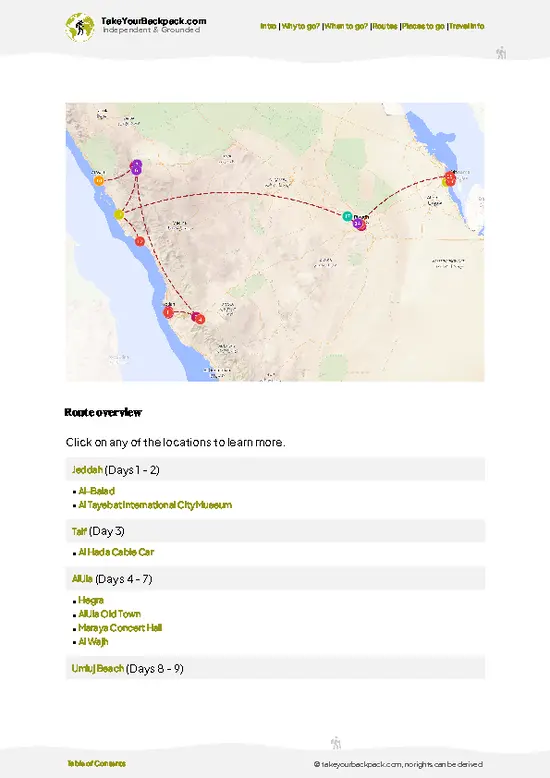
example page 0 from our offline Travel Guide for Saudi Arabia
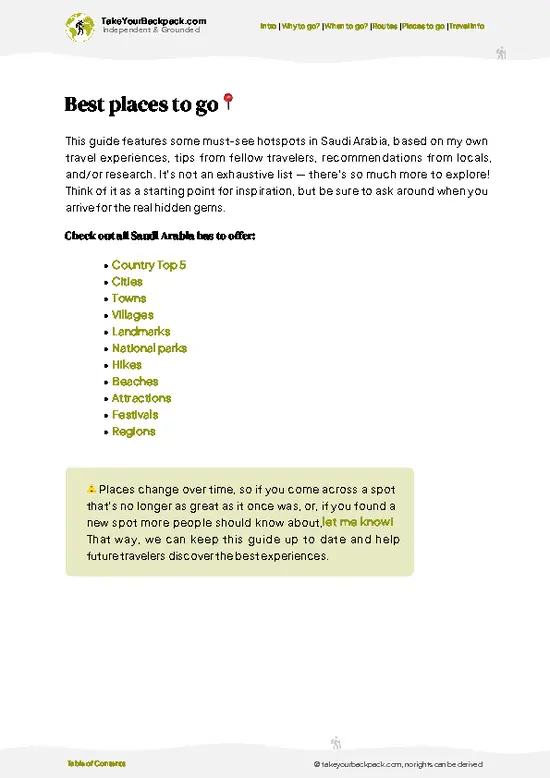
example page 1 from our offline Travel Guide for Saudi Arabia
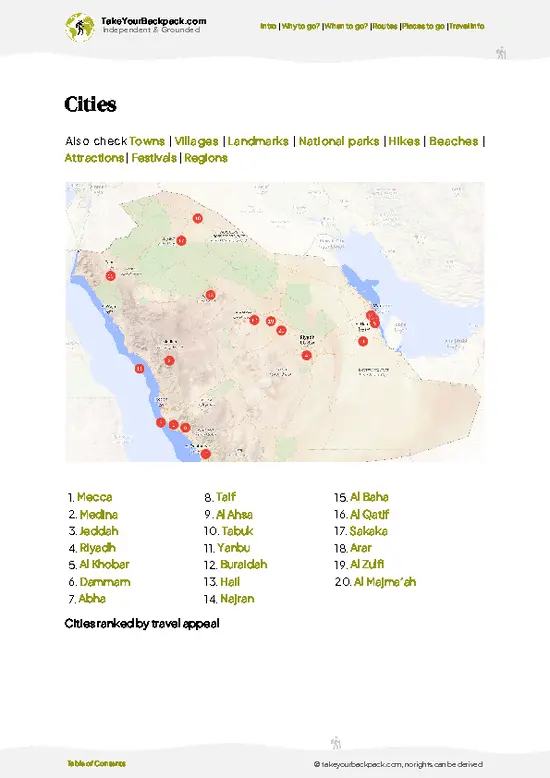
example page 2 from our offline Travel Guide for Saudi Arabia
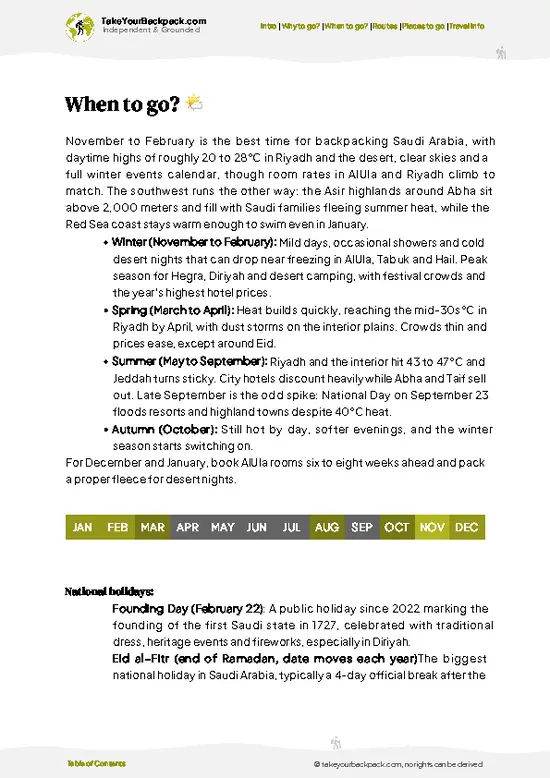
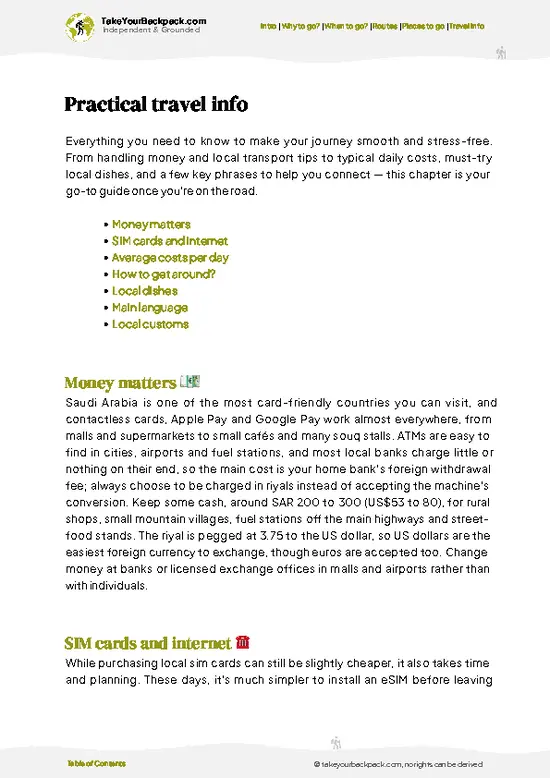
example page 3 from our offline Travel Guide for Saudi Arabia
example page 4 from our offline Travel Guide for Saudi Arabia
example page 5 from our offline Travel Guide for Saudi Arabia
example page 6 from our offline Travel Guide for Saudi Arabia
example page 7 from our offline Travel Guide for Saudi Arabia
Loading the map 🌍
CLICK TO FILTER
cities
towns
villages
landmarks
national parks
hikes
beaches
attractions
festivals
regions
SHOW COUNTRY’S BESTSHOW ALL

✨ Why go?
Ranked #5 festival in Saudi Arabia
Reasons people choose to celebrate the here

Backpackers flock to the King Abdulaziz Camel Festival for a jolt of social energy and a taste of temporary community. This isn’t just a spectacle; it’s a deep dive into Saudi culture, where you can witness the artistry of camel grooming and the thrill of races that pulse with excitement.

Planning your route around this festival isn’t just smart; it’s a savvy way to immerse yourself in local traditions while keeping costs in check. Compared to other global events, this festival offers affordability without sacrificing experience.

Plus, it seamlessly fits into longer travel plans, acting as a vibrant waypoint in your journey. You’ll leave not just with memories, but with a sense of connection to a culture that thrives on celebration. Embrace the challenge, and let the festival amplify your adventure!

💡 HighlightsDon't-miss highlights and experiences

  1. Camel Beauty Pageants (Al-Mazayen) — Camels decked out in colorful tassels, ornate bridles and tribal jewelry are paraded and judged for features like head shape and gait. It’s theatrical, loud with owner pride, and unlike any livestock show you’ve seen — think runway couture but for camels.
  2. Camel Races and Endurance Trials — High-energy sprint races and longer endurance events put breeding and training on full display. The speed and close finishes are nail-biting, and you get a real sense of the athleticism bred into these animals over generations.
  3. Camel Market and Auctions — A bustling marketplace where breeders, traders and buyers haggle over prized camels and related goods. It’s part economy, part spectacle — great for seeing how deeply camels are woven into social and commercial life.
… read more 👉
  1. Camel Beauty Pageants (Al-Mazayen) — Camels decked out in colorful tassels, ornate bridles and tribal jewelry are paraded and judged for features like head shape and gait. It’s theatrical, loud with owner pride, and unlike any livestock show you’ve seen — think runway couture but for camels.
  2. Camel Races and Endurance Trials — High-energy sprint races and longer endurance events put breeding and training on full display. The speed and close finishes are nail-biting, and you get a real sense of the athleticism bred into these animals over generations.
  3. Camel Market and Auctions — A bustling marketplace where breeders, traders and buyers haggle over prized camels and related goods. It’s part economy, part spectacle — great for seeing how deeply camels are woven into social and commercial life.
  4. Cultural Heritage Villages and Folk Performances — Traditional music, dance (like the Ardah), falconry displays and equestrian shows create a living museum of Bedouin culture. Stalls with handmade crafts and local food complete the vibe, so you can taste, hear and buy a piece of the heritage.
  5. Hands-On Experiences and Photo Opportunities — From short camel rides and grooming demos to vet and handling workshops, there are plenty of ways to get off the sidelines. The photo ops are unbeatable — camels in full regalia against desert light make for memorable shots.
Spotted a mistake or missing something? Contact us.

Things to do near King Abdulaziz Camel Festival

Ratings based on Tripadvisor reviews. When you book through this link, you support our work at no extra cost to you.

🌤️ When to go?When is the celebration of King Abdulaziz Camel Festival?

  • Weather: The festival runs in January, when Saudi Arabia’s desert climate cools down to a manageable 14-22°C (57-72°F). This drop from scorching summer heat means you can move, explore, and enjoy without melting into your gear.
  • Temperature: Nights can dip to around 5°C (41°F), so pack layers. Days are crisp but comfortable, perfect for long hours outdoors without overheating or freezing.
  • Daylight Hours: Expect roughly 10-11 hours of daylight, enough time to catch the camel races, cultural shows, and markets without rushing. The sun sets early, so plan your late afternoon activities accordingly.
  • Crowds: January draws serious camel enthusiasts and locals, but it’s not a crush-fest. Arriving early in the festival week helps you dodge peak crowds and snag better accommodation deals.
  • Seasonal Activities:
… read more 👉
  • Weather: The festival runs in January, when Saudi Arabia’s desert climate cools down to a manageable 14-22°C (57-72°F). This drop from scorching summer heat means you can move, explore, and enjoy without melting into your gear.
  • Temperature: Nights can dip to around 5°C (41°F), so pack layers. Days are crisp but comfortable, perfect for long hours outdoors without overheating or freezing.
  • Daylight Hours: Expect roughly 10-11 hours of daylight, enough time to catch the camel races, cultural shows, and markets without rushing. The sun sets early, so plan your late afternoon activities accordingly.
  • Crowds: January draws serious camel enthusiasts and locals, but it’s not a crush-fest. Arriving early in the festival week helps you dodge peak crowds and snag better accommodation deals.
  • Seasonal Activities: The cooler weather unlocks full festival programming—camel beauty contests, endurance races, and traditional music. Visit outside this window, and you miss the heart of the action.
  • Price Fluctuations: Prices spike during the festival’s peak days. Booking transport and lodging ahead, especially for the weekend, saves you from last-minute markups and sold-out scenarios.
Pro-tip: Time your visit for early January to balance cooler weather, manageable crowds, and better prices—keeping your energy and budget intact for the festival’s best moments.


source: climatestotravel.comJANJanuary: excellent for travelingFEBFebruary: not recommended for travelingMARMarch: not recommended for travelingAPRApril: not recommended for travelingMAYMay: not recommended for travelingJUNJune: not recommended for travelingJULJuly: not recommended for travelingAUGAugust: not recommended for travelingSEPSeptember: not recommended for travelingOCTOctober: not recommended for travelingNOVNovember: not recommended for travelingDECDecember: not recommended for traveling

✈️ The backpacker research shortcutSaudi Arabia Travel Guide

An offline-friendly backpacking guide with optimized travel routes, ranked highlights, transport advice, and the best areas to stay.
example page 0 from our offline Travel Guide for Saudi Arabia
example page 1 from our offline Travel Guide for Saudi Arabia
example page 2 from our offline Travel Guide for Saudi Arabia
example page 3 from our offline Travel Guide for Saudi Arabia
example page 4 from our offline Travel Guide for Saudi Arabia
example page 5 from our offline Travel Guide for Saudi Arabia
example page 6 from our offline Travel Guide for Saudi Arabia
example page 7 from our offline Travel Guide for Saudi Arabia
The digital guide (322 pages) contains:
✅ 86 highlights, ranked by travel appeal
✅ Optimized 5, 10 & 15-day travel routes
✅ Cities, national parks, landmarks, beaches
✅ How to get around
✅ Offline-friendly for travel without Wi-Fi
👉 Click to see all 30+ guide features

📅 Plan smarter in minutes, not weeks
✅ Month by month travel advice
✅ Festivals & national holidays
✅ Budget expectations

🗺️ Go to the right places, skip the overrated ones
✅ Honest pros & cons of destinations
✅ Top hikes, parks & viewpoints
✅ Lesser-known places most travelers miss
✅ Clear “worth it vs skip it” guidance

🛏️ Travel smoothly without rookie mistakes
✅ Best areas to stay
✅ Transport systems explained simply
✅ Common scams & safety advice
✅ SIM cards, money & practical tips

🌍 Understand the country, not just visit it
✅ Culture & traditions
✅ 52 Essential phrases & customs
✅ Festivals worth planning around
✅ Traveler-friendly historical context
✅ Insights that make places more meaningful

📱 Built for real travel conditions
✅ Fully downloadable PDF
✅ Works completely offline
✅ Optimized for phone use
✅ Useful in remote areas & buses
✅ Everything in one place
Stop searching, start planning
Get instant access to your full guide. 30‑day money-back guarantee.
+ Add another guide for just

By proceeding you agree to our terms.
Sent to your inbox immediately after payment • 100% Secure Checkout
Best Backpacking Travel Advisor 2025 tourism awardBest Backpacking
Travel Advisor
2025
What others say about Take Your Backpack Guides:
⭐⭐⭐⭐⭐
Fantastic, amazing amount of information!
⭐⭐⭐⭐⭐
My goodness this is amazing, it's what I've been looking for hats off too you!
⭐⭐⭐⭐⭐
I think this is absolutely BRILLIANT
⭐⭐⭐⭐
Very complete and informative. It's still missing places, but I gotta to commend you
⭐⭐⭐⭐⭐
This is truly amazing, thank you, can't wait to explore it with my kids!
⭐⭐⭐⭐⭐
Awesome resource, thank you!
⭐⭐⭐⭐⭐
This is amazing! Can't wait to explore the ones I haven't seen
⭐⭐⭐⭐
I love this! Well done, great idea.
⭐⭐⭐⭐⭐
Thanks for taking the time to make this gem!
⭐⭐⭐⭐⭐
This might be the best website I've ever seen.
⭐⭐⭐⭐⭐
Congratulations, and thank you so much for your work; it's incredibly valuable.
⭐⭐⭐⭐
In all seriousness I think you did a great job pointing out the important spots
⭐⭐⭐⭐⭐
10/10 very good
⭐⭐⭐⭐⭐
As someone who's only just starting to visit regularly this is awesome, thank you.
⭐⭐⭐⭐
Thank you very much! I'm going to visit my dad, it's going to be very useful!
⭐⭐⭐⭐⭐
This is really cool! We'll be travelling for the first time and this definitely come in handy.
⭐⭐⭐⭐⭐
You are now our minister of culture, congratulations 👨‍💼
⭐⭐⭐⭐⭐
Just wanted to tell you that this is a pearl! Going to follow your recommendations.
⭐⭐⭐⭐⭐
This is so cool. I'll definitely be using the resource for my travels soon.
⭐⭐⭐⭐⭐
This is very impressive! Good work.
⭐⭐⭐⭐⭐
This is an amazing and informative site. Very well done!

🛏️ Where to stay?How to pick the right area

When you’re gearing up for the King Abdulaziz Camel Festival, think about staying in Al-Dahna. This area buzzes with energy and is a magnet for fellow backpackers. You’ll find a mix of affordable accommodations and a vibrant social scene, perfect for swapping stories over a cup of Arabic coffee.

Another solid option is the outskirts of Riyadh. It’s a bit of a trek to the festival, but the trade-off is worth it. You’ll discover local eateries and markets that give you a taste of authentic Saudi life. Plus, the camaraderie among travelers here is electric.

Avoid the temptation of staying too close … read more 👉
When you’re gearing up for the King Abdulaziz Camel Festival, think about staying in Al-Dahna. This area buzzes with energy and is a magnet for fellow backpackers. You’ll find a mix of affordable accommodations and a vibrant social scene, perfect for swapping stories over a cup of Arabic coffee.

Another solid option is the outskirts of Riyadh. It’s a bit of a trek to the festival, but the trade-off is worth it. You’ll discover local eateries and markets that give you a taste of authentic Saudi life. Plus, the camaraderie among travelers here is electric.

Avoid the temptation of staying too close to the festival grounds. Prices skyrocket, and the atmosphere can feel more commercial than communal. Instead, embrace the adventure of a short commute. It’ll keep your budget intact and your spirit high, allowing you to dive deep into the festival experience without breaking the bank.

👛 Costs (as of 15 October 2026)Travel costs and budget guide for King Abdulaziz Camel

The King Abdulaziz Camel Festival in Saudi Arabia is a vibrant celebration of culture, but it comes with costs that can sneak up on you. Here’s how to navigate the budget landscape effectively.
  • Festival Tickets: Expect to pay around €10 to €20 ($11 to $22) for entry. This gives you access to the main events, but be aware that special competitions or VIP areas may cost extra. Plan ahead to avoid surprises.
  • Accommodation: Prices can vary widely. Budget options start at about €30 to €50 ($33 to $55) per night for basic hotels or hostels. Mid-range hotels can run from €70 to €120 ($77 to $132). Book early to secure the best deals, especially during peak festival days.
  • Local Transport: Public transport is limited, so factor in around €5 to €15 ($6 to $16) per day for taxis or rideshares. If you’re
… read more 👉
The King Abdulaziz Camel Festival in Saudi Arabia is a vibrant celebration of culture, but it comes with costs that can sneak up on you. Here’s how to navigate the budget landscape effectively.
  • Festival Tickets: Expect to pay around €10 to €20 ($11 to $22) for entry. This gives you access to the main events, but be aware that special competitions or VIP areas may cost extra. Plan ahead to avoid surprises.
  • Accommodation: Prices can vary widely. Budget options start at about €30 to €50 ($33 to $55) per night for basic hotels or hostels. Mid-range hotels can run from €70 to €120 ($77 to $132). Book early to secure the best deals, especially during peak festival days.
  • Local Transport: Public transport is limited, so factor in around €5 to €15 ($6 to $16) per day for taxis or rideshares. If you’re staying nearby, walking is a great way to soak in the atmosphere and save some cash.
  • Food & Drinks: Street food is your friend here. Meals can range from €5 to €15 ($6 to $16) depending on where you eat. Restaurants will be pricier, with meals averaging €15 to €30 ($16 to $33). Hydration is key, so budget for drinks, which can add another €5 ($6) daily.
  • Miscellaneous Expenses: This includes souvenirs, extra activities, or unexpected costs. Set aside around €20 to €50 ($22 to $55) for these. It’s wise to have a buffer for anything that catches your eye or any last-minute experiences.

Stay sharp, plan wisely, and you’ll preserve your energy and budget for the moments that truly matter at the festival.
⚠️ Prices can change and everyone travels differently, so take this as a rough guide. Hope it helps you plan your adventure!

🍲 FoodWhat to Eat & Drink

At the King Abdulaziz Camel Festival, food and drink are as vibrant as the event itself. You’ll find stalls brimming with local specialties like kabsa, a fragrant rice dish loaded with spices and tender meat. Don’t miss out on shawarma—it’s a festival staple, wrapped in warm bread and bursting with flavor.

For drinks, qamar al-din, a sweet apricot juice, is a must-try. It’s refreshing and perfect for the desert heat. If you’re feeling adventurous, sample some camel milk; it’s creamy and surprisingly delicious.

When it comes to etiquette, be ready to share. Meals are often communal, so don’t hesitate to join in. Lines can get long, so patience is key. Bring cash; while some stalls accept cards, many don’t. Serving sizes can be generous, so pace yourself—there’s plenty to savor. Embrace the … read more 👉
At the King Abdulaziz Camel Festival, food and drink are as vibrant as the event itself. You’ll find stalls brimming with local specialties like kabsa, a fragrant rice dish loaded with spices and tender meat. Don’t miss out on shawarma—it’s a festival staple, wrapped in warm bread and bursting with flavor.

For drinks, qamar al-din, a sweet apricot juice, is a must-try. It’s refreshing and perfect for the desert heat. If you’re feeling adventurous, sample some camel milk; it’s creamy and surprisingly delicious.

When it comes to etiquette, be ready to share. Meals are often communal, so don’t hesitate to join in. Lines can get long, so patience is key. Bring cash; while some stalls accept cards, many don’t. Serving sizes can be generous, so pace yourself—there’s plenty to savor. Embrace the atmosphere, and let the flavors fuel your festival experience!

FAQFrequently asked questions about King Abdulaziz Camel

The King Abdulaziz Camel Festival usually takes place annually in January and lasts about 40 days. It is timed to coincide with the cooler winter months in Saudi Arabia, making it more comfortable for attendees and participants.
The cost to attend the King Abdulaziz Camel Festival varies depending on the events and activities you want to participate in, but general entry is often free. Some specific competitions or exhibitions may have fees ranging from 50 to 200 Saudi Riyals.
Yes, you generally need tickets in advance for certain events within the King Abdulaziz Camel Festival, especially for popular competitions and VIP areas. It is recommended to secure tickets early as the festival attracts large crowds and tickets can sell out quickly.
⚠️ Things can change over time, so always validate details locally before you go.

Other Saudi festivals near King Abdulaziz Camel

Explore more nearby:

  • MDLBEAST Soundstorm—electronic music, mega stages, international DJs, immersive visuals| 79 km away
  • Janadriyah Festival—folk arts, regional crafts, traditional attire, heritage villages| 97 km away
  • Riyadh Season—citywide shows, themed zones, interactive installations, global cuisine| 100 km away

💡 Not sure where to go next?
Create a personalized itinerary for Saudi Arabia including King Abdulaziz Camel and the places that fit your trip.

Generate my itinerary

👉 Discover all festivals

Or checkout all Saudi Arabia has to offer (think cities, towns, villages, national parks, hikes, beaches, festivals)
Country photo of Saudi Arabia

We 💚 feedbackSumming up the experience

The King Abdulaziz Camel Festival pulses with energy. You’ll be swept up in the vibrant atmosphere, where the competition is fierce and the camaraderie is real. Don’t miss the camel beauty pageant—it’s a delightful surprise. Just remember, the sun can be relentless. Hydrate and pace yourself to soak in every moment without burning out. Trust me, it’s worth it.

✍️ Help improve this page!
The information on this page is based on in-depth research, insights shared by experienced travelers, and feedback from the local travel community in Saudi Arabia. While every effort is made to keep the information accurate and current, conditions can change — so if you spot anything incorrect or outdated, please get in touch.


🙋‍♂️ Give feedback

👋 Meet the founderWho’s Behind Take Your Backpack?

Johan, backpacker and founder of TakeYourBackpackHi, I’m Johan (Netherlands 🇳🇱), the creator of TakeYourBackpack. Over the past 3 decades, I’ve backpacked through 90+ countries across six continents, gaining extensive experience with independent travel, long-term trips, and overland routes.

This site is built on a combination of firsthand travel experience and carefully curated insights from other backpackers. Many guides are based on places I’ve personally visited, while others bring together tips, observations, and practical advice shared by trusted travelers I’ve met along the way.

The goal is to provide realistic, experience-driven guidance — not generic itineraries — so you can explore destinations with better context, clearer expectations, and more confidence.