×

Saudi Arabia🇸🇦 | best festivalsThe Must-See 10 festivals in Saudi Arabia

Festivals in Saudi Arabia are mostly large, state-organized seasons rather than village fairs, and they run on a very different logic from those in neighboring countries. The big events cluster around Riyadh, Jeddah and the AlUla region, with tickets, apps and organized shuttles, and crowds that are mostly Saudi families. Heritage and camel-related gatherings in the desert are slower, rural and harder to reach without a car. Costs run higher in the cities and lower at local events. For independent travelers and backpackers, the choice comes down to a polished urban season or a quieter regional one, and the e-visa makes either feasible.

By Johan Kruseman 🇳🇱 | Updated October 19, 2026
Explore the best regions in Saudi Arabia

Why go?Why These festival Stand Out

Saudi Arabia suits festivals in an unusual way: the climate forces public life indoors or into the evening for much of the year, so events are built around cooler months and late hours. Most programming is recent, tied to the national modernization agenda that opened tourism to foreigners in 2019, which means infrastructure is new, well funded and often free or cheap to enter, but the calendar can shift from year to year.

The country is also huge. Riyadh, the Red Sea coast, the northwest and the south sit hundreds of kilometers apart, and each has its own character, from Najdi desert heritage to Hejazi port culture and the highland traditions of the Asir region. That variety is real, but it is spread thin, and public transport between regions is limited.

Before choosing Saudi Arabia for … read more 👉
Saudi Arabia suits festivals in an unusual way: the climate forces public life indoors or into the evening for much of the year, so events are built around cooler months and late hours. Most programming is recent, tied to the national modernization agenda that opened tourism to foreigners in 2019, which means infrastructure is new, well funded and often free or cheap to enter, but the calendar can shift from year to year.

The country is also huge. Riyadh, the Red Sea coast, the northwest and the south sit hundreds of kilometers apart, and each has its own character, from Najdi desert heritage to Hejazi port culture and the highland traditions of the Asir region. That variety is real, but it is spread thin, and public transport between regions is limited.

Before choosing Saudi Arabia for festivals, know that most events are ticketed through official apps and sell out for popular dates. Dress and conduct follow local norms, alcohol is not sold, and the atmosphere is family-oriented rather than rowdy. Traditions tied to Islamic holidays shift each year with the lunar calendar, so dates move by about 11 days annually. Visitors should expect order, efficiency and sometimes long queues rather than spontaneity.
Behind the Scenes of Selection
The list of best festivals in Saudi Arabia is created based on energy, traditions, crowd experience, activities, and overall excitement. If you feel a festival is missing in this list, please let us know.

When to go?Timing Your Visit for the Best Experience

Best months for festivals: The best months are October to March, because daytime highs in most of the country fall to roughly 18 to 30°C instead of the 40 to 48°C common from June to August. Most major seasons are scheduled in this window, and evenings are comfortable enough for outdoor events.

Regional differences: In Riyadh and the central desert, winter nights can drop to 5 to 10°C, so a warm layer matters. AlUla and the northwest are similar, with cold clear nights and very little rain. The Red Sea coast around Jeddah stays warmer, around 25 to 30°C in winter, and humid in summer. The Asir highlands around Abha are the exception, staying cooler in summer at about 20 to 30°C, with the main rain falling in spring and late summer.

Shoulder seasons and prices: April and October are shoulder … read more 👉
Best months for festivals: The best months are October to March, because daytime highs in most of the country fall to roughly 18 to 30°C instead of the 40 to 48°C common from June to August. Most major seasons are scheduled in this window, and evenings are comfortable enough for outdoor events.

Regional differences: In Riyadh and the central desert, winter nights can drop to 5 to 10°C, so a warm layer matters. AlUla and the northwest are similar, with cold clear nights and very little rain. The Red Sea coast around Jeddah stays warmer, around 25 to 30°C in winter, and humid in summer. The Asir highlands around Abha are the exception, staying cooler in summer at about 20 to 30°C, with the main rain falling in spring and late summer.

Shoulder seasons and prices: April and October are shoulder months, warm but workable, with highs of 33 to 38°C in the center. Rainfall is low nationwide, mostly under 100 millimeters a year outside the southwest, so the main risk is heat rather than wet weather. Hotel prices peak during big winter events and national holidays, and can run 30 to 100 percent above off-peak rates in Riyadh and AlUla. Around Ramadan, daytime activity shrinks, and Eid periods bring domestic crowds and full flights.

festival hoppingHow to Combine festivals Into One Trip

How long to allow: A trip combining several festivals in Saudi Arabia needs 10 to 16 days, because the distances are long and the events are concentrated in separate regions.

Grouping regions and direction: The most practical pairing is Riyadh with AlUla, then onward to Jeddah, which gives a sweep from the center to the northwest to the Red Sea coast. Domestic flights link all three, typically 1.5 to 2 hours. The Haramain high-speed train connects Jeddah and Medina in about 2 hours, but non-Muslims cannot enter Mecca and Medina's central areas have restrictions. The Asir highlands sit far to the south and suit a separate leg by flight to Abha, about 2 hours from Riyadh or Jeddah.

Time per stop: Allow 2 to 4 days in Riyadh, 3 to 4 in AlUla (where sites are spread over large distances), 2 … read more 👉
How long to allow: A trip combining several festivals in Saudi Arabia needs 10 to 16 days, because the distances are long and the events are concentrated in separate regions.

Grouping regions and direction: The most practical pairing is Riyadh with AlUla, then onward to Jeddah, which gives a sweep from the center to the northwest to the Red Sea coast. Domestic flights link all three, typically 1.5 to 2 hours. The Haramain high-speed train connects Jeddah and Medina in about 2 hours, but non-Muslims cannot enter Mecca and Medina's central areas have restrictions. The Asir highlands sit far to the south and suit a separate leg by flight to Abha, about 2 hours from Riyadh or Jeddah.

Time per stop: Allow 2 to 4 days in Riyadh, 3 to 4 in AlUla (where sites are spread over large distances), 2 to 3 in Jeddah, and 2 to 3 in Abha. Overland journeys are long: Riyadh to Jeddah is about 950 kilometers, roughly 9 to 10 hours by road, and Riyadh to AlUla over 1,000 kilometers.

Common planning mistakes: The usual error is driving between regions to save money, which costs entire days. Fly instead and book early. Another is fixing dates before checking event calendars, which are announced late and can change. Book accommodation with flexible cancellation, and leave a spare day around each flight.

The ListTop festivals of Saudi Arabia

1 Janadriyah Festival

folk arts, regional crafts, traditional attire, heritage villages

Experience Saudi Arabia’s diverse regions through live performances, hands-on craft displays, and immersive cultural pavilions that highlight centuries-old customs.

2 Winter at Tantora

desert concerts, archaeological sites, hot air balloons, fine dining

Attend open-air performances and cultural events set against AlUla’s ancient sandstone backdrop, with opportunities for scenic flights and curated meals.

3 Red Sea International Film Festival

cinema premieres, filmmaker panels, coastal screenings, industry networking

Watch new films debut alongside discussions and workshops, all set in Jeddah’s historic district and along the Red Sea waterfront.

4 MDLBEAST Soundstorm

electronic music, mega stages, international DJs, immersive visuals

Join crowds at a multi-day music festival defined by high-energy sets, large-scale production, and a lineup that draws global and regional talent.

5 King Abdulaziz Camel Festival

camel pageants, desert camps, breed competitions, heritage displays

Observe camel beauty contests, traditional racing, and cultural exhibitions that showcase the animal’s enduring role in Saudi life.

6 Souk Okaz

poetry recitals, ancient marketplace, reenactments, Bedouin traditions

Step into a recreated souk where poetry, storytelling, and traditional competitions revive the spirit of pre-Islamic Arabian gatherings.

7 AlUla Skies Festival

hot air balloons, stargazing, aerial shows, sandstone landscapes

Float above ancient tombs at sunrise, join astronomy sessions, and witness aerial displays framed by AlUla’s dramatic rock formations.

8 Riyadh Season

citywide shows, themed zones, interactive installations, global cuisine

Navigate a sprawling festival where themed districts, international performances, and diverse food experiences reshape Riyadh’s urban landscape for months.

9 Jeddah Season

Red Sea coastline, art installations, urban concerts, pop-up events

Dive into a city-wide celebration where contemporary art, music, and culinary pop-ups transform Jeddah’s waterfront and public spaces each summer.

10 Diriyah Season

UNESCO site, sporting events, open-air dining, historical reenactments

Explore a heritage district hosting international sports, culinary pop-ups, and cultural showcases within the mudbrick walls of old Diriyah.

11 Taif Season

mountain breezes, rose gardens, equestrian shows, fruit markets

Enjoy cooler highland air while exploring floral farms, local produce stalls, and open-air performances unique to Taif’s summer festival.

12 Buraidah Date Festival

date auctions, farm tours, local produce, market stalls

Browse bustling markets where farmers trade dozens of date varieties, sample fresh harvests, and learn about cultivation in the heart of Qassim.

13 Sharqiah Season

Gulf coastline, water sports, street art, family carnivals

Take part in seaside festivities featuring live murals, beach activities, and family-friendly events along Saudi Arabia’s eastern shore.

Think you know Saudi Arabia?

Prove you’re a true local — uncover 3 lesser-known festivals in Saudi Arabia that locals tend to keep to themselves.
Loading the map 🌍

Expert viewInsights from Locals and Experts

How many festivals to attend: Plan on two or three festivals in a single trip. Events are large, spread across a country the size of Western Europe, and most of the cost and effort goes into reaching them rather than attending. Beyond three, you spend more time in airports than at events, and heat or schedule changes can break the plan.

Which kind to prioritize: For a first visit, a large urban season in Riyadh or Jeddah is the easiest: clear ticketing, English signage, taxis and ride-hailing, and plenty of food. Travelers interested in culture and history do better with a heritage or desert event, which is slower and more local, but usually needs a rental car or organized transport. Those short on money should favor free-entry events, which exist in every city and are often run at public … read more 👉
How many festivals to attend: Plan on two or three festivals in a single trip. Events are large, spread across a country the size of Western Europe, and most of the cost and effort goes into reaching them rather than attending. Beyond three, you spend more time in airports than at events, and heat or schedule changes can break the plan.

Which kind to prioritize: For a first visit, a large urban season in Riyadh or Jeddah is the easiest: clear ticketing, English signage, taxis and ride-hailing, and plenty of food. Travelers interested in culture and history do better with a heritage or desert event, which is slower and more local, but usually needs a rental car or organized transport. Those short on money should favor free-entry events, which exist in every city and are often run at public sites. Photographers and hikers tend to prefer the northwest and the highlands, where open landscapes frame the events.

What it costs: A realistic budget is US$70 to 130 a day (about SAR 260 to 490), with hostels scarce and mid-range hotels the norm at SAR 250 to 500 a night. Entry fees range from free to about SAR 50 to 300, and premium concerts and shows cost more. Ride-hailing within a city is SAR 15 to 50 a trip, and domestic flights usually SAR 200 to 600 if booked ahead. Guides for desert or heritage sites run SAR 300 to 800 a day. Prices spike during peak events, so book early, since last-minute rates are the expensive way to travel here.

Safety and etiquette: Saudi Arabia is generally very safe for visitors, with low street crime. The practical risks are heat, long distances and dehydration. Dress modestly: shoulders and knees covered for everyone, and women are not required to wear an abaya but should avoid tight or revealing clothing. Alcohol and drugs are illegal, and penalties are severe. Photographing people, especially women and families, requires permission, and drones need authorization. Public displays of affection are best avoided.

Practical points: Tickets are sold mostly through official apps and websites, and many require a local or registered phone number, so a local SIM or eSIM helps. Carry your passport or a copy, as security checks are routine at larger events. During prayer times, some venues pause service for about 20 to 30 minutes, so plan meals around it. Check event dates against your e-visa validity, which is typically for one year with stays up to 90 days.

✈️ The backpacker research shortcutSaudi Arabia Travel Guide

An offline-friendly backpacking guide with optimized travel routes, ranked highlights, transport advice, and the best areas to stay.
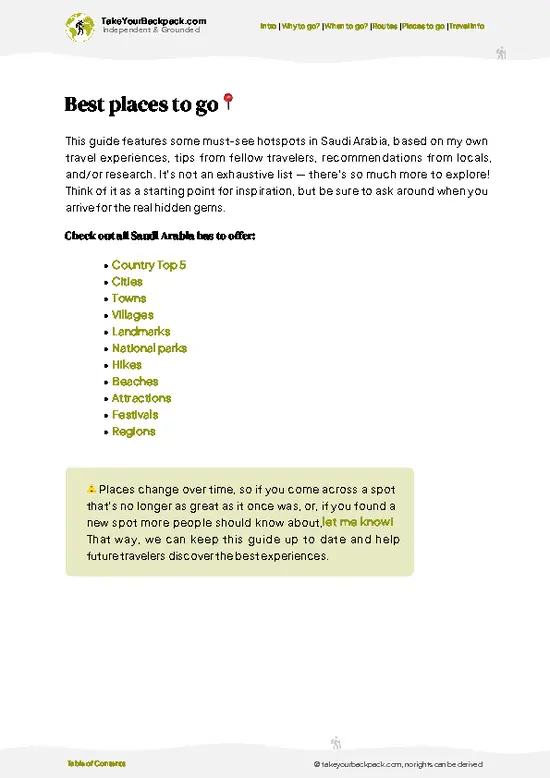
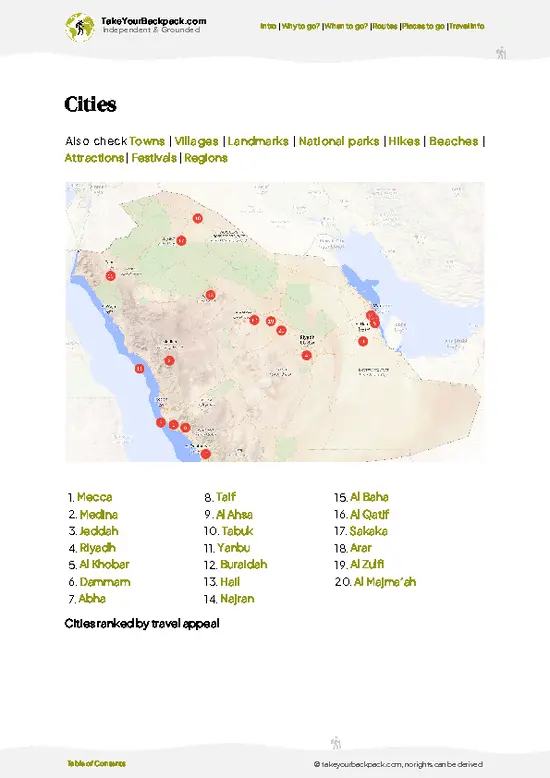
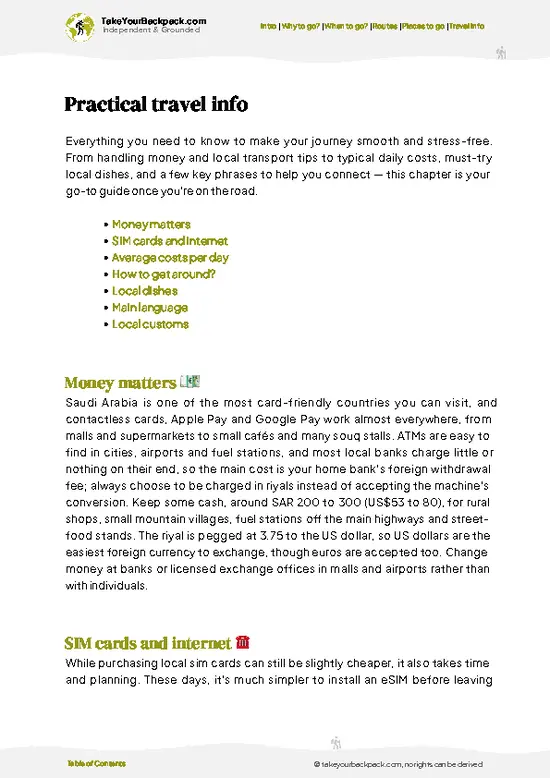
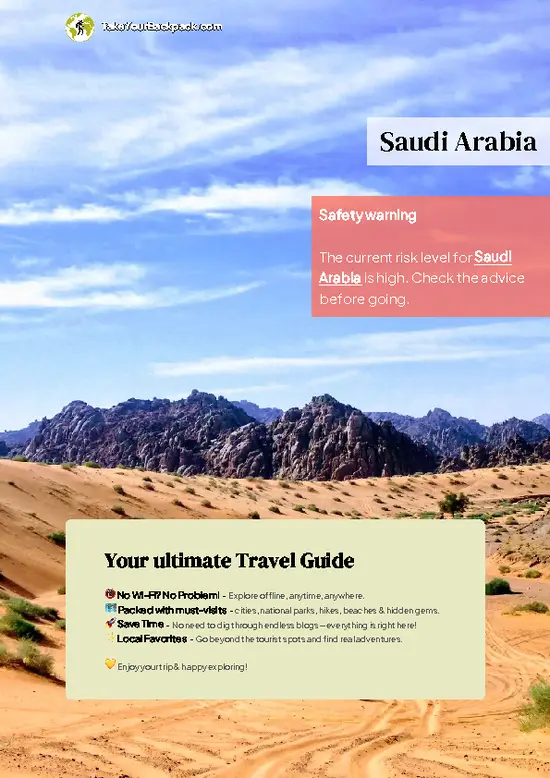
example page 0 from our offline Travel Guide for Saudi Arabia
example page 1 from our offline Travel Guide for Saudi Arabia
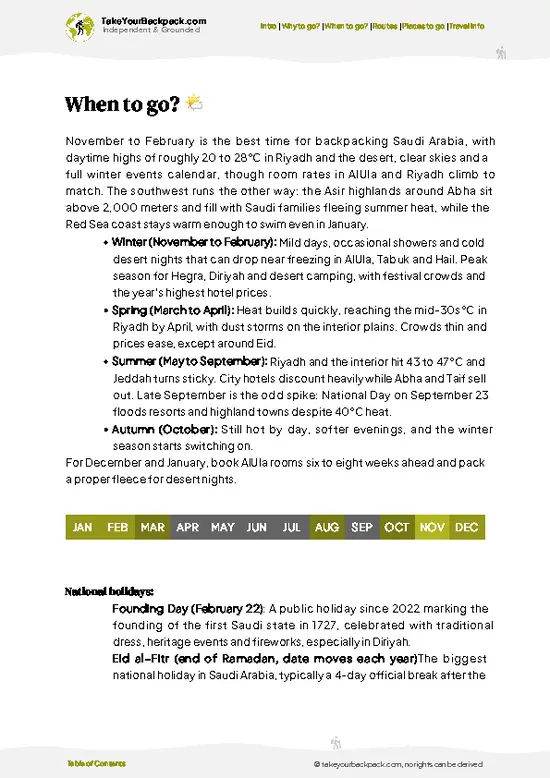
example page 2 from our offline Travel Guide for Saudi Arabia
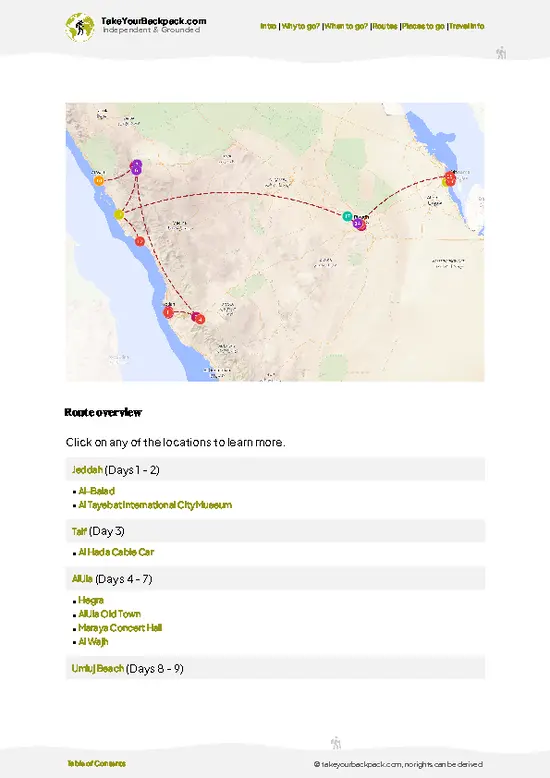
example page 3 from our offline Travel Guide for Saudi Arabia
example page 4 from our offline Travel Guide for Saudi Arabia
example page 5 from our offline Travel Guide for Saudi Arabia
example page 6 from our offline Travel Guide for Saudi Arabia
example page 7 from our offline Travel Guide for Saudi Arabia
The digital guide (322 pages) contains:
✅ 86 highlights, ranked by travel appeal
✅ Optimized 5, 10 & 15-day travel routes
✅ Cities, national parks, landmarks, beaches
✅ How to get around
✅ Offline-friendly for travel without Wi-Fi
👉 Click to see all 30+ guide features

📅 Plan smarter in minutes, not weeks
✅ Month by month travel advice
✅ Festivals & national holidays
✅ Budget expectations

🗺️ Go to the right places, skip the overrated ones
✅ Honest pros & cons of destinations
✅ Top hikes, parks & viewpoints
✅ Lesser-known places most travelers miss
✅ Clear “worth it vs skip it” guidance

🛏️ Travel smoothly without rookie mistakes
✅ Best areas to stay
✅ Transport systems explained simply
✅ Common scams & safety advice
✅ SIM cards, money & practical tips

🌍 Understand the country, not just visit it
✅ Culture & traditions
✅ 52 Essential phrases & customs
✅ Festivals worth planning around
✅ Traveler-friendly historical context
✅ Insights that make places more meaningful

📱 Built for real travel conditions
✅ Fully downloadable PDF
✅ Works completely offline
✅ Optimized for phone use
✅ Useful in remote areas & buses
✅ Everything in one place
Stop searching, start planning
Get instant access to your full guide. 30‑day money-back guarantee.
+ Add another guide for just

By proceeding you agree to our terms.
Sent to your inbox immediately after payment • 100% Secure Checkout
Best Backpacking Travel Advisor 2025 tourism awardBest Backpacking
Travel Advisor
2025
What others say about Take Your Backpack Guides:
⭐⭐⭐⭐⭐
Fantastic, amazing amount of information!
⭐⭐⭐⭐⭐
My goodness this is amazing, it's what I've been looking for hats off too you!
⭐⭐⭐⭐⭐
I think this is absolutely BRILLIANT
⭐⭐⭐⭐
Very complete and informative. It's still missing places, but I gotta to commend you
⭐⭐⭐⭐⭐
This is truly amazing, thank you, can't wait to explore it with my kids!
⭐⭐⭐⭐⭐
Awesome resource, thank you!
⭐⭐⭐⭐⭐
This is amazing! Can't wait to explore the ones I haven't seen
⭐⭐⭐⭐
I love this! Well done, great idea.
⭐⭐⭐⭐⭐
Thanks for taking the time to make this gem!
⭐⭐⭐⭐⭐
This might be the best website I've ever seen.
⭐⭐⭐⭐⭐
Congratulations, and thank you so much for your work; it's incredibly valuable.
⭐⭐⭐⭐
In all seriousness I think you did a great job pointing out the important spots
⭐⭐⭐⭐⭐
10/10 very good
⭐⭐⭐⭐⭐
As someone who's only just starting to visit regularly this is awesome, thank you.
⭐⭐⭐⭐
Thank you very much! I'm going to visit my dad, it's going to be very useful!
⭐⭐⭐⭐⭐
This is really cool! We'll be travelling for the first time and this definitely come in handy.
⭐⭐⭐⭐⭐
You are now our minister of culture, congratulations 👨‍💼
⭐⭐⭐⭐⭐
Just wanted to tell you that this is a pearl! Going to follow your recommendations.
⭐⭐⭐⭐⭐
This is so cool. I'll definitely be using the resource for my travels soon.
⭐⭐⭐⭐⭐
This is very impressive! Good work.
⭐⭐⭐⭐⭐
This is an amazing and informative site. Very well done!

🛏️ Where to stay?Top Areas to Stay

True dorm hostels are rare in Saudi Arabia, so budget travelers mostly book small hotels, furnished apartments or app-listed rooms, typically SAR 150 to 250 (about US$40 to 67) a night in big cities. In Riyadh, Al Batha has the cheapest beds and sits near Masmak Fort and the old souqs, though it is crowded, noisy and rough around the edges, while Al Olaya costs more but is clean, safe, on the Metro and closest to the city’s cafés and late-night dining. In Jeddah, Al Balad puts you inside the historic coral-stone quarter with few modern comforts, and Al Hamra near the Corniche is quieter and greener, with evening seafront walks but longer rides to the old town.

If you enjoy meeting fellow travelers, … read more 👉
True dorm hostels are rare in Saudi Arabia, so budget travelers mostly book small hotels, furnished apartments or app-listed rooms, typically SAR 150 to 250 (about US$40 to 67) a night in big cities. In Riyadh, Al Batha has the cheapest beds and sits near Masmak Fort and the old souqs, though it is crowded, noisy and rough around the edges, while Al Olaya costs more but is clean, safe, on the Metro and closest to the city’s cafés and late-night dining. In Jeddah, Al Balad puts you inside the historic coral-stone quarter with few modern comforts, and Al Hamra near the Corniche is quieter and greener, with evening seafront walks but longer rides to the old town.

If you enjoy meeting fellow travelers, consider choosing hostels with high ratings for atmosphere. On the other hand, if you prefer having your own space, a hotel might be a better option.

Saudi ArabiaDiscover the Country

👋 Meet the founderWho’s Behind Take Your Backpack?

Johan, backpacker and founder of TakeYourBackpackHi, I’m Johan (Netherlands 🇳🇱), the creator of TakeYourBackpack. Over the past 3 decades, I’ve backpacked through 90+ countries across six continents, gaining extensive experience with independent travel, long-term trips, and overland routes.

This site is built on a combination of firsthand travel experience and carefully curated insights from other backpackers. Many guides are based on places I’ve personally visited, while others bring together tips, observations, and practical advice shared by trusted travelers I’ve met along the way.

The goal is to provide realistic, experience-driven guidance — not generic itineraries — so you can explore destinations with better context, clearer expectations, and more confidence.