v2.webp)
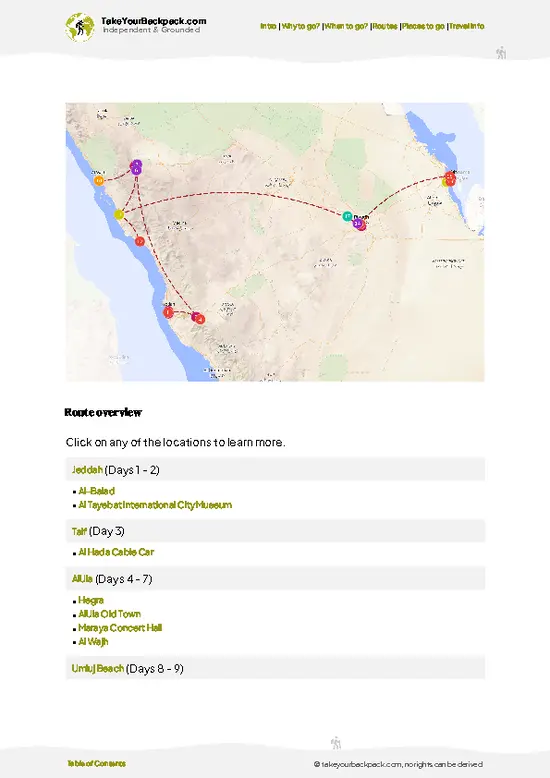
- Al-Masjid an-Nabawi (The Prophet’s Mosque) — The spiritual heart of Medina: vast courtyards, the Green Dome, the Rawdah (a very revered prayer area) and striking modern Ottoman/modern architecture. Visiting here is an intense sensory and spiritual experience; note that access to the holy precincts follows strict rules, so check entry requirements before you go.
- Jannat al-Baqi (Al-Baqi Cemetery) — The historic cemetery next to the Prophet’s Mosque where many early Muslim figures are buried. It’s a quiet, reflective place packed with history; the simplicity of the graves and the location give a real sense of continuity with Medina’s earliest days.
- Quba Mosque — The first mosque in Islam, rebuilt beautifully but still retaining its deep historic significance. It’s peaceful to visit early
- Al-Masjid an-Nabawi (The Prophet’s Mosque) — The spiritual heart of Medina: vast courtyards, the Green Dome, the Rawdah (a very revered prayer area) and striking modern Ottoman/modern architecture. Visiting here is an intense sensory and spiritual experience; note that access to the holy precincts follows strict rules, so check entry requirements before you go.
- Jannat al-Baqi (Al-Baqi Cemetery) — The historic cemetery next to the Prophet’s Mosque where many early Muslim figures are buried. It’s a quiet, reflective place packed with history; the simplicity of the graves and the location give a real sense of continuity with Medina’s earliest days.
- Quba Mosque — The first mosque in Islam, rebuilt beautifully but still retaining its deep historic significance. It’s peaceful to visit early morning, and many pilgrims make a point of praying here because of its special place in the Seerah.
- Masjid al-Qiblatain (The Mosque of the Two Qiblas) — Famous for the moment the qibla (direction of prayer) changed from Jerusalem to Mecca. The small on-site displays and the mosque itself make the historical event feel immediate and tangible.
- Hejaz Railway Station & Museum — An atmospheric slice of Ottoman railroad history right in the city: old locomotives, station buildings and exhibitions that tell the story of the Hejaz Railway and its role in Medina’s modern past.
- Mount Uhud — The battlefield of Uhud with rock formations, the mass graves of martyrs and panoramic views over the city. It’s both an important historical site and a place for quiet reflection; local guides around the site can point out the key spots.
- The Seven Mosques (Sab’ah Masajid) — A cluster of small, linked historic mosques associated with the Battle of the Trench. They’re less crowded than the big sites and offer a compact, meaningful walk through early Islamic history on Medina’s outskirts.
- Al-Madinah Museum (Dar al-Madinah / Madinah Historical Museum) — A small, well-curated museum that lays out the city’s story: pre-Islamic life, the Prophet’s time in Medina, and the development of the city. Good if you want context before or after visiting the outdoor sites.
- Old Bazaar by the Haram (Souq area) — The lanes around the Prophet’s Mosque still have traditional market life: prayer beads, scarves, fragrances, small eateries and local snacks. It’s a great place to watch daily rhythms and pick up modest, authentic souvenirs.
- Central Date Market / Local Date Shops — Dates are a big deal in Medina. There are specialty stalls and markets where you can taste many varieties, watch local trade, and learn about how dates figure into regional cuisine and hospitality.
Spotted a mistake or missing something? Contact us.

Medina Unveiled Private Tour

Private Guided Spiritual Ziyarat Tour of Madinah

Private Guided Ziyarat Tour of Madinah.

Umrah Guide

Agafay Desert Tour from Marrakech Quad Dinner and Camel Riding

Private Guided Tour of Madinah Ziyarat

Marrakech Traditional Hammam Massage Experience with Transfers

Madinah Ziyarat Private Tour – Holy & Historical Islamic Sites

Half - Day Tour in Prophet Mohammed City


 Best Backpacking
.jpg) Hi, I’m Johan (Netherlands 🇳🇱), the creator of TakeYourBackpack. Over the past 3 decades, I’ve backpacked through 90+ countries across six continents, gaining extensive experience with independent travel, long-term trips, and overland routes.
Hi, I’m Johan (Netherlands 🇳🇱), the creator of TakeYourBackpack. Over the past 3 decades, I’ve backpacked through 90+ countries across six continents, gaining extensive experience with independent travel, long-term trips, and overland routes.