×

Senegal🇸🇳 | townsBakelFalémé-edge fort, Mali across the water, Soninke mud-brick compounds | things to do and best time to go

Explore VélingaraExplore Podor

Backpacking in Bakel
🌟 Highlighttown ranked #8
By Johan Kruseman 🇳🇱 | Updated October 22, 2026

Bakel puts you on the Senegal River with Mali a short pirogue ride away, so you can see two countries from one riverbank. It sits in the far east of Senegal, in the Tambacounda region, on a bend where the red hills of the Falémé country start to rise. Expect ochre dust, the creak of the old colonial-era bridge frame, smoke from charcoal stoves and goats weaving between mopeds. The old fort quarter and the riverside are worth a slow wander, but there is no nightlife, and few other backpackers pass through. Hostels do not exist, so you stay in small auberges and meet people over café tea or at the market. Getting here takes a long overland day on rough road, so arrive early. Carry plenty of cash, because ATMs here often run dry and cards are useless.

Discover everything you want to know in the 📖 Senegal Travel Guide.


example page 0 from our offline Travel Guide for Senegal
example page 1 from our offline Travel Guide for Senegal
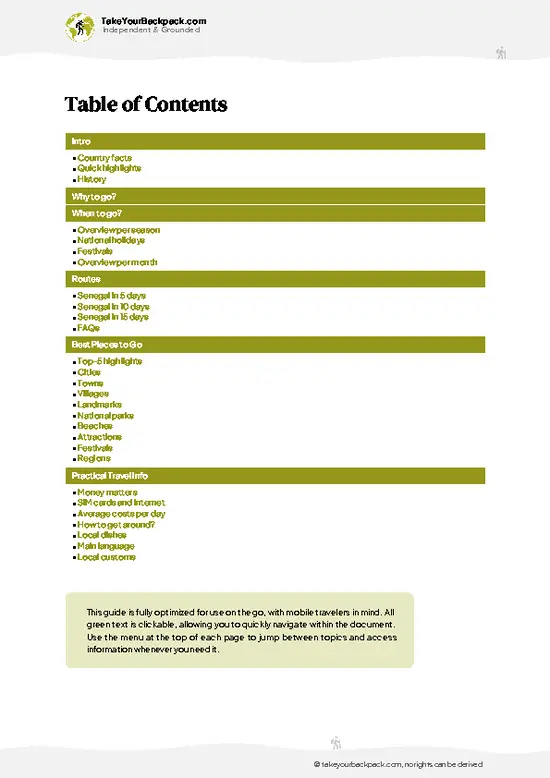
example page 2 from our offline Travel Guide for Senegal
example page 3 from our offline Travel Guide for Senegal
example page 4 from our offline Travel Guide for Senegal
example page 5 from our offline Travel Guide for Senegal
example page 6 from our offline Travel Guide for Senegal
example page 7 from our offline Travel Guide for Senegal
Loading the map 🌍
CLICK TO FILTER
cities
towns
villages
landmarks
national parks
beaches
attractions
festivals
regions
SHOW COUNTRY’S BESTSHOW ALL

✨ Why go?
Ranked #8 town in Senegal
Why visitors keep coming back

Bakel is the place you go when you want the Senegal that few backpackers reach. The town sits on a cliff-backed curve of the river, and the main reasons to linger are the Fort de Bakel area, the river life below it and the cross-border trade that shapes the market. Walking is enough, since everything lies within a short stroll. Most travelers stay one or two nights, and slow travelers who like talking with locals can easily stretch that. Soninke families run much of the town, and greetings go a long way. Expect a quiet, sociable atmosphere, with tea sessions rather than bars. Solo travelers do well here because people are curious and friendly. If you need a nightlife scene or a hostel crowd, skip it. If you enjoy sunset over the Senegal River and the sense of being far out on a frontier, it fits well.

💡 HighlightsPlaces and moments you shouldn't skip

  1. Fort de Bakel: Built by the French in the 1800s on a rise above the river, it is the town’s best-known landmark. The walls and the views over the water make it the obvious first stop. Go in the late afternoon for softer light. Entry is usually free or a small tip, and 45 minutes is enough.
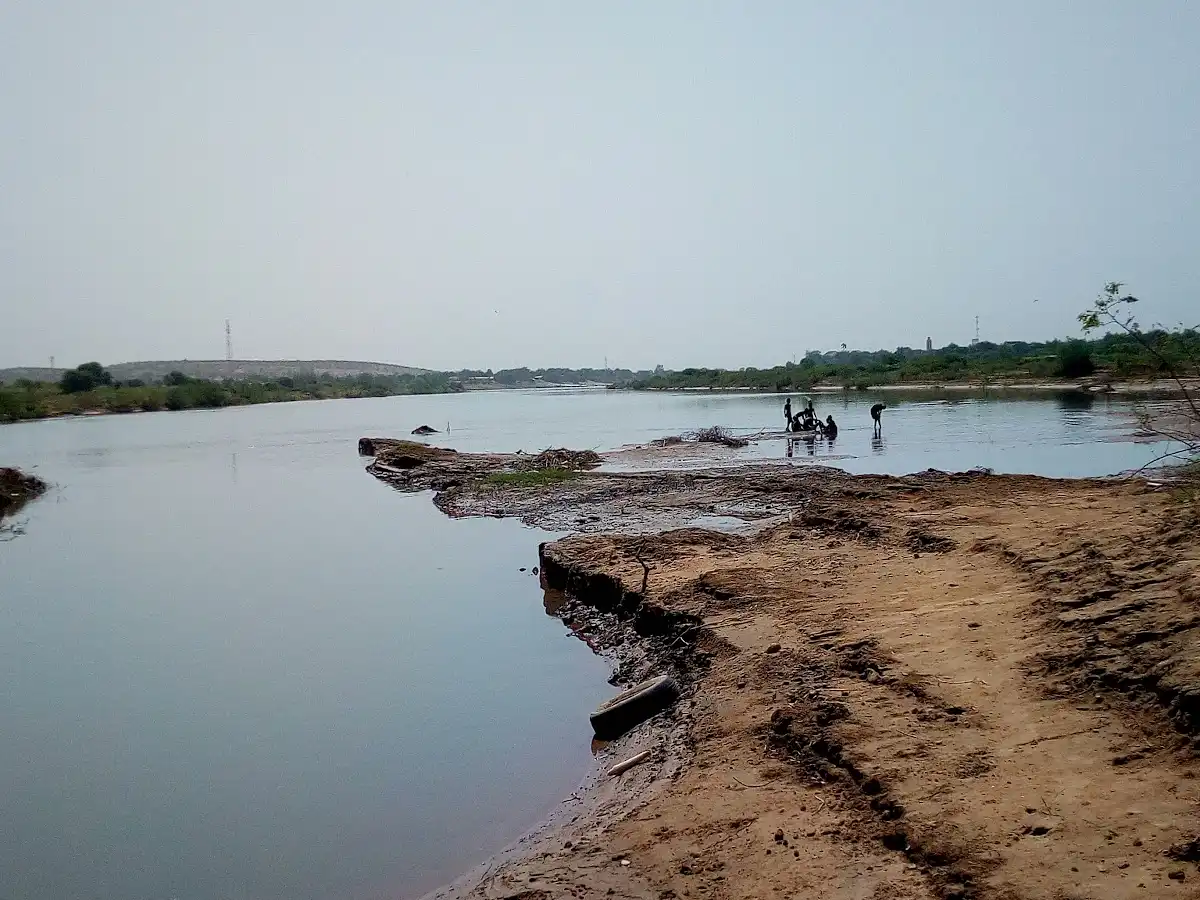
  2. Senegal River waterfront: Fishermen, women washing laundry and pirogues crossing to the Mali side make this the town’s living stage. Come early morning or around dusk. It is free, and an hour passes easily.
  3. Bakel Market: Cloth, dried fish, spices and enamel pots fill the stalls, with traders from Mali and Mauritania adding to the mix. Mornings are busiest. Entry is free, and you should allow one to two hours. Bring small change for snacks.
  4. Old town and Soninke quarters: Mud-brick compounds, carved doors and
… read more 👉
  1. Fort de Bakel: Built by the French in the 1800s on a rise above the river, it is the town’s best-known landmark. The walls and the views over the water make it the obvious first stop. Go in the late afternoon for softer light. Entry is usually free or a small tip, and 45 minutes is enough.
  2. Senegal River waterfront: Fishermen, women washing laundry and pirogues crossing to the Mali side make this the town’s living stage. Come early morning or around dusk. It is free, and an hour passes easily.
  3. Bakel Market: Cloth, dried fish, spices and enamel pots fill the stalls, with traders from Mali and Mauritania adding to the mix. Mornings are busiest. Entry is free, and you should allow one to two hours. Bring small change for snacks.
  4. Old town and Soninke quarters: Mud-brick compounds, carved doors and shaded courtyards show how local families live. Wander at a gentle pace in the cooler morning. It costs nothing, and one hour is plenty. Ask before taking photos.
  5. Hill viewpoint above town: A short climb gives a wide look over the river, rooftops and red earth beyond. Go before sunset. It is free and takes about 30 to 45 minutes round trip.
Day trips from Bakel can take you to villages along the Falémé river and to the Mali border towns across the water, or toward Kidira to the north. Everything in town together takes roughly one full day, or a relaxed day and a half.
Spotted a mistake or missing something? Contact us.
🏘️ NeighborhoodsHow different areas shape the experience

Bakel is small enough to cover on foot in an hour, and each part has its own texture, so head out early before the heat flattens everything.
  • Riverfront and quay: The Senegal River runs wide and brown here, and mornings bring pirogues, women washing clothes and the smell of wet mud and woodsmoke. Walk it before 9 a.m. because the shadeless bank turns punishing by midday. Photograph boats, not people, without asking first.
  • Old colonial quarter and the fort hill: Faded French-era buildings and the old fort sit above the river, with the best view over the water and the Mali border country beyond. The climb is short but sandy and exposed, so carry water. Late afternoon is when the stone stops radiating heat.
  • Central market and main road: Stalls sell millet, dried fish, fabric and phone credit, and
… read more 👉
Bakel is small enough to cover on foot in an hour, and each part has its own texture, so head out early before the heat flattens everything.
  • Riverfront and quay: The Senegal River runs wide and brown here, and mornings bring pirogues, women washing clothes and the smell of wet mud and woodsmoke. Walk it before 9 a.m. because the shadeless bank turns punishing by midday. Photograph boats, not people, without asking first.
  • Old colonial quarter and the fort hill: Faded French-era buildings and the old fort sit above the river, with the best view over the water and the Mali border country beyond. The climb is short but sandy and exposed, so carry water. Late afternoon is when the stone stops radiating heat.
  • Central market and main road: Stalls sell millet, dried fish, fabric and phone credit, and the air mixes dust, spices and diesel. Mornings are busiest and prices are fixed by haggling, so counter at about two thirds of the first offer. Street vendors grill meat and fry dough in the evenings.
  • Residential quarters: Sandy lanes of walled compounds, goats and the evening sound of pounding grain. Quiet after dark, with almost no nightlife beyond a few tea circles, where a greeting in French or Wolof earns you a stool.

⌛️ 1 dayA smart one-day plan

7:00 AM, Senegal River bank near the old quay
Start at the water, because the air is still cool and the river is at its calmest. Fishermen push out dugout canoes, women rinse laundry on the rocks, and the Mauritanian bank sits low and brown across the current. Walk the shore for 45 minutes, then climb back into town.

8:30 AM, Fort de Bakel
The French colonial fort sits on a rise above the river, built in the 1800s as a trading and military post. Its thick stone walls and the view over the water make the short, steep walk worthwhile. Check at the gate for access, since parts of the site are in use, and take photos from the outer walls if the interior is closed.

10:00 AM, Central market
Drop down into the market for a breakfast of fresh bread, coffee with condensed milk and a bean sandwich from … read more 👉
7:00 AM, Senegal River bank near the old quay
Start at the water, because the air is still cool and the river is at its calmest. Fishermen push out dugout canoes, women rinse laundry on the rocks, and the Mauritanian bank sits low and brown across the current. Walk the shore for 45 minutes, then climb back into town.

8:30 AM, Fort de Bakel
The French colonial fort sits on a rise above the river, built in the 1800s as a trading and military post. Its thick stone walls and the view over the water make the short, steep walk worthwhile. Check at the gate for access, since parts of the site are in use, and take photos from the outer walls if the interior is closed.

10:00 AM, Central market
Drop down into the market for a breakfast of fresh bread, coffee with condensed milk and a bean sandwich from a street stall. Stalls sell fabric, dried fish, peanuts and hibiscus flowers. Bargain gently and pay in cash. Leave before the midday heat flattens everything.

12:30 PM, Lunch by the river
Find a small eatery for thieboudienne or grilled fish with rice and onion sauce. Sit in the shade, drink plenty of water and rest through the hottest hours.

4:00 PM, Soninke quarter on the outskirts
This is the part of the day that tour groups seldom reach. Wander the dusty lanes of the residential neighborhoods, where Soninke families live in courtyard compounds, and where many households have relatives working in France. Children will greet you, and a polite hello in Soninke or French opens conversations quickly. Ask before photographing anyone.

6:00 PM, Back at the riverbank
Finish where you started. The heat eases, the sky turns orange over the water, and the evening call to prayer drifts across town. Buy grilled corn or tea from a vendor and stay until dark.

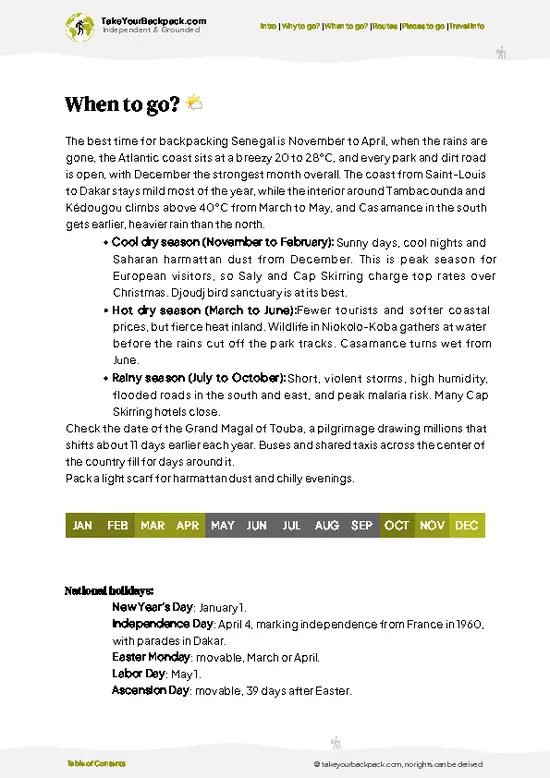
🌤️ When to go?Seasonal considerations and timing

November to February gives Bakel its most comfortable weather, with daytime highs of 32 to 36°C (90 to 97°F) and cooler nights near 18 to 22°C (64 to 72°F).
  • Cool Months (Nov to Feb): Dry, dusty with harmattan haze, ideal for walking the riverbank. Daylight runs about 11 hours. Few tourists, so prices stay flat.
  • Hot Season (Mar to Jun): Temperatures reach 40 to 45°C (104 to 113°F), the hottest in Senegal. Sightseeing is only possible at dawn and dusk.
  • Rainy Season (Jul to Oct): Highs of 33 to 38°C (91 to 100°F) with humid storms. Dirt roads turn to mud, and transport slows. The river runs full and the landscape turns green.
Book a December trip around the cool mornings and save the climb to the fort for late afternoon.

source: climatestotravel.comJANJanuary: excellent for travelingFEBFebruary: excellent for travelingMARMarch: excellent for travelingAPRApril: excellent for travelingMAYMay: highly recommended for travelingJUNJune: fair for travelingJULJuly: fair for travelingAUGAugust: fair for travelingSEPSeptember: fair for travelingOCTOctober: fair for travelingNOVNovember: highly recommended for travelingDECDecember: excellent for traveling
senegal-city-bakel v1
© Google |

✈️ The backpacker research shortcutSenegal Travel Guide

An offline-friendly backpacking guide with optimized travel routes, ranked highlights, transport advice, and the best areas to stay.
example page 0 from our offline Travel Guide for Senegal
example page 1 from our offline Travel Guide for Senegal
example page 2 from our offline Travel Guide for Senegal
example page 3 from our offline Travel Guide for Senegal
example page 4 from our offline Travel Guide for Senegal
example page 5 from our offline Travel Guide for Senegal
example page 6 from our offline Travel Guide for Senegal
example page 7 from our offline Travel Guide for Senegal
The digital guide (360 pages) contains:
✅ 85 highlights, ranked by travel appeal
✅ Optimized 5, 10 & 15-day travel routes
✅ Cities, national parks, landmarks, beaches
✅ How to get around
✅ Offline-friendly for travel without Wi-Fi
👉 Click to see all 30+ guide features

📅 Plan smarter in minutes, not weeks
✅ Month by month travel advice
✅ Festivals & national holidays
✅ Budget expectations

🗺️ Go to the right places, skip the overrated ones
✅ Honest pros & cons of destinations
✅ Top hikes, parks & viewpoints
✅ Lesser-known places most travelers miss
✅ Clear “worth it vs skip it” guidance

🛏️ Travel smoothly without rookie mistakes
✅ Best areas to stay
✅ Transport systems explained simply
✅ Common scams & safety advice
✅ SIM cards, money & practical tips

🌍 Understand the country, not just visit it
✅ Culture & traditions
✅ 52 Essential phrases & customs
✅ Festivals worth planning around
✅ Traveler-friendly historical context
✅ Insights that make places more meaningful

📱 Built for real travel conditions
✅ Fully downloadable PDF
✅ Works completely offline
✅ Optimized for phone use
✅ Useful in remote areas & buses
✅ Everything in one place
Stop searching, start planning
Get instant access to your full guide. 30‑day money-back guarantee.
+ Add another guide for just

By proceeding you agree to our terms.
Sent to your inbox immediately after payment • 100% Secure Checkout
Best Backpacking Travel Advisor 2025 tourism awardBest Backpacking
Travel Advisor
2025
What others say about Take Your Backpack Guides:
⭐⭐⭐⭐⭐
Fantastic, amazing amount of information!
⭐⭐⭐⭐⭐
My goodness this is amazing, it's what I've been looking for hats off too you!
⭐⭐⭐⭐⭐
I think this is absolutely BRILLIANT
⭐⭐⭐⭐
Very complete and informative. It's still missing places, but I gotta to commend you
⭐⭐⭐⭐⭐
This is truly amazing, thank you, can't wait to explore it with my kids!
⭐⭐⭐⭐⭐
Awesome resource, thank you!
⭐⭐⭐⭐⭐
This is amazing! Can't wait to explore the ones I haven't seen
⭐⭐⭐⭐
I love this! Well done, great idea.
⭐⭐⭐⭐⭐
Thanks for taking the time to make this gem!
⭐⭐⭐⭐⭐
This might be the best website I've ever seen.
⭐⭐⭐⭐⭐
Congratulations, and thank you so much for your work; it's incredibly valuable.
⭐⭐⭐⭐
In all seriousness I think you did a great job pointing out the important spots
⭐⭐⭐⭐⭐
10/10 very good
⭐⭐⭐⭐⭐
As someone who's only just starting to visit regularly this is awesome, thank you.
⭐⭐⭐⭐
Thank you very much! I'm going to visit my dad, it's going to be very useful!
⭐⭐⭐⭐⭐
This is really cool! We'll be travelling for the first time and this definitely come in handy.
⭐⭐⭐⭐⭐
You are now our minister of culture, congratulations 👨‍💼
⭐⭐⭐⭐⭐
Just wanted to tell you that this is a pearl! Going to follow your recommendations.
⭐⭐⭐⭐⭐
This is so cool. I'll definitely be using the resource for my travels soon.
⭐⭐⭐⭐⭐
This is very impressive! Good work.
⭐⭐⭐⭐⭐
This is an amazing and informative site. Very well done!

🛏️ Where to stay?How to pick the right area

The area around the main road and market is the best bet for budget sleepers, since transport garages, food stalls and shops sit within a few minutes’ walk. Budget beds are limited in Bakel, with simple guesthouses and basic rooms rather than a hostel scene, so dorms are rare and a cheap private room with a fan is the norm. Noise starts early here with roosters, the call to prayer and vehicles leaving at dawn, so bring earplugs. Power cuts happen, so a headlamp helps.
The quieter riverside edge of town is the second option. Breezes off the water cool the nights a little and the setting is calmer, … read more 👉
The area around the main road and market is the best bet for budget sleepers, since transport garages, food stalls and shops sit within a few minutes’ walk. Budget beds are limited in Bakel, with simple guesthouses and basic rooms rather than a hostel scene, so dorms are rare and a cheap private room with a fan is the norm. Noise starts early here with roosters, the call to prayer and vehicles leaving at dawn, so bring earplugs. Power cuts happen, so a headlamp helps.
The quieter riverside edge of town is the second option. Breezes off the water cool the nights a little and the setting is calmer, but the walk back after dark is on unlit sandy lanes, and moto-taxis are scarce late. Wherever you choose, reserve ahead by phone in the cool season, and check that the room has a working fan or air conditioning, which matters between March and June.

🚌 Getting aroundMoving around without the hassle

Arriving in the afternoon and hoping for a bus out the same day is the mistake that costs the most, because long-distance cars fill at dawn and leave when full, often by mid-morning. Bakel is compact, dusty and hot, and public transport is informal rather than scheduled, so plan around the heat and the sunrise departures.
  • Walking: Everything in town sits within 20 to 30 minutes on foot. Sand covers many streets, so wear closed shoes, and move in the cool early hours or after 4 p.m.
  • Moto-taxis and local taxis: Short hops cost about €0.50 to 1.50. Agree the fare before climbing on, as no meters exist. Motorbike engines buzz through the quiet evening lanes.
  • Sept-places (shared cars) and minibuses: These run to Tambacounda, roughly 4 to 5 hours for about €10 to 14, and onward toward Dakar, a long
… read more 👉
Arriving in the afternoon and hoping for a bus out the same day is the mistake that costs the most, because long-distance cars fill at dawn and leave when full, often by mid-morning. Bakel is compact, dusty and hot, and public transport is informal rather than scheduled, so plan around the heat and the sunrise departures.
  • Walking: Everything in town sits within 20 to 30 minutes on foot. Sand covers many streets, so wear closed shoes, and move in the cool early hours or after 4 p.m.
  • Moto-taxis and local taxis: Short hops cost about €0.50 to 1.50. Agree the fare before climbing on, as no meters exist. Motorbike engines buzz through the quiet evening lanes.
  • Sept-places (shared cars) and minibuses: These run to Tambacounda, roughly 4 to 5 hours for about €10 to 14, and onward toward Dakar, a long 10 to 12 hours depending on road and stops. Go to the garage by 6 or 7 a.m., pick a seat with your luggage on the roof secured, and expect to wait until the vehicle is full.
  • Pirogue and local rides to nearby villages: Boat and bush-taxi fares to riverside villages run about €1 to 4. Ask at the quay in the morning, and bring small change as nobody carries it.

👛 Costs (as of 22 October 2026)Typical daily expenses

Bakel costs backpackers about €9 to 16 a day, with a Total Daily Budget of €36 in high season.
CategoryBudget RangeLocal Reality
Dorm accommodation€9 to 16True dorms are rare, so expect a basic private room with a fan, and prices climb with air conditioning.
Meals€6 to 10Rice and fish, grilled meat sandwiches and street breakfasts with bread and coffee fill the day.
Local transport€2 to 4Moto-taxis for short trips cost around €0.50 to 1.50 each.
Basic activities/entry fees€2 to 5Most sights are free, and a pirogue or village guide costs a few euros.
Miscellaneous expenses€3 to 5Water, phone credit and small tips, paid in cash.
Total Daily Budget€36High season, cool months.
Carry small bills and eat where locals do at the market, since larger notes and tourist-priced meals can double your daily spend. … read more 👉
Bakel costs backpackers about €9 to 16 a day, with a Total Daily Budget of €36 in high season.
CategoryBudget RangeLocal Reality
Dorm accommodation€9 to 16True dorms are rare, so expect a basic private room with a fan, and prices climb with air conditioning.
Meals€6 to 10Rice and fish, grilled meat sandwiches and street breakfasts with bread and coffee fill the day.
Local transport€2 to 4Moto-taxis for short trips cost around €0.50 to 1.50 each.
Basic activities/entry fees€2 to 5Most sights are free, and a pirogue or village guide costs a few euros.
Miscellaneous expenses€3 to 5Water, phone credit and small tips, paid in cash.
Total Daily Budget€36High season, cool months.
Carry small bills and eat where locals do at the market, since larger notes and tourist-priced meals can double your daily spend. Cash is the only reliable payment, and ATMs may be out of service, so withdraw money before arriving.


source: senegal-tourism.com
⚠️ Prices can change and everyone travels differently, so take this as a rough guide. Hope it helps you plan your adventure!

🚌 Day tripsBest day trips from Bakel

Bakel works as a base for short river and village excursions, though public transport is thin, so most trips need a hired moto-taxi or a negotiated car.
Gabou and nearby Soninke villages: Villages along the river show mud-brick compounds, fields of millet and markets, and a hired moto-taxi for the half day costs around €10 to 15. Go in the cool morning, and ask permission before photographing anyone.

Kidira border market: Kidira lies on the Mali border and has a busy trading scene with trucks, money changers and food stalls. Shared cars take roughly 1 to 1.5 hours and cost about €3 to 6 each way. Leave early, because afternoon returns thin out, and do not exchange money on the street.

Senegal River boat ride: A pirogue outing at dawn or dusk shows fishermen, birds and the border hills. Negotiate … read more 👉
Bakel works as a base for short river and village excursions, though public transport is thin, so most trips need a hired moto-taxi or a negotiated car.
Gabou and nearby Soninke villages: Villages along the river show mud-brick compounds, fields of millet and markets, and a hired moto-taxi for the half day costs around €10 to 15. Go in the cool morning, and ask permission before photographing anyone.

Kidira border market: Kidira lies on the Mali border and has a busy trading scene with trucks, money changers and food stalls. Shared cars take roughly 1 to 1.5 hours and cost about €3 to 6 each way. Leave early, because afternoon returns thin out, and do not exchange money on the street.

Senegal River boat ride: A pirogue outing at dawn or dusk shows fishermen, birds and the border hills. Negotiate about €10 to 20 for a private boat for a couple of hours. The best months are November to February, when water is calm and the air bearable.

🛡️ SafetyTraveler Safety Guide

Bakel is calm and low-key, and most problems are small ones like inflated prices or heat. Petty theft is uncommon, but keep your phone and cash out of sight in the market and at the garage, where crowds form around departing vehicles. Overcharging on moto-taxis and shared cars is the usual annoyance, so settle the fare first and keep small bills. After dark the sandy lanes are poorly lit, so carry a headlamp and walk with a friend or take a moto-taxi, especially if you are solo. Women travelers should dress modestly and expect friendly attention that stays verbal. Stay away from the Mali border zone beyond Kidira unless you have checked current conditions, and drink bottled or filtered water, since heat dehydration catches more visitors than crime.

FAQFrequently asked questions about Bakel

Bakel is worth a stop if you want the quiet upper Senegal River, not a quick transit point. The riverfront, fort hill and market fill a day, and the Soninke villages around town add a half day more. Visitors on the long route toward Mali or Tambacounda often find the town more rewarding than expected.
Bakel needs two days for a comfortable visit, which covers the riverside at dawn, the fort and market, and one village or boat outing. A single night works as a pause on a long overland route, and a third day suits those wanting the Kidira border market. Departures are early, so plan to sleep close to the garage.
Bakel is too remote to visit as a day trip from a city, since Tambacounda sits roughly 4 to 5 hours away by road and Dakar over 10 hours. A shared car from Tambacounda costs around €10 to 14 each way, so an overnight stay makes more sense. The only realistic day trips are from Bakel itself to nearby villages and Kidira.
⚠️ Things can change over time, so always validate details locally before you go.

Other Senegalese towns near Bakel

Explore more nearby:

  • Sinthiou Bamambé—Dakar-Niger rail platform, Haalpulaar lanes, baobab footpaths| 89 km away
  • Ourossogui—Matam inland market, tailor stalls, Pulaar bargaining| 121 km away
  • Salemata—Bassari hill hamlets, Peul granaries, weekly cloth stalls| 256 km away

💡 Not sure where to go next?
Create a personalized itinerary for Senegal including Bakel and the places that fit your trip.

Generate my itinerary

👉 Discover all towns

Or checkout all Senegal has to offer (think cities, towns, villages, national parks, hikes, beaches, festivals)
Country photo of Senegal

We 💚 feedbackFinal thoughts on visiting Bakel

Bakel is best in the cool early mornings and late afternoons, when the river comes alive and the heat loosens its grip. I would plan to sit by the water at dusk with tea and talk to whoever joins you. Bring plenty of cash and a flexible mindset.

✍️ Help improve this page!
The information on this page is based on in-depth research, insights shared by experienced travelers, and feedback from the local travel community in Senegal. While every effort is made to keep the information accurate and current, conditions can change — so if you spot anything incorrect or outdated, please get in touch.


🙋‍♂️ Give feedback

👋 Meet the founderWho’s Behind Take Your Backpack?

Johan, backpacker and founder of TakeYourBackpackHi, I’m Johan (Netherlands 🇳🇱), the creator of TakeYourBackpack. Over the past 3 decades, I’ve backpacked through 90+ countries across six continents, gaining extensive experience with independent travel, long-term trips, and overland routes.

This site is built on a combination of firsthand travel experience and carefully curated insights from other backpackers. Many guides are based on places I’ve personally visited, while others bring together tips, observations, and practical advice shared by trusted travelers I’ve met along the way.

The goal is to provide realistic, experience-driven guidance — not generic itineraries — so you can explore destinations with better context, clearer expectations, and more confidence.