×

Senegal🇸🇳 | regionsPetite CôteFish beaches, shell island, lagoons, baobab reserve | things to do and best time to go

Explore Réserve Naturelle Communautaire de DindéféloExplore Casamance River

Backpacking in Petite Côte
🌟 Highlightregion ranked #2
By Johan Kruseman 🇳🇱 | Updated October 22, 2026

Pirogues grind onto the sand at Mbour, men wade in shin-deep to haul crates of silver sardines, and the whole beach smells of diesel, smoke and salt. That is Petite Côte at its least polished. It runs along the Atlantic south of Dakar in Senegal, a long coastal strip of fishing towns, mangrove lagoons and cliffs. The resort zone around Saly brings easy beds, pools and package-tour prices, while Toubab Dialaw and Popenguine cost less and feel more local, though the rooms are simpler and the roads rougher. For a backpacker, a mid-range guesthouse outside Saly gives the most for the money, with the fish beaches and shared minibuses within reach. Natural beauty is real but low-key: lagoons, baobabs and shell islands rather than dramatic peaks. Touts in Saly can wear you down. A first day could mean a morning stroll on Mbour’s fish beach, grilled thiof at a plastic table, then a slow afternoon in the shade near the sea.

Discover everything you want to know in the 📖 Senegal Travel Guide.


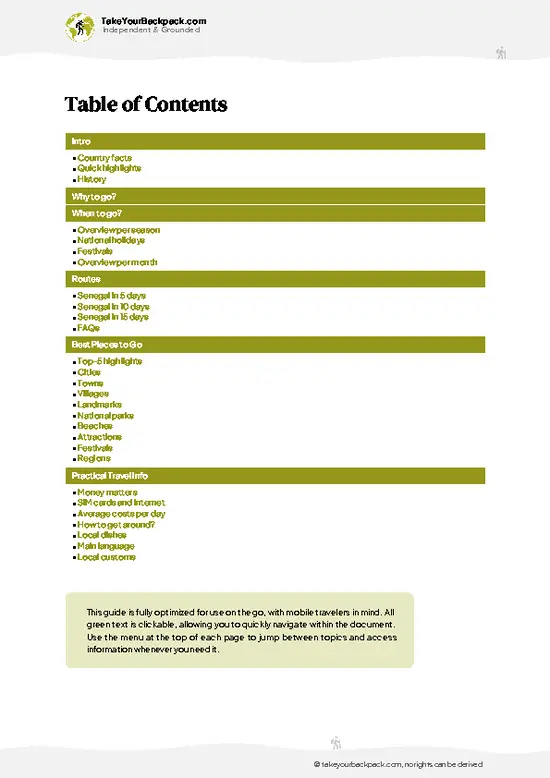
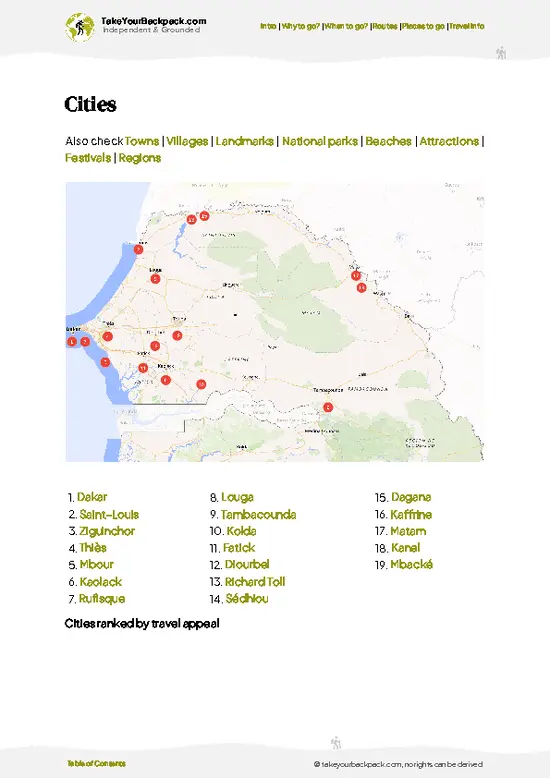
example page 0 from our offline Travel Guide for Senegal
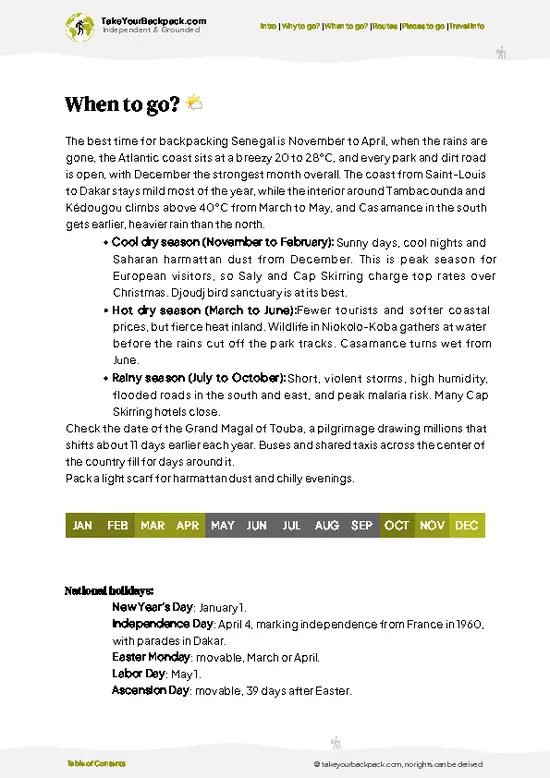
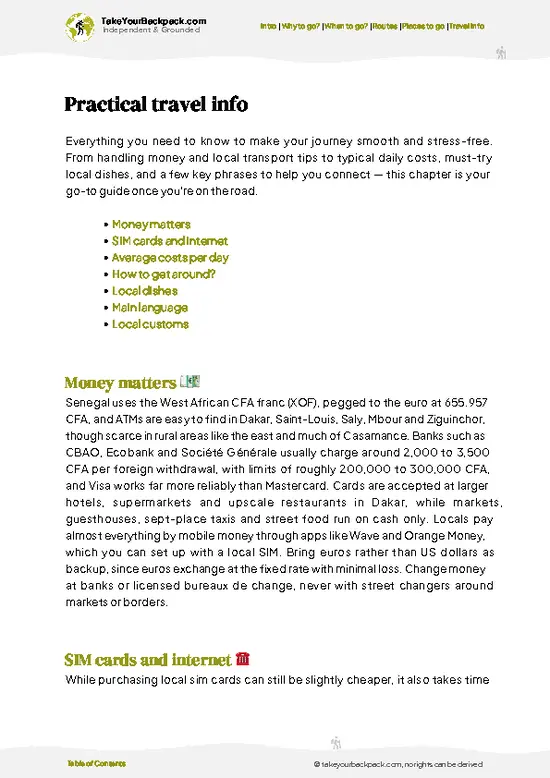
example page 1 from our offline Travel Guide for Senegal
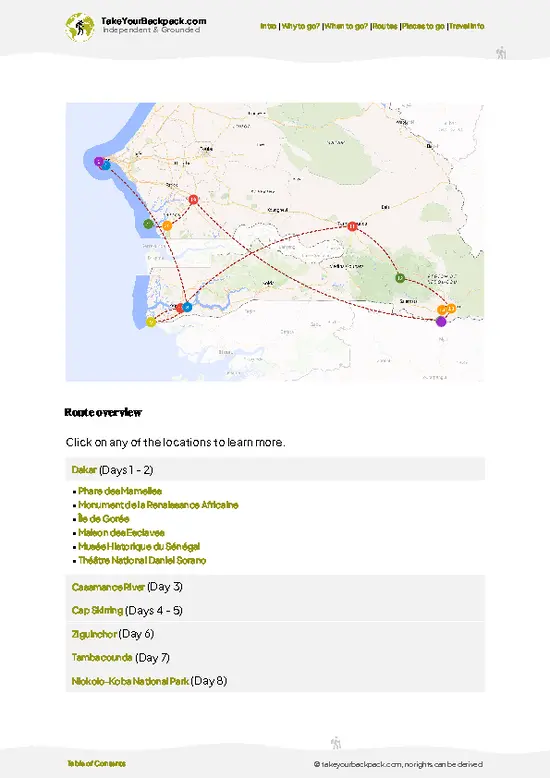
example page 2 from our offline Travel Guide for Senegal
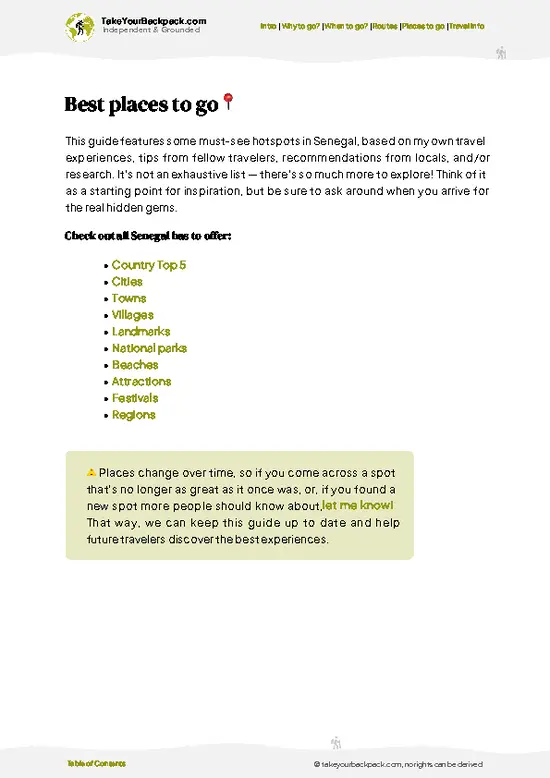
example page 3 from our offline Travel Guide for Senegal
example page 4 from our offline Travel Guide for Senegal
example page 5 from our offline Travel Guide for Senegal
example page 6 from our offline Travel Guide for Senegal
example page 7 from our offline Travel Guide for Senegal
Loading the map 🌍
CLICK TO FILTER
cities
towns
villages
landmarks
national parks
beaches
attractions
festivals
regions
SHOW COUNTRY’S BESTSHOW ALL

✨ Why go?
Ranked #2 region in Senegal
The unique appeal for travelers

Petite Côte lets you swap landscapes without repacking for a week. The coast stacks the red cliffs and artist-run guesthouses of Toubab Dialaw, the mangrove channels of the Somone Lagoon, and the shell-paved Fadiouth Island, all along one road served by sept-place taxis and minibuses. You can hop between them in short rides and sleep in the same place for several nights. The second reason is culture beside nature. Fishing towns here still run on the daily return of the boats, and a Catholic and Muslim mix gives Joal-Fadiouth and Popenguine festivals and customs you will not see in the north. Giraffes and rhinos at Bandia Reserve add a safari morning without a long trip inland. Slow travel works because nothing is far, so you can drift from a quiet beach village to a market town and back, spend … read more 👉
Petite Côte lets you swap landscapes without repacking for a week. The coast stacks the red cliffs and artist-run guesthouses of Toubab Dialaw, the mangrove channels of the Somone Lagoon, and the shell-paved Fadiouth Island, all along one road served by sept-place taxis and minibuses. You can hop between them in short rides and sleep in the same place for several nights. The second reason is culture beside nature. Fishing towns here still run on the daily return of the boats, and a Catholic and Muslim mix gives Joal-Fadiouth and Popenguine festivals and customs you will not see in the north. Giraffes and rhinos at Bandia Reserve add a safari morning without a long trip inland. Slow travel works because nothing is far, so you can drift from a quiet beach village to a market town and back, spend little on transport, and still feel you have covered a lot of Senegal’s coast.

💡 HighlightsKey sights and experiences for travelers

  1. Mbour Fish Beach: Hundreds of painted pirogues land here at dusk, and women bargain over crates of fish on the sand. It is the working heart of the coast, loud, smelly and photogenic.
  2. Fadiouth Island: A village built on millions of clam shells, reached by a long wooden footbridge. Streets are paved with shells, and the tiny cemetery where Christians and Muslims lie side by side is the sight to see.
  3. Joal, Birthplace of Léopold Senghor: The poet-president’s hometown has his childhood house and a small museum, plus a harbor of colorful boats.
  4. Bandia Reserve: A fenced reserve with giraffes, rhinos, zebras, antelope and ancient baobabs. You drive through in a jeep, so it is easy and reliable for wildlife.
  5. Somone Lagoon: Paddle or take a pirogue through mangroves where egrets and pelicans feed. It is
… read more 👉
  1. Mbour Fish Beach: Hundreds of painted pirogues land here at dusk, and women bargain over crates of fish on the sand. It is the working heart of the coast, loud, smelly and photogenic.
  2. Fadiouth Island: A village built on millions of clam shells, reached by a long wooden footbridge. Streets are paved with shells, and the tiny cemetery where Christians and Muslims lie side by side is the sight to see.
  3. Joal, Birthplace of Léopold Senghor: The poet-president’s hometown has his childhood house and a small museum, plus a harbor of colorful boats.
  4. Bandia Reserve: A fenced reserve with giraffes, rhinos, zebras, antelope and ancient baobabs. You drive through in a jeep, so it is easy and reliable for wildlife.
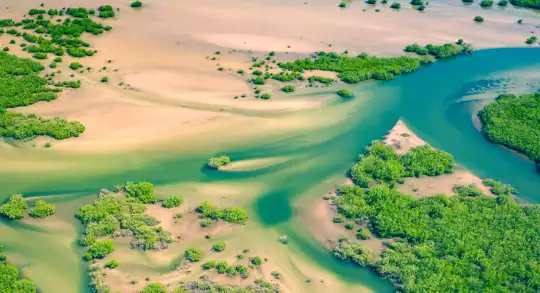
  5. Somone Lagoon: Paddle or take a pirogue through mangroves where egrets and pelicans feed. It is quiet at dawn, with oyster collectors working the roots.
  6. Toubab Dialaw Cliffs: Rust-colored cliffs and rocky coves above the surf, with a small artists’ scene and drumming sessions at the guesthouses. It is a calm place to stay for a few nights.
  7. Popenguine Nature Reserve: Coastal bush, small coves and a cliff-top landscape with walking paths. Hardly anyone goes, so you often have the trails to yourself.
  8. Black Madonna Sanctuary, Popenguine: A seaside pilgrimage site that draws huge crowds at Pentecost. The rest of the year it is silent and hushed.
  9. Nianing Beach: A wide, quiet beach with sand fringed by palms and a few small lodges. It is the calm alternative to the Saly strip.
  10. Palmarin Salt Pans and Mangroves: At the southern end, pink-tinged salt flats, baobabs and creeks lead toward the Saloum Delta. Few backpackers make it this far.
Petite Côte’s cheapest highlight is the Mbour fish beach, which costs nothing to wander.
Spotted a mistake or missing something? Contact us.

Things to do near Petite Côte

Ratings based on Tripadvisor reviews. When you book through this link, you support our work at no extra cost to you.

⌛️ 5 daysA smart one-week plan

Day 1: Toubab Dialaw: An easy arts-and-cliffs day sets the pace. Dakar’s minibuses and sept-place taxis leave when full, so an early start avoids waiting at the garage. Spend the day and the next on the red cliffs, in the workshops and with drummers at the guesthouses, then break the next morning for Popenguine’s reserve and its quiet sanctuary. Staying put for two nights saves you a transfer and lets you watch the coast settle down.Day 3: Mbour: Move south to Mbour, the transport hub, where almost every road along the coast starts. Go to the fish beach in the late afternoon when the pirogues return, then eat grilled fish by the shore. Using Mbour as your base keeps luggage in one place and makes day trips simple. The detour is Bandia Reserve, a jeep safari that fits into half a day and returns … read more 👉
Day 1: Toubab Dialaw: An easy arts-and-cliffs day sets the pace. Dakar’s minibuses and sept-place taxis leave when full, so an early start avoids waiting at the garage. Spend the day and the next on the red cliffs, in the workshops and with drummers at the guesthouses, then break the next morning for Popenguine’s reserve and its quiet sanctuary. Staying put for two nights saves you a transfer and lets you watch the coast settle down.Day 3: Mbour: Move south to Mbour, the transport hub, where almost every road along the coast starts. Go to the fish beach in the late afternoon when the pirogues return, then eat grilled fish by the shore. Using Mbour as your base keeps luggage in one place and makes day trips simple. The detour is Bandia Reserve, a jeep safari that fits into half a day and returns you to Mbour for the night without any extra planning.Day 4: Joal-Fadiouth: Take a minibus south to Joal, visit Senghor’s house, then cross the wooden bridge to Fadiouth. Walk the shell lanes slowly, check the granaries on stilts and finish at the cemetery. If you have time, stay the night so you see the island in the evening, after the day groups leave.Day 5: Back to the Coast: Head to Nianing or Palmarin to let the trip wind down: a beach morning, a salt-pan walk, then a late ride back toward Mbour or Dakar. If one day justifies the whole trip, make it Day 4. Fadiouth’s shell streets and the shared cemetery tell you more about Senegalese coexistence than any museum.

🌤️ When to go?Choosing the right time of year

November to May is when Petite Côte works best for a beach-and-backpack trip, with dry days and a steady sea breeze along the coast south of Dakar.
  • Cool Dry Season (November to February): Days run 24 to 29°C (75 to 84°F) with cool nights near 18°C (64°F). Daylight lasts about 11 to 12 hours. Mbour, Saly and Joal-Fadiouth are busiest here, and beds in Saly cost the most (roughly €15 to 40 for budget rooms).
  • Hot Dry Season (March to May): Coastal highs reach 28 to 32°C (82 to 90°F), cooled by the ocean wind. Crowds thin out and prices ease, which suits swimming and fishing-harbor visits.
  • Rainy Season (June to October): Humid, 30 to 34°C (86 to 93°F), with storms mostly from August to September. Dirt roads turn to mud, some lodges close, and rooms drop to their lowest prices. Birdwatching around
… read more 👉
November to May is when Petite Côte works best for a beach-and-backpack trip, with dry days and a steady sea breeze along the coast south of Dakar.
  • Cool Dry Season (November to February): Days run 24 to 29°C (75 to 84°F) with cool nights near 18°C (64°F). Daylight lasts about 11 to 12 hours. Mbour, Saly and Joal-Fadiouth are busiest here, and beds in Saly cost the most (roughly €15 to 40 for budget rooms).
  • Hot Dry Season (March to May): Coastal highs reach 28 to 32°C (82 to 90°F), cooled by the ocean wind. Crowds thin out and prices ease, which suits swimming and fishing-harbor visits.
  • Rainy Season (June to October): Humid, 30 to 34°C (86 to 93°F), with storms mostly from August to September. Dirt roads turn to mud, some lodges close, and rooms drop to their lowest prices. Birdwatching around the Somone lagoon is at its best.
Book Saly rooms well ahead for late December and February, when European visitors fill them.


source: climatestotravel.comJANJanuary: excellent for travelingFEBFebruary: excellent for travelingMARMarch: excellent for travelingAPRApril: highly recommended for travelingMAYMay: highly recommended for travelingJUNJune: fair for travelingJULJuly: fair for travelingAUGAugust: fair for travelingSEPSeptember: fair for travelingOCTOctober: fair for travelingNOVNovember: highly recommended for travelingDECDecember: excellent for traveling
senegal-region-petite-cote v3
© Google |

✈️ The backpacker research shortcutSenegal Travel Guide

An offline-friendly backpacking guide with optimized travel routes, ranked highlights, transport advice, and the best areas to stay.
example page 0 from our offline Travel Guide for Senegal
example page 1 from our offline Travel Guide for Senegal
example page 2 from our offline Travel Guide for Senegal
example page 3 from our offline Travel Guide for Senegal
example page 4 from our offline Travel Guide for Senegal
example page 5 from our offline Travel Guide for Senegal
example page 6 from our offline Travel Guide for Senegal
example page 7 from our offline Travel Guide for Senegal
The digital guide (360 pages) contains:
✅ 85 highlights, ranked by travel appeal
✅ Optimized 5, 10 & 15-day travel routes
✅ Cities, national parks, landmarks, beaches
✅ How to get around
✅ Offline-friendly for travel without Wi-Fi
👉 Click to see all 30+ guide features

📅 Plan smarter in minutes, not weeks
✅ Month by month travel advice
✅ Festivals & national holidays
✅ Budget expectations

🗺️ Go to the right places, skip the overrated ones
✅ Honest pros & cons of destinations
✅ Top hikes, parks & viewpoints
✅ Lesser-known places most travelers miss
✅ Clear “worth it vs skip it” guidance

🛏️ Travel smoothly without rookie mistakes
✅ Best areas to stay
✅ Transport systems explained simply
✅ Common scams & safety advice
✅ SIM cards, money & practical tips

🌍 Understand the country, not just visit it
✅ Culture & traditions
✅ 52 Essential phrases & customs
✅ Festivals worth planning around
✅ Traveler-friendly historical context
✅ Insights that make places more meaningful

📱 Built for real travel conditions
✅ Fully downloadable PDF
✅ Works completely offline
✅ Optimized for phone use
✅ Useful in remote areas & buses
✅ Everything in one place
Stop searching, start planning
Get instant access to your full guide. 30‑day money-back guarantee.
+ Add another guide for just

By proceeding you agree to our terms.
Sent to your inbox immediately after payment • 100% Secure Checkout
Best Backpacking Travel Advisor 2025 tourism awardBest Backpacking
Travel Advisor
2025
What others say about Take Your Backpack Guides:
⭐⭐⭐⭐⭐
Fantastic, amazing amount of information!
⭐⭐⭐⭐⭐
My goodness this is amazing, it's what I've been looking for hats off too you!
⭐⭐⭐⭐⭐
I think this is absolutely BRILLIANT
⭐⭐⭐⭐
Very complete and informative. It's still missing places, but I gotta to commend you
⭐⭐⭐⭐⭐
This is truly amazing, thank you, can't wait to explore it with my kids!
⭐⭐⭐⭐⭐
Awesome resource, thank you!
⭐⭐⭐⭐⭐
This is amazing! Can't wait to explore the ones I haven't seen
⭐⭐⭐⭐
I love this! Well done, great idea.
⭐⭐⭐⭐⭐
Thanks for taking the time to make this gem!
⭐⭐⭐⭐⭐
This might be the best website I've ever seen.
⭐⭐⭐⭐⭐
Congratulations, and thank you so much for your work; it's incredibly valuable.
⭐⭐⭐⭐
In all seriousness I think you did a great job pointing out the important spots
⭐⭐⭐⭐⭐
10/10 very good
⭐⭐⭐⭐⭐
As someone who's only just starting to visit regularly this is awesome, thank you.
⭐⭐⭐⭐
Thank you very much! I'm going to visit my dad, it's going to be very useful!
⭐⭐⭐⭐⭐
This is really cool! We'll be travelling for the first time and this definitely come in handy.
⭐⭐⭐⭐⭐
You are now our minister of culture, congratulations 👨‍💼
⭐⭐⭐⭐⭐
Just wanted to tell you that this is a pearl! Going to follow your recommendations.
⭐⭐⭐⭐⭐
This is so cool. I'll definitely be using the resource for my travels soon.
⭐⭐⭐⭐⭐
This is very impressive! Good work.
⭐⭐⭐⭐⭐
This is an amazing and informative site. Very well done!

🛏️ Where to stay?Where staying makes the most sense

Mbour is the best base for most backpackers on Petite Côte, because it is a working fishing town with the cheapest rooms, a lively daily market and a steady stream of shared taxis in all directions. Budget beds run roughly €8 to 25 a night, and the beach at the fish quay, with its painted pirogues and gutting stalls, gives you real local life instead of resort polish. It is busy and a little rough around the edges, so keep valuables close and avoid empty beach stretches at night.
Saly is the social choice. The strip of bars, restaurants and sellers is built for visitors, you will meet other travelers … read more 👉
Mbour is the best base for most backpackers on Petite Côte, because it is a working fishing town with the cheapest rooms, a lively daily market and a steady stream of shared taxis in all directions. Budget beds run roughly €8 to 25 a night, and the beach at the fish quay, with its painted pirogues and gutting stalls, gives you real local life instead of resort polish. It is busy and a little rough around the edges, so keep valuables close and avoid empty beach stretches at night.
Saly is the social choice. The strip of bars, restaurants and sellers is built for visitors, you will meet other travelers easily, and the beach is the best for swimming. It costs more, with simple rooms from about €20 to 45, and touts can be persistent, but it feels comfortable for solo travelers and first-timers.
Somone and Popenguine are quieter. Somone has a lagoon and mangroves with small guesthouses, and Popenguine has a laid-back village feel, a long beach and a pilgrimage church on the hill. Joal-Fadiouth has a few simple lodgings and works best for an overnight stay when you want to watch the shell island at dawn without the day crowds.

🚌 Getting aroundGetting around like a local

Petite Côte is easiest to travel by sept-places shared taxi and minibus, because they run all day along the coastal N1 and N1 spur roads and fill up fast, so waiting is rarely long. Roads are paved and the main route from Dakar to Mbour, Saly and Joal-Fadiouth is dependable, though traffic leaving Dakar can swallow an extra hour.
  • Sept-places shared taxis: Old Peugeot estates with seven seats, fixed fares and a driver who leaves when the car is full. Dakar (Gare Pompiers or Gare Routière) to Mbour is around €3 to 4 and takes about 2 to 2.5 hours, a bit faster than a minibus and a lot better for your knees than the alternative. Expect cracked vinyl, a warm breeze through the windows, and a front seat that costs slightly more. For most backpackers this gives the best balance of cost and speed.
… read more 👉
Petite Côte is easiest to travel by sept-places shared taxi and minibus, because they run all day along the coastal N1 and N1 spur roads and fill up fast, so waiting is rarely long. Roads are paved and the main route from Dakar to Mbour, Saly and Joal-Fadiouth is dependable, though traffic leaving Dakar can swallow an extra hour.
  • Sept-places shared taxis: Old Peugeot estates with seven seats, fixed fares and a driver who leaves when the car is full. Dakar (Gare Pompiers or Gare Routière) to Mbour is around €3 to 4 and takes about 2 to 2.5 hours, a bit faster than a minibus and a lot better for your knees than the alternative. Expect cracked vinyl, a warm breeze through the windows, and a front seat that costs slightly more. For most backpackers this gives the best balance of cost and speed.
  • Minibuses and Ndiaga Ndiaye vans: Painted, battered and loud with Wolof radio, they cost €1.50 to 3 for Dakar to Mbour. They are the cheapest option but slow, because they stop constantly and pack in passengers with luggage on knees. They suit short hops between Saly, Mbour and Joal when you do not mind the heat and diesel smell.
  • Jakarta motorbike taxis and clippers: Short rides within Mbour or from Saly to nearby beaches cost about €0.50 to 2. Agree the price before you climb on. Wind, dust and sea air come with every ride, and helmets are rare.
  • Private taxis: Yellow or unmarked cars can be hired for the day, usually €30 to 50 depending on distance and bargaining. They cost the most but make sense for a group visiting Bandia reserve, Joal-Fadiouth and Palmarin in one run, and for the airport transfer at Blaise Diagne, around €25 to 40.
Leave Dakar before 8 a.m. to beat the traffic, and carry small coins for fares, since drivers rarely have change.

🍲 FoodLocal Cuisine & Drinks

Seafood runs the show on Petite Côte, and the best of it comes straight off the boats at Mbour and Joal, where the morning catch is sold on the sand. Try thieboudienne, the national dish of fish stuffed with herbs, cooked over rice in tomato sauce, and yassa, chicken or fish smothered in sweet caramelized onions and lemon. Around Joal, look for grilled lobster, oysters and cockles, plus millet couscous with fish. A full plate is usually €2 to 5 at local spots.
Eat where locals do: dusty tangana stalls that serve breakfast of bread, omelet and coffee with condensed milk, plus beachside grills where a whole fish with onion sauce costs about €4 to 8. In Saly, café terraces and tourist restaurants cost €8 to 18 a plate. Roadside stands sell sweet fataya pastries and cold bissap (hibiscus) and bouye … read more 👉
Seafood runs the show on Petite Côte, and the best of it comes straight off the boats at Mbour and Joal, where the morning catch is sold on the sand. Try thieboudienne, the national dish of fish stuffed with herbs, cooked over rice in tomato sauce, and yassa, chicken or fish smothered in sweet caramelized onions and lemon. Around Joal, look for grilled lobster, oysters and cockles, plus millet couscous with fish. A full plate is usually €2 to 5 at local spots.
Eat where locals do: dusty tangana stalls that serve breakfast of bread, omelet and coffee with condensed milk, plus beachside grills where a whole fish with onion sauce costs about €4 to 8. In Saly, café terraces and tourist restaurants cost €8 to 18 a plate. Roadside stands sell sweet fataya pastries and cold bissap (hibiscus) and bouye (baobab fruit) juice, sharp and tangy, for under €1.
Shared platters are common, so wash your hands, eat from your own section of the bowl with the right hand or a spoon, and wait for the host to pass the best fish to you. Tea, attaya, is poured in three rounds, bitter then sweeter, and refusing is rude. Alcohol is available in Saly and Mbour but not in every local spot.

🛡️ SafetyStaying Safe: What Travelers Should Know

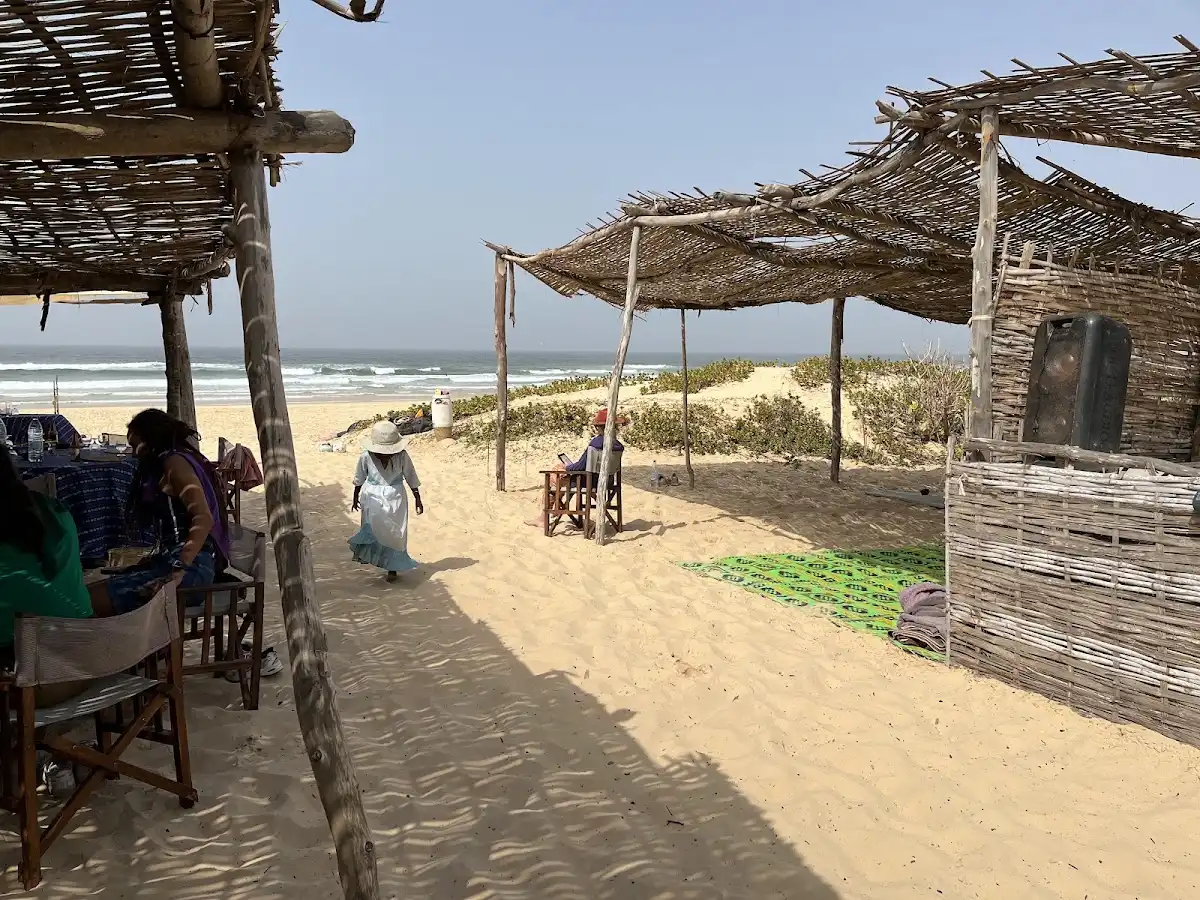
Plage de la Petite Côte is a delightful stretch of sand, but like any beach, it has its quirks. The waves can be playful, but they also pack a punch. Currents can shift, especially during the afternoon when the tide rolls in. Keep an eye on the locals; they know when it’s best to dive in.

As for marine life, you might spot a ray gliding by or a curious fish, but don’t worry about sharks. They’re not the main attraction here. Just be mindful of jellyfish, especially in warmer months.

The sun can be relentless, so slather on that sunscreen and consider a hat. Mornings are usually calmer, making them prime swimming time. By afternoon, the beach can get crowded, and with that, the risk of petty theft increases. Keep your belongings close, and don’t leave valuables unattended.

Overall, this … read more 👉
Plage de la Petite Côte is a delightful stretch of sand, but like any beach, it has its quirks. The waves can be playful, but they also pack a punch. Currents can shift, especially during the afternoon when the tide rolls in. Keep an eye on the locals; they know when it’s best to dive in.

As for marine life, you might spot a ray gliding by or a curious fish, but don’t worry about sharks. They’re not the main attraction here. Just be mindful of jellyfish, especially in warmer months.

The sun can be relentless, so slather on that sunscreen and consider a hat. Mornings are usually calmer, making them prime swimming time. By afternoon, the beach can get crowded, and with that, the risk of petty theft increases. Keep your belongings close, and don’t leave valuables unattended.

Overall, this beach is well-managed and generally safe, but a little situational awareness goes a long way. Enjoy the grind; the gold is in the experience.

FAQFrequently asked questions about Petite Côte

Three to five days covers Petite Côte well. Spend one day in Mbour for the fish quay and market, one at Saly's beach, one at Joal-Fadiouth and its shell island (entry about €1 to 2, plus a pirogue ride), and add Bandia Reserve or Popenguine if you have extra time.
Shared taxis and minibuses are the usual way to get around Petite Côte without a car. Dakar to Mbour takes about 2 to 2.5 hours and costs roughly €1.50 to 4, depending on the vehicle, and short hops between Mbour, Saly and Joal cost under €2. Motorbike taxis cover the last bit to beaches for about €0.50 to 2.
Petite Côte is known for its long Atlantic beaches, busy fishing ports and seafood. Saly is the main resort strip, Mbour has the large fish landing and market, and Joal-Fadiouth is famous for its island built of shells linked by a wooden bridge. Nature fans also come for Bandia Reserve, the Somone lagoon and birdlife, and for pilgrimage crowds at Popenguine.
⚠️ Things can change over time, so always validate details locally before you go.

Other Senegalese regions near Petite Côte

Explore more nearby:

  • Île de Gorée—Car-free lanes, Door of No Return, ochre walls, Dakar ferry| 45 km away
  • Casamance River—Mangrove estuary, Diola villages, pirogue crossings, Carabane island| 231 km away

💡 Not sure where to go next?
Create a personalized itinerary for Senegal including Petite Côte and the places that fit your trip.

Generate my itinerary

👉 Discover all regions

Or checkout all Senegal has to offer (think cities, towns, villages, national parks, hikes, beaches, festivals)
Country photo of Senegal

We 💚 feedbackWhat to keep in mind

Petite Côte suits travelers who like unhurried days, fish eaten on the sand and a base they can return to each night, more than those chasing nightlife. My advice is to skip the Saly strip for sleeping and stay in Toubab Dialaw or Nianing. Bring small bills for minibuses and a hat, because the beach has little shade.

✍️ Help improve this page!
The information on this page is based on in-depth research, insights shared by experienced travelers, and feedback from the local travel community in Senegal. While every effort is made to keep the information accurate and current, conditions can change — so if you spot anything incorrect or outdated, please get in touch.


🙋‍♂️ Give feedback

👋 Meet the founderWho’s Behind Take Your Backpack?

Johan, backpacker and founder of TakeYourBackpackHi, I’m Johan (Netherlands 🇳🇱), the creator of TakeYourBackpack. Over the past 3 decades, I’ve backpacked through 90+ countries across six continents, gaining extensive experience with independent travel, long-term trips, and overland routes.

This site is built on a combination of firsthand travel experience and carefully curated insights from other backpackers. Many guides are based on places I’ve personally visited, while others bring together tips, observations, and practical advice shared by trusted travelers I’ve met along the way.

The goal is to provide realistic, experience-driven guidance — not generic itineraries — so you can explore destinations with better context, clearer expectations, and more confidence.